KBL (Kadyos, Baboy, at Langka) Recipe
KBL, or Kadyos, Baboy, at Langka, is an Ilonggo soup made with pork hocks, pigeon peas, and unripe jackfruit. The broth is sour and purple, and it gets a little thicker as the kadyos cook. I sour it with fresh batuan, and the hocks simmer until the meat is soft enough to pull from the bone. Lemongrass goes in early, and sweet potato leaves go in right at the end.
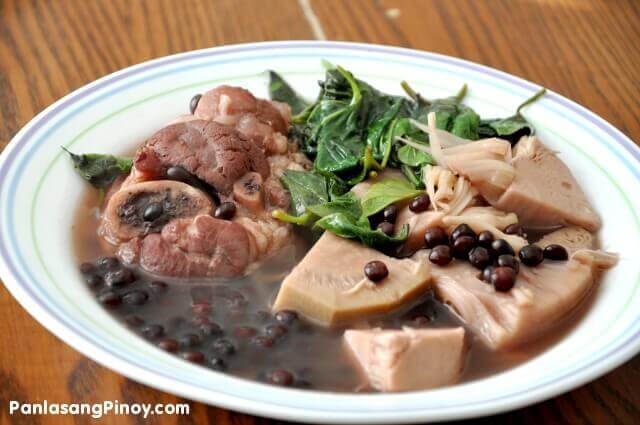
I learned to make KBL from an Ilonggo relative. Part of my family comes from La Carlota in Negros, and that relative was the first person I heard talk about using fresh batuan in this soup. I was not familiar with the fruit back then, and it was hard to find in Manila, so I used the same sinigang mix I use for my pork sinigang. Nowadays I use batuan when there is a chance. It has a cleaner tartness that leaves a fresh aftertaste.
Kadyos can be hard to find too, especially outside the Visayas. What I find in Filipino stores abroad is the dried purple kind, and those need to soak overnight, so that part of KBL has to be planned the day before.
What is KBL?
KBL stands for kadyos, baboy, and langka, the three main ingredients. In Hiligaynon it is called Kadyos, Baboy, kag Langka.
KBL is cooked all over Iloilo and Negros, where batuan is the usual souring ingredient. Another well-known Ilonggo soup is cansi, which uses beef shank and unripe jackfruit. In KBL the kadyos soften, release their purple color, and give the broth a little more body than a clear sinigang.
Why This KBL Recipe Works
- Parboiling the pork hocks first – Boiling the hocks for 10 minutes and rinsing them removes most of the scum. You get a cleaner broth when the pork goes back in.
- Lemongrass and the broth cube go in early – The pork simmers in that broth for 40 to 45 minutes, so the lemongrass has time to flavor it before the peas and jackfruit go in.
- The batuan goes in with the jackfruit, not at the beginning – It is easier to control the sourness this way. Once the fruit softens, mash it, strain the juice back into the pot, and taste before adding salt.
- The sweet potato leaves cook on residual heat – Two minutes in the covered pot with the heat off is enough to wilt them while they are still bright green.
Ingredients
- Pork hocks (pata) – Sliced into serving pieces. Have the butcher cut them, because the bone is hard to get through at home. Pork butt or pork belly also work if you want something less bony.
- Pigeon peas (kadyos) – The dark purple ones. Fresh kadyos go straight into the pot; dried ones need the overnight soak and a rinse.
- Unripe jackfruit (langka) – Peeled and chopped into chunks about the size of the pork pieces. Buy it already cleaned and cut if the market stall sells it that way, since the sap is messy to deal with.
- Sweet potato leaves (talbos ng kamote) – Pick the tender tops and leave the thick stems behind. They go in last and only need the heat left in the pot.
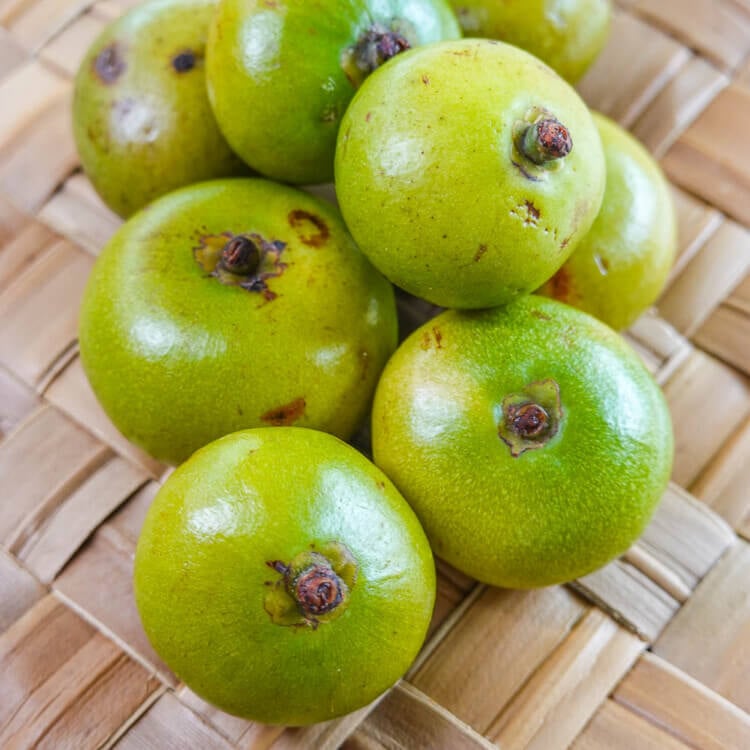
- Fresh batuan (batwan) – Ten medium green ones. Sinigang mix is the fallback when there is none.
- Lemongrass (tanglad) – Bruise the stalks with the back of a knife and tie them into knots so they are easy to fish out later.
- Beef or pork broth cube – One cube. Either one works here.
- Water – Twelve cups, used in two batches of six. The first six cups get thrown away after the parboil.
- Salt and ground black pepper – A little salt goes into the parboiling water. The rest goes in at the end, after the batuan juice, so you are seasoning the finished broth.
Vanjo’s Advice
- Start with 10 batuan. The sourness varies with their size and how ripe they are, so taste the broth after the juice goes in and add a couple more only if you want it more sour.
- Keep the heat on low to medium once the lemongrass is in. Cover the pot and let it simmer gently so the broth stays clear and the hocks turn tender without the meat falling apart.
- Add water as the peas cook. Kadyos take up a lot of liquid. Check the pot after 20 minutes and top it up with hot water so there is enough broth left for the jackfruit.
- Cut the jackfruit into bigger chunks. Small pieces turn soft and lose their shape by the time the batuan has softened. Pieces about the size of the pork hold up better.
- Take the lemongrass out before serving. The knots make this easy, and the stalks are not meant to be eaten.
How to Cook KBL
Parboil the Pork Hocks
- Pour 6 cups of water into a cooking pot. Add the pork hocks and a little salt. Bring to a boil and cook for 10 minutes.
- Drain and discard the water. Rinse the pork hocks briefly to remove any remaining impurities, then return them to the pot. Pour in the remaining 6 cups of fresh water and bring to a boil.
Simmer with Lemongrass and Kadyos
- Add the lemongrass and broth cube. Cover and simmer over low to medium heat for 40 to 45 minutes, or until the pork starts to turn tender.
- Add the pigeon peas. Continue simmering for 20 to 25 minutes, or until tender. Add more water as needed to maintain enough broth.
The pork should be starting to soften but still firmly attached to the bone. It keeps cooking with the kadyos.
Add the Jackfruit and Batuan
- Add the unripe jackfruit and 10 pieces of batuan. Continue simmering for 10 to 15 minutes, or until the jackfruit is tender and the batuan has softened.
- Remove the softened batuan and mash it with a little hot broth. Strain the extracted liquid back into the pot. Stir and season with salt and ground black pepper. Adjust the sourness to taste.
If you are using sinigang mix instead of batuan, stir it in with the jackfruit and start with less than the full amount. Taste once the jackfruit is tender and add the rest only if the broth needs it.
Finish with Sweet Potato Leaves
- Add the sweet potato leaves. Cover the pot and turn off the heat. Allow the residual heat to wilt the leaves for 2 minutes.
- Transfer to a serving bowl and serve hot with steamed white rice.
What to Serve with KBL
- Steamed white rice – Spoon some of the purple broth over the rice.
- Fish sauce with calamansi – A small saucer on the side, with a crushed chili if you like, for anyone who wants their bowl saltier or more sour.
- Fried fish – Fried bangus or tilapia next to the bowl turns it into a full meal when there are more people at the table.
Storage
- Refrigerator: Let the soup cool, then keep it in a covered container for up to 3 days. The jackfruit and peas keep soaking up broth as the soup sits, so expect less liquid the next day. Reheat only what you plan to eat.
- Freezer: The broth, pork, and peas freeze well for up to 2 months. Freeze it before the sweet potato leaves go in if you can, since the leaves turn dark and limp after thawing. The jackfruit comes out softer too, but it is still fine.
- Reheating: Bring it back to a gentle simmer on the stove and add a splash of water if the broth has thickened. Add fresh sweet potato leaves at the end if you froze it without them, then taste for salt before serving.
More Ilonggo Recipes
- Laswa – Ilonggo vegetable soup with shrimp, squash, okra, and leafy greens in a broth seasoned with bagoong.
- Batchoy – La Paz batchoy with miki noodles, pork, and innards, topped with crushed chicharon and toasted garlic.
- Pancit Molo – Pork and shrimp wontons with shredded chicken in a clear broth, finished with scallions and toasted garlic.
- Utan nga Langka – Unripe jackfruit with dried fish and bago leaves cooked in coconut milk.
Substitutions
- Fresh batuan – Sinigang mix is the easiest fallback, starting at 1 1/2 tablespoons. Kamias is the closer swap when you can get it; use it whole the way you would the batuan and mash it once soft. It is the souring fruit in my sinigang na baboy sa kamias. Batuan paste or powder also works, following the package amount.
- Pork hocks – Pork butt or pork belly, cut into chunks. Both cook in less time than the hocks, so check them at 30 minutes.
- Dried kadyos – Fresh kadyos skip the overnight soak and cook faster. Canned pigeon peas can stand in; they are usually the green kind, so the broth will not turn as purple. Drain them and add them with the jackfruit so they just heat through.
- Unripe jackfruit – Canned unripe jackfruit, drained. It is softer than fresh, so add it a few minutes after the batuan instead of at the same time.
- Sweet potato leaves – Kangkong or spinach. Both wilt the same way with the heat off.
- Lemongrass – Leave it out if you cannot find it. The broth loses that aroma but still tastes like KBL.
Frequently Asked Questions
Why is my KBL purple?
That is the kadyos. Dark purple pigeon peas color the broth as they cook, and that color is part of the dish. If you used green or canned peas, the broth stays lighter.
How do I know the batuan is ready to mash?
It gives easily when you press it against the side of the pot with a spoon, usually after 10 to 15 minutes in the simmering broth. Lift it out, mash it with a little hot broth, and strain the juice back in. The seeds and skin stay in the strainer.
Is KBL the same as sinigang?
No. Both are sour pork soups, but they use different ingredients. KBL gets its sourness from batuan and uses kadyos and unripe jackfruit. Sinigang usually uses tamarind or another souring ingredient, along with vegetables such as taro, radish, and kangkong. You can compare it with my sinigang na pata with gabi, which uses the same cut.
Can I make KBL ahead of time?
Yes. Cook it through the batuan and seasoning step, let it cool, and keep it covered in the refrigerator. Reheat it to a simmer and add the sweet potato leaves right before serving so they stay green.
Where can I buy kadyos outside the Visayas?
Dried kadyos are what Filipino stores abroad usually carry, and that is what I used in the US. In Manila, the public market is a better bet than the supermarket. If you are in the United States, pigeon peas are also sold dried and canned in Latin grocery stores, though those are the green kind.
I still make KBL with sinigang mix when there is no fresh batuan around, but batuan is what I look for first. It was hard to find in Manila when I first learned this dish, so I make sure to use it whenever I can get some. Serve the KBL hot with steamed rice and plenty of the sour purple broth in every bowl.
Watch How to Make It

Did you make this? If you snap a photo, please be sure tag us on Instagram at @panlasangpinoy or hashtag #panlasangpinoy so we can see your creations!
KBL (Kadyos, Baboy, at Langka)
Ingredients
- 1 1/2 lbs pork hocks pata, sliced into serving pieces
- 1 piece unripe jackfruit langka, peeled and chopped into serving pieces
- 1 cup pigeon peas kadyos, soaked overnight if dried
- 2 cups sweet potato leaves talbos ng kamote
- 10 pieces fresh green batwan batuan, medium; or 1 1/2 tablespoons sinigang mix, adjusted to taste
- 3 to 5 stalks lemongrass tanglad, bruised and tied into knots
- 1 piece beef or pork broth cube
- 12 cups water divided into two 6-cup batches
- salt and ground black pepper to taste
Equipment
- 1 Large cooking pot Deep enough to hold 6 cups of broth plus the pork and jackfruit
- 1 Fine strainer For straining the mashed batwan liquid back into the pot
Instructions
- Pour 6 cups of water into a cooking pot. Add the pork hocks and a little salt. Bring to a boil and cook for 5 minutes.12 cups water, 1 1/2 lbs pork hocks, salt and ground black pepper
- Drain and discard the water. Rinse the pork hocks briefly to remove any remaining impurities, then return them to the pot. Pour in the remaining 6 cups of fresh water and bring to a boil.1 1/2 lbs pork hocks, 12 cups water
- Add the lemongrass and broth cube. Cover and simmer over low to medium heat for 40 to 45 minutes, or until the pork begins to turn tender.3 to 5 stalks lemongrass, 1 piece beef or pork broth cube
- Add the pigeon peas. Continue simmering for 20 to 25 minutes, or until tender. Add more water as needed to maintain enough broth.1 cup pigeon peas, 12 cups water
- Add the unripe jackfruit and 10 pieces of batwan. Continue simmering for 10 to 15 minutes, or until the jackfruit is tender and the batwan has softened. Remove the softened batwan and mash it with a little hot broth. Strain the extracted liquid back into the pot. Stir, then season with salt and ground black pepper. Adjust the sourness to taste.1 piece unripe jackfruit, 10 pieces fresh green batwan, salt and ground black pepper
- Add the sweet potato leaves. Cover the pot and turn off the heat. Let the residual heat wilt the leaves for 2 minutes.2 cups sweet potato leaves
- Transfer to a serving bowl and serve hot with steamed white rice. Share and enjoy!


jerico says
Thanks for this. May I know what would be a better alternative for the sweet potato leaves in case it’s not available?
Vanjo Merano says
Jerico, you can use spinach or water spinach as alternatives.
Terese says
Hello there! Love this site for any Filipino recipes that I don’t know off the top of my head that my grandma has taught me.
I just have a question:
The Instructions first step is just boiling water with salt? Or is this where the ham hock should already be in the pot?
My grandmother made this the other day and it was out on the counter for an entire day so I had to get rid of it. I want to make it for her because I know she enjoyed it. The pigeon peas are a little hard to come by but I know of a few grocery stores here in San Diego that do carry them Frozen.
Charm says
I made this awhile ago following your recipe and it came out fantastic! Im an Ilongga who had this authentic dish back in Iloilo and I’d give this recipe a 9/10! In Miami, you can buy Pigeon peas in can at Cuban or Spanish grocery stores and Im glad I found a small Filipino grocery store close to us that has unripened jackfruit in can. So, i was very happy to be able to get all the ingredients needed. Thank you for sharing this recipe! I learned how to cook by following your website.
Vanjo Merano says
Charm, thank you for the feedback. It was nice to know that you liked it. 9 out of 10 is very high rating — I appreciate it.
joyceeluk says
i cannot find Kadyos beans anywhere in the supermarkets in Metro Manila whenever I am in the Philippines. My chinese husband loves this soup which he tasted in Mang Inasal’s fast-food in Makati. Where do you think I can buy Kadyos beans? We even have to sneak it into our hotel room.
Ana Liza says
I dont think this can be buy at the supermarket..You have to go to Palengke!…Im sure they have it!
Nikita says
Hi, the instructions #1, 2 is confusing since you did not mention that the pork needs to be added. On my understand I am just boiling water with salt. Until the #3 instruction the pork will be tender. But loved the recipe same what my mom does. Thanks.
Vanjo Merano says
It should be clear now. Thanks for the feedback.
Anna says
Omigosh…thank you for posting this! I grew up with this and never know how to make it. I can’t wait to try this recipe!
elle says
This is my most favorite dish! Since I’m an Ilongga, we often serve this on special occasions..
Lana says
Hi Ilongga man ko. Namit gid ni no? Budlay lang mangita kadyos sa U.S bisan sa Asian store daw waay ko makita.