Dinengdeng Recipe
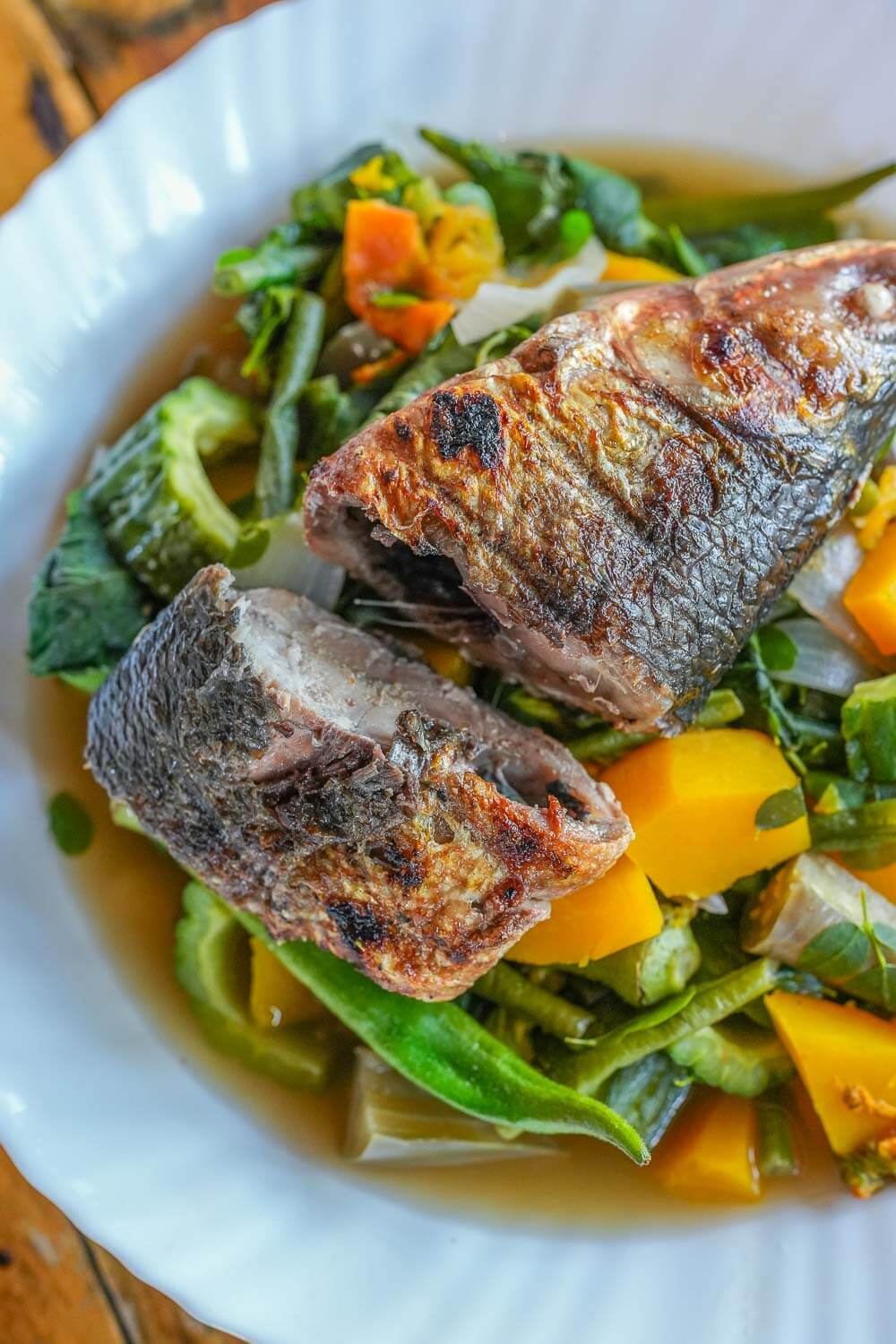
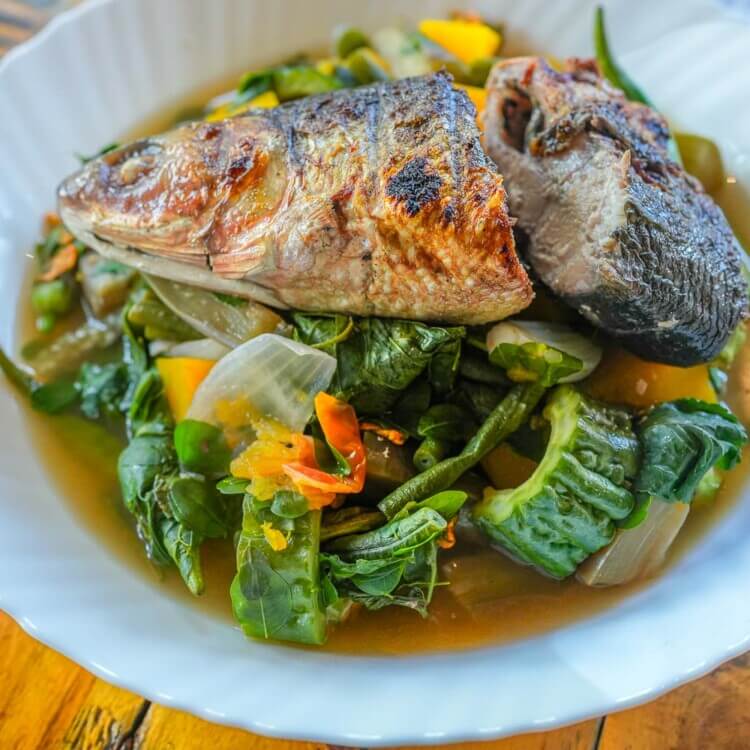
Dinengdeng is an Ilocano vegetable dish made with kalabasa, okra, ampalaya, string beans, and leafy greens, cooked in a broth seasoned with bagoong isda. The vegetables take on the salty, savory taste of the bagoong as they cook, and a few pieces of grilled bangus simmered in the pot near the end give the broth a smoky taste on top of that. With a plate of warm rice, this is a complete meal.
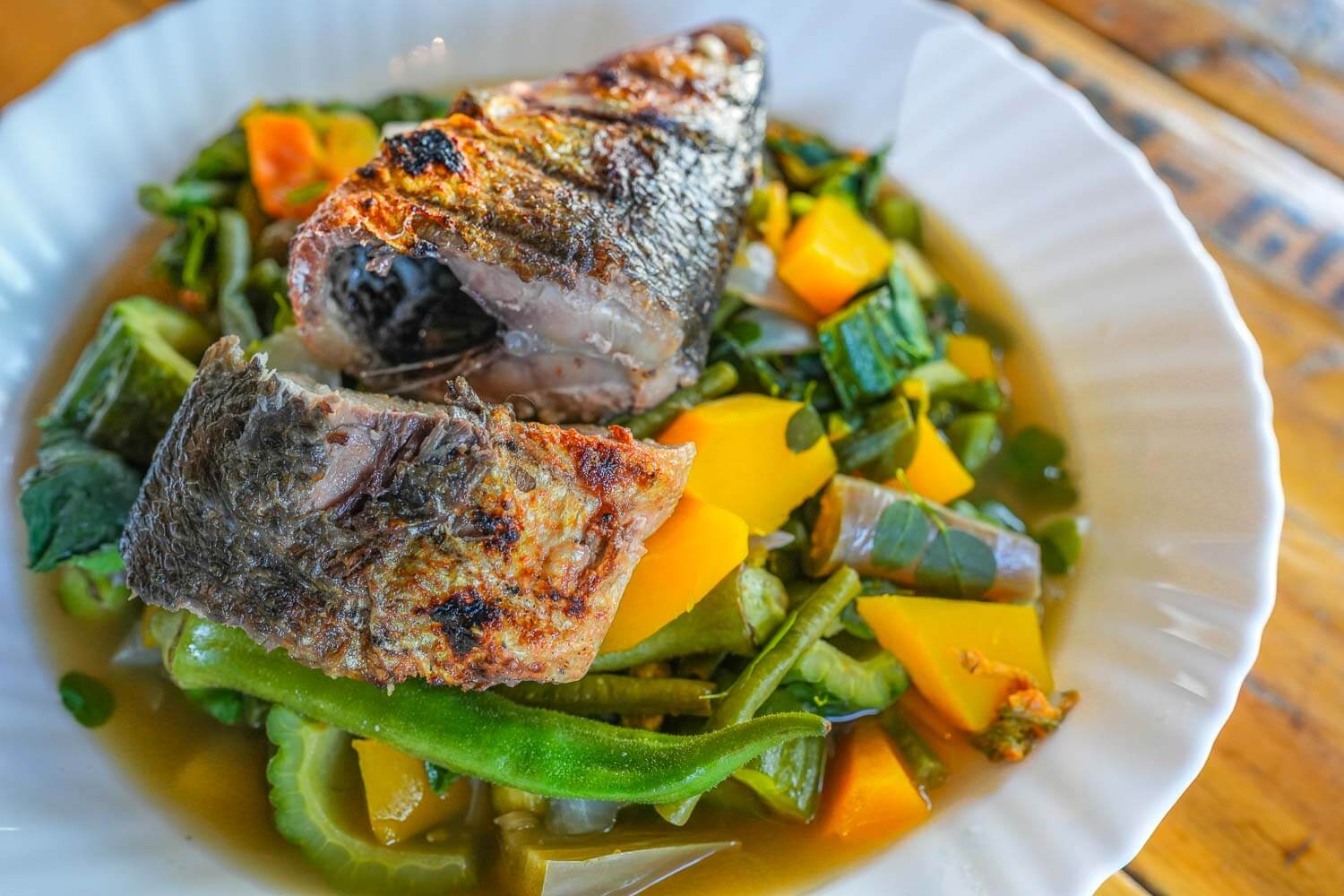
I have been cooking this dish since we were still in the Philippines. It is one of the vegetable dishes we regularly have at home, along with laswa and bulanglang. I started using grilled milkfish after a friend from Ilocos suggested it. I tried it, loved how the grilled fish tasted with the bagoong broth, and have made it that way ever since. Fried or smoked fish works too.
Kalabasa adds a little sweetness to the broth, while ampalaya gives it that familiar bitter taste. The saluyot, malunggay, and squash blossoms go in last because they need very little cooking. With eight vegetables in one pot and grilled fish instead of fried, this is also my go-to dish when I want to eat something nutritious.
What is Dinengdeng?
Dinengdeng is also called inabraw in Ilocos. My inabraw recipe uses fried tilapia and bagoong balayan, and it is cooked the same way. There is no garlic in it, and you do not need the same vegetables every time. Kalabasa, eggplant, okra, ampalaya, and whatever leafy vegetables are available all work, and the fish can be grilled, fried, or smoked.
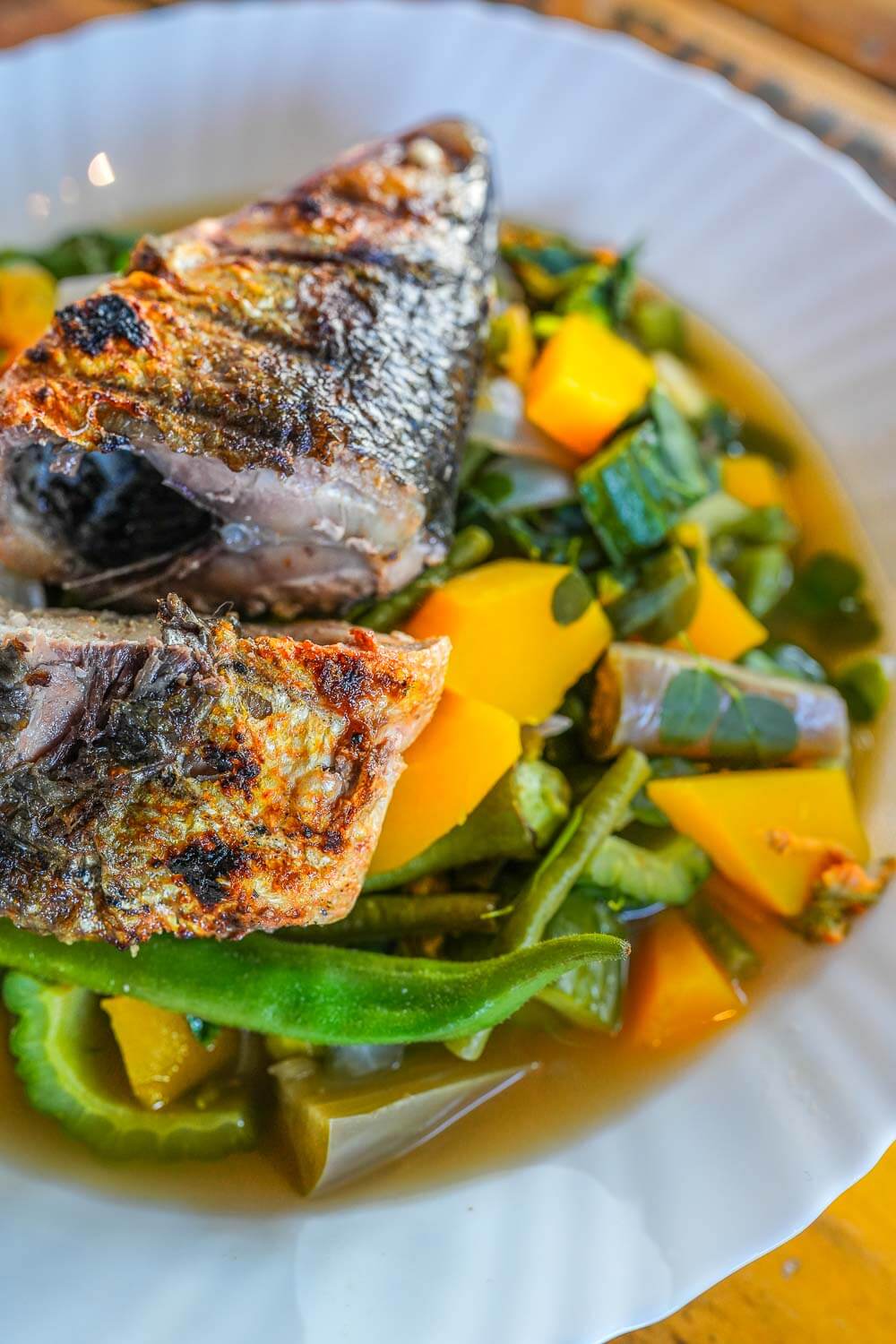
Bagoong isda is what gives dinengdeng its taste, and the broth is part of the dish. Dinengdeng has enough broth to spoon over rice. Pinakbet also uses bagoong isda, but it has very little liquid and is usually cooked with bagnet. My bulanglang is plain boiled vegetables seasoned with salt, and my laswa is cooked with shrimp and bagoong alamang, so both taste milder than this.
Why This Dinengdeng Recipe Works
- Grilling the bangus first makes a difference – A few pieces simmer with the vegetables toward the end, giving the broth some of that grilled fish flavor. The rest go on top at serving so they stay intact.
- The bagoong isda is strained – Only the seasoned liquid goes into the broth. The bones and solids stay out.
- The vegetables go in by stages – Kalabasa takes the longest, so it goes in first. String beans and eggplant follow, then okra and ampalaya. The leaves and squash blossoms need about a minute, so they go in last.
Ingredients
For the Grilled Bangus
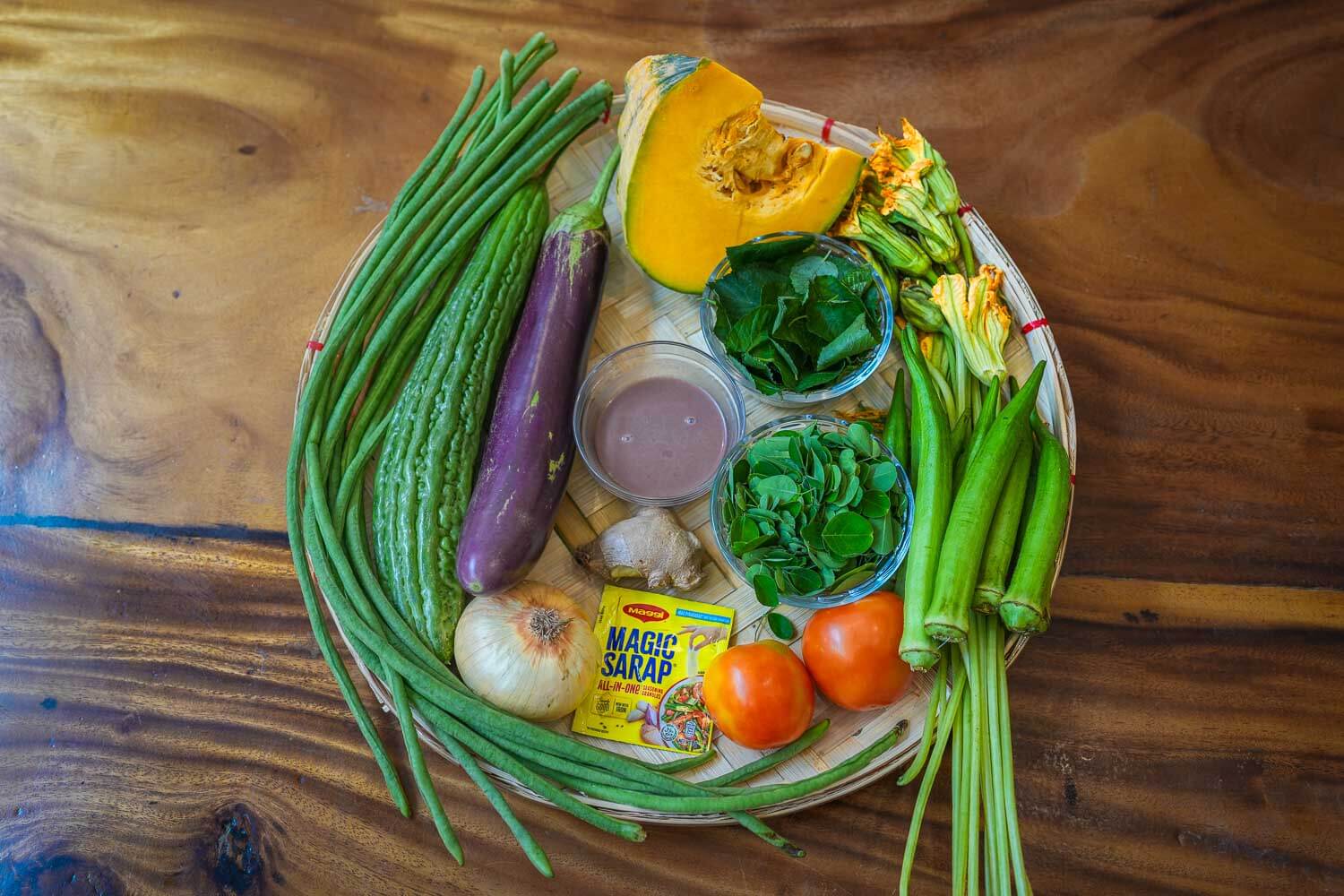
- Bangus – One whole fish, about 1 1/2 to 2 pounds, cleaned, scaled, and gutted, then cut into serving pieces. I usually use bangus or tilapia for this dish, and either one works. My inihaw na bangus recipe is for grilling the fish whole with the scales on.
- MAGGI Magic Sarap – Rub it all over the fish and give it 10 minutes before grilling.
- Cooking oil – Brush both sides of the fish so it releases from the grate.
For the Broth
- Water – Three cups is enough for 5 to 6 servings. Keep a little more on hand in case the vegetables need it.
- Yellow onion – Quartered. It goes into the water with the ginger and tomatoes.
- Ginger – A thumb-sized piece, peeled and sliced crosswise.
- Ripe tomatoes – Use ripe tomatoes. They soften in the broth and add a little sourness.
- Bagoong isda (bagoong monamon) – This is fermented anchovy, sold in jars at Filipino and Asian stores. Strain it before it goes in so only the liquid flavors the broth. Start with 3 tablespoons and add more at the end if you want it saltier.
Vegetables
- Kalabasa – Peeled, seeded, and cut into bite-sized pieces. Cut them the same size so they soften together.
- String beans – Cut into 2-inch pieces.
- Chinese eggplant – Slice it crosswise, then cut each piece lengthwise.
- Okra – Trim the stem caps and leave the pods whole.
- Bitter melon – Halve the ampalaya, remove the seeds and white pith, then slice it.
- Moringa leaves – Strip the leaves from the stems. One cup, loosely packed.
- Jute leaves – Saluyot. The leaves thicken the broth slightly as they wilt.
- Squash blossoms – Pull off the sepals at the base of each flower and check inside for insects.
Vanjo’s Advice
- Grill the bangus until it flakes easily at the thickest part. The flesh should be opaque all the way through. If you use a thermometer, the fish is done at 145°F.
- Strain the bagoong isda over the pot. Press the solids with the back of a spoon, then throw away what is left in the strainer.
- Taste the broth before the leafy vegetables go in. Add more bagoong isda a little at a time. The leaves cook in about a minute, so the seasoning should be right before they go in.
- Rub the ampalaya with salt if you want it milder. Rub about a teaspoon of salt over the slices, wait 5 minutes, then rinse and pat them dry.
- Smoked fish can take the place of the grilled bangus. Tinapa is already cooked, so it goes into the pot with the leafy vegetables. I make a saluyot version with tinapang galunggong that way.
How to Cook Dinengdeng
Grill the fish first, then start the broth while it rests.
Grill the Bangus
- Rub the MAGGI Magic Sarap all over the bangus pieces.
- Let the fish sit for 10 minutes to absorb the seasoning.
- Brush both sides of the bangus with cooking oil.
- Grill over hot charcoal or on a preheated gas grill until fully cooked. Set aside.
Start the Broth
- Bring the water to a boil in a cooking pot. Add the yellow onion, ginger, and ripe tomatoes. Cover and simmer for 3 to 4 minutes to allow their flavors to develop.
- Add the strained bagoong isda. Stir gently and bring the broth back to a boil.
Cook the Vegetables
- Add the kalabasa. Cover and cook over medium heat for 1 to 2 minutes, or until it begins to soften.
- Add the string beans and Chinese eggplant. Cover and continue cooking until the vegetables begin to soften.
- Add the okra and bitter melon. Continue cooking until the vegetables are tender but not mushy.
- Add a little more water if needed, and adjust the seasoning with additional bagoong isda to taste.
The okra and ampalaya are ready when a fork goes in with a little resistance. They will finish cooking after the fish and leaves go in.
Add the Fish and Leafy Vegetables
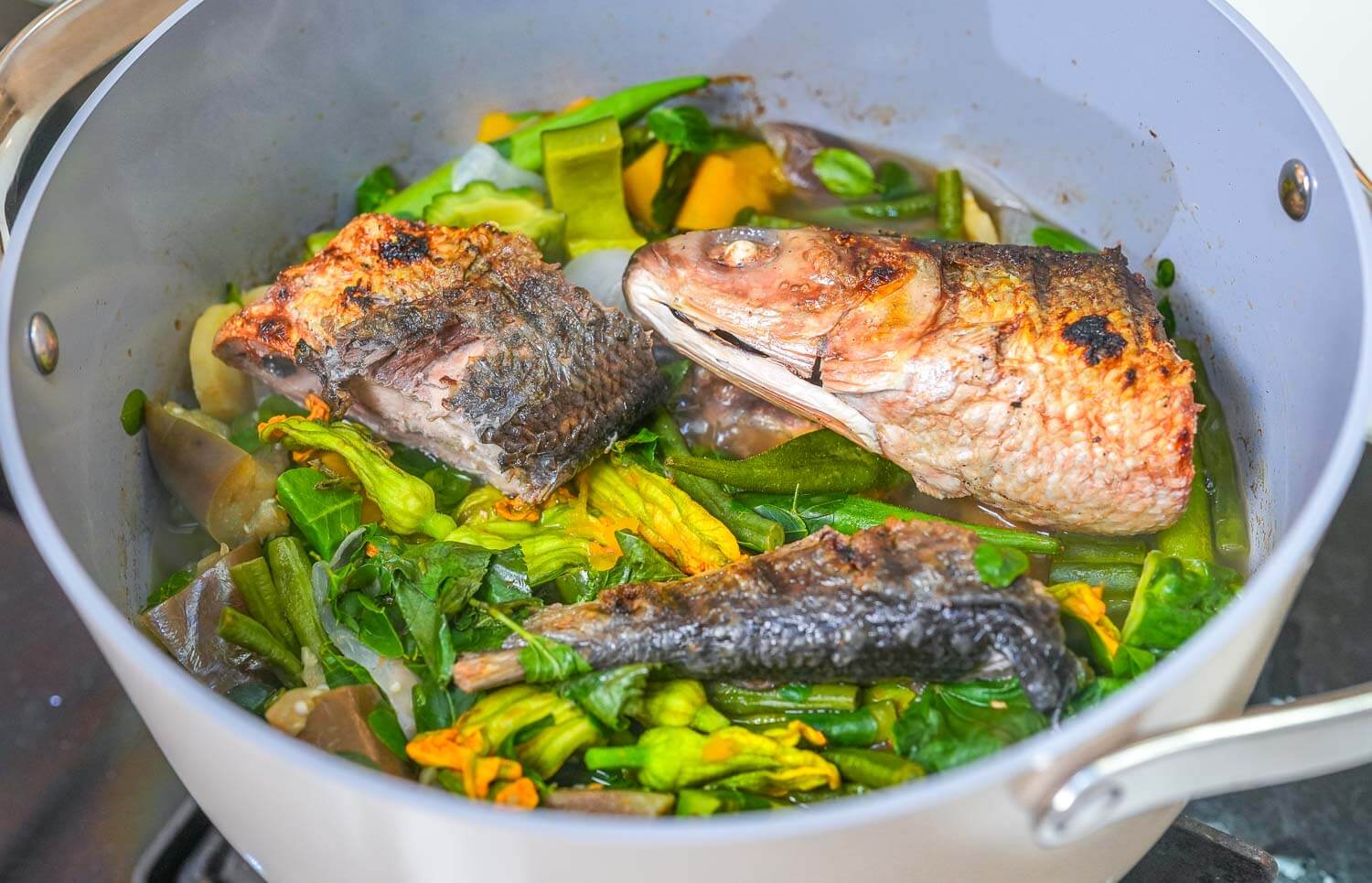
- Arrange some of the grilled bangus pieces in the pot. Let the broth simmer gently to absorb the smoky flavor of the fish.
- Add the jute leaves, moringa leaves, and squash blossoms. Cover and cook for about 1 minute, or until the leafy vegetables begin to wilt.
- Gently spoon some of the hot broth over the vegetables to help them cook evenly. Avoid stirring too much to keep the fish intact and prevent the vegetables from becoming mushy.
- Transfer the dinengdeng to a serving bowl. Arrange the remaining grilled bangus on top and serve hot with steamed white rice.
What to Serve with Dinengdeng
- Steamed white rice – Spoon the vegetables and broth over it.
- Tomato and Onion with Bagoong Isda – Chopped tomato and onion mixed with the same bagoong isda. It goes with the grilled bangus too.
- Fried tilapia – Serve a few pieces on the side if you want crispy fish with the broth.
- Soy sauce with calamansi – A small saucer for the fish, with chopped chili if you want it.
Storage
- Refrigerator: Let it cool, then keep it in a covered container for up to 2 days. The vegetables keep softening in the broth, so I try to finish it the next day. Keep the extra bangus in its own container so it stays firm.
- Freezer: The finished dish does not freeze well because the okra, eggplant, and leaves turn mushy once thawed. You can freeze the grilled bangus on its own for up to a month, wrapped tightly, and cook a fresh pot of vegetables for it later.
- Reheating: Warm it in a pot over low heat until steaming hot. A splash of water loosens the broth if the saluyot thickened it overnight. Put the fish pieces on top once the broth is hot.
Filipino Vegetable Recipes
- Dinengdeng with Fried Fish – The version with crispy fried fish on top and pepper leaves in the broth.
- Dinengdeng with Bilong-bilong – Made with fried moonfish and malunggay.
- Ginisang Ampalaya – Thin slices of bitter melon sautéed with garlic, onion, tomato, and egg.
- Ginisang Kalabasa at Sitaw with Daing – Squash and string beans sautéed with shredded salted dried fish.
- Ginisang Sitaw with Bell Pepper – String beans and red bell pepper cooked with braised pork belly in one pan.
Substitutions
- Bangus – Tilapia or galunggong, grilled or fried. Any medium fish works as long as it is cooked before it goes in.
- Bagoong isda – Bagoong balayan is the direct swap. Patis can be used, but the flavor will be different.
- MAGGI Magic Sarap – Salt and ground black pepper rubbed on the fish.
- Kalabasa – Sweet potato, cut the same size. Add it first, the same way.
- Jute leaves – More malunggay, or squash leaves, alugbati, or pepper leaves. Add them at the same point as the jute leaves.
- Squash blossoms – Leave them out if you cannot find them. The dish does not need anything in their place.
Frequently Asked Questions
Can I use patis instead of bagoong isda?
You can, but the flavor will be different. Bagoong isda gives the best results for this dish, so I still recommend it.
What is the difference between dinengdeng and pinakbet?
Pinakbet has very little liquid and is usually cooked with bagnet, while dinengdeng has a broth and uses fish. Both are seasoned with bagoong isda and use many of the same vegetables.
Are dinengdeng and inabraw the same dish?
Yes. Inabraw is another Ilocano name for the same dish. The vegetables and the fish change from one kitchen to the next, but the bagoong isda broth is the same.
What is dinengdeng in English?
There is no exact English name for it. It is usually described as an Ilocano vegetable stew in fermented fish broth, served with grilled or fried fish.
Can I make dinengdeng ahead of time?
Cook it right before serving. The vegetables soften as they sit in the broth, and the leaves lose their color. You can grill the bangus ahead, let it cool, and keep it covered in the refrigerator until you start the broth.
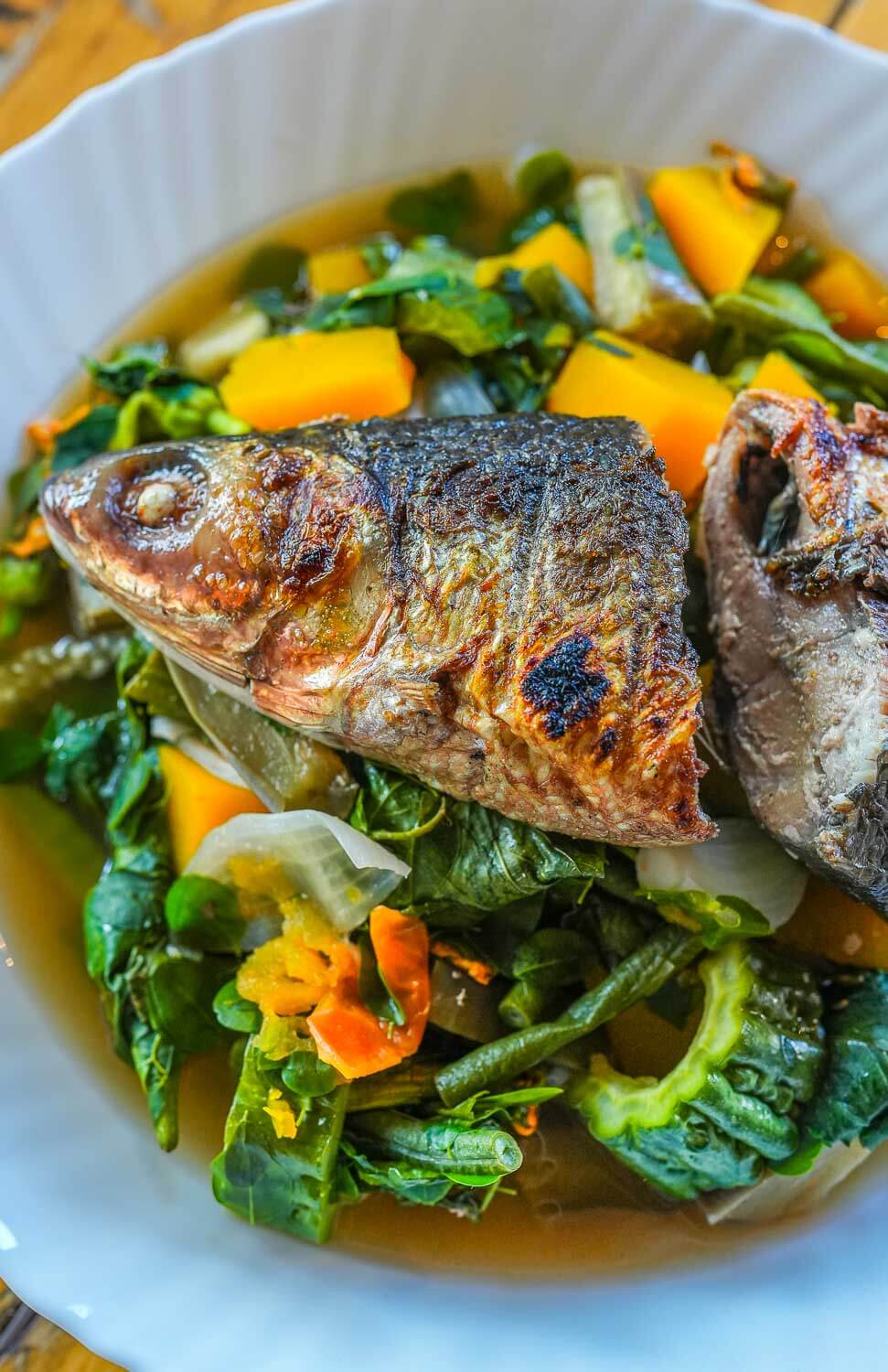
Dinengdeng is best eaten while the vegetables still have their texture and the broth is hot. Spoon some over steamed rice, add a piece of grilled bangus, and you have a satisfying meal without needing much else. I still make it with grilled bangus, just as my friend from Ilocos suggested. A squeeze of calamansi on the fish makes it even better.
Watch How to Make It

Did you make this? If you snap a photo, please be sure tag us on Instagram at @panlasangpinoy or hashtag #panlasangpinoy so we can see your creations!
Dinengdeng
Ingredients
For the Grilled Bangus
- 1 medium whole bangus (milkfish) about 1 1/2 to 2 lbs., cleaned, scaled, gutted, and cut into serving pieces
- 6 grams MAGGI Magic Sarap
- 1 tablespoon cooking oil
For the Broth
- 3 cups water
- 1 medium yellow onion quartered
- 1 thumb ginger peeled and sliced crosswise
- 2 medium ripe tomatoes quartered
- 3 tablespoons bagoong isda (bagoong monamon) strained, plus more to taste
Vegetables
- 1/2 lb. kalabasa (squash) peeled, seeded, and cut into bite-sized pieces
- 12 pieces string beans cut into 2-inch pieces
- 1 large Chinese eggplant sliced crosswise and then lengthwise
- 8 to 10 pieces okra trimmed
- 1 medium bitter melon halved, seeded, and sliced
- 1 cup moringa leaves
- 1 cup jute leaves
- 10 pieces squash blossoms sepals removed
Equipment
- 1 Charcoal or gas grill For grilling the bangus
- 1 Cooking pot For the broth and vegetables
Instructions
- Rub the MAGGI Magic Sarap all over the bangus. Let it sit for 10 minutes so the seasoning can absorb.1 medium whole bangus (milkfish), 6 grams MAGGI Magic Sarap
- Brush both sides of the bangus with cooking oil. Grill over hot charcoal or on a preheated gas grill until fully cooked. Set aside.1 medium whole bangus (milkfish), 1 tablespoon cooking oil
- Bring the water to a boil in a cooking pot. Add the yellow onion, ginger, and ripe tomatoes. Cover and simmer for 3 to 4 minutes to let their flavors develop.3 cups water, 1 medium yellow onion, 1 thumb ginger, 2 medium ripe tomatoes
- Add the strained bagoong isda. Stir gently and bring the broth back to a boil.3 tablespoons bagoong isda (bagoong monamon)
- Add the kalabasa. Cover and cook over medium heat for 1 to 2 minutes, or until it begins to soften.1/2 lb. kalabasa (squash)
- Add the string beans and Chinese eggplant. Cover and continue cooking until the vegetables begin to soften.12 pieces string beans, 1 large Chinese eggplant
- Add the okra and bitter melon. Continue cooking until the vegetables are tender but not mushy. Add a little more water if needed, and adjust the seasoning with additional bagoong isda to taste.8 to 10 pieces okra, 1 medium bitter melon, 3 tablespoons bagoong isda (bagoong monamon)
- Arrange some of the grilled bangus pieces in the pot. Let the broth simmer gently so it absorbs the smoky flavor of the fish.1 medium whole bangus (milkfish)
- Add the jute leaves, moringa leaves, and squash blossoms. Cover and cook for about 1 minute, or until the leafy vegetables begin to wilt.1 cup moringa leaves, 1 cup jute leaves, 10 pieces squash blossoms
- Gently spoon some of the hot broth over the vegetables to help them cook evenly. Avoid stirring too much to keep the fish intact and the vegetables from turning mushy.
- Transfer the dinengdeng to a serving bowl. Arrange the remaining grilled bangus on top and serve hot with steamed white rice. Share and enjoy!1 medium whole bangus (milkfish)


jas says
pwede bang patis pag alang bagoong isda?
Vanjo Merano says
It is nice if bagoong isda will be used for best results. Pwede kang gumamit ng patis, pero hindi magiging pareho ang lasa.
alfredo dizon says
thank you for sharing i love denengdeng its my favorite dish
rey says
Wow it looks good. Thank you for posting the recipe. I haven’t had this for more than 20 years since I migrated. My mom is from the north and does it differently. She uses fried galunggong.
I love fried galunggong only when its freshly cook. It brings out the flavor when its still hot from the pan. ONce it gets cold Its almost bland to me. To make use of the rest of the galunggong, my mom uses it for dinengdeng. So its like a re-run but with a twist and it works.
You forgot to include the “saluyot” on the recipe.
edward lee says
dinengdeng looks yummy and healthy ! thanks for sharing the recipe .
i wonder if “talbos ng kalabasa ” maybe used here instead of the malunggay . i have plenty of talbos ng kalabasa in my backyard and don’t quite know what to do with them . suggestions , anyone ?