Easy Calamari Recipe
Every time we order calamari at a restaurant, I am surprised at how fast it reaches the table, still hot and crunchy outside and soft in the middle. Calamari is squid, usually sliced into rings, coated in seasoned flour or batter and fried quickly until the coating turns light and crisp. In the Philippines the same dish is called calamares, and the biggest difference is what sits in the dipping bowl beside it. You do not need to go out for this one. Once the squid has soaked, the actual cooking takes about ten minutes.
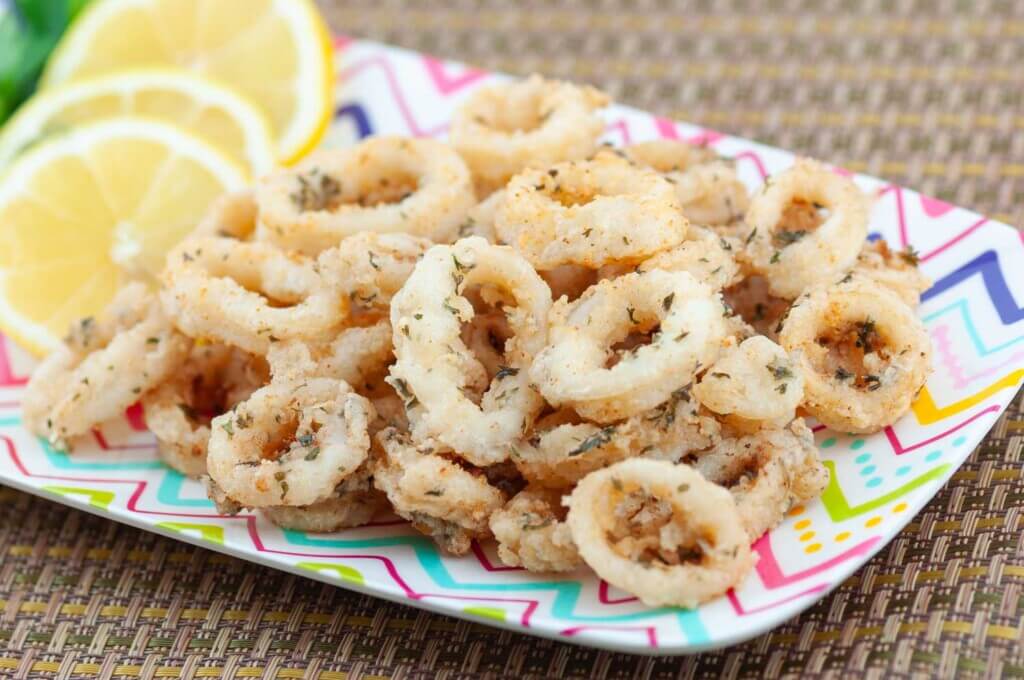
The main worry with squid is that it will come out rubbery. It tightens up fast, and once that happens, more time in the oil only makes it worse. What I do is soak the rings in fresh milk for at least 3 hours, and overnight when I have the time. You can feel the difference in the rings before they even go into the flour.
The other half of it is the frying. Two minutes in hot oil is enough. Take the rings out while the coating is still light golden rather than deep brown, and keep each batch small so the oil temperature does not drop. Past that point the rings go tough, and no amount of good coating will hide it.
What Is Calamari?
Calamari is squid, most often sliced into rings, coated, and deep fried until crisp. The name comes from the Italian calamaro, which traces back to the Latin calamarium, meaning ink pot, a reference to the ink sac inside the squid. On a menu the word almost always means the fried version, though the same squid is also grilled, stewed, and stuffed all around the Mediterranean coast.
Fried squid has long been served in Italy, Spain, Greece, and Portugal, usually as a small plate before the meal. It became a standard American restaurant appetizer much later, in the second half of the twentieth century, and many people in the United States know it as a basket of rings with marinara on the side. Calamares also became part of Filipino cooking through Spanish influence and is often served as pulutan, the food you put on the table when people are sitting around talking over drinks.
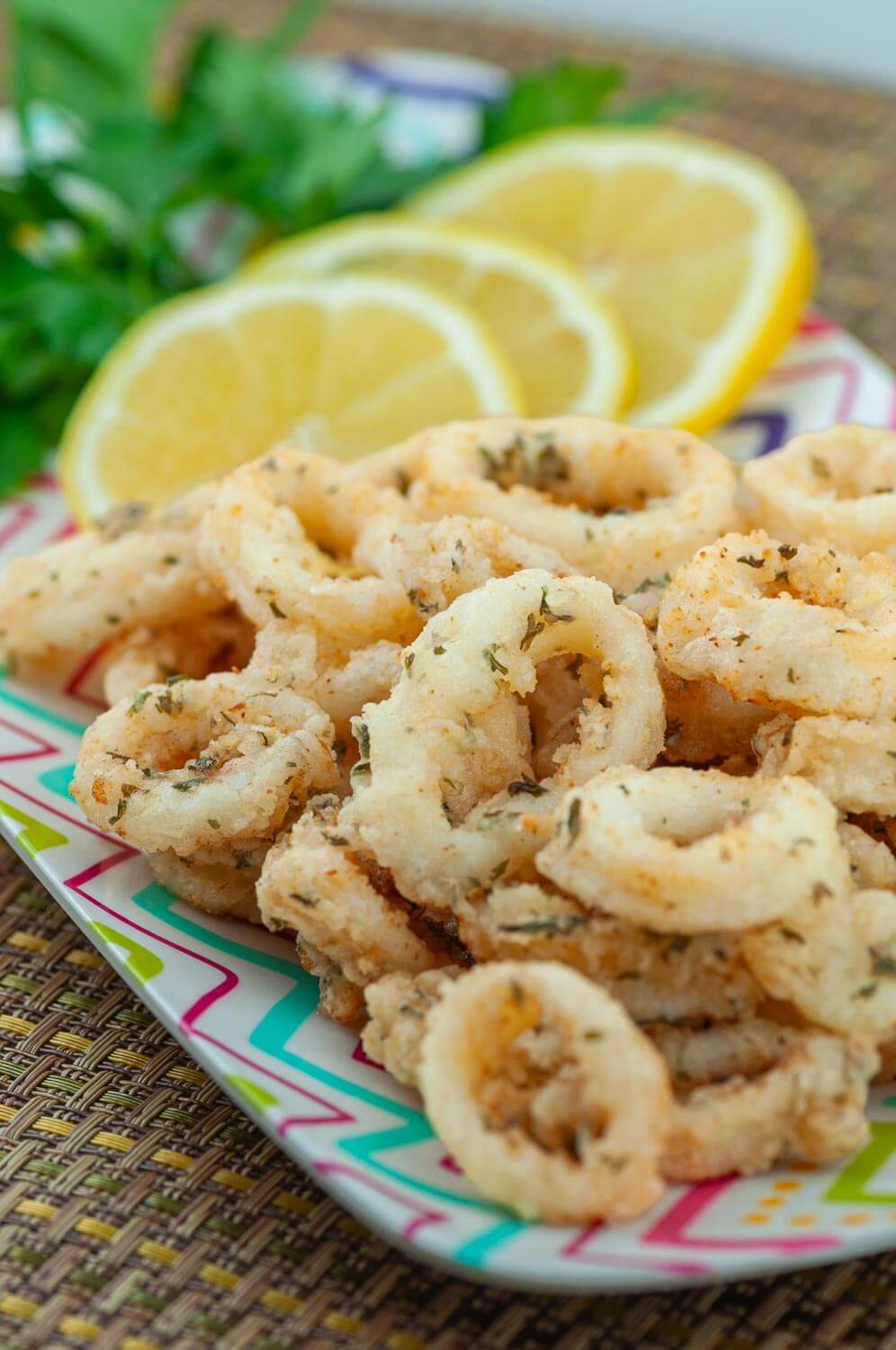
The Filipino version is usually breaded a little heavier and served with spiced vinegar or toyomansi instead of a tomato sauce, and the dip is one of the clearest differences between the two. In Filipino homes it usually shows up the same way it does in a restaurant, on a plate in the middle of the table with lemon wedges and a bowl of vinegar, and it rarely lasts long enough to get cold.
Ingredients
- Calamari rings – Frozen rings from the seafood section are what I use most of the time, and they save you the cleaning. Fresh squid works just as well if you clean it and slice it crosswise into rings about half an inch thick.
- Fresh milk – Enough to cover the rings completely in the bowl. Whole milk is fine, and the soak matters more than the brand. No fresh milk on hand? See the substitutions below.
- All-purpose flour – Plain flour on its own gives a thin, light crust rather than a thick batter shell, which is what you want for rings this small.
- Salt – About a teaspoon and a half for the flour mixture. Season the coating properly, since the squid itself picks up almost nothing from the milk.
- Garlic powder – Use the powder here, not fresh garlic. Fresh garlic burns in two minutes of hot oil and turns bitter.
- Dried parsley flakes – These are for color and a light herby note in the crust. Dried oregano works if that is what is in the cabinet.
- Cooking oil – Enough for a proper deep fry. Any neutral oil is fine.
- Lemon wedges – Squeeze them over the calamari right at the table, not earlier, so the coating stays crisp.
A word on the milk, since it is the one ingredient that decides how this turns out. The long soak helps soften the squid, which is why I give it at least 3 hours. A reader once asked me if evaporated milk could work instead. It does, and you can use the same amount. Keep the bowl in the refrigerator the whole time, never on the counter.
Vanjo’s Advice
Most of the work happens before the calamari reaches the oil.
- Give the soak more time than you think it needs. Three hours is the minimum. Overnight is what I do whenever I plan ahead, and the difference in texture is easy to notice.
- Reach for evaporated milk if you have a can open. Use it in the same amount as fresh milk.
- Let the milk drip off properly before dredging. Rings that go into the flour soaking wet end up with a gummy coating, and the extra liquid spits when it hits hot oil.
- Fry in small batches. Crowding the pot drops the oil temperature, and cool oil means the coating soaks up oil instead of crisping. Give the rings room to move.
- Open a window and turn on the vent before you start. Deep frying seafood fills a house quickly, and the smell lingers longer than the calamari lasts.
- The same milk soak works on the grill. I use it before making grilled calamari too, as long as the squid comes off the heat quickly.
- Set the dip out first. Fried calamari is best in the first few minutes, so have the spiced vinegar or sawsawan ready on the table before the first batch comes out.
How to Cook Calamari
Making calamari is straightforward, but the soaking takes longer than the cooking. Start it in the morning or the night before, and the rest is a ten-minute job.
Soak the Calamari
- Place the calamari rings in a bowl and pour in enough fresh milk to cover them completely.
- Cover the bowl and refrigerate for at least 3 hours.
Overnight is better if you can plan for it. If you are working with frozen rings, thaw them fully in the refrigerator first, then pour the milk over them.
Set Up the Coating and the Oil
- Combine the flour, salt, garlic powder, and dried parsley flakes in a wide bowl and mix well.
- Heat the cooking oil in a deep pot or wok.
The oil is ready when a pinch of the flour mixture sizzles the moment it touches the surface. This is usually between 350°F and 375°F. A wide bowl for the flour makes the dredging much faster than a deep one.
Dredge and Fry
- Drain the calamari and let the excess milk drip off.
- Coat each ring completely in the flour mixture, then gently shake off the extra flour.
- Fry the calamari in batches for about 2 minutes, or until the coating turns light golden brown.
- Lift the rings out with a kitchen spider or slotted spoon as soon as they reach that color.
Lower the rings into the oil carefully rather than dropping them in, since any milk still clinging to them will make the oil spit. Take them out while the coating is light golden, because it keeps cooking for a few seconds after it leaves the pot and will darken a little on the rack.
Drain and Serve
- Let the excess oil drain on a wire rack or a plate lined with paper towels.
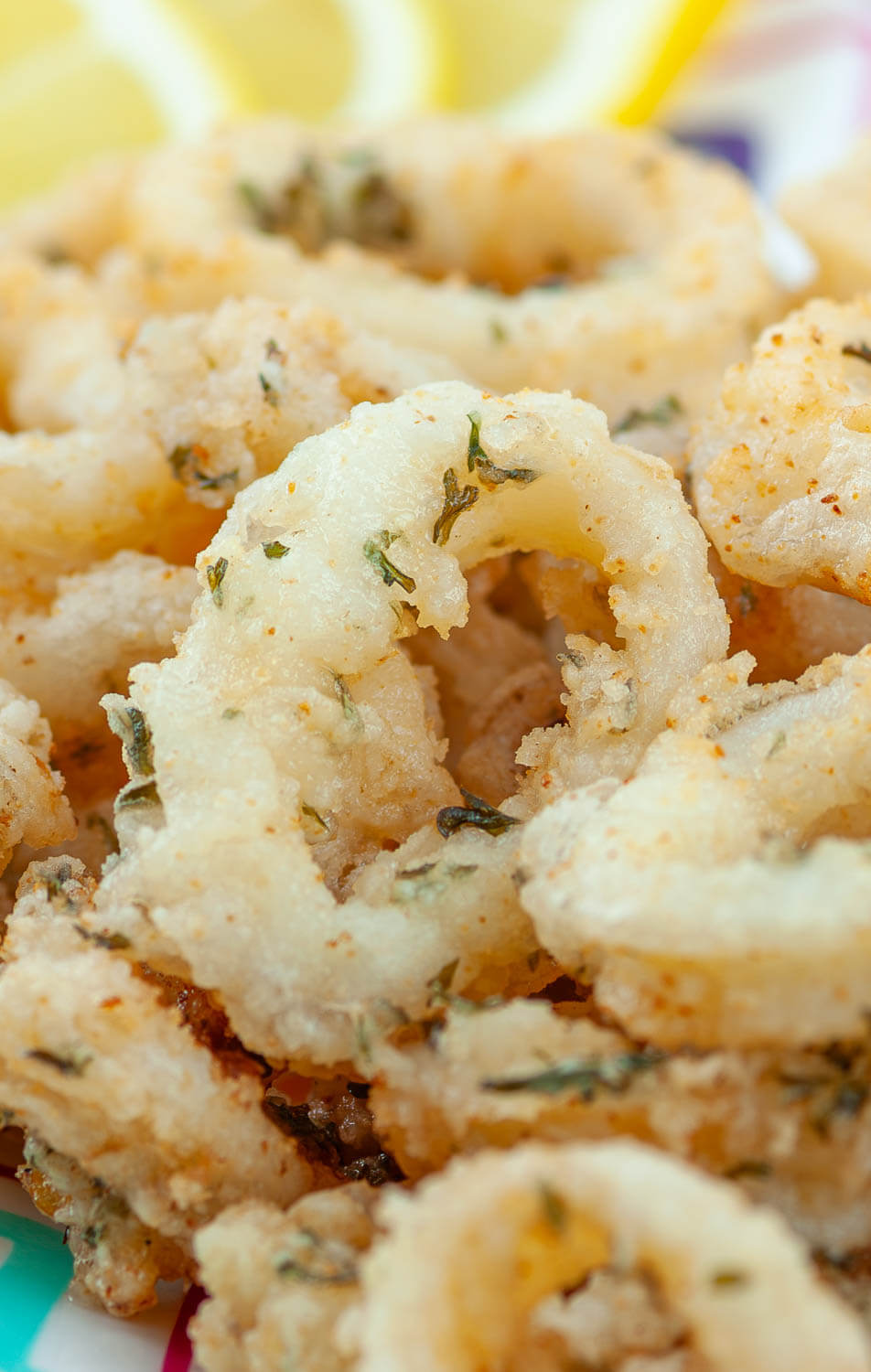
- Transfer to a serving plate and serve right away with lemon wedges.
Serve it while it is still hot, because the coating softens as it sits. If you are frying several batches, keep the finished ones on the rack in a warm oven with the door slightly open rather than stacking them on a covered plate.
What to Serve with Calamari
- Tartar Sauce – The creamy, tangy dip most American restaurants send out with fried seafood.
- Marinara Sauce – The tomato-based dip commonly served with calamari in Italian-American restaurants.
- Asian Dipping Sauce – Soy sauce, vinegar, and sesame oil, close to the toyomansi that goes with calamares back home.
- Garlic Fried Rice – Turns the appetizer into an actual meal, which is how we usually end up eating it.
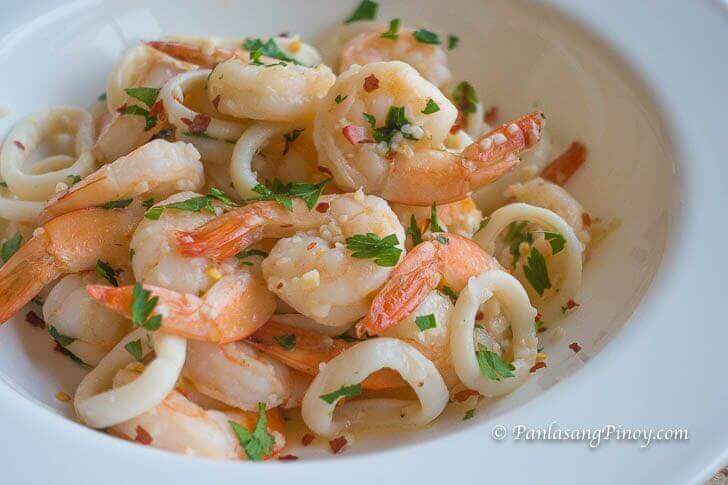
- Butter Garlic Shrimp and Squid – Put both on the table when you want a seafood spread instead of a single plate.
Storage
Calamari is at its best in the first few minutes, but leftovers keep well enough if you store them properly and warm them the right way.
- Refrigerator: Keep leftovers in an airtight container for up to 2 days. Let them cool completely first, since trapped steam softens the coating overnight.
- Freezer: I would not freeze it after frying, because the coating separates when it thaws. Freeze the raw squid instead and soak it in milk after thawing.
- Reheating: Use an oven or air fryer at around 375°F for 3 to 5 minutes, just until it crisps again. Skip the microwave, which turns the coating soft and the squid chewy.
More Filipino Seafood Recipes
- Adobong Pusit – Squid simmered in vinegar, soy sauce, and garlic, with the ink stirred back in.
- Squid Sisig – Chopped squid on a sizzling plate, another pulutan that disappears fast.
- Rellenong Pusit – Whole squid stuffed with a savory filling for a more substantial meal.
- Ginataang Pusit – The coconut milk version, rich and mild instead of sharp.
- Squid Stir-Fry in Oyster Sauce – A quick weeknight version that uses the same short cooking rule.
- Mixed Seafood in Coconut Milk – Shrimp, fish, and squid all in one pot.
- Camaron Rebosado – Battered fried shrimp, the dish I make when calamari alone is not enough for the table.
Substitutions
- Fresh milk – Evaporated milk can be used in the same amount. Buttermilk is the next best option. Use the same amount and soak the squid for 3 hours.
- Calamari rings – Whole fresh squid, cleaned and sliced crosswise into rings about half an inch thick. Keep the tentacles and fry them alongside the rings.
- All-purpose flour – Replace a third of it with cornstarch for a lighter, crunchier crust. Rice flour does something similar.
- Garlic powder – Onion powder if that is what you have, or leave it out and add a little more salt.
- Dried parsley flakes – Dried oregano, or a small spoon of paprika for color and a bit of warmth.
- Lemon wedges – Calamansi, which is sharper and closer to how calamares is served in the Philippines.
Frequently Asked Questions
Is calamari squid or octopus?
It is squid. Calamari and octopus are different animals, and the confusion usually comes from the rings, since a sliced octopus tentacle and a squid ring can look similar on a plate. A squid has a long, tapered body that slices neatly into even rings. If a menu says calamari, you are getting squid.
What does calamari taste like?
Mild and slightly sweet, much closer to shrimp than to a strong-tasting fish. Squid picks up whatever it is cooked with, so most of what you taste in fried calamari is the seasoned coating, the oil, and the dip. The texture matters more. It should be firm with a slight spring when cooked properly.
Can I use frozen calamari rings?
Yes, and that is what I use most of the time. Thaw them fully in the refrigerator, then drain the water and pat them dry before the milk soak. Never lower frozen or icy rings into hot oil, because the ice turns to steam instantly and the oil will spatter.
My calamari came out rubbery. Can I save it?
Not once it has been fried, no. You either cook squid very briefly, around two minutes, or simmer it gently for 30 to 45 minutes until it softens again. Anything in between comes out tough. You can drop overcooked rings into a tomato sauce and simmer them until they turn tender, but the coating will not survive it. The best fix is to take the next batch out sooner.
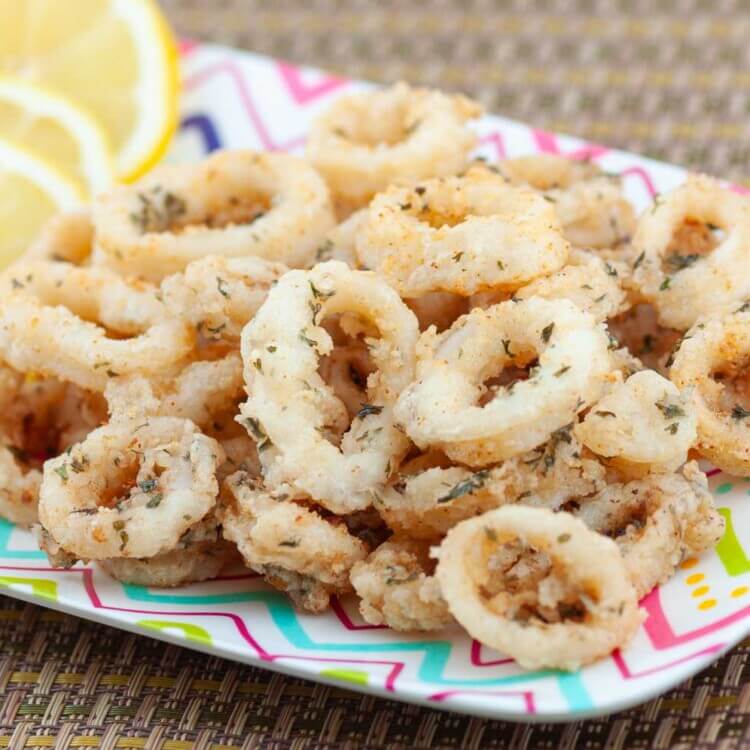
Once the squid has finished soaking, fry the calamari for about two minutes and serve it right away with lemon wedges and your favorite dip.
Watch How to Make It

Did you make this? If you snap a photo, please be sure tag us on Instagram at @panlasangpinoy or hashtag #panlasangpinoy so we can see your creations!
Easy Calamari
Ingredients
- 1 lbs calamari rings
- 2 cups fresh milk or enough to cover the calamari
- 1/2 cup all-purpose flour
- 1 1/2 teaspoons salt
- 2 teaspoons garlic powder
- 2 teaspoons dried parsley flakes
- 2 cups cooking oil for deep frying
- 4 pieces lemon wedges for serving
Equipment
- 1 Deep cooking pot Holds enough oil to fry the calamari in batches.
- 1 Wide Mixing Bowl For combining the flour and seasonings.
- 1 Kitchen Spider or Slotted Spoon Lets you lift the calamari out quickly before it overcooks.
- 1 Wire rack Keeps the coating crisp while the excess oil drains.
Instructions
- Place the calamari rings in a bowl and pour in enough fresh milk to cover them completely. Refrigerate for at least 3 hours.1 lbs calamari rings, 2 cups fresh milk
- Combine the all-purpose flour, salt, garlic powder, and dried parsley flakes in a wide bowl. Mix well until the seasonings are evenly distributed.1/2 cup all-purpose flour, 1 1/2 teaspoons salt, 2 teaspoons garlic powder, 2 teaspoons dried parsley flakes
- Heat the cooking oil in a deep cooking pot.2 cups cooking oil
- Drain the calamari and let the excess milk drip off. Coat each ring completely with the flour mixture, then gently shake off any excess flour.1 lbs calamari rings, 1/2 cup all-purpose flour
- Fry the calamari in batches for about 2 minutes, or until the coating turns light golden brown. Avoid adding too many pieces at once so that the oil stays hot.1 lbs calamari rings
- Remove the calamari using a kitchen spider or a slotted spoon. Let the excess oil drain on a wire rack or on a plate lined with paper towels.
- Transfer to a serving plate and serve right away with lemon wedges. Share and enjoy!4 pieces lemon wedges


kulethz says
thanks for this recipe ?
must try ☺
wil says
tnx po sa recipe!super favorite q po calamari!
Mae says
Great recipe, have been cooking this over and over again. Thanks for the tip!
Mutchie Co says
thank you, favorate namin ang calamares. I will try cooking this. God Bless. post more menu 🙂
michael avellano says
can i use evaporated milk instead of fresh milk? thanks!
Vanjo Merano says
Michael, using evaporated milk is even better because it has higher levels of lactic acid.