Kutsinta Recipe
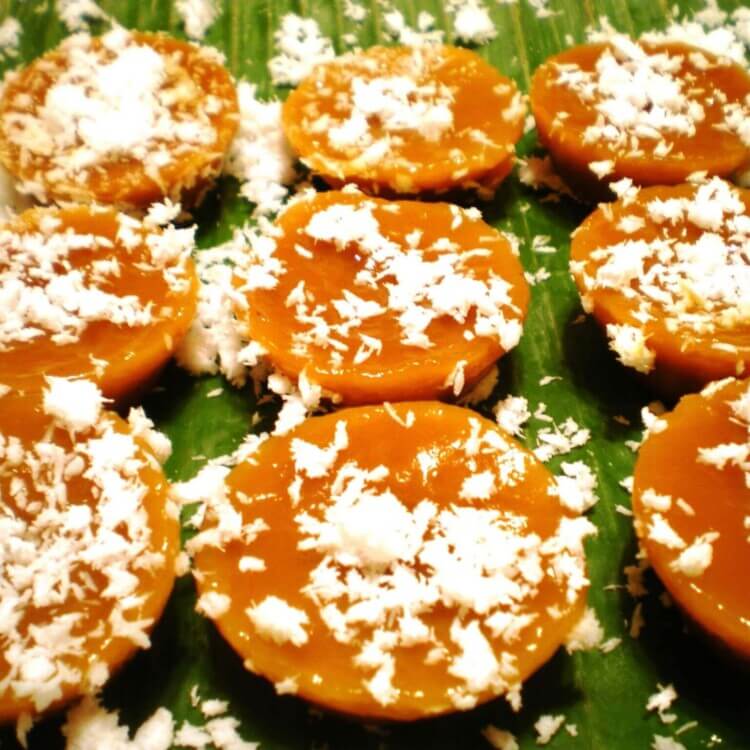
Kutsinta is a Filipino steamed rice cake made with rice flour, brown sugar, and lye water, with annatto giving it that brown-orange color. It is chewy and a little sticky, and most of the flavor comes from the brown sugar. Freshly grated coconut goes on top, and for me that is an important part of eating kutsinta.

I learned how to make kutsinta from my mom. She has been making it for as long as I can remember. We used to buy freshly grated coconut from the local flea market in Las Piñas, and that is still the topping I use today.
Getting the texture right takes some care, mostly in measuring the lye water. This kutsinta recipe uses just 1 1/2 teaspoons. Adding too much can leave a bitter taste, so measure it with a spoon instead of estimating. The rest is mixing the batter and giving it enough time in the steamer.
What is Kutsinta?
Kutsinta is the brown one sold next to puto at kakanin stalls, and the two together are what people mean by puto kutsinta. My cheese puto and puto cake are the soft, white ones. Kutsinta is denser, and you can bend a piece without it breaking. The name is also spelled kutchinta, kuchinta, or cuchinta, and in English it is sometimes called brown rice cake.
Puto rises with baking powder, while kutsinta has no leavening at all. This kutsinta recipe is the rice flour version, with a little all-purpose flour mixed in. Some recipes use all-purpose flour with tapioca or cassava flour instead. Mine is the one my mom made, so rice flour is what I use.
Why This Kutsinta Recipe Works
- Regular rice flour – This is where kutsinta gets its chew. Glutinous rice flour looks almost the same on the shelf but makes a soft, sticky cake closer to tikoy, so check the bag before you start.
- Annatto for the color – Brown sugar gives some color, but the annatto water is what turns it the orange-brown kutsinta is known for.
- Water goes in a little at a time – Stir as you pour and the sugar dissolves and the flour mixes in smoothly. If lumps form anyway, keep stirring, or pass the batter through a strainer before it goes into the molds.
- A towel under the steamer lid – Steam collects on the lid and drips back down. The towel catches it, so the tops of the kutsinta stay smooth and dry.
Kutsinta Ingredients
- Rice flour – Regular rice flour, not glutinous rice flour.
- All-purpose flour – Mix it with the rice flour and brown sugar before adding the water.
- Brown sugar – Light or dark both work. Dark brown sugar makes a darker kutsinta with more molasses flavor.
- Water – Use all 3 cups. The batter should be thin enough to pour easily into the molds.
- Lye water – Buy food-grade lye water only, also called lihia. It comes in small bottles at Filipino and Asian stores. Do not confuse it with the lye sold for cleaning, and keep it away from children. My lye water guide covers it in more detail.
- Annatto seeds – Atsuete. The seeds are soaked, not cooked, so only the colored water goes into the batter.
- Water for the annatto – Just 3 tablespoons, enough to draw the color out of the seeds.
- Fresh grated coconut – For the topping. Grate it fresh if you can. Frozen grated coconut from an Asian store works once it is thawed and drained.
- Cooking oil – A light coat on the molds. Any neutral oil is fine.
Equipment
- Kutsinta molds – Small round molds, either tin or silicone. A muffin tin or small silicone cupcake cups work when you cannot find kutsinta molds, and the pieces come out larger.
- Steamer – Wide enough to hold the molds in a single layer with the water underneath. A bamboo steamer set over a wok or a metal steamer both work.
Vanjo’s Advice
- Stir the batter before every pour. The flour settles to the bottom quickly. A stir before each mold gets filled keeps every piece the same.
- Keep the steamer at a steady boil. Check the water level halfway through and add hot water if needed.
- Check the center before taking the molds out. The top should be firm and the middle should not move when you tilt a mold. Give it another 10 minutes if the center is still wet.
- Let the kutsinta cool completely before unmolding. Run a toothpick around the edges before lifting each piece out.
- Put the coconut on right before serving. Fresh grated coconut turns sour within the day at room temperature, so keep it in the refrigerator and top only the pieces you are about to eat.
How to Make Kutsinta
Mix the Batter
- Combine the rice flour, all-purpose flour, and brown sugar in a large mixing bowl. Stir until evenly blended.
- Gradually pour in 3 cups of water while continuously stirring until the sugar dissolves and the batter becomes smooth and free of lumps.
- Soak the annatto seeds in 3 tablespoons of water to extract their color. Strain and discard the seeds.
- Add the lye water and strained annatto water to the batter. Stir thoroughly until well incorporated.
Fill the Molds
- Lightly grease individual kutsinta molds with cooking oil.
- Stir the batter again, then pour it into the prepared molds.
Steam and Serve
- Bring the water in a steamer to a boil.
- Arrange the molds inside and cover the steamer lid with a clean kitchen towel to prevent condensation from dripping onto the kutsinta.
- Steam for 40 to 60 minutes, or until the kutsinta is set and no longer has a liquid center.
- Remove the molds from the steamer and allow the kutsinta to cool before unmolding. Top with freshly grated coconut and serve.
What to Serve with Kutsinta
- Cheese Puto – Kutsinta and puto are often sold together. The soft, slightly salty cheese puto goes well with the sweet, chewy kutsinta.
- Hot tsokolate – Thick hot chocolate, for a merienda that is more than a snack.
- Coffee – Plain brewed coffee, since the kutsinta is already sweet.
- Salabat – Ginger tea if you want something warm that is not sweet.
Storage
- Refrigerator: Keep the kutsinta in a covered container for up to 3 days, without the coconut on it. Refrigerated kutsinta becomes firmer, so let it sit out for a while before eating.
- Freezer: Freezing changes the texture, and the pieces come out firmer and drier than they went in. You can freeze them in a single layer in a freezer bag for up to a month if you need to, but a smaller batch kept in the refrigerator is the better option.
- Reheating: Steam the pieces for 3 to 5 minutes to soften them again, then let them cool before adding the coconut. Room temperature is fine too if you only want them softer than they are straight from the refrigerator.
More Filipino Kakanin Recipes
- Pichi-Pichi – Grated cassava steamed with lye water until it turns translucent, rolled in grated coconut.
- Sapin-Sapin – Three steamed layers of glutinous rice flour and coconut milk, with jackfruit, plain coconut, and ube, topped with latik.
- Suman sa Lihiya – Glutinous rice mixed with lye water, wrapped in banana leaves, and boiled. Served with sugar or latik.
- Espasol – Toasted glutinous rice flour and coconut cooked into a dough, rolled into logs, and coated in more toasted flour.
- Palitaw – Flat discs of glutinous rice flour boiled until they float, then rolled in grated coconut, sugar, and toasted sesame seeds.
Substitutions
- Lye water – Baked baking soda is the closest substitute, and my lye water guide has the method for making it. It is not a one-to-one swap, so treat it as a different recipe to test. Baking soda straight from the box is not the same thing.
- Annatto seeds – Annatto powder works. Dissolve a small amount in the 3 tablespoons of water and add it until the batter is orange-brown.
- Brown sugar – Muscovado makes a darker kutsinta with a stronger molasses taste. White sugar works, but the kutsinta comes out paler and the color depends on the annatto alone.
- Rice flour – Tapioca flour or cassava flour makes a chewier, more translucent kutsinta, but it needs its own ratio. The amounts in this recipe are for rice flour and do not carry over.
Frequently Asked Questions
Why is my kutsinta sticky and not firm?
It can stay too soft when it has not steamed long enough, when the flour and water were measured off, or when the lye water came up short. Give it the full steaming time, and use standard US measuring cups and spoons for everything.
Why did my kutsinta come out hard?
Too much flour for the amount of water. Level off the cups of flour instead of packing them, and use the full 3 cups of water. Kutsinta also firms up as it cools and again in the refrigerator, so judge it at room temperature.
Can I use all-purpose flour only?
The rice flour is what gives kutsinta its chew, so all-purpose flour on its own makes a softer cake. Keep the half cup of all-purpose flour as the supporting amount and use rice flour for the rest.
Can I cook kutsinta in the oven instead of a steamer?
This recipe is written for a steamer. Baked versions exist, but they use a covered water bath and a different cooking time, so the 40 to 60 minutes here does not apply to them.
What can I use if I do not have kutsinta molds?
A muffin tin, silicone cupcake cups, or small ramekins all work. Grease them the same way, and expect larger pieces that may need the longer end of the steaming time.
Freshly grated coconut is still my favorite topping for kutsinta. That is how my mom served it, and it is how I enjoy it to this day. Serve it for merienda with hot coffee or hot chocolate.
Did you make this? If you snap a photo, please be sure tag us on Instagram at @panlasangpinoy or hashtag #panlasangpinoy so we can see your creations!
Kutsinta Recipe
Ingredients
- 1 1/2 cups rice flour
- 1/2 cup all-purpose flour
- 1 cup brown sugar
- 3 cups water
- 1 1/2 teaspoons food-grade lye water
- 2 teaspoons annatto seeds atsuete
- 3 tablespoons water for soaking the annatto seeds
- freshly grated coconut for topping
Equipment
- 1 steamer Large enough to hold the molds in a single layer
- 1 Kutsinta molds Small individual molds, lightly greased
- 1 Large mixing bowl For combining the dry ingredients and batter
- 1 Fine mesh strainer For straining the annatto water
- 1 Clean kitchen towel Wrapped around the steamer lid to catch condensation
Instructions
- Combine the rice flour, all-purpose flour, and brown sugar in a large mixing bowl. Stir until evenly blended.1 1/2 cups rice flour, 1/2 cup all-purpose flour, 1 cup brown sugar
- Gradually pour in 3 cups of water while stirring continuously until the sugar dissolves and the batter is smooth and free of lumps.3 cups water
- Soak the annatto seeds in 3 tablespoons of water to extract their color. Strain the liquid and discard the seeds.2 teaspoons annatto seeds, 3 tablespoons water
- Add the lye water and the strained annatto water to the batter. Stir thoroughly until fully incorporated.1 1/2 teaspoons food-grade lye water
- Lightly grease the individual kutsinta molds with cooking oil. Stir the batter once more, then pour it into the prepared molds.
- Bring the water in a steamer to a boil. Arrange the molds inside and cover the steamer lid with a clean kitchen towel to keep condensation from dripping onto the kutsinta. Steam for 40 to 60 minutes, or until the kutsinta is set and no longer has a liquid center.
- Remove the molds from the steamer and let the kutsinta cool before unmolding. Top with freshly grated coconut. Serve. Share and enjoy!freshly grated coconut


Adelaida D Tanagras says
Easy recipe. Good for beginners.
Vanjo Merano says
Thank you, Adelaida. I am glad the Kutsinta recipe was easy to follow. It is a good recipe for anyone making kakanin for the first time.
Julienne Sayo says
This recipe worked for me!
Kapag feeling nyo prang tikoy eh tagalan nyo p ang pakulo. maari nyo din takpan ng foil pra nde magtubig un ibabaw ng niluluto nyong kakanin, akala ko nun una failed eh ,, ndi naman pala. thank u panlasang pinoy! favorite ko tong kuchinta
Joela says
Should it be cool before its serve?
DINA LYN LINSAO CORTEZ says
where can i buy lye water?
remy baluyo says
Thank you so much sir vanjo for all your recipes, they awaken my desires in cooking…May God continue to bless you po.
Vanjo Merano says
You are welcome, Remy 🙂
Mina says
Hi Vanjo,
Your website is really very helpful! Keep it up!
By the way, I live in Singapore and I can’t seem to find lye water. What I only see here is alkaline water. Can I also use as a substitute for lye water? Many thanks!
Vanjo Merano says
Mina, please check the comments section of this article on Lye water. It might be of help.
Ronic says
Can i use vanilla instead of lye water?
Jackielyn Marie Quemado says
What is the measurement sir if i use anatto powder?
Angelita guiao says
Cuchinta is a no rise puto. If we use baking soda or baking powder it will cause the cuchinta to rise so the result would be different
Jujielyn galbizo says
hi! thank you this is the best because the important information i only need is the abbrevations thank you so much.by the way how about you try halo-halo because i need the abbrevations
thanks bye!!!
-jujielyn<3
Lito Armea says
I am an engineer, but I love cooking. Pan lasang pinoy is such a great site where food lovers can enjoy spending time seeing, reading and learning your recipes. Many thanks , and it was a great help to people who wants to learn how to cook their favorite food.
Cristy B. says
Hi! I did everything and put them in a big bowl about 2.5 inches deep and 6 inches diameter. How come it takes so long to steam?
ma.carmila says
Is it o.k. to cook this kutsinta without lye water? What will happen if i tried.. it would still be perfect kutsinta just like the one you did…?
joana rose lucero says
Is it okay if i dont use anatto seed anymore? Wat is the of annatoo seed?
Anne rose says
Atchuwete seed po
Chelle says
You listed glutinous rice flour in the ingredients but in the video you said regular rice flour. I just want to make sure what type of flour should be used from your recipe? Thank you.
Vanjo Merano says
Chelle, the printed represents the detailed ingredients. This should always be followed.
GIna says
hello there…. i’d like to thank you for posting this recipe.. i’m an avid fan of your site. panlasangpinoy.com . i followed the instructions of most of your recipes. and when some have tasted my kutchinta, they ordered from me. hehehe… thank you very much and God bless you more.
Gina says
Can I use powdered Anatto instead?
Vanjo Merano says
Yes Gina, you can.