Helpful Tips on How to Become a Chef
Becoming a chef is a dream for many people who love food and cooking. Whether your goal is to work in a busy restaurant, explore different cuisines, or someday start a food business, the journey always begins with small steps. This guide shares practical and meaningful tips that you can follow, practice, and apply as you move closer to a professional kitchen.
Start With the Fundamentals
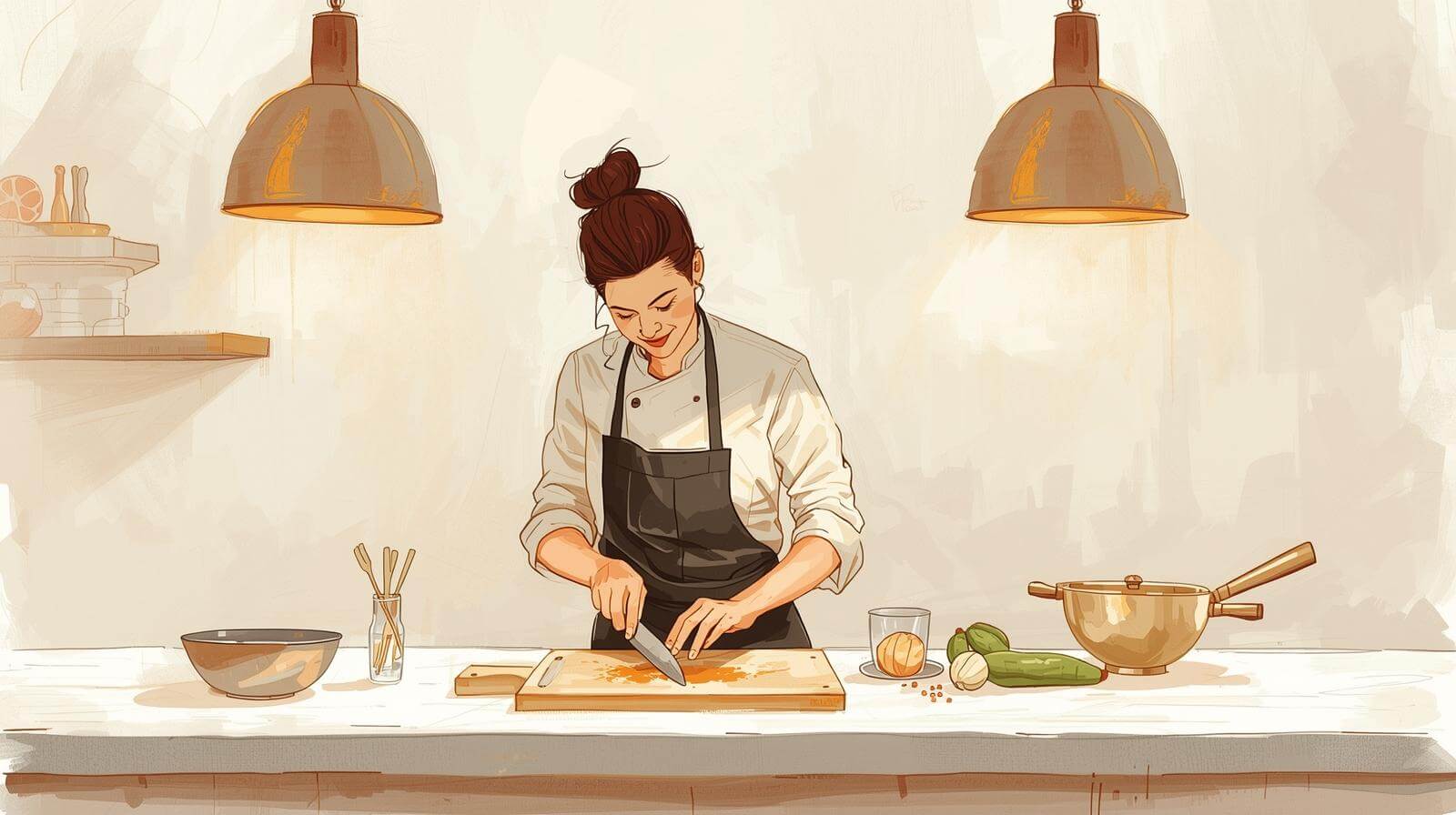
Every chef begins with the basics. Strong foundational skills will help you in every kitchen you enter. Instead of jumping right away into complex recipes, focus on the core techniques that you can use every day.
- Practice knife skills for a few minutes each day using one vegetable and focus on even cuts.
- Learn simple cooking methods such as boiling, sautéing, roasting, and steaming.
- Train yourself to taste food as you cook and adjust seasoning slowly and carefully.
- Study food safety so you understand cleanliness, storage, and proper handling of ingredients.

23 Easy Filipino Vegetable Dishes
Filipino vegetable dishes are some of the simplest and easiest meals you can prepare at home, yet they still deliver comforting and familiar flavors.
Once you feel comfortable with these basics, you will find it easier to follow recipes and create your own dishes with confidence.
Spend Time in a Real Kitchen
You learn the most when you spend time in a real working kitchen. This does not always mean a fine dining restaurant right away. You can start small and still gain valuable experience.
- Assist in a local eatery, café, or catering business.
- Volunteer for community events that prepare food for a crowd.
- Help family and friends who run food stalls or small food businesses.
- Look for short term roles as a kitchen helper or prep cook.
Real kitchen work teaches discipline, speed, teamwork, and the natural rhythm of service. You learn how to move with purpose and how to support other cooks during busy hours.
Learn From Different Cooks and Kitchens
Every cook and every kitchen has something unique to offer. If you pay attention, you will collect techniques, habits, and ideas that you can apply to your own style.
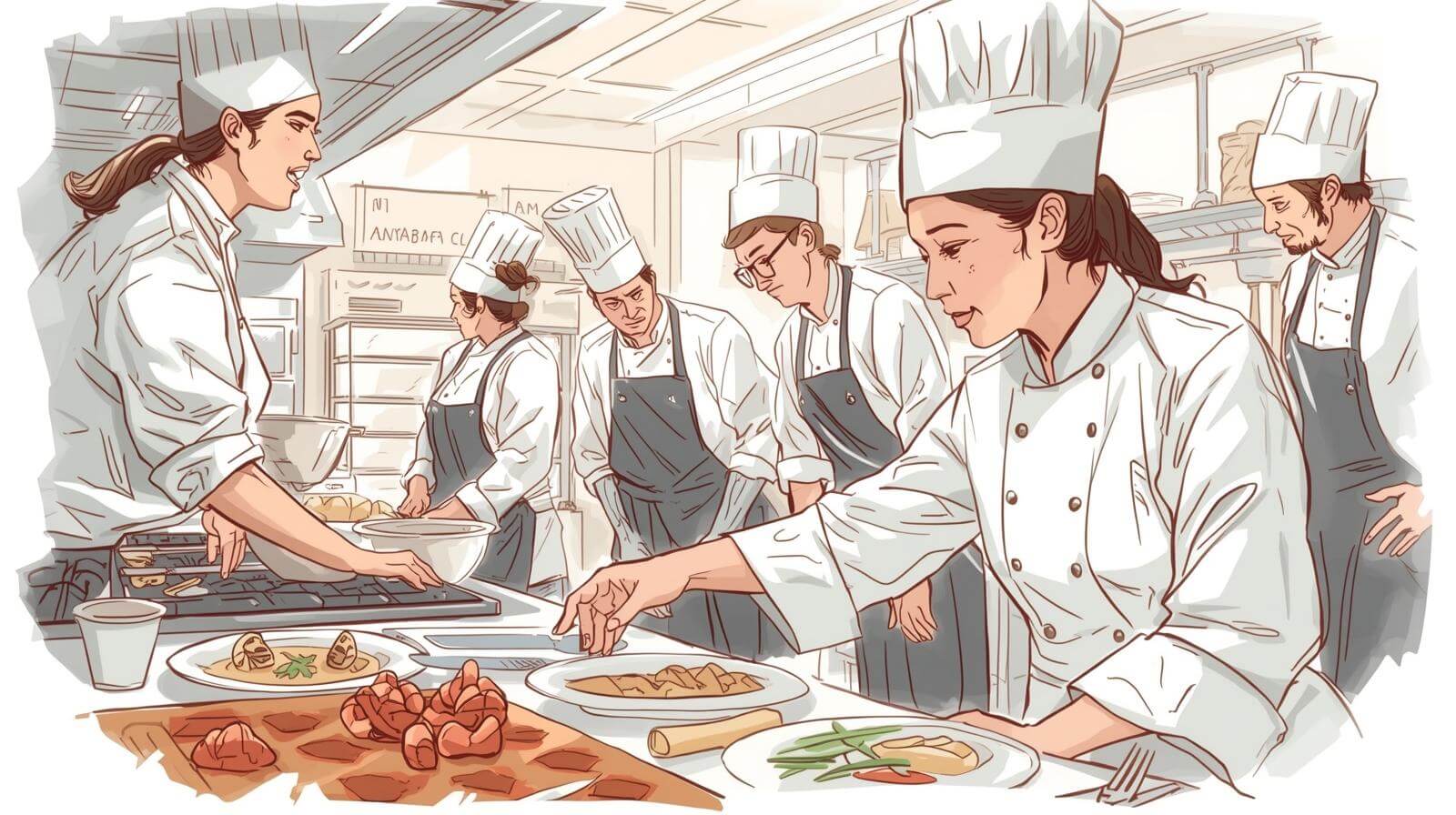
- Observe how different cooks organize their station and handle ingredients.
- Ask respectful questions when time allows and listen to the reasoning behind their methods.
- Study how dishes are plated and presented before they leave the pass.
- Taste dishes from many cuisines and try to identify the main flavors and aromatics.
The more you watch and taste, the richer your cooking vocabulary becomes. This helps you grow faster as you move from beginner to more advanced roles.
Build Confidence Through Repetition
Repetition is one of the most powerful training tools in the kitchen. You become more confident when your hands and eyes know what to do without hesitation.

- Cook the same basic dish several times in one week and compare the result each time.
- Time yourself during prep work to see if you can become faster without losing accuracy.
- Choose one technique for the week such as sautéing or roasting and focus on it.
- Keep a simple cooking notebook where you write what worked and what you want to improve.
Small improvements add up. Over time you will notice that tasks which once felt difficult now feel natural and easy to repeat.
Develop the Right Mindset for Kitchen Life
Skill is important, but mindset often decides who grows and who gives up. The kitchen can be busy and demanding, and the right attitude helps you stay steady.

- Stay humble and accept correction from more experienced cooks.
- Arrive early, be prepared, and keep your station clean and organized.
- Stay calm when orders begin to pile up and focus on one task at a time.
- Show respect to everyone on the team, from dishwashers to head chefs.
When people see that you work hard, listen well, and support the team, they will be more willing to teach you and trust you with more responsibility.
Train Your Palate
Your sense of taste is one of your most important tools as a chef. You can train it in the same way that you train your knife skills and cooking techniques.
- Taste individual ingredients before you cook with them so you know their natural flavor.
- Notice how salt, acid, sweetness, and bitterness affect a simple soup or sauce.
- Compare the taste of fresh herbs and dried herbs in the same dish.
- Adjust seasoning little by little instead of adding a large amount at once.
As your palate improves, you will be able to fix dishes, balance flavors, and create sauces and marinades with more confidence.
Take Care of Your Body and Energy
Cooking in a professional kitchen is physically demanding. You may stand for long hours, carry heavy pots, and work in a hot environment. Taking care of your body will help you stay in this field for many years.
- Stretch your back, shoulders, and wrists before long cooking sessions.
- Wear proper footwear that supports your feet while you stand.
- Drink water regularly and eat meals that give you steady energy.
- Get enough rest between busy days in the kitchen.
Good health allows you to focus on cooking instead of struggling with constant fatigue or discomfort.
Choose the Learning Path That Fits You
There is no single correct path to becoming a chef. Some people start in culinary school, others learn through apprenticeships or direct kitchen work. What matters is that you keep moving forward and keep improving.
- Culinary schools offer structured classes, kitchen labs, and theory in a classroom setting.
- Apprenticeships mix work in a real kitchen with guided learning from a supervising chef.
- On the job training allows you to learn directly in restaurants as a prep cook or line cook.
- Home practice with serious study can prepare you before you apply to a restaurant or school.
Look at your budget, schedule, and long term goals, then choose the path that feels realistic and sustainable for you.
Avoid Common Beginner Mistakes
New cooks often make the same mistakes. Being aware of them can save you time and frustration.
- Focusing only on recipes without learning the underlying techniques.
- Skipping proper preparation and trying to cook while ingredients are still unorganized.
- Ignoring food safety and cross contamination rules.
- Giving up quickly when the work becomes tiring or repetitive.
Mistakes are normal, but if you learn from them and adjust your habits, you will continue to grow as a cook and future chef.
Create a Simple Practice Routine
A clear routine helps you stay consistent. You do not need expensive ingredients or equipment to train like a future chef. You just need time, focus, and a plan.

- Day One: focus on knife skills and vegetable preparation.
- Day Two: practice one cooking method such as sautéing.
- Day Three: work on seasoning and tasting a basic soup or sauce.
- Day Four: follow a complete recipe from start to finish.
- Day Five: repeat the same recipe and aim for a better result.
- Day Six: read or watch lessons about cooking techniques or kitchen organization.
- Day Seven: rest and review what you learned during the week.
You can repeat and adjust this routine based on your schedule. The important part is to keep moving and keep practicing.
Becoming a chef is a journey that takes time, patience, and consistent effort. Every dish you cook, every shift you complete, and every lesson you learn in the kitchen brings you one step closer to your goal. Stay curious, stay humble, and keep practicing. With passion and steady work, you can build a future where cooking is not only your skill but also your career and source of joy.
mark kevin says
thanks for the tip…,
I’ll keep that in mind.