Sotanghon Guisado Recipe
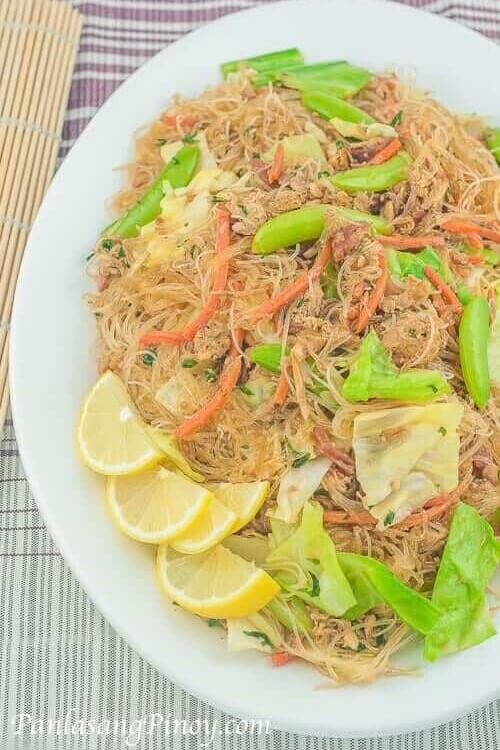
Sotanghon guisado is a Filipino noodle dish made with glass noodles, shredded chicken, carrots, green onions, and plenty of garlic. I cook the noodles in homemade chicken broth with annatto water, which gives them their light orange color. The noodles absorb much of the broth as they cook, becoming tender with shredded chicken and carrots mixed throughout. A squeeze of calamansi just before eating is how I like to finish mine.

I use chicken and fish sauce for this recipe, unlike my pancit sotanghon, which also has pork, Chinese sausage, soy sauce, and oyster sauce. The chicken simmers with celery, onion, and whole peppercorns, and I save that broth for cooking the noodles, so there is no need for chicken powder or bouillon.
Wood ear mushrooms are another ingredient I like adding to sotanghon guisado. I first tried this version at my aunt’s house when I was around 7 years old. At first I did not want to eat it because I had never seen those mushrooms before. I tried it anyway and liked it. The mushrooms keep a little crunch even after cooking, which goes well with the soft noodles, and I still include them whenever I can find them.
What is Sotanghon Guisado?
Guisado comes from gisa, which means to sauté. Sotanghon guisado is cooked much like pancit bihon guisado, pancit canton, and most of the other Filipino pancit on this site, with the noodles finishing in the pan along with the meat, vegetables, and broth instead of being boiled on their own. The noodle is what changes. Sotanghon is traditionally made from mung bean starch, turns translucent when cooked, and has a soft, slightly slippery texture that bihon does not have.
I use annatto water for the color instead of soy sauce, which is what turns most pancit brown. The chicken broth and the fish sauce carry the seasoning, and the noodles come out light orange with the shredded chicken and carrots showing through.
Why This Sotanghon Guisado Recipe Works
- Homemade chicken broth gives the noodles more flavor. The broth comes from simmering the same chicken that goes into the finished dish, along with celery, onion, and whole peppercorns. Cooking the sotanghon in it gives the noodles a richer chicken flavor without any bouillon.
- Do not hold back on the garlic. I use at least 2 tablespoons because the garlic is a big part of the flavor and aroma here. Sautéing it early also gives the oil a good garlic flavor before the chicken goes in.
- Annatto water gives the color, not the taste. The seeds are soaked and strained out, so the noodles turn orange and taste the same as they would without it.
- The broth goes in a little at a time. Sotanghon keeps absorbing liquid as it cooks. Two cups go in first, then more only as the noodles take it, so they end up tender rather than wet or mushy.
Ingredients
- Sotanghon – Dried glass noodles made from mung bean starch. Rice vermicelli sits right next to it on the shelf and looks almost the same, so read the package.
- Chicken – Bone-in thighs or drumsticks make the best broth here and shred easily. Breast works too, but the broth comes out lighter.
- Celery – A rough chop is fine, since it goes into the broth and gets strained out.
- Onion – Half simmers with the chicken and the other half is sautéed with the garlic, so dice it all at once and set half aside.
- Whole peppercorns – A teaspoon in the broth. Leave them whole, because they get strained out with the celery.
- Annatto seeds – Two tablespoons, soaked in warm water. These are the same seeds I use for annatto oil, and rubbing them between your fingers after 15 minutes is what pulls the color out.
- Garlic – Two to three tablespoons, minced. I recommend at least two.
- Green onions – A full cup, chopped. Half cooks with the carrots and half goes on top, where it stays bright.
- Fish sauce – Two tablespoons, which is where the saltiness of the dish comes from. Taste before adding more, because some brands are saltier than others.
- Carrots – Julienned thin, so a few minutes in the broth is enough and they keep a little bite.
- Wood ear mushrooms – Sold dried, often labeled black fungus or tenga ng daga. Buy a small bag, because they expand a lot once soaked.
- Cabbage – Optional, and I add it when I have some. Thin slices go in at the very end so they stay a little crisp.
- Cooking oil – Two tablespoons, enough for the garlic and onion to sauté in before the chicken goes in.
- Calamansi or lemon – Wedges on the side. Calamansi is what I use, and lemon is the closest thing when there is none.
Wood ear mushrooms were not easy for me to find when I first published this recipe, which is why they are optional here. If your Asian store carries dried mushrooms, they are usually on the same shelf as the dried shiitake. Soak them in warm water until they open up and turn soft, trim off any hard bits at the base, then slice them thin.
Vanjo’s Advice
- Soak the noodles only until they bend. They should still feel a little firm when you drain them, because they finish cooking in the broth. Noodles soaked until fully soft break apart when you toss them.
- Keep enough broth for the noodles. Cover the pot while the chicken simmers so less of it cooks off. After straining, set aside 2 cups to start the noodles and keep the rest nearby to add as needed. Add a little hot water if the broth has cooked down too much.
- Taste before adding more fish sauce. The broth has no salt in it, so the 2 tablespoons carry all the seasoning. Some brands are saltier than others, so taste a noodle first.
- Make the broth a day ahead if you want. Keep the strained broth and the shredded chicken covered in the refrigerator. The noodle part then takes about 10 minutes the next day.
- Keep any broth that is left. It is already seasoned with celery and peppercorns, so it makes a good start for a quick chicken soup, and it keeps for up to 3 days in the refrigerator.
How to Cook Sotanghon Guisado
Make the Chicken Broth
- Pour 4 cups of water into a cooking pot and bring it to a boil.
- Add the celery, 3/4 cup of the diced onion, the whole peppercorns, and the chicken.
- Simmer for 40 to 60 minutes, or until the chicken is fully cooked and tender. Remove the chicken and let it cool slightly.
- Separate the meat from the bones and skin, then shred it into bite-sized pieces. Strain the cooking liquid and reserve the broth.
The meat should pull away from the bone easily before you take the chicken out. If you want to check with a thermometer, the thickest part should read 165°F.
Prepare the Noodles and Annatto Water
- Soak the sotanghon in water until softened, then drain and set aside. If using wood ear mushrooms, soak them separately until rehydrated, then drain and slice them thin.
- Soak the annatto seeds in 1/4 cup of warm water for 15 minutes. Rub the seeds gently to release the color, then strain and discard the seeds.
Sauté the Chicken
- Heat the cooking oil in a wok or cooking pot.
- Sauté the garlic and the remaining 3/4 cup of diced onion until the garlic turns lightly golden and the onion softens.
- Add the shredded chicken and sauté for 2 minutes.
- Pour in the annatto water and 2 cups of the reserved chicken broth. Bring to a gentle boil.
Cook the Noodles
- Add the carrots and half of the chopped green onions. Add the wood ear mushrooms at this stage if you are using them. Cook for 3 minutes.
- Add the softened sotanghon and the fish sauce. Toss gently and cook for 2 to 3 minutes, adding more reserved chicken broth a little at a time as needed until the noodles are tender and have absorbed most of the liquid.
- Add the cabbage if you are using it and toss gently for 1 to 2 minutes, or until just tender.
- Transfer to a serving platter and top with the remaining green onions. Serve hot with calamansi or lemon wedges on the side. Share and enjoy!
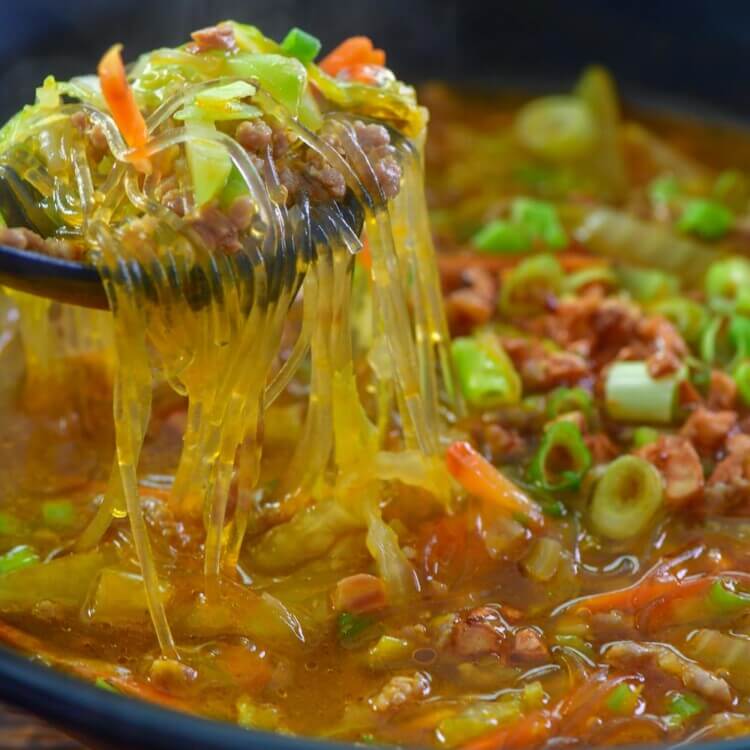
The noodles are done when they turn clear and glossy.
What to Serve with Sotanghon Guisado
- Lumpia – Fried pork lumpia. Pancit and lumpia have gone together at birthdays and gatherings for as long as I can remember.
- Pandesal – Soft bread rolls. I like having pancit with bread on the side.
- Pinoy Fried Chicken – Chicken leg quarters rubbed with lemon, salt, pepper, and garlic, then pan fried without breading.
Storage
- Refrigerator: Keeps up to 3 days in a covered container. The noodles soak up whatever broth is left as they sit, so add a splash of water or broth when you reheat them.
- Freezer: The finished noodles do not freeze well, because sotanghon turns soft and breaks apart after thawing. You can freeze the shredded chicken and the strained broth in separate containers for up to 2 months and cook the noodles fresh on the day.
- Reheating: A pan over medium heat with a little water or broth works best. Toss until heated through. The microwave works too if you cover the noodles and stir them halfway.
More Sotanghon Recipes
- Pancit Sotanghon na may Hipon – Stir fried sotanghon with shrimp and minced Chinese sausage, seasoned with fish sauce and colored with paprika.
- Sotanghon Overload – Chicken, pork belly, chorizo, and four dozen boiled quail eggs on glass noodles in a soy sauce and oyster sauce base.
- Vegetarian Pancit Sotanghon – Meatless, cooked in vegetable broth with celery, cabbage, carrot, and parsley.
- Sotanghon with Sayote and Giniling – A brothy soup with ground pork and sliced chayote, colored with annatto seeds.
- Chicken Sotanghon Soup – Chicken breast simmered with a chicken cube and bay leaf, with annatto water in the broth and roasted garlic on top.
- Filipino Glass Noodle Soup with Egg – A meatless sotanghon soup topped with hard-boiled eggs and toasted garlic.
Substitutions
- Annatto seeds – Annatto powder works, stirred straight into the broth. Add it a little at a time until the color looks right.
- Wood ear mushrooms – Shiitake mushrooms, dried or fresh, sliced thin. You can also leave the mushrooms out.
- Green onions – Onion leeks, which is what the older version of this recipe used.
- Fish sauce – Soy sauce works, but it turns the noodles brown. Salt keeps the color.
- Sotanghon – Bihon. Soak it the same way and add the broth gradually. It makes a different dish, closer to pancit bihon, but the method holds.
Frequently Asked Questions
Can I use store-bought chicken broth for sotanghon guisado?
Yes. Use cooked, shredded chicken and skip the first phase. Start with 2 cups of broth when the noodles go in and keep more nearby, the same way you would with the homemade broth. Low-sodium broth is the better choice if you can find it, and taste before adding the full 2 tablespoons of fish sauce.
Can I make sotanghon guisado without annatto?
Yes. It is there for color only and has no taste you would miss. The noodles come out pale instead of orange, and everything else stays the same.
What part of the chicken is best for sotanghon guisado?
Bone-in thighs and drumsticks. They give a richer broth than breast, and the meat shreds easily after an hour of simmering. A mix of cuts works too.
Can I add pork or shrimp to sotanghon guisado?
You can. Sauté thinly sliced pork after the garlic and onion and cook it all the way through before the chicken and broth go in. Add peeled shrimp with the carrots and cook until pink and opaque. This recipe uses chicken and fish sauce, while my pancit sotanghon also has pork, Chinese sausage, soy sauce, and oyster sauce.
Is sotanghon guisado gluten free?
It can be. Mung bean sotanghon has no wheat in it, and this recipe uses fish sauce instead of soy sauce. Check the noodle and fish sauce labels for wheat and for cross-contact warnings, and use certified gluten-free products when you are cooking for someone who has to avoid gluten.
Sotanghon guisado is best enjoyed freshly cooked, while the noodles are still tender and moist from the chicken broth. A squeeze of calamansi adds a little sourness that goes well with the garlic and savory chicken. I have always enjoyed pairing pancit with crispy lumpia, and this recipe is no different. The tender noodles and crunchy lumpia make a delicious combination, especially when served together while everything is still warm.
Watch How to Make It

Did you make this? If you snap a photo, please be sure tag us on Instagram at @panlasangpinoy or hashtag #panlasangpinoy so we can see your creations!
Sotanghon Guisado
Ingredients
- 1/2 lb sotanghon glass noodles
- 1 lb chicken bone-in, any cut
- 1 cup celery chopped
- 1 1/2 cups onion diced, divided
- 1 teaspoon whole peppercorns
- 4 cups water
- 2 tablespoons annatto seeds
- 1/4 cup warm water for soaking the annatto seeds
- 2 to 3 tablespoons garlic minced
- 1 cup green onions chopped, divided
- 2 tablespoons fish sauce
- 1/2 cup carrots julienned
- 1/2 cup dried wood ear mushrooms tenga ng daga, rehydrated and thinly sliced (optional)
- 1 cup cabbage thinly sliced (optional)
- 2 tablespoons cooking oil
- calamansi or lemon wedges for serving
Equipment
- 1 Cooking pot For simmering the chicken and making the broth
- 1 Wok A wide pot also works for tossing the noodles
- 1 Strainer For the broth and the annatto water
Instructions
- Pour 4 cups of water into a cooking pot and bring it to a boil.4 cups water
- Add the celery, 3/4 cup of the diced onion, the whole peppercorns, and the chicken.1 cup celery, 1 1/2 cups onion, 1 teaspoon whole peppercorns, 1 lb chicken
- Simmer for 40 to 60 minutes, or until the chicken is fully cooked and tender. Remove the chicken and let it cool slightly.1 lb chicken
- Separate the chicken meat from the bones and skin. Shred the meat into bite-sized pieces and set aside.1 lb chicken
- Strain the cooking liquid and reserve the chicken broth.
- Soak the sotanghon noodles in water until softened. Drain and set aside. If using wood ear mushrooms, soak them separately until rehydrated, then drain and slice them thinly.1/2 lb sotanghon, 1/2 cup dried wood ear mushrooms
- Soak the annatto seeds in 1/4 cup of warm water for 15 minutes. Rub the seeds gently to release their color, then strain and discard the seeds.2 tablespoons annatto seeds, 1/4 cup warm water
- Heat the cooking oil in a wok or cooking pot.2 tablespoons cooking oil
- Sauté the garlic and the remaining 3/4 cup of diced onion until the garlic turns lightly golden and the onion softens.2 to 3 tablespoons garlic, 1 1/2 cups onion
- Add the shredded chicken and sauté for 2 minutes.1 lb chicken
- Pour in the annatto water and 2 cups of the reserved chicken broth. Bring to a gentle boil.2 tablespoons annatto seeds
- Add the carrots and half of the chopped green onions. If using wood ear mushrooms, add them at this stage. Cook for 3 minutes.1/2 cup carrots, 1 cup green onions, 1/2 cup dried wood ear mushrooms
- Add the softened sotanghon noodles and the fish sauce. Toss gently and cook for 2 to 3 minutes, adding more of the reserved chicken broth a little at a time as needed, until the noodles are tender and have absorbed most of the liquid.1/2 lb sotanghon, 2 tablespoons fish sauce
- If using cabbage, add it and toss gently for 1 to 2 minutes, or until just tender.1 cup cabbage
- Transfer to a serving platter and garnish with the remaining green onions. Serve hot with calamansi or lemon wedges on the side. Share and enjoy!1 cup green onions, calamansi or lemon wedges

Beth Ann says
Can I substitute spring onions for the onion leeks?
Vanjo Merano says
Yes, you may 🙂
Michelle says
I don’t know if I can get annatto from where I live. If I remove this, will the taste change? This is just for coloring right?
Tanya says
What you put in there are green onions not leeks. :-p
Victoria says
I am a fan of your page. 🙂
melisa jane juyal says
Hi Kuya,
Im so so much addicted into cooking n super lab ko mga recipe mo.I hope pguwi me ng Pnas i could grab ur cook book…LAb ur fud,so simple to understand!!!Im a FAN of PANLASANG PINOy!!!
Panlasang Pinoy says
Hi Melisa, thanks for visiting. I hope to see you around.
mary grace magdales says
thanks a lot for the recipe it help a lot.. more power
rowina a. de leon says
how do you make annato water
Jen says
I’ve been watching your videos at you tube. It’s a great help especially with those people like me who are starting to learn how to cook. I’m enjoying it much,I think I’m going to try to cook this tom for my dadi 🙂 BTW, do you have hard copies of you recipe’s? Where can I find it?
Liz says
what is the difference of pancit malabon and pancit luglug ?
Ka benjie says
Sotanghon noodle is made from “munggo beans flour”, it is not rice noodles
Panlasang Pinoy says
You’re welcome , Hazel.