Kimchi Adobo Fried Rice
I started eating kimchi in my late teens and eventually began using it in some of the food I cooked at home. That is how this Kimchi Adobo Fried Rice came about. Instead of pork belly or Spam, this version uses leftover pork adobo, chopped into small pieces and crisped in butter before the rest of the ingredients go in. It makes a good lunch for me, especially with a fried egg on top and the yolk still soft.
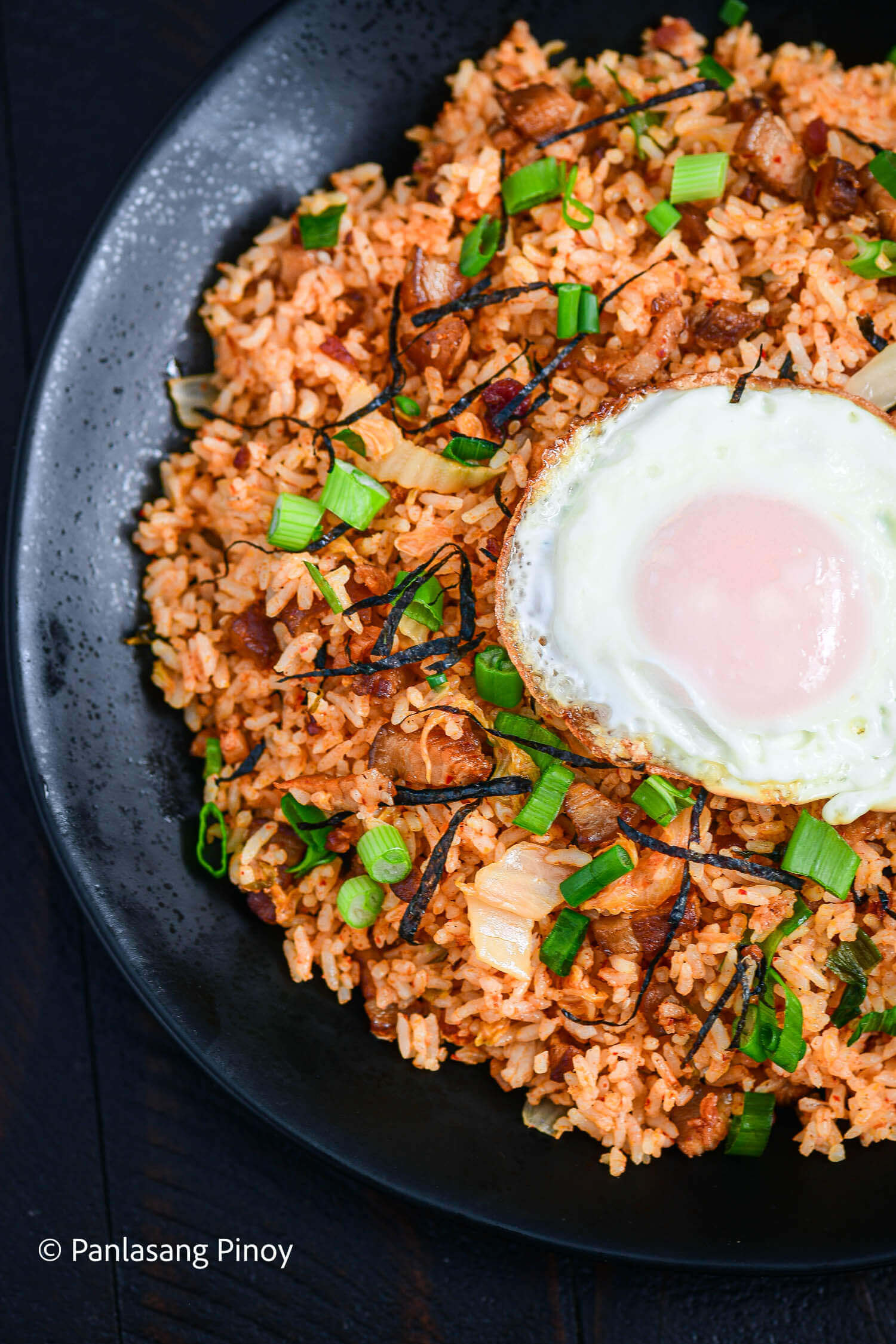
Older kimchi works better here because it has a stronger sour taste. A jar that has been open for two or three weeks also tends to cook down with less water, which helps when making fried rice. That extra sourness balances the richness from the butter, bacon bits, chicharon, and adobo. With all of those ingredients in the wok, I consider this a complete meal rather than a side dish. For something simpler, try my Simple Kimchi Fried Rice made with kimchi, rice, and the two oils.
The adobo goes into the butter first so the edges have time to crisp. Once the kimchi and its juice are added, more moisture gets into the wok and browning becomes harder. This is why I make sure anything that needs some color goes in early. For more heat, add a second tablespoon of gochujang together with the kimchi.
What is Kimchi Adobo Fried Rice?
Kimchi Adobo Fried Rice is a Filipino version of Korean kimchi fried rice, made with day-old white rice stir-fried with chopped kimchi, kimchi juice, and gochujang, then loaded with leftover pork adobo, bacon bits, crushed chicharon, and nori strips. I finish mine with a fried egg on top.
Koreans call the original kimchi bokkeumbap. Bap means rice, which is why the word also turns up in bibimbap and kimbap, and bokkeum means stir fried. Kimchi bokkeumbap is also a practical way to use older, more fermented kimchi. That kimchi also gets cooked into stew, pancakes, and rice like this.
The Filipino part is the meat. Adobo is already cooked with soy sauce and vinegar, so it works well with sour kimchi without tasting out of place. My Adobo Rice uses the same leftover meat with garlic and oyster sauce and no kimchi at all, and sinangag is the plain garlic rice underneath both of them. Using adobo here makes sense in a Filipino kitchen for a simple reason. The adobo and the rice are usually already there from the night before.
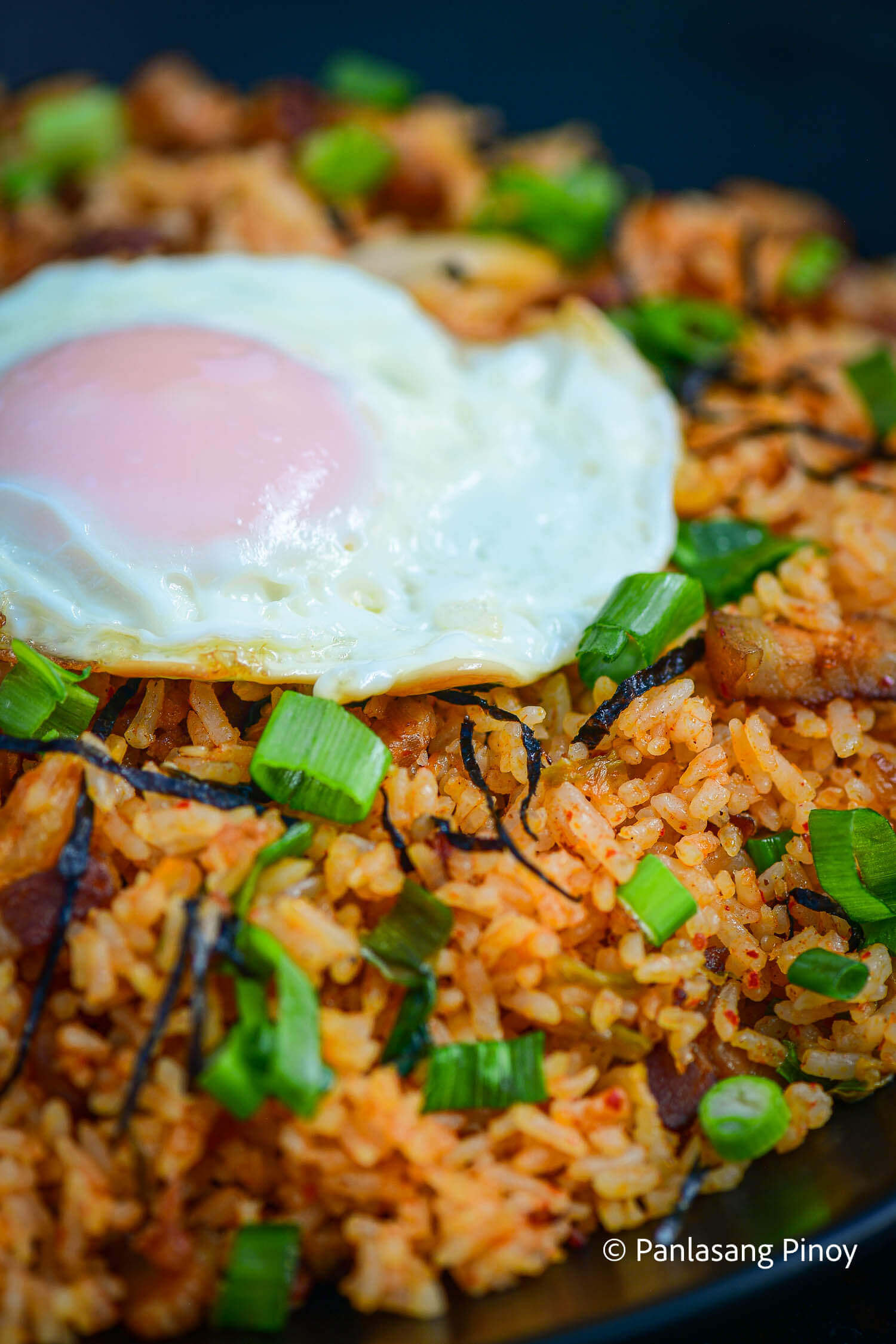
Ingredients
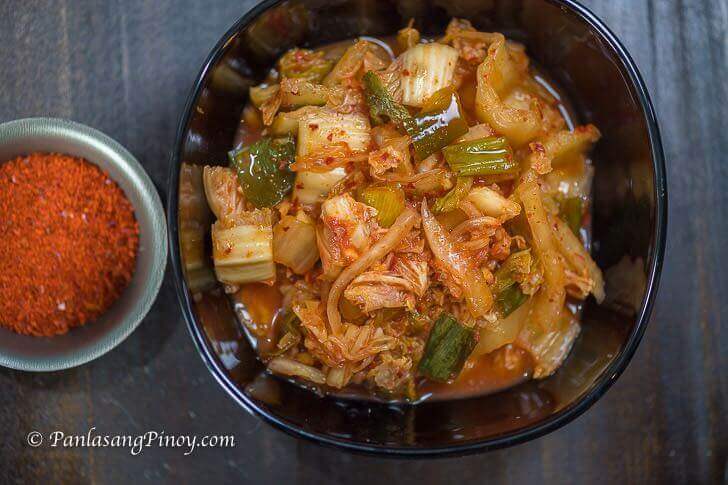
- Kimchi – Chop it small so it spreads evenly through four cups of rice. You can also make the kimchi at home, which lets you decide how long it ferments before you use it here.
- Kimchi juice – The liquid sitting at the bottom of the jar. Three tablespoons is enough for this batch, and it goes in after the rice has already fried for a few minutes.
- Gochujang – Korean fermented chili paste, thick and a little sweet. One tablespoon deepens the color of the rice and gives a heat that sits behind the sourness. No gochujang on hand? See the substitutions below.
- Pork adobo – Leftover adobo from the day before, chopped into small pieces. If the container still has sauce in it, bring a spoonful of that along with the meat.
- Leftover white rice – Cold from the fridge. Break the clumps with your hands before it goes into the wok. Black, brown, and red rice all work at the same four cups.
- Bacon bits – The cooked, crumbled kind. A quarter cup spreads enough bacon through the rice without making it greasy.
- Chicharon – Crush it just before you use it. Chicharon crushed in advance goes soft in its own bag.
- Nori strips – The seasoned seaweed strips sold for rice bowls. They go in during the last minute so they still have some bite.
- Sesame oil – Use toasted sesame oil, the dark one. Two teaspoons is plenty, and it belongs near the end of cooking rather than at the start.
- Sesame seeds – Toasted white seeds. They go in with the sesame oil.
- Butter – This is what the adobo crisps in. I use salted butter and then hold back on any extra salt at the end.
- Garlic infused oil – It raises the smoke point of the butter so the pork can crisp without the milk solids burning.
- Green onions – Sliced thin and added in the last minute with the nori.
- Egg – One egg fried on its own for the top. Cook a second one if you are splitting this between two big appetites.
For this recipe I use napa cabbage kimchi that has had enough time to turn noticeably sour. A fresh jar is crunchy and only mildly tangy. Korean groceries sell the aged kind by the tub, and most large supermarkets now carry kimchi in the chilled section near the tofu. If all you can find is a new jar, leave it on the counter for a day before putting it back in the fridge, which moves the fermentation along.
Equipment
- Wok – The sloped sides let you toss four cups of rice without throwing half of it onto the stove. A wide skillet works if you cook in two batches.
- Flat wooden spatula – Better than a spoon for pressing clumps of cold rice apart against the side of the wok.
Vanjo’s Advice
- Squeeze the kimchi before you chop it. Lift the kimchi out of the jar, press it lightly over a bowl, and measure your three tablespoons of juice from what comes out. Kimchi that goes into the wok soaking wet steams the pork instead of letting it fry.
- Fry the rice dry for the full three minutes before the juice goes in. That is the window where the grains separate and pick up heat, and liquid added early is what turns a batch sticky. If it has already gone soft, spread the rice flat across the wok, turn the flame up, and leave it alone a minute at a time until the moisture cooks off.
- Hold the sesame oil until the end. Toasted sesame oil loses most of its aroma over high heat. Poured in with the kimchi juice near the finish, you can still smell it when the plate reaches the table.
- Keep the chicharon and nori for the last minute. Both soften the moment they meet hot rice. One minute of tossing is enough to warm them and still leave some crunch.
- Cook in two batches if your wok is small. Four cups of rice in a crowded pan sits and steams. Two smaller rounds take the same total time and come out drier.
- Cool the rice properly the night before. Rice left out on the counter for hours is a food safety problem, not just a texture one. My guide on how to cook rice covers the cooling and storage part, and rice chilled that way fries up drier anyway.
- Fry the egg in a separate pan. I serve this with a fried egg every time, and cooking it on its own keeps you in control of the yolk. I like mine soft, though a runny yolk needs fresh, well-chilled eggs. Cook the egg until the yolk is firm, about 160°F, if you are serving young children, older adults, or anyone pregnant.
How to Make Kimchi Fried Rice with Pork
Crisp the pork first, then build the rice around it. The wok work takes about ten minutes from start to finish, so chop the kimchi, the adobo, and the green onions before you turn on the heat.
Crisp the Pork Adobo
- Melt the butter in a wok over medium heat, then pour in the garlic infused oil.
- Once the bubbles subside, add the chopped pork adobo. Cook until the outer part turns slightly crisp.
Wait for the bubbling to stop before the pork goes in. That bubbling is water leaving the butter, and meat dropped into it will poach rather than fry. Give the pieces a minute to sit still against the wok before you start moving them around.
Cook the Kimchi and Rice
- Add the chopped kimchi and the gochujang. Continue cooking for 2 minutes.
- Put the leftover rice into the wok. Stir fry for 3 minutes, pressing the clumps apart as you go.
- Pour in the kimchi juice, then add the sesame oil and sesame seeds. Cook for 2 minutes.
- Add the bacon bits and crushed chicharon, followed by the nori strips and green onions. Cook for 1 minute.
The gochujang needs those two minutes with the kimchi before the rice arrives. Straight from the tub it is a thick paste, and it will streak the rice red in spots instead of coloring it evenly. Two minutes in hot fat loosens it enough to coat every grain.
Finish and Serve
- Transfer the fried rice to a serving plate and top it with the fried egg.
- Serve while the rice is still hot.
Transfer the rice to the plate right away. If it sits in the hot wok, the bottom continues to dry out and the chicharon starts to soften from the steam.
What to Serve with Kimchi Adobo Fried Rice
- Cucumber Salad – Cold and sharp, which is what you want next to the gochujang.
- Salted Egg and Tomato Salad – The tomato cuts the fat from the butter and the chicharon.
- Extra kimchi straight from the jar – A small saucer on the side for anyone who wants it sourer than the rice.
- Roasted seaweed sheets – Scoop the rice into a sheet and eat it by hand. This works well for leftovers the next day.
- Iced water or cold barley tea – Something cold helps, since the heat from the gochujang builds as you eat.
Storage
Kimchi Adobo Fried Rice keeps for a few days, but the chicharon and nori do not survive the fridge, so add fresh ones when you reheat.
- Refrigerator: Cool the rice first, then store it in an airtight container for up to 3 days. Get it into the fridge within 2 hours of cooking.
- Freezer: Pack it flat in a zip-top bag for up to 1 month. Freeze the rice without the egg and cook a fresh one when you reheat.
- Reheating: Use a hot dry pan rather than the microwave, which softens the grains. Toss for 3 to 4 minutes until the rice is steaming through, then crush new chicharon over the top.
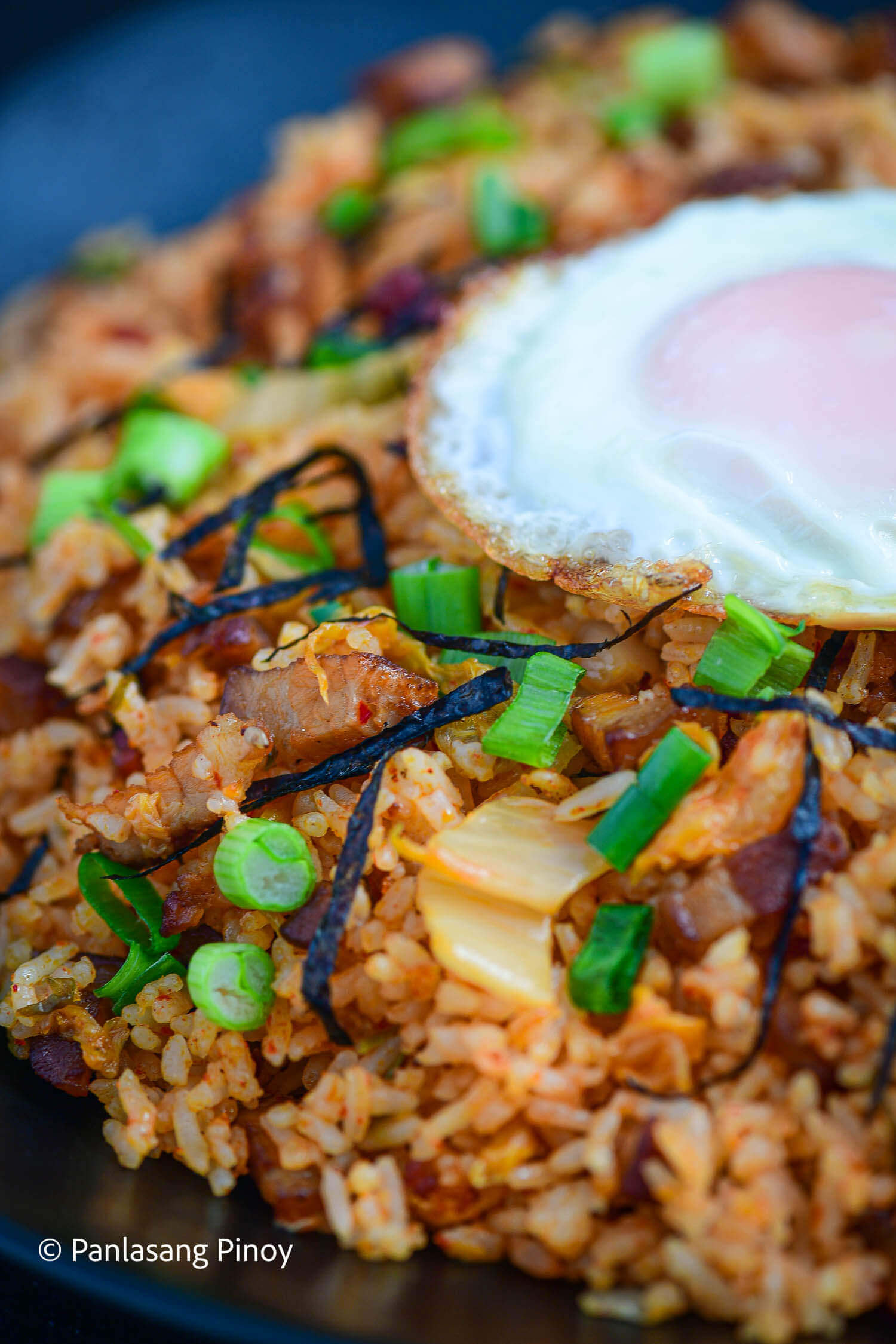
More Fried Rice Recipes
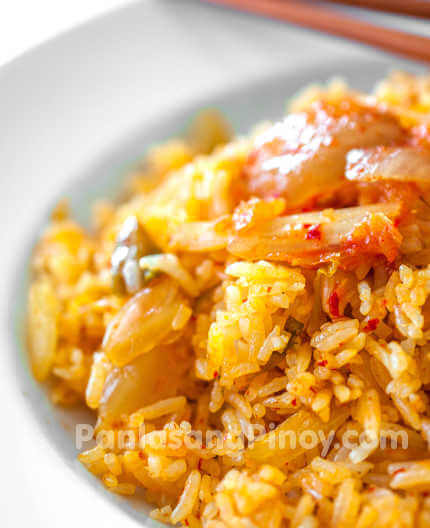
- Yang Chow Fried Rice – Shrimp, char siu, and egg in one pan, and the one I cook when there is no leftover meat to work with.
- Tocino Fried Rice – Sweet cured pork stirred through garlic rice with peas and carrots.
- Tinapa Fried Rice – Smoked fish flakes with salted egg and tomato.
- Tuyo Fried Rice – Dried salted fish fried into the rice for a saltier, plainer breakfast plate.
- Filipino Pork Fried Rice – Marinated pork tossed with garlic rice when you are cooking the meat fresh instead of using leftovers.
- Vegetable Fried Rice – No meat at all, for the mornings when the fridge is bare.
Substitutions
- Pork adobo – Chicken adobo works the same way, though the taste is lighter, so chop it fine and bring a spoon of its sauce with it. Crispy adobo flakes are the other option, and since they are already crisp you can add them at the end with the bacon bits instead of at the start.
- Gochujang – Nothing matches it exactly. The closest is a teaspoon of gochugaru mixed with a teaspoon of miso and a pinch of sugar, stirred into the kimchi before it hits the wok. Sriracha turns the rice sweeter and thinner, so use half the amount if that is what you have.
- Chicharon – Plain pork rinds crushed the same way. Skip it if you want, though the plate loses its crunch.
- Nori strips – Furikake gives you the same seaweed flavor plus more sesame. A sheet of roasted seaweed cut with scissors also works.
- Bacon bits – Three strips of bacon cooked crisp and chopped. Drain them well, since the butter is already carrying enough fat.
- Butter – Cooking oil on its own is fine and you can skip the garlic infused oil then. The pork browns faster without butter, so watch it more closely.
Frequently Asked Questions
Can I use Spam instead of pork adobo?
You can. Cut the Spam into small cubes and fry them in the butter until the edges brown, the same way the adobo goes in. Spam is saltier and sweeter than adobo and it does not carry any vinegar, so the rice ends up leaning on the kimchi alone for sourness. A little extra kimchi juice makes up for that.
Do I need gochujang for this recipe?
No. Kimchi already has chili in it, so the rice comes out mild but still good without gochujang. What you lose is the deeper red color and the slow heat that gochujang adds. I would add it if you can find it, and one tablespoon is enough to notice.
Do I have to add the chicharon and nori?
Neither one is required. The rice already has plenty of flavor before the chicharon and nori go in. Those last additions are mostly there for texture. What I would keep is the chicharon, because it is the only crunch on the plate once the rice is soft and the egg is on top.
How many calories are in a serving?
Check the nutrition panel on the recipe card below for the current figure. Most of the calories here come from the four cups of rice, the butter, and the pork adobo, so this is a heavy plate rather than a light one. If you want it lighter, cut the butter to one tablespoon, leave out the bacon bits, and serve smaller portions with a vegetable side.
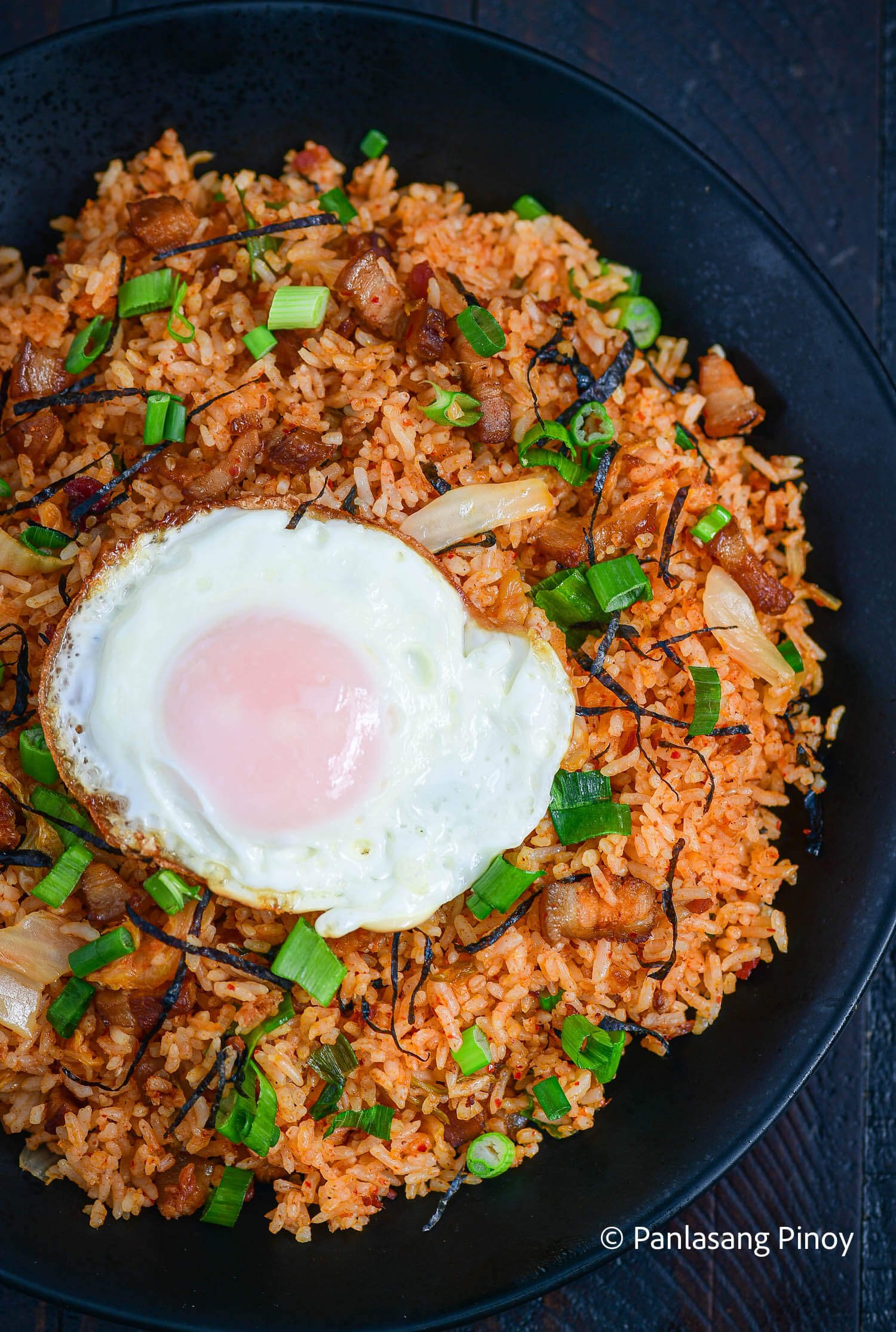
Kimchi Adobo Fried Rice is a good way to give leftover adobo a completely different character. The sour kimchi, crisp pieces of por
Watch How to Make It

Did you make this? If you snap a photo, please be sure tag us on Instagram at @panlasangpinoy or hashtag #panlasangpinoy so we can see your creations!
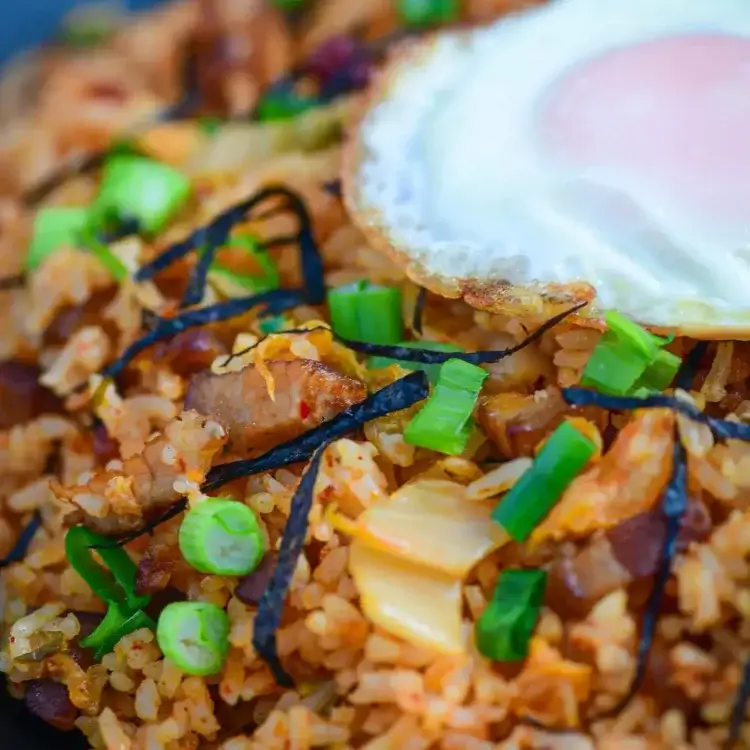
Kimchi Adobo Fried Rice
Ingredients
- 1 cup kimchi chopped
- 1 piece egg fried, for topping
- 4 cups cooked white rice day-old, leftover
- 3 tablespoons kimchi juice from the jar
- 1 tablespoon gochujang
- 3/4 cup pork adobo chopped
- 1/4 cup bacon bits cooked
- 2 teaspoons sesame oil toasted
- 2 teaspoons sesame seeds toasted
- 1/4 cup chicharon crushed
- 2 tablespoons nori strips
- 2 tablespoons green onion chopped
- 2 1/2 tablespoons butter
- 2 tablespoons garlic-infused oil
Equipment
- 1 Wok The sloped sides let you toss four cups of rice without losing half of it to the stove.
- 1 Small frying pan For frying the egg separately so you stay in control of the yolk.
- 1 Flat wooden spatula Better than a spoon for pressing clumps of cold rice apart against the side of the wok.
Instructions
- Melt the butter in a wok, then add the garlic-infused oil.2 1/2 tablespoons butter, 2 tablespoons garlic-infused oil
- Once the bubbles subside, add the pork adobo. Cook until the outer part becomes slightly crispy.3/4 cup pork adobo
- Add the chopped kimchi and the gochujang. Continue cooking for 2 minutes.1 cup kimchi, 1 tablespoon gochujang
- Put the leftover rice into the wok. Stir-fry for 3 minutes.4 cups cooked white rice
- Pour in the kimchi juice, then add the sesame oil and sesame seeds. Cook for 2 minutes.3 tablespoons kimchi juice, 2 teaspoons sesame oil, 2 teaspoons sesame seeds
- Add the bacon bits and the crushed chicharon, followed by the nori strips and green onions. Cook for 1 minute.1/4 cup bacon bits, 1/4 cup chicharon, 2 tablespoons nori strips, 2 tablespoons green onion
- Transfer to a serving plate and top it with the fried egg.1 piece egg
- Serve. Share and enjoy!
Rosalinda Nuñez says
Sarap!iba talaga ang pinoy
Nick S. says
I’ve cooked Korean kinchi friend rice and adobo many times. This looks awesome. I can wait to try this!