Pancit Sotanghon
This pancit sotanghon has a generous amount of shredded baked chicken, pork, and Chinese sausage mixed with glass noodles and vegetables. The noodles take in the chicken broth, soy sauce, and oyster sauce as they cook and come out glossy and savory. The Chinese sausage is slightly sweet. The carrots, snap peas, and cabbage go in last and still have some crunch when you eat them.
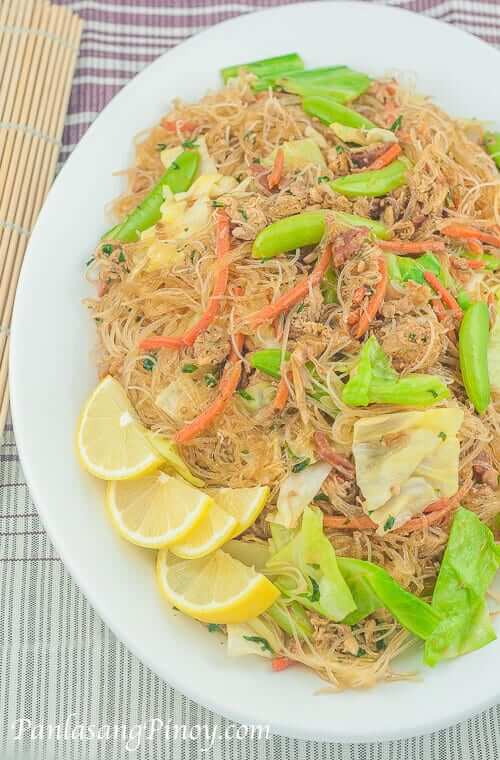
This is one of the pancit varieties my mom usually made when we were kids. I remember having it with a side of sliced tasty bread, and for some reason these two go really well together. I also like squeezing a good amount of calamansi over my plate because it makes the noodles taste fresher.
When I make this version, I blanch the vegetables separately and add them toward the end, so the carrots, snap peas, and cabbage stay crisp. I prepare the noodles much like I do for my pancit canton. I soak them first, then let them finish cooking in the pan with the broth and sauce.
What is Pancit Sotanghon?
Sotanghon are glass noodles made from mung bean starch. They look like stiff white bundles when dry and turn clear once cooked. Pancit sotanghon is one of the most common kinds of Filipino pancit, along with pancit bihon, made with rice noodles, and pancit canton, made with wheat flour noodles. You can use similar meat and vegetables with all three, but each gives the finished pancit a different texture. Bihon stays opaque and tender, canton has a firmer bite, and sotanghon becomes clear and slippery when cooked.
My sotanghon guisado uses the same noodles, but it is a different dish. That one is chicken only, colored with annatto water and seasoned with fish sauce. This one has chicken, Chinese sausage, and pork, and the color comes from soy sauce.
Why This Pancit Sotanghon Recipe Works
- The noodles are soaked, not boiled – Ten minutes in water softens them enough to bend. The actual cooking happens in the pan, where the broth and sauce are.
- The broth goes in two parts – Start with 3/4 cup of broth and add the remaining 1/2 cup gradually as the noodles cook. Different brands of sotanghon absorb different amounts, so check the noodles before adding more.
- The vegetables are blanched and shocked in ice water – One to two minutes in boiling water, then straight into ice water. They keep their color and crunch, and the 3 minutes at the end only heats them through.
Pancit Sotanghon Ingredients
- Sotanghon noodles – Look for dried glass noodles made from mung bean starch, sold in bundles at Asian stores. Check the label, because some packs labeled vermicelli are rice noodles and cook differently.
- Baked chicken – Half a chicken, meat pulled off the bone and shredded. Leftover roast chicken or a rotisserie chicken from the supermarket works the same way.
- Chinese sausage – Slightly sweet and firm. Chop it small so a few pieces end up in every serving. It is usually sold vacuum packed in the refrigerated section of Asian stores.
- Pork – Thin slices, chopped into small pieces so they cook quickly alongside the sausage and chicken.
- Flat-leaf parsley – Chopped.
- Soy sauce – Regular soy sauce. Most of the color comes from it.
- Oyster sauce – One tablespoon. It makes the sauce slightly sweeter and a little thicker than soy sauce alone.
- Carrot, snap peas, and cabbage – Julienne the carrot and chop the cabbage into pieces about the same size so they blanch evenly. Snap peas can stay whole.
- Yellow onion and garlic – Sliced onion and crushed garlic.
- Unsalted chicken broth – The soy sauce, oyster sauce, and Chinese sausage are already salty, so unsalted broth keeps the dish from getting too salty before you have had a chance to taste it.
- Cooking oil – Use 3 tablespoons to sauté the garlic, onion, sausage, and pork.
- Salt – Add to taste after the noodles have absorbed the sauce.
- Ground black pepper – Add to taste toward the end of cooking.
Vanjo’s Advice
- Stop soaking while the noodles still feel firm. They should bend and be pliable, not soft all the way through, since they still have to cook in the pan. Fully softened noodles break apart and clump once the broth goes in.
- Taste before adding any salt. The soy sauce, oyster sauce, and Chinese sausage carry plenty of salt between them. Most of the time a little ground black pepper is all the pan needs.
- Toss with two spatulas, or tongs, and lift from underneath. Glass noodles are slippery and long. Lifting and folding mixes them with the meat without tearing the strands.
How to Cook Pancit Sotanghon
I group the ingredients before I start: vegetables in one bowl, meat in another, and the soaked noodles in a third. It saves time once the pan is hot, because after the garlic and onion go in, everything else follows quickly.
Soak the Noodles and Blanch the Vegetables
- Pour 6 cups of water into a large mixing bowl. Add the sotanghon noodles and soak for 10 minutes, or until slightly softened. Drain and set aside.
- Bring 4 cups of water to a boil. Add the carrots and blanch for 1 minute.
- Add the snap peas and cabbage and continue blanching for another minute.
- Transfer the vegetables to a bowl of ice water to stop the cooking. Drain and set aside.
Have the bowl of ice water ready before the vegetables go into the pot. Cabbage keeps cooking after it is drained, and you want it in the cold water right away.
Saute the Meat and Build the Sauce
- Heat a wok or wide pan over medium heat. Pour in the cooking oil.
- Add the garlic and onion. Saute until the onion softens.
- Add the Chinese sausage, pork, and shredded baked chicken. Stir-fry for 5 minutes, or until the pork is fully cooked.
- Add the chopped parsley, soy sauce, and oyster sauce. Pour in 3/4 cup of chicken broth. Stir and bring to a boil.
Cook the Noodles
- Add the drained sotanghon noodles. Toss gently until they are evenly combined with the meat and seasonings.
- Gradually add the remaining 1/2 cup of chicken broth as needed, letting the noodles absorb the liquid until they are tender.
Bite a strand before the vegetables go in. It should be tender all the way through with no firm center, and the noodles should look clear rather than white. A little liquid left in the pan is fine; the vegetables will cook it off.
Season and Finish
- Season with salt and ground black pepper to taste. Toss gently to distribute the seasonings.
- Add the blanched carrots, snap peas, and cabbage. Toss gently and continue cooking for 3 minutes.
- Transfer the pancit sotanghon to a serving platter.
- Serve hot with calamansi or lemon on the side. Share and enjoy!
What to Serve with Pancit Sotanghon
- Tasty bread – Sliced white loaf bread, the way I had it as a kid.
- Lumpia – Crispy fried pork lumpia. I also like having pancit with a few pieces of lumpia dipped in sweet and sour sauce.
- Calamansi – Halved, in a small bowl on the table so everyone can squeeze their own. Lemon wedges work too.
- Steamed rice – For a bigger meal. The sauce on the noodles is enough to go with plain rice.
Storage
- Refrigerator: Up to 3 days in a covered container. The noodles stick together once cold and loosen up again when reheated with a little liquid.
- Freezer: Freezing the finished dish is not recommended, since glass noodles and cabbage tend to lose their texture after thawing. The cooked meat and sauce can be frozen on their own for up to 2 months, then thawed and brought back to a boil before fresh noodles and vegetables go in.
- Reheating: In a pan over medium heat with 2 to 3 tablespoons of water or broth, tossing until steaming hot. A covered plate in the microwave also works; stir it halfway through.
More Sotanghon Recipes
- Pancit Sotanghon na may Hipon – Glass noodles with shrimp, Chinese sausage, and paprika, cooked in a fish sauce broth in about 20 minutes.
- Sotanghon Overload – The party version, with chicken, pork belly, chorizo, quail eggs, bell peppers, and toasted garlic on top.
- Vegetarian Pancit Sotanghon – Made with vegetable broth, annatto water, celery, cabbage, and carrots, with no meat or animal products.
- Chicken Sotanghon Soup – The soup version, with the same noodles in a chicken broth colored with annatto water and topped with roasted garlic and scallions.
- Bam-i – The Cebuano pancit that uses canton and sotanghon noodles together in one pan.
Substitutions
- Sotanghon noodles – Bihon works in this recipe, and you end up with something close to my pancit bihon. Follow the soaking time on the package, since it varies by brand. Korean sweet potato glass noodles also work and come out chewier.
- Baked chicken – Rotisserie chicken, leftover roast chicken, or boiled chicken breast, shredded. Raw chicken can be used too, sliced thin and cooked with the pork until no longer pink.
- Chinese sausage – Sliced ham, chopped bacon, or Filipino-style sweet longganisa with the casing removed. Each one changes the flavor, and bacon makes the pan saltier, so go lighter on the soy sauce.
- Oyster sauce – Leave it out. The sauce will be a little thinner and less sweet. If you add more soy sauce to make up for it, taste first, because the dish gets saltier.
- Snap peas – Snow peas or green beans cut into 2-inch pieces. Green beans need another minute in the blanching water.
- Flat-leaf parsley – Chopped celery leaves or kinchay (Chinese celery). Use the same amount.
Frequently Asked Questions
What is the difference between pancit sotanghon and pancit bihon?
The main difference is the noodles. Pancit sotanghon uses glass noodles, which become translucent and slippery when cooked. Pancit bihon uses thin rice noodles that remain opaque and have a different texture. Both can be cooked with meat, vegetables, and seasonings.
What is sotanghon made of?
Sotanghon noodles are traditionally made from mung bean starch and water. They are also called glass noodles or cellophane noodles because they become translucent when cooked. Check the package before buying, since some glass noodles use other starches.
Why did my sotanghon noodles turn mushy?
Usually the soak went too long or too much liquid went in at once. Soak the noodles only until they bend, then add the second half cup of broth gradually and stop once the noodles are tender.
Is pancit sotanghon the same as sotanghon guisado?
Both are stir-fried dishes made with sotanghon noodles, and the names can overlap. My pancit sotanghon combines baked chicken, pork, and Chinese sausage with soy sauce and oyster sauce. My sotanghon guisado recipe uses chicken, annatto water, and fish sauce, giving it a different color and flavor.
Do you need to soak sotanghon before cooking?
For this recipe, soak the noodles in water for about 10 minutes, just until they bend easily but still feel firm. They finish cooking in the pan with the seasoned chicken broth. Avoid soaking them until completely soft because they can become mushy during cooking.
Why does my pancit sotanghon turn mushy?
Sotanghon can turn mushy when it is soaked too long or cooked with too much liquid. Soak the noodles only until pliable, then add the remaining chicken broth gradually as they cook. Stop once the noodles are tender.
Pancit sotanghon is best served while the noodles are still hot and the vegetables have a little crunch. I like having calamansi on the side so everyone can squeeze some over their own plate. My mom used to serve this with sliced tasty bread when we were kids. I still think the two go really well together, and it is worth trying at least once.
Did you make this? If you snap a photo, please be sure tag us on Instagram at @panlasangpinoy or hashtag #panlasangpinoy so we can see your creations!
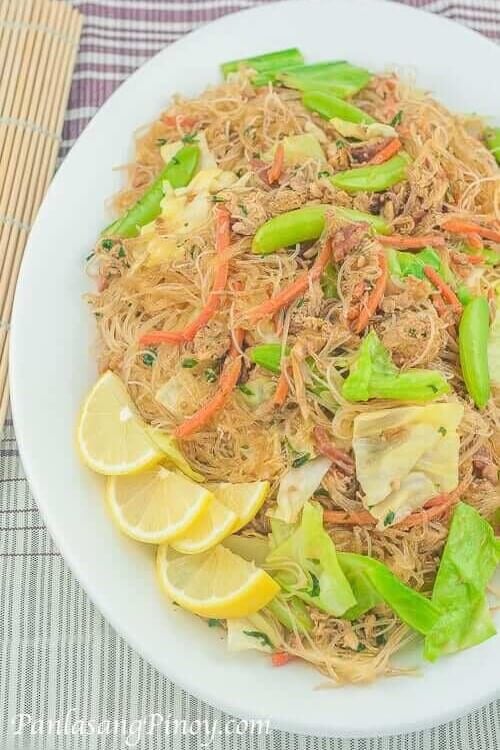
Pancit Sotanghon
Ingredients
- 3/4 lbs sotanghon noodles
- 1/2 baked chicken meat shredded
- 3 pieces Chinese sausages chopped
- 4 oz pork thinly sliced and chopped
- 1/4 cup flat-leaf parsley chopped
- 3 tablespoons soy sauce
- 1 tablespoon oyster sauce
- 1 piece carrot small, julienned
- 15 to 18 pieces snap peas
- 1/2 piece cabbage medium, chopped
- 1 piece yellow onion small, sliced
- 2 cloves garlic crushed
- 3 tablespoons cooking oil
- 1 1/4 cups unsalted chicken broth divided
- salt and ground black pepper to taste
Equipment
- 1 Wok or wide pan Gives the noodles room to be tossed with the meat and vegetables.
- 1 Large mixing bowl For soaking the noodles and for the ice water bath.
Instructions
- Pour 6 cups of water into a large mixing bowl. Add the sotanghon noodles and soak for 10 minutes, or until slightly softened. Drain and set aside.3/4 lbs sotanghon noodles
- Bring 4 cups of water to a boil. Add the carrots and blanch for 1 minute. Add the snap peas and cabbage and continue blanching for another minute. Transfer the vegetables to a bowl of ice water to stop the cooking process. Drain and set aside.1 piece carrot, 15 to 18 pieces snap peas, 1/2 piece cabbage
- Heat a wok or wide pan over medium heat. Pour in the cooking oil.3 tablespoons cooking oil
- Add the garlic and onion. Saute until the onion softens.2 cloves garlic, 1 piece yellow onion
- Add the Chinese sausage, pork, and shredded baked chicken. Stir-fry for 5 minutes, or until the pork is fully cooked.3 pieces Chinese sausages, 4 oz pork, 1/2 baked chicken
- Add the chopped parsley, soy sauce, and oyster sauce. Pour in 3/4 cup of the chicken broth. Stir and bring to a boil.1/4 cup flat-leaf parsley, 3 tablespoons soy sauce, 1 tablespoon oyster sauce, 1 1/4 cups unsalted chicken broth
- Add the drained sotanghon noodles. Toss gently until evenly combined with the meat and seasonings. Gradually add the remaining 1/2 cup of chicken broth as needed, allowing the noodles to absorb the liquid until tender.3/4 lbs sotanghon noodles, 1 1/4 cups unsalted chicken broth
- Season with salt and ground black pepper to taste. Toss gently to distribute the seasonings.salt and ground black pepper
- Add the blanched carrots, snap peas, and cabbage. Toss gently and continue cooking for 3 minutes.1 piece carrot, 15 to 18 pieces snap peas, 1/2 piece cabbage
- Transfer the pancit sotanghon to a serving platter. Serve hot with calamansi or lemon on the side. Share and enjoy!
Notes
Nutrition Information

Zeny vasquez says
I love Panlasang Pimoy recipe
BOGDAN SZPEJANKOWSKI says
I DO LOVE AND ENJOY PINOY COOKING AND THE FOOD TRAY MOST OF THE FOOD WICH I COOK BY MY SELF.