Pork Pata Humba Recipe
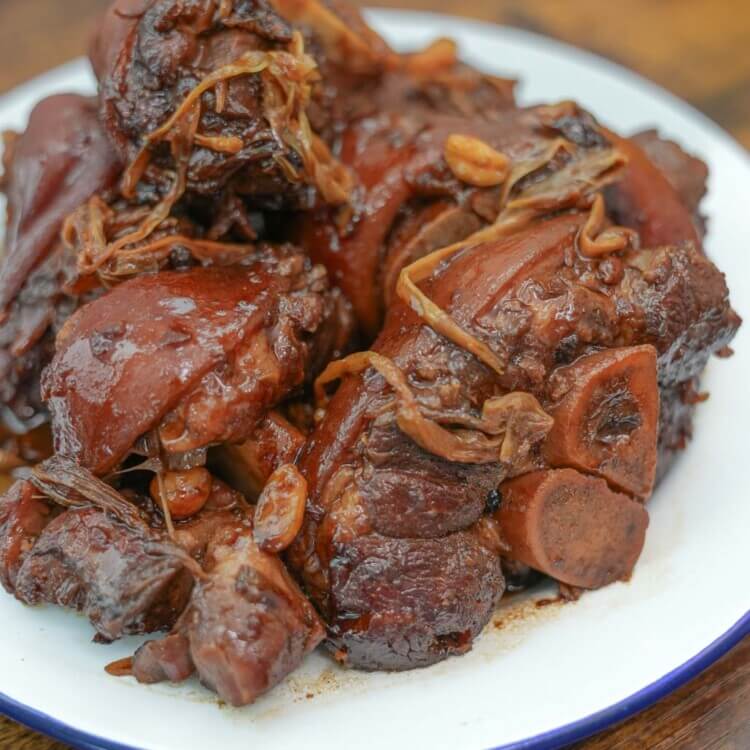
Of all the things I cook with pork hocks, Pata Humba is my favorite. It is the pork hock version of humba, the Visayan braise more commonly made with pork belly. I use the pata for the skin and the connective tissue around the bone. Both soften over a long, slow simmer, and the collagen turns to gelatin, which is what gives the sauce its body. A lean, boneless cut will not thicken the sauce the same way.
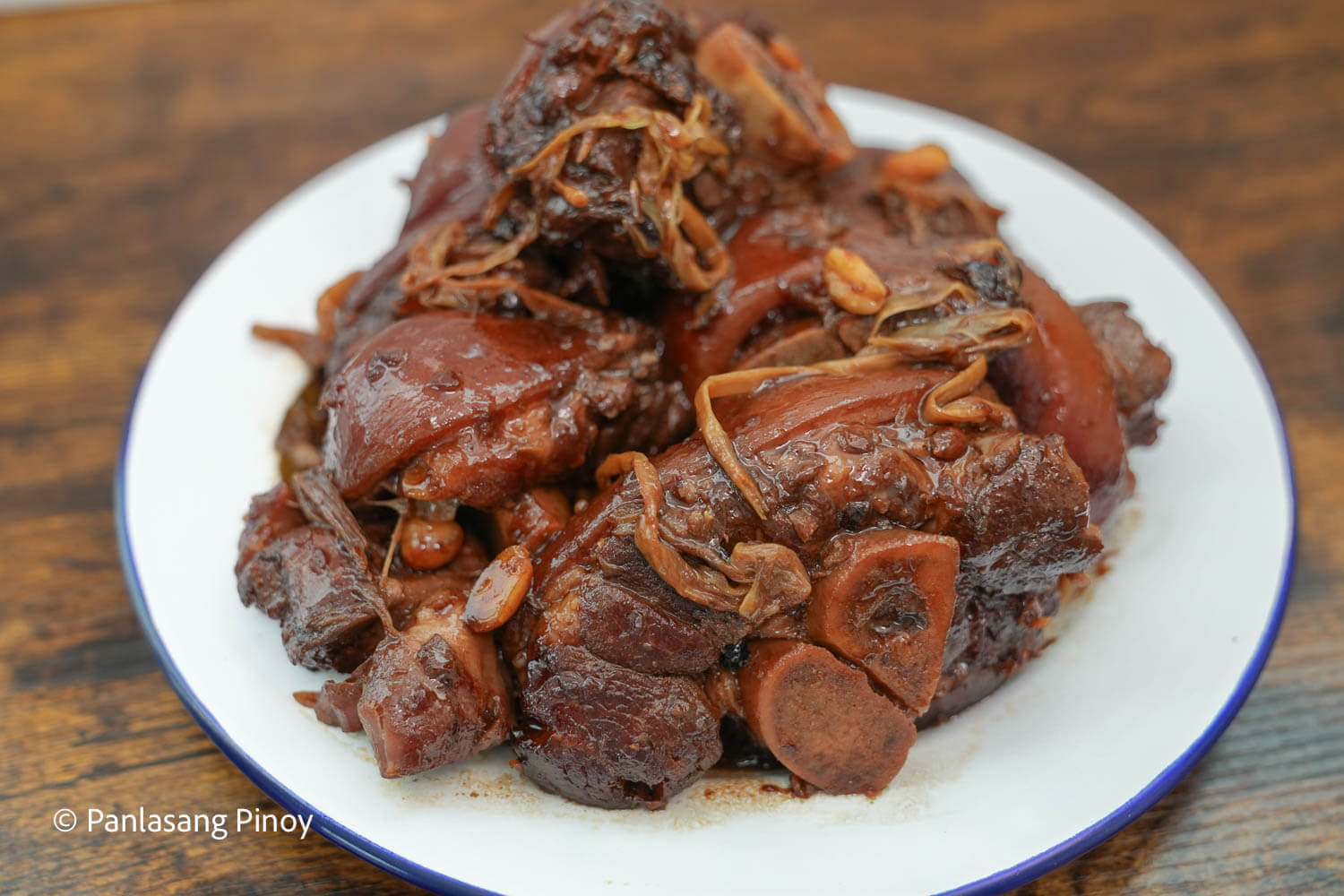
I cook Pata Humba two ways, depending on how much time I have. When I am not in a hurry, I keep the heat low and simmer it for a couple of hours. When I am rushed, I pressure cook the meat and finish the sauce on the stove. Either way, the sauce goes over warm white rice, and that is the part I look forward to. Paksiw na pata uses the same cut, and it also has to simmer long enough for the skin and connective tissue to soften.
The one thing to watch is the sugar. Pineapple juice is already sweet, and the sweetness concentrates as the sauce reduces. Add the brown sugar near the end, and taste as you go.
What is Pata Humba?
Pata Humba is the pork hock version of humba, a Visayan braise of pork in soy sauce, vinegar, and pineapple juice. Humba is often linked to hong ba, a Hokkien braised pork, although its exact history is unclear.
People often ask how it differs from pork adobo, since both use soy sauce, vinegar, garlic, and peppercorns. Adobo is sharper and more sour. Humba is sweeter and less vinegar-forward, and it uses tausi, which a standard pork adobo does not. Dried banana blossoms and star anise are also common in humba, though plenty of versions leave one or both out. Pata tim is the other Chinese-Filipino braise people compare it to, and it uses mushrooms and no tausi.
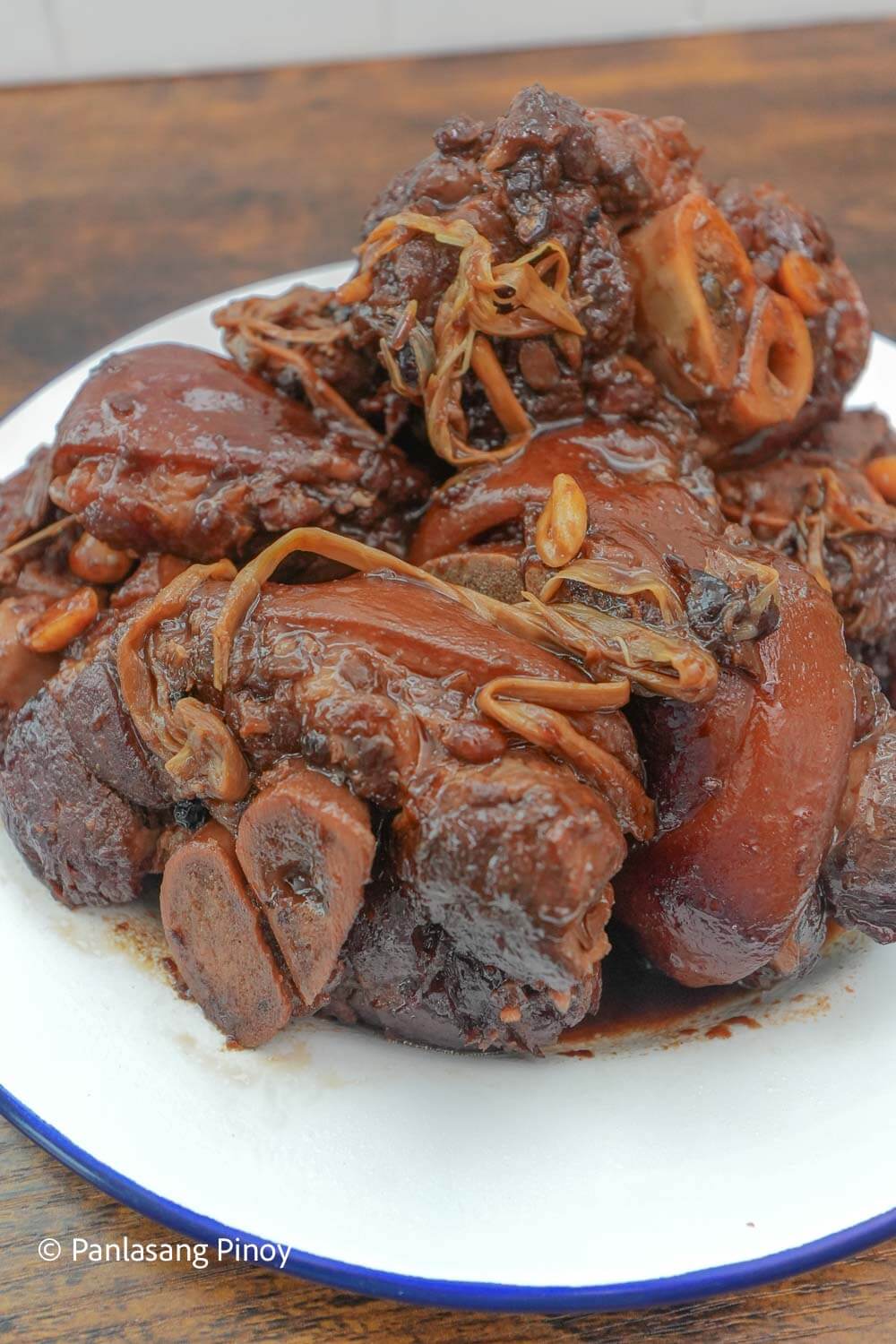
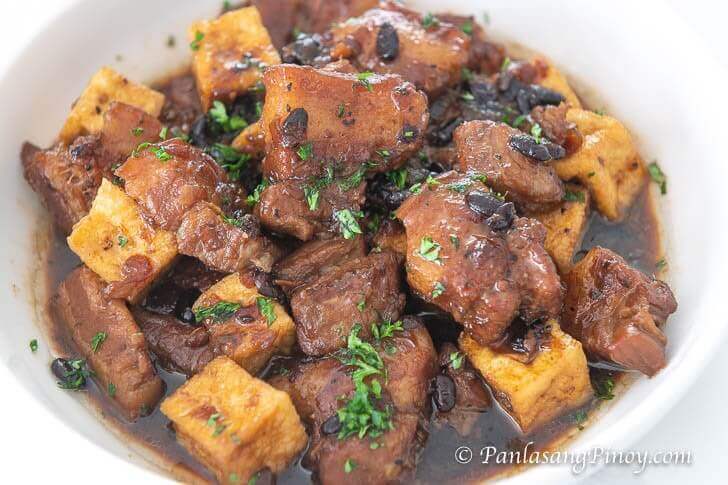
Humba turns up at fiestas and family lunches, cooked in one big pot for the table to share. In Cebu and the provinces nearby, cooks often use clear soda in place of pineapple juice, and I have a separate recipe for that one, humba Bisaya. There is also a version cooked with pork and fried tofu together, called tokwa at baboy humba.
Ingredients for Pata Humba
- Pork hocks – Ask the butcher to saw them crosswise into serving pieces, since a whole hock is hard to cut at home. Look for pieces with a good amount of meat left on the bone.
- Salted black beans – Tausi. These are fermented black soybeans, and they give the sauce a salty, fermented taste that soy sauce alone will not produce.
- Star anise – The recipe uses four pods for four and a half pounds of pork, which gives the sauce a noticeable star anise flavor. Use two pods if you want it milder.
- Pineapple juice – Use unsweetened or 100 percent juice. The syrup-packed kind, on top of the half cup of brown sugar, will make the sauce too sweet.
- Vinegar – Cane vinegar suits this dish. It is mild enough to balance the sugar without overpowering the tausi.
- Dried banana blossoms – Optional. Soak them in water for at least 5 minutes, then rinse and drain. They add a mild earthy flavor and a soft, chewy texture, and they absorb some of the sauce as they cook.
- Peanuts – Roasted and unsalted. I use roasted because the toasted flavor comes through in the sauce, and 10 minutes in the pot is short enough to keep some of their crunch.
- Brown sugar – Half a cup for this batch, stirred in at the finish rather than at the start. Add most of it, taste, and add the rest only if the sauce needs it.
- Soy sauce, garlic, onions, whole peppercorns, dried bay leaves, cooking oil, water – The braising base and the aromatics. Soy sauce brands differ in saltiness, so if you are using an unfamiliar one, taste the sauce before you season at the end.
- Maggi Magic Sarap – Up to five grams, added at the very end and adjusted to taste. The sauce gets saltier as it reduces, so the seasoning is easier to control once the reduction is done.
More about tausi. Look for it in the Asian section in jars, cans, or small packets, sometimes in brine and sometimes dry-salted. Black bean sauce is not a stand-in, since it comes already thinned and seasoned. Chinese groceries sell the same beans, often labeled fermented black beans, but brands differ in how heavily salted they are, so rinse them and taste the sauce before adding any more seasoning.
Equipment
- Large wok or heavy-bottomed pot – It should hold the hocks in one layer and still have depth for the braising liquid. A Dutch oven works just as well.
- Pressure cooker – Optional. It cuts the braise down to 35 to 40 minutes at pressure, though you still need time to build the aromatics and reduce the sauce afterward.
- Tongs – Safer than a fork for turning the hocks in hot oil.
Vanjo’s Advice
A few things I pay attention to when I make this.
- Pat the hocks dry before frying. Wet pork will make the oil splatter. Dry each piece with paper towels after parboiling and rinsing the pork, and use a splatter screen instead of covering the pan.
- Soak the banana blossoms before you start. Five minutes in water, then a rinse and a drain. Without soaking, they may still be stiff after 10 minutes in the pot. They can soak while the pork parboils.
- Keep it at a gentle simmer. Maintain small bubbles around the edge of the pot for the whole braise. A rolling boil knocks the pieces around, and the pork is easier to keep intact at low heat.
- Reduce the sauce uncovered if you use the pressure cooker. Very little evaporates in a sealed pot, so the meat comes out tender while the sauce stays thin. Finish it on the stove with the lid off.
- Spoon the sauce over warm white rice. I put the pata on the rice, pour the sauce on top, and let it soak in before eating.
- Serve something sour with it. The skin and fat are what I like about this cut, and a sour side balances the richness.
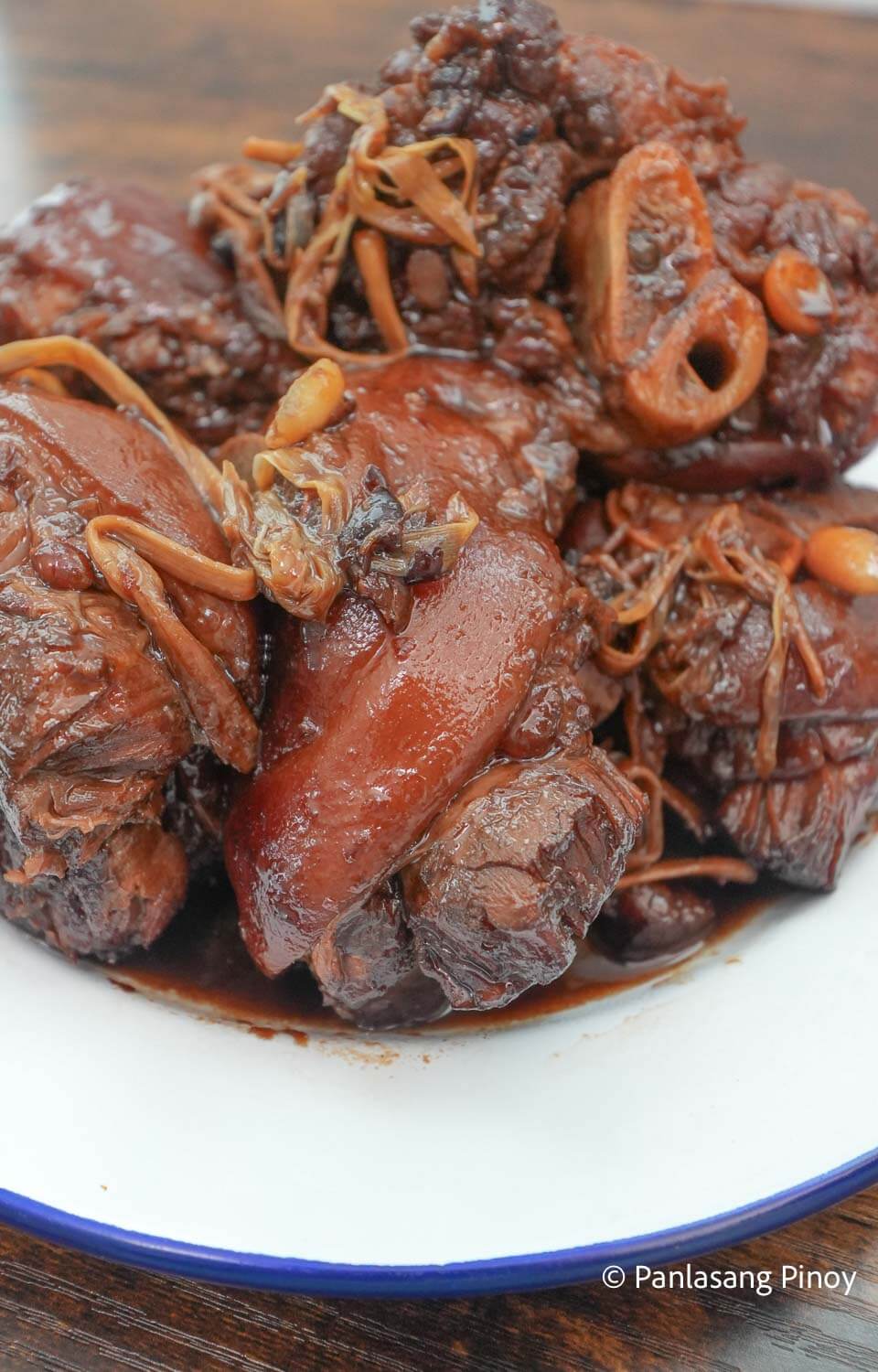
How to Cook Pata Humba
The pork is parboiled and browned first, then the aromatics go into the same pan, and the braise runs for a couple of hours before the sauce is finished.
Clean and Brown the Pork
- Boil the pork hocks for 10 minutes, then discard the water.
- Rinse the hocks under running water and pat them dry with paper towels. Boiling brings the scum to the surface, and discarding that water takes most of it away, so there is far less to skim once the braise starts.
- Heat the cooking oil in a wok and fry the hocks for 2 minutes per side until golden brown.
- Remove them from the wok and set aside.
The oil will splatter even when the hocks look dry, because the skin holds moisture. Use a splatter screen and stand back from the pan.
Build the Aromatic Base
- Sauté the garlic in the remaining oil over medium heat for 1 to 2 minutes, until it starts to brown and becomes fragrant. Lower the heat if the oil is still very hot from frying the pork.
- Add the onions and cook for 3 to 4 minutes, until soft and translucent.
- Add the salted black beans and mash them with your spoon. Mashing distributes the beans evenly before the liquids go in.
- Add the star anise, dried bay leaves, and whole peppercorns, and sauté for 30 seconds, until you can smell them. Keep the heat moderate here so the spices do not scorch.
Braise Until Tender
- Pour in the soy sauce, vinegar, pineapple juice, and water, then stir to combine.
- Return the pork hocks to the wok, cover, and simmer on low heat for 1 1/2 to 2 hours, until the meat is fork-tender and pulling away from the bone. Add water whenever the level drops, both to keep the pot from scorching and to keep the skin under the liquid.
Resist turning up the flame. A low simmer over an hour and a half or two is what softens the skin, and Filipino-Chinese braised pork belly is cooked the same slow way. Take out the star anise pods once the pork is tender.
Finish the Sauce
- Add most of the brown sugar, the soaked and drained banana blossoms (if using), and the roasted peanuts.
- Cook for 10 minutes, until the sauce thickens enough to coat the pork. The gelatin from the hocks gives it body as it reduces.
- Taste the reduced sauce. Add the reserved brown sugar if it needs it, then season with Maggi Magic Sarap, using less than the full five grams if the sauce is already salty.
- Transfer to a serving plate and serve hot with steamed rice.
What to Serve with Pata Humba
- Steamed white rice – Serve it hot and plain, with enough on the plate to soak up the sauce.
- Atchara – Pickled green papaya. The sourness balances the fat.
- Ensaladang mangga – Green mango, tomato, and onion with a little bagoong. The sour mango cuts the sweetness of the sauce.
- Blanched pechay or kangkong – A green vegetable, lightly salted, for something fresh alongside the pork.
- Sinangag – Garlic fried rice, which turns leftover humba into breakfast the next day.
- Cold soda or beer – A cold drink is welcome with a dish this fatty, and it is what usually gets served with humba anyway.
Storage
Pata Humba keeps well, which makes it worth cooking the full four and a half pounds even for a small household.
- Refrigerator: Store in an airtight container for up to 3 days. The gelatin from the hocks sets the sauce when it chills, and it loosens again on reheating.
- Freezer: Portion the pork with its sauce into freezer-safe containers and freeze for up to 3 months. Freezing it in the sauce keeps the meat from drying out.
- Reheating: Warm it in a pan over low heat with a splash of water. Low heat warms the meat through without reducing the sauce any further.
More Pork Recipes
- Pata Hamonado – Pork hock in a pineapple and soy braise, with no tausi and no banana blossoms. Sweeter and simpler than humba.
- Pork Estofado – Pork stewed in soy sauce and vinegar with brown sugar, then finished with fried saba bananas and carrots.
- Pork Asado – The pork is marinated in soy sauce and five spice powder before it simmers, and the spice blend takes it somewhere quite different from humba.
- Crispy Pata – Pork hock boiled until tender, then deep fried so the skin turns crisp.
- Pineapple Chicken – Chicken marinated in pineapple juice, then stewed with pineapple chunks, carrots, bell pepper, and milk.
Substitutions
- Dried banana blossoms – There is no direct substitute. If you cannot find them, leave them out.
- Salted black beans – Tausi has no direct substitute here. The dish still tastes good without it, but the fermented, salty note will be missing.
- Pineapple juice – Some Visayan versions use clear lemon-lime soda instead. Cut back on the brown sugar if you do, since the soda is already sweet.
- Pork hocks – Pork belly is the more common cut for humba and it cooks faster. Boneless, skinless pork shoulder is an option too, but it is a different dish: leaner, quicker to cook, and with less gelatin, so the sauce will not thicken the same way.
- Brown sugar – Muscovado or palm sugar can be used in the same amount. Muscovado has more molasses in it, so the sauce comes out darker. Palm sugar varies by source and type, so start with less and adjust once it has dissolved.
- Hard-boiled eggs – Not a substitute, but a common addition. Put them in during the last 15 minutes so they take on some of the flavor.
Frequently Asked Questions
Why do I need to parboil the pork hocks first?
You can skip it if you would rather skim the pot as the braise goes along, but I find the parboil less work overall. Most of the scum comes up during those 10 minutes and leaves with the water, so there is far less to skim later.
My pork is tender but the skin is still tough. What went wrong?
Usually it just needs more time, since skin softens slower than meat does. Check the liquid as well, because a piece sitting above the sauce softens more slowly than one that is submerged. Add water, push the hocks down, cover, and give it another 20 to 30 minutes on low.
How long do I pressure cook Pata Humba?
Thirty-five to forty minutes on high pressure, after the parboiling and sautéing are done. Release the pressure according to your cooker’s manual, since the correct method differs from one model to another. Once the pot is open, add the sugar, the soaked banana blossoms, and the peanuts, then reduce the sauce with the lid off.
The sauce came out too salty. What can I do?
Stir in water a little at a time, simmering briefly after each addition, until the sauce no longer tastes too salty. Do not reduce it back down afterward, or the salt will concentrate all over again. Next time, rinse the tausi more thoroughly and taste the sauce before you add the Maggi Magic Sarap.
How is pata humba different from paksiw na pata?
They use the same cut but a different sauce. Paksiw is vinegar-forward and comes out tangier. Humba is sweeter, and it uses tausi, which paksiw na pata normally does not.
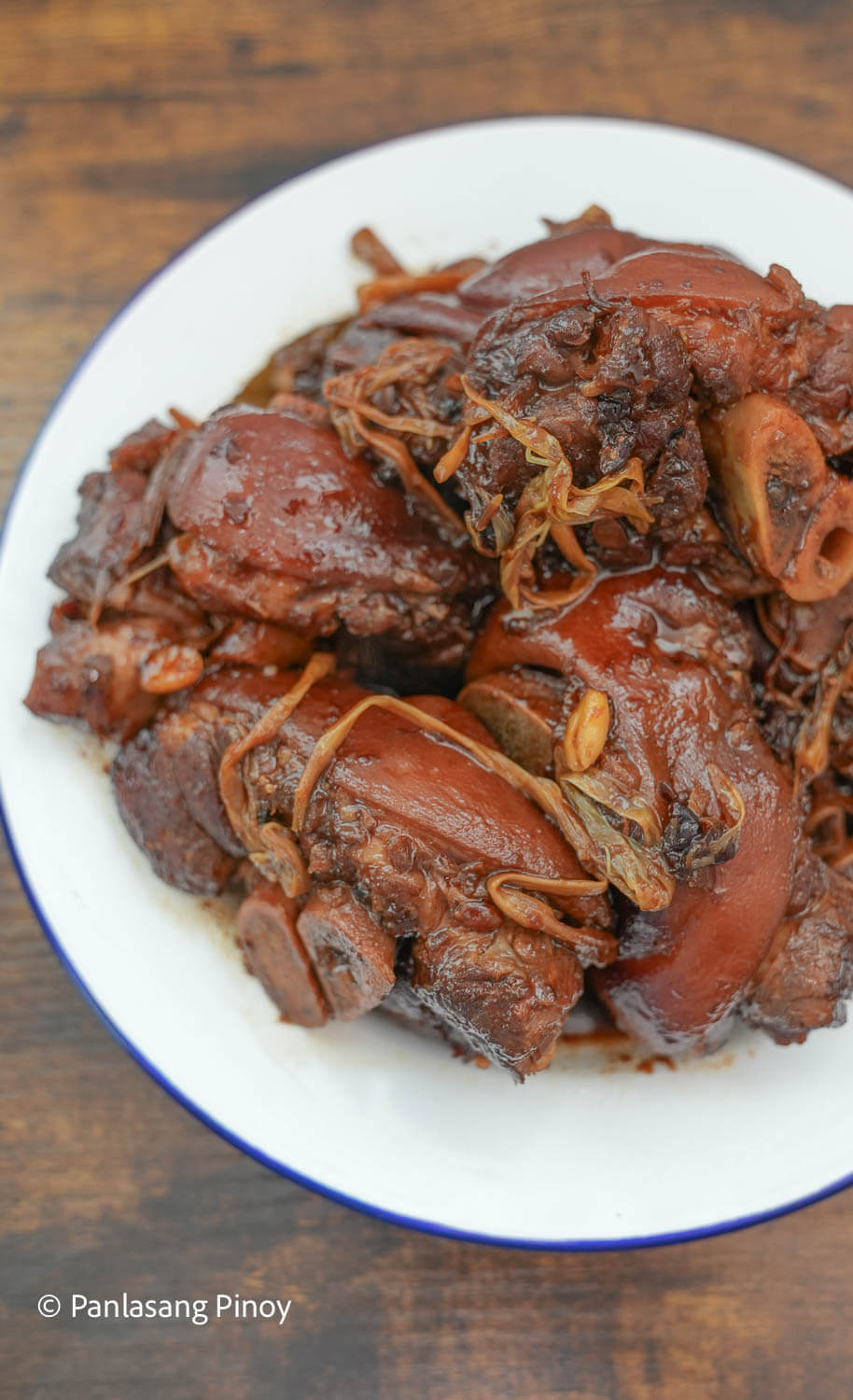
Enjoy cooking this dish and let me know how you liked it.
Watch How to Make It

Did you make this? If you snap a photo, please be sure tag us on Instagram at @panlasangpinoy or hashtag #panlasangpinoy so we can see your creations!
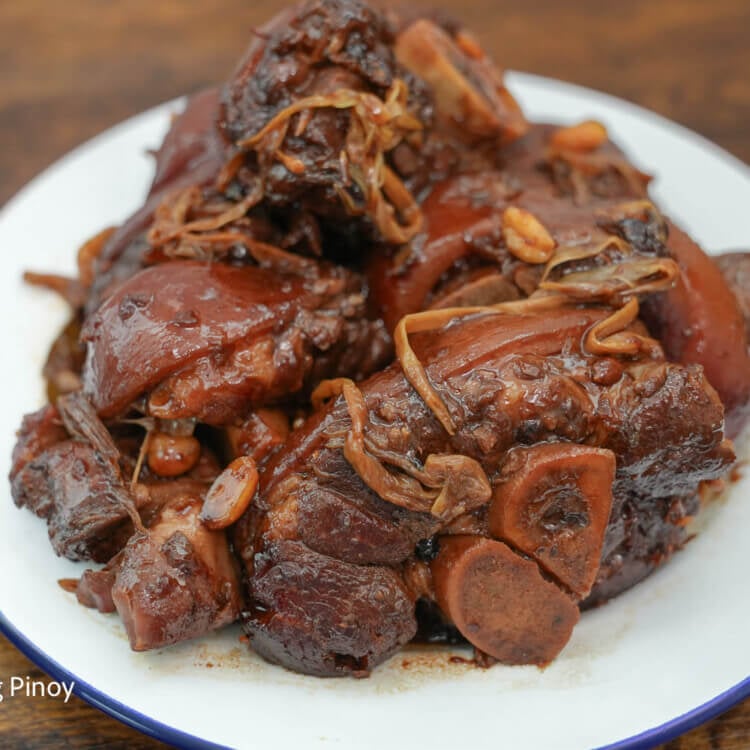
Pata Humba (Braised Pork Hocks)
Ingredients
- 4.5 lbs pork hocks sliced into serving pieces
- 3 tablespoons cooking oil
- 2 pieces yellow onions minced
- 8 cloves garlic minced
- 2 tablespoons salted black beans rinsed
- 4 pieces star anise
- 3 pieces dried bay leaves
- 2 teaspoons whole peppercorns
- 1/2 cup soy sauce
- 3 tablespoons vinegar
- 3 cups pineapple juice
- 1 cup water
- 1/2 cup brown sugar
- 1/4 cup dried banana blossoms optional
- 1/4 cup peanuts
- 5 grams Maggi Magic Sarap
Equipment
- 1 Large wok or heavy-bottomed pot For braising the pork hocks
- 1 Cooking spoon For mashing black beans and stirring
Instructions
- Boil the pork hocks for 10 minutes. Rinse thoroughly under cold water to remove impurities, then pat dry with paper towels.4.5 lbs pork hocks
- Heat the cooking oil in a wok. Fry the pork hocks for 2 minutes per side until golden brown. Remove from the wok and set aside.3 tablespoons cooking oil, 4.5 lbs pork hocks
- Using the remaining oil, sauté the garlic until it starts to brown and becomes fragrant, about 1 to 2 minutes.8 cloves garlic
- Add the onions. Continue sautéing until they soften and become translucent, about 3 to 4 minutes.2 pieces yellow onions
- Add the salted black beans. Mash them using your cooking spoon to release their flavor into the oil.2 tablespoons salted black beans
- Add the star anise, dried bay leaves, and whole peppercorns. Sauté for 30 seconds until fragrant and the spices bloom.4 pieces star anise, 3 pieces dried bay leaves, 2 teaspoons whole peppercorns
- Pour in the soy sauce, vinegar, pineapple juice, and water. Stir to combine all ingredients.1/2 cup soy sauce, 3 tablespoons vinegar, 3 cups pineapple juice, 1 cup water
- Return the pork hocks to the wok. Cover and simmer on low heat until the pork is completely tender and falls off the bone, about 1½ to 2 hours. Add water as needed to prevent burning.4.5 lbs pork hocks
- Add the brown sugar, banana blossoms (if using), and peanuts. Continue cooking for 10 minutes to allow the sauce to reduce slightly and the flavors to meld.1/2 cup brown sugar, 1/4 cup dried banana blossoms, 1/4 cup peanuts
- Season with Maggi Magic Sarap. Taste and adjust the seasoning as needed.5 grams Maggi Magic Sarap
- Transfer to a serving plate. Serve hot with steamed rice, spooning the rich sauce over the rice for the best experience.
Ella says
Your instructions are very simple, yet the outcome is almost perfect.
Ty for posting these recipes, it helps a lot.
God bless you!
Mj says
Can I used bamboo shoots instead of banana blossom? Thanks
Vanjo Merano says
It really depends on your preference. Using bamboo shoot will introduce a different taste that can affect the overall flavor of the dish. However, this is not bad. It is unusual, but why not try it anyway?
Kristine Santos says
Maramaming salamat sa pag share ng recipe na ito. First time ko magluto ng humba at talagang nagustuhan ko at pati na din ng magama ko. God bless you and more power!
Vanjo Merano says
Hi Kristine, congratulations! Sana ay i-check mo pa at subukan ang iba nating recipes dito sa blog.
Precie Latayan says
Thank you! More power to you
Mari says
Can I cook this in a slow cooker? Thanks!
Vanjo Merano says
sure, cooking in the slow cooker is a good idea because the meat will be very tender.