Lo Mein Recipe
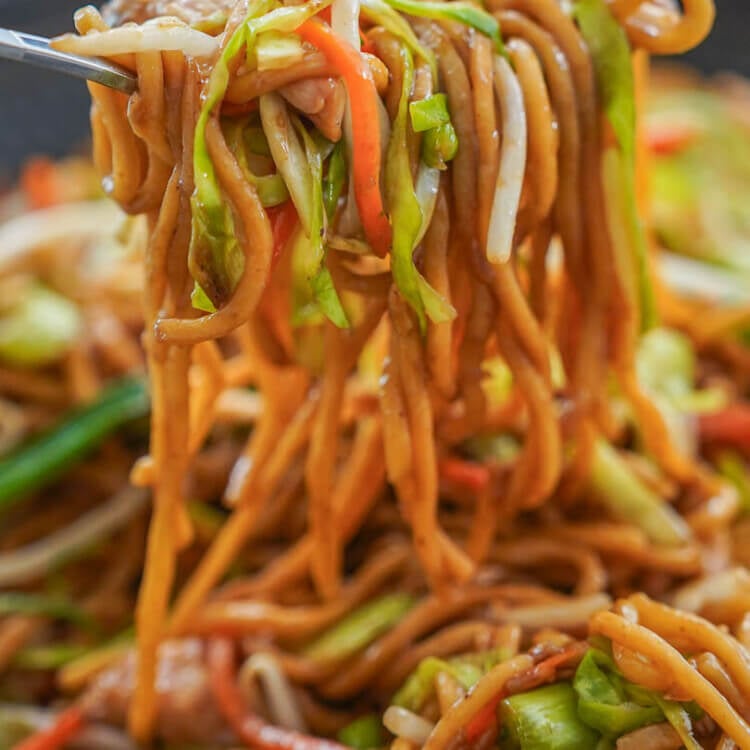
Lo mein is a stir fried noodle dish with soft egg noodles, vegetables, and a soy oyster sauce. I like this lo mein recipe because it is quick and the sauce is simple. You cook the lo mein noodles, toss them in a hot wok with snow peas, carrots, mushrooms, and bell pepper, then pour in the sauce and stir fry until the noodles absorb it. The whole thing takes about 25 minutes. If you have tried my Pancit Canton, this lo mein uses the same approach. Same type of egg noodle, same wok technique. The lo mein sauce just leans more on oyster sauce and chicken stock.
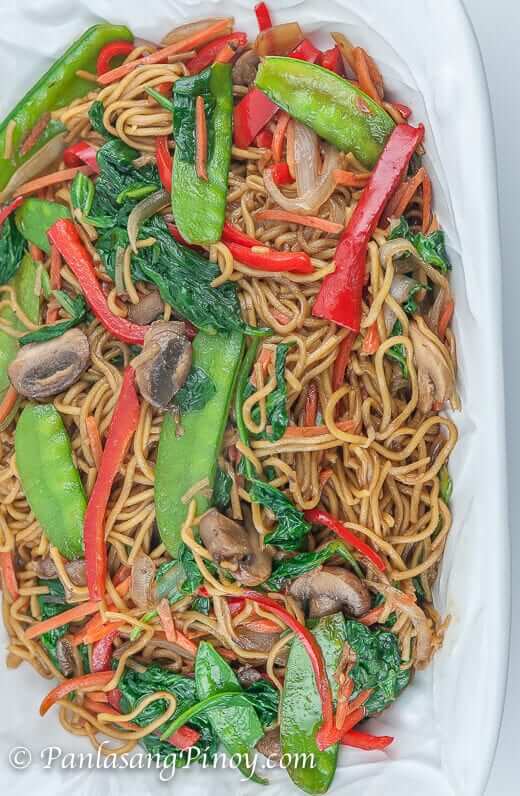
I started making this back when I was living in Chicago. I had a bag of dried egg noodles in the pantry and wanted to try something other than pancit. The recipe has not changed much since then. Soy sauce, oyster sauce, chicken stock, whatever vegetables I have on hand.
The sauce is only three ingredients mixed with chicken stock. Simple, but it is enough to make plain noodles taste good.
What is Lo Mein?
Lo mein is a Chinese stir fried noodle dish where egg noodles are boiled, drained, and then tossed in a hot wok with vegetables, sauce, and sometimes meat or seafood. The name comes from Cantonese. “Lou mein” translates roughly to “tossed noodles” or “stirred noodles,” which is exactly what you do. You boil the noodles, toss them into a smoking hot wok with everything else, and keep them moving until every strand is coated in sauce.
The dish started in Cantonese kitchens but became a favorite in the United States through Chinese American restaurants. It ended up on almost every takeout menu right next to fried rice and egg foo young. People sometimes mix up lo mein with chow mein, but they are different. Chow mein noodles are thinner and get pan fried until crispy. Lo mein noodles stay soft and chewy. I like making both, but when I want something quick on a weeknight, lo mein is what I go for.
Here is something I think about sometimes. Pancit canton uses the exact same type of egg wheat noodle. Same wok technique. Same soy and oyster sauce base. The Filipino version just evolved on its own with cabbage, snap peas, and sometimes Chinese sausage, while the Chinese version went a different direction with bok choy and bean sprouts. It is the same family of noodles, just different branches. I find that really interesting.
Why This Lo Mein Recipe Works
This vegetable lo mein turns out well, and I think it comes down to a few small things.
- The vegetables only cook for about 2 minutes. Snow peas, carrots, and bell pepper need high heat and a short time in the wok. Any longer and they go soft. You want them with a bite still.
- The noodles go into the wok before the sauce. This gives them a chance to warm up and get a little toasted on the surface, which is really nice. It also keeps them from clumping together, which was a problem I had a lot when I first started making this.
- The sauce is simple and clean. Soy sauce, oyster sauce, and chicken stock. I have experimented with adding sesame oil, dark soy sauce, and sugar over the years. They all taste fine, but I always come back to this simpler version because it lets the vegetables and noodles shine without overpowering anything.
- Spinach goes in at the very end. If you toss it in too early, it releases water and makes the whole dish wet. A minute or two at the end is enough. The spinach wilts from the heat and stays green.
Ingredients
- Dried egg noodles chewy and springy once cooked
- Snow peas they stay crisp in the wok and taste a little sweet
- Carrots julienned thin so they soften without taking too long
- Red bell pepper good color and mild sweetness that goes well with the sauce
- Fresh white mushrooms earthy and mild, they soak up the sauce
- Chicken stock the liquid part of the sauce that keeps the noodles moist and flavorful
- Fresh spinach goes in right at the end and wilts down in about a minute
- Yellow onion the first thing in the wok, it sweetens up as it cooks and builds that aromatic base
- Oyster sauce thick, savory, and a little sweet
- Light soy sauce the main seasoning that ties everything together
- Cooking oil something neutral like vegetable oil or canola with a high smoke point
Vanjo’s Advice
- Pull the noodles out of the boiling water about a minute early. They finish cooking in the wok, and that is where they really develop their texture. If you boil them all the way through first, they turn mushy and start falling apart when you toss them. I learned this the hard way after a few disappointing batches.
- Get everything prepped and ready before you turn on the stove. All your vegetables sliced. Sauce measured and mixed. Noodles drained. Stir frying moves fast and it does not wait for you. Once that oil is hot, you have maybe 30 seconds before things start burning.
- I use tongs instead of a spatula. Tongs let you grab the noodles from underneath and flip everything over properly. A spatula just pushes things around on top, and you end up with noodles stuck together at the bottom of the wok.
- Do not pile all the vegetables in at once. When you overload the wok, the temperature drops and the vegetables steam instead of searing. Keep them moving and give them room.
- Sometimes I throw in leftover chicken or some peeled shrimp. This version is all vegetables, but it takes well to protein. I just toss the meat in at the same time as the noodles and let everything heat through.
- A small drizzle of sesame oil right before you plate. Not required, but it gives the dish a nutty smell that I like. Just do not cook with sesame oil. It burns fast.
How to Cook Lo Mein
This is a fast cook. Once you start, you are done in about 15 minutes. Make sure everything is prepped and within arm’s reach before you turn on the heat.
Cook the Noodles
- Bring a large pot of water to a rolling boil. Cook the dried egg noodles according to the package directions, but pull them out about a minute early so they still have some chew.
- Drain well and set aside.
If the noodles start sticking together while they sit, toss them with a tiny bit of oil. Not a lot. Just enough to keep the strands separate.
Stir Fry the Vegetables
- Heat the cooking oil in a wok over medium heat. Add the onion and sauté until it softens.
- Toss in the bell pepper, mushrooms, snow peas, and carrots. Stir fry for about 2 minutes, just until the vegetables are slightly tender but still have some crunch.
Toss the Noodles and Sauce
- Add the cooked egg noodles to the wok and toss them well with the vegetables. Let everything cook together for about 3 minutes.
- Pour in the soy sauce, chicken stock, and oyster sauce. Toss everything together and keep cooking for 3 to 5 minutes. You want the noodles to absorb the sauce.
You will know it is ready when there is no pool of liquid sitting at the bottom of the wok and the noodles look glossy.
Finish with Spinach
- Add the fresh spinach and season with salt and pepper. Toss and cook for 1 to 3 minutes, just until the spinach wilts down.
- Transfer to a serving plate and serve right away.
Pro Tips
- Taste before you add any extra salt. The soy sauce and oyster sauce already carry a lot of sodium. I sometimes skip the extra salt entirely.
- Serve it right away. Lo mein is best fresh out of the wok. The noodles get sticky and dry if they sit on the counter too long.
- A squeeze of calamansi or lime at the table. Not traditional, but the acidity cuts through the sauce and I like what it does. Try it once.
What to Serve with Lo Mein
- Lumpiang Shanghai – crispy egg rolls next to a plate of noodles is hard to beat
- Steamed white rice – some people like rice with their noodles, and I am not going to judge because I do it too
- Egg Fried Rice – when you are feeding more people and want a bigger spread on the table
- Egg Rolls – another crispy side that pairs well with soft noodles
- Hot and sour soup – a tangy broth on the side
Storage
Lo mein keeps well if you happen to have any left over, though in our house it usually gets finished the same night.
- Refrigerator: Store in an airtight container for up to 3 days. The noodles will soak up the remaining sauce overnight, so they look a little drier the next day. That is completely normal and they still taste good.
- Freezer: Lo mein freezes fine for up to 2 months. The vegetables will get a bit softer when you thaw it, but the flavor is still there. I would not freeze it if you are particular about texture, but for a quick reheated meal it works well.
- Reheating: Skillet or wok over medium heat with a splash of water or chicken stock. The stovetop works way better than the microwave for this. The microwave tends to make the noodles rubbery, and that is not how you want to eat them.
More Noodle Recipes
- Pancit Canton the classic Filipino stir fried noodle dish that shows up at every birthday party and family gathering
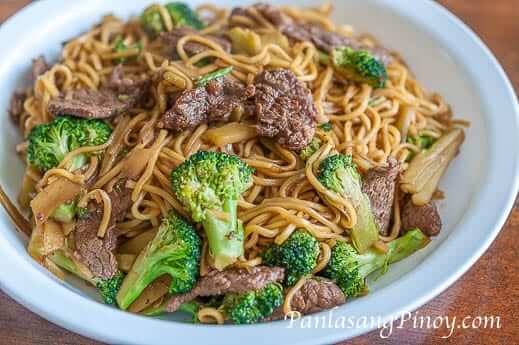
- Lo Mein with Beef and Broccoli a heartier version with tender beef if you want more protein in your noodles
- Beef with Broccoli Lo Mein another take with a slightly different sauce
- Crispy Noodles deep fried egg noodles with a thick, savory sauce poured right on top
- Pan Fried Noodles with Beef and Veggies chow mein style with golden crispy noodles and bok choy
- Pancit Miki Guisado thick fresh egg noodles stir fried with pork and vegetables
- Chicken Mami Filipino chicken noodle soup for the colder days
Substitutions
- Dried egg noodles fresh lo mein noodles from the refrigerated aisle of an Asian grocery store are actually better if you can find them. Chewier and more tender. If you cannot find either, spaghetti or linguine cooked al dente works. I have done it many times. Nobody complained.
- Snow peas snap peas or green beans sliced on an angle are both great alternatives
- Fresh spinach baby bok choy or napa cabbage are good options too, and both hold up to the heat a little better than spinach does
- Chicken stock vegetable stock if you want to keep it fully vegetarian, or just dissolve half a bouillon cube in some hot water
- Oyster sauce hoisin sauce is the closest substitute, though it is a bit sweeter so you may want to use a little less
- Light soy sauce regular soy sauce works well, or tamari if you are avoiding gluten
Frequently Asked Questions
What is the difference between lo mein and chow mein?
The biggest difference is texture. Lo mein noodles get boiled and then tossed with sauce, so they stay soft and chewy. Chow mein noodles are fried until crispy. “Lo mein” means tossed noodles while “chow mein” means fried noodles. I like both, but they give you completely different results. If you want to try the crispy version, I have a Pan Fried Noodles recipe that shows you how.
What noodles should I use for lo mein?
Egg noodles are what you want. Fresh ones from the refrigerated section of an Asian grocery store are ideal. They are yellow, chewy, and made with wheat flour and eggs. I use dried egg noodles in this recipe because I always have them in the pantry and they store for months. If you cannot find either, cook spaghetti or linguine al dente. It is not traditional, but it tastes good and works in a pinch.
What is in lo mein sauce?
For this recipe: light soy sauce, oyster sauce, and chicken stock. That is the whole sauce. Some recipes include dark soy sauce for a deeper color, sesame oil, or a little sugar. I have tried all of those additions and they taste fine, but I always find myself coming back to this simpler version. It lets the flavor of the vegetables and noodles come through without competing with the sauce.
Can I add chicken, beef, or shrimp?
Yes. Cook the protein first in the wok until it is done, then set it aside on a plate. Stir fry the vegetables next, and return the protein to the wok when you toss in the noodles. This keeps everything from overcooking. I also have a separate Lo Mein with Beef and Broccoli recipe if you want a version built around meat.
Can I make lo mein ahead of time?
You can prep everything ahead of time. Cook the noodles, chop all the vegetables, and mix the sauce. Store them separately in the fridge and when you are ready to eat, the stir frying takes less than 10 minutes. I would not cook the whole dish and reheat it later though. Freshly tossed lo mein is better.
Lo mein has earned its spot in our weekly dinner rotation. It is not a complicated dish. Good noodles, vegetables, and a simple sauce. I hope you give this lo mein recipe a try and make it your own. Swap the vegetables, toss in some chicken or shrimp, adjust the sauce to your taste. If you do make this, tag us @panlasangpinoy on Instagram so we can see how it turned out.
Did you make this? If you snap a photo, please be sure tag us on Instagram at @panlasangpinoy or hashtag #panlasangpinoy so we can see your creations!
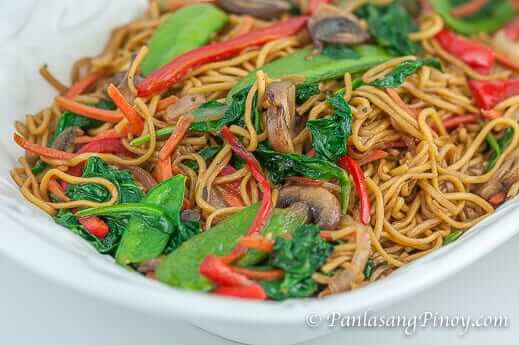
Lo Mein
Ingredients
- 8 oz dried egg noodles cooked according to package instructions
- 12 to 15 pieces snow peas
- 3/4 cup carrots julienned
- 1 pieces small red bell pepper julienned
- 1 cup fresh white mushrooms sliced
- 1/2 cup chicken stock
- 3 cups fresh spinach
- 1 pieces small yellow onion sliced
- 1 tablespoon oyster sauce
- 3 tablespoons light soy sauce
- salt and pepper to taste
- 3 tablespoons cooking oil
Equipment
- 1 Wok A large skillet works if you do not have a wok
Instructions
- Heat the cooking oil in a wok over medium heat.3 tablespoons cooking oil
- Sauté the onion until it softens. Add the bell pepper, mushrooms, snow peas, and carrots. Stir fry for about 2 minutes, just until the vegetables are slightly tender but still crisp.1 pieces small yellow onion, 1 pieces small red bell pepper, 1 cup fresh white mushrooms, 12 to 15 pieces snow peas, 3/4 cup carrots
- Add the cooked egg noodles. Toss well and cook for 3 minutes.8 oz dried egg noodles
- Pour in the soy sauce, chicken stock, and oyster sauce. Toss everything together and continue cooking for 3 to 5 minutes, allowing the noodles to absorb the sauce.3 tablespoons light soy sauce, 1/2 cup chicken stock, 1 tablespoon oyster sauce
- Add the spinach, then season with salt and pepper. Toss again and cook for 1 to 3 minutes, just until the spinach wilts.3 cups fresh spinach, salt and pepper to taste
- Transfer to a serving plate and serve hot. Share and enjoy!
Notes
Nutrition Information
Cena says
this is a perfect starter recipe! i didn’t use all the same veggies, but like he said you can add whatever you want to it 🙂 thanks for posting this and helping me get started on mastering lo mein!
Ofelia Hutalla says
I like all the recipes you are publishing. Thank you so much. I became confident cooking now because I follow your recipes. Please continue to publish more of your specialties. Happy thanksgiving!
Vanjo Merano says
That is good to know, Ofelia.
Happy Thanksgiving!