Sinigang na Panga ng Tuna Recipe (Tuna jaw cooked in sour broth)
Sinigang na Panga ng Tuna is a sour Filipino soup made with tuna jaw, the meaty collar part behind the head. The fish simmers in tamarind broth until the meat becomes tender and starts to pull away from the bone. I cook it the same way I cook most sinigang, with tomatoes, fish sauce, and vegetables added near the end. Tuna jaw works well here because it has enough fat and soft tissue to stay good in a sour broth. This is the seafood sinigang I like making when good tuna panga is available.
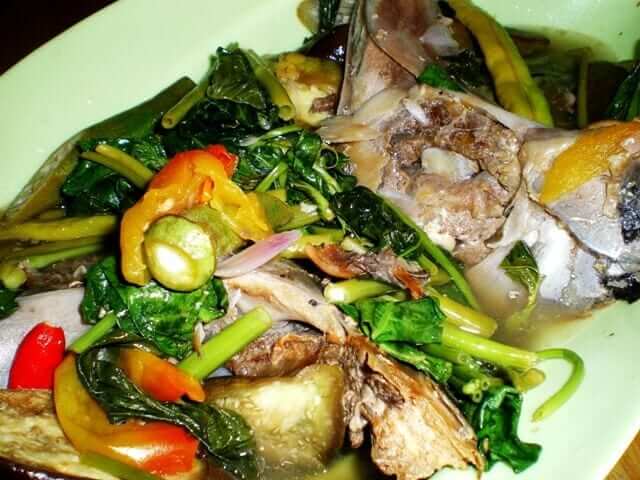
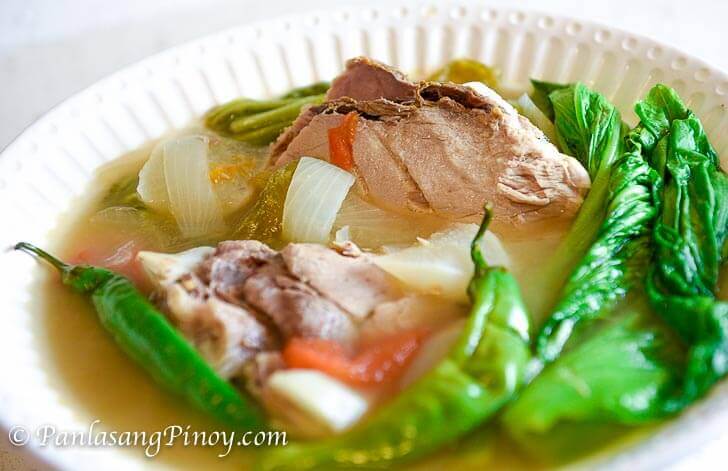
I usually cook this when I see nice tuna jaw at the market and want something sour, hot, and easy to put together. This version uses sinigang mix instead of fresh tamarind, which makes the process faster. It is helpful on days when I want sinigang without doing the longer method. The pork sinigang follows the same idea but uses a different main ingredient.
This Sinigang na Panga ng Tuna gives you clear sour broth and tender fish in about fifty minutes. Timing is important. The tuna jaw needs enough time to soften, while the vegetables only need a few minutes. I add the fish first, then the vegetables based on how long they take to cook, and I finish the water spinach with the heat left in the pot.
What is Sinigang na Panga ng Tuna?
Sinigang is the general name for the Filipino sour soup made with tamarind or other tart fruits, and Sinigang na Panga ng Tuna is the version made with tuna jaw. Panga means jaw in Tagalog, and it points to the collar section just behind the head of the fish. There is not much straight muscle there. Most of what you eat is the soft tissue and cartilage around the bone, which is exactly why the cut is better in a slow simmer than in a hot pan.
You will see tuna panga often in places where tuna is common, especially around General Santos and parts of Mindanao, where yellowfin tuna, or bariles, is a daily catch. Cooks there make use of the head, jaw, belly, and other parts that carry a lot of flavor. Sinigang na Panga ng Tuna came out of that, cooking the whole fish and wasting nothing.
Among the seafood versions, the tuna jaw one is a favorite because the cut is so fatty. A thin fillet can break apart and cloud the broth, but panga ng tuna stays in one piece and keeps the soup clear while still giving up plenty of flavor. In most homes it is the main dish, served hot with rice, with the sour broth carrying the whole meal.
Why I Cook It This Way
I cook Sinigang na Panga ng Tuna in stages because tuna jaw and vegetables cook differently. The fish needs time to soften. The vegetables only need a few minutes, especially the kangkong.
- Putting the tuna jaw in first – The fish needs about fifteen minutes to soften and flavor the broth. It goes in while the broth is still plain, so it has room to do that.
- Adding the vegetables in order – The eggplant goes in early with the sinigang mix since it takes longer to soften. The okra and sitaw follow, and the kangkong goes in last. They cook at different speeds, and going in order keeps each one from turning to mush.
- Cooking the tomatoes down early – When the tomatoes break down in the pot, they give a little sweetness and help round out the sour broth.
- Using enough sinigang mix for the water – A pouch is made for a set amount of water. Match it to your pot and the broth tastes sour enough without becoming too sharp.
Ingredients
- Tuna jaw (panga ng tuna) – The main ingredient, a fatty collar cut that turns tender in the broth.
- Sinigang mix – This gives the broth its sour tamarind taste without boiling fresh tamarind.
- Tomatoes – Cooked down early so they soften and lightly sweeten the broth.
- Onion – Softened with the tomatoes to start the base of the soup.
- Fish sauce (patis) – Seasons the broth with salt and a deeper seafood flavor.
- String beans (sitaw) – Cut into short lengths and added partway through so they stay slightly crisp.
- Okra – Softens into the broth and thickens it slightly.
- Eggplant – Sliced and simmered until tender so it soaks up the sour broth.
- Water spinach (kangkong) – Goes in at the end because it wilts fast.
- Long green chili (siling pansigang) – This gives the broth a little heat. It is mild, so use more or less to taste.
A note on the tuna jaw. Tuna jaw, or panga, is sold at most Filipino and Asian wet markets and seafood counters, usually frozen and cut into large slices. Ask for tuna panga or yellowfin collar if the label is not clear, and pick pieces with a good amount of soft tissue around the bone, since that is the part that turns tender in the soup. When I buy it, I go to the market early before the good pieces are gone, and I ask the vendor to set the jaw aside and clean it for me while I finish the rest of my shopping. If you cannot find the jaw, tuna belly or steaks will do, though they cook faster and give up less of that soft, gelatin texture.
Vanjo’s Advice
Here are a few things I keep in mind when I cook this Sinigang na Panga ng Tuna
- Clean the tuna jaw well. Rinse the pieces and check around the bone for dark bits or blood near the gill side. A clean cut keeps the broth from tasting muddy or too fishy.
- Taste before you add all the sinigang mix. Brands differ in strength, so I stir in most of it, taste, then adjust. It is easier to add more sourness than to fix a broth that has gone too sharp.
- Adjust the chili to your taste. Long green chili gives a mild heat that builds as it simmers. Add a little first, then more once you taste the broth.
- Do not boil the fish hard. A steady, gentle simmer keeps the jaw meat in one piece. A rolling boil shreds the soft tissue and clouds the soup.
- Add the water spinach at the very end. I turn off the heat and let the covered pot finish it. The leaves stay green and the stems keep a little crunch this way.
- Serve it right away. Sinigang tastes best straight off the stove, when the broth is sour and the vegetables still have texture, so I do not let it sit long before serving.
How to Cook Sinigang na Panga ng Tuna
Making Sinigang na Panga ng Tuna at home is simple when you cook it in stages. Get the broth going first, give the fish time to soften, then add the vegetables by how long each one needs.
Build the Broth
- Heat a cooking pot and pour in the water. Bring to a boil.
- Put in the onion and tomatoes and cook until tender.
- Put in the tuna jaw and simmer for 15 minutes.
- Add the sinigang mix, chilies, and eggplant, then simmer for 3 minutes.
Keep the heat at a gentle simmer once the tuna jaw goes in. A slow simmer cooks the fish through without breaking it apart or clouding the broth.
Add the Vegetables
- Put in the okra and string beans and cook for 3 minutes.
- Mix in the water spinach and season with the fish sauce.
- Turn off the heat, then cover the pot.
- Let the residual heat finish cooking the water spinach.
The okra and string beans go in first, then the water spinach. The kangkong needs only the residual heat, which keeps it bright instead of wilting into the broth.
Serve
- Transfer the soup to a serving bowl.
- Serve hot with rice.
This soup is best eaten fresh and steaming. Ladle it out as soon as the vegetables are done, while the broth is still hot and the vegetables are not overcooked.
What to Serve with Sinigang na Panga ng Tuna
- Crispy Pork Belly Chips – This crispy pork adds wonderful texture when eaten with rice and sinigang. I usually have it on the side (literally) so that it does not absorb the broth. A bite of crispy pork followed by a spoonful of rice with sinigang broth and tuna meat is perfect!
- Patis with crushed fresh chili pepper – This small dish of fish sauce with fresh chili is for dipping the tuna and adjusting the saltiness at the table. I have to give a small warning here. This condiment is so good with hot rice and sinigang that you might forget to watch how much rice you are eating, so take it easy and enjoy it slowly.
- Grilled liempo – This works well when you want something dry beside the soup. I absolutely love the combination.
- Soy sauce and calamansi sawsawan – A salty and sour dip that goes well with the fish.
- Crisp green mango with bagoong – A sour and salty snack on the side for anyone who wants more sourness.
Storage
Sinigang na Panga ng Tuna keeps for a day or two when you store it well. The broth actually tastes a little rounder the next day, once the flavors settle.
- Refrigerator: Store the soup in an airtight container for up to 2 days. Keep the fish in the broth so it does not dry out.
- Freezer: Freezing is not ideal because the vegetables turn soft and the fish loses its texture. If you must, freeze only the broth and fish for up to 1 month and add fresh vegetables when you reheat.
- Reheating: Warm it gently on the stove over medium heat until it just steams. Avoid a hard boil so the tuna jaw stays in one piece.
More Filipino Seafood Recipes
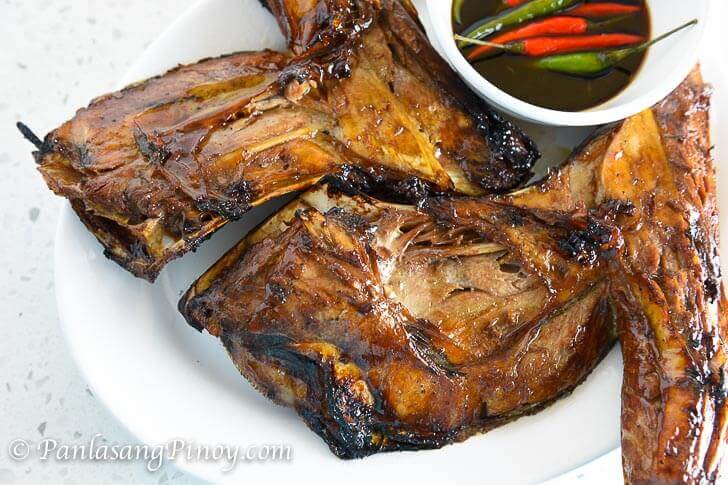
- Inihaw na Panga ng Tuna – The same tuna jaw cut grilled with a sweet and tangy marinade for a smoky, dry dish.
- Sinigang na Ulo ng Salmon – A sour soup that swaps in fatty salmon head for the tuna jaw.
- Sinigang na Hipon – The shrimp version of sinigang, lighter and faster to cook.
- Seafood Sinigang – A mixed pot of fish and shrimp in one sour broth for a bigger spread.
- Fish Sinigang – A version with fried fish that deepens the flavor of the broth.
- Kinilaw na Tuna – Fresh tuna cured in vinegar and calamansi for a tangy, no cook starter.
Substitutions
- Sinigang mix – Use fresh tamarind for the classic method. Boil about fifteen to twenty soft pods, mash them, and strain the juice into the broth.
- Tuna jaw – Tuna belly or thick tuna steaks work, though they cook faster, so cut the simmer to about eight to ten minutes.
- Water spinach (kangkong) – Spinach or mustard greens are good stand ins, added at the same point off the heat.
- Eggplant – Daikon radish or taro can take its place for a different texture in the broth.
- Long green chili (siling pansigang) – Leave it out for a milder soup, or use a hotter chili like bird’s eye if you want more kick.
Frequently Asked Questions
How do I get rid of the fishy smell in tuna sinigang?
Start with a clean cut. Rinse the tuna jaw well and pull out any blood or dark bits near the gill side, since that is where most of the smell comes from. A steady simmer instead of a hard boil helps too. If you still want it milder, a spoon of Filipino miso or a squeeze of calamansi at the end helps make the broth taste cleaner.
Can I use canned tuna for this recipe?
I would not. Canned tuna is already cooked and flaky, so it falls apart in the broth and loses the tender bite that makes the jaw worth using. If fresh tuna jaw is hard to find, fresh tuna belly or steaks are a far better choice than canned.
What other vegetables can I add to Sinigang na Panga ng Tuna?
Plenty work here. Daikon radish, taro, long beans, and mustard greens are all common in sinigang. Add the firmer ones with the okra and string beans, and save the leafy greens for the end so they do not overcook.
Can I make Sinigang na Panga ng Tuna without sinigang mix?
You can. Boil fresh tamarind pods until soft, mash them, and strain the juice into the broth to taste. Green mango, bilimbi, or guava can also sour the broth, but each one gives the soup a different taste.
I hope you try this Sinigang na Panga ng Tuna the next time you find good tuna jaw at the market. Serve it hot with rice, with a little patis and chili on the side, and eat it while the vegetables still have some bite. If you want to see how the broth and fish should look along the way, the video above walks through it.
Watch How to Make It
Did you make this? If you snap a photo, please be sure tag us on Instagram at @panlasangpinoy or hashtag #panlasangpinoy so we can see your creations!
Sinigang na Panga ng Tuna Recipe (Tuna jaw cooked in sour broth)
Ingredients
- 2 lbs tuna jaw panga ng tuna
- 2 cups string beans sitaw, cut in 2 inches length
- 2 pieces eggplant sliced
- 8 pieces okra cleaned
- 1 bunch water spinach kangkong, chopped
- 4 pieces tomatoes halved
- 1 piece onion wedged
- 2 tablespoons fish sauce patis
- 44 grams Sinigang mix
- 8 cups water
- 4 pieces long green chili pepper siling pansigang
Instructions
- Heat a cooking pot and pour-in the water. Bring to a boil.8 cups water
- Put-in the onions and tomatoes and cook until tender.4 pieces tomatoes, 1 piece onion
- Put-in the tuna jaw and simmer for 15 minutes2 lbs tuna jaw
- Add the sinigang mix, chilies, and eggplant.Simmer for 3 minutes.2 pieces eggplant, 44 grams Sinigang mix, 4 pieces long green chili pepper
- Put-in the okra and string beans and cook for 3 minutes.2 cups string beans, 8 pieces okra
- Mix-in the water spinach. Season with fish sauce. Turn the heat off, cover the pot, and allow residual heat to completely cook the water spinach.1 bunch water spinach, 2 tablespoons fish sauce
- Transfer to a serving bowl and serve hot.
- Share and enjoy!
Leave a Comment