Sinampalukang Manok Recipe
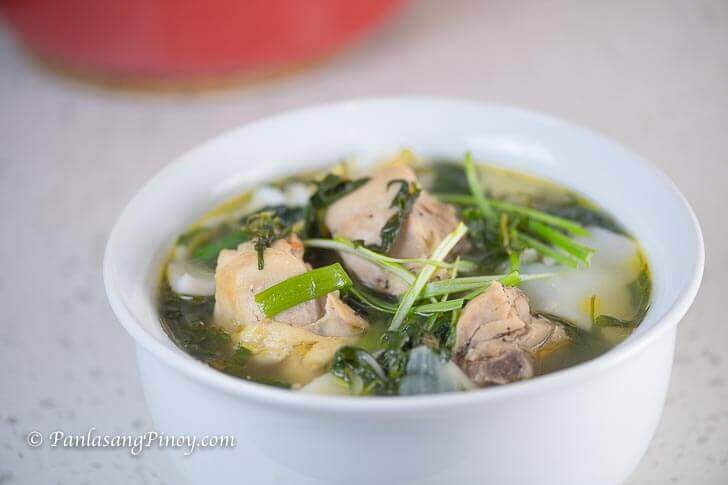
I usually cook Sinampalukang Manok when I have a cold. The hot, sour broth helps me feel better, especially when I eat it with warm rice and dip the chicken in fish sauce with crushed bird’s eye chili.
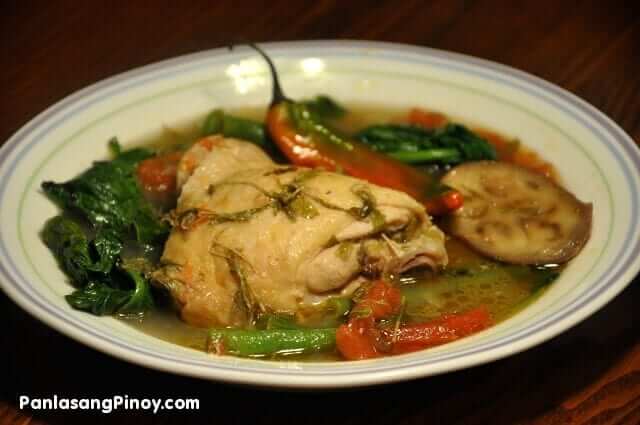
Young tamarind leaves give this soup a gentler sourness than the sinigang mix I use for sinigang na baboy. I like my sinigang sour, so the optional tablespoon of mix usually goes into my pot. Leave it out if you want the leaves to provide all the sourness.
I sauté the ginger, onion, and tomatoes before adding the chicken. I let the chicken cook with the aromatics for a few minutes, then add the fish sauce before pouring in the water. The fish sauce seasons the chicken, while the browned bits from the bottom of the pot add flavor to the broth.
What is Sinampalukang Manok?
The name comes from sampalok, which is the Tagalog word for tamarind, so sinampalukan means cooked with tamarind. Traditionally, sinigang sa sampalok refers to soup soured with tamarind fruit, while sinampalukan is made with tender young leaves. The leaves come from the pale new growth at the tips of the branches, and they taste lighter and fresher than ripe tamarind pods.
The cooking method also sets it apart from the usual sinigang because the aromatics and chicken are sautéed first. Ginger rarely goes into pork sinigang, but it belongs in this soup. If you like ginger-based chicken soups, you can also try my Tinolang Manok recipe, which has a clear and mild broth instead of a sour one.
I asked in the earlier version of this post where the dish came from, and readers answered from their own provinces. Most of them pointed to Southern Tagalog and Nueva Ecija, naming Batangas, Cavite, and the town of Jaen. I have not found a written source that settles it, so I take those answers as what people remember cooking at home. What all of them had in common was the tamarind leaves.
Ingredients
- Chicken – I like using bone-in pieces such as thighs and drumsticks. They stay moist during the simmer, and the bones give the broth more flavor than boneless meat does.
- Young tamarind leaves – These are what make the dish. Choose the pale and soft growth at the tips of the branch, then pull off the tough stems before rinsing them.
- Ginger – I slice mine into coins instead of mincing it, so you can still taste it in each spoonful of broth.
- Tomatoes – Use ripe ones, and press them against the side of the pot while they cook so they soften and release their juice.
- Onion – I slice it instead of chopping it, since the pieces soften into the broth as the soup cooks.
- Fish sauce – I add this in two parts. One tablespoon goes in with the chicken, and the rest goes in at the end after tasting the broth.
- Sinigang mix – Optional. One tablespoon is enough if you want a more sour broth without covering the taste of the leaves.
- Chinese eggplant – This holds its shape better than the globe type, which can turn soft in a soup.
- Long green beans – Cut them into 2-inch pieces so they cook at the same rate as the eggplant.
- Fresh spinach – This goes in at the very end, with the pot uncovered.
Young tamarind leaves, or talbos ng sampalok, are the new shoots of the tamarind tree. They are small, feathery, and bright green, and they already taste sour if you chew one raw. In the Philippines you can find them in wet markets during the growing season, usually sold in bunches with the stems still attached. They are harder to get outside the country, though some Asian markets carry them frozen or bottled in brine as pickled tamarind leaves.
Strip the leaves from the stems before adding them to the pot, because the stems stay woody no matter how long they cook. I also press the leaves between my hands first, which breaks them up a little and lets more of the sourness go into the broth. If you cannot find them at all, then what you are making is a chicken sinigang rather than sinampalukan, and you can look through the other souring agents in my sinigang recipes to decide which one to use. Kamias is a good option, and I use it to sour the broth in my pork sinigang sa kamias recipe.
Vanjo’s Advice
I pay attention to two things when I cook this soup: how sour the broth turns out, and whether the chicken stays tender.
- Brown the chicken before pouring in the water. Five to seven minutes with the aromatics is enough. The pieces do not need to brown all over. Once you add the water, the browned bits on the bottom of the pot loosen and add flavor to the broth.
- Crush the tamarind leaves before adding them. Strip them from the stems first, then press them lightly between your hands. More of their sourness ends up in the broth this way.
- Taste the broth before adding the last of the fish sauce. The leaves and the optional mix are already in by then, so you know how sour it is. Add the fish sauce little by little until the taste is where you want it.
- Keep the simmer gentle after you cover the pot. A hard boil can toughen the meat and cause the pieces to break apart. Low heat gives you tender chicken that still holds together when you serve it.
- Add the vegetables according to how long each one needs. The eggplant and string beans go in together for 5 to 7 minutes, while the spinach only needs a minute or two.
- Serve the soup as soon as the spinach wilts. The spinach keeps cooking in the hot broth even after you turn off the heat, and it turns dark and soft if the pot sits too long.
- Try the same sautéed start when cooking other sour soups. I also begin my pork ribs sinigang by sautéing the onion and tomato before adding the liquid.
How to Cook Sinampalukang Manok
Start by sautéing the aromatics and chicken. Add the vegetables only after the chicken turns tender so none of them overcook.
Sauté the Aromatics and Chicken
- Heat the cooking oil in a pot over medium heat.
- Add the onion, tomatoes, and ginger. Sauté for 3 to 4 minutes, pressing the tomatoes against the side of the pot until the onion softens and the tomatoes release their juice.
- Add the chicken. Cook for 5 to 7 minutes, turning the pieces occasionally, until the outside turns light brown.
- Pour in 1 tablespoon of fish sauce. Stir and cook for 1 minute.
The sautéed start is one thing that makes this different from a boiled chicken soup such as my nilagang manok recipe. Adding the fish sauce at the end of the sauté cooks off its raw smell and seasons the chicken before you pour in the water.
Simmer with the Tamarind Leaves
- Pour in the water. Stir and let the liquid boil.
- Add the young tamarind leaves. Lower the heat, cover the pot, and simmer for 20 to 25 minutes, until the chicken is tender.
The chicken is tender when the meat pulls away from the bone with light pressure from a fork. Chicken is safe to eat at an internal temperature of 165°F, which you can check at the thickest part of a piece without touching the bone.
Season the Broth
- Add the optional sinigang mix and stir until it dissolves completely.
- Taste the broth, then add the remaining fish sauce a little at a time until the flavor is balanced.
Wait until the leaves release their sourness before adjusting the fish sauce. Sinigang mix brands have different salt levels, so the amount of fish sauce you need can change from one pot to the next.
Add the Vegetables
- Add the eggplant and string beans. Cook for 5 to 7 minutes, until tender but not soft.
- Add the spinach. Gently push the leaves into the broth and cook uncovered for 1 to 2 minutes, then transfer to a serving bowl.
What to Serve with Sinampalukang Manok
- Warm steamed white rice – Spoon some of the broth over the rice while you eat, since that is where most of the flavor is.
- Fish sauce with crushed bird’s eye chili – Dip the chicken in it as you go, so everyone can adjust their own serving.
- Daing na Bangus – Fried milkfish marinated in vinegar. I like having something crisp on the table alongside a bowl of soup.
- Lechon Kawali – Crispy pork belly, for when you want a heavier meal.
- Sliced tomatoes with salted egg – A cold side that takes only a couple of minutes to put together.
Storage
This Sinampalukang Manok keeps well, though the vegetables soften the longer it sits. Let the pot cool before you put it in the refrigerator.
- Refrigerator: Store it in an airtight container for up to 3 days. The broth tastes more sour on the second day because the leaves keep steeping in it.
- Freezer: You can freeze the chicken and broth for up to 2 months. Leave out the spinach and eggplant, since both turn watery after thawing, then add fresh ones when you reheat.
- Reheating: Warm it in a pot over medium heat until it steams. I do not use the microwave for a full bowl with chicken in it, because the meat heats unevenly and the edges dry out.
Substitutions
- Young tamarind leaves – Bottled tamarind leaves in brine are the closest option, and I rinse them first to remove some of the salt. If you cannot get either one, use bok choy or pechay for the greens, then sour the broth with a pack of sinigang mix or 2 tablespoons of tamarind paste.
- Sinigang mix – Fresh tamarind pods can replace the mix. Boil them until soft, then press the pulp through a strainer. This is the method I use in my sinigang na liempo sa sampaloc recipe.
- Chinese eggplant – Globe eggplant works. Cut it into smaller pieces and add it a couple of minutes later so it does not fall apart.
- Spinach – Kangkong or pechay. Both wilt in about the same amount of time.
- Long green beans – Regular green beans, trimmed and left whole.
- Chicken – A whole chicken cut into serving pieces gives you a better broth than a tray of a single cut.
More Filipino Soup Recipes
- Pork and Chicken Sinigang – Both proteins in one pot, with taro and daikon radish in the broth.
- Killer Crispy Sinigang – Crispy pork belly served with sour broth so the skin stays crunchy.
- Binakol na Manok – Chicken cooked in young coconut water, which gives you a sweet broth instead of a sour one.
- Rotisserie Chicken Arroz Caldo – A ginger rice porridge that comes together faster because the chicken is already cooked.
- Sinigang Mix Inasal na Manok – Grilled chicken that uses sinigang mix in the marinade instead of the broth.
- Kinamunggayang Manok – A chicken soup with banana blossoms and malunggay leaves, and no souring agent at all.
Frequently Asked Questions
What is the difference between Sinampalukang Manok and chicken sinigang?
There are two differences. This soup is soured with young tamarind leaves rather than tamarind fruit or a packet, and the chicken is sautéed with ginger, onion, and tomatoes before the water goes in. Chicken sinigang is boiled from the start and does not usually have ginger in it.
Do I have to use sinigang mix?
No, you do not. The recipe works without it, and the broth tastes cleaner when the sourness comes only from the leaves. I list it as optional because many of us are used to a sharper sinigang, and the leaves on their own can taste mild in comparison.
Why is my broth not sour enough?
It has something to do with the leaves. Older and darker leaves have less sourness than the pale young shoots. Crush them before they go in and let them simmer with the chicken the whole time. If the broth is still mild after that, add more tamarind leaves. You can also add a tablespoon of sinigang mix.
What chicken cut works best?
I like bone-in thighs and drumsticks. They stay moist through the simmer, and the bones give the broth more flavor than boneless meat does. You can use breast pieces if that is what you have, though I take them out earlier because they dry out faster.
Serve Sinampalukang Manok while the broth is hot and the spinach is still green. I like it with plenty of warm rice. Share and enjoy!
Watch How to Make It

Did you make this? If you snap a photo, please be sure tag us on Instagram at @panlasangpinoy or hashtag #panlasangpinoy so we can see your creations!
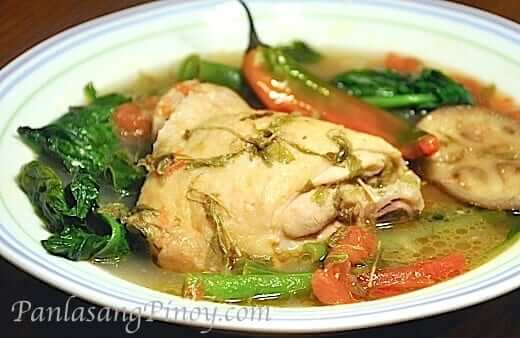
Sinampalukang Manok
Ingredients
- 1.5 lbs chicken cut into serving pieces
- 1.5 cups young tamarind leaves rinsed, with the tough stems removed
- 1 tablespoon sinigang mix optional
- 1 pieces medium Chinese eggplant sliced into serving pieces
- 0.5 lbs long green beans or string beans trimmed and cut into 2-inch pieces
- 2 cups fresh spinach
- 2 tablespoons fish sauce divided
- 4 cups water
- 1 pieces medium onion sliced
- 3 pieces medium tomatoes quartered
- 1 thumbs ginger peeled and sliced
- 3 tablespoons cooking oil
Equipment
- 1 Cooking pot A heavy pot holds a steady simmer while the chicken cooks.
- 1 Colander For rinsing and draining the young tamarind leaves.
Instructions
- Heat the cooking oil in a pot over medium heat.3 tablespoons cooking oil
- Add the onion, tomatoes, and ginger. Saute for 3 to 4 minutes while gently pressing the tomatoes against the side of the pot. Continue cooking until the onion softens and the tomatoes release their juices.1 pieces medium onion, 3 pieces medium tomatoes, 1 thumbs ginger
- Add the chicken. Cook for 5 to 7 minutes, turning the pieces occasionally, until the outside turns light brown.1.5 lbs chicken
- Pour in 1 tablespoon of fish sauce. Stir and cook for 1 minute. Pour in the water, stir, and let the liquid boil.2 tablespoons fish sauce, 4 cups water
- Add the young tamarind leaves. Lower the heat, cover the pot, and simmer for 20 to 25 minutes or until the chicken becomes tender.1.5 cups young tamarind leaves
- Add the optional sinigang mix and stir until it dissolves completely. Taste the broth before adding the remaining fish sauce. Add as much of it as needed to balance the sourness and saltiness.1 tablespoon sinigang mix, 2 tablespoons fish sauce
- Add the eggplant and string beans. Cook for 5 to 7 minutes or until the vegetables are tender but not overly soft.1 pieces medium Chinese eggplant, 0.5 lbs long green beans or string beans
- Add the spinach. Gently push the leaves into the broth and cook uncovered for 1 to 2 minutes.2 cups fresh spinach
- Transfer to a serving bowl and serve with warm rice. Serve warm. Share and enjoy!
Monica Van Rickley says
This dish was amazing! If I had to describe it, I too would say it is Sinigang with chicken. After researching other similar recipes and reading the reviews below, I decided to add 1 Tablespoon fresh, minced ginger and sautéed with the inions and tomato’s. I subbed bokchoy for Tamarind leaves bc I wouldn’t even know how to find these. This is healthier than Sinigang with pork and will be my new go to. Thank you, for sharing your recipe.
Teresa Muriph says
This is quite popular in our province, Nueva Ecija. However, we saute ginger, garlic and onions then chicken. We don’t use tomatoes. We use tamarind leaves and tamarind concoction from boiled tamarind fruits.
Mari says
I first learned of sinampalukang chicken when my mother and I went to visit friends in Jaen, Nueva Ecija.It was quite a novelty to me since I only know about the regular Pork, Beef, Fish, and Shrimp sinigang.For me, I could safely say that this is where it originated.
cat of SJ CA says
Tried this recipe tonight exactly as shown (the only thing missing is the tamarind leaves) and my kids absolutely ate it up! And I mean the vegetables too. Thank you for the easy to cook and prep recipe.
Looking forward to trying the rest of the recipes on this website.
Ovvian says
Thanks for your recipes. The Sinampalukang manok I am used to has ginger. That is the distinct difference between chicken sinigang and sinampalukan—and yes, no kamatis. 🙂 Sinampalukang manok is definitely sounthern Tagalog. It’s comfort food in Cavite for sure.
Elodie Jane Amora says
I made a recipe similar to this lately. Helped with my flu! 🙂
Rosie says
I think this dish is from Batangas-I have friends from that region who cooks
this dish as well.
Thanks for sharing your recipe.