Beef Nilaga Recipe
Beef Nilaga has always been one of those dishes that take me back home, no matter where I am. There is something special about the way the broth smells as it simmers. The blend of beef, peppercorns, and onion fills the kitchen with a comforting aroma that reminds me of slow Sundays in the Philippines. It is not an extravagant dish, but that is exactly what makes it beautiful. With just a few ingredients, you can create something that feels like a hug in a bowl. The same way Bistek Tagalog turns a few pantry staples into something special, Beef Nilaga relies on patience and timing to bring out the natural goodness of its ingredients.
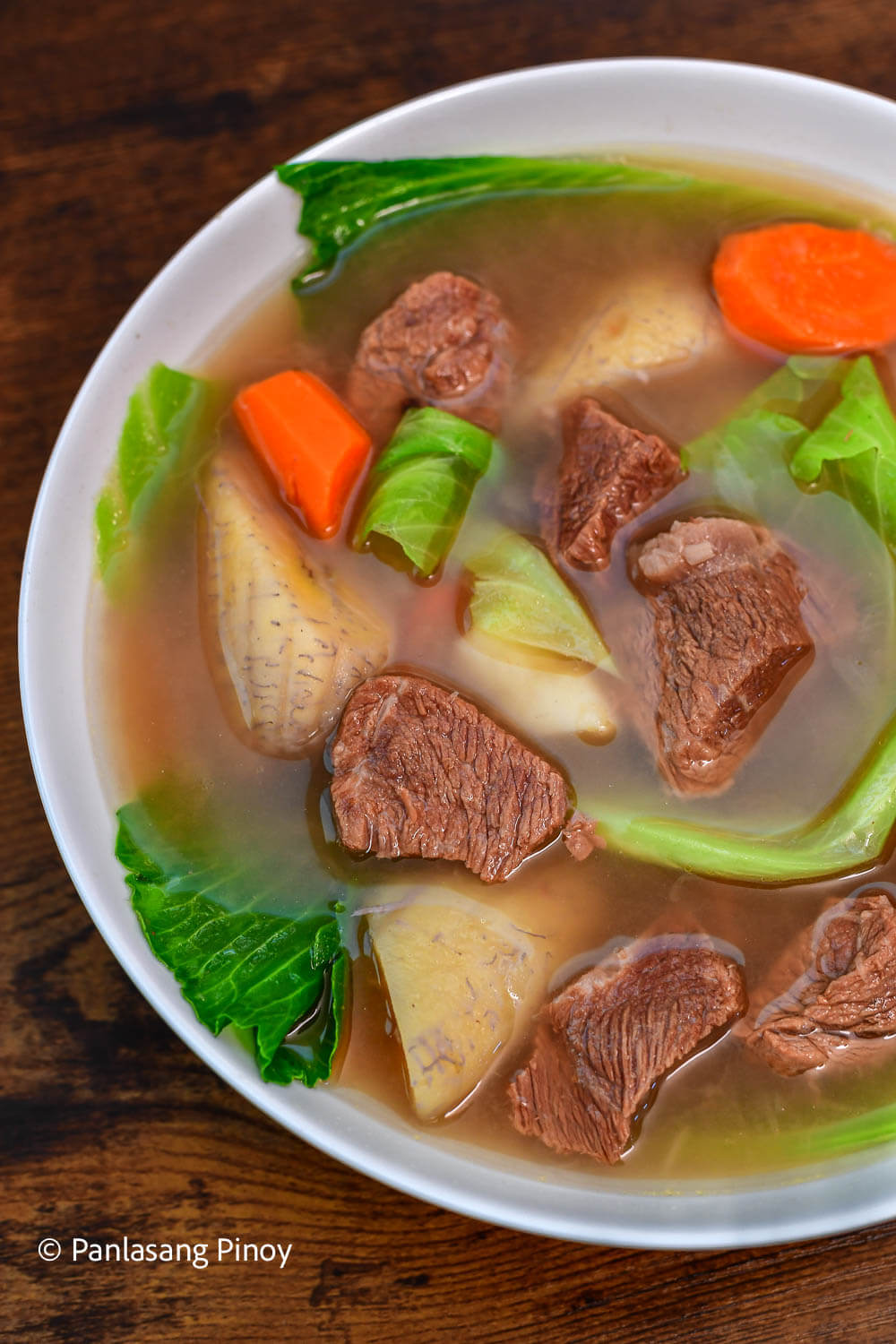
Nilaga has become a household favorite not just in the Philippines but also among Filipino families abroad. When you are living far from home, cooking Beef Nilaga becomes a way to reconnect with tradition and warmth.
What is Beef Nilaga
Beef Nilaga or nilagang baka is one of the most comforting and recognizable Filipino soups. The word nilaga means boiled, and this simple method of slow cooking brings out the best in every ingredient. The beef is simmered until it becomes fork tender while vegetables such as potatoes, cabbage, and saba bananas add sweetness and depth to the broth. The result is a light and balanced soup that tastes nourishing and familiar.
While Beef Kaldereta impresses with its rich and colorful sauce, Nilaga charms in a simpler way with its clear broth and gentle flavors.
The Cultural Meaning Behind Nilaga
Every Filipino family has its own version of Nilaga. Some prefer it plain and light, while others add corn or saba bananas to make it heartier. In rural areas, Nilaga often becomes the centerpiece of communal meals where neighbors share bowls and stories around the table. Its simplicity reflects Filipino values of warmth, resourcefulness, and togetherness.
Cooking Nilaga is also a lesson in patience. The long simmering process teaches you to slow down and let flavors develop naturally. The smell that fills the house when Nilaga is cooking is a kind of invitation, a promise that everyone will gather soon to eat together.
Ingredients for Beef Nilaga
- Beef brisket tender cut that becomes soft and flavorful after long simmering
- Potato adds starch and natural sweetness to the broth
- Carrot provides color and enhances the flavor of the soup
- Cabbage gives freshness and balance to the broth
- Bok choy contributes a mildly earthy flavor and adds color
- Saba bananas bring natural sweetness that blends beautifully with the savory broth
- Fish sauce deepens flavor and adds umami
- Whole peppercorn gives subtle heat and aroma
- Onion enhances the natural sweetness of the broth
- Water forms the base for boiling and flavor extraction
- Salt used for seasoning and balance
How to Cook Beef Nilaga
- Boil the beef
Place the beef brisket in a large cooking pot and pour enough water to cover it. Bring it to a boil over medium heat. Skim off any foam to keep the broth clear. - Simmer until tender
Add onion and whole peppercorns. Lower the heat, cover the pot, and let it simmer for about one and a half to two hours or until the beef becomes tender. - Season the broth
Add fish sauce and a pinch of salt. Stir gently and taste to adjust the flavor to your preference. - Add the vegetables
Place the potatoes and carrots in the pot and cook until they start to soften. Add the cabbage, bok choy, and saba bananas. Continue cooking until all vegetables are tender. - Serve hot
Transfer the Beef Nilaga to a serving bowl. Serve hot with rice and a small bowl of fish sauce with calamansi on the side.
Tips in Cooking Beef Nilaga
- Use beef shank or ribs with bone for richer flavor similar to Bulalo. The bones add natural collagen and enhance the broth.
- Simmer slowly instead of boiling rapidly to keep the broth clear and the meat tender.
- Remove impurities that rise to the top while cooking.
- Add leafy vegetables only near the end to keep them crisp and vibrant.
- Try adding a small piece of ginger or lemongrass for extra aroma without changing the traditional flavor.
Use cold water at the start to help extract flavor gradually from the meat and bones. - Cook the soup in a deep and heavy pot with a lid for even heat distribution.
- Taste and adjust seasoning midway through cooking for a well balanced broth.
- Serve immediately after adding leafy vegetables for a bright and crisp finish.
- Arrange meat and vegetables neatly before pouring the broth to enhance presentation.
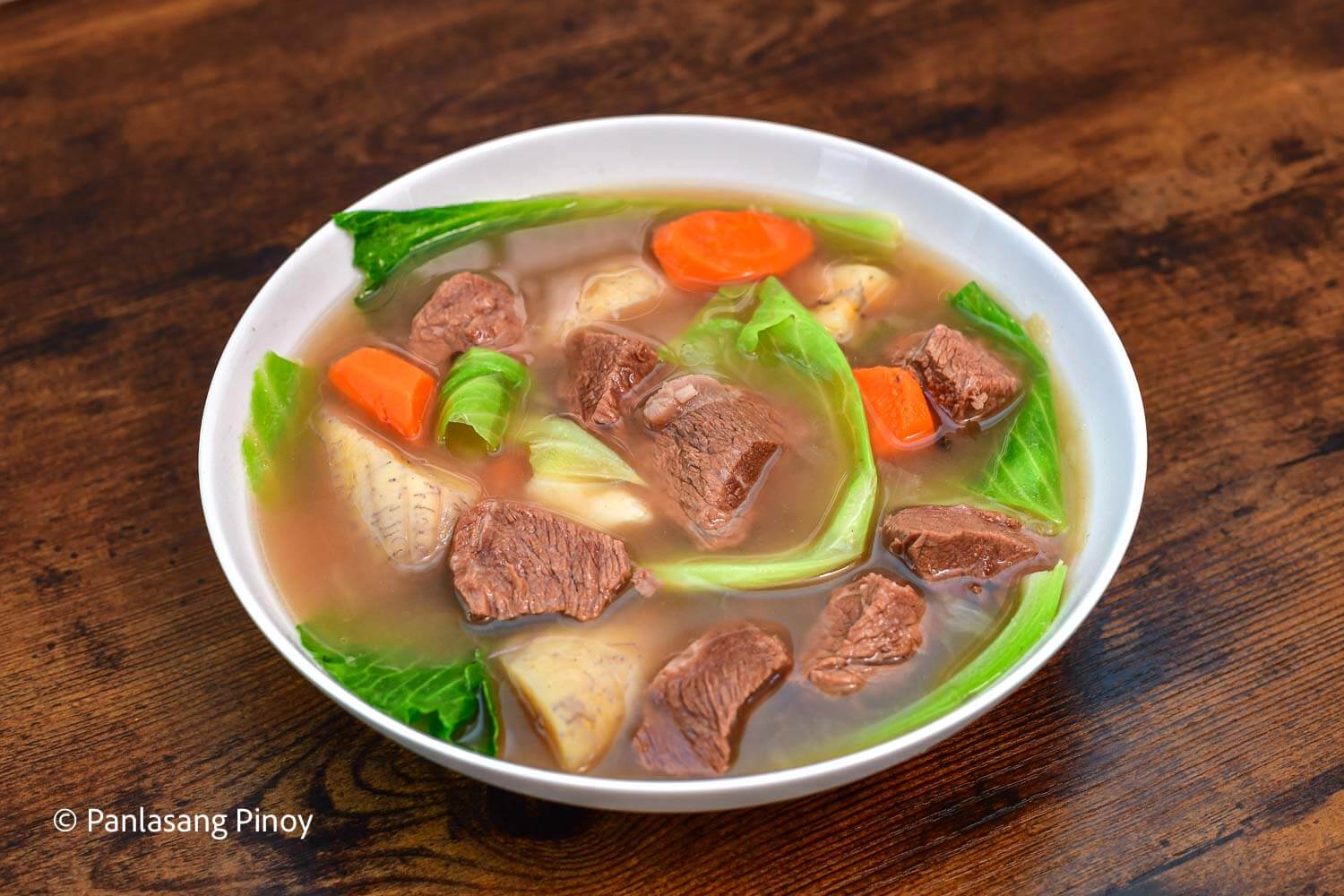
Best Ways to Enjoy Beef Nilaga
Beef Nilaga is best enjoyed hot and fresh. The light broth, soft vegetables, and tender beef make it perfect for lunch or dinner. A side of steamed white rice completes the meal because it absorbs the flavorful broth beautifully. Many Filipinos like dipping the meat in fish sauce with crushed chili or calamansi for extra flavor. Leftovers often taste even better the next day as the flavors become richer with time.
How This Beef Nilaga Stands Out
This Beef Nilaga stands out for its pure and balanced flavor. It celebrates simplicity and shows that the best comfort food does not need complex ingredients. While other beef dishes rely on rich sauces, Nilaga offers gentle warmth through its clear broth and natural sweetness from vegetables. Its slow cooking process creates depth without heaviness and every spoonful feels comforting and familiar.
Substitutions and Variations
- Use beef ribs, shank, or short ribs for added richness and texture.
- Replace cabbage with pechay or napa cabbage for a milder taste.
- Add corn on the cob or green beans for extra sweetness and crunch.
- If you prefer a lighter broth, season with salt instead of fish sauce.
- Add saba bananas only at the last few minutes of cooking to preserve their shape and sweetness.

More Beef Recipes
Enjoy making classic Filipino meals? Check out more of our delicious beef recipes and find new dishes that bring the same warmth, flavor, and comfort to your table.
Storage and Leftovers
- Store leftover Nilaga in an airtight container and refrigerate for up to three days.
- Reheat gently over low heat and add a bit of water if the broth thickens.
- Avoid freezing to keep the vegetables tender.
- Remove leafy greens before storing to prevent bitterness.
- Cool the soup before placing it in the refrigerator to preserve freshness.
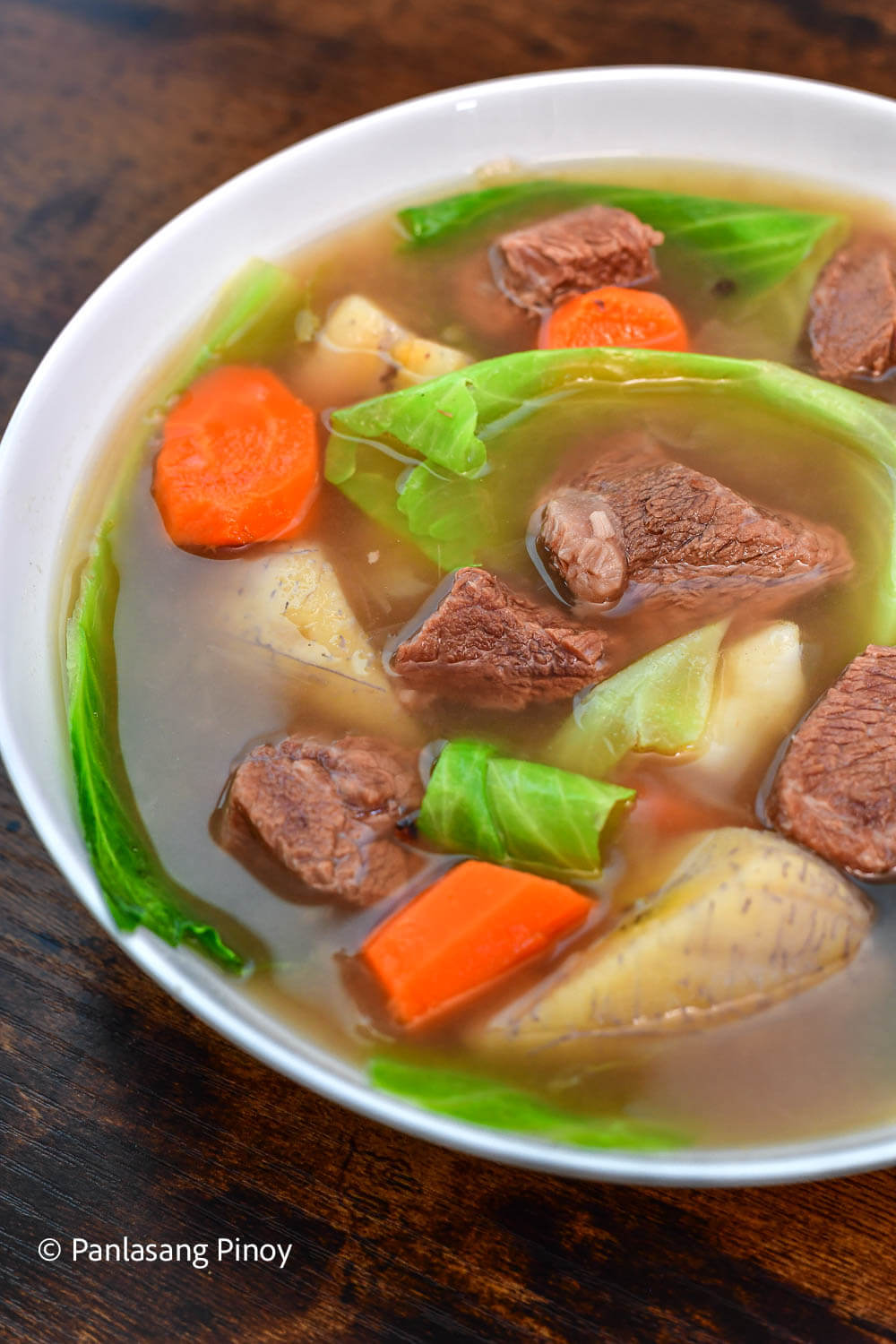
What to Have with It
- White Rice This simple steamed rice perfectly complements the light broth and tender beef.
- Filipino Fried Chicken The crispy and savory flavor creates a delightful contrast to the mild Nilaga soup.
- Atchara The sweet and tangy pickled papaya refreshes the palate and balances the richness of the beef.
Frequently Asked Questions
Can I use a pressure cooker for Beef Nilaga
Yes, it can cut the cooking time down to about thirty five minutes while keeping the beef tender. Let the pressure release naturally for the best texture.
What is the best beef cut for Nilaga
Brisket, shank, and short ribs work beautifully because their connective tissues soften during long cooking and give the broth body and flavor.
Can I add other vegetables
Yes, you can include corn, green beans, or sweet potatoes to make the dish heartier and more colorful.
How can I make the broth clearer
Skim the scum during the first boil and avoid stirring once simmering starts. Clean water and a steady low heat are key to a clear broth.
What can I do with leftover Nilaga broth
You can use it as a soup base for noodles or rice porridge. It is flavorful enough to stand alone as a light soup.
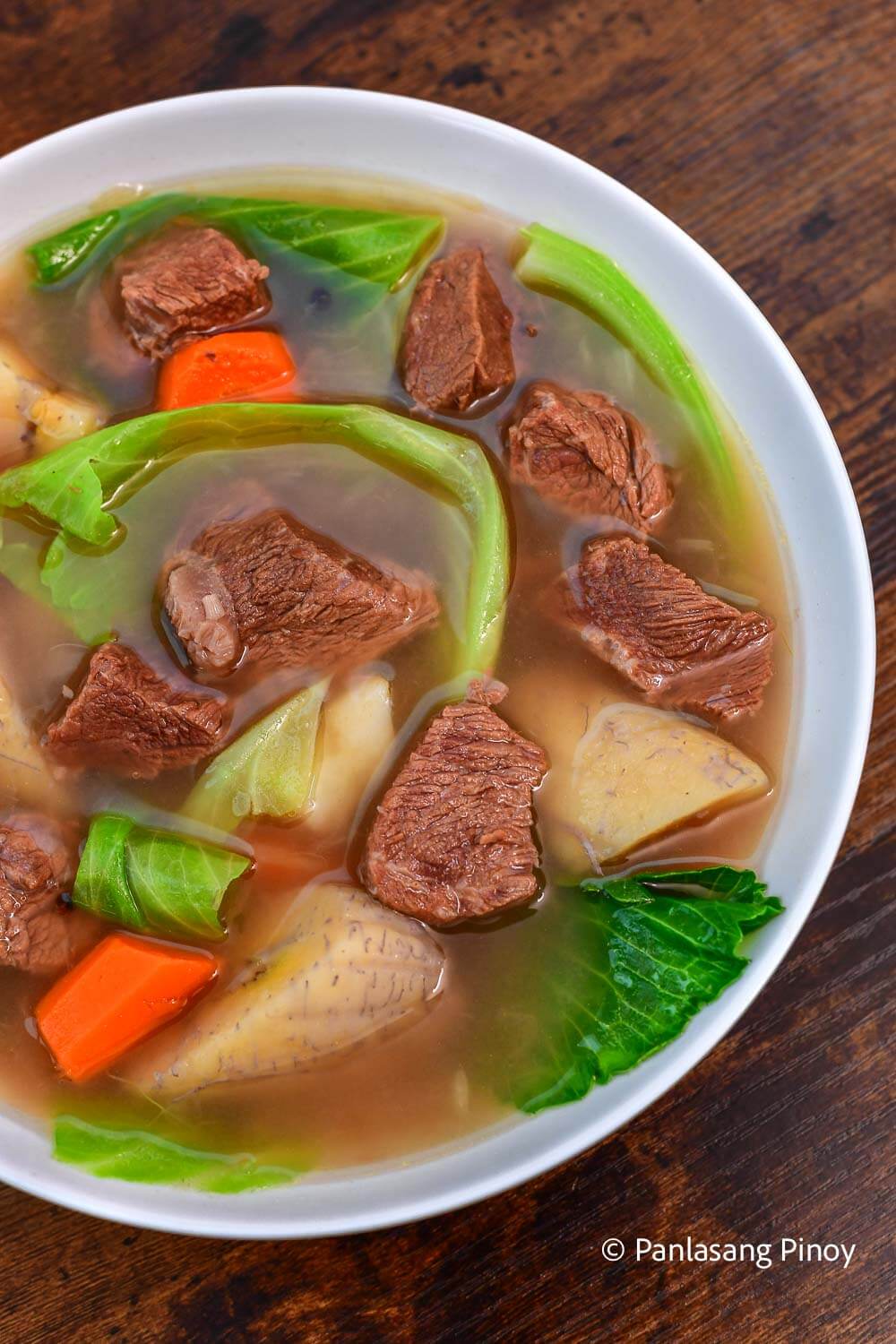
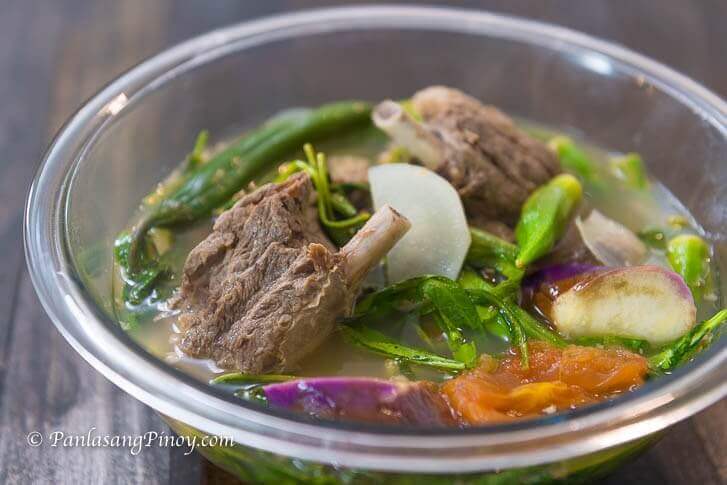
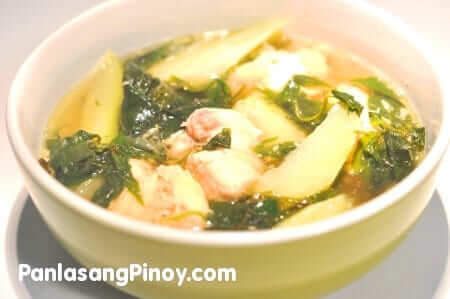
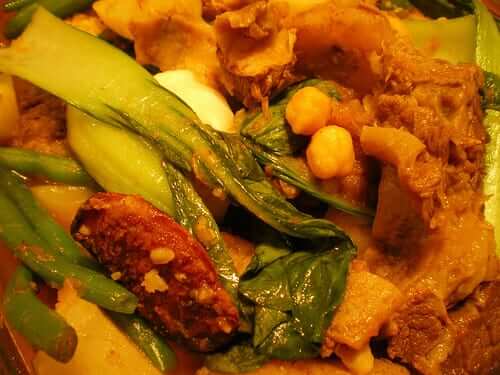
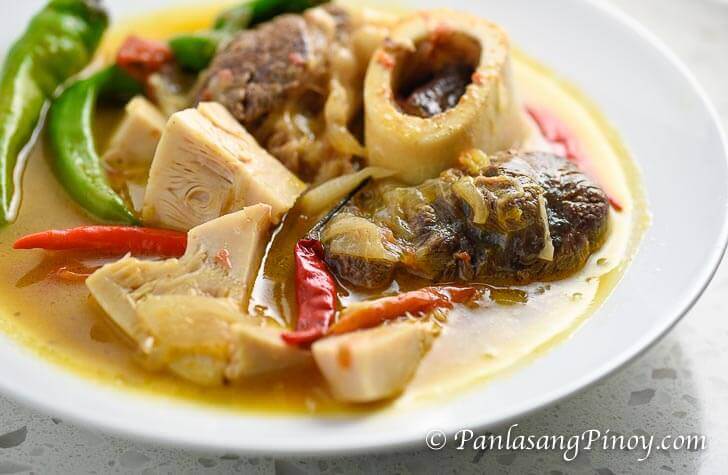
Beef Nilaga remains one of the most cherished Filipino dishes for good reason. It is humble, nourishing, and deeply comforting. The slow simmering fills the kitchen with a scent that feels like home. Every serving is a reminder that true Filipino food is built on patience, simplicity, and love. Whether you are in Manila or far away in another part of the world, a bowl of Beef Nilaga will always taste like family.
Did you make this? If you snap a photo, please be sure tag us on Instagram at @panlasangpinoy or hashtag #panlasangpinoy so we can see your creations!
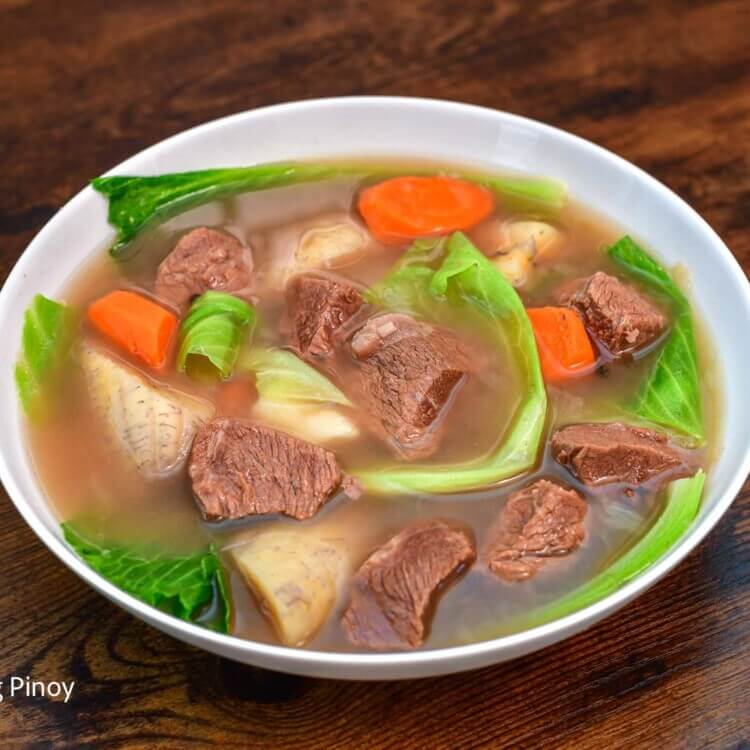
Beef Nilaga Recipe
Ingredients
- 2 lbs beef brisket cubed
- 1 piece potato cubed
- 2 pieces saba banana sliced
- 1 bunch bok choy
- 1 onion wedged
- 2 carrots sliced crosswise
- 1 tablespoon whole peppercorn
- 2 1/2 tablespoons fish sauce
- 1 1/2 quarts water
Instructions
- Saute the onion until texture becomes soft1 onion
- Add-in the beef brisket and cook for about 5 minutes2 lbs beef brisket
- Add the fish sauce and whole peppercorn then mix well2 1/2 tablespoons fish sauce, 1 tablespoon whole peppercorn
- Pour the water and bring to a boil. Simmer for 1 to 2 hours (or 30 minutes if using pressure cooker)1 1/2 quarts water
- Add the potato, saba banana, and carrots. Simmer for 5 to 7 minutes1 piece potato, 2 carrots, 2 pieces saba banana
- Add the bok choy. Cover the pot and turn off the heat. Let it stay for 5 minutes.1 bunch bok choy
- Serve hot. Share and Enjoy!
Robert Scott says
Bok choy in Nilaga? Ok but during my 5 years in the Phil’s my girlfriends, wife and mother in law all used cabbage. We used baboy usually. Neuva Ecija.
Karen says
Hi! Can I add tomato and long sili?
Vanjo Merano says
Long green pepper can be added. However, I do not recommend adding tomato for this dish. You might want to check this beef sinigang recipe if you want to add tomato to your soup.
Jing says
Where did you get your lemon squeezer? Been looking for something like that. 🙂
MaryLou Jacinto says
Hi! I was born in the states my father is a native of the Philippines and my mother is mestiza so I am 3/4 Filipino but I consider myself Filipina because of my upbringing and I love the food. My parents divorced when I was young and my father remarried a Pinay who is an excellent cook. I love to cook and try new dishes. My family loves my cooking but at the next gathering I can’t wait to see their expressions when I show up with some of the popular Filipino dishes I think I can pull it off with your easy to follow instructions & videos. Thanks so much!
Presoshky says
I wouldn’t be cooking now without your website. Thank you at the age of 36, I finally know how to cook! Kinda late bloomer, I should say.