Chicken Lomi Recipe
Chicken Lomi is a thick Filipino noodle soup. I make this version with thin slices of chicken breast instead of the pork, liver, and kikiam you usually see in lomi. I slice the chicken thin so I can cook it right away with the garlic and onion instead of boiling and shredding it first. The carrots go in early, then I add the cabbage with the noodles near the end. With the chicken, noodles, and vegetables, one bowl is already filling enough for a meal.
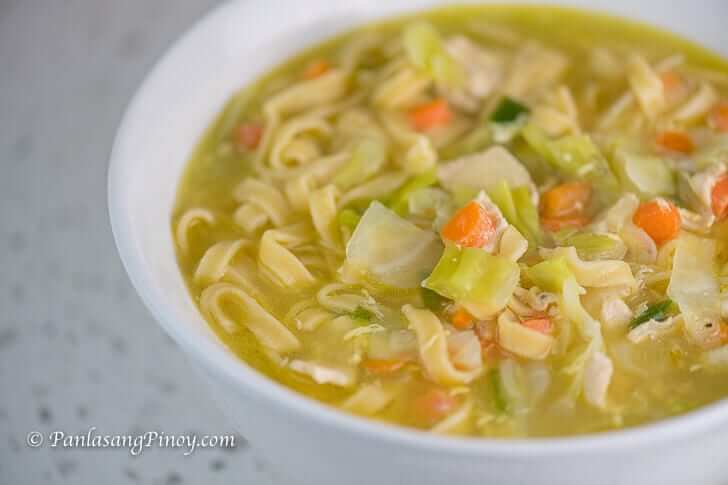
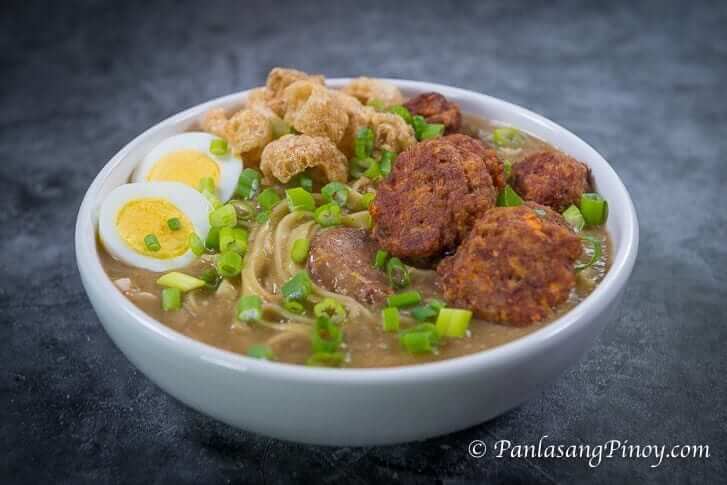
I like my lomi thick, but not so thick that it turns pasty. The beaten egg gives the broth some body, then the cornstarch thickens it more. You can stop after the egg if you prefer a lighter broth, or add the full tablespoon of cornstarch the way I do. If you want a heavier and more loaded version, my lomi recipe uses pork, ham, pig’s liver, and meatballs, then gets topped with crushed chicharon.
I also rinse the fresh miki noodles before adding them to the pot. They usually have some starch and oil on the surface, and I do not want all of that going into the broth. I just rinse them quickly under running water, separate the strands with my hands, and let them drain in a colander before cooking.
What is Chicken Lomi?
Chicken Lomi has fresh thick egg noodles and sliced chicken in a broth that gets thickened twice, once with beaten egg and once with a cornstarch slurry. Lomi reached Filipino kitchens through Chinese noodle soups, and Batangas turned it into the version most people picture today.
I eat a lot of lomi whenever I am in Batangas. The bowls there are heavy on meat and light on vegetables, with pork, liver, meatballs, and crushed chicharon sitting on top of a very thick soup. My corned beef lomi is the closest thing to that on this site. This chicken version keeps the thick broth and fresh noodles but uses chicken and vegetables instead, so it is very different from the clear broth in my chicken noodle soup. If you want something in between the two, my Filipino chicken noodle soup has a clearer broth but also uses fresh miki noodles.
The egg is where lomi and egg drop soup go different ways. In egg drop soup you pour the beaten egg into a gentle simmer and leave it alone so it sets into ribbons. Here you keep stirring while you pour, so the egg breaks into fine pieces and spreads through the broth. That is part of what thickens the soup.
Ingredients
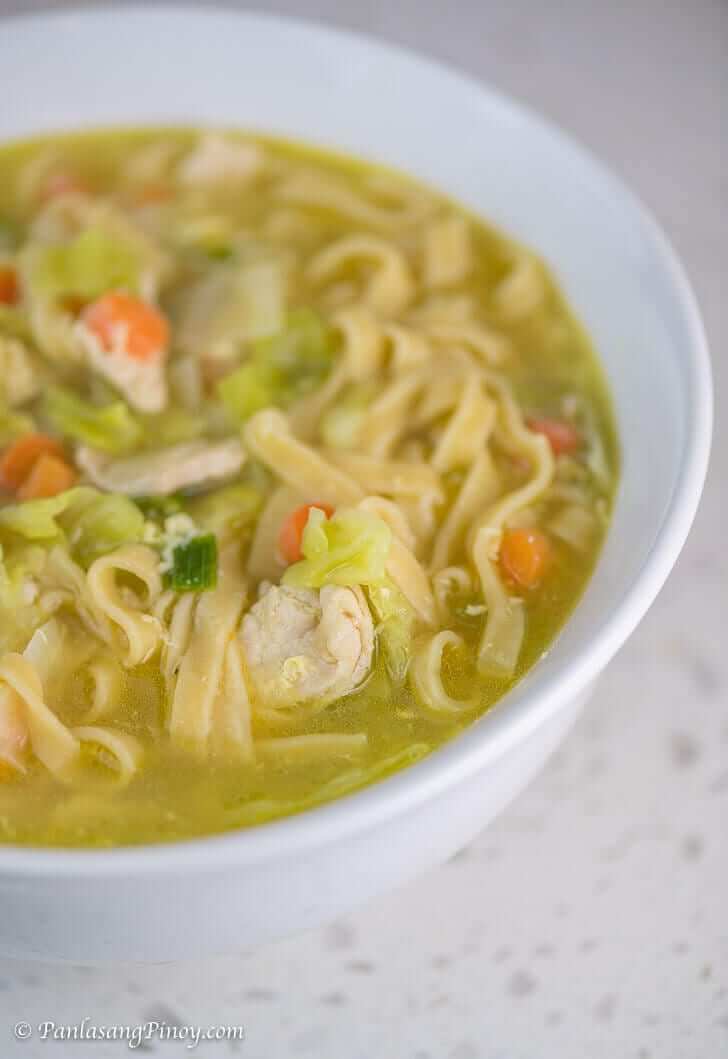
- Fresh flat miki noodles – Look for them in the refrigerated section of an Asian grocery, sold in plastic bags and usually a little oily. Flat miki is what I use, though the thicker round lomi noodles work the same way. Dried miki is a different product and it will not give you the same chew.
- Chicken breast – Sliced thin so it cooks in the few minutes it spends with the aromatics. Ask the meat counter to slice it for you if you would rather not do it at home.
- Knorr Chicken Cube – The pot starts with plain water, so the cube is what seasons the broth. One is enough for six to seven cups.
- Cabbage – Regular green cabbage. Chop it into wide pieces, because it loses a lot of volume once it hits the hot broth.
- Carrots – These go in early with the garlic and onion, so cut them small enough to soften in the same stretch of time.
- Scallions – Chopped and added near the end, which keeps their color and their bite.
- Cornstarch – One tablespoon is enough for this pot. Keep the slurry loose with a quarter cup of water so it blends in quickly instead of leaving lumps.
- Egg – Beat it in a small bowl until the yolk and white are one color. Streaks of unmixed white set into pale clumps once they hit the broth.
- Salt and ground black pepper – Both go in at the end. The chicken cube adds plenty of saltiness, and some brands are saltier than others, so taste before you use the full teaspoon.
Vanjo’s Advice
- Freeze the chicken breast for about 20 minutes before slicing. A firm breast is much easier to cut into thin, even pieces. I do this any time a recipe asks me for thin slices of raw chicken.
- Chop the cabbage wide. Thin shreds can disappear once the soup thickens. Aim for pieces around an inch across and they will still be there when you serve.
- Keep the pot at a low boil once the noodles go in. Fresh miki is soft to begin with, and a hard rolling boil breaks the strands. If you see the surface rolling hard, bring the heat down and let it settle.
- Cook extra noodles on the side if people are eating at different times. The noodles in the pot keep soaking up broth while they sit. A second batch boiled separately keeps the later bowls from turning into one solid mass
How to Cook Chicken Lomi
The chicken cooks with the garlic, onion, and carrots before any water goes in. After that the broth simmers on its own for 15 minutes, then the cabbage and noodles go in together, and the egg and cornstarch come last.
Sauté the Chicken and Aromatics
- Heat the cooking oil in a pot.
- Sauté the garlic, onion, and carrots.
- Add the sliced chicken. Cook until the chicken turns light brown.
Spread the chicken across the pot instead of dropping it in as one pile. Slices that are piled together will steam instead of brown.
Build the Broth
- Pour in the water and let it boil.
- Add the chicken cube and stir. Cover the pot and cook over low to medium heat for 15 minutes.
The 15 minutes are for the broth, not for the chicken. Thin slices are already cooked through by this point, and the time is what draws flavor out of the chicken and the aromatics into the water.
Add the Cabbage and Noodles
- Rinse the miki noodles and drain well. Add the cabbage and noodles. Cook for 8 to 10 minutes.
- Add the scallions and stir.
Separate the strands with your hands as you rinse the noodles. Fresh miki is packed as a block, so the strands can stay stuck together if you put the whole thing into the pot. They are done when they are soft all the way through with no firm center.
Thicken with Egg and Cornstarch
- Slowly pour in the beaten egg while stirring continuously.
- Combine the cornstarch with 1/4 cup water and stir until smooth. Pour the mixture into the pot while stirring. Continue stirring until the soup thickens.
Constant stirring breaks the egg into fine pieces and spreads it through the broth. If you stop stirring, the egg will form ribbons instead.
Season and Serve
- Season with salt and ground black pepper. Cook for 2 minutes.
- Transfer the Chicken Lomi to a serving bowl. Serve warm. Share and enjoy!
Take it off the heat while it still pours easily off the ladle. A lomi that looks right in the pot will be noticeably thicker by the time it reaches the table.
What to Serve with Chicken Lomi
- Lumpiang Shanghai – Lomi houses in Batangas often put these right on top of the bowl. Eat them before the wrappers soften.
- Lechon Kawali – Chop it small and scatter it over the soup right before serving.
- Crushed chicharon – Crush it coarsely rather than down to dust, so the pieces last a few spoonfuls before they go soft.
- Toasted garlic – Fry sliced garlic in a little oil until it turns light gold, then spoon it over each bowl with some of the oil.
Storage
Lomi keeps for up to 3 days, though the noodles are the part that changes the most.
- Refrigerator: Store it in an airtight container for up to 3 days. The noodles soak up most of the loose broth overnight, so stir in half a cup of water or broth when you warm it back up.
- Freezer: I do not freeze this one with the noodles in it, because fresh miki turns soft and breaks apart after thawing. If you want a head start, stop after the 15-minute simmer and freeze the broth and chicken before the cabbage, noodles, egg, and cornstarch go in. It holds for up to 2 months that way. Cook the rest fresh when you thaw it.
- Reheating: Warm it over low heat with a splash of water, stirring so the bottom does not scorch. Do not let it boil because the noodles will soften even more.
More Lomi Recipes
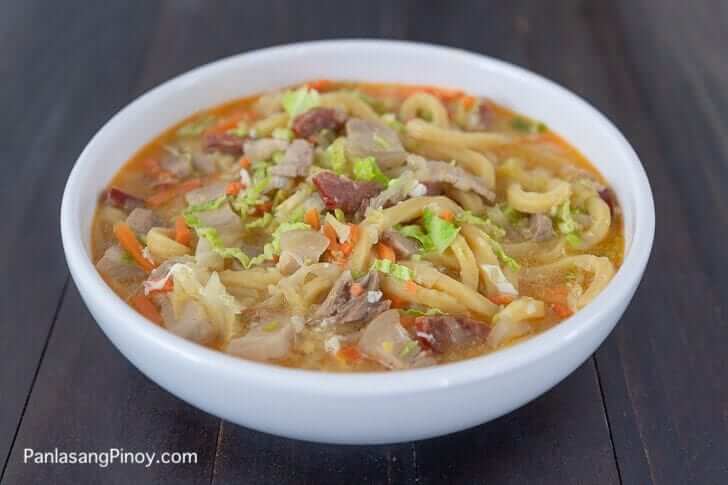
- Lechon Lomi Recipe – Chopped leftover lechon simmered into the broth with a beef cube, fish sauce, and soy sauce, with the noodles going in last.
- Pork Lomi – Pork belly boiled until tender and sliced thin, with Chorizo de Bilbao sautéed early and the pork stock going back into the soup.
- Oriental Lomi Recipe – Round miki noodles with Chinese sausage and thin pork slices, thickened with all-purpose flour instead of cornstarch.
- Seafood Lomi Noodles Recipe – Squid balls, kani, and long green beans, with a packet of Knorr Crab and Corn Soup standing in for the broth.
- Beef Pares Lomi – Beef kalitiran simmered with star anise and brown sugar until tender, then the fresh noodles go into the same wok.
Substitutions
- Fresh flat miki noodles – Round lomi noodles are the closest swap and need the same cooking time. Dried egg noodles or fettuccine also work, but boil them separately and add them to the bowls, since their starch would thicken the broth further.
- Chicken breast – Boneless chicken thighs work too. Slice them the same way and follow the same cooking method.
- Knorr Chicken Cube – Use 6 to 7 cups of chicken broth in place of the water and the cube. Go easy on the salt at the end, since store-bought broth is already seasoned.
- Cabbage – Napa cabbage. It is softer and cooks faster, so add it in the last 5 minutes rather than with the noodles.
- Cornstarch – Cassava flour thickens the same way and it is what my lomi recipe uses. Potato starch works too. Mix either one with cold water before it goes in.
- Spinach – Not a swap for the cabbage, but a good addition. Stir a handful in with the scallions and let the heat of the pot wilt it.
Frequently Asked Questions
What noodles should I use for chicken lomi?
Fresh miki noodles are sold refrigerated in plastic bags at Asian groceries. Flat miki is what this recipe uses. Lomi noodles are thicker and chewier, but they hold up just as well in the pot, so buy whichever your store carries. Fresh miki is thicker than the thin egg noodles used for mami but a little thinner than lomi noodles, and it is the same noodle I stir-fry for pancit miki guisado.
Can I use spaghetti or fettuccine instead of miki noodles?
You can. A reader asked me the same thing about flat spaghetti. Boil the pasta separately, drain it, and add it to the pot at the end. Dried pasta gives off a lot of starch while it cooks, and cooking it in the soup would make the broth too thick before the cornstarch even goes in. The texture is softer than fresh miki, but the soup still works.
My lomi came out too thick. How do I fix it?
Add hot water a quarter cup at a time over low heat and stir until the soup loosens. Use hot water rather than something cold so the pot does not lose its heat. Taste after the second pour, because the seasoning thins out along with the broth.
Is chicken lomi the same as Batangas lomi?
Not exactly. Both have thick broth and fresh noodles, but Batangas lomi usually has much more meat and very few vegetables. Chicken breast, cabbage, and carrots make this a lighter bowl, and the shopping list is a lot shorter.
Can I make chicken lomi ahead of time?
Yes. Take the broth and chicken through the simmer, let it cool, and keep it covered in the refrigerator for up to 2 days. Do the rest on the day you serve it. If you cook the whole pot a day ahead, the noodles will absorb more of the broth and the lomi will get much thicker. You will probably need to loosen it with water when you reheat it.
I like mine with calamansi and a little patis on the side.
Watch How to Make It

Did you make this? If you snap a photo, please be sure tag us on Instagram at @panlasangpinoy or hashtag #panlasangpinoy so we can see your creations!
Chicken Lomi
Ingredients
- 1/2 lbs fresh flat miki noodles
- 10 ounces boneless chicken breast sliced into thin pieces
- 1 pieces Knorr Chicken Cube
- 1/2 pieces cabbage medium, chopped
- 1 cups carrots chopped
- 1/2 cups scallions chopped
- 1 pieces yellow onion medium, cubed
- 3 cloves garlic crushed
- 1 tablespoons cornstarch
- 1 pieces egg beaten
- 6 to 7 cups water
- 1 teaspoons salt
- 1/4 teaspoons ground black pepper
- 3 tablespoons cooking oil
Equipment
- 1 Cooking pot Use a wide 5-quart pot so the noodles have room to move as the soup thickens.
- 1 Ladle Helpful for stirring the slurry in evenly and for portioning the soup.
- 1 Small Mixing Bowl For beating the egg and dissolving the cornstarch.
Instructions
- Heat the cooking oil in a pot.3 tablespoons cooking oil
- Sauté the garlic, onion, and carrots.3 cloves garlic, 1 pieces yellow onion, 1 cups carrots
- Add the sliced chicken. Cook until the chicken turns light brown.10 ounces boneless chicken breast
- Pour in the water and let it boil.6 to 7 cups water
- Add the chicken cube and stir. Cover the pot and cook over low to medium heat for 15 minutes.1 pieces Knorr Chicken Cube
- Add the cabbage and miki noodles. Cook for 8 to 10 minutes.1/2 pieces cabbage, 1/2 lbs fresh flat miki noodles
- Add the scallions and stir.1/2 cups scallions
- Pour in the beaten egg. Stir.1 pieces egg
- Combine the cornstarch with 1/4 cup water and stir until smooth. Pour the mixture into the pot while stirring. Continue stirring until the soup thickens.1 tablespoons cornstarch
- Season with salt and ground black pepper. Cook for 2 minutes.1 teaspoons salt, 1/4 teaspoons ground black pepper
- Transfer the Chicken Lomi to a serving bowl.
- Serve warm. Share and enjoy!

ANNELYN BANIQUED says
I did it!, it really taste like the lomi they served during our training. Thank you sir. By the way I’m from Baguio City, Philippines.
Vanjo Merano says
That is nice to hear, Annelyn. I am glad the Chicken Lomi reminded you of the one served during your training. Thank you for writing from Baguio City.
rochelle lofranco says
Hi po pwede po ba gamitin yung flat spagetti noodles in leiu of miki noodles? Thanks po
Mebielyn Cutanda says
Ask ko lang po if pwede po ba sa spinach na kahit anung klaseng luto. Thanks po and God bless po????