Sinigang na Hipon Recipe
Sinigang na Hipon is a sour Filipino soup where the shrimp does more than just provide the meat. Cooking it with the heads and shells on gives the broth a noticeable seafood flavor that works well with the sourness of the sinigang. Since shrimp cooks quickly, it also makes this a much faster dish to prepare than versions made with pork or beef.
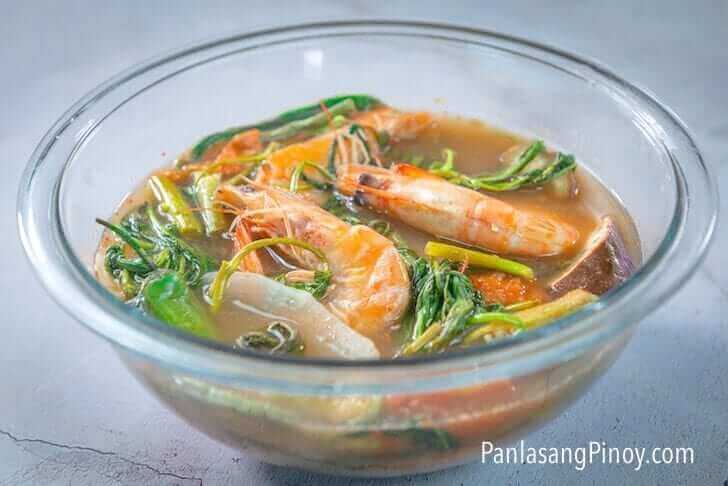
I like using shrimp with the heads and shells still on because they add more flavor to the broth. We also like our sinigang quite sour at home, much like my classic pork sinigang, so I usually taste the broth as it cooks and adjust it from there. Prawns work well too. I made sinigang na sugpo after a trip to the wet market in Imus, Cavite, and I cook it almost the same way. Since prawns are bigger, I just give them a little more time to cook.
The important thing with shrimp is not to leave it in the pot for too long. Overcooked shrimp gets tougher, and the shell can also be harder to peel. Once the shrimp is cooked and the kangkong has wilted, I turn off the heat and serve the sinigang while it is still hot.
What is Sinigang na Hipon?
Sinigang na Hipon is a Filipino sour soup made with shrimp and vegetables in a tamarind broth, seasoned with fish sauce. The name comes from sigang, an old Tagalog word for stewing, and hipon is the Filipino word for shrimp.
Sinigang is cooked with almost every protein in Filipino kitchens. Pork is the most common one, and my sinigang na bangus uses milkfish steaks in the same kind of broth. Timing is the main difference with the shrimp version. Pork needs an hour or more before it turns tender, while shrimp is done in a few minutes, so I start the vegetables before the shrimp goes in.
The souring agent changes with what is on hand. Tamarind is the usual choice, but kamias, guava, and green mango are all used in different provinces, and each one sours the broth in its own way. I serve this hot in the middle of the table with rice, and I keep a small dish of fish sauce with crushed chili beside my plate.
Ingredients
- Shrimp – Whole shrimp with the heads and shells on. Medium size is easier to peel at the table than the small ones, and you get more meat per piece.
- Sinigang sa Sampaloc Mix – One 44 gram packet is enough for two quarts of water.
- Daikon radish – Keep this one even if you skip the other vegetables. The radish gives sinigang that sweet peppery edge. Slice it into rounds about a quarter inch thick.
- Kangkong – Separate the stalks from the leaves before you start, since they go into the pot at different times. Wash it two or three times because grit collects inside the hollow stalks.
- Snake beans – Cut into two-inch pieces.
- Okra – Leave the pods whole and keep the caps on. Cut okra lets out more slime into the broth.
- Chinese eggplant – The long purple kind. Slice it on a diagonal so the pieces cook through in five minutes.
- Long green pepper – Siling pansigang. Leave the peppers whole for the aroma, or split one open if you want some heat in the broth.
- Onion and tomato – Quarter both. They go in with the radish at the start and turn soft enough to eat by the time the soup is done.
- Fish sauce – Season with this at the end rather than with salt. Brands vary in saltiness, so pour a little, stir, and taste.
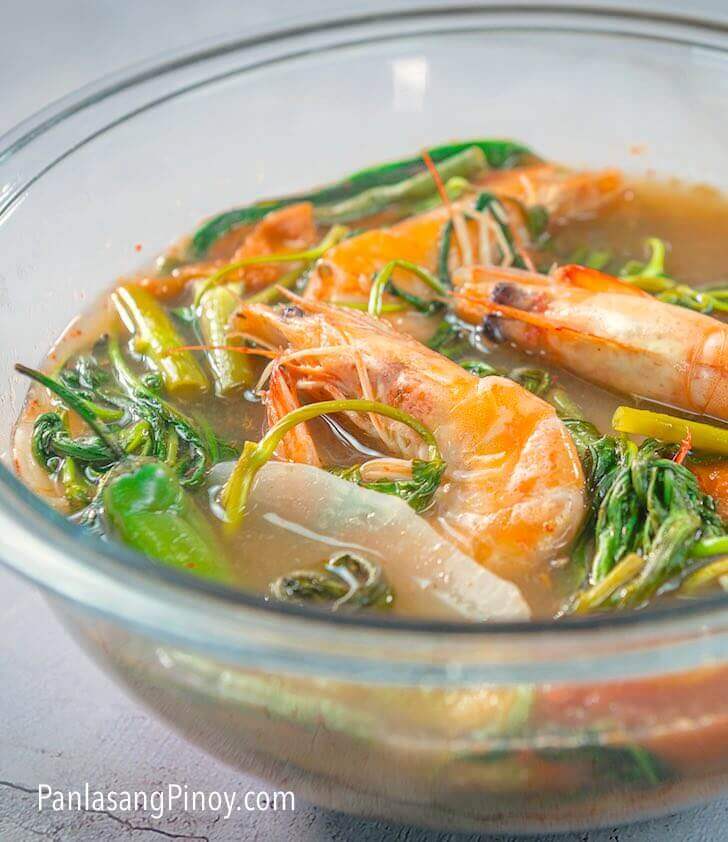
Choosing and Cleaning the Shrimp
Fresh shrimp makes a better broth than frozen. Look for firm shells, heads that are still attached and not darkened, and a fresh smell. Shrimp sold with the heads already removed costs less, and it works, but the broth will taste plainer.
Cleaning takes a few minutes. Rinse the shrimp under cold running water, then trim the sharp horn on top of the head and snip off the long whiskers and legs with kitchen scissors. Those are the parts that scratch your mouth and collect grit. Deveining is optional on small shrimp, though I do it on the larger ones: run a small knife along the back of the shell and lift out the dark line with the tip.
Frozen shrimp is fine when fresh is not around. Thaw it in the ref overnight or under cold running water, then drain it well before it goes into the pot so the melted ice does not water down the broth.
Vanjo’s Advice
- Keep the onion, tomato, and radish even if you drop the rest. Those three are what build the broth. You can adjust the okra, eggplant, sitaw, and kangkong depending on what your family likes to eat.
- Season a little at a time. Add the sinigang mix and fish sauce gradually, then taste the broth before adding more.
- Once the water starts boiling, the cooking moves quickly. Have all the vegetables ready before you start.
- Use more sinigang mix if your household likes it very sour. We do, so I go past what the packet suggests. You can also squeeze in fresh calamansi at the table if only some of you want it sharper.
- Put the kangkong leaves in last and turn off the stove right after. A minute in the hot broth is all they need. Left longer, they go dark and lose their bite.
- Serve it with the shells still on. Peeling shrimp at the table is part of eating this, so I put out a small plate for the shells.
How to Cook Sinigang na Hipon
Make the Broth
- Boil the water in a cooking pot. Add the onion, tomato, and daikon radish.
- Cover the pot and continue boiling for 8 minutes.
Give the radish the full eight minutes before anything else goes in. It takes longer to soften than the shrimp and the other vegetables.
Cook the Shrimp
- Add the shrimp. Cook for 1 minute.
- Add the Knorr Sinigang sa Sampaloc Recipe Mix. Stir until completely dissolved, then cover the pot and cook for 3 minutes.
I taste the broth at this point and add more sinigang mix if I want it more sour.
Add the Vegetables
- Add the long green peppers, snake beans, okra, and eggplant.
- Stir and cook for 5 minutes.
Push the vegetables under the broth instead of letting them sit on top. Pieces above the broth cook slower than the ones under it, and you end up with firm okra beside soft eggplant.
Finish with Kangkong (water spinach)
- Put the kangkong stalks into the pot.
- Season with fish sauce and ground black pepper.
- Add the kangkong leaves. Cook for 1 minute.
- Transfer to a serving bowl. Serve warm with rice.
Ladle the shrimp out first, then the vegetables, then the broth over everything.
What to Serve with Sinigang na Hipon
- Steamed white rice – The soup is meant to be eaten with it, and the broth is good spooned straight over a mound of rice.
- Fish sauce with crushed siling labuyo – The sawsawan I keep beside my plate. Dip the shrimp in it after peeling.
- Fried tuyo – Salty dried fish next to a sour soup is an old pairing, and a few pieces stretch the meal.
- Lechon Kawali – Crispy pork belly for when shrimp on its own is not enough for the table.
- Fried galunggong – Another fried fish that goes with sour soup and rice.
Storing Sinigang na Hipon
Leftover Sinigang na Hipon keeps for a couple of days in the ref. Shrimp does not hold up well to reheating, so I warm only what we are going to finish.
- Refrigerator: Store leftovers in a covered container in the refrigerator for up to 2 days. I usually reheat only the portion we plan to eat so the shrimp and vegetables do not get cooked over and over.
- Freezer: Freeze the broth by itself for up to 2 months. I leave out the shrimp and kangkong because both lose their texture after thawing. If I know I will freeze part of the sinigang, I set that portion of broth aside before adding the kangkong.
- Reheating: I warm it over medium heat just until it starts to steam, then take it off the heat. Avoid boiling it again because the shrimp can turn tough. Add a little water if the broth has thickened in the refrigerator. For frozen broth, thaw it overnight in the refrigerator, then add fresh shrimp and vegetables as you heat it.
More Shrimp Recipes
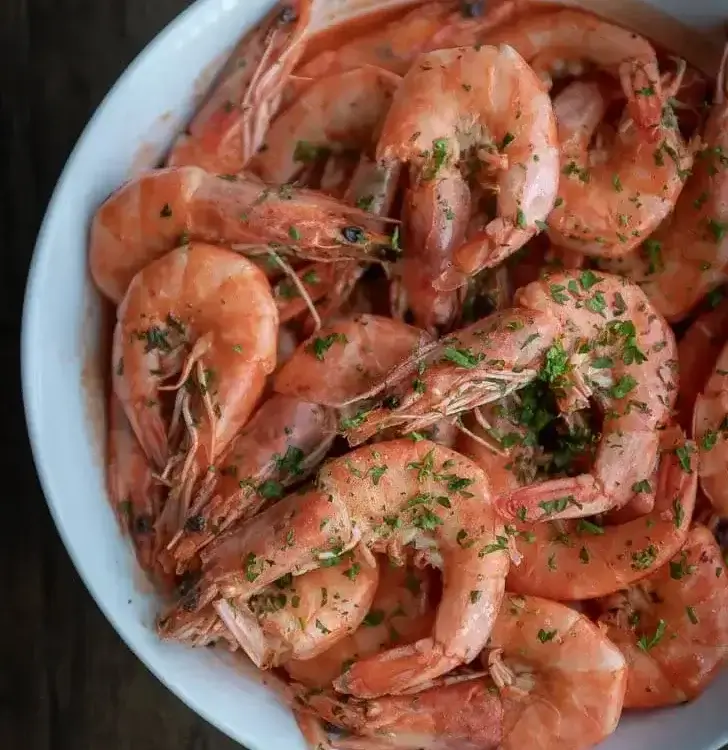
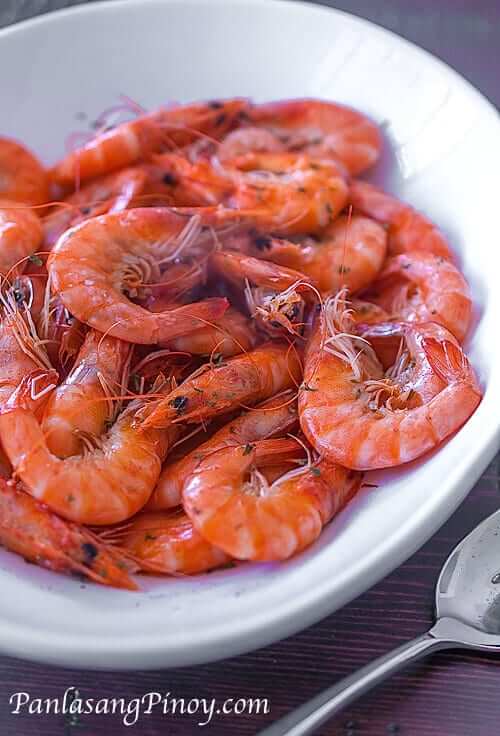
- Halabos na Hipon – Shrimp cooked in its own juices with very little added, so the flavor stays concentrated.
- Ginataang Hipon – Shrimp simmered in coconut milk with ginger, garlic, and green and red chilies.
- Garlic Butter Shrimp – Shrimp cooked in butter with plenty of garlic, sauce spooned over the top.
- Ukoy – Crisp shrimp fritters eaten with a vinegar dip.
- Nilasing na Hipon – Shrimp marinated in wine and fried in a light batter.
- Shrimp Laing – Dried taro leaves cooked down in coconut milk with shrimp and chili.
Substitutions
- Shrimp – Prawns take about 3 to 4 minutes more in the pot. You can also cook half shrimp and half fish, the way I do in my seafood sinigang.
- Knorr Sinigang sa Sampaloc Mix – Use about 10 to 12 pieces of fresh green tamarind. Boil them in a cup of water until soft, mash, then strain the liquid into the pot and discard the seeds and skins. Tamarind paste also works: start with 2 tablespoons, stir it in, and add more to taste.
- Kangkong – Spinach or bok choy, added at the very end the same way.
- Snake beans – Regular green beans, cut to the same length.
- Chinese eggplant – Globe eggplant cut into thick half moons.
- Long green pepper – Banana pepper or Anaheim, both mild enough to leave whole.
Frequently Asked Questions
Do I need to devein the shrimp?
On small shrimp I skip it. On the larger ones I take the vein out, since it is easy to see and easy to reach with the tip of a knife through the back of the shell. Trimming the horn and the whiskers matters more to me than the vein, because those are what get in the way when you peel.
Can I use frozen shrimp?
You can. Thaw it first in the ref overnight, or in a colander under cold running water if you are cooking right away. Drain it well before adding it to the pot. Shrimp dropped in still frozen releases water into the broth and takes longer to cook.
Can I add gabi to make the broth thicker?
Yes, though it changes the timing. Peel and quarter two pieces of gabi and put them in with the radish at the start, then mash one or two against the side of the pot once they are soft. That way the soup thickens before the shrimp goes in. I do the same thing in my sinigang na baboy with gabi.
My broth came out flat. What did I do wrong?
Add more fish sauce, stir, and taste it again. If it is the sourness that is missing rather than the salt, add the rest of the sinigang mix. The amount you need depends on how much water is in the pot and how sour you like your sinigang, so treat the packet as a starting point.
Sinigang na Hipon is done the minute the kangkong leaves go limp, so have the bowls and the rice ready before you get to that step. Share and enjoy!
Watch How to Make It

Did you make this? If you snap a photo, please be sure tag us on Instagram at @panlasangpinoy or hashtag #panlasangpinoy so we can see your creations!

Sinigang na Hipon Recipe
Ingredients
- 1 lbs shrimp cleaned
- 44 grams Knorr Sinigang sa Sampaloc Mix
- 1 bunch kangkong stalks and leaves separated
- 15 pieces snake beans cut into 2-inch lengths
- 5 pieces okra
- 1 piece Chinese eggplant sliced
- 1 cup daikon radish sliced
- 1 piece tomato sliced
- 3 pieces long green peppers
- 1 piece onion sliced
- 2 quarts water
- Fish sauce and ground black pepper to taste
Equipment
- 1 Cooking pot A 5-quart pot holds the 2 quarts of broth with room for the vegetables.
- 1 Slotted spoon Useful for lifting the shrimp out if you want to hold them aside while the vegetables finish.
Instructions
- Boil the water in a cooking pot. Add the onion, tomato, and radish. Cover the pot and continue boiling for 8 minutes.2 quarts water, 1 piece onion, 1 piece tomato, 1 cup daikon radish
- Add the shrimp. Cook for 1 minute.1 lbs shrimp
- Add the Knorr Sinigang sa Sampaloc Recipe Mix. Stir until completely dissolved. Cover the pot and cook for 3 minutes.44 grams Knorr Sinigang sa Sampaloc Mix
- Add the long green peppers, snake beans, okra, and eggplant. Stir and cook for 5 minutes.3 pieces long green peppers, 15 pieces snake beans, 5 pieces okra, 1 piece Chinese eggplant
- Put the kangkong stalks into the pot. Season with fish sauce and ground black pepper to taste.1 bunch kangkong, Fish sauce and ground black pepper
- Add the kangkong leaves. Cook for 1 minute.1 bunch kangkong
- Transfer to a serving bowl. Serve warm with rice. Share and enjoy!

Jenn says
Do you have to put all of the vegetables in there? I have a few family that doesn’t like a few of those. But will it affect the taste? My grandma would make this and it’s great!
Vanjo Merano says
You can leave some out, Jenn. Keep the onion, tomato, and radish, since those are what build the broth. The radish in particular gives sinigang that sweet peppery edge. The okra, eggplant, sitaw, and kangkong are mostly there for texture and bulk, so drop whichever ones your family does not like. The sourness comes from the tamarind mix, not the vegetables, so it will still taste like your grandma’s. One thing to watch though: with fewer vegetables in the pot there is less to soak up the seasoning, so add the sinigang mix and fish sauce a little at a time and taste as you go. Otherwise the broth can come out sharper and saltier than you want.
Teresita morado says
Perfect