What Is Okra? A Filipino Cook’s Guide to Using It
Okra is a green pod vegetable with a mild taste and small, edible seeds inside. In Filipino cooking, I usually see it in pinakbet, sinigang, and dinengdeng. The texture is what people notice first. When you slice it and cook it with liquid, okra releases a natural mucilage that turns slippery, which is also what thickens a good pot of sinigang. I mostly have it in those stews or steamed with bagoong on the side. It is cheap, it cooks in minutes, and it is easier to enjoy once you know how to cook it.
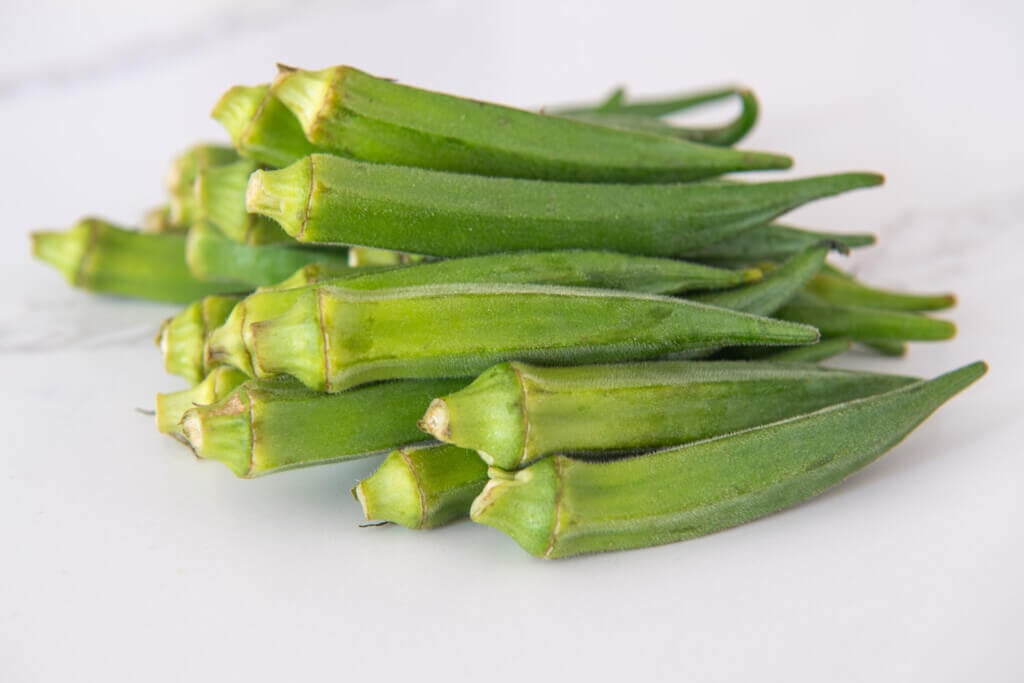
What I do is keep it simple. For most dishes I cook okra over high heat, or I add it near the end so it stays firm and green. It is a mainstay in my pinakbet and sinigang, and I also like it steamed with bagoong alamang on the side. I will share how I choose okra, how I keep the slippery texture down, and where I use it most in Filipino cooking.
What is Okra?
Okra (Abelmoschus esculentus) is the edible seed pod of a flowering plant in the mallow family, the same family as cotton and hibiscus. You may also see it called lady’s fingers or lady finger because of its long, tapered shape, and in South Asian cooking it goes by bhindi. In Spanish-speaking regions it is often called quimbombó or simply okra. Botanically the pod is a fruit, since it holds the seeds, but in the kitchen we treat okra as a vegetable.
Okra started in Africa and spread around the world through trade. It grows best in warm, humid weather, which is why it does well in the Philippines. You will find it in many cuisines, from Indian curries to Creole gumbo, and it has long been part of everyday Filipino vegetable cooking.
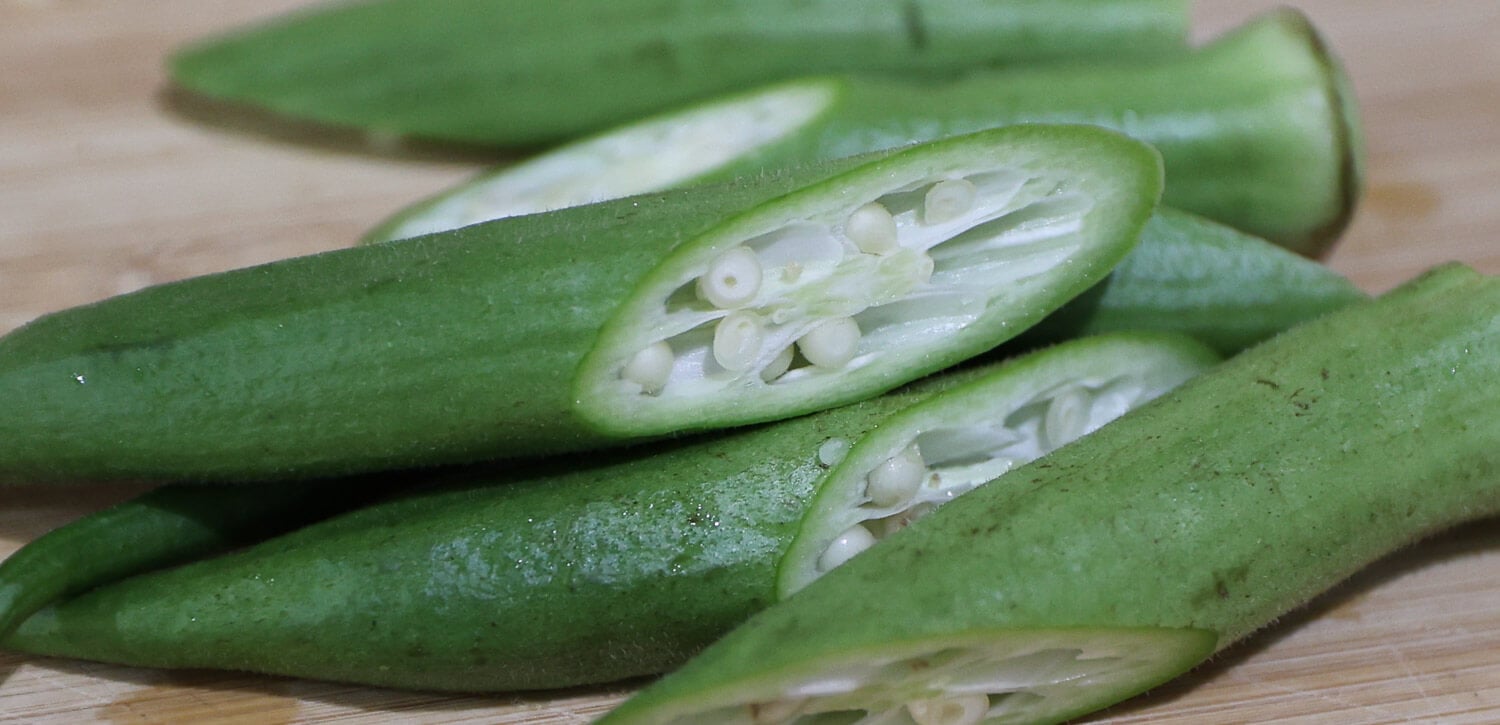
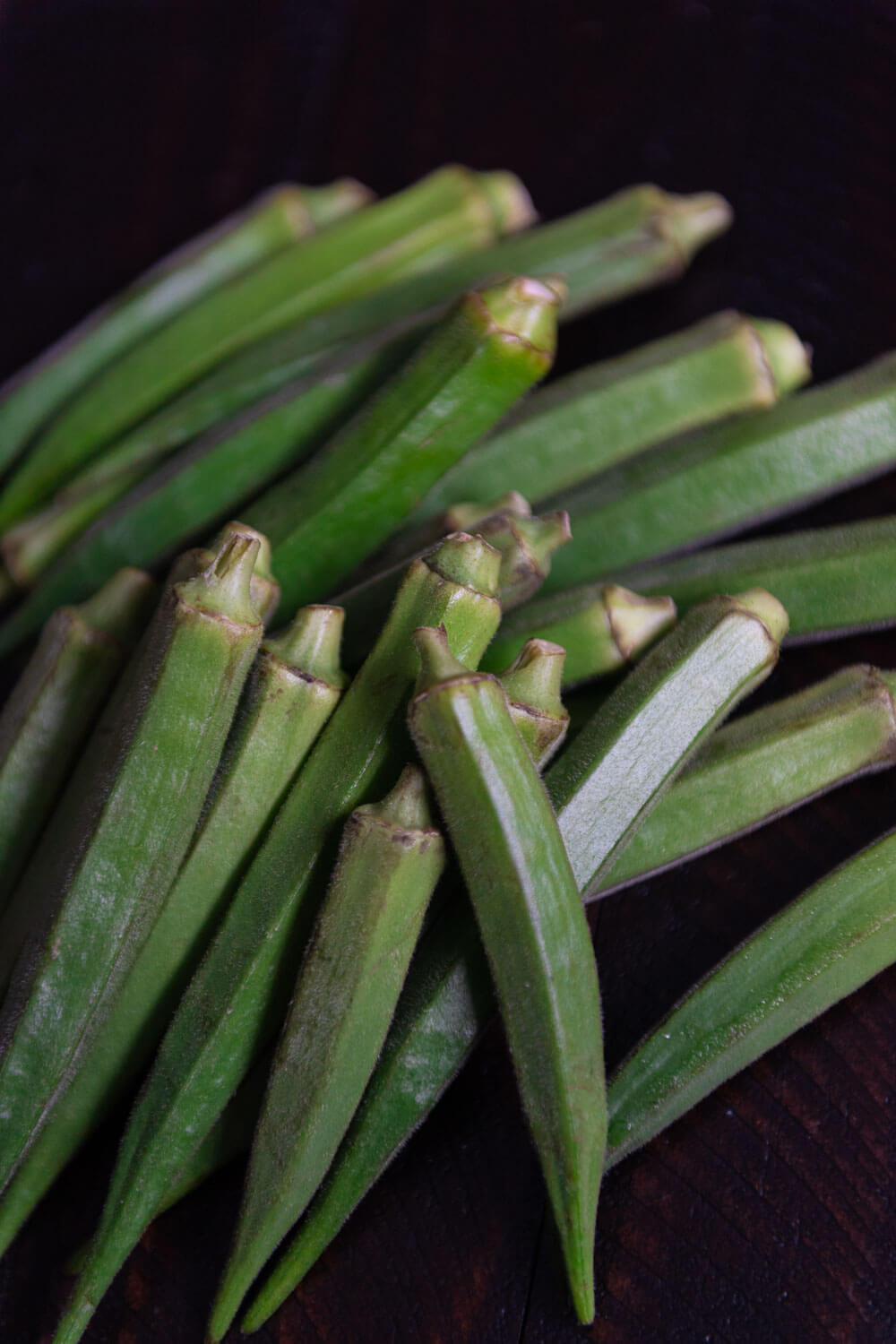
A fresh pod is firm and green, usually 2 to 4 inches long, with skin that is smooth or a little fuzzy depending on the variety. The seeds inside are soft and you eat them along with the pod. That slippery mucilage is the reason some people love okra and others avoid it. The good part is that you can control it by how you cook the okra.
What Does Okra Taste Like?
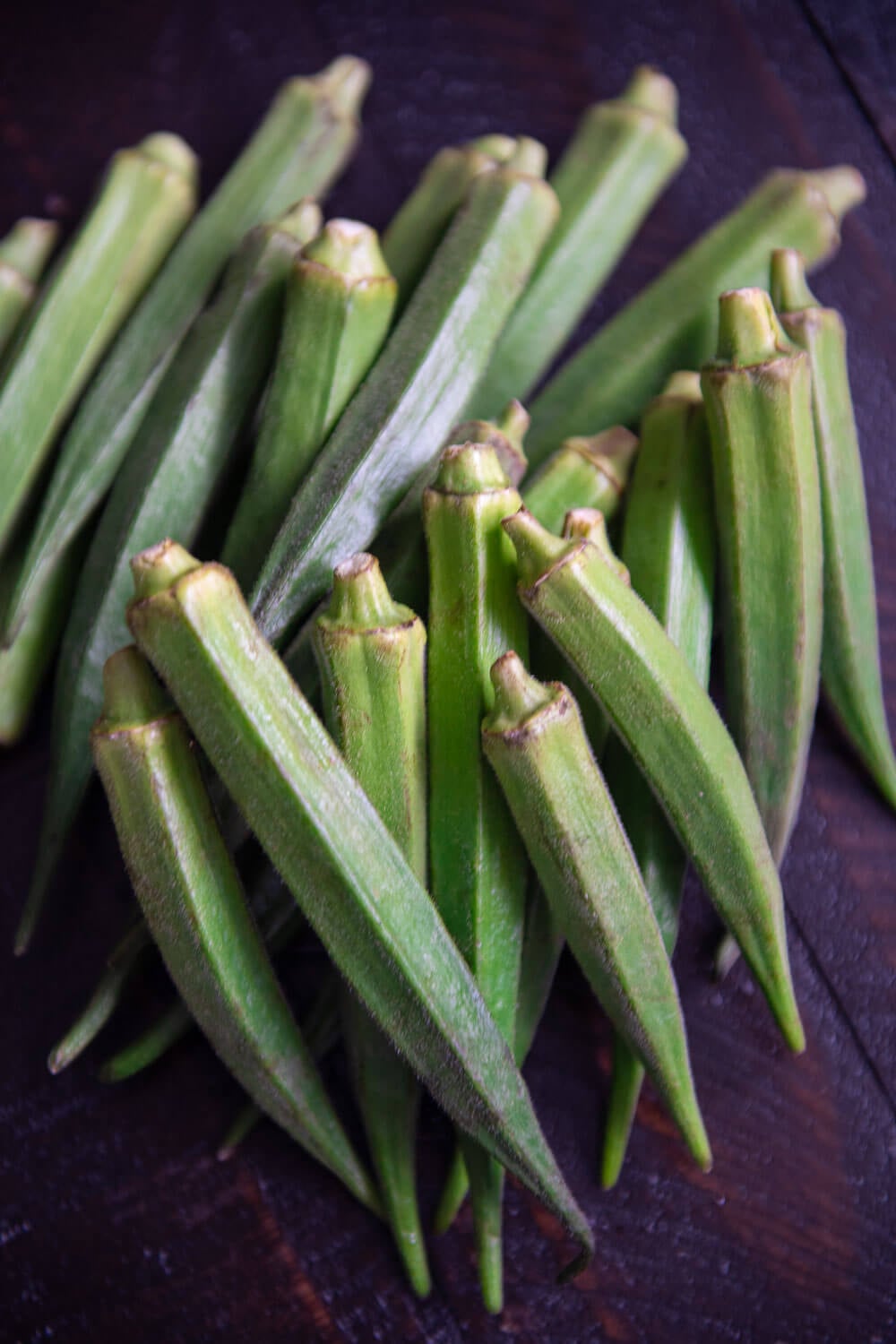
Okra has a mild, grassy taste, somewhere between green beans and eggplant. It is not a strong vegetable, so it takes on the flavors around it, like bagoong, tomatoes, fish, or a sour sinigang broth. How it feels in the mouth depends on how you cook it. Cooked fast, the pods stay firm with a slight snap. Simmered in soup, they soften and turn silky while thickening the broth. I like it both ways. For sinigang I do not mind the silky texture. For sautéed okra I cook it quick so it holds its shape.
This is also why okra goes well with eggplant, bitter gourd, and string beans. The flavor is gentle, so it does not take over the dish.
Vanjo’s Advice
Dealing with Okra’s Slime
The slippery feel in okra comes from mucilage, a natural gel the pod releases when it is cut and heated with moisture. In soups and stews this is a good thing, since it thickens the broth.
- High heat cooking – For drier dishes, I usually go with high heat. A hot pan cooks the okra before it has time to release much slime. This is why searing, sautéing, roasting, and grilling help.
- Vinegar – This is my other option, but only when the dish already calls for it, so the flavor is not thrown off. I soak the okra for 5 to 10 minutes in water with a little vinegar, about 1 tablespoon to a cup of water, then dry the pods well before cooking. That is why okra fits a dish like adobong okra, where the vinegar belongs in the recipe anyway. A little acid from tomatoes or calamansi in the pan does a similar thing.
A few more things help. Pat the pods completely dry before cooking, since extra water feeds the slime. Keep the pods whole or cut them into larger pieces when you want less slipperiness, because more cut surface means more mucilage. And do not crowd the pan, or the trapped steam works against you.
How to Prepare Okra
Okra needs almost no prep. Here is all it takes.
- Rinse the pods under running water.
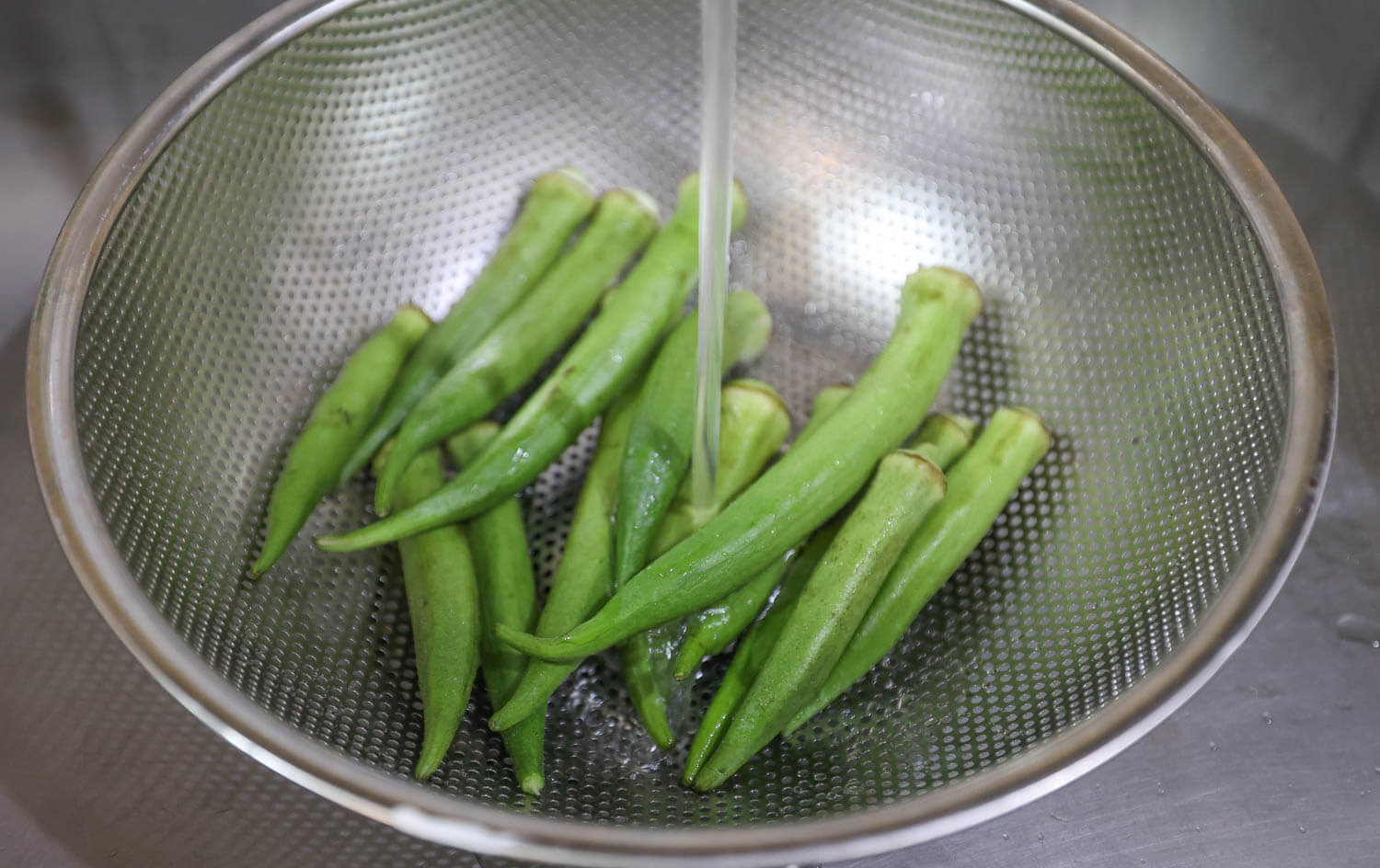
- Pat them completely dry.
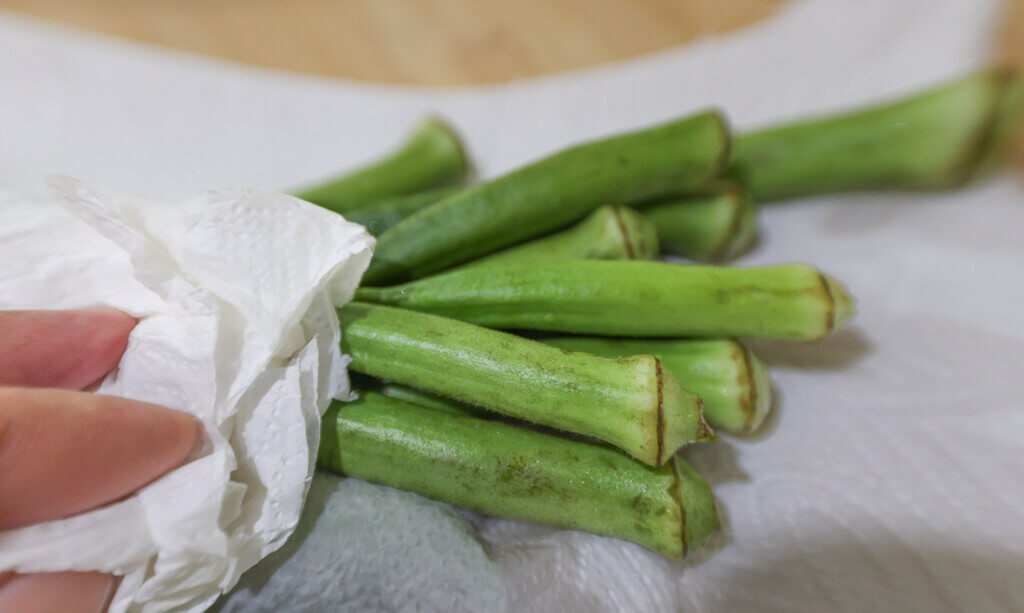
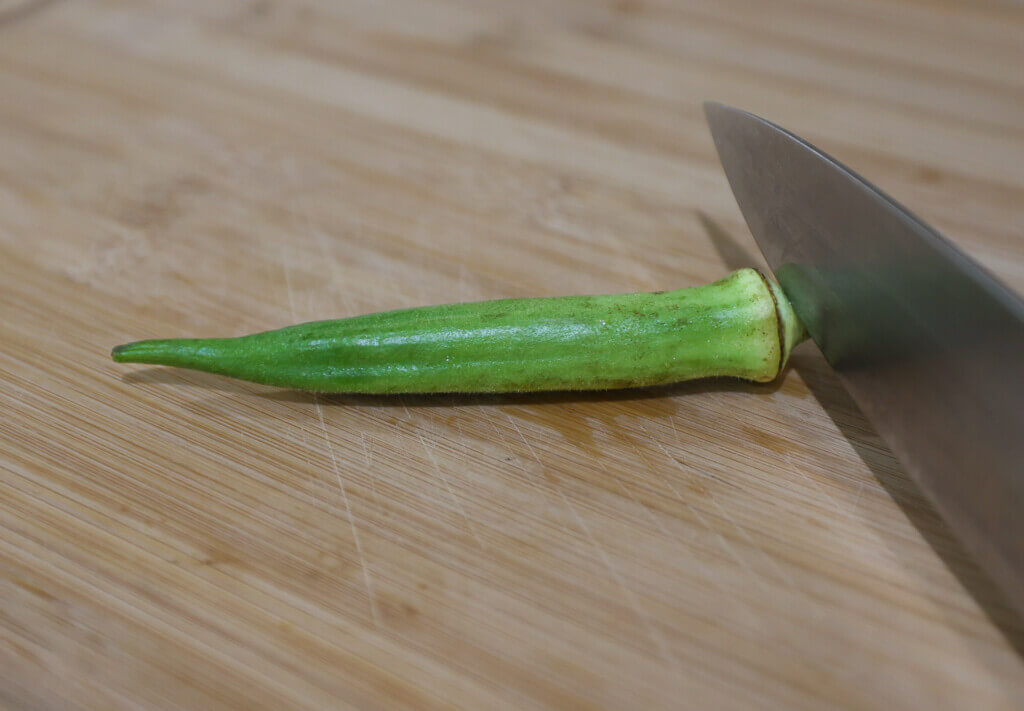
- Trim the tough stem cap at the top.
- Leave the pods whole, slice them into rounds, or cut them lengthwise, depending on the dish.
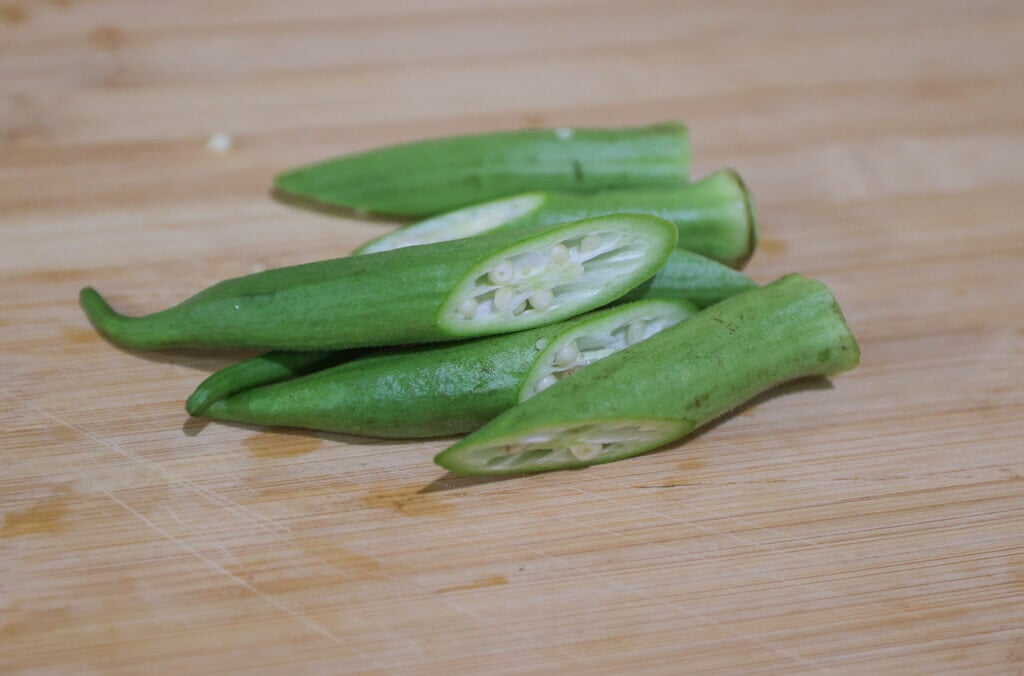
If you are slicing okra and want less of that slippery texture, keep your knife and board dry and cut the pods just before they go into the pan.
You can eat okra raw when it is young and tender. Sliced thin, raw okra is mild and far less slippery than cooked okra, since the slime needs heat and moisture to come out. Most Filipino dishes cook it, but raw is fine if the pods are fresh and small.
Picking the Best Okra
When I buy okra, the first thing I do is look at it. Fresh okra is firm, evenly green, and free of blemishes, soft spots, or dark, dried-out tips. Here is what I check.
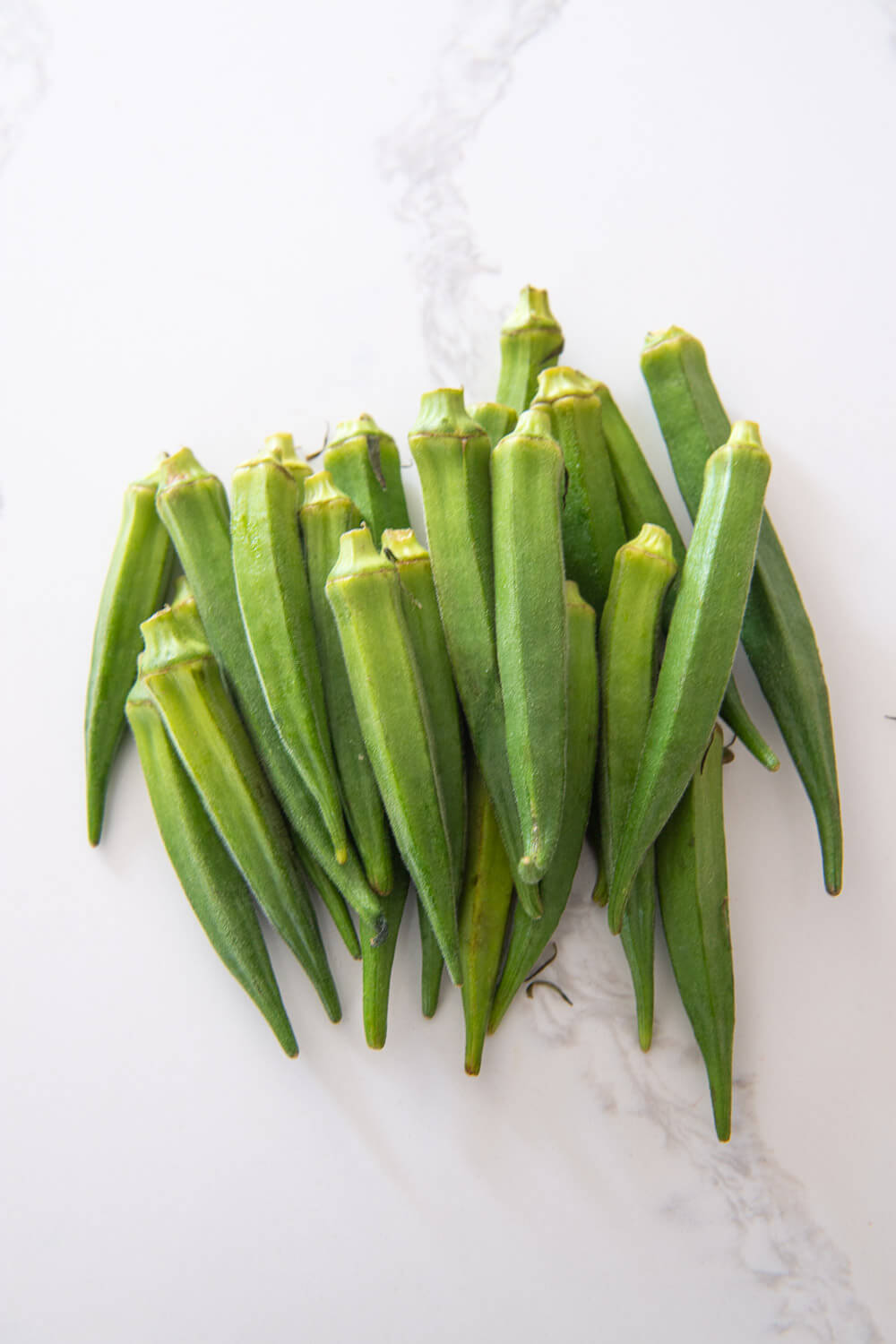
- Check the color and skin – Look for even green pods with no blemishes, bruising, or dark patches.
- Go for smaller pods – Pods around 2 to 4 inches are tender. Large pods tend to turn woody and tough.
- Do the snap test – When I can hold a piece, I bend the tip. A fresh, tender pod snaps cleanly instead of bending. When okra is sold wrapped in cling film, the snap test is off the table, so I rely on appearance and a gentle feel through the pack.
- Pick your variety – I prefer the smooth green variety, which is what we usually get in the Philippines. Other varieties work too, so use what is available to you.
How to Store Okra
- Keep okra dry and unwashed until you cook it. Moisture is what makes okra spoil and slime up faster, so wait to rinse it until right before cooking.
- Store it in the refrigerator, loosely in a paper bag or a perforated bag in the crisper drawer. It stays good for about 3 to 4 days.
- To keep okra longer, blanch the pods for a couple of minutes, cool and dry them, then freeze in a sealed bag.
- Toss any okra that has turned dark, mushy, slimy on the outside, or that shows mold.
How to Cook Okra
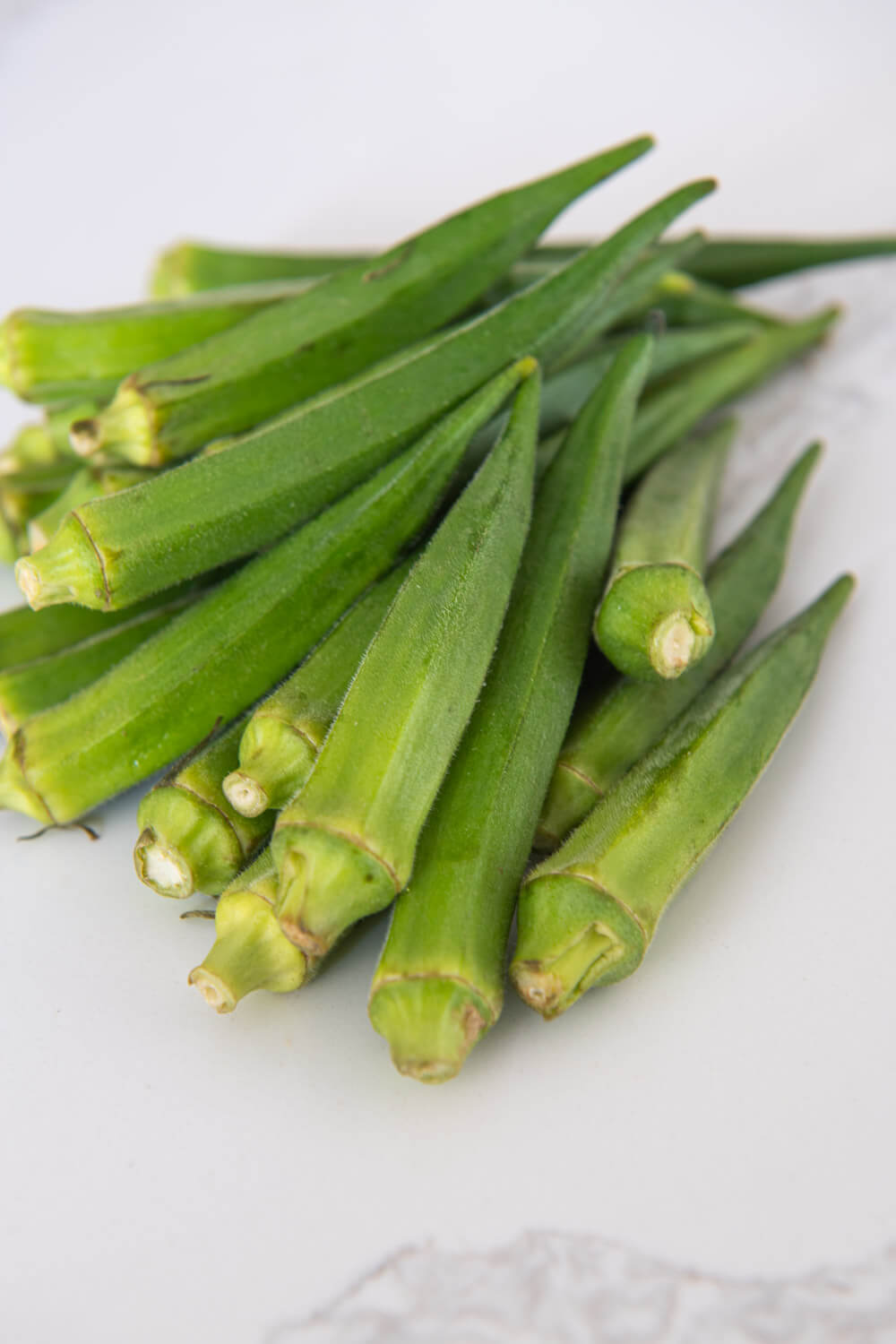
- Sauté or stir-fry over high heat. This is the fastest way to cook okra and the surest way to limit slime. Heat the pan well, add the okra, and keep it moving until just tender.
- Steam it for a light side. Steamed okra holds its shape and goes well with bagoong alamang on the side. Steam whole pods for about 15 minutes, until just tender.
- Boil or blanch, then shock in cold water. A short boil softens okra, and moving it straight to cold water stops the cooking and keeps the color. I use this when I plan to serve the okra with bagoong.
- Roast or air-fry for a drier, firmer bite. High, dry heat drives off moisture and leaves okra with almost no slime. Toss the pods with a little oil, salt, and pepper before they go in.
- Add it to soups and stews near the end. Here the mucilage is welcome, since it thickens the broth. This is what okra does in a fish sinigang and in Ilocano dinengdeng, where it simmers alongside eggplant, bitter gourd, and string beans.
Is Okra Healthy?
Okra is low in calories and gives you fiber, including the soluble fiber that makes it turn silky when cooked. It also has vitamin C, vitamin K, folate, magnesium, and antioxidants. I treat it as part of the meal, together with rice, protein, and other vegetables. It is affordable, easy to cook, and good to keep around for everyday meals.
Filipino Recipes with Okra
Okra is easy to work into Filipino cooking. Here are some of the dishes I keep coming back to.
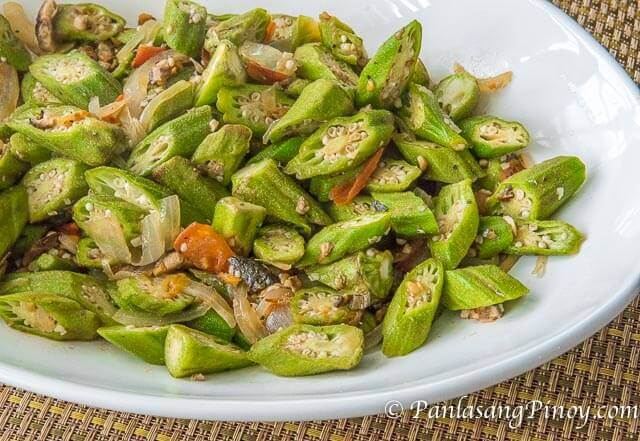
Ginisang Okra with Fish Flakes
This is what I cook when I have leftover fried fish. I flake the fish, sauté it with the okra over high heat, and season it with fish sauce. The okra keeps its bite, and it is very good with rice and a little bagoong on the side.
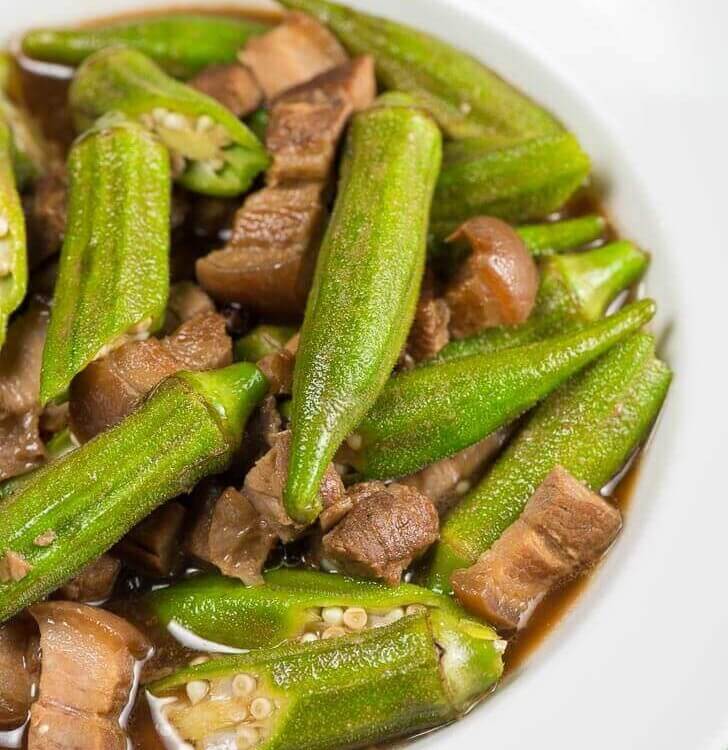
Adobong Okra with Pork
The vinegar in the adobo does two jobs here. It flavors the pork and it keeps the okra from getting slimy. I add the okra near the end so it holds its shape against the rich sauce. A good one when you want adobo but also want a vegetable in the pot.
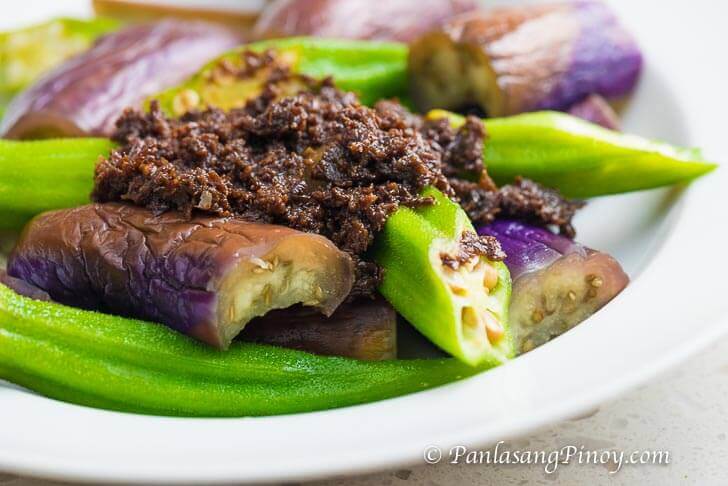
Steamed Eggplant and Okra with Bagoong
When I want something light, this is how I eat okra most: steamed whole, then dipped in bagoong alamang. The okra and soft eggplant carry the salty shrimp paste well. Fifteen minutes, and it is done. Have it with warm rice.
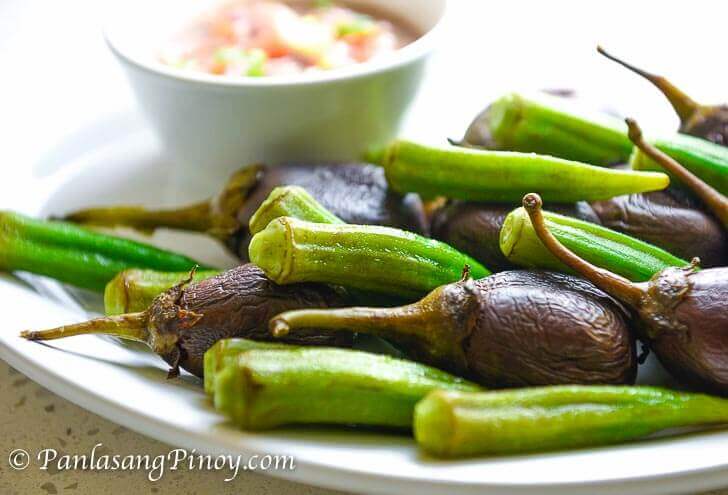
Boiled Okra and Eggplant with Bagoong Dipping Sauce
Boil the okra briefly, then drop it in cold water so it keeps its color and bite. Serve it with a bagoong isda dipping sauce of onion and tomato. The whole plate takes under 20 minutes and costs almost nothing.
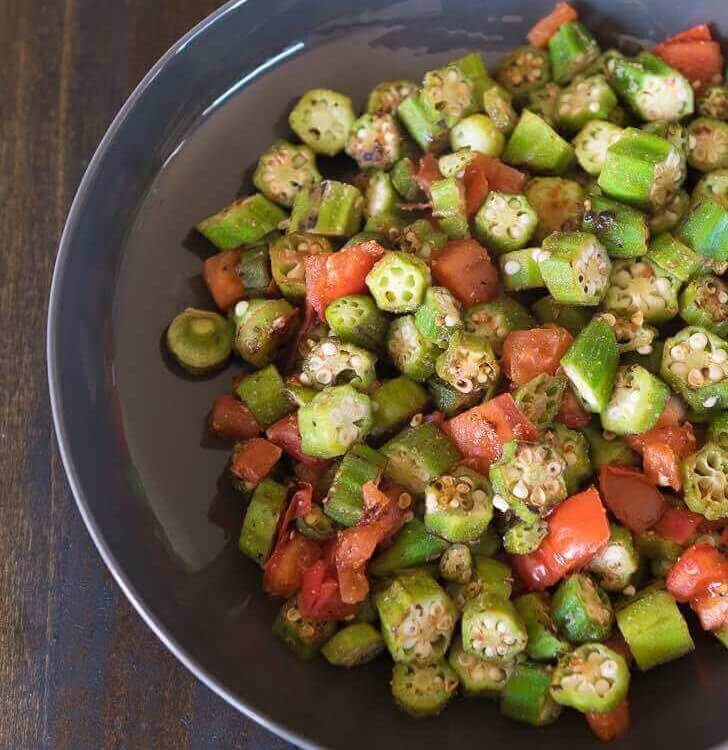
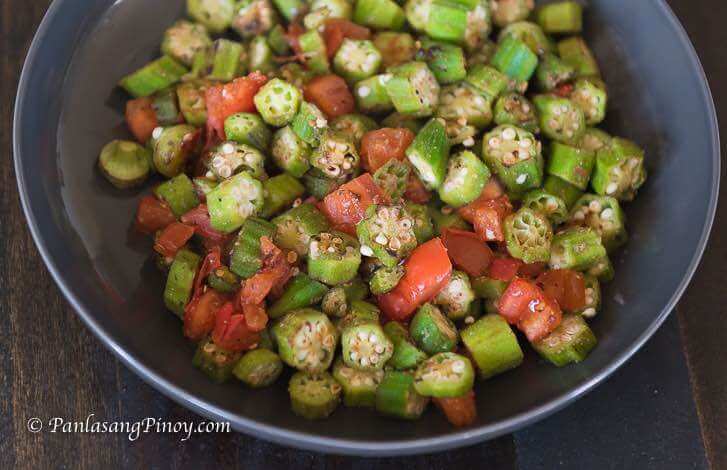
Seared Okra and Tomato
I soak the okra in a little vinegar water first, then sear it fast so it stays firm. The tomatoes bring acidity that keeps the texture in check. This is my quick side when I do not feel like much prep.
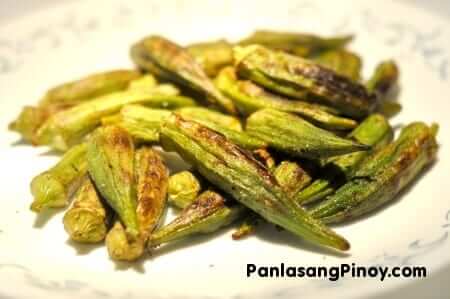
Roasted Okra
Dry, high heat gives you okra with almost no slime. Toss the pods with oil, salt, and pepper, then roast them until tender. I eat these as an appetizer or over rice, dipped in bagoong.
Okra may not be everyone’s first choice because of its texture, but it is a vegetable worth keeping in the kitchen. Once you know when to cook it fast and when to let it soften in soup, it becomes much easier to enjoy. Have it steamed with bagoong, sautéed with fish flakes, or added to pinakbet and sinigang. It is simple, affordable, and easy to bring into everyday meals.
Leave a Comment