Kare Kare Recipe
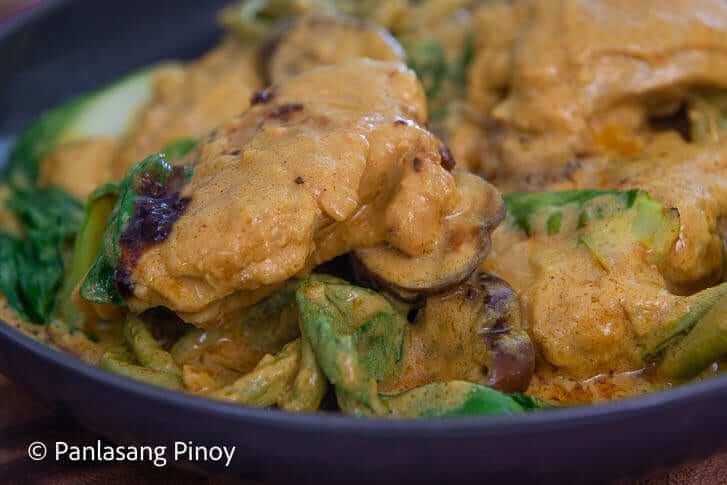
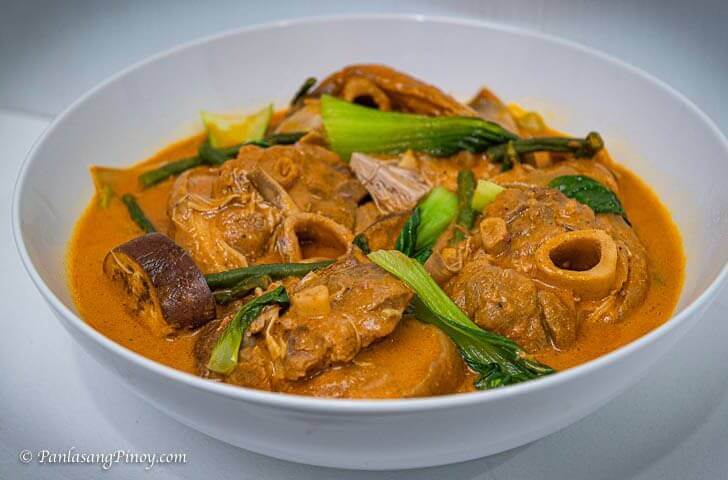
Kare Kare is a Filipino oxtail stew in a thick peanut sauce, served with rice and a small bowl of bagoong alamang on the side. The sauce in this Kare Kare recipe is built from ground peanuts, a little peanut butter, and toasted ground rice. Annatto seeds give it that orange color. The vegetables that go in are banana flower, eggplant, string beans, and bok choy. I like this version of Kare Kare because the oxtail makes the broth richer, and the peanut and rice combination thickens the sauce without overpowering the meat.
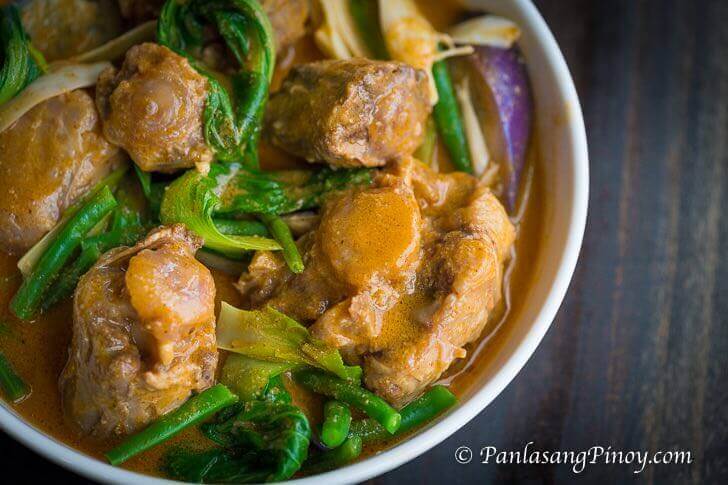
There are several ways to cook this dish, and I have made it with different cuts over time. Pork pata for a more affordable version, beef tripe when I wanted something more traditional, beef chuck when I needed it to cook faster. All of them work, but oxtail still tastes the best to me. The bones release gelatin as the meat simmers, and the meat becomes tender enough to pull off the bone with a fork.
The recipe below is the version I cook at home. I start with the oxtail because it takes the longest. Once the meat is tender, the sauce and vegetables are easy to finish.
What Is Kare Kare?
Kare Kare is a Filipino stew of oxtail and vegetables in a thick peanut sauce. The sauce is salty, slightly sweet, and nutty. On its own it tastes mild, almost under-seasoned. That is intentional. The bagoong alamang on the side does the rest of the seasoning once you mix it with the kare kare on rice.
Many Filipino homes cook Kare Kare a little differently. Some use buntot ng baka alone. Some combine oxtail with tripe. Others use pork hock to keep the cost down, or beef shank for a richer broth. There is even a seafood version with shrimp, crab, and squid, and a crispy kare kare that pairs the peanut sauce with lechon kawali.
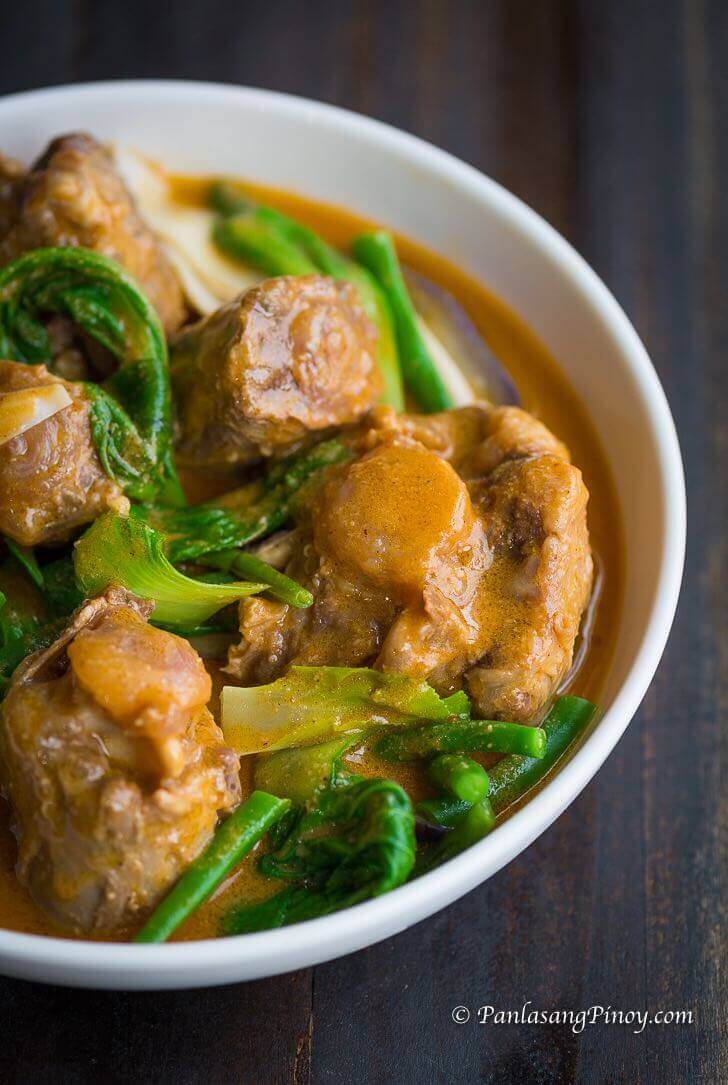
Kare Kare has been around in Filipino cooking for a long time. The name likely comes from “kari,” an older word for sauce. Over time, peanuts, annatto, and bagoong became the standard ingredients. The long simmer is what makes it a weekend or holiday dish in most homes. Birthdays, fiestas, Noche Buena are when you usually see it on the table.
Why This Kare Kare Recipe Works
What makes this Kare Kare recipe work is the order of cooking. The oxtail gets tender first so the broth already has flavor before the sauce goes in.
- Oxtail is the right cut. The bones release gelatin during the long simmer, which gives the sauce a thicker texture. Beef chuck and pork hock work but the result is not the same.
- Ground peanuts plus peanut butter. I use both because ground peanuts give the sauce a better nutty taste, and peanut butter helps make it smoother. If you use only one or the other, the sauce will not have the same texture.
- Use only the annatto water. Soak the seeds in warm water, then strain. Use the colored water and discard the seeds. Leaving the seeds in turns the sauce bitter.
- Toasted ground rice for thickening. Toasted rice thickens the sauce and adds a roasted aroma that cornstarch cannot match. Toast it in a dry pan on low heat until light brown.
- Cook the vegetables separately. I sauté them in their own pan with garlic and add them at the end. If they sit too long in the peanut sauce, they soften too much and lose their color.
Ingredients
- Oxtail – Bone in, cut into two inch slices. The traditional and best cut. Tripe and beef can be added too.
- Banana flower bud – Sliced. Adds a subtle bitterness and a soft, meaty texture. One small bud is enough for the pot.
- Pechay or bok choy – Goes in at the very end so it stays green and slightly crisp.
- String beans – Cut into two inch pieces. They hold their shape during the short blanch.
- Chinese eggplant – Softer and quicker to cook than the round kind. Slice on the diagonal.
- Ground peanuts – Roasted peanuts ground in a food processor. This is the flavor base of the sauce.
- Peanut butter – Creamy and unsweetened. Skippy or any plain creamy peanut butter works.
- Shrimp paste (bagoong alamang) – Served on the side, not in the pot. Each person spoons a little onto their plate.
- Annatto seeds – Soaked in water to release the orange color. The seeds get strained out before the colored water goes in.
- Toasted ground rice – Glutinous rice flour, toasted in a dry pan until light brown. This is what thickens the sauce.
- Garlic – Minced. Used to sauté the vegetables.
- Onion – Chopped. Goes in with the oxtail at the start.
- Salt and pepper – Lightly. The bagoong on the side adds the rest.
- Water – Enough to cover the oxtail. It becomes the broth as the meat simmers.
Vanjo’s Advice
These are the small things that help me get a better Kare Kare at home.
- Cook the oxtail the day before if you can. Boil it, then refrigerate the broth overnight. The fat hardens on top and lifts off in one piece. The sauce comes out richer but not greasy. A few readers in the comments have suggested the same thing. It works.
- Use a pressure cooker if you are short on time. Three hours on the stovetop becomes thirty five minutes under pressure. The meat is just as tender. I use this method when guests are on the way.
- Toast the rice on low heat and do not walk away. The rice goes from light brown to burnt fast. Stir constantly until it turns the color of toasted bread and smells nutty. Take it off the heat right then.
- Skim the fat before adding the peanut butter. Lift the floating fat off the broth before stirring in the peanuts. The sauce tastes less greasy.
- Season lightly. Bagoong does the rest. The pot should taste a little under-seasoned on its own. The bagoong will add enough salt once you eat it with rice.
- If the sauce is too thin at the end, simmer uncovered. If it is too thick, splash in some hot water. Adjust before adding the vegetables.
How to Cook Kare Kare
I cook this Kare Kare recipe in parts. The oxtail goes first because it needs the most time. Once it is tender, I work on the sauce, then the vegetables.
Tenderize the Oxtail
- Bring water to a boil in a large pot. Add the oxtail and chopped onion.
- Simmer for two and a half to three hours, or use a pressure cooker for thirty five minutes. Add hot water as needed to keep the meat submerged.
- Skim the foam that rises during the first thirty minutes of boiling.
- The meat is done when a fork goes through easily and the meat starts to separate from the bone.
Build the Peanut Sauce
- Soak the annatto seeds in a cup of warm water for ten to twelve minutes. Stir a few times so the color comes out.
- Strain the annatto water into the pot with the tender oxtail. Throw out the seeds.
- Add the ground peanuts and peanut butter. Stir until the peanut butter melts in. Simmer for five to seven minutes.
- Add the toasted ground rice. Stir well and simmer another five minutes until the sauce thickens.
The sauce should be thick enough to cling to the meat and vegetables. If it is too thick, add a splash of hot water. If it is too thin, let it simmer uncovered a few more minutes.
Cook the Vegetables and Finish
- Heat a little oil in a separate pan. Sauté the garlic until fragrant.
- Add the banana flower, eggplant, and string beans. Cook for about five minutes until the vegetables are crisp tender.
- Transfer the vegetables to the pot with the oxtail. Add the bok choy last and let it wilt for a minute.
- Season with salt and pepper. Serve hot with steamed rice and bagoong alamang on the side.
What to Serve with Kare Kare
I always serve Kare Kare with hot rice. The peanut sauce gets spooned over the rice, and I keep a small amount of bagoong on the side of the plate. Most of the time the table stays simple, but on special days I add a crispy dish to balance the soft stew.
- Plain steamed rice – The standard. Hot rice is the only base I use for this dish. Some of the sauce always ends up poured on top.
- Bagoong alamang – On the side, never in the pot. A small spoonful per bite. Kare Kare tastes mild without bagoong, so I always keep it on the table. If I really have the time, I cook a small batch of ginisang bagoong to pair with this. The sautéed version with pork and tomatoes gives the dish a stronger savory flavor.
- Lumpiang Shanghai – Crispy pork spring rolls. The crunch is a good contrast to the soft oxtail and vegetables.
- Lechon Kawali – Crispy pork belly on the side during special occasions. Sometimes I serve crispy pata instead.
Storage
Leftover Kare Kare is one of my favorite things about cooking this dish. The sauce settles overnight and tastes even better the day after.
- Refrigerator: I let it cool to room temperature, then transfer to an airtight container. I keep the vegetables separate from the meat and sauce so they do not get soggy. It keeps well for up to three days.
- Freezer: When I know I will not finish it within a few days, I freeze the oxtail and peanut sauce together for up to two months. The vegetables turn watery once thawed, so I leave them out. Move it to the fridge overnight before reheating.
- Reheating: I warm it in a saucepan over low heat and stir every few minutes so the sauce does not stick. If it has thickened, splash in some water or beef broth.
What I usually find with leftovers is that most of the oxtail is gone but the sauce and vegetables are still there. When that happens, I boil pork hock or pork belly until tender and add it to the leftover sauce the next day. The pork takes on the peanut flavor, and you end up with another meal without wasting any of the sauce.
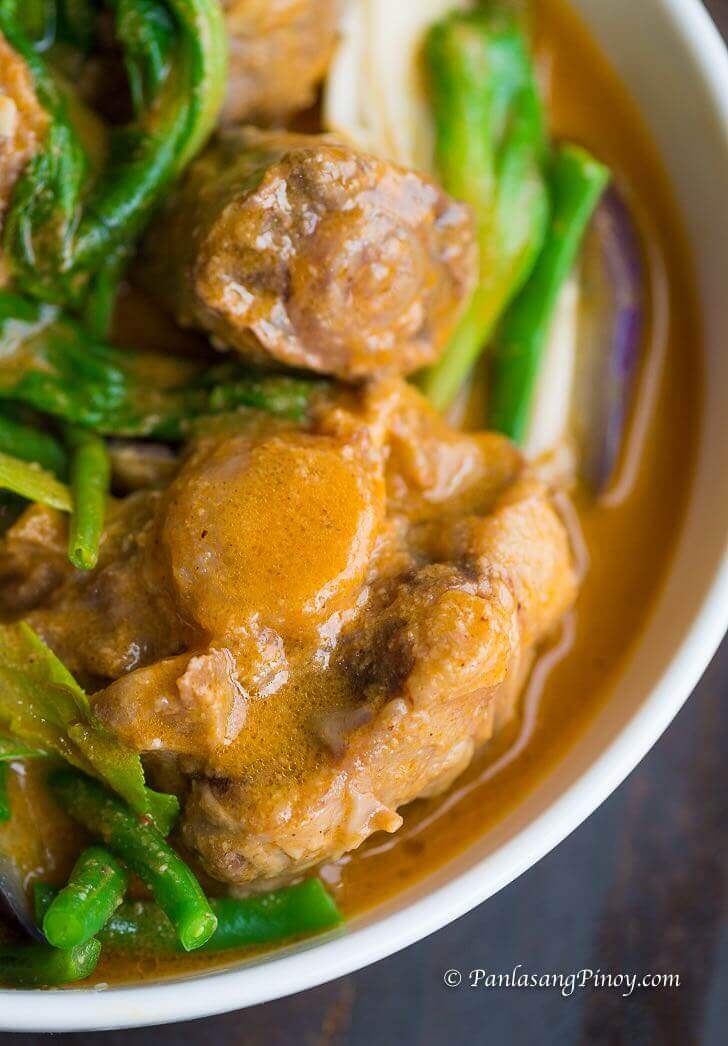
More Kare Kare Recipes
- Kare-Kare with Beef Tripe – The traditional tripe version, slow cooked until tender.
- Pork Kare Kare – A pork-only version that uses pata and is easier on the budget.
- Chicken Kare-Kare – A lighter, quicker version for weeknights.
- Chicken Kare-Kare sa Gata – Same idea with coconut milk added for a creamier sauce.
Substitutions
- Oxtail – Beef shank, beef chuck, pork hock, or tripe all work. Pork is cheaper and chuck cooks faster.
- Ground peanuts – More peanut butter if you cannot grind your own. About two tablespoons of peanut butter replaces a quarter cup of ground peanuts.
- Toasted ground rice – A cornstarch slurry works. One tablespoon cornstarch mixed with three tablespoons of cold water, added at the end.
- Annatto seeds – Annatto powder is easier and faster. One teaspoon of powder for every tablespoon of seeds. Annatto paste also works.
- Banana flower – Canned banana blossoms if fresh is not available. Hearts of palm in a pinch.
- Bok choy – Napa cabbage or kangkong. Both stand in well.
Frequently Asked Questions
What is toasted ground rice and is it the same as rice flour?
It is glutinous rice flour toasted in a dry pan until light brown. Regular rice flour is not the same. The glutinous variety is what thickens the sauce properly. If you cannot find rice flour, toast raw glutinous rice in a pan, then grind it in a blender or pound it with a mortar and pestle. Toasted rice gives the sauce a light roasted taste. Raw rice flour will only thicken it.
Can I use annatto powder instead of annatto seeds?
Yes. Start with one teaspoon of powder for the amount of sauce in this recipe. Add more if you want it more vibrant. Annatto paste works too. Seeds give a cleaner color, but powder is easier.
What can I use to thicken the sauce if I do not have toasted ground rice?
A cornstarch slurry. Mix one tablespoon of cornstarch with three tablespoons of cold water, pour it in at the end, and simmer for two to three minutes. Potato starch also works the same way. The sauce will not have the same toasted rice taste, but it will thicken properly.
Why does my kare kare taste bland?
Two reasons usually. Either the oxtail did not simmer long enough to flavor the broth, or there is not enough peanut in the sauce. For three pounds of oxtail, I use one cup of ground peanuts plus a half cup of peanut butter. Also remember the sauce should taste mild on its own. The bagoong on the side does the rest of the seasoning.
Can I cook the oxtail the day before?
Yes, and it usually turns out better that way. Boil the oxtail with onion, let it cool, then refrigerate the meat in its broth overnight. The next day the fat will have hardened on top. Lift it off in one piece, then continue with the recipe. The sauce tastes better the next day because you can remove the hardened fat before finishing it.
I hope you try this Kare Kare at home, especially when you have family coming over. Serve it with hot rice and bagoong on the side, and give the oxtail enough time to become tender. Watch the video above if you want a visual guide to the steps. If you make this, tag us @panlasangpinoy on Instagram so we can see your batch. Share and enjoy!
Watch How to Make It

Did you make this? If you snap a photo, please be sure tag us on Instagram at @panlasangpinoy or hashtag #panlasangpinoy so we can see your creations!
Kare Kare
Ingredients
- 3 lbs oxtail cut in 2 inch slices you an also use tripe or beef slices
- 1 piece small banana flower bud sliced
- 1 bundle pechay or bok choy
- 1 bundle string beans cut into 2 inch slices
- 4 pieces Chinese eggplant sliced
- 1 cup ground peanuts
- 1/2 cup peanut butter
- 1/2 cup shrimp paste
- 34 Ounces water about 1 Liter
- 1/2 cup annatto seeds soaked in a cup of water
- 1/2 cup toasted ground rice
- 1 tbsp garlic minced
- 1 piece onion chopped
- salt and pepper
Instructions
- In a large pot, bring the water to a boil
- Put in the oxtail followed by the onions and simmer for 2.5 to 3 hrs or until tender (35 minutes if using a pressure cooker)
- Once the meat is tender, add the ground peanuts, peanut butter, and coloring (water from the annatto seed mixture) and simmer for 5 to 7 minutes
- Add the toasted ground rice and simmer for 5 minutes
- On a separate pan, saute the garlic then add the banana flower, eggplant, and string beans and cook for 5 minutes
- Transfer the cooked vegetables to the large pot (where the rest of the ingredients are)
- Add salt and pepper to taste
- Serve hot with shrimp paste. Enjoy!
Sharon says
i love this recipe with the suggestion of using different meats and even seafoods. I will try using ox tripe and oxtail together next time I cook kare kare. My ultimate fave Filipino food.
Emma says
Love it the best recipe
Zarina says
Swak sa Budget, simple ang ingredients at masarap
Randy says
Can i use flour?
Vikki Marinas says
love all his recipe
Mariana says
love this recipe!
Evelyn says
Well I’m out of Kare Kare season packet so, here I’m going in for a “from scratch” attempt. I may use a titch of Mexican Mole coz it has annatto maybe I add Patis.. sugar and lots of peanut butter. Lots of peanut butter
Adria says
So good! I boiled the meat the night before and cooled it in the fridge separately from the broth so I could skim the fat off the broth before heating it with the rest of the ingredients. I didn’t add the banana flower and I like it very peanut buttery so I added a lot more peanut butter. It turned out great!
Beth Collado says
I cook this for my batchmate they really love it, thank you for your recipe more power to panlasang pinoy recipe Godbless
Geena says
Really good
Mae says
I followed this recipe and it came out amazing! Thank you!
Amie Sagum says
Thank you for sharing ur recipe
May G says
Ang cute nyong dalawa 🙂
Emma Reynolds says
Hi there; just out of curiosity; what is toasted ground rice ; is it rice flour ?
Vanjo Merano says
Hello Emma, it is ground glutinous rice flour (in form of powder) toasted in a pan until the color turns light brown.
loi says
Hi Vanjo what is the toasted rice for? just an idea? does it add to taste or is it more for the stickyness?
Jan says
Can achuete be substituted fir annatto?
Vanjo Merano says
Both are the same ingredients.
Zarina says
Swak sa Budget, simple ang ingredients at masarap
Mark says
Do you have a substitute with annatto seeds?
Vanjo Merano says
Annatto powder is a good substitute.
Cherry says
Thanks for this recipe!
Melody Sacpopo says
What is 1 banana flower bud? Like literally just 1 of the tiny buds?
Cherry says
I agree! That’s what I did.
Rubi Custodio says
If I may, I would suggest tenderizing the meat the night before. The meat and the broth are then refrigerated, separately, overnight. The next day, the layer of fat can easily be removed from the top of the broth. Yes, it means a longer process, but it’s healthier and it doesn’t diminish the flavour at all.
Jay Atienza says
If we are using the Annatto powder instead of the seeds how much should we be using in the recipe?
Vanjo Merano says
You can start with 1 teaspoon. Add more if you want the sauce to be vibrant.