Pancit Cabagan Recipe
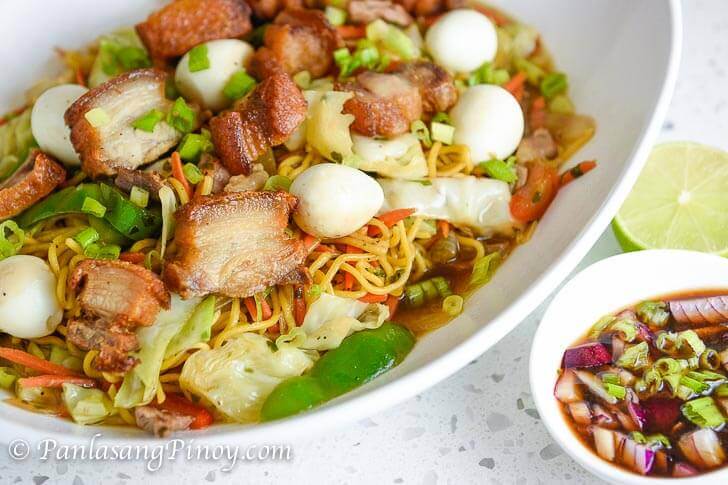
Pancit Cabagan is a saucy noodle dish from the town of Cabagan in Isabela. This Pancit Cabagan recipe uses fresh miki noodles cooked in beef broth seasoned with soy sauce and fish sauce, then topped with lechon carajay, igado, and boiled quail eggs. What I like about Pancit Cabagan is how different it is from the usual pancit you see at parties. The noodles have more sauce, the toppings are generous, and every Pancit Cabagan plate feels like a full meal. People from Isabela take real pride in this Pancit Cabagan, and you will see why.

I think the toppings are really what make this one stand out. Imagine your pancit already tasting good on its own, then you pile crispy lechon carajay and cooked igado on top of it. What more can you ask for? Rice, probably.
Getting the sauce right matters most. You want the miki noodles glossy, not dry, but not swimming in broth either. Hit that balance and the rest is easy.
What is Pancit Cabagan?
Pancit Cabagan is a stir-fried miki noodle dish from the municipality of Cabagan in Isabela province, Philippines. It has Chinese roots, like most Filipino noodle dishes. The story goes that a Chinese trader named Sia Liang – locals called him Dianga – migrated from Amoy (now Xiamen), China and ended up in Cagayan around 1887. He married a Filipina named Augustina Deray Laddaran. Together they ran a panciteria in Cabagan before World War II. Dianga made his own miki noodles from wheat flour and lye water, kneading by hand and slicing the dough thin with a Chinese butcher knife.
His original recipe was simpler. Dried shrimp or pork, bagoong, soy sauce, oil, and pork broth. That was it. Over the decades, cooks in Cabagan kept adding to it. Lechon carajay became a standard topping. Then stewed pork liver. Then quail eggs. Dianga’s restaurant burned down during the war, but his daughter Potenciana opened a new place called The New Life Restaurant, and from there the dish spread across town. Josie’s, Aling Kikay’s, and Felicita’s are the panciterias people talk about in Cabagan today. Every January, the town holds a Pansi Festival as part of the feast of St. Vincent Ferrer.
People always compare Pancit Cabagan to Pancit Batil Patung from Tuguegarao City, since both use miki noodles and come from the Cagayan Valley. The difference is in the eggs and the sauce. Batil Patung uses a poached egg on top and an egg drop soup on the side. Pancit Cabagan uses boiled quail eggs, and the sauce stays right in the noodles.
Why This Pancit Cabagan Recipe Works
A few things make this Pancit Cabagan recipe work well at home.
- Beef broth as the cooking liquid – You cook the pork in beef broth, then use that same broth for the noodles. It makes the base taste richer than plain water ever could.
- Browning the pork first – Stir-frying the pork shoulder until the edges get some color on them gives the dish more flavor before any liquid goes in
- Noodles cook directly in the seasoned broth – Instead of boiling the miki separately, you drop them right into the soy sauce and fish sauce mixture. They soak up flavor from the inside.
- Vegetables go in last – Carrots, bell pepper, and cabbage only need about 5 minutes. Adding them at the end keeps a little crunch in the dish.
Ingredients
- Fresh miki noodles – Thick yellow egg noodles that give this dish its chewy texture
- Pork shoulder – Sliced into small pieces and simmered until tender
- Lechon carajay – Crispy pork belly for topping, the part that gives each bite its crunch
- Igado – Stewed pork liver that is a traditional Isabela topping (optional but worth including)
- Boiled quail eggs – Small eggs that are part of what makes this dish recognizable
- Garlic – Crushed and sauteed until light brown
- Beef broth – The liquid that seasons the noodles as they cook
- Soy sauce – The main seasoning that gives color and saltiness
- Fish sauce – A smaller amount for umami depth
- Cooking oil – For sauteing and browning
- Carrot – Julienned, for a little sweetness and color
- Bell pepper – Cut into thin strips
- Cabbage – Chopped and cooked just enough to soften without going limp
- Parsley – Mixed in with the vegetables
- Scallions – Chopped and sprinkled on top as garnish
- Ground black pepper – For final seasoning
Vanjo’s Advice
A few things I have learned from cooking this and other noodle dishes.
- Get your toppings ready before you start cooking. The lechon carajay, igado, and quail eggs should all be prepared and set to the side. You want to plate everything quickly so the lechon stays crispy on top.
- Use fresh miki noodles if you can find them. Dried miki works, but fresh ones are chewier and absorb the broth better. Most Asian grocery stores carry them in the refrigerated section near the tofu and wonton wrappers.
- Do not skip the igado. I know liver is not for everyone, but it is part of what makes this taste like real Pancit Cabagan from Isabela. The stewed liver is rich and savory, and it goes well with the saucy noodles.
- Watch your broth level while the pork simmers. If it reduces too much, the noodles will not have enough liquid to cook in. Add more broth if it looks low. On the other hand, if there is too much liquid when the noodles are done, just cook uncovered for a minute or two.
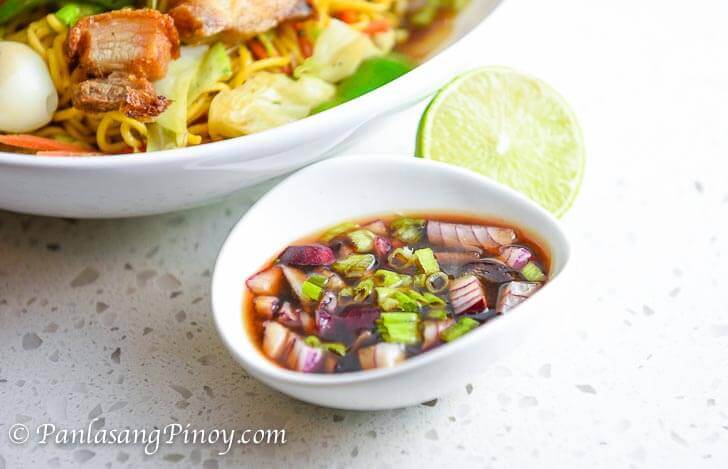
- Serve with a vinegar-onion dip. This is how they eat it in Cabagan and Tuguegarao. Chop some red onions, mix with vinegar or calamansi juice and soy sauce, then drizzle over each bite. It cuts through the richness and makes a real difference.
How to Cook Pancit Cabagan
Cooking Pancit Cabagan at home is not complicated. Prep everything first, then go step by step.
Saute the Garlic and Tenderize the Pork
- Heat the cooking oil in a wok or large pan over medium-high heat.
- Saute the crushed garlic until it turns light brown.
- Add the pork shoulder and stir-fry for about 2 minutes until the pieces start to brown.
- Pour in the soy sauce, fish sauce, and beef broth. Let it boil, then cover and simmer on low heat until the pork is tender, about 12 minutes.
Do not rush this. Tough pork ruins the whole dish. Give it time.
Cook the Noodles and Add the Vegetables
- Add the fresh miki noodles to the wok and toss them in the broth. Cook for 2 minutes.
- Toss in the carrot, bell pepper, cabbage, and parsley. Continue cooking for about 5 minutes, adding more broth if the noodles look too dry.
- Season with ground black pepper and toss everything together.
- Top with the boiled quail eggs, lechon carajay, and igado. Transfer to a serving plate and garnish with scallions.
You want a bit of sauce still clinging to the noodles when you plate. Dry noodles are not Pancit Cabagan.
Pro Tips
- Do not overcook the miki – Two minutes in the broth is enough. Overcooked miki turns soft and breaks apart.
- Cut the lechon carajay right before plating – If you slice it too early, the skin loses its crunch from the steam.
- Taste the broth before the noodles go in – This is when you adjust the soy sauce and fish sauce. Once the noodles absorb everything, it is hard to fix
- Quail eggs are worth the effort – Chicken eggs work, but the small quail eggs are traditional and they look right on the plate.
What to Serve with Pancit Cabagan
- Steamed white rice – Some people in Isabela eat this with rice, especially when the sauce is rich
- Vinegar-onion dip – Chopped red onions in vinegar with soy sauce and sliced chili, the traditional condiment
- Calamansi wedges – Squeeze over the noodles for brightness
- Lumpia Shanghai – Crispy spring rolls that go well alongside a big plate of saucy noodles
- Iced tea or sago’t gulaman – Something cold and sweet to balance the savory dish
Storage
Pancit Cabagan keeps well, though in my experience a plate this loaded disappears fast.
- Refrigerator: Keep in an airtight container for up to 3 days. Store the lechon carajay separately so it does not soften in the sauce.
- Freezer: The noodles and sauce freeze well for up to 1 month. Pack the toppings in a separate container.
- Reheating: Warm in a pan over medium heat with a small splash of broth to loosen the noodles. Re-crisp the lechon in a dry pan or air fryer. Microwaving works but the texture will not be the same.
More Noodle Recipes
- Pancit Canton – Stir-fried egg noodles with pork, shrimp, and vegetables in soy-oyster sauce
- Pancit Bihon Guisado – Rice vermicelli stir-fried with chicken, pork, and vegetables
- Pancit Lomi – Thick egg noodles in a starchy broth with pork and kikiam from Batangas
- Pancit Malabon – Seafood noodles with a golden shrimp sauce and smoked fish flakes
- Pancit Habhab – Stir-fried noodles from Lucban, Quezon served on banana leaves
- Bam-I – A Cebuano noodle dish that uses both bihon and canton noodles
Substitutions
- Fresh miki noodles – Dried miki or thick egg noodles (lo mein style) will work. Dried noodles need more cooking time.
- Lechon carajay – Lechon kawali or crushed pork chicharon as an alternative
- Igado – Sauteed chicken liver with a bit of vinegar and soy sauce can stand in. You can also leave it out.
- Quail eggs – Hard-boiled chicken eggs sliced in half
- Beef broth – Pork broth or chicken broth both work. Beef gives a deeper flavor.
- Parsley – Kinchay (Chinese celery) or flat-leaf parsley are interchangeable
Frequently Asked Questions
What is the difference between Pancit Cabagan and Pancit Batil Patung?
They get compared all the time because both come from the Cagayan Valley and both use miki noodles. Pancit Cabagan is from Isabela – it uses boiled quail eggs and the sauce stays right in the noodles. Pancit Batil Patung is from Tuguegarao, Cagayan. It has a poached egg on top, and you get an egg drop soup on the side that you pour over the noodles as you eat. Cabagan’s version also tends to be saucier, and the lechon carajay and igado toppings are more typical of Cabagan than Tuguegarao.
What kind of noodles are used in Pancit Cabagan?
Fresh miki. Thick, yellow, made from wheat flour, lye water, and eggs. In Cabagan itself, the panciterias make their own. For home cooking, grab fresh miki from an Asian grocery store – they are usually in the refrigerated section.
Can I use canton noodles instead of miki?
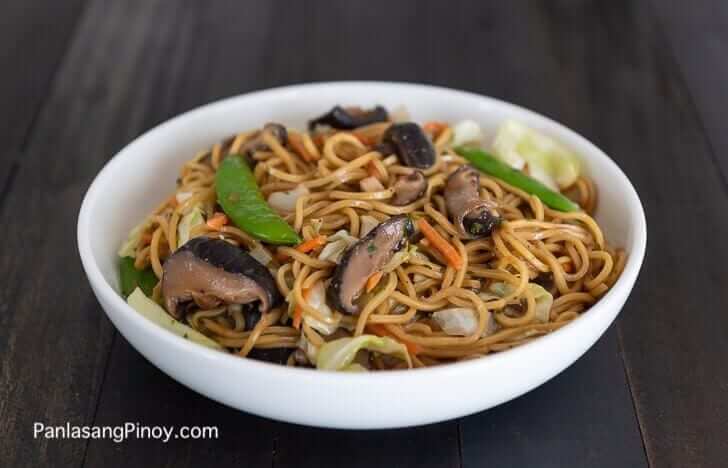
You can, but it will not taste the same. Canton noodles are thinner and firmer. Miki is thicker, softer, and absorbs more of the sauce. If you cannot find miki, thick lo mein style egg noodles are a closer match than canton. One of the comments on the original post asked this same question – it is a common swap, but miki is really the way to go if you can get it.
What is igado?
Igado is stewed pork liver. It comes from the Ilocos and Cagayan Valley regions, cooked down with vinegar, soy sauce, and sometimes green peas. It is one of the toppings that makes this dish taste the way it should. You can skip it if liver is not your thing, but try it at least once.
How do I keep the lechon carajay crispy when I serve this?
Put it on top right before you serve. That is it. Do not mix it into the noodles – the sauce softens the skin in minutes. If the lechon has been sitting and lost its crunch, a quick pass in a hot dry pan or a couple of minutes in the air fryer will fix it.
I hope you give this Pancit Cabagan recipe a try. It tastes like something you would get from a panciteria in Isabela, and the toppings alone make it worth the effort. If you make this, tag us @panlasangpinoy on Instagram so we can see your version.
Did you make this? If you snap a photo, please be sure tag us on Instagram at @panlasangpinoy or hashtag #panlasangpinoy so we can see your creations!
Pancit Cabagan Recipe
Ingredients
- 8 pieces boiled quail eggs
- 1/4 lb. cooked Lechon Carajay chopped
- 1 lb. fresh Miki noodles
- 1 medium carrot julienned
- 1 small bell pepper cut into thin strips
- 1/4 cup chopped parsley
- 1/4 lb. pork shoulder sliced in small pieces
- 1/4 lb. Igado optional
- 1/4 head cabbage chopped
- 5 cloves garlic crushed
- 3 cups beef broth
- 1/4 cup soy sauce
- 2 teaspoons fish sauce patis
- 3 tablespoons Cooking oil
- 3 tablespoons chopped scallions
- ground black pepper to taste
Instructions
- Heat the oil in a wok or pan.
- Saute the garlic until it starts to turn light brown.
- Add the pork slices. Stir-fry until for 2 minutes or until it starts to turn brown.
- Pour-in the soy sauce, fish sauce, and 3 cups beef broth. Let boil. Cover and cook in low heat for 12 minutes or until the pork becomes tender.
- Add the miki noodles. Toss. Cook for 2 minutes.
- Add the carrot, parsley, bell pepper, and cabbage. Continue to cook for 5 minutes. You can add more beef broth if needed.
- Sprinkle some ground black pepper. Toss.
- Put the boiled quail eggs in the wok and top with lechon carajay and igado.
- Transfer to a serving plate. Serve.
- Share and enjoy!


Yanni says
Can I use canton noodle?
veronica fuster says
Thank you chef .. ttry ko na to bukas.. godbless