Pork Chop Suey Recipe
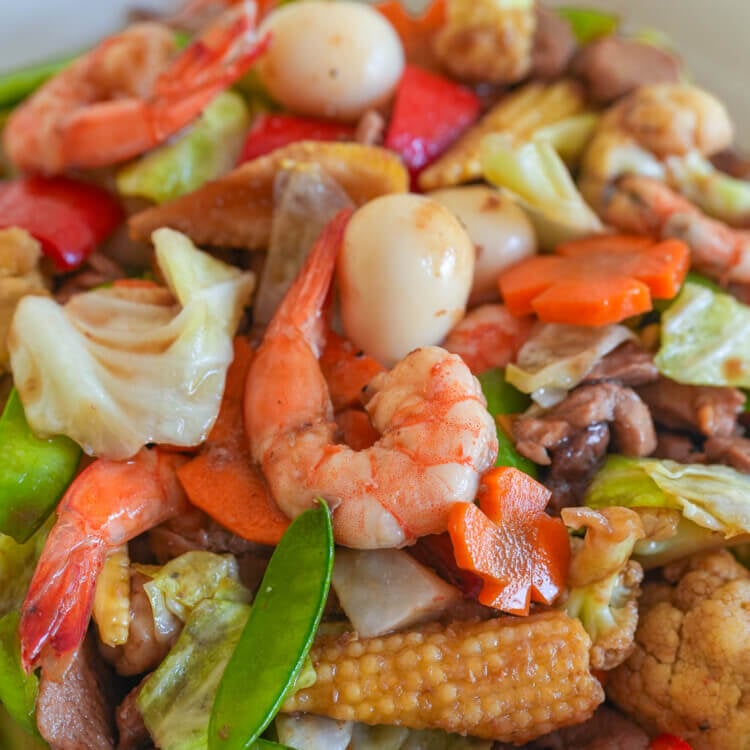
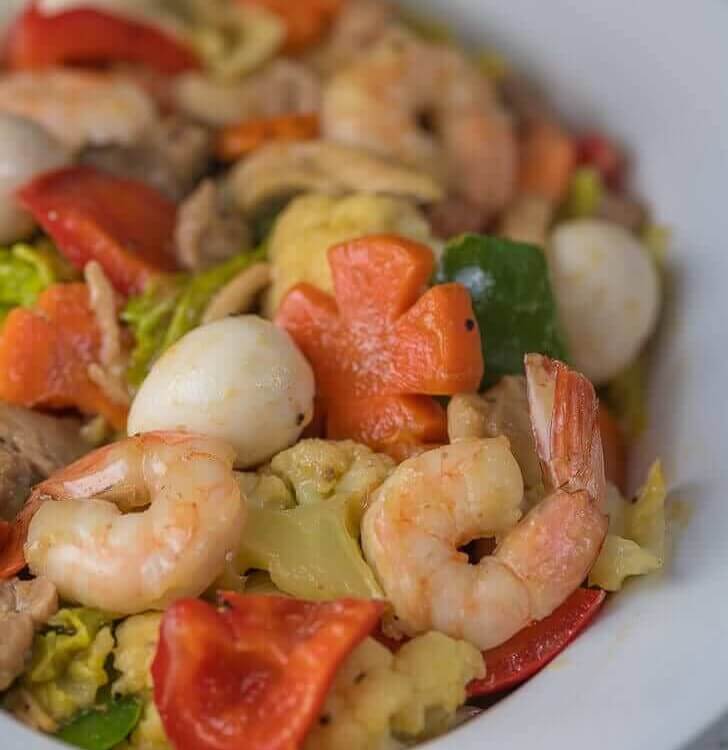
I cook Pork Chop Suey when I want something simple to go with rice. The main ingredients are pork shoulder, carrot, cabbage, bell pepper, and onion. I grew up eating chop suey with chicken and chicken liver, while my regular Chop Suey recipe is the fuller version with shrimp and quail eggs. This pork version is lighter on ingredients, but it still gives you plenty of meat and vegetables in every serving.

Adding everything to the pot at once turns the vegetables into one soft, watery mixture. Cabbage and bell pepper release liquid as soon as they heat up, and a covered pot keeps that liquid in. The order is what fixes it. The pork browns on its own first, the carrot goes in next because it is the firmest, and the cabbage and bell pepper go in near the end. If you prefer the chicken and chicken liver style I grew up eating, my Super Tasty Chop Suey is closer to that version.
Slice the pork shoulder thin. Thin strips brown in 5 to 7 minutes and stay tender through the covered cooking that follows. Thicker pieces need longer, and by the time they turn tender the cabbage is already past its best. Ask the meat counter to slice it for you if the pork feels too soft to cut into even strips at home.
What is Pork Chop Suey?
Pork Chop Suey is a stir fried dish of thin pork strips cooked with mixed vegetables in a light sauce thickened with cornstarch, served over rice. The name comes from the Cantonese tsap seui, which means assorted or mixed pieces. Chinese cooks in the United States built it around whatever meat and vegetables they had, so the dish never developed one fixed ingredient list. That is why the pork version, the chicken version, and the seafood version all carry the same name.
The dish reached the Philippines through Chinese trade and settlement, and Filipino cooks kept the stir-fry method but adapted the dish to the way meals are served here. Ours is eaten with rice rather than noodles, which is the clearest difference between chop suey and chow mein. My Chicken Chow Mein uses fried noodles, while the vegetables remain the focus in chop suey. The sauce stays thin enough that they still taste like vegetables.

Chop suey shows up on Filipino tables more as a weekday ulam than a fiesta dish. The fuller versions with shrimp, quail eggs, and chicken liver are the ones cooked for birthdays and Sunday lunches. The pork version is the one I make when I have a cabbage to use, and it also works well beside richer dishes.
What Is Pork Chop Suey Meat?
If you shop in a US grocery store, you have probably seen a package at the meat counter labeled pork chop suey meat. It is not a cut of pork. It is a label for pork that has already been sliced or cubed for stir frying, and the meat is usually trimmed from the shoulder.
Buying it saves you the slicing. The tradeoff is thickness, because those packages are often cut thicker than this recipe needs. Go through the package and cut anything chunky down to strips before it goes in the pan.
You do not need it. A one pound piece of pork shoulder gives the same result and usually costs less per pound. Chill the pork in the freezer for about 20 minutes before slicing, and the strips come out even instead of ragged.
Ingredients
- Pork shoulder – Sliced into thin strips. Shoulder carries enough fat to stay tender through the covered cooking, which lean cuts do not.
- Cabbage – One small head. Cut it into wide pieces rather than shredding it, so it wilts without collapsing.
- Carrot – Sliced crosswise into thin coins. Thick coins will still be hard when the cabbage is done.
- Bell pepper – Any color works. Red is sweeter, green is sharper.
- Sweet onion – Sliced, not chopped. The strips stay visible in the finished dish.
- Garlic – A teaspoon minced is enough here.
- Flat leaf parsley – About a quarter cup, chopped, and it goes in at the very end. Parsley is not standard in chop suey, and it gives this version a different taste from the others on the site.
- Soy sauce – Optional. One tablespoon darkens the sauce and salts the pork. Leave it out if you want the vegetables to stay bright.
- Cornstarch – One tablespoon. Dissolve it in the broth completely before it goes near the pot.
- Beef broth – Or plain water. Broth gives the sauce more body.
- Cooking oil, salt, and ground black pepper – Season at the end, after the sauce thickens.
Vanjo’s Advice
These small details keep the pork tender and the vegetables from turning watery.
- Slice the pork thin. I do this with every chop suey I cook. Thin strips are tender in minutes, so the meat is ready before the vegetables go soft.
- Give the pork the pot to itself. Crowding it with the vegetables drops the heat and the pork steams instead of browning. Wait for the color before the carrot goes in.
- Cut the cabbage into wide pieces. Shredded cabbage disappears into the sauce. Wide pieces still have some bite after the 5 to 8 minutes under the cover.
- Dissolve the cornstarch completely. Stir it into the cold broth until no white settles at the bottom of the bowl. Dry cornstarch will clump in the sauce.
- Stir every 2 minutes while it is covered. The vegetables at the bottom sit closest to the heat. Stirring keeps the carrot and cabbage cooking evenly.
- I like the sauce on the thicker side. If you want it looser, use half the cornstarch and add the rest only if you need it.
- Have the rice ready before you start. This cooks faster than a pot of rice does, and the vegetables keep softening while they wait
How to Cook Pork Chop Suey
This cooks quickly, so have everything sliced before the oil goes in the pan.
Brown the Pork
- Heat the cooking oil in a wok or wide cooking pot over medium-high heat.
- Sauté the onion for 1 minute. Add the garlic and continue cooking for 30 seconds.
- Add the pork. Stir fry for 5 to 7 minutes, or until the pork is lightly browned and no longer pink.
- Pour in the soy sauce, if using.
The pork should be lightly browned with no pink left before the vegetables go in. Thin strips cook quickly, and they keep cooking under the cover.
Cook the Vegetables
- Add the carrot and cook for 3 minutes.
- Add the bell pepper and cabbage. Stir fry for 3 minutes.
- Reduce the heat to medium, cover the pot, and cook for another 5 to 8 minutes.
- Stir every 2 minutes so that the vegetables cook evenly.
Remove the cover after 5 minutes and check the cabbage. It should be wilted but still hold its shape when you lift a piece with a spoon. Give it the last 3 minutes only if it is still stiff. For a saucier result, add half a cup of broth here, the way my Chopsuey with Quail Eggs does.
Thicken and Finish
- Combine the cornstarch and beef broth or water in a small bowl. Stir until the cornstarch is completely dissolved.
- Pour the cornstarch mixture into the pot while stirring.
- Add the parsley and continue cooking for 1 to 2 minutes, or until the sauce thickens and coats the pork and vegetables.
- Season with salt and ground black pepper as needed. Transfer to a serving plate.
Keep stirring while the cornstarch mixture goes in. If you pour it in without stirring, it can set in one spot and clump. Season after the sauce thickens because the soy sauce and broth may already be salty.
What to Serve with Pork Chop Suey
- Warm white rice – The lightly thickened sauce still runs into the rice.
- Sinangag – Garlic fried rice the next morning, with the leftover chop suey warmed in a pan beside it.
- Sweet and Sour Pork – The crisp pork and tangy sauce make a good contrast to the softer vegetables.
- Lechon Kawali – For a bigger meal. The vegetables and light sauce balance the richness of the fried pork.
- Spiced vinegar – Plain vinegar with crushed peppercorns and a chili, on the side for dipping the pork.
Storage
Pork Chop Suey keeps well enough for the next day, though the vegetables soften the longer they sit in the sauce. Cool it down quickly before it goes in the container.
- Refrigerator: Store in an airtight container for up to 3 days. The cabbage keeps softening, so the second day tastes closer to a stew than a stir fry.
- Freezer: I do not recommend it. Cabbage and bell pepper turn watery once thawed, and the cornstarch sauce separates.
- Reheating: Use a hot pan over medium heat for 3 to 5 minutes. Add a splash of water if the sauce tightened up in the refrigerator. A microwave works, though it cooks the cabbage further.
More Chop Suey Recipes
- Beef Chop Suey – Marinated sirloin instead of pork, with snap peas in the mix
- Chopsuey with Chicken and Broccoli – Broccoli replaces the cabbage and the sauce leans on oyster sauce
- Scallop Chop Suey – Bay scallops in a chicken broth sauce, lighter than the pork version
- Squid Ball Chop Suey – Squid balls and chicken liver, closer to street food
- Crab and Corn Chopsuey – A sweeter take built on a crab and corn soup base
Substitutions
- Pork shoulder – Pork loin or tenderloin both work. They are leaner, so cut the browning to 4 or 5 minutes.
- Fresh pork – Leftover roast pork turns this into roast pork chop suey. Skip the browning step and add the meat with the carrot. My Pork Asado is a good one to cook for this.
- Cabbage – Napa cabbage or bok choy. Both cook faster, so give them 3 to 4 minutes under the cover.
- Beef broth – Chicken broth or plain water. Water makes a lighter sauce that needs a little more salt.
- Flat leaf parsley – Chopped celery leaves or green onion, added at the same point.
- Cornstarch – All purpose flour, using twice the amount and the same cold liquid.
Frequently Asked Questions
Why did my Pork Chop Suey turn out watery?
The cabbage and bell pepper let out water under the cover, and cornstarch can only take up so much of it. If the pot looks loose before you add the slurry, take the cover off and raise the heat for a minute to cook the liquid down. Then add the cornstarch mixture.
Can I add bean sprouts?
Yes, and they belong in chop suey (although not very common in Filipino versions). Add a cup of mung bean sprouts in the last minute, right after the cornstarch mixture. Any earlier and they go limp and release more water into the sauce.
Is this the same as American chop suey?
No. American chop suey is a New England dish of elbow macaroni and ground beef in tomato sauce. It shares the name and nothing else. What is on this page is the stir fry that goes over rice.
Can I skip the soy sauce?
You can. It is optional in this recipe. Without it, the sauce stays paler and the vegetables taste slightly sweeter. Taste before adding salt at the end.
The sauce on Pork Chop Suey keeps thickening for a minute or two after the pot leaves the heat, so take it off while it still looks slightly loose. Spoon it over warm white rice and serve right away. Share and enjoy!
Try this simple Pork Chop Suey Recipe. Let me know what you think.
Did you make this? If you snap a photo, please be sure tag us on Instagram at @panlasangpinoy or hashtag #panlasangpinoy so we can see your creations!

Pork Chop Suey
Ingredients
- 1 lbs pork shoulder sliced into thin strips
- 1 piece carrot medium, peeled and sliced crosswise
- 1 piece cabbage small head, chopped
- 1 piece bell pepper small, sliced into strips
- 1 piece sweet onion medium, sliced
- 1 teaspoon garlic minced
- 1/4 cup flat-leaf parsley chopped
- 1 tablespoon soy sauce optional
- 1 tablespoon cornstarch
- 1/2 cup beef broth or water
- 2 tablespoons cooking oil
- Salt and ground black pepper to taste
Equipment
- 1 Wok A wide cooking pot or heavy skillet also works
- 1 Small Mixing Bowl For dissolving the cornstarch in the broth
Instructions
- Heat the cooking oil in a wok or wide cooking pot over medium-high heat.2 tablespoons cooking oil
- Sauté the onion for 1 minute. Add the garlic and continue cooking for 30 seconds.1 piece sweet onion, 1 teaspoon garlic
- Add the pork. Stir-fry for 5 to 7 minutes, or until the pork is lightly browned and no longer pink.1 lbs pork shoulder
- Pour in the soy sauce, if using. Add the carrot and cook for 3 minutes.1 tablespoon soy sauce, 1 piece carrot
- Add the bell pepper and cabbage. Stir-fry for 3 minutes. Reduce the heat to medium, cover the pot, and cook for another 5 to 8 minutes. Stir every 2 minutes so that the vegetables cook evenly.1 piece bell pepper, 1 piece cabbage
- Combine the cornstarch and beef broth or water in a small bowl. Stir until the cornstarch is completely dissolved.1 tablespoon cornstarch, 1/2 cup beef broth
- Pour the cornstarch mixture into the pot while stirring. Add the parsley and continue cooking for 1 to 2 minutes, or until the sauce thickens and coats the pork and vegetables.1 tablespoon cornstarch, 1/2 cup beef broth, 1/4 cup flat-leaf parsley
- Season with salt and ground black pepper as needed. Transfer to a serving plate. Serve warm. Share and enjoy!Salt and ground black pepper

eden says
I dont know how to cook and just a weeks ago, I started making simple recipes taken from your website. I must commend that you did a great job. Thank you for sharing your recipes with us. I really appreciate it. 🙂