Beef Mami Recipe
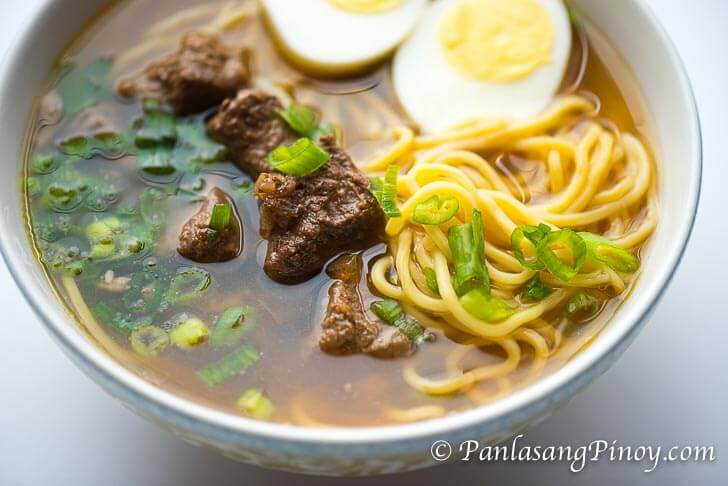
Beef mami is a Filipino noodle soup made with tender beef brisket and egg noodles in a hot beef broth, topped with Chinese cabbage, sliced hard-boiled egg, and green onions. I am a big fan of noodle soups, and beef mami is my favorite.

I used to have this during college. My favorite pares house served good beef mami too, and that is where I learned that pares and beef mami have the same base. If you order beef pares, the beef with sauce is served with sinangag and a separate bowl of beef broth. If you order beef mami, they arrange noodles in a bowl, add the same beef and sauce, and pour the same beef broth into the bowl.
The beef mami I make at home is simpler than the pares house bowl. The brisket simmers right in the broth with star anise and a beef cube, without the soy sauce and sugar that go into beef pares. You still get tender beef and a fragrant broth from one pot. A little soy sauce and sugar in that pot will take it closer to the pares house version if that is the taste you are after.
What is Beef Mami?
Mami is the noodle soup you order at a mamihan or a pares house, and you usually get to choose between beef, chicken, and wonton. Beef mami is the one this recipe makes, and chicken mami soup is the other kind that I cook at home. Ma Mon Luk is widely credited with making mami popular in Manila, where he started selling his noodle soup in Binondo in the 1920s.
Why This Beef Mami Recipe Works
- Browning the brisket with the garlic and onion – The beef picks up flavor in the pot before any water is added, and that flavor ends up in the broth.
- Star anise goes in before the water – A short time in the hot pot with the beef is enough to bring out its aroma.
- No separate stock needed – The brisket and beef cube cook together in 5 cups of water, and that becomes your broth.
- Cabbage goes straight into the bowl – The hot broth softens it a little, and it keeps some crunch.
Ingredients
- Beef brisket – A good cut for mami because it becomes tender after simmering and gives the broth plenty of beef flavor. Slice it into serving pieces before cooking.
- Star anise – Use whole pieces. Six pieces give the broth a strong aroma, and you can use fewer if you like it milder.
- Beef cube – Gives the broth its beef flavor and salt.
- Water – Use 5 cups for the broth.
- Cooking oil – For sautéing the garlic and onion and browning the beef. Any neutral oil works.
- Garlic – Minced, and sautéed only until fragrant.
- Onion – One medium onion, minced. Cook it until soft so it tastes sweeter.
- Green onions – Chopped and sprinkled on top right before serving.
- Egg noodles – Cook them according to the package before you assemble the bowls. Thin round noodles are the usual choice for mami, either fresh or dried.
- Chinese cabbage (pechay Baguio) – Also sold as Napa cabbage. Chop it into pieces that are easy to pick up with the noodles.
- Hard-boiled eggs – Sliced and placed on top of each bowl.
- Salt and ground black pepper – Both go in after the beef is tender.
Vanjo’s Advice
- Taste the broth before adding salt. The beef cube has already seasoned it, so the broth may only need a small pinch.
- Keep the pot covered and the simmer gentle. The brisket needs a long simmer, so check the pot now and then. Add a little hot water if the broth has reduced a lot, then taste it again.
- Add soy sauce and sugar for the pares house taste. A little of each in the pot is enough. When I want a pares-style bowl with ginger and the other spices, I use my beef pares mami recipe.
- Remove the star anise before serving. Nobody wants to bite into a whole piece.
How to Cook Beef Mami
Sauté the Aromatics and Brown the Beef
- Heat the cooking oil in a large cooking pot over medium heat.
- Add the minced garlic and onion. Sauté, stirring occasionally, until the onion softens and the garlic is fragrant. Keep the garlic light in color so the broth does not pick up a bitter taste.
- Add the beef brisket, sliced into serving pieces. Cook, stirring occasionally, until the outer surface of the beef turns light brown.
- Add the beef cube and star anise. Stir gently and cook briefly until you can smell the star anise.
Simmer the Broth
- Pour 5 cups of water into the pot. Raise the heat and bring to a boil, then lower the heat to a gentle simmer. Cover the pot and simmer until the brisket is tender enough for a fork to go through easily. It can take up to 3 hours on the stovetop, depending on the quality of the meat.
- Season with salt and ground black pepper. Stir, taste the broth, and adjust the seasoning as needed.
Assemble the Bowls
- Divide the cooked egg noodles evenly among 3 serving bowls. Arrange the chopped Chinese cabbage over the noodles.
- Ladle the hot broth and the brisket into each bowl. Pour enough broth to cover most of the noodles.
- Slice the hard-boiled eggs and arrange them over the noodles and beef. Sprinkle the chopped green onions on top.
- Serve immediately while the broth is hot.
What to Serve with Beef Mami
- Siopao Asado – Steamed buns with a sweet and savory pork filling. Mami and siopao is the classic mamihan order.
- Pork Siomai – Steamed pork and shrimp dumplings with soy sauce and calamansi for dipping.
- Toasted Garlic – Sprinkle a spoonful over the bowl along with the green onions.
- Chili Garlic Oil – For anyone at the table who wants a spicy bowl.
- Patis and calamansi – Set these on the table so everyone can season their own bowl.
Storage
- Refrigerator: Keep the broth and beef together in a covered container for up to 3 days, and store the cooked noodles in a separate container so they stay firm. Reheat only the amount of broth you plan to serve.
- Freezer: The broth and beef freeze well for up to 2 months. Let them cool first and leave a little space at the top of the container. Leave out the noodles, cabbage, and eggs, and prepare those fresh on the day you serve it.
- Reheating: Bring the broth and beef to a boil in a pot over medium heat. You can dip the cold noodles in hot water for a few seconds to loosen them before they go into the bowl.
More Filipino Noodle Soup Recipes
- Bulalo Beef Mami – Made with beef shank, with carrots and cabbage cooked in the pot along with the noodles.
- Spicy Beef Noodle Soup – Beef shank and egg noodles in a soy sauce broth with dried chilies and star anise.
- Batchoy – Fresh egg noodles with pork, liver, and crushed pork rind on top.
- Beef Pares Lomi – Fresh miki noodles and pares-style beef in a thick broth.
- Tinola Chicken Mami – Chicken mami with ginger, green papaya, and malunggay.
- Beef Pho Noodle Soup – Rice noodles and thinly sliced sirloin in a spiced beef bone broth.
Substitutions
- Beef cube and water – Use 5 cups of beef stock in place of both. Season lightly at the end, since stock can already be salted.
- Star anise – Five spice powder. It has star anise along with other spices, so the broth will taste a little different. Start with 1/2 teaspoon, taste, and add more if you want.
- Egg noodles – Fresh miki noodles, or flat egg noodles if that is what you have.
- Chinese cabbage – Bok choy, regular pechay, or savoy cabbage.
Frequently Asked Questions
What noodles are used for beef mami?
Egg noodles. Fresh ones from the refrigerated section of an Asian store are good, and dried egg noodles work too. Cook either kind first, drain well, and then divide them among the bowls.
Is beef mami the same as beef pares mami?
No. Beef pares mami has beef cooked in a sweet soy sauce mixture, and the beef and its sauce go over the noodles before the broth is poured. The beef in this recipe is simmered in the broth itself with star anise and a beef cube.
What cut of beef is best for beef mami?
Brisket is what I use. It turns tender after simmering and gives the broth a lot of flavor. Beef chuck and beef shank also work. Simmer either one until tender, the same way as the brisket.
Can I cook beef mami in a pressure cooker or slow cooker?
Yes, both work. Sauté the garlic, onion, and beef first, then add the beef cube, star anise, and water. A pressure cooker usually gets the brisket tender in less than 1 hour, depending on the size of the pieces. A slow cooker takes much longer, around 6 to 8 hours on low as a rough guide. Check that the beef is tender before you season the broth.
Do I need to cook the cabbage first?
No. Chopped Chinese cabbage softens enough from the hot broth. If you like it softer, add it to the pot for the last minute of cooking.
Beef mami is best served right after you put everything together. Have the noodles, cabbage, eggs, and green onions ready, then ladle in the hot broth once everyone is at the table. That is how they serve it at a pares house. Enjoy it with siopao on the side.
Watch How to Make It

Did you make this? If you snap a photo, please be sure tag us on Instagram at @panlasangpinoy or hashtag #panlasangpinoy so we can see your creations!
Beef Mami Recipe
Ingredients
- 1 lb. beef brisket
- 6 pieces star anise
- 1 piece beef cube
- 5 cups water
- 2 tablespoons cooking oil
- 1 tablespoon garlic minced
- 1 medium onion minced
- 1/4 cup green onions chopped
- 14 ounces egg noodles cooked
- 1 cup Chinese cabbage (pechay Baguio) chopped
- 4 hard-boiled eggs
- Salt and ground black pepper to taste
Equipment
- 1 Large cooking pot
Instructions
- Heat the cooking oil in a large cooking pot over medium heat.
- Add the minced garlic and onion. Sauté while stirring occasionally until the onion softens and the garlic becomes fragrant. Make sure the garlic does not burn, as this can give the broth a bitter taste.
- Add the beef brisket to the pot. Cook while stirring occasionally until the outer surface of the beef turns light brown. This allows the beef to develop additional flavor before the broth is added.
- Add the beef cube and star anise. Stir gently to combine them with the beef and sautéed aromatics. Let the ingredients cook briefly to release the aroma of the star anise.
- Pour 5 cups of water into the pot. Increase the heat and bring the liquid to a boil. Once boiling, reduce the heat to maintain a gentle simmer. Cover the pot and continue cooking until the beef brisket becomes tender. Check the beef occasionally and continue simmering as needed until it is soft enough to eat comfortably.
- Season the broth with salt and ground black pepper to taste. Stir gently to distribute the seasonings. Taste the broth and adjust the seasoning as needed, keeping in mind that the beef cube already contributes saltiness.
- Divide the cooked egg noodles evenly among 3 serving bowls. Arrange the chopped Chinese cabbage over the noodles, making sure each bowl receives a portion of the vegetables.
- Ladle the hot beef broth and tender beef brisket into each bowl. Pour enough broth to cover most of the noodles and allow the heat to slightly soften the Chinese cabbage.
- Slice the hard-boiled eggs and arrange them over the noodles and beef. Sprinkle the chopped green onions on top to add freshness, color, and flavor.
- Serve the Beef Mami immediately while the broth is hot. Share and enjoy!

Wana says
Very good
Vhee Pabalan says
I always trust your recipes. Everyone loves my dishes, I’m actually using some of it for business. Thanks for sharing.
Vanjo Merano says
You’re welcome, Vhee.
Giovani says
I enjoyed watching your cooking videos, I learned cooking beef mami and beef pares through your site. Thank you, you’re a great help. Sometimes I “tweak” some of the ingredients like putting a little bit of sesame seed oil for the beef stock. It’s like fusing some other ingredients I learned from preparing other foreign soup/noodle dishes. It’s been working alright so far. Im not a great cook, I’m just learning through watching different cooking videos I browse through YouTube or any other food site. But when it comes to cooking authentic Pinoy foods, Your site, IMO is still the best. Thanks again. Keep uploading!
Bernadette says
Hi Vanjo!
Great beef mami recipe!!!
I love the website!
Bernadette