Pancit Malabon Recipe
I got hooked on Pancit Malabon as a teenager, ordering it from a small restaurant right next to my parents’ shop. Pancit Malabon is a noodle dish from the city of Malabon, made with thick rice noodles in an orange shrimp and annatto sauce and topped with shrimp, squid, and more. It resembles Pancit Palabok, but the noodles are thicker and the sauce is mixed through them instead of poured on top.
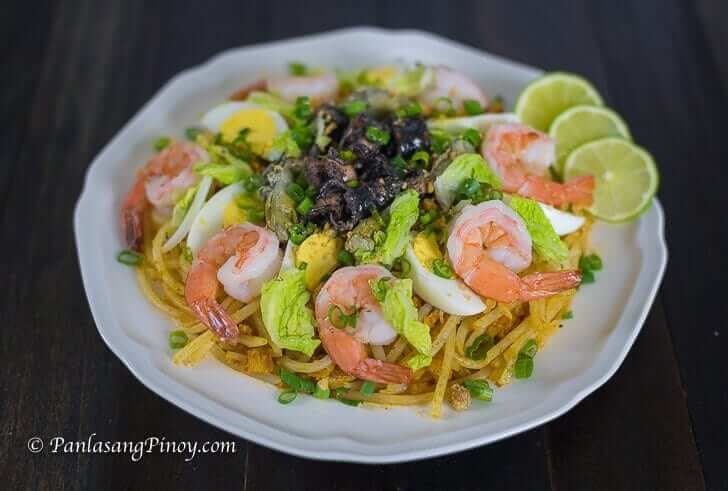
That spot was Aling Cely’s, a small restaurant that specialized in Pancit Malabon, right beside my family’s marble and tile shop along Alabang-Zapote Road in Las Piñas. I manned the shop on Saturdays and through most of the summer, and merienda almost always meant a serving of pancit from Aling Cely’s, sometimes chicken mami when I wanted a change. Most of the effort here is in the prep: boiling and slicing the pork, cooking the shrimp and squid, and getting the toppings ready before you plate.
What I pay attention to most is the sauce. Unlike a stir-fried Filipino pancit that cooks in one pan, Pancit Malabon has no flour or starch to thicken it the way palabok does. Most of the seafood flavor comes from the shrimp juice, while the fish sauce, pork, and tinapa add seasoning and depth, and the annatto water is mainly for color. I make my shrimp juice on the stronger side, since it is the main source of that flavor.
What is Pancit Malabon?
Pancit Malabon, also spelled Pansit Malabon, comes from Malabon, a coastal city just north of Manila. It sits beside Navotas and its large fish port, and seafood has long been part of the local cooking. The toppings reflect that: shrimp, squid, smoked fish, and in some versions oysters or mussels. Like the rest of Filipino pancit, the noodles have Chinese roots, but the amount of seafood is what makes this version particular to Malabon.
People mix it up with Pancit Palabok and Pancit Luglug all the time. The shared orange color from annatto makes them easy to confuse. Palabok uses thin bihon noodles with the sauce ladled over the top. Pancit Malabon uses thick rice noodles with the sauce mixed all the way through. Traditional Malabon sauce also has crab fat, or taba ng talangka, which makes it richer and gives it a stronger seafood taste. Luglug is the Pampanga version, named after the way its thick noodles are dipped in boiling water until soft.
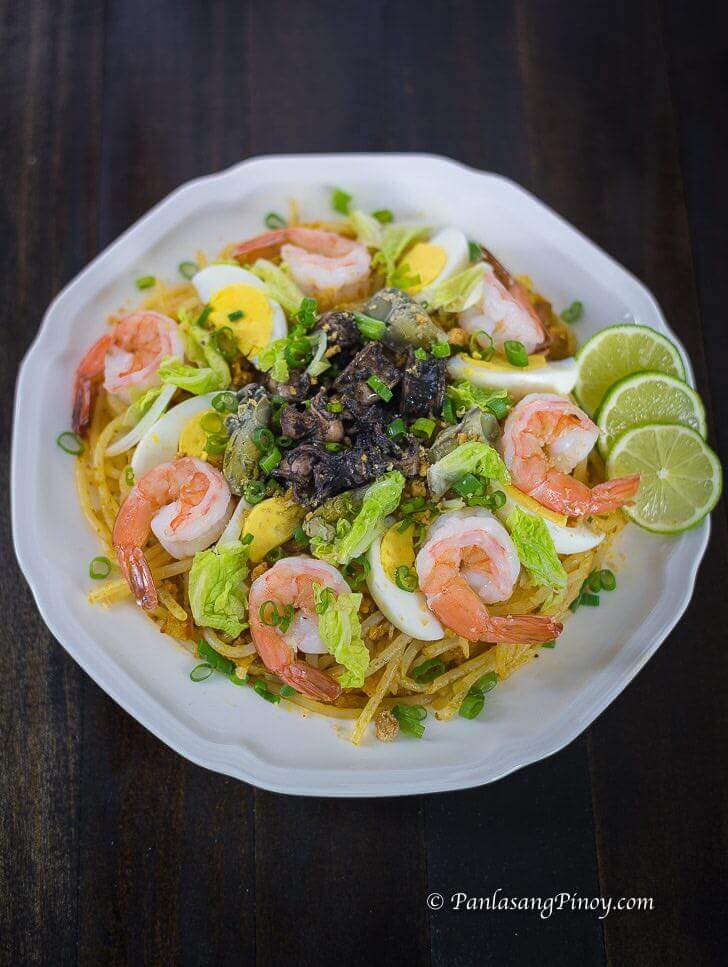
I mostly see Pancit Malabon at parties rather than as an everyday meal, usually on a bilao, the wide bamboo tray, at birthdays, fiestas, and Noche Buena. Filipinos serve pancit at celebrations because the long noodles stand for a long life. When it shows up, it is usually a big bilao set out for the whole table.
Ingredients
Noodles and Sauce
- Thick rice noodles – Look for the thick, dry noodles sold as Pancit Malabon or palabok noodles at a Filipino store. Soak them before cooking, which takes a few hours or an overnight soak depending on the brand. If you cannot find them, see the substitutions below.
- Shrimp juice – The liquid you press out of pounded shrimp heads and shells. I explain how to make it after the list.
- Annatto water – Annatto (achuete) seeds soaked in water until the water turns deep orange. This is what colors the sauce.
- Pork belly – Boil it until tender, then slice it into small pieces before it goes into the sauce.
- Fish sauce – Also called patis. It is the main seasoning here, so add a little first and adjust after tasting.
- Chicharon – Pounded pork rinds. Part of it is stirred into the sauce, where it softens and thickens it slightly, and the rest goes on top at the end and stays crisp.
- Onion and garlic – Minced fine and sauteed first, before anything else goes in.
- Ground black pepper – About half a teaspoon, adjusted to taste.
Toppings
- Shrimp – Shelled, cooked, and sliced in half lengthwise.
- Adobong pusit – Squid cooked in a light adobo, then sliced. Prepare it ahead so it is ready when you plate. It is a common topping in Malabon-style pancit.
- Tinapa flakes – Smoked fish, flaked. It adds a distinct smoked-fish taste to the toppings. You will find it at Filipino markets.
- Napa cabbage – Blanched for a short time to keep it green and just tender. Pechay Baguio also works.
- Hard-boiled eggs – Sliced into rounds and laid over the top.
- Toasted garlic – I make a batch ahead and keep it on hand. Sprinkle it on last so it stays crisp.
- Parsley – Chopped and scattered over the top just before serving. Scallions also work, though they taste sharper than parsley.
- Lemon or calamansi – Served on the side and squeezed over each serving before eating.
To make shrimp juice, take the heads and shells left from peeling the shrimp and pound them in a mortar. Add a little water, then press the mixture through a strainer and keep the liquid. Since the sauce has no flour or starch, this shrimp liquid and the annatto water make up most of the sauce. When there is no time for it, dissolve a shrimp bouillon cube in water and use that instead. The bouillon makes the sauce saltier and gives it a lighter, less concentrated shrimp taste.
Vanjo’s Advice
- Soak the noodles ahead, but do not overcook them. The thick noodles need a long soak, sometimes overnight for the traditional kind, then only a few minutes in boiling water. Leave them in too long and they turn gummy.
- Prep every topping before you start the sauce. With the shrimp, squid, eggs, and garnishes prepared beforehand, you can add them right after mixing the noodles with the sauce.
- Keep some chicharon and toasted garlic on the side. They soften once they sit in the sauce, so I put extra in small bowls on the table for people to sprinkle on as they eat.
- Season the sauce and taste it before you mix in the noodles. Once everything is tossed together, the salt is much harder to fix.
- Assemble close to serving time. The noodles keep absorbing the sauce as they sit, and the dish can dry out if it waits too long. I mix and top it just before everyone sits down.
- Serve it on a wide platter or bilao. A wide, shallow surface lets you spread the toppings more evenly across the noodles
How to Cook Pancit Malabon
Here is how I cook Pancit Malabon.
Prepare the Noodles
- Cook the thick rice noodles according to the package instructions. If you are using the traditional Pancit Malabon noodles, soak them in water overnight before cooking so they soften evenly.
- Drain the noodles well and set them aside. They should be tender but still have a little bite, not mushy.
Cook the Sauce
- Heat the cooking oil in a wide pan, then saute the garlic and onion until the onion softens. Cook it gently and do not let the garlic brown.
- Add the boiled pork belly and cook for about 3 minutes, stirring now and then.
- Pour in the fish sauce, black pepper, shrimp juice, and annatto water, then let it come to a boil.
- Stir in the pounded chicharon and simmer for 2 to 3 minutes, then turn off the heat. The chicharon softens and breaks down as it simmers, which thickens the sauce a little.
Assemble and Serve
- Place the cooked noodles in a large bowl and pour the sauce over them. Toss until the sauce coats all the noodles.
- Transfer the noodles to a wide serving platter.
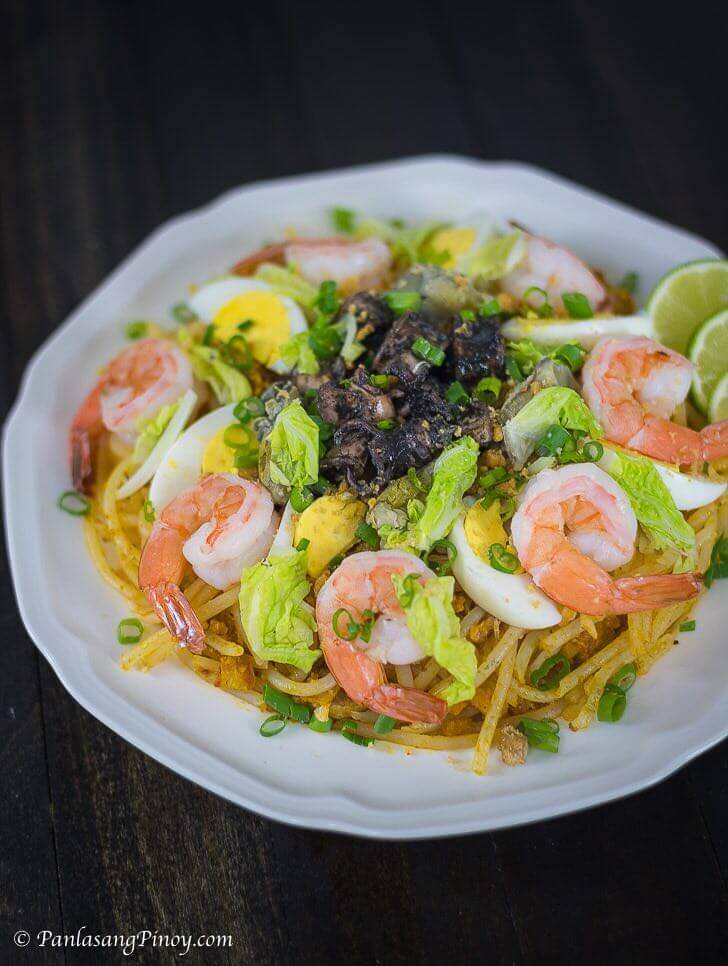
- Arrange the shrimp, adobong pusit, tinapa flakes, blanched cabbage, sliced eggs, remaining chicharon, toasted garlic, and parsley over the top.
- Serve with lemon wedges or calamansi on the side.
What to Serve with Pancit Malabon
- Pandesal – A lot of Filipinos eat pancit with soft bread on the side, scooping the noodles into a sliced pandesal.
- Calamansi or lemon – Squeeze a little over your serving right before eating. I like the sourness with the rich, salty noodles.
- Cold drinks – I usually have buko juice or a soft drink with mine.
- Extra chicharon and toasted garlic – Keep some in bowls on the table so people can add more to their own plates.
Storage
Leftover Pancit Malabon keeps for a day or two if you store it right. Because of the seafood, I do not push it much past that.
- Refrigerator: Store leftovers in an airtight container for up to 2 days. The noodles keep softening in the sauce, and the texture is best on the first day.
- Freezer: Freezing does not work well here. The rice noodles and seafood turn soft and watery after thawing. Freeze only the sauce, without the toppings, for up to 1 month, then make fresh noodles and toppings later.
- Reheating: Warm leftovers gently in a pan or the microwave with a small splash of water to loosen the sauce. Top with fresh toasted garlic and chicharon after reheating, since the original ones will have softened.
More Pancit Recipes
- Pancit Canton – My everyday pancit, stir-fried in one pan with pork, shrimp, and vegetables.
- Pancit Bihon Guisado – Thin bihon noodles stir-fried with pork, shrimp, and vegetables.
- Arroz Palabok – The palabok sauce and toppings served over rice porridge instead of noodles.
- Pancit Molo – An Ilonggo soup made with filled pork-and-shrimp dumplings.
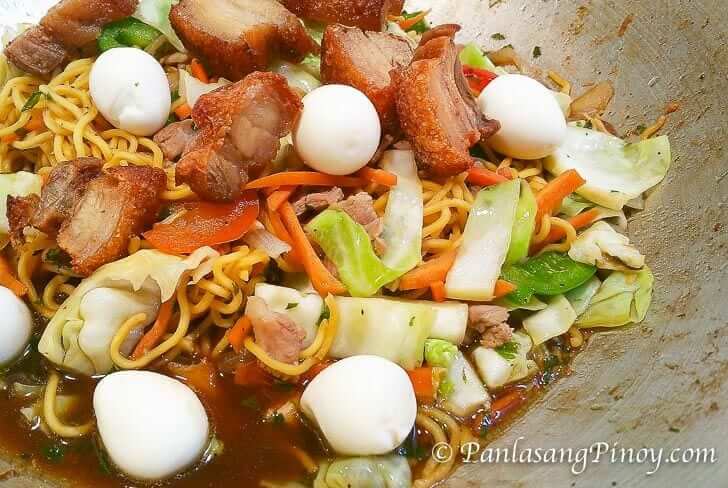
- Pancit Cabagan – A saucy noodle dish from Isabela, topped with crispy pork and quail eggs.
Substitutions
- Thick rice noodles – Thick cornstarch palabok sticks are the closest match. Regular bihon works too, though the noodles come out thinner and the result is closer to palabok.
- Shrimp juice – Dissolve a shrimp bouillon cube in water if you would rather not pound shrimp heads. The sauce comes out saltier and the shrimp flavor is less natural.
- Tinapa flakes – The usual swaps are flaked smoked mackerel or smoked herring. Both can be oilier and stronger-tasting than tinapa, so use a little less.
- Adobong pusit – Plain cooked squid rings are fine if you skip the adobo. They taste milder without the adobo seasoning.
- Pork belly – A leaner cut of pork works if you want less fat, though it will not be as rich or as tender as pork belly.
- Napa cabbage – Pechay Baguio is the closest swap. Blanched green beans work too and stay crisper.
Frequently Asked Questions
What is the difference between Pancit Malabon and Palabok?
Pancit Malabon uses thicker noodles, and the sauce is mixed through the noodles instead of poured on top the way it is with palabok. It also has more seafood, including squid and, in some versions, oysters or mussels.
What are Pancit Malabon noodles made of?
They are thick, dried noodles. Some are made mostly from rice flour and others from cornstarch, so the exact makeup depends on the brand. Either way, they have a firm, chewy texture. Check the package, and look for them at Filipino stores as Pancit Malabon or palabok noodles.
What is shrimp juice and can I skip it?
Shrimp juice is the liquid pressed from pounded shrimp heads and shells, and it gives the sauce most of its seafood flavor. You can skip it and use a shrimp bouillon cube dissolved in water instead. The fresh version has a fuller shrimp taste and lets you control the salt, since bouillon is already salty.
How long should I soak the noodles?
It depends on the brand, so follow the package first. Some soften in an hour or two, while the traditional thick Malabon noodles are usually soaked overnight. When they bend easily instead of snapping, they are ready to boil.
Can I add oysters or mussels?
Yes. Some Malabon versions include oysters or mussels along with the shrimp and squid. Cook them first, then arrange them on top with the other toppings.
Serve Pancit Malabon while the noodles are well coated with the sauce and the toppings are fresh. It is always nice to see a full bilao ready for everyone to enjoy.
Did you make this? If you snap a photo, please be sure tag us on Instagram at @panlasangpinoy or hashtag #panlasangpinoy so we can see your creations!
Pancit Malabon
Ingredients
- 1 lbs thick rice noodles
- 2 tablespoons cooking oil
- 1 tablespoon garlic minced
- 1 onion medium, minced
- 1/2 lbs pork belly boiled and sliced into small pieces
- 3 tablespoons fish sauce
- 1/2 teaspoon ground black pepper
- 3/4 cup shrimp juice
- 1/2 cup annatto water
- 1/4 cup chicharon pounded
- 1/2 lbs shrimp shelled, cooked, and sliced in half lengthwise
- 1/4 lbs adobong pusit sliced
- 3/4 cup tinapa flakes
- 1 cup napa cabbage or pechay Baguio chopped and blanched
- 3 hard-boiled eggs sliced
- 1/2 cup chicharon pounded
- 2 tablespoons toasted garlic
- 1 tablespoon parsley chopped
- 1 lemon quartered, or calamansi
Equipment
- 1 Wide pan Gives room to toss the noodles and sauce evenly.
- 1 Large mixing bowl For coating the noodles in sauce before plating.
- 1 Wide serving platter Lets you arrange every topping so each portion gets a bit of all.
Instructions
- Prepare the noodles. Cook the thick rice noodles according to the package instructions. Traditional Pancit Malabon noodles should be soaked in water overnight before cooking. Drain them well and set aside.1 lbs thick rice noodles
- Sauté the aromatics. Heat the cooking oil in a wide pan, then add the garlic and onion. Sauté until the onion softens.2 tablespoons cooking oil, 1 tablespoon garlic, 1 onion
- Cook the pork. Add the boiled pork belly and continue sautéing for 3 minutes.1/2 lbs pork belly
- Season the sauce. Add the fish sauce and ground black pepper, then stir until everything is well combined.3 tablespoons fish sauce, 1/2 teaspoon ground black pepper
- Add the liquids. Pour in the shrimp juice and annatto water, then let the mixture come to a boil.3/4 cup shrimp juice, 1/2 cup annatto water
- Finish the sauce. Add 1/4 cup of pounded chicharon. Stir and simmer for 2 to 3 minutes, then turn off the heat.1/4 cup chicharon
- Mix the noodles and sauce. Place the cooked noodles in a large bowl. Pour the sauce over the noodles and toss until they are evenly coated.1 lbs thick rice noodles
- Add the toppings. Transfer the noodles to a wide serving platter. Arrange the shrimp, adobong pusit, tinapa flakes, cabbage, sliced eggs, remaining chicharon, toasted garlic, and parsley on top.1/2 lbs shrimp, 1/4 lbs adobong pusit, 3/4 cup tinapa flakes, 1 cup napa cabbage or pechay Baguio, 3 hard-boiled eggs, 1/2 cup chicharon, 2 tablespoons toasted garlic, 1 tablespoon parsley
- Serve. Serve with lemon wedges or calamansi on the side. Share and enjoy!1 lemon

Karen Quintana says
Hi! Are thick noodles available in every supermarket?
Arceli Trinidad says
Thank you for the video presentation. All your videos are very clear and easy to follow. I’ve always been a fan of Pansit Malabon while in the Philippines and although you can order it from the Filipino caterers here, they are not as delicious as those in the Philippines. I will try this recipe this weekend. Marami na akong natutunan sa pagluluto, thanks to Panlasang Pinoy!
Maria says
When you say shrimp juice, is it the juice you use from boiling the shrimps?
Vanjo Merano says
It’s the juice that you get from pounding the head of the shrimp.
meriam berse says
hmm…yummy one of my favorite.wish i can cook this recipe soon..thank u panlasang pinoy
Novie Sespene says
I am very thankful that I found panlasangpinoy.com because I really learn a lot from your videos and the food are all delicious.
Ally says
thanks, nakaka-miss ang mga pagkain and enjoyed watching your post.:) will definitely try this one soon..:)
gie butler says
very helpful ang iyong video, thanks a lot. can’t wait to try your pancit malabon recipe. miss ko na ito.
Jane says
I haven’t tried your recipe yet but will do soon for Christmas. Thank you for posting a video… it seems easier than I thought.
PiNk says
Does anyone know on where I could buy “tinapa flakes” online? Thanks ^_^
Doris Elnar says
Thanks for posting this video,its a big help!!I cooked this on my birthday and it’s a success…more recipes and videos to post!!thank you!=)
tere says
hi,
i tried the recipe, and thank you so much they really like it. it os just my first time to cook it and its really yummy….
Jo says
Oh, sorry! Please disregard my question po…haven’t watched the video yet when I made my comment…Thanks anyway po.
ana says
HI can I use Chicken instead of Pork because I dont eat pork. or any alternative meat aside form pork?
Panlasang Pinoy says
Well said Sin. I am a fan of Nanay’s and I make sure to drop by every time I visit Malabon.
hungrynez says
And if you happen to pass by Dagupan City, make sure you grab a bilao of Pansit Malabon of Gorings. It may not be from Malabon, but i assure you, it sure does taste great.
Panlasang Pinoy says
Thanks for the Tip hungrynez. I’ll definitely look or that place if I’m in the area.