Banana Ketchup Recipe
Banana ketchup is the sweet and tangy Filipino ketchup made with saba bananas, vinegar, brown sugar, and spices. Many of us grew up with a bottle of it on the table, and we have it with fried chicken, lumpia, hotdogs, and even Filipino spaghetti. My banana ketchup recipe makes about 3 cups.
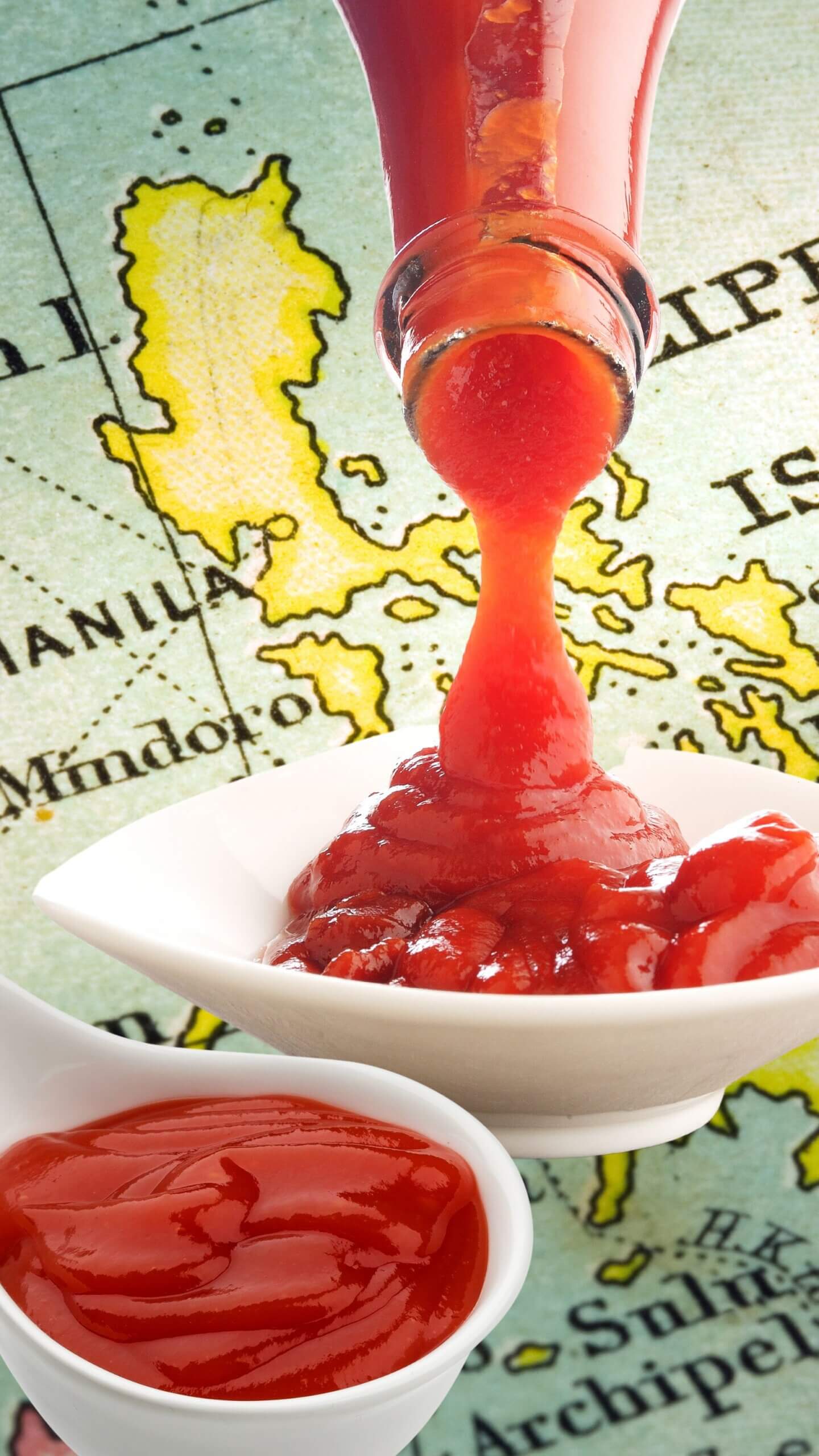
I spent months testing this recipe until the ketchup came out the way I expected. Finding saba bananas was the first challenge. It was a good thing I discovered that the Filipino store near our house sells frozen saba bananas from the Philippines.
The color is the one thing that might surprise you the first time. Banana ketchup is naturally brownish yellow, and the red in the bottled kind comes from food coloring. I kept the coloring optional, so you can leave your batch natural or stir in a few drops until it looks like the ketchup you are used to.
What is Banana Ketchup?
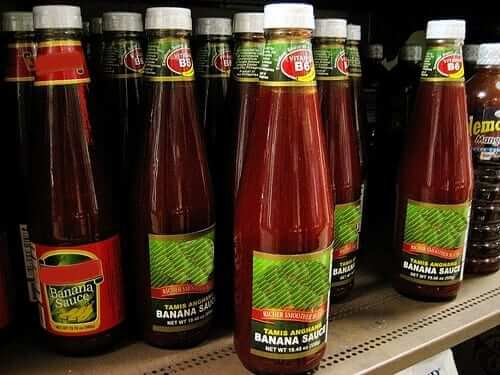
Some of us still call it banana catsup, and bottles sold outside the Philippines are often labeled banana sauce. It is the same condiment. It goes back to World War II, when tomatoes were scarce in the Philippines and bananas were plentiful, and food technologist Maria Orosa is credited with developing it.
There are no tomatoes in banana ketchup. The bananas make the sauce thick, and the vinegar and sugar make it taste like ketchup. Filipinos dip fried food in it, pour it over omelets and hotdogs, and mix it into barbecue marinades and sweet spaghetti sauce.
Why This Banana Ketchup Recipe Works
- Boiling the saba in the peel – Ripe saba is still firm and starchy. Ten to twelve minutes in boiling water cooks it through and makes it soft enough to mash into the sauce.
- Weighing the bananas after peeling – Saba comes in different sizes, so counting pieces does not tell you much. With 600 grams of pulp, the amount of banana stays the same against the vinegar and sugar in every batch.
- Cooking the onion, garlic, and bell pepper first – Sauteed aromatics lose their raw taste and blend smoothly with the bananas.
- Blending, then cooking again – The first simmer breaks the bananas down. Once the sauce is blended smooth, it is easier to see how thick it is while you cook it a second time.
Ingredients
- Saba bananas – Use ripe ones with yellow peels. You need 600 grams, or about 1.3 pounds, of pulp, weighed after the bananas are boiled and peeled.
- Brown sugar – Pack it into the measuring cup. It sweetens the ketchup and makes the color a little deeper.
- White vinegar – Regular distilled white vinegar with 5% acidity. It is what makes the ketchup tangy.
- Water – Part of it goes into the sauce. You also need enough to boil the bananas, plus a few tablespoons on standby to thin the ketchup at the end.
- Onion – One small onion, chopped. It gets blended later, so the pieces do not need to be fine.
- Red bell pepper – Half a pepper, chopped. It has a mild sweetness and helps with the color.
- Garlic – Minced, and added after the onion so it has less time in the hot oil.
- Cooking oil – Any neutral oil for sauteing the aromatics.
- Iodized salt – Start with the amount in the recipe, then taste and adjust near the end.
- Paprika – A small amount for color and a mild pepper taste.
- Ground cinnamon – Only an eighth of a teaspoon. Cinnamon is strong, and a little is enough to notice.
- Ground cloves – Use the same amount as the cinnamon, and measure it level.
- Red food coloring – Optional. It only changes how the ketchup looks.
Saba is a cooking banana. It is shorter and thicker than the regular bananas sold in most supermarkets, and the flesh is firmer and less sweet. Check the freezer section of Filipino and Asian stores if fresh saba is not available where you live.
Vanjo’s Advice
- Pick saba that is fully ripe. The peel should be yellow, and a few dark spots are fine. Ripe saba is sweeter and mashes more easily after boiling.
- Keep the heat low and scrape the bottom of the pan. The mixture is thick and has plenty of sugar in it. If you feel it starting to catch, lower the heat a bit more and stir in a tablespoon of water.
- Stop the second cook while the ketchup is a little thinner than you want. It should pour slowly off the spoon while hot. It will be thicker once it has cooled.
- Add the food coloring a few drops at a time. The color gets deeper quickly, and you can always add more. Without it, your ketchup will be brownish yellow and taste exactly the same.
How to Make Banana Ketchup
Boil the Saba
- Pour enough water into a large pot to completely submerge the saba bananas and bring it to a boil over medium-high heat. Add the unpeeled saba bananas and boil for 10 to 12 minutes, or until cooked through and soft enough to mash. Remove the bananas from the pot and let them cool until you can handle them comfortably.
- Peel the cooked bananas and weigh 600 grams of the banana pulp. Cut the bananas into smaller pieces and set them aside.
Saute the Aromatics and Add the Bananas
- Heat the cooking oil in a heavy-bottomed saucepan over medium heat. Saute the chopped onion for 2 minutes, or until it begins to soften. Add the minced garlic and chopped red bell pepper. Continue to saute for another 2 minutes, stirring occasionally, until the garlic becomes aromatic and the bell pepper begins to soften.
- Add the cooked saba bananas to the saucepan. Pour in the 3/4 cup water and the white vinegar. Add the brown sugar, iodized salt, paprika, cinnamon, and ground cloves. Stir thoroughly while gently mashing the bananas with a wooden spoon or spatula to help mix them into the liquid.
Simmer and Blend
- Bring the mixture to a gentle simmer over medium heat. Reduce the heat to low and continue cooking for 15 to 25 minutes, stirring frequently and scraping the bottom of the saucepan so the mixture does not stick or scorch. The bananas should break down further as the sauce cooks, and the liquid should begin to thicken.
- Turn off the heat and let the mixture cool slightly. Carefully transfer it to a blender and process until completely smooth. Work in small batches and let the steam escape safely when blending warm ingredients. An immersion blender can also be used directly in the saucepan. For a finer consistency, pass the blended mixture through a fine-mesh strainer.
Thicken, Season, and Color
- Pour the blended banana ketchup back into the saucepan. Set the heat to low and continue cooking for 5 to 10 minutes, stirring frequently, until the sauce reaches a smooth, pourable consistency similar to commercial ketchup. If the mixture becomes too thick, add water 1 tablespoon at a time until you get the consistency you want. Remember that the ketchup will thicken further as it cools.
- Taste the banana ketchup and adjust the sweetness or saltiness if needed. Add the optional red food coloring a few drops at a time, stirring until you get the color you want. Continue cooking for another 2 minutes while stirring to distribute the seasoning and color evenly.
Cool, Store, and Serve
- Remove the saucepan from the heat. Transfer the banana ketchup to a shallow, clean, food-safe container and cool it promptly before refrigerating. Once cooled, transfer it to clean bottles or jars with tight-fitting lids. Keep refrigerated at 40°F or below and use within 3 to 4 days, or freeze portions for longer storage. The recipe has no added preservatives and is not intended for shelf-stable storage.
- Serve the homemade banana ketchup with fried chicken, hotdogs, lumpiang shanghai, French fries, or other favorite Filipino dishes.
What to Serve with Banana Ketchup
- Tortang Talong – Pour the ketchup over the eggplant omelet and have it with warm rice.
- Pinoy Style Fried Chicken – Seasoned simply with salt, pepper, garlic powder, and onion powder, and banana ketchup is the usual dip.
- Lumpia – Fried pork lumpia. Pour the ketchup into a small bowl for dipping.
- Sauteed Onion and Hotdog with Ketchup – Red hotdogs and onion cooked with banana ketchup. Good for breakfast with garlic rice.
- Pork Barbecue – The marinade and the basting sauce both use banana ketchup, so your homemade batch can go straight into the recipe.
- French fries – Use it the same way you would use tomato ketchup.
Storage
- Refrigerator: Keep the ketchup in clean bottles or jars with tight-fitting lids at 40°F or below, and use it within 3 to 4 days. Homemade banana ketchup is not shelf-stable, so it stays in the refrigerator and not in the pantry.
- Freezer: Freeze what you cannot finish in a few days. Small containers work best because you can thaw only what you need. Leave a little space at the top of each container.
- Reheating: Banana ketchup is served cold or at room temperature, so there is nothing to reheat. Thaw frozen portions in the refrigerator overnight and stir well before serving. If it is thicker than you like, stir in a teaspoon of water.
More Filipino Recipes with Banana Ketchup
- Pinoy Spaghetti – Sweet spaghetti sauce made from scratch with tomato sauce and a full cup of banana ketchup.
- Jollibee Style Spaghetti – Our version of Jollibee spaghetti, with ground pork, ham, and red hotdogs.
- Chicken Barbecue – Chicken leg quarters marinated overnight in banana ketchup, soy sauce, and lemon juice, then grilled.
- Hotsilog – Hotdogs, garlic fried rice, and fried egg, with banana ketchup as the condiment.
- Stir Fried Chicken Franks – Chicken franks cooked with garlic, onion, banana ketchup, and oyster sauce.
Substitutions
- Saba bananas – Ripe plantains are the closest match because they are also cooking bananas. The taste will be a little different from saba.
- White vinegar – Cane vinegar or apple cider vinegar. Taste the ketchup near the end and adjust the sugar or salt if needed.
- Brown sugar – White sugar works. The ketchup will be lighter in color.
- Ground cloves – Ground allspice in the same amount.
- Red food coloring – Leave it out, or add a little more paprika for a warmer color. Paprika will not make the ketchup bright red.
Frequently Asked Questions
What does banana ketchup taste like?
It is sweet and a little sour. Compared with tomato ketchup, it is sweeter and less tangy.
Why is banana ketchup red?
Food coloring makes it red. The natural color is brownish yellow, and the red is there so it looks like tomato ketchup. There are no tomatoes in it.
Can I use regular bananas instead of saba?
You can, but the result will be different. Regular bananas are softer and sweeter than saba, so expect a sweeter ketchup with a stronger banana taste. The recipe is written for saba, and that is what I recommend if you can find it.
Do I need to strain banana ketchup?
No, straining is optional. Passing the blended ketchup through a fine-mesh strainer makes it finer and closer to the bottled kind.
Can I make spicy banana ketchup?
Yes. Add minced bird’s eye chilies when you add the garlic. Start with one or two, then use more on your next batch if you want it hotter.
Fried pork chop was the first dish I had with this banana ketchup. It has been one of my favorite dishes since I was growing up. I suggest having your first batch the same way, with a crispy fried pork chop and warm rice.
Did you make this? If you snap a photo, please be sure tag us on Instagram at @panlasangpinoy or hashtag #panlasangpinoy so we can see your creations!
Banana Ketchup Recipe
Ingredients
- 600 grams ripe saba bananas weighed after peeling (about 1.3 lbs.)
- 1/2 cup brown sugar packed (120 grams)
- 1/2 cup white vinegar 5% acidity
- 3/4 cup water plus more for boiling the bananas
- 1 small onion chopped
- 1/2 red bell pepper chopped
- 4 cloves garlic minced
- 1 tablespoon cooking oil
- 1 teaspoon iodized salt
- 1/4 teaspoon paprika
- 1/8 teaspoon ground cinnamon
- 1/8 teaspoon ground cloves
- red food coloring optional
Equipment
- 1 Large cooking pot
- 1 Heavy-bottomed saucepan
- 1 Blender or immersion blender
- 1 Fine-mesh strainer (optional)
Instructions
- Pour enough water into a large pot to completely submerge the saba bananas and bring it to a boil over medium-high heat. Add the unpeeled saba bananas and boil for 10 to 12 minutes, or until cooked through and soft enough to mash. Remove the bananas from the pot and let them cool until you can handle them comfortably.600 grams ripe saba bananas, 3/4 cup water
- Peel the cooked bananas and weigh 600 grams of the banana pulp. Cut the bananas into smaller pieces and set them aside.600 grams ripe saba bananas
- Heat the cooking oil in a heavy-bottomed saucepan over medium heat. Saute the chopped onion for 2 minutes, or until it begins to soften. Add the minced garlic and chopped red bell pepper. Continue to saute for another 2 minutes, stirring occasionally, until the garlic becomes aromatic and the bell pepper begins to soften.1 tablespoon cooking oil, 1 small onion, 4 cloves garlic, 1/2 red bell pepper
- Add the cooked saba bananas to the saucepan. Pour in the 3/4 cup water and the white vinegar. Add the brown sugar, iodized salt, paprika, cinnamon, and ground cloves. Stir thoroughly while gently mashing the bananas with a wooden spoon or spatula to help mix them into the liquid.600 grams ripe saba bananas, 3/4 cup water, 1/2 cup white vinegar, 1/2 cup brown sugar, 1 teaspoon iodized salt, 1/4 teaspoon paprika, 1/8 teaspoon ground cinnamon, 1/8 teaspoon ground cloves
- Bring the mixture to a gentle simmer over medium heat. Reduce the heat to low and continue cooking for 15 to 25 minutes, stirring frequently and scraping the bottom of the saucepan so the mixture does not stick or scorch. The bananas should break down further as the sauce cooks, and the liquid should begin to thicken.
- Turn off the heat and let the mixture cool slightly. Carefully transfer it to a blender and process until completely smooth. Work in small batches and let the steam escape safely when blending warm ingredients. An immersion blender can also be used directly in the saucepan. For a finer consistency, pass the blended mixture through a fine-mesh strainer.
- Pour the blended banana ketchup back into the saucepan. Set the heat to low and continue cooking for 5 to 10 minutes, stirring frequently, until the sauce reaches a smooth, pourable consistency similar to commercial ketchup. If the mixture becomes too thick, add water 1 tablespoon at a time until you get the consistency you want. Remember that the ketchup will thicken further as it cools.3/4 cup water
- Taste the banana ketchup and adjust the sweetness or saltiness if needed. Add the optional red food coloring a few drops at a time, stirring until you get the color you want. Continue cooking for another 2 minutes while stirring to distribute the seasoning and color evenly.red food coloring
- Remove the saucepan from the heat. Transfer the banana ketchup to a shallow, clean, food-safe container and cool it promptly before refrigerating. Once cooled, transfer it to clean bottles or jars with tight-fitting lids. Keep refrigerated at 40°F or below and use within 3 to 4 days, or freeze portions for longer storage. The recipe has no added preservatives and is not intended for shelf-stable storage.
- Serve the homemade banana ketchup with fried chicken, hotdogs, lumpiang shanghai, French fries, or other favorite Filipino dishes.
Notes
- Yield is approximately 3 cups. One serving is 1 tablespoon.
- Weigh the saba after boiling and peeling so you have exactly 600 grams of pulp.
- The ketchup thickens as it cools. Thin it with water, 1 tablespoon at a time, if needed.
- The food coloring is optional. Without it, the ketchup is brownish yellow.
- Keep refrigerated at 40°F or below and use within 3 to 4 days, or freeze portions for longer storage. The recipe has no added preservatives and is not intended for shelf-stable storage.

Dominga Ofori says
Enjoy Panlasang Pinoy. Just love the simplicity.
Yolly santos says
I want to know more about how to make tomato sauce, catsup, fish sauce, vinegar, soy sauce,pasta making,w/ c school can I enrolled?
Joan says
why should it be cooked at 80-85 degree Celsius for 40 minutes? Why the specific temperature for that amount of time? Any chemical or biological reasons for that?