Filipino Food
Welcome to Panlasang Pinoy. My name is Vanjo Merano, and I started this site in 2009 to share Filipino recipes the way I cook them at home. Since then, the recipe library has grown to more than 2,000 dishes. This page is where I want to help you find what you are looking for, whether that is the chicken adobo your mom used to make, a sour soup for a rainy day, or something from a region you have not cooked from before. I also want to share what I have learned from cooking these dishes for many years and from reading the comments readers send in every day.
A little about me. I grew up cooking in the Philippines starting around the age of ten. I lived in Chicago for many years before moving to Tampa, Florida, where I run Panlasang Pinoy now. My family helps me with the videos and the kitchen work.
The site has been mentioned by several food publications over the years, and I am thankful for that. What means more to me is hearing from readers who cook the recipes, share them with family, and come back when they need help in the kitchen.You can read more about me on the About page.
What Filipino Food Actually Is
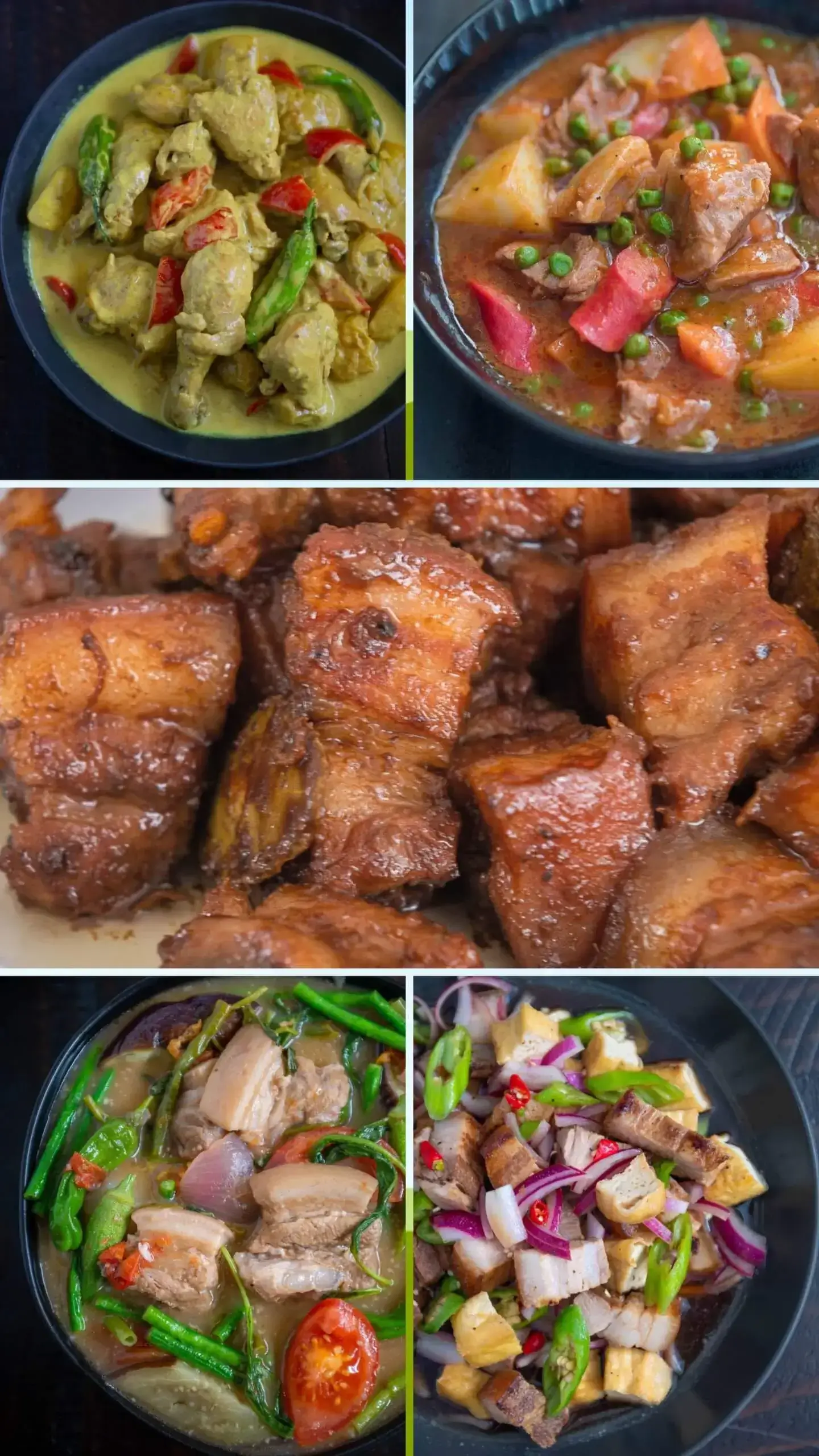
If you are not Filipino, the dishes you have probably tried are lumpia and pancit. These are the two dishes that show up at parties and Filipino food halls, so they end up standing in for the whole cuisine in most people’s minds. They are good dishes. They are also a small part of what Filipino food is. There are sour soups, slow-cooked tomato stews, fermented condiments, vegetable dishes built around bagoong, native sweets, and at least five distinct regional traditions that almost never travel outside the Philippines.
Filipino cooking is also more step-by-step than most home cooking in the United States. A dish like menudo can technically be done in an Instant Pot, but the way I learned it, the pork is sautéed first, the potatoes and carrots are fried separately, and the liver is browned before it goes in. There is a proper order. A lot of Filipinos still cook this way even when shortcuts are available, because the steps produce a different dish than the shortcut. Menudo built up in stages does not taste the same as menudo dumped in a pot all at once.
And one more thing about Filipino food that I want to point out. It is sour. Sinigang, paksiw, kinilaw, sinampalukang manok. These are entire dish families built around different ways to make a broth or a cure sour. Most cuisines do not lead with sour. Filipino food does, and the sourness is balanced by the saltiness and umami of patis and bagoong. Once you understand that, a lot of the cuisine starts to make more sense.
Five Dishes Filipinos Argue About
Filipino food is regional and family-by-family. Most published recipes flatten that. Over the years, the dishes I see readers correct, defend, and assert their family’s version of are menudo, arroz caldo, pancit, pinakbet, and humba.
Menudo varies by whether the family adds raisins, hot dogs, bell peppers, or chickpeas, and by whether the liver is real pig liver or liver spread. Arroz caldo splits along whether it is the chicken-and-saffron version, the plain lugaw of breakfast, or the offal-rich goto. Pancit has many versions: canton, malabon, palabok, bihon, sotanghon, lomi, habhab, molo. Each one has families and provinces that consider their version the right one. Pinakbet divides between the Ilocano version with bagoong isda and the Tagalog version with bagoong alamang. Humba is the Visayan and Cebuano take on braised pork, and rarely tastes the same in any two homes.
When readers tell me “this is not how my mom made it,” I take it seriously. They are usually right. Filipino food is not one fixed recipe per dish. It is many.
Adobo and Why I Always Start There
If a non-Filipino friend asks me where to start with Filipino food, I tell them to start with adobo. It is the dish I would point to first.
The word comes from the Spanish adobar, meaning to marinate, but the technique itself is older than Spanish contact. Filipinos were already cooking meat in vinegar to preserve it before colonization. The soy sauce came in later. What I think of as adobo is built around two simple ideas: vinegar to preserve and tenderize, and salt to season. Everything else changes from family to family.
One thing I want to share, because experienced readers keep bringing it up in the comments, is that the older adobo recipes do not add water. The meat releases its own juices, the vinegar tenderizes, the soy seasons. When you add water, the dish leans more toward a stew. Both versions are real adobo, but they are not the same dish. The home cooks who learned from their grandparents almost always make it without water.
The other thing readers have taught me is the mid-cook frying step. The best home cooks I know cook the meat in the sauce until tender, then take it out, fry it briefly to develop a crust, and return it to the pot. The crust holds the sauce differently. The texture changes a lot. It is a step most published recipes skip, and it is worth doing if you have the time.
The two recipes I would point you to first are Chicken Adobo and Pork Adobo. From there, I have written variations including pork and chicken adobo combined, adobong manok sa gata with coconut milk, adobo with hard-boiled egg, and adobong atay at balun-balunan using chicken liver and gizzard. Adobo is the technique. The protein is whatever you have on hand.
How Mechado, Kaldereta, Menudo, and Afritada Are Different
These four dishes confuse a lot of cooks, including a lot of Filipinos. They all use tomato. They all sit in the same orange register. Most published recipes do not draw clean lines between them. Here is how I separate them in my own kitchen.
- Mechado uses larger chunks of beef or pork, marinated in soy sauce and citrus, then simmered in tomato. The name comes from mecha, the Spanish word for wick, because the original recipe wove pork back-fat through beef chuck so it looked like a candle wick. The sauce is thinner than the others. See my Beef Mechado recipe.
- Kaldereta is the only one of the four that uses liver spread. That single ingredient gives the sauce its rich, slightly earthy taste. The dish is bolder, often spicy, and was originally made with goat. Some northern Philippine versions use peanut butter instead of liver spread. See my Beef Kaldereta recipe, or the Batangas version if you want it spicier.
- Menudo uses small cubes of pork and pig liver. Real liver, not spread. Festive versions add raisins, hot dogs, bell peppers, and green peas. The everyday version is plainer. There is one tip I always give readers: if you use liver spread in menudo instead of pig liver, the dish basically turns into kaldereta. That is the line I tell people to remember. See my Pork Menudo recipe.
- Afritada is the only one of the four that traditionally uses chicken. The name itself tells you what makes it different. Fritada means “to fry,” and the dish is named after the pan-frying step that begins it. The sauce is the lightest of the four. See my Chicken Afritada recipe.
If you remember nothing else: tomato is the constant. What changes is the meat, the cut, and the one ingredient that defines each dish.
Where to Start If You Are New to Filipino Food
If you have never cooked Filipino food and are not sure where to start, I would point you to two dishes first. Chicken adobo and lumpia. They work for different reasons. Adobo wins people over because the ingredients are familiar. Soy, vinegar, garlic, bay leaves are recognizable to most American or European palates, and the combination tastes uniquely Filipino without being unfamiliar. Lumpia wins people over because the format is familiar. Spring rolls are understood worldwide, and the Filipino seasoning carries through nicely.
Two more dishes round out the entry point: leche flan and kare-kare. Leche flan is the dessert at almost every Filipino celebration. Kare-kare is the rich peanut and oxtail stew served with bagoong on the side, the dish many families save for fiestas and gatherings.
These four are the dishes most Filipino-Americans I know cook for non-Filipino spouses, friends, and coworkers. They are the dishes at the office potluck. They are reliable for introducing someone new to Filipino food.
Filipino Sour Soups
Filipino sour soups are a category that does not have a clean equivalent in most cuisines. The base technique is the same: meat or fish simmered with aromatics until tender, then soured with a fruit or a leaf. What changes is the souring agent.
I see this a lot when readers ask me about sinigang. They want to know if they can use lemon, calamansi, tamarind mix, or fresh sampaloc. That one question already says a lot about how Filipino cooking works. You adjust based on what you can find. The traditional version of sinigang uses unripe tamarind. The Iloko version often uses kamias, also called bilimbi. The bangus version uses ripe guava, which gives a sourness that is mild and almost sweet. Sinampalukan uses tamarind leaves rather than the unripe fruit, so the sourness is lighter and more herbal.
Tinola is not sour at all but lives in the same soup family. It is chicken in ginger broth with green papaya or chayote, the soup I usually want when the weather turns cold or when someone in the house is not feeling well. Nilaga is the plain boiled version, clear broth with cabbage and corn. The kind of soup I make on a regular weeknight.
Here is one thing readers from Mindanao have taught me over the years. The traditional kinilaw in their region uses tabon-tabon, a fruit I cannot find here in the United States, before the calamansi or vinegar goes in. It tames the rawness of the fish in a way calamansi alone cannot. Most kinilaw recipes online skip tabon-tabon because it is hard to source outside the region. Filipino food is more regional than recipe sites usually show.
Soups That Do Not Get Enough Attention
If I had to point to one category on the site that I think gets less attention than it deserves, it would be the lesser-known Filipino soups. Sinampalukang manok, made with chicken simmered in young tamarind leaves, is often confused with sinigang but cooks differently and tastes lighter. Tinolang isda, the fish version of tinola, is a coastal staple I get a lot of questions about from readers who grew up with it but cannot find it outside the Philippines. Beef papaitan, the Ilocano bitter offal soup, is one of the most distinctive regional dishes in Northern Luzon.
Sinanglaw, the Ilocano soup soured with bile, is one I have not yet written up properly. It is on my list. Many Filipino families know these soups well, even if they do not always get much attention online.
Filipino Food by Region
Bicol
Bicolano cooking is built on two ingredients: coconut milk and chili. The dish I would name first from the region is laing, dried taro leaves slow-simmered in coconut milk with bagoong and pork.
Bicol Express is the spicy pork-and-coconut-milk dish that travels under that name in Manila restaurants. Bicolano readers have been telling me for years that locally the dish is gulay na lada, and the Bicol Express name was coined in the 1960s by Cely Kalaw at her Manila restaurant after the train that ran from Manila to Naga. Both dishes show what coconut milk and chili can do together with enough time. Pinangat, the wrapped fish in leaves preparation, is another Bicol staple worth trying.
Ilocos
Ilocano food is the most agriculturally honest of the regional cuisines I cook from. Vegetables get used the day they come out of the garden. The offal gets used because nothing is wasted. Bagoong isda is the seasoning that anchors most savory cooking.
Bagnet is the Ilocano twice-fried pork belly. It is boiled, dried, and fried two or three times until the texture is crunchy all the way through. That is what makes it different from once-fried lechon kawali. Dinakdakan is grilled-and-creamy pork ear and face, often compared to sisig but distinguished by its mayonnaise dressing. Dinardaraan is the Ilocano version of dinuguan, drier and crispier than the Tagalog version. Papaitan is the bitter offal soup I mentioned earlier. It takes some getting used to.
Visayas
Two of the most exported dishes in Filipino cuisine come from the Visayas.
Chicken Inasal is the Bacolod and Iloilo grilled chicken. There is no soy sauce in the marinade. Just calamansi, vinegar, lemongrass, ginger, and garlic, basted with chicken oil while it grills. The dish became popular in the 1970s along Cuadra Street in Bacolod, and the city declared it a locally important cultural property in 2022.
Cebu-style lechon belly is the rolled, herb-stuffed pork belly modeled after whole-pig Cebu lechon. Purists eat it without sauce because they believe the seasoning of the meat itself should be enough. Humba is the Visayan braised pork belly often called the Bisaya answer to adobo. It is sweeter and richer, with banana blossoms and salted black beans. Laswa is the Ilonggo vegetable soup that proves a region known for seafood and lechon also knows what to do with vegetables.
Mindanao
If there is one regional cuisine in the Philippines that I think deserves more attention, it is Mindanao. Most English-language Filipino food coverage skips it. Most food publishers, including me for many years, are based in Manila or Cebu and tend to write about the dishes they grew up with. Mindanao cuisine has Muslim-influenced roots and many dishes that simply have not made it into mainstream Filipino food media yet.
The dishes I think readers should know about include beef rendang, which is the Maranao version of the dish more commonly associated with Indonesia and Malaysia, built around palapa, the chili-ginger-coconut paste that defines Maranao cooking. Piyaparan na manok is chicken simmered in palapa and coconut milk. Tiyula itum, the Tausug black beef stew, gets its color from charred coconut meat ground into a paste. Satti is the Tausug grilled skewers with spiced peanut sauce, often eaten for breakfast in Zamboanga. Pyanggang manok is grilled chicken with charred-coconut paste.
I have not yet written full recipes for these dishes on Panlasang Pinoy. They are on my list, and I want to do them properly. The closest crossover dish I have already published is sinuglaw, the Davao crossover of grilled pork belly and tuna kinilaw. It sits between Visayas and Mindanao traditions and is worth cooking on its own.
Pampanga and the Tagalog Region
Pampanga is often called the culinary capital of the Philippines, and the dish that built that reputation is sisig. Boiled and grilled pig face and ears chopped fine, sizzled on a hot plate with onion, chili, and chicken liver.
The Tagalog region is where most of the everyday national canon lives. Sinigang, tinola, nilaga, and the four tomato stews are the dishes a Tagalog mom cooks on rotation through the week. They form the spine of how most non-Tagalog Filipinos picture the cuisine.
Cooking Filipino Food Away from Home
Living in the United States changed how I see some of the ingredients I grew up with. A few things stand out from my own cooking and from what I hear from readers in Canada, the Middle East, Europe, and Australia.
The ingredient I miss most is siling pansigang. The Filipino long green chili has a flavor that jalapeños and serranos do not match. The heat is milder, but the character is vegetal and slightly grassy, and it carries the broth in a way the Mexican peppers do not. You can substitute another long green chili and get close on heat, but you lose part of the dish.
Filipino umami is also different from the umami most people in the United States grew up with. Soy sauce, parmesan, dried mushrooms, and miso are familiar. Patis and bagoong are sharper, more pungent, more vivid. Once you cook with a small spoonful of patis, you understand why my grandma always reached for that bottle. It transforms a soup that was missing something.
And rice is always there. I grew up with it, and even after many years in the United States, I still feel that a Filipino meal is not complete without rice. Filipinos who have lived in the US for forty years still build their tables around it. The protein changes, the side dishes change, the menu adapts to what is available. Rice stays.
How Filipino Home Cooking Has Changed Since 2009
The biggest change I have seen since I started this site is generational. The kitchen used to belong mostly to mom. Recipes passed from her to her daughters, and from grandma to whichever apo was closest by. That is not the default anymore.
Three groups now share the kitchen. Husbands and dads who never cooked in 2009 cook regularly now. I see this in my own family and in the comments. Filipino-American kids born and raised abroad come back to Filipino food as adults, often teaching themselves in their twenties what their parents stopped teaching them in their teens. And young Filipinos almost everywhere are learning from YouTube and TikTok now, not from mom.
Filipino home cooking is still alive. It just happens in more kinds of kitchens now.
What I Have Noticed from Reading Reader Comments
After many years of reading comments on the site, I noticed something simple. Most readers are not asking fancy cooking questions. They usually want to know three things.
- Can I substitute one ingredient for another?
- How do I make a bigger batch for a family gathering?
- Can I still cook this without one item I cannot find?
These are the questions of people who are cooking under real conditions, often outside the Philippines, often with whatever the local Asian grocery has that week. Filipino home cooking, the way most of my readers do it, is about adapting.
Something else I noticed. “Readers do not usually ask me how to scale recipes down. They scale them up“. A reader doubles the pancit for a church potluck. Another triples the pork adobo for a family reunion. Someone scales kaldereta up for a town fiesta. Filipino families still cook for sharing, even after moving far from the Philippines. The kitchen stays a gathering kitchen.
The third thing is worth saying plainly. The most common reason a recipe does not turn out well is that the cook starts before reading the recipe through to the end. A marinating step gets skipped. An ingredient turns up missing in the middle of the cook. A timer was off. I write my recipes so they can be read all the way through before the heat goes on. The ten minutes spent reading first is usually the difference between a meal and a mess.
How to Use This Site
If you are new to Filipino cooking, start with adobo. It is the most beginner-friendly entry point and will teach you the basic flavors of the cuisine. From there, try a sour soup. Pork sinigang if you can find tamarind, tinolang manok if you cannot. Then try a noodle dish. Pancit canton for a weeknight, pancit palabok for a weekend or a celebration. Leche flan when you want to impress someone. Chicken Inasal when you have a grill and a free Sunday.
If you grew up with Filipino food and are looking for a specific dish, the search bar at the top of every page will get you there fastest. If you are looking for a regional version of something, the comments under each recipe are usually where the most useful information is. Readers from many provinces and many diaspora kitchens have been sharing their family’s variations on this site since 2009. They are worth reading.
If you want a guided tour as a beginner, the Start Here page is a good place to begin.
One Last Thought
Food writers have been asking me for years why Filipino food has not broken through in the United States the way Korean or Vietnamese food has. My honest take, after sixteen years of running this site, is that it has, just in a different way than people expected. Korean and Vietnamese food entered American awareness through restaurants first, and home cooking followed. Filipino food entered through home kitchens first, in millions of Filipino-American households, through YouTube videos and recipe blogs and the slow passing of adobo and lumpia and pancit across two and three generations. The restaurant breakthrough may still come. The home cooking breakthrough already happened, and I am glad Panlasang Pinoy has been part of it.
That is also why I want to keep adding recipes from regions I have not covered well yet. Mindanao especially. Filipino food is bigger than the few dishes most people know, and I want this site to keep showing that.
Thank you for reading this far. I hope you find something here you want to cook tonight.