Chicken Adobo with Coconut Milk (Adobo sa Gata)
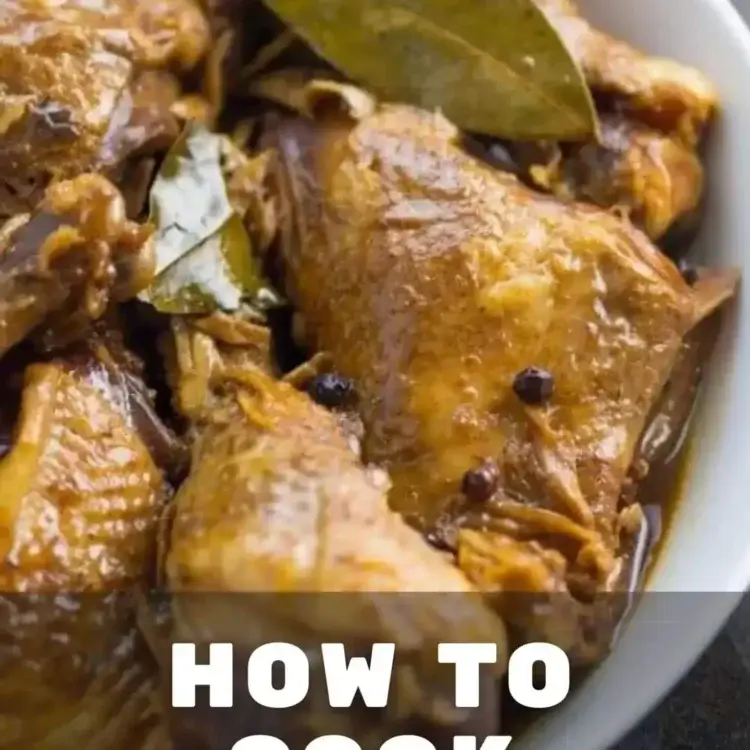
Chicken adobo with coconut milk starts the same way as regular chicken adobo. It still has soy sauce, vinegar, garlic, peppercorns, and bay leaves, but the gata goes in near the end and makes the sauce richer and creamier.
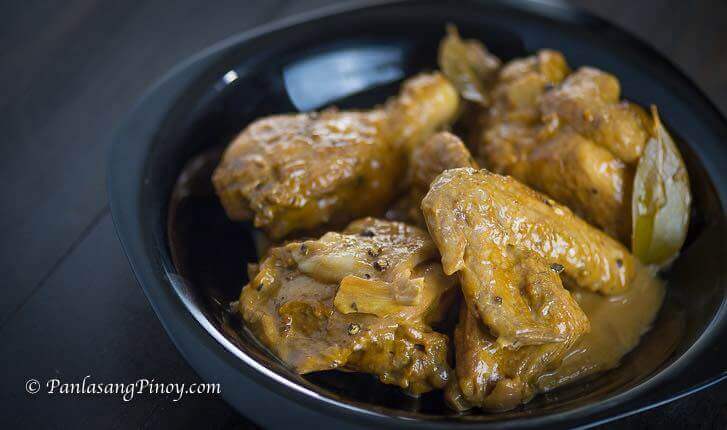
I like keeping enough sauce in the pot to spoon over rice. Once it coats the chicken, that is usually where I stop cooking. You can reduce it further if you prefer a drier adobo, but I would rather have that creamy sauce with every bite.
Keep the heat low once the coconut milk goes into the pot. A hard boil can make the sauce separate and turn oily.
What is Chicken Adobo with Coconut Milk?
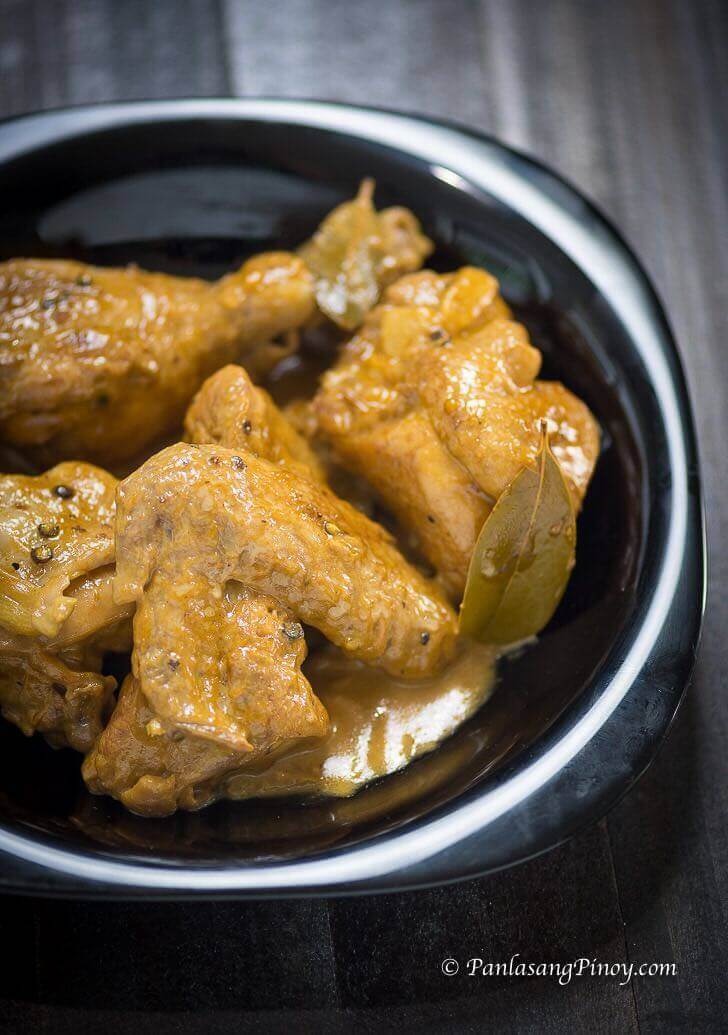
Filipinos call this dish adobo sa gata. Gata is the Tagalog word for coconut milk, and it thickens the adobo sauce and softens the sharpness of the vinegar. The chicken is marinated in soy sauce and garlic, then browned and simmered with vinegar, bay leaves, and peppercorns. The coconut milk goes in near the end, and the sauce turns creamy and light brown.
Adobo sa gata is often associated with Bicol because coconut milk and chili are used in many Bicolano dishes such as laing and Bicol express. It is not limited to the region, though, and versions are also cooked in other parts of the Philippines. I keep the chili optional in this recipe, but you can add siling labuyo if you want it spicy.
How This Chicken Adobo Stands Out
- The vinegar boils on its own before the coconut milk goes in. Most coconut milk adobo recipes pour the vinegar and the gata into the pot together. Giving the vinegar two minutes by itself takes the raw edge off before anything creamy lands on it.
- The chicken is marinated, not just simmered. A lot of adobo sa gata recipes skip this and season the pot instead. Twenty minutes in soy sauce and garlic before the chicken hits the oil is the difference between flavor on the surface and flavor in the meat.
- The sauce is reduced uncovered until it can be spooned, not until it glazes. Cook it down too far and it clings to the chicken with nothing left for the rice. Stop while there is still sauce in the pot.
Ingredients
- Chicken – Bone-in pieces cut for serving, about 2 pounds. Thighs and drumsticks stay moist through the simmer.
- Coconut milk – Two cups of unsweetened canned coconut milk, full fat. Shake the can before you open it, since the thick part settles at the top.
- Garlic – A whole head, crushed. Half goes into the marinade and half gets sauteed in the oil.
- Soy sauce – I use Filipino brands like Silver Swan or Datu Puti.
- White vinegar – Cane vinegar is what I keep on hand. Coconut vinegar also works.
- Dried bay leaves – Five pieces.
- Whole peppercorn – About a tablespoon, crushed.
- Cooking oil – For browning the garlic and the chicken.
Vanjo’s Advice
- Keep the heat low once the gata is in. Coconut milk separates over a hard boil. A little oil at the surface is normal, but a gentle simmer helps keep the sauce creamy.
- Marinate for an hour if you have the time. Twenty minutes is the minimum in this recipe. An hour gives the chicken more flavor.
- Pat the chicken dry before it goes in the oil. It browns more easily and splatters less.
- Use a heavy pot. The sauce is thick by the end, and a thin pan can scorch it at the bottom.
- Coconut cream works in place of coconut milk. Use 1 cup of cream and 1 cup of water to make up the 2 cups. Fresh gata from the palengke also works, and I use it on the same day I buy it.
- Add two or three siling labuyo if you want it spicy. Put them in along with the coconut milk.
How to Cook Chicken Adobo with Coconut Milk
Cooking chicken adobo with coconut milk has three parts. Marinate the chicken, brown it and build the adobo, then add the gata near the end.
Marinate the Chicken
- Combine the chicken, soy sauce, half of the crushed garlic, and the crushed peppercorn in a bowl. Mix well and marinate for at least 20 minutes.
- Remove the chicken from the marinade and pat it dry. Keep the marinade for later.
Brown the Chicken and Build the Adobo
- Heat the cooking oil in a heavy pot and saute the remaining garlic until it turns light brown.
- Add the chicken and cook for 3 to 5 minutes per side, until lightly browned.
- Pour the reserved marinade into the pot and add the dried bay leaves. Let it boil, then lower the heat and simmer for 5 minutes.
- Pour in the vinegar and let it boil uncovered for 2 minutes before stirring. Cook for 3 minutes more.
Watch the garlic while it browns. It goes from light brown to burnt quickly, and burnt garlic makes the sauce bitter.
Add the Coconut Milk and Simmer
- Pour in the coconut milk and bring it to a gentle simmer.
- Cover the pot and cook for 25 minutes, until the chicken is tender and reaches an internal temperature of 165°F.
- Take the cover off and keep simmering until the sauce coats the chicken and there is still enough left to spoon over rice.
- Transfer to a serving bowl and serve with warm rice.
Best Ways to Enjoy Chicken Adobo sa Gata
- Over hot rice – Spoon the sauce on top. This is how I eat it.
- With a fried egg – The yolk mixes into the coconut sauce and the rice.
- Reheated the next day – Warm it slowly over low heat.
- With extra chili – Add siling labuyo if you want more heat.
What to Have with It
- Steamed white rice – The sauce is rich and salty, so plain rice works best with it.
- Ensaladang talong – Grilled eggplant with tomato and onion in vinegar. I serve it cold with the hot adobo.
- Kangkong with bagoong – A simple vegetable side.
- Sliced tomatoes with salted egg – Fresh tomatoes and salty egg, eaten in the same bite as the adobo.
Storing Chicken Adobo sa Gata
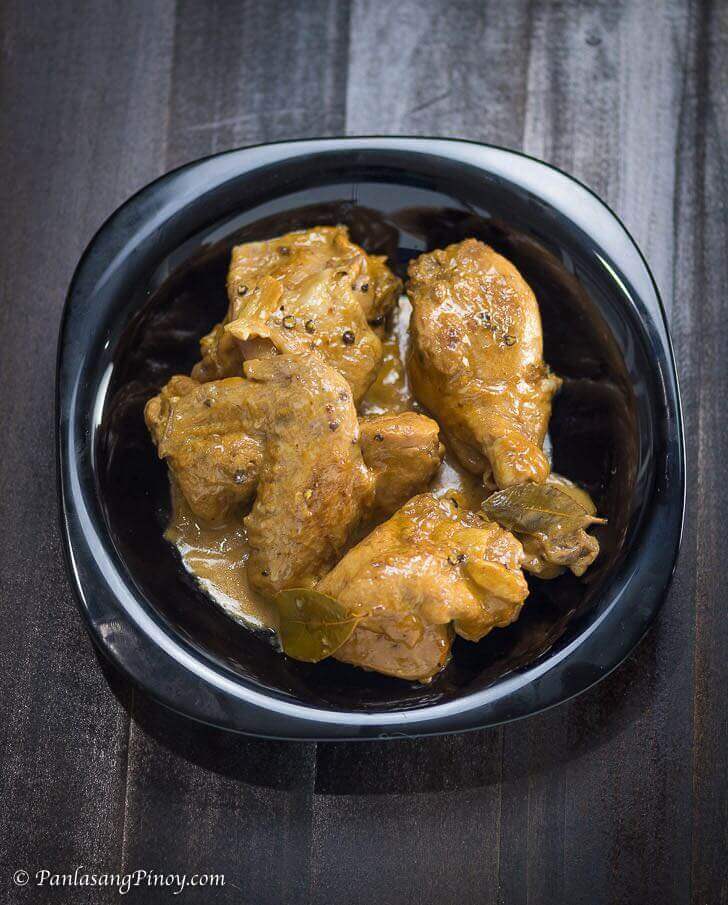
- Refrigerator – I let the adobo cool first, then transfer it to a container with a lid. It keeps well in the refrigerator for about 3 days. When you open it the next day, the sauce may look thick and pale. That is just the coconut fat setting in the cold, and it loosens back up once reheated.
- Freezer – It keeps in the freezer for about 2 months. I thaw it in the refrigerator overnight before putting it back in the pan. Gata does not freeze perfectly, so the sauce may come back a little grainy. It still tastes good, and I would rather do that than throw it out.
- Reheating – Warm it over low heat and stir slowly as it heats. Add a splash of water if the sauce became too thick in the refrigerator. If the oil separates and the chicken starts frying in it, leave it. That is nagmamantika, and I like it that way too.
Suggested Recipes
- Adobong Baboy sa Gata – Pork adobo with gata. The pork is simmered until tender first, and the coconut cream goes in after that.
- Pork and Chicken Adobo – Pork belly and chicken in one pot, with the chicken coming out first so it does not overcook.
- Ginataang Manok – Chicken in gata with chili and malunggay, cooked without soy sauce or vinegar.
- Chicken Adobo with Egg – Boiled eggs simmered in the adobo sauce until they darken and soak up the flavor.
- Chicken Adobong Puti – Adobo made with vinegar and no soy sauce.
Frequently Asked Questions
Why did my coconut milk separate?
It probably boiled too hard, although some separation can happen naturally as gata cooks. This does not mean the sauce has spoiled. Lower the heat and stir gently, but the sauce may remain slightly separated.
Do I have to use bone-in chicken?
Bone-in thighs and drumsticks are what I use, and they hold up to the 25-minute simmer. Boneless chicken cooks faster, so check it earlier and shorten the covered simmer.
Can I add sugar?
You can. I do not add any to this one. Start with one teaspoon near the end, then taste before adding more.
What if the sauce is still too thin?
Keep simmering with the cover off. The liquid reduces and the sauce thickens.
Is chicken adobo sa gata the same as adobong manok sa buko?
No. Gata is coconut milk, pressed from the meat of a mature coconut, and it makes a creamy sauce. Buko juice is the clear water inside a young coconut, and adobong manok sa buko comes out with a thin sauce and a lighter taste.
I cook chicken adobo with coconut milk when I want a richer adobo. The gata makes the sauce richer, but it also means keeping the heat low once it goes into the pot. Check out the video below for the details. I hope that you will have a great time making it. Enjoy!
Watch How to Make It

Did you make this? If you snap a photo, please be sure tag us on Instagram at @panlasangpinoy or hashtag #panlasangpinoy so we can see your creations!
Chicken Adobo sa Gata
Ingredients
- 2 lbs chicken cut into serving pieces
- 1 head garlic crushed and divided
- 1 tablespoon whole peppercorn crushed
- 2 cups coconut milk
- 5 pieces dried bay leaves
- 6 tablespoons soy sauce
- 5 tablespoons white vinegar
- 3 tablespoons cooking oil
Equipment
- 1 Heavy cooking pot The sauce is thick by the end, and a thin pan can scorch it at the bottom.
Instructions
- Combine the chicken, soy sauce, half of the crushed garlic, and the crushed peppercorn in a bowl. Mix well and marinate for at least 20 minutes. I suggest marinating it for 1 hour when you have extra time.2 lbs chicken, 1 head garlic, 1 tablespoon whole peppercorn, 6 tablespoons soy sauce
- Remove the chicken from the marinade and set it aside. Reserve the marinade.2 lbs chicken
- Heat the cooking oil in a pot. Saute the remaining garlic until it starts to turn light brown.1 head garlic, 3 tablespoons cooking oil
- Add the chicken. Cook for 3 to 5 minutes per side, or until lightly browned.2 lbs chicken
- Pour the reserved marinade into the pot. Add the dried bay leaves and let the liquid boil. Reduce the heat and simmer for 5 minutes.5 pieces dried bay leaves
- Pour in the vinegar. Let it boil uncovered for 2 minutes before stirring. Continue cooking for 3 minutes.5 tablespoons white vinegar
- Add the coconut milk and stir gently. Let it come to a gentle boil.2 cups coconut milk
- Lower the heat, cover the pot, and simmer for 25 minutes, or until the chicken becomes tender.
- Remove the cover and continue simmering until the sauce reduces to your preferred consistency.
- Transfer to a serving bowl. Serve with warm rice. Share and enjoy!
JayJay says
taste good thanks for the help
Wendy Ann Krapp says
It looks really good. I am always an avid follower of your cooking videos. Very easy to follow this step by step procedure. Also tried a lot of your super recipes. Thanks for sharing..hopefully you can feature next time Kiampeng or Kiampung …more power & looking forward for more yummy recipes….