Hot and Sour Soup
Hot and Sour Soup is the thick, peppery Chinese restaurant soup with pork, tofu, mushrooms, and egg ribbons, and I make it with the vinegar and the pepper going in at the very end. A long simmer flattens vinegar. Add it early and you may need more because the sourness fades as it simmers. Off the heat, what you pour in is what you taste. Everything before that is a plain pot of broth, meat, and vegetables cut into strips.
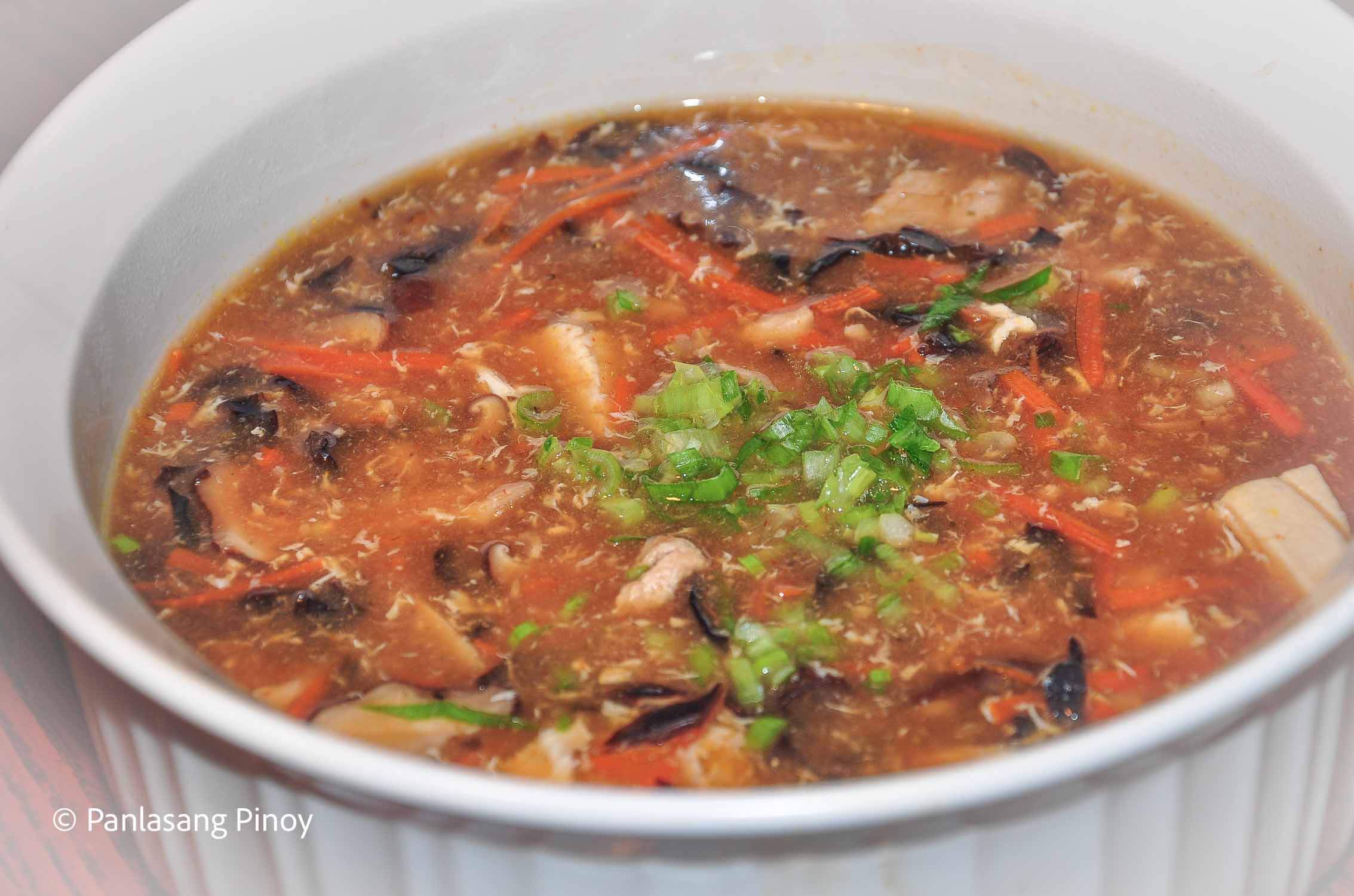
Two ingredients decide whether this tastes like the bowl you get at a Chinese restaurant, and neither one is the vinegar. They are ground white pepper and wood ear mushrooms. White pepper is where that earthy warmth comes from, and wood ear gives the soup a soft crunch that nothing else in the pot can stand in for. Both are cheap, both keep for months in the cupboard, and one trip to a Chinese grocery covers you for several batches.
The cornstarch and the egg do two different jobs, so they go in one at a time. Stir the slurry in first and let the broth thicken, then bring the pot down to a gentle simmer before the beaten eggs go in. A thickened broth holds the egg together into long ribbons instead of scattering it, and it is the same pour I use for my egg drop soup.
What is Hot and Sour Soup?
Hot and Sour Soup is a Chinese soup of pork, tofu, mushrooms, and bamboo shoots in a cornstarch-thickened broth, soured with vinegar and made hot with ground white pepper, then finished with beaten egg poured in as ribbons. The Chinese name is suan la tang, which reads straight across as sour spicy soup. You will also see it labeled as Sichuan hot and sour soup on many Chinese restaurant menus, even though the soup is also traced to Henan.
The American Chinese version is generally thicker because of the cornstarch. That thickness also makes it filling enough to serve as a first course or a light meal.
Ingredients
For the soup
- Pork – Any lean cut you can slice thinly. I cut it across the grain into strips about as wide as the carrot sticks, so everything sits on the spoon together.
- Shiitake mushrooms – Fresh is fine, since they get 12 minutes in the broth. Dried ones taste stronger, and their soaking water can go into the pot as part of the liquid.
- Wood ear mushrooms – Sold dried, in a clear bag, at any Chinese or Filipino Chinese grocery. No wood ear at your store? See the substitutions below.
- Ginger – Sliced into coins rather than minced, so anyone who does not want a mouthful of ginger can push the pieces aside.
- Firm tofu – Firm, not silken. Soft tofu falls apart the moment you start stirring the slurry through.
- Carrots – Julienned thin. They only get about 3 minutes in the pot, so thick sticks stay raw in the middle.
- Bamboo shoots – I use the canned sliced ones, drained and rinsed. The liquid in the can has a tinny smell that carries into the broth.
- Chicken broth – Low sodium if you can find it, since the soy sauce is bringing salt of its own.
- Soy sauce – Regular all-purpose soy sauce. Three tablespoons colors the broth without making it taste like soy sauce.
- Sugar – One teaspoon, and it will not make the soup sweet. It rounds off the edge of the vinegar.
To thicken and finish
- Cornstarch and cold water – Equal amounts of each, and the water has to be cold. Warm water starts setting the starch in the bowl.
- Eggs – Beat them until no streak of white is left, or you get a rubbery patch in the finished soup.
- Rice vinegar – Get the unseasoned kind. Seasoned rice vinegar already has salt and sugar in it, which throws off the seasoning at the end. No unseasoned rice vinegar? See the substitutions below.
- Toasted sesame oil – A finishing oil. Its aroma fades with cooking, so I add it after turning off the heat.
- Cayenne pepper powder – A quarter teaspoon is mild. You can push it up after you taste.
- Ground white pepper – A teaspoon, and buy it already ground in a small jar. It is in the spice aisle of most Asian groceries.
- Salt – Last, after the soy sauce and the vinegar are both in.
- Spring onions – Chopped fine and scattered over the bowls.
About the Wood Ear Mushrooms
Wood ear is a thin black fungus sold dried, and it tastes of almost nothing on its own. What it gives the soup is a soft, slightly crisp bite that holds up well during simmering. That texture is one of the things I look for in Hot and Sour Soup.
A small handful swells to several times its dry size, so a half cup of dried pieces goes further than it looks. Soak them in warm water for about 20 minutes, until they feel soft and rubbery rather than papery. Cut away the hard knot at the base of each piece before slicing, because that knot stays tough no matter how long it simmers. Restaurant-style recipes often ask for dried lily flower alongside it, sometimes with a soak of an hour or more. This one leaves the lily flower out, and 20 minutes is the longest anything here needs to sit in water.
Vanjo’s Advice
- Do all the slicing before the pot goes on. Once the broth is boiling there is no comfortable moment to stop and julienne a carrot. I keep the cut pieces in separate piles so I can add them in the right order without looking.
- Skim the foam once the pork has been in a minute or two. Thin pork throws a grey foam as it starts to cook, and after the broth thickens there is no getting it out. A spoon across the surface takes about ten seconds
- Stop the slurry a little short of the thickness you want. I pour in about three quarters of the mixture, look at the pot, and decide about the rest from there. It firms up more as it cools toward eating temperature.
- A pot at a rolling boil will not give you ribbons however carefully you pour. The egg tears apart the moment it lands. Bring the heat down until only a few bubbles are breaking around the edge before the egg goes anywhere near it
- Black pepper makes a different soup, not a worse one. A reader in Texas wrote to tell me the version at her local place gets its heat from black pepper instead of chilies, which gives it a dustier smell. That is a real regional style, so black pepper is a fair swap and not a compromise.
How to Cook Hot and Sour Soup
Start the broth and let the pork and mushrooms simmer while you mix the cornstarch and beat the eggs. Once the broth thickens, the egg and final seasonings go in quickly.
Simmer the Broth
- Pour the chicken broth into a cooking pot and bring it to a boil.
- Add the shiitake mushrooms, wood ear mushrooms, ginger, and pork.
- Reduce the heat and simmer for 12 minutes.
- Add the bamboo shoots and carrots, then simmer for 3 minutes.
Keep it at a low bubble once the pork is in rather than a rolling boil. Thin slices tighten up in a hard boil. Twelve minutes at a simmer leaves them tender and no longer pink through the middle.
Season and Thicken
- Add the tofu, soy sauce, and sugar. Stir gently and let the soup return to a gentle simmer.
- Combine the cornstarch and cold water in a small bowl.
- Slowly pour the mixture into the soup while stirring.
- Continue cooking until the broth thickens.
Pour the slurry in a thin stream rather than tipping it in at once. A quarter cup of cornstarch is a lot for one pot, and a fast pour leaves lumps that will not stir out once the broth is hot.
Add the Egg and Finish
- Slowly drizzle the beaten eggs into the simmering soup while gently stirring in one direction.
- Let the egg set into ribbons, then turn off the heat.
- Stir in the rice vinegar, sesame oil, cayenne pepper, and ground white pepper.
- Taste and add more vinegar, cayenne, or white pepper if it needs it, then season with salt.
Pour the egg in a thin stream from a few inches above the pot. The height stretches the stream so it lands across the surface instead of dropping in one place.
Serve
- Transfer the soup to a serving bowl.
- Garnish with the chopped spring onions. Serve warm. Share and enjoy!

What to Serve with Hot and Sour Soup
- Rice – The broth is thick enough to eat over rice like a sauce, which turns one bowl into a light lunch.
- Egg Fried Rice – The fried rice works well with the thick broth and turns the soup into a more filling meal.
- Kung Pao Chicken – Already carrying its own heat, so keep the soup on the mild side when you serve them together.
- Pork Siomai – Steamed dumplings and a small bowl of soup is how most Chinese meals open here.
- Pinsec Frito – Fried wontons to eat between spoonfuls, so there is something crisp on the table.
- Hot tea – Plain jasmine or oolong. Something unsweetened after a sour, peppery bowl.
Storage
Hot and Sour Soup keeps well in the refrigerator, but I like to reheat it gently so the egg ribbons and tofu stay in good shape.
- Refrigerator – I let the soup cool first, then keep it in a tightly sealed container in the refrigerator for 3 to 4 days. A good lid also helps keep the vinegar smell from spreading. I only reheat what we are going to eat because the tofu gets softer each time the soup is warmed.
- Freezer – I prefer freezing this before adding the cornstarch and eggs. I ladle out the portion I want to freeze once the vegetables are cooked, then add the slurry and eggs after reheating. It keeps well for up to 2 months this way. You can freeze the finished soup too, but the broth may thin after thawing and need a little more cornstarch and water.
- Reheating – I warm it on the stove over medium heat until steaming, but I avoid letting it boil. Boiling can break up the egg ribbons and make the tofu spongy. Taste the soup before serving too. The vinegar can mellow in the refrigerator, so I usually add a small splash if it needs more sourness.
More Soup Recipes
- Chicken and Corn Soup – Cream-style corn and ground chicken in a thickened broth with egg ribbons through it.
- Hototay Soup – Pork, liver, and vegetables in a clear broth, with a whole raw egg cracked into each bowl and cooked by the heat of the soup.
- Pancit Molo – The Ilonggo wonton soup, with pork dumplings and toasted garlic scattered on top.
- Chicken Lomi – Thick miki noodles in a heavy broth, thickened with cornstarch and beaten egg.
- Sotanghon and Egg Noodle Soup – Two kinds of noodle in one clear broth.
- Tofu Balls with Miswa and Patola – Fried tofu balls with thin flour noodles and loofah.
Substitutions
- Pork – Chicken breast cut into thin strips, added at the same point. You can also leave the meat out entirely and use vegetable broth in place of the chicken broth.
- Unseasoned rice vinegar – Plain white vinegar at the same 1/3 cup is the closest match. Chinese black vinegar works too and makes the soup darker and rounder, but start at 1/4 cup because it is stronger.
- Wood ear mushrooms – Another cup of sliced shiitake takes their place. You lose the crunch and nothing else.
- Ground white pepper – Ground black pepper at the same teaspoon.
- Bamboo shoots – Canned water chestnuts, sliced thin, give you a similar crunch. Leaving them out is also fine.
- Cornstarch – Potato starch at the same 1/4 cup. Flour will thicken the soup but the broth turns dull instead of glossy.
Frequently Asked Questions
What makes hot and sour soup sour?
Rice vinegar. A third of a cup against seven cups of broth gives a clear sourness that does not sting. Chinese versions often use black vinegar instead, which tastes darker and a little sweeter. If you are unsure about the sourness, hold back a little vinegar at first and add more after you taste the soup.
Is hot and sour soup spicy?
Not very, and the heat does not come from chilies the way most people expect. The quarter teaspoon of cayenne only adds a little extra heat on top of the white pepper, so the soup stays fairly mild. If you want the soup hotter, add cayenne rather than more white pepper, because white pepper takes over the taste of the broth before it makes much difference to the heat.
Can I make it without the egg?
You can. Skip the drizzling step and go straight from thickening to the vinegar and the pepper. The soup is still hot and sour, just plainer to look at and lighter in the mouth. If you are also making it meatless, add another half cup of tofu so there is still something to chew on.
Can I make it ahead of time?
Yes, and this is how I handle it when I am cooking for a crowd. Take the pot as far as the thickening step, let it cool, and keep it covered in the refrigerator. On the day, warm it through and then do the egg, the vinegar, the sesame oil, and the peppers, so the ribbons are fresh and the sourness has not had time to flatten.
Is it good to eat when you have a cold?
Plenty of people eat it for exactly that. A reader once told me a Chinese friend pointed her toward this soup when she had the flu, and that the heat and the pepper made her sweat and cleared her nose. It is not medicine, but it is hot, easy to swallow, and stronger tasting than most things you can face when you are sick.
Serve Hot and Sour Soup hot with chopped spring onions on top. I like mine a little more peppery, so I usually add a bit more white pepper to my bowl.
Watch How to Make It

Did you make this? If you snap a photo, please be sure tag us on Instagram at @panlasangpinoy or hashtag #panlasangpinoy so we can see your creations!
Hot and Sour Soup
Ingredients
- 1/2 lb pork thinly sliced
- 1 1/2 cups shiitake mushrooms sliced
- 1/2 cup wood ear mushrooms rehydrated and sliced
- 2 thumbs ginger sliced
- 8 ounces firm tofu cut into cubes or strips
- 1/2 cup carrots julienned
- 1/2 cup bamboo shoots sliced
- 7 cups chicken broth
- 3 tablespoons soy sauce
- 1 teaspoon sugar
- 1/4 cup cornstarch
- 1/4 cup cold water
- 2 pieces eggs beaten
- 1/4 cup spring onions finely chopped
- 1/3 cup unseasoned rice vinegar plus more to taste
- 1 teaspoon toasted sesame oil
- 1/4 teaspoon cayenne pepper powder
- 1 teaspoon ground white pepper plus more to taste
- Salt to taste
Equipment
- 1 Cooking pot A wide pot gives the beaten egg room to spread across the surface.
- 1 Small bowl For mixing the cornstarch with cold water.
- 1 Ladle Used to stir the broth in one direction and to serve.
Instructions
- Pour the chicken broth into a cooking pot and bring it to a boil. Add the shiitake mushrooms, wood ear mushrooms, ginger, and pork. Reduce the heat and simmer for 12 minutes.7 cups chicken broth, 1 1/2 cups shiitake mushrooms, 1/2 cup wood ear mushrooms, 2 thumbs ginger, 1/2 lb pork
- Add the bamboo shoots and carrots. Simmer for 3 minutes.1/2 cup bamboo shoots, 1/2 cup carrots
- Add the tofu, soy sauce, and sugar. Stir gently and let the soup return to a gentle simmer.8 ounces firm tofu, 3 tablespoons soy sauce, 1 teaspoon sugar
- Combine the cornstarch and cold water in a small bowl. Slowly pour the mixture into the soup while stirring. Continue cooking until the broth thickens.1/4 cup cornstarch, 1/4 cup cold water
- Slowly drizzle the beaten eggs into the simmering soup while gently stirring in one direction. Let the egg set into ribbons, then turn off the heat.2 pieces eggs
- Stir in the rice vinegar, sesame oil, cayenne pepper, and ground white pepper. Taste and add more vinegar, cayenne pepper, or white pepper if needed. Season with salt to taste.1/3 cup unseasoned rice vinegar, 1 teaspoon toasted sesame oil, 1/4 teaspoon cayenne pepper powder, 1 teaspoon ground white pepper, Salt
- Transfer the soup to a serving bowl and garnish with chopped spring onions. Serve warm. Share and enjoy!1/4 cup spring onions


Michael Malone says
I have eaten Chinese Hot and Sour Soup my entire life, but, this recipe has to be the very best I have ever used. I do add 1/4 cup of Sesame Oil. You simply cannot beat the flavor, textures and aroma !! Thanks SO much for sharing !
Eva says
This soup is good for this kind of weather!
Tess says
I once was down with the flu and a chinese friend of mine advised me to take hot and sour soup. It really worked! Pagpapawisan ka sa init at anghang ng soup. Tanggal din agad ang ubo’t sipon ko.
Elma says
Thanks for sharing this recipe. It is very affordable and easy to cook.
Donna says
The Hot Sour soup we get here in Texas is hot from black pepper, not chilis. This definitely affects the overall taste as you get the ‘dusty’ fragrance from the black pepper that is not there with chilis.
Also, rather than use corn starch for your thickening, you really should try it with a good thick homemade broth made with plenty of collagen (skin, knuckles, etc.)…the kind that gels when it’s in the fridge. The mouth feel of a good, rich broth has no comparison – and is truer to the origins of the soup. I make mine over several days in the crockpot and freeze it in 2 cup amounts in freezer bags, so it’s really convenient.
Donna Marie says
As always, you made a seemingly complicated dish really easy to make. My husband and I are fans of this soup. Thanks for sharing. If you have a list of vegetarian dishes that will suit the Filipino palate, I’m all for it. 😀