Carioca Recipe
Carioca are sweet, chewy ball-shaped treats made from glutinous rice flour and sweetened shredded coconut. You will find carioca vendors in the major streets of Manila, usually right next to the banana cue and kamote cue sellers, with individual servings skewered on bamboo sticks. This carioca recipe uses coconut milk in both the dough and the coating, which gives the balls a richer flavor than the carioca versions made with just water. I have been making this carioca recipe for years and my family still asks for it regularly, especially during merienda.
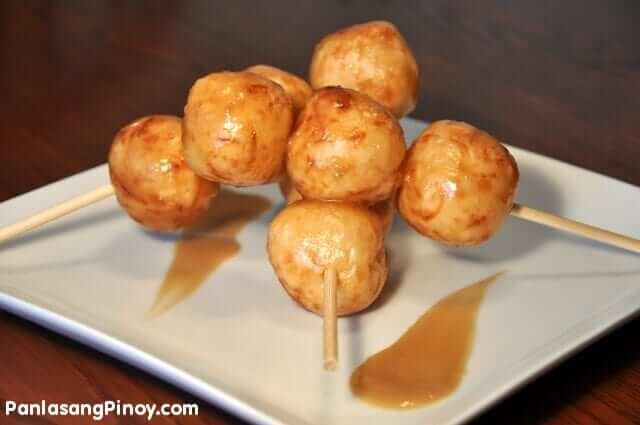
What I like most about carioca is its texture. It reminds me of buchi minus the sesame seeds and the filling. Just that chewy, slightly crispy bite that you do not get from other kakanin. The sweet coating is technically optional, and most of the carioca I tried growing up were not coated at all. But I find it so much better with the brown sugar and coconut milk glaze. I do not know why anyone would skip it.
The dough is forgiving, by the way. If you mess up the ratio a bit, it still works. That is not something you can say about every recipe I post on this site.
What is Carioca?
Carioca is a Filipino street food made from glutinous rice flour shaped into small balls, deep fried until golden, and coated in a brown sugar glaze. It belongs to the kakanin family, the same group of rice-based treats that includes palitaw, biko, and sapin-sapin.
Here is where it gets interesting. Carioca has a different name in almost every region. In Kapampangan, they call it tungi-tungi because tungi means skewer. It is known in the Visayas as bitsu-bitsu. In Ilocos, tinudok. Some areas say cascaron, though that usually means a slightly different version with more grated coconut and a dry sugar coating instead of a wet glaze. I have had people argue about whether cascaron and carioca are even the same thing. It depends on who you ask and where they grew up.
The origins are not well documented. What I do know is that carioca has been a fixture at street stalls, school canteens, and town fiestas for as long as anyone can remember. Vendors fry them fresh, stick three or four balls on a bamboo skewer, and dip them in the glaze right in front of you. The whole thing costs almost nothing. That is part of why it is such a loved snack. You do not need much to make something that tastes this good.
Why This Carioca Recipe Works
This carioca recipe works well, and it comes down to a few decisions.
- Coconut milk in the dough instead of water – This is the biggest difference. A lot of carioca recipes just use water, and the balls end up bland. Coconut milk gives the inside actual flavor and a softer bite. I have tried both. Water versions are not bad, but they are forgettable.
- Sweetened shredded coconut mixed into the dough – It binds the dough together, which matters more than you think. I skipped it once and the balls kept splitting open in the oil. Lesson learned.
- Frying at medium heat for 5 to 7 minutes – Go higher and you get dark outsides with raw, gummy centers. Not worth saving two minutes.
- Separate coconut milk and brown sugar glaze – Cooking the coating until it thickens means it actually sticks to the balls. If the glaze is too thin, it just runs off and pools at the bottom of the plate.
Ingredients
- Sweet rice flour – The base of the dough. This is what gives carioca its chew.
- Sweetened shredded coconut – Goes right into the dough. It is not just for flavor. It helps the balls hold together during frying.
- Coconut milk – For the dough and the coating. Buy a full can. You will use it in both.
- Cooking oil – For deep frying. Enough to submerge the balls.
For the coating:
- Brown sugar – Caramelizes into the sticky glaze
- Coconut milk – The other half of the coating
Vanjo’s Advice
I have made a lot of these over the years. Some batches perfect, some not. I always try to look at the bright side of things for the not so perfect ones and charge it to experience. Here are some of the things that I learned.
- Do not skip the shredded coconut. I tried it once. The balls were bland and they kept popping in the oil. Oil splattered everywhere. One of the readers on my original post mentioned the same thing. The coconut is not just for taste, it holds the dough together.
- Mix with your hands once the dough starts forming. A spoon gets you started, but you need to feel the texture. Too sticky, add more flour. Too dry, splash in more coconut milk. You will know.
- Medium heat. Do not push it. I have ruined batches by getting impatient and cranking the heat. The outside looks perfect and the inside is still raw. Just let them fry at a steady pace.
- Make the glaze while the balls are in the oil. Timing works out perfectly. By the time you drain the balls, the glaze is thick and ready.
- Coat them while they are still warm. Cold carioca and warm glaze do not stick well. I learned that the hard way at a family gathering when half the coating slid off onto the plate.
How to Make Carioca
Making this carioca recipe takes less than 30 minutes. It is not complicated. Just take it step by step.
Mix the Dough
- In a mixing bowl, combine the sweet rice flour, sweetened shredded coconut, and coconut milk.
- Mix until a soft dough forms. Switch to your hands when it gets thick enough.
If the dough cracks when you roll it, it needs a bit more liquid. If it sticks to everything, more flour. You do not need to be exact here.
Shape and Fry
- Scoop about 1½ tablespoons of the mixture and roll it into a ball. Repeat until the dough is used up.
- Heat the cooking oil in a deep pot over medium heat. When it is hot, carefully lower the balls in and fry for 5 to 7 minutes, turning occasionally, until light to medium brown.
- Remove with a slotted spoon and transfer to a plate lined with paper towels.
- Set aside while you make the coating.
Do not crowd the pot. Frying too many at once drops the oil temperature and the balls just sit there absorbing grease. Three to five at a time is plenty.
Make the Coating and Serve
- Heat a saucepan over medium heat. Pour in the coconut milk and let it come to a boil.
- Add the brown sugar and keep stirring until the mixture thickens. Turn off the heat.
- Dip the fried balls into the coating until each one is covered.
- Skewer if you want. Serve warm.
If the glaze seems too thin, let it cook a little longer. You want it thick enough that when you dip a ball and lift it out, the coating does not immediately drip off.
Pro Tips
- Wet your hands before rolling – Quick fix that keeps the dough from sticking to your palms
- Test with one ball first – Drop one in the oil, wait, and check it. If the inside is still gummy after 7 minutes, your oil is too hot and the outside is cooking faster than the center.
- Drain well before coating – Oily balls repel the glaze. Give them at least a minute on the paper towels.
What to Serve with Carioca
- Kapeng barako – Strong Filipino coffee. The bitterness cuts through the sweetness.
- Hot chocolate – Warm and rich. A good combination with the coconut in the glaze.
- Turon – Another fried Filipino snack. Set both out for merienda and watch them disappear.
- Maja Blanca – If you are serving a dessert spread, this coconut pudding fits right in.
- Iced tea – Sometimes you just want something cold next to all that fried sweetness.
Storage
Carioca is best eaten fresh. In my house, it rarely survives more than an hour. But if you somehow have leftovers:
- Refrigerator: Airtight container, up to 2 days. The texture will firm up. It will not be the same as fresh, but it is still decent.
- Freezer: I would not bother. Glutinous rice flour does not freeze well. The balls come out dense and lose their chew entirely. I tried it once and threw out the whole batch.
- Reheating: Microwave for about 10 seconds. Or warm them in a dry pan over low heat. You can re-dip in fresh glaze if the coating dried out.
More Filipino Dessert Recipes
- Espasol – A toasted rice cake from Laguna made with glutinous rice flour and coconut milk. Nutty and soft.
- Pichi Pichi – Steamed cassava rolled in grated coconut
- Kalamay Hati – A sticky rice cake with muscovado sugar and coconut cream
- Bibingkang Malagkit – Baked sticky rice with coconut cream topping
- Ube Biko – Ube halaya meets biko. Two favorites in one.
- Kutsinta – A soft, brown rice cake that goes great with grated coconut
Substitutions
- Sweet rice flour – Glutinous rice flour from any brand works. Mochiko is what I usually grab. Do not use regular rice flour. It will not be chewy. The dough will crumble and fall apart in the oil.
- Sweetened shredded coconut – If you only have unsweetened, that is fine. Just add about a tablespoon of sugar to the dough. Frozen grated coconut works too, but thaw it first and pat it dry or you will have too much moisture.
- Coconut milk – You can use water. The carioca will still be okay, just less flavorful. Honestly, the difference is noticeable.
- Brown sugar – Muscovado or coconut sugar both work and give the glaze a slightly deeper color. Regular white sugar is too thin. It will not caramelize the same way.
- Cooking oil – Canola or vegetable. Nothing with a strong flavor. Olive oil would be strange here.
Frequently Asked Questions
Can I use regular rice flour instead of glutinous rice flour?
No. I get this question a lot. Regular rice flour does not have the same starch content, so it will not produce that chewy, stretchy texture carioca needs. The dough will be dry and crumbly, and the balls will likely fall apart in the oil. You need sweet rice flour or glutinous rice flour. Most Asian grocery stores carry it.
Can I use regular rice flour instead of glutinous rice flour?
No. I get this question a lot. Regular rice flour does not have the same starch content, so it will not produce that chewy, stretchy texture carioca needs. The dough will be dry and crumbly, and the balls will likely fall apart in the oil. You need sweet rice flour or glutinous rice flour. Most Asian grocery stores carry it.
Why did my carioca balls crack or explode while frying?
This is the most common problem, and it usually means one of two things. The oil is too hot, or the balls are too big. Keep the heat at medium and make each ball about 1½ tablespoons. Some people poke a small hole through the center with a skewer before frying to let steam out. That works too. I also found that including the shredded coconut in the dough reduces cracking. When I left it out, that is when I had the worst problems with popping.
Is carioca gluten free?
Yes. The name “glutinous” confuses people, but glutinous rice flour does not actually contain gluten. It is called that because of how sticky it gets when cooked. Carioca is naturally gluten free.
What is the difference between carioca and cascaron?
It depends on the region. In some places, the names are used interchangeably. In others, carioca means the version with a wet brown sugar or coconut milk glaze, while cascaron has more grated coconut mixed in and is rolled in dry brown sugar after frying. Both start with glutinous rice flour dough.
Can I make carioca without coconut?
Yes. Use water instead of coconut milk in the dough, and skip the shredded coconut. For the coating, use brown sugar and water instead of coconut milk. It will taste simpler, but it still works. Just be aware that leaving out the shredded coconut means you might have more issues with the balls cracking during frying.
I hope you give this carioca recipe a try. It is the kind of snack I keep coming back to because it is fast, the ingredients are simple, and the result is always good. Once you bite through that sticky brown sugar coating and hit the soft, chewy center, you will get why this is still one of the most popular street food snacks in the Philippines.
Watch How to Make It
Did you make this? If you snap a photo, please be sure tag us on Instagram at @panlasangpinoy or hashtag #panlasangpinoy so we can see your creations!
Carioca
Ingredients
- 1 cup sweet rice flour glutinous rice flour can be used as a substitute
- 1 cup sweetened shredded coconut
- 3/4 cup coconut milk
- 2 cups cooking oil for deep frying
Coating Ingredients
- 1/4 cup brown sugar
- 1/2 cup coconut milk
Equipment
- 1 Deep Pot For deep frying the rice balls
- 1 Mixing bowl For combining the dough ingredients
- 1 Saucepan For making the brown sugar coating
- 1 Slotted spoon For removing the fried balls from the oil
- 1 Bamboo Skewers Optional, for serving
Instructions
- In a mixing bowl, combine the sweet rice flour, sweetened shredded coconut, and coconut milk. Mix everything together until a soft dough forms.1 cup sweet rice flour, 1 cup sweetened shredded coconut, 3/4 cup coconut milk
- Scoop about 1½ tablespoons of the mixture and roll it into a ball using your hands. Repeat until all the dough is used up. Set the balls aside on a plate.
- Heat the cooking oil in a deep pot over medium heat.2 cups cooking oil
- Carefully lower the balls into the hot oil. Deep fry for 5 to 7 minutes, turning occasionally, until they turn light to medium brown.
- Remove the fried balls from the oil with a slotted spoon and transfer them to a plate lined with paper towels to drain the excess oil. Set aside.
- Prepare the coating. Heat a saucepan over medium heat, then pour in the coconut milk and bring it to a boil. Add the brown sugar and stir continuously until the mixture thickens. Turn off the heat.1/4 cup brown sugar, 1/2 cup coconut milk
- Dip the fried balls into the coconut milk coating until each one is evenly covered. Skewer on bamboo sticks if desired.
- Serve warm. Share and enjoy!

ikiou says
good
chloe says
hello! how many pieces can this batch make?
Ashley says
Hi! I really like carioka and I will definatly try this recipe, but I was wondering if this would still be good for the next day? WIll it change the flavour ot texture or anything? please reply, Thank you!
SC says
hello! i went to philfest in florida this week and they had this and was wonderful! they also had a more crystallized coating on the carioca and i was wondering if you had any suggestions to make the sugar coat more like a semi hard coat? thank you! i love this site helps me connect back to my roots
dhess says
kuya ano po ung.swetend sherded coconut .?
anne says
Hi
Can I used desicnated coconut as sub? thanks =)
Rose says
Do I need to squeeze the milk from the shredded coconut before mixing? Is this teh same as “kinudkod” na nyog? Im currently based in Kuwait, thats why I have limited resources(ingredients).
Maureen says
what is sweetened shredded coconut? sorry…
JJ says
If I were you, don’t try without the shredded coconut because it will pop on you and the oil will splatter everywhere. Trust me, I learned it the hard way.
Corie says
hi there! i tried this today and followed all the engridients listed, but wondering why when i was frying it, it sticks to the bottom of the pan and had a hard time taking them off from the oil. BTW, i used the glutinous rice flour.
ruby says
i tried this yesterday. it was really good and chewy on the inside but it had a really hard exterior. i remember carioca’s being softer to bite. what could i have done better? i had the oil at medium high. maybe took 10 minutes to cook in the oil. any suggestions?
Cheryl says
Hi, how much of each ingredient should you add for more servings? Thanks so much for posting the recipe. Keep it going! 🙂
Methyl says
Hi there. Any substitute for shredded coconut? Im based here in west coast Australia. is this available on asian stores? hope to hear from u the soonest.. thank u.
elaine says
what if i omit the shredded coconut? would i need to add more sweet rice flour?
LC says
OMG! My aunt used to make these and I LOVED them! I’m so excited to find this recipe and will definitely give it a try 🙂 One question: I can only find regular GLUTEN-FREE rice flour where I live; can I use this as well and get the same results? It’s not “sweet”, but can I add some sugar? Or will the sweetened coconut be enough?
Thanks! 😀
Panlasang Pinoy says
LC, You may add a little sugar if you want it sweeter.
LC says
Thank you 😉 But what about the “gluten-free” part? To my understanding, gluten is needed to make it chewy…I DO have sweet rice, and I’m going to try to make my own flour out of it – will THIS work too?
PS. Sorry for all the questions, but I really want this to turn out good 🙂
Nieva says
hello, rice are usually labelled gluten free to make sure it is safe for people who has coeliac(gluten intolerance), all kinds of rice are gluten free and in the case of glutinous rice(sweet rice), it is sticky that is why it is called glutinous rice but it doesnt mean it has gluten!!!
cheers.
PS. Panlasang Pinoy thanks for posting this recipe, i love carioca, now i can make it!!!
mareza says
i’m thrilled to find your site, and you are exellent.and i used to be from chicago but moved 96 miles west.i will definitely try all your recipe.
CeciliaMQ says
Thanks for sharing! I miss this. For sure I will be making this on the weekend and you will be seing it on my blog 🙂 Hard to find this in our local Pinoy Resto.