Pancit Bihon Guisado
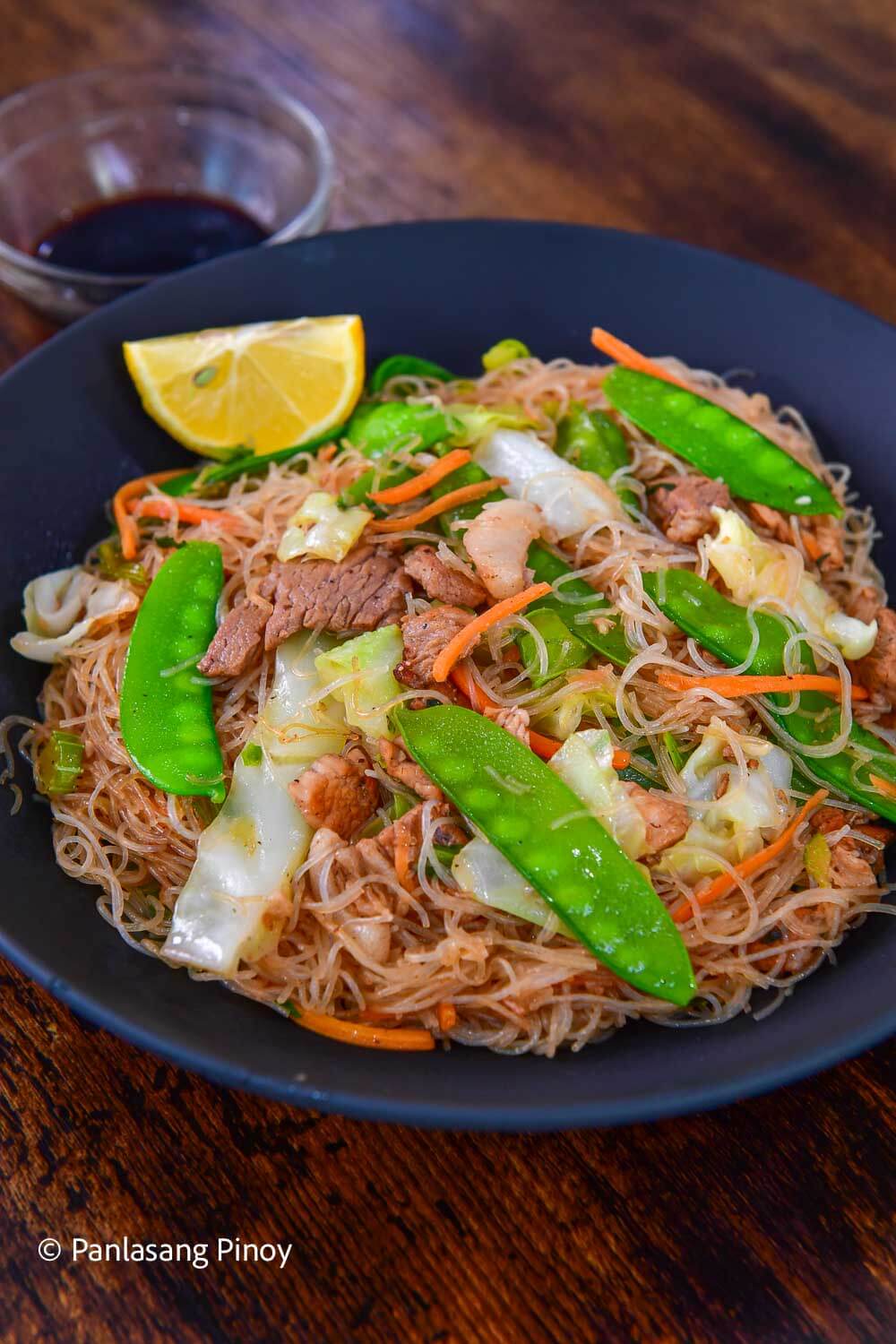
Pancit Bihon Guisado is a Filipino noodle dish made with thin rice noodles, pork, cooked chicken, and vegetables. The bihon cooks in a seasoned broth until it has soaked all of it up, and the cabbage, carrots, and snow peas keep a little crunch.

I have known Pancit Bihon Guisado for as long as I can remember. Although it is easy to prepare and readily available in local restaurants and panciterias, I have always associated it with special occasions. It is almost always served at birthday parties, town fiestas, and holiday gatherings, usually alongside other Filipino favorites like lumpia. I have always enjoyed having the two together.
I remember my mom preparing pancit bihon for my birthdays when I was a child. She used to tell me that serving pancit on birthdays symbolizes long life and prosperity. Whenever she asked if I wanted pancit bihon or Filipino spaghetti for my birthday, I always had a hard time choosing. To be on the safe side, I would ask for both.
What is Pancit Bihon Guisado?
Bihon is the thin rice noodle, and guisado means sauteed, which is how the cooking starts. Pancit canton is made with egg noodles, and pancit bihon comes out softer and lighter once the noodles have absorbed the broth. My Filipino pancit combines the two noodles in one wok. This one uses bihon alone, with pork, cooked chicken, and vegetables.

Why This Pancit Bihon Recipe Works
- The bihon cooks in seasoned broth. Soy sauce goes in before the noodles, so the seasoning is already in the liquid they absorb. They are done when they are tender and the bottom of the wok is dry. A noodle that still has a hard center at that point needs a splash of hot water and another minute of tossing.
- The meat and vegetables come out before the noodles go in. You get the whole wok for tossing the bihon, and the cabbage and snow peas wait in a bowl instead of cooking further. They go back in for the last 1 to 2 minutes, just long enough to heat through.
- A 10-minute soak is enough. The noodles should bend without breaking. Thinner bihon softens faster, so check the package if yours looks finer than usual.
Ingredients
- Pancit bihon – Dried rice noodles. They need a short soak before cooking.
- Pork – Sliced thin and cut into small pieces. Tender cuts such as shoulder or loin work best for the short cooking time.
- Cooked chicken – Half a pound, deboned and sliced thin. Leftover boiled or roasted chicken works well here.
- Snow peas – Trim the strings from the edges before cooking.
- Carrots – Cut into thin strips so they cook quickly.
- Cabbage – Half a small head, chopped into pieces about the size of the carrot strips.
- Celery leaves – Finely chopped. The leaves have a stronger aroma than the stalks, and a full cup is not too much here.
- Onion – Chopped.
- Garlic – Minced.
- Chicken powder – Two teaspoons make the broth. A chicken bouillon cube works the same way.
- Soy sauce – Five tablespoons. Brands vary in saltiness.
- Water – Three to four cups. This becomes the broth the noodles cook in.
- Cooking oil – Any neutral oil for sauteing.
Filipino and Asian grocery stores sell the noodles as bihon or rice sticks, and some brands are noticeably thinner than others. Thinner noodles soak and cook faster, so watch their texture as the broth cooks down.
Vanjo’s Advice
- Use the biggest wok or pan you have. A pound of soaked bihon fills a wok once it goes in, and the noodles need room to be tossed without breaking.
- Taste the broth before the bihon goes in. The soy sauce and chicken powder already carry salt, so check first. This is the time to adjust, before the noodles absorb the liquid.
- You can also add Chinese sausage. I usually use 2 pieces, sliced thin on the diagonal, and brown them with the pork. It makes the pancit a little sweeter and richer.
How to Cook Pancit Bihon Guisado
Soak the Noodles
- Soak the pancit bihon in water for about 10 minutes.
- Drain and set aside.
Cook the Pork and Chicken
- Heat the cooking oil in a large wok. Saute the garlic and onion until the onion softens.
- Add the pork and saute for 2 to 4 minutes, or until light to medium brown.
- Add the cooked chicken and saute for 2 minutes.
- Add the chicken powder and 3 to 4 cups of water. Stir, then simmer for 15 minutes.
Cook the Vegetables
- Add the carrots, snow peas, cabbage, and celery leaves. Simmer for a few minutes until the vegetables are tender but still have a little bite.
- Remove the meat and vegetables from the wok using a strainer or slotted spoon. Set aside, leaving the cooking liquid in the wok.
Remove the vegetables while the cabbage still has a little crunch. It cooks again when everything goes back into the wok.
Cook the Noodles and Finish
- Pour the soy sauce into the cooking liquid and stir.
- Add the drained bihon noodles. Toss gently to distribute the liquid and cook until the noodles are tender and the liquid has completely evaporated.
- Return the cooked meat and vegetables to the wok. Toss everything together and cook for another 1 to 2 minutes.
- Transfer to a serving platter and serve hot. Share and enjoy!
What to Serve with Pancit Bihon
- Calamansi – Cut a few in half and set them on the platter. I squeeze some over my serving along with a few drops of patis.
- Pinoy Fried Chicken – Crispy fried chicken goes well with pancit, especially as part of a larger Filipino meal.
- Puto – Soft steamed rice cakes, often served alongside pancit at Filipino celebrations.
Storage
- Refrigerator: Store leftover pancit bihon in an airtight container in the refrigerator for up to 3 to 4 days. The noodles firm up when chilled, so add a little water when reheating to loosen them.
- Freezer: It freezes for up to 2 months in a freezer bag or airtight container, pressed flat so it thaws faster. The snow peas and cabbage go limp after thawing, so the texture is best when you cook a fresh handful of vegetables and toss them in while reheating.
- Reheating: Heat it in a pan over medium heat with 2 to 3 tablespoons of water, tossing until the noodles loosen and are steaming hot all the way through. The microwave works too; cover the plate and heat in short bursts so the edges do not dry out.
More Pancit Recipes
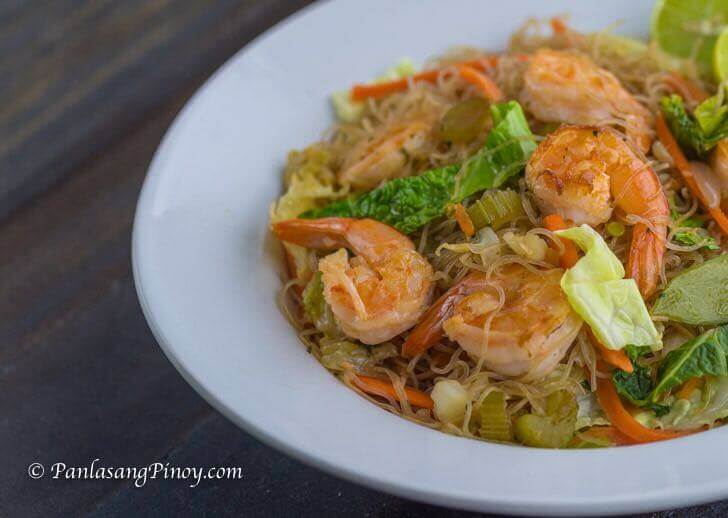
- Filipino Shrimp Pancit Bihon – The same noodles cooked with pan-fried shrimp and a shrimp cube instead of pork and chicken.
- Garlic Bihon – Bihon in a broth from poached chicken, with annatto for color and plenty of garlic.
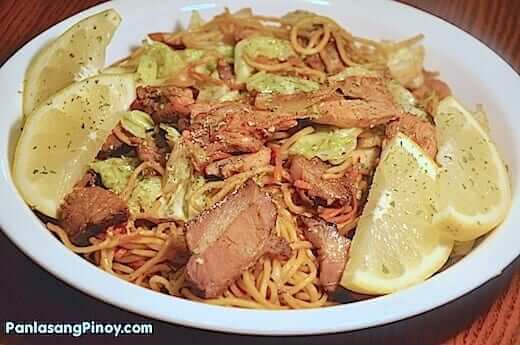
- Pancit Canton at Bihon – Bihon and canton cooked together with pork, chicken, and shrimp, close to the bam-i of Cebu.
- Chicken Pancit – Bihon and sotanghon in one pan, with the broth from boiled chicken leg quarters.
- Pancit Canton – The egg noodle version with pork, shrimp, and Chinese sausage in a soy and oyster sauce base.
Substitutions
- Pancit bihon – Sotanghon (glass noodles) works, with the soaking time on its package and the water adjusted as needed. The texture comes out softer and more slippery.
- Pork – Sliced ham or more cooked chicken. Ham only needs 2 minutes in the wok, so add it with the chicken instead of browning it first.
- Cooked chicken – Thinly sliced raw chicken breast or thigh. Add it with the pork and make sure it is fully cooked before the noodles go in.
- Snow peas – Snap peas, with the strings pulled off. Green beans cut into 2-inch pieces also work and need a minute or two more in the broth.
- Celery leaves – Chopped celery stalks or flat-leaf parsley. Stalks go in with the carrots; parsley goes in at the end with the noodles.
- Chicken powder – One chicken bouillon cube, crushed into the water. Chicken broth in place of the water works too, with the chicken powder left out.
Frequently Asked Questions
How much water do I need for 1 pound of pancit bihon?
Start with 3 to 4 cups of water for 1 pound of bihon. In this recipe, the water simmers with the pork, chicken powder, and vegetables before the noodles go in, so some of it evaporates. The bihon should be tender by the time the liquid has been absorbed. If the noodles are still firm, add a little hot water and continue tossing.
How do I keep pancit bihon from getting mushy?
Soak the bihon for about 10 minutes, then drain it well. Once it goes into the wok, toss gently and cook just until the noodles are tender and the liquid has been absorbed. I also remove the meat and vegetables before cooking the noodles, then add them back during the last 1 to 2 minutes. That keeps the cabbage and snow peas from becoming too soft while the bihon cooks.
What should I do if my pancit bihon is still dry or hard?
Add a small splash of hot water and gently toss the noodles over medium heat. Continue cooking until they soften, adding a little more water only if needed. Bihon varies in thickness, so some brands need more liquid than others. Avoid pouring in a large amount at once because the noodles can become too soft.
Can I use sotanghon instead of bihon for pancit guisado?
Yes, but the noodles will have a different texture. Bihon is the thin rice noodle used in this recipe, while sotanghon is made from starch and turns more translucent and slippery when cooked. Follow the soaking instructions on the sotanghon package and adjust the cooking liquid as needed. The pork, chicken, and vegetables can stay the same.
What can I prepare ahead of time when making pancit bihon for a party?
You can slice the pork, prepare the cooked chicken, and cut the vegetables ahead of time. Keep the ingredients refrigerated until you are ready to cook. For the best texture, soak the bihon and cook it in the seasoned broth closer to serving time, so the noodles do not sit for hours after absorbing the liquid.
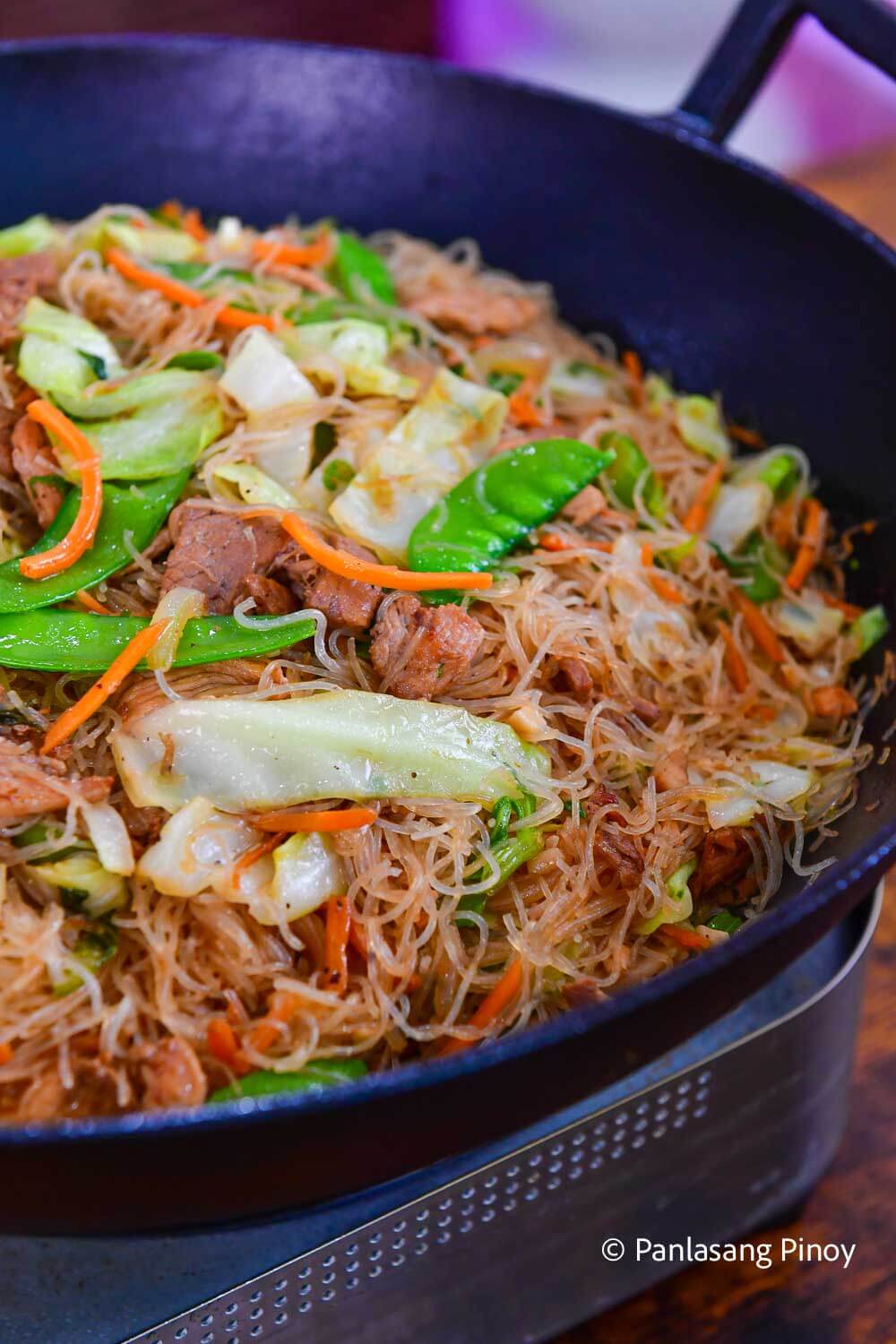
Pancit bihon is a good dish to prepare when you have family or friends coming over, especially with lumpia and other Filipino favorites on the table. Serve it hot with calamansi on the side and let everyone help themselves from the platter. My mom served pancit bihon at my birthdays when I was young, and the reason she gave, long life and prosperity, still holds for me.
Watch How to Make It

Did you make this? If you snap a photo, please be sure tag us on Instagram at @panlasangpinoy or hashtag #panlasangpinoy so we can see your creations!

Pancit Bihon Guisado
Ingredients
- 1 lb pancit bihon rice noodles, soaked in water for 10 minutes and drained
- 1/2 lb pork cut into small thin slices
- 1/2 lb chicken cooked, deboned, and cut into thin slices
- 1/8 lb snow peas strings trimmed
- 1 cup carrot cut into thin strips
- 1/2 piece small cabbage chopped
- 1 cup celery leaves chopped finely
- 1 piece onion chopped
- 1/2 tablespoon garlic minced
- 2 teaspoons chicken powder
- 5 tablespoons soy sauce
- 3-4 cups water
- 3 tablespoons cooking oil
Equipment
- 1 Large wok The biggest one you have, so a pound of soaked bihon can be tossed without breaking
- 1 Mixing bowl For soaking the bihon
- 1 Strainer or slotted spoon For lifting the meat and vegetables out of the broth
- 1 Kitchen tongs For tossing the noodles
Instructions
- Soak the pancit bihon in water for about 10 minutes. Drain and set aside.1 lb pancit bihon
- Heat the cooking oil in a large wok. Saute the garlic and onion until the onion softens.3 tablespoons cooking oil, 1/2 tablespoon garlic, 1 piece onion
- Add the pork and saute for 2 to 4 minutes, or until light to medium brown.1/2 lb pork
- Add the cooked chicken and saute for 2 minutes.1/2 lb chicken
- Add the chicken powder and 3 to 4 cups of water. Stir, then simmer for 15 minutes.2 teaspoons chicken powder, 3-4 cups water
- Add the carrots, snow peas, cabbage, and celery leaves. Simmer for a few minutes until the vegetables are tender but still have a little bite.1 cup carrot, 1/8 lb snow peas, 1/2 piece small cabbage, 1 cup celery leaves
- Remove the meat and vegetables from the wok using a strainer or slotted spoon. Set aside, leaving the cooking liquid in the wok.
- Pour the soy sauce into the cooking liquid and stir.5 tablespoons soy sauce
- Add the drained bihon. Toss gently to distribute the liquid and cook until the noodles are tender and the liquid has completely evaporated.1 lb pancit bihon
- Return the cooked meat and vegetables to the wok. Toss everything together and cook for another 1 to 2 minutes.
- Transfer to a serving platter and serve hot. Share and enjoy!
Della says
Very good recipe. I’ve made it several times and everyone loves it!!!
Vanjo Merano says
Thank you, Della! I really appreciate you coming back to this recipe.
Ariane says
Dear Vanjo,
My co-worker (who is not Filipino) LOVES pancit and so she asked if I knew how to make it. I said no, but my mom absolutely makes the best pancit in town! I asked my mom to make it for her and she said no. So I said, fine. I’ll make it myself. How hard can it be? I looked up many recipes and actually tried one before yours (which was not good obviously). What attracted me to your recipe is that it’s so simple and it had simple ingredients.
Let me say, that your recipe was a huge SUCCESS! I was so proud of myself. Watch out mother! There’s a new pancit sherif in town.
Because I am plant-based and mostly vegan, I did make several modifications to this recipe.
1. Substituted the meat with tofu.
2. I omit the oil because I always saute in either water or broth.
3. Substituted chicken broth with vegan chicken broth cubes.
4. I only used a 6.5 0z pack of noodles so only used 1.5 cups of broth and 2 tablespoons of soy sauce.
5. I soacked the noodles for 10 minutes in hot water but found I probably don’t really need to do that next time.
6. After adding back the veggies, I topped it off with another teaspoon of soy sauce and 1/8th teaspoon of MSG. It was perfect! Although I’m inclined to try vegan oyster sauce next time I make it. (I didn’t see this on your list of ingredients but you did mention it in your video.)
7. I added A LOT of other veggies–green beans, mushrooms (although I will use shitake next time), onions, doubled the garlic, and for cabbage I used a precut bag of coleslaw for ease.
Thank you for this recipe. I wanted to let you know it was a hit and I appreciated your blog. I have used it several times for other Filipino dishes.
P.S. Please post some vegan Filipino recipes for me!
Vanjo Merano says
Thank you for sharing this. I enjoyed reading your story and I love the “new pancit sheriff in town” line.
I’m glad the recipe worked out well for you, especially with all the plant based adjustments. You did a great job adapting it, and the extra veggies sound perfect. You’re also right about the noodles. A quick soak can help, but it’s not always necessary.
I appreciate you using the blog for other Filipino dishes too. That really means a lot. I’ll keep your suggestion about vegan Filipino recipes in mind. Thanks again and keep cooking.
Dina says
How many of people does this recipe feed
Dale Barnes says
Fantastic, my wife from the Philippines loved it. Not bad for a British guy.
Lourdes Tayas says
Clear and simple
Vanjo Merano says
Thank you. Glad you thought so.
Cathy says
This was delicious, but I’d put in twice the meat. And it makes a LOT.
Erning Santiago says
Tried your recipe and it was good as your other recipes. I added Chinese sausage and Kikkoman oyster sauce with your recipe.
dulce says
it’s awesome !sobrang dami ko natutunan mga recipe. thanks
Nita says
Very nice and easy, will recommend it to others.
Jhonnie says
Simple at sarap!