Ginisang Monggo with Vegetables
Ginisang Monggo with Vegetables gives you a full serving of vegetables in the same bowl as the beans. The mung beans simmer alone until they turn soft and creamy. The vegetables cook in a second pan with pork and bagoong alamang, the way a Pinakbet Tagalog is built. The two meet only at the end. Cooking everything together from the start can turn the monggo and vegetables into one soft mixture. The second pan is what keeps it from happening. Each piece of squash and okra holds its shape, and the beans stay creamy underneath.

I used to have monggo every Friday when I was still living in the Philippines. I never found out how that habit started, and it stuck anyway. This is the version I cook when I want the pot to stand on its own without a separate vegetable dish beside it. A regular ginisang monggo leans on the beans with a handful of greens stirred in at the end. Here, the squash, okra, eggplant, sitaw, and ampalaya make up nearly half of the dish.
Soak the mung beans overnight before cooking. Soaked beans need about 45 minutes of simmering instead of an hour or more, and they break down into a thicker base that clings to the vegetables. Drain the soaking water in the morning and start from there.
What is Ginisang Monggo with Vegetables?
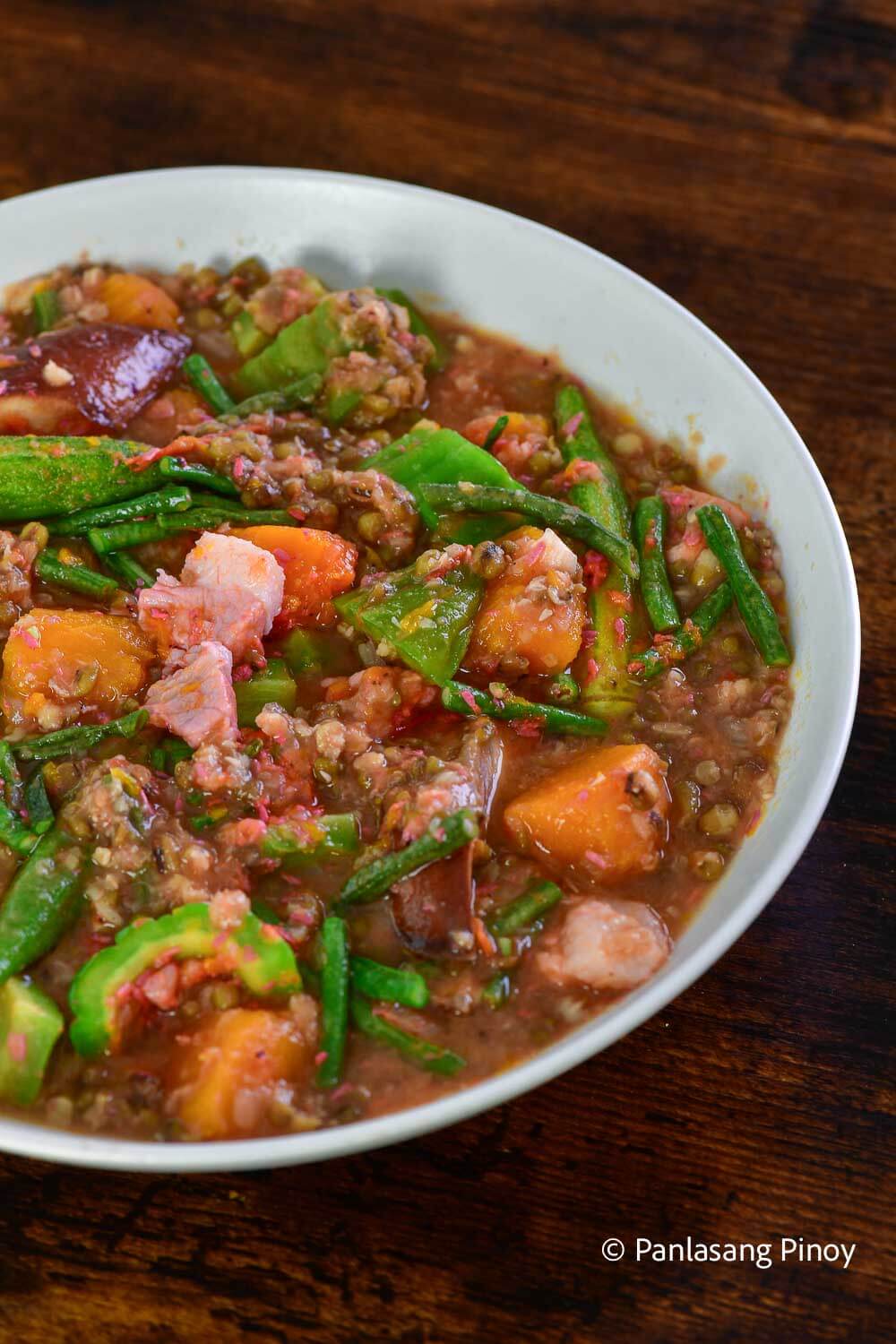
Ginisang Monggo with Vegetables is a Filipino stew of sauteed mung beans cooked with the vegetables normally used for pinakbet: calabaza squash, okra, Chinese eggplant, string beans, and bitter melon. Pork and shrimp paste season the vegetable side. A pork cube seasons the beans. Ginisa means sauteed, and both pans start with garlic, onion, and tomato in hot oil.
Monggo is cooked in homes all over the Philippines and costs very little to put on the table, which is why a bag of dried mung beans sits in so many cupboards. The vegetable lineup comes from the Ilocos region, where Pinakbet Ilocano is seasoned with bagoong isda instead of shrimp paste. Cooking monggo on a Friday is a long-running habit in many households, tied to the Catholic practice of skipping meat on that day.
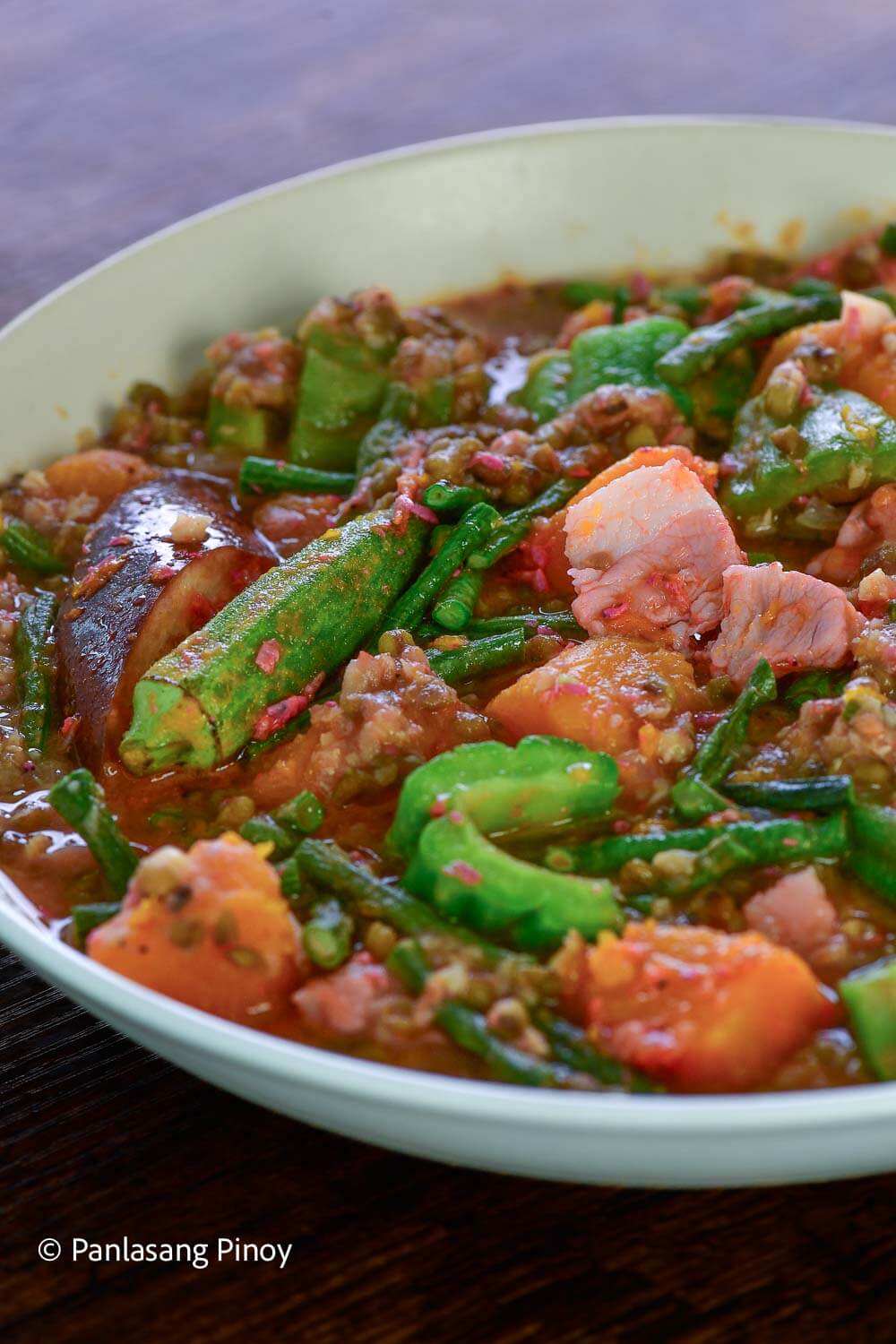
A plain ginisang monggo is a bean dish with greens folded in near the end. This one is closer to half beans and half vegetables, which is why it can go on the table as the only ulam a family needs beside a pot of rice.
Ingredients for Ginisang Monggo with Vegetables
- Mung beans – Buy whole dried green mung beans, not the split yellow kind. Twelve ounces feeds six people.
- Bagoong alamang – Three tablespoons, sauteed in the pan for a full minute before any vegetable goes in. Brands vary in saltiness, so taste the pot before you reach for the salt. No bagoong alamang on hand? See the substitutions below.
- Knorr Pork Cube – One cube, and it goes into the bean pot. The pork itself cooks in the other pan.
- Pork – Five ounces, sliced thin. That is enough to season the vegetables without making the dish too heavy.
- Calabaza squash – Cut into cubes about an inch across. That size cooks through in the two minutes it gets before the rest of the vegetables go in.
- Chinese eggplant – Sliced lengthwise. It carries fewer seeds than globe eggplant and tastes milder.
- Bitter melon – Core it and slice it thin. Thin slices cook through fast and taste milder.
- Okra – Trim only the caps and leave the pods whole. Whole pods stay firm in the pot.
- String beans – Cut into 2-inch pieces so they sit on a spoon alongside the beans.
- Ginger – Two thumbs, crushed, and only in the pork pan.
- Tomatoes, onion, and garlic – Split the total in half. One half starts the bean pot and the other half starts the vegetable pan.
- Water – Three cups for the beans, with smaller pours for the pork and for the vegetables.
- Cooking oil – Two tablespoons.
- Salt and ground black pepper – Added in the last step, after the bagoong has been in the pot.
Choosing Your Mung Beans
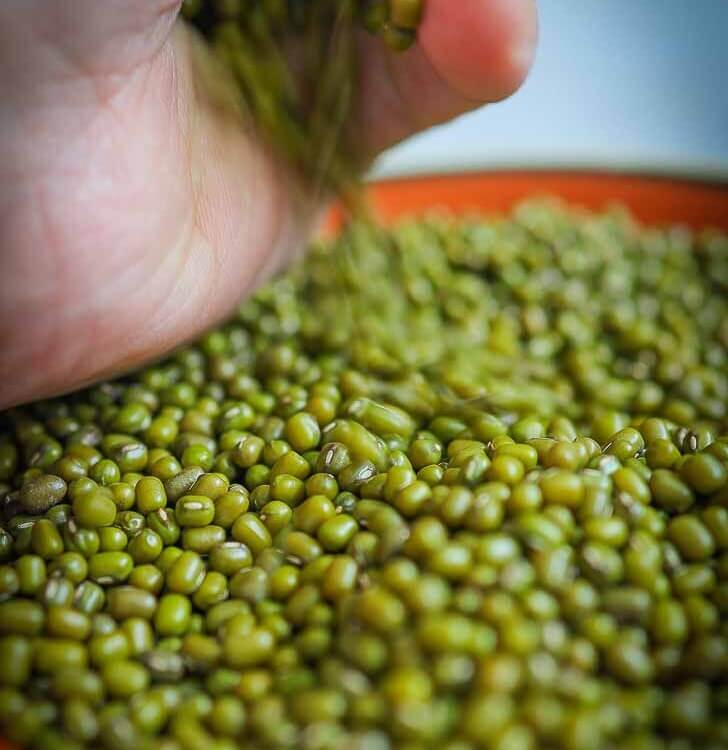
Mung beans are small green legumes sold dried in Asian groceries and in the bean aisle of most large supermarkets. Look for an even green color across the bag, and buy from a store that moves stock quickly. Newer dried beans soften in about 45 minutes once they have been soaked overnight.
Whole green mung beans are the ones this recipe needs. Split yellow mung beans, sold as mung dal, have the skins taken off and cook into a puree in about 20 minutes. That texture suits a smooth soup, while this recipe needs beans that still hold together once mixed with the vegetables. Kept in a sealed jar away from heat, whole dried beans stay good for about a year.
Vanjo’s Advice
- Soak the beans the night before you cook. I put them in water after dinner and drain them in the morning. The pot needs 45 minutes after that.
- Hold the salt until the last step. The bagoong carries most of the salt already. I taste the pot once the beans are in, then season from there.
- Add water in small pours. The beans keep drinking as they simmer. Half a cup at a time keeps the pot loose while the base stays thick.
- Mash a spoonful of beans against the side of the pot for a thicker base. I do this when the pot looks soupier than I want it.
- Rub the sliced ampalaya with salt and rinse it if you like it mild. Two minutes of rubbing and a quick rinse under cold water is enough.
- Cut every vegetable before you start the second pan. Once the bagoong hits the oil, the vegetables go in one group after another with very little time between them.
How to Cook Ginisang Monggo with Vegetables
The beans and the vegetables cook in two separate pots and meet only in the last three minutes.
Soak the Mung Beans
- Place the mung beans in a bowl and pour in enough water to cover them by two inches. Leave them to soak overnight.
- Drain the water the next day and set the beans aside.
Soaked beans crush easily between two fingers. That is the sign they are ready for the pot.
Simmer the Mung Beans
- Heat 2 tablespoons of cooking oil in a pot. Saute half of the garlic, onion, and tomatoes until the onion and tomato soften.
- Add the soaked mung beans. Saute for 2 minutes.
- Pour in 3 cups of water and let it boil. Add the Knorr Pork Cube and stir.
- Cover the pot and cook over low to medium heat for 45 minutes, adding water as needed. Set the pot aside once the beans are soft.
The beans are ready when they mash easily against the side of the pot. Start the second pan while this one simmers.
Cook the Pork and Vegetables
- In a separate pan, saute the remaining garlic, onion, and tomato. Add the ginger and keep cooking until the onion and tomato soften.
- Add the sliced pork and saute until it turns light brown. Pour in ¾ cup of water, let it boil, then cover and cook until the water evaporates and the pork is tender. Make sure the pork reaches at least 145°F.
- Add the shrimp paste and saute for 1 minute. Put in the calabaza squash and cook for 2 minutes.
- Add the eggplant, bitter melon, okra, and string beans. Saute for 2 minutes, then pour in ½ cup of water and let it boil.
The squash goes in ahead of the rest because it takes the longest to turn tender. Everything else needs only a couple of minutes.
Combine and Season
- Pour the cooked mung beans into the pan with the vegetables. Stir once and cook for 3 minutes.
- Season with salt and ground black pepper. Transfer to a serving bowl.
Cook for 3 minutes only. A longer simmer past this point softens the okra and eggplant more than you want.
What to Serve with Ginisang Monggo with Vegetables
- Steamed white rice – The bean base is thick enough to spoon over rice, and that is how I eat it.
- Lechon Kawali – Crispy pork belly on the side gives the meal a crunch the stew does not have on its own.
- Fried dried fish – Tuyo or daing fried until crisp is the everyday partner for a pot of monggo.
- Patis with calamansi – A small dish of fish sauce with calamansi squeezed in lets each person season their own bowl.
Storage
Ginisang Monggo with Vegetables keeps well, and the beans thicken further once the pot has been in the refrigerator overnight.
- Refrigerator: Let the pot cool to room temperature, then store it in an airtight container for up to 3 days. The flavor is fuller on the second day.
- Freezer: Freeze in meal-sized portions for up to 2 months. Bean-heavy portions freeze best, so keep servings with more squash and okra in the refrigerator instead.
- Reheating: Warm it in a pan over low heat with a splash of hot water stirred in, since the pot sets thick when cold. Stir gently so the vegetables keep their shape.
Substitutions
- Bagoong alamang – Bagoong isda makes the dish closer to the Ilocano version. Fish sauce is another option, using 1 to 2 tablespoons for every teaspoon of shrimp paste.
- Pork – Shrimp or sliced chicken thigh both work. Leave the meat out entirely for a meatless pot and season with a little more bagoong.
- Knorr Pork Cube – A shrimp cube or a vegetable cube seasons the beans just as well.
- Chinese eggplant – Globe eggplant works, sliced thinner since it tastes stronger. Zucchini is the milder option.
- Calabaza squash – Kabocha or butternut squash cut to the same size.
- Bitter melon – Leave it out and add more string beans in its place.
More Monggo Recipes
- Ginisang Monggo with Kalabasa – Squash and greens in a thicker pot, finished with crushed chicharon on top
- Pork Monggo – Cooked without soaking the beans first, with pork and malunggay
- Ginisang Monggo with Dilis – Dried anchovies instead of pork, for a saltier and lighter pot
- Monggo Guisado – Built around flaked leftover fried fish and bagoong isda
- Ginisang Monggo with Pata at Sotanghon – Pork hock and vermicelli noodles cooked into the same pot of beans
- Ginataang Monggo – The sweet side of mung beans, with coconut milk and sticky rice
Frequently Asked Questions
Do I have to soak the mung beans overnight?
You can cook them straight from the bag. Give the pot an extra 20 to 30 minutes and keep water nearby, because unsoaked beans drink faster than you expect. I still soak mine, since the 45 minute simmer leaves me free to work on the vegetable pan.
Why are my mung beans still firm after 45 minutes?
Beans that have been in the cupboard a long time need more time in the pot. Add a cup of hot water, cover, and keep them at a low simmer, checking every 10 minutes until a bean crushes easily. For the next batch, buy from a store that sells dried beans regularly.
Can I cook this in one pot?
You can. Simmer the beans first, scoop them into a bowl, then use the same pot for the pork and vegetables and return the beans at the end. What I would not do is drop the raw vegetables into the bean pot for the whole 45 minutes, since the squash and okra fall apart well before the beans are ready.
How do I keep the vegetables firm?
Cut them to a similar size, add them in the order given, and take the pan off the heat as soon as the three minutes with the beans are up. The vegetables continue cooking from the residual heat, so serve the dish right away.
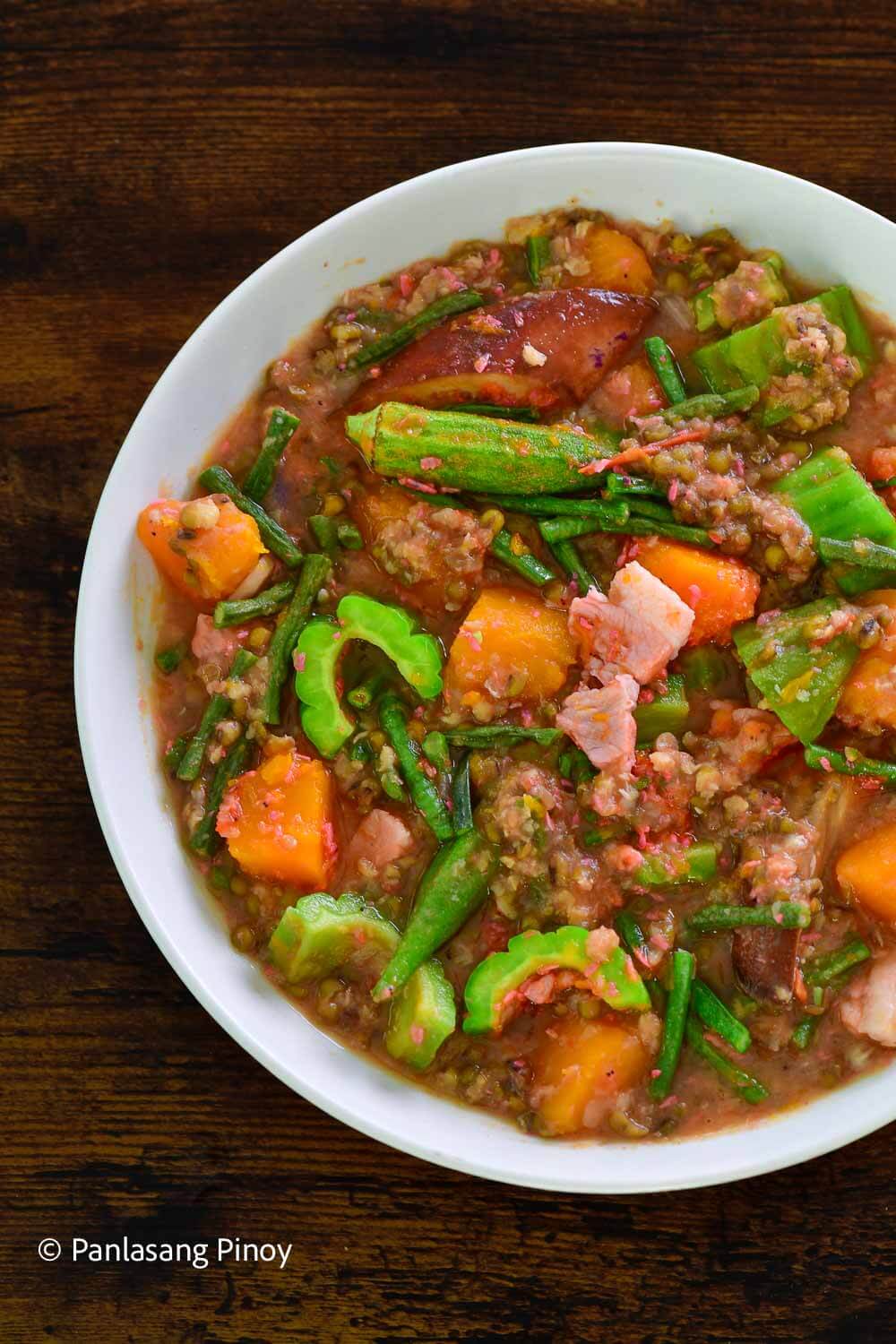
Serve Ginisang Monggo with Vegetables hot, with warm white rice on the side. Share and enjoy!
Watch How to Make It

Did you make this? If you snap a photo, please be sure tag us on Instagram at @panlasangpinoy or hashtag #panlasangpinoy so we can see your creations!
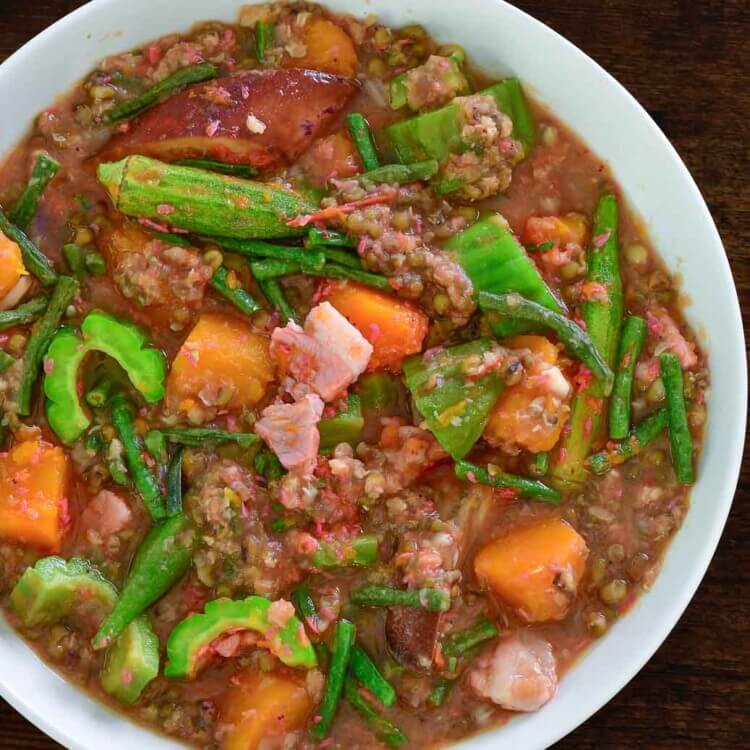
Ginisang Monggo with Vegetables
Ingredients
- 12 ounces mung beans
- 5 ounces pork thinly sliced
- 1 pieces Knorr Pork Cube
- 3 tablespoons shrimp paste
- 12 pieces string beans cut into 2 inch pieces
- 1 pieces Chinese eggplant sliced into serving pieces
- 1 pieces bitter melon cored and sliced
- 10 ounces calabaza squash cubed
- 8 pieces okra
- 2 pieces tomatoes cubed
- 2 thumbs ginger crushed
- 5 cloves garlic chopped
- 1 pieces onion chopped
- 4 tablespoons cooking oil divided
- 3 cups water plus more as needed for the mung beans
- 3/4 cups water for cooking the pork
- 1/2 cups water for the vegetables
- Salt and ground black pepper to taste
Equipment
- 2 Cooking pot One for the mung beans and one for the pork and vegetables.
- 1 Mixing bowl For soaking the mung beans overnight.
Instructions
- Place the mung beans in a bowl and cover them with water. Soak overnight, then drain and set aside.12 ounces mung beans
- Heat 2 tablespoons of cooking oil in a pot. Add half of the garlic, onion, and tomatoes. Saute until the onion and tomatoes soften.4 tablespoons cooking oil, 5 cloves garlic, 1 pieces onion, 2 pieces tomatoes
- Add the drained mung beans. Saute for 2 minutes.12 ounces mung beans
- Pour in 3 cups of water and bring it to a boil. Add the Knorr Pork Cube and stir. Cover the pot and simmer over low to medium heat for 45 minutes, or until the mung beans become tender. Add more water as needed to keep them from drying out. Set the cooked mung beans aside.3 cups water, 1 pieces Knorr Pork Cube
- Heat the remaining 2 tablespoons of cooking oil in a separate pot. Add the remaining garlic, onion, and tomatoes. Saute for 2 minutes. Add the ginger and continue sauteing until the onion and tomatoes soften.4 tablespoons cooking oil, 5 cloves garlic, 1 pieces onion, 2 pieces tomatoes, 2 thumbs ginger
- Add the sliced pork. Saute for about 5 minutes, or until it turns light brown.5 ounces pork
- Pour in 3/4 cup of water and bring it to a boil. Cover the pot and simmer until the pork becomes tender and most of the liquid evaporates.3/4 cups water
- Add the shrimp paste. Stir and saute for 1 minute.3 tablespoons shrimp paste
- Add the calabaza squash and cook for 2 minutes.10 ounces calabaza squash
- Add the eggplant, bitter melon, okra, and string beans. Saute for 2 minutes.1 pieces Chinese eggplant, 1 pieces bitter melon, 8 pieces okra, 12 pieces string beans
- Pour in 1/2 cup of water and bring it to a boil.1/2 cups water
- Add the cooked mung beans. Stir and simmer for 3 minutes.12 ounces mung beans
- Taste before adding salt because the pork cube and shrimp paste are already salty. Season with ground black pepper and salt only as needed.Salt and ground black pepper
- Transfer to a serving bowl. Serve with warm rice. Share and enjoy!


Leave a Comment