Pancit Habhab Recipe
There are few dishes that remind me more of the lively food scene in Lucban, Quezon than Pancit Habhab. You can walk down any busy street there and catch the aroma of sautéed noodles, soy sauce, and vegetables rising from open food stalls. It is one of those dishes that speak to everyday Filipino life, fast, tasty, and meant to be eaten with joy.
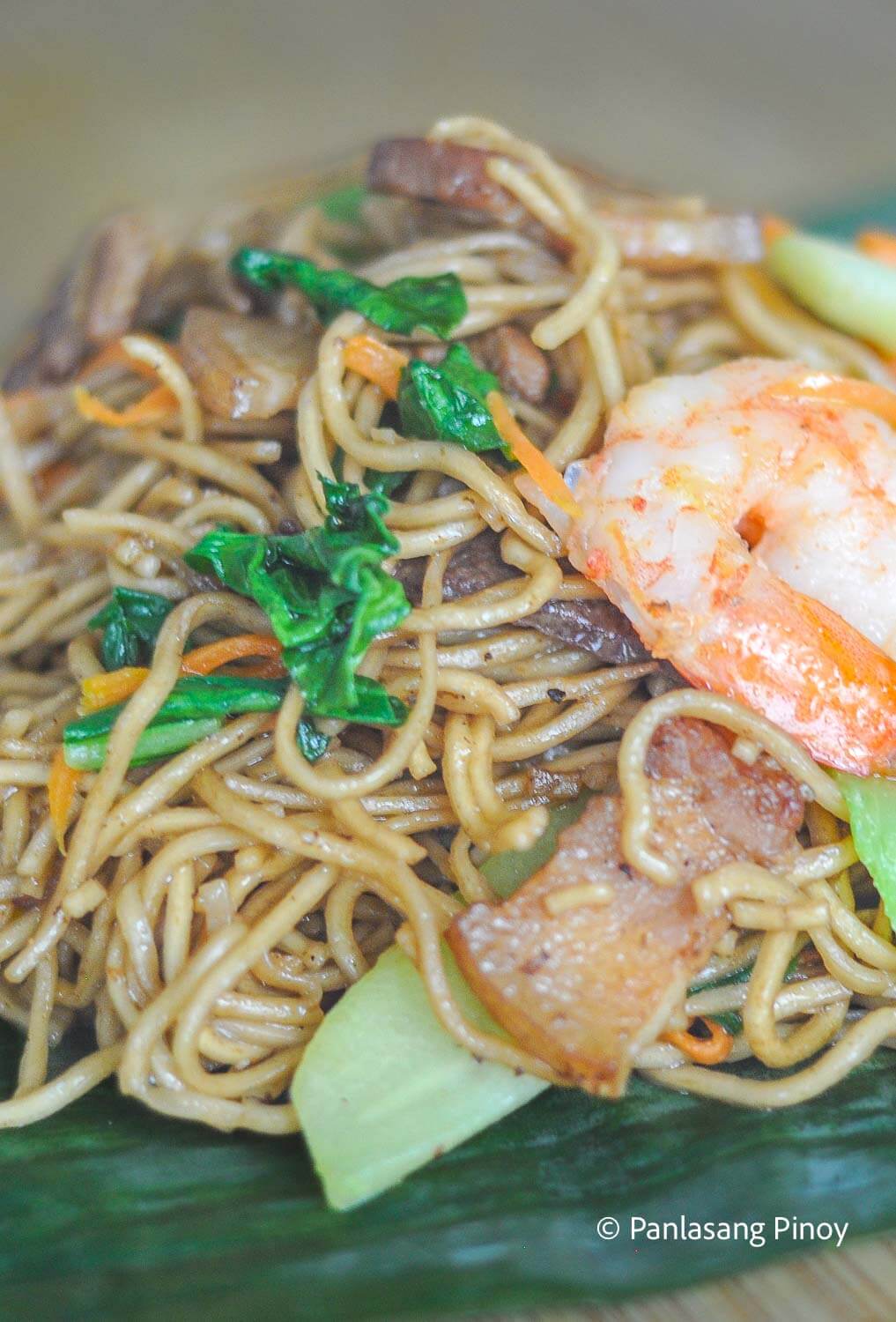
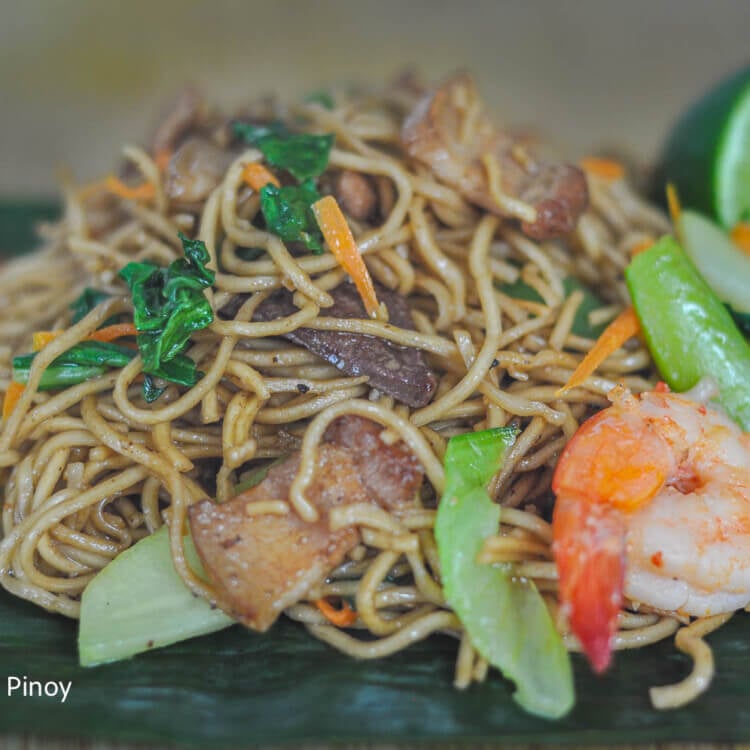
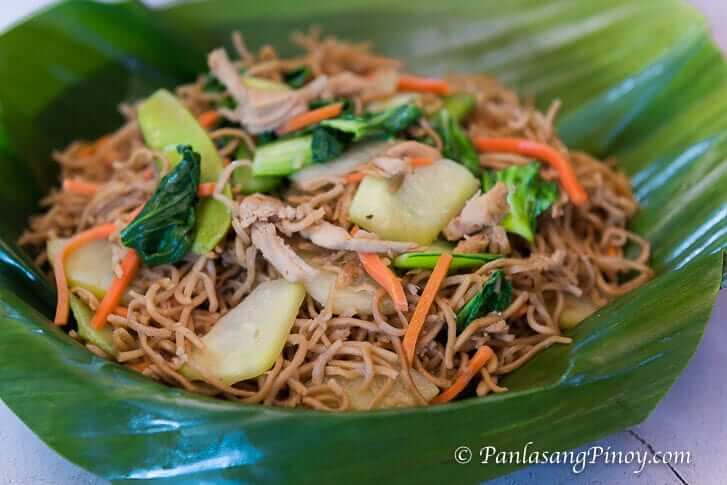
Pancit Habhab is unique not just because of its ingredients but because of how it is served. The noodles are laid out on banana leaves and eaten without utensils. Instead, you lift the leaves and bring the noodles directly to your mouth and devour it, thus the term “habhab” That experience alone makes this dish both memorable and fun.
When I first cooked Pancit Habhab at home, I realized how simple it actually is to make. With a bit of pork belly, shrimp, vegetables, and miki Lucban noodles, you can create a meal that tastes festive and comforting at the same time. The drizzle of vinegar at the end cuts through the savory sauce perfectly, bringing all the flavors together in one satisfying bite.
What is Pancit Habhab
Pancit Habhab is a noodle dish that originated in the town of Lucban in Quezon Province. It uses miki Lucban noodles, a type of fresh egg noodle that is slightly firm and chewy, giving the dish its distinct texture. The word habhab describes the way people eat it, slurping directly from banana leaves without a fork or spoon.
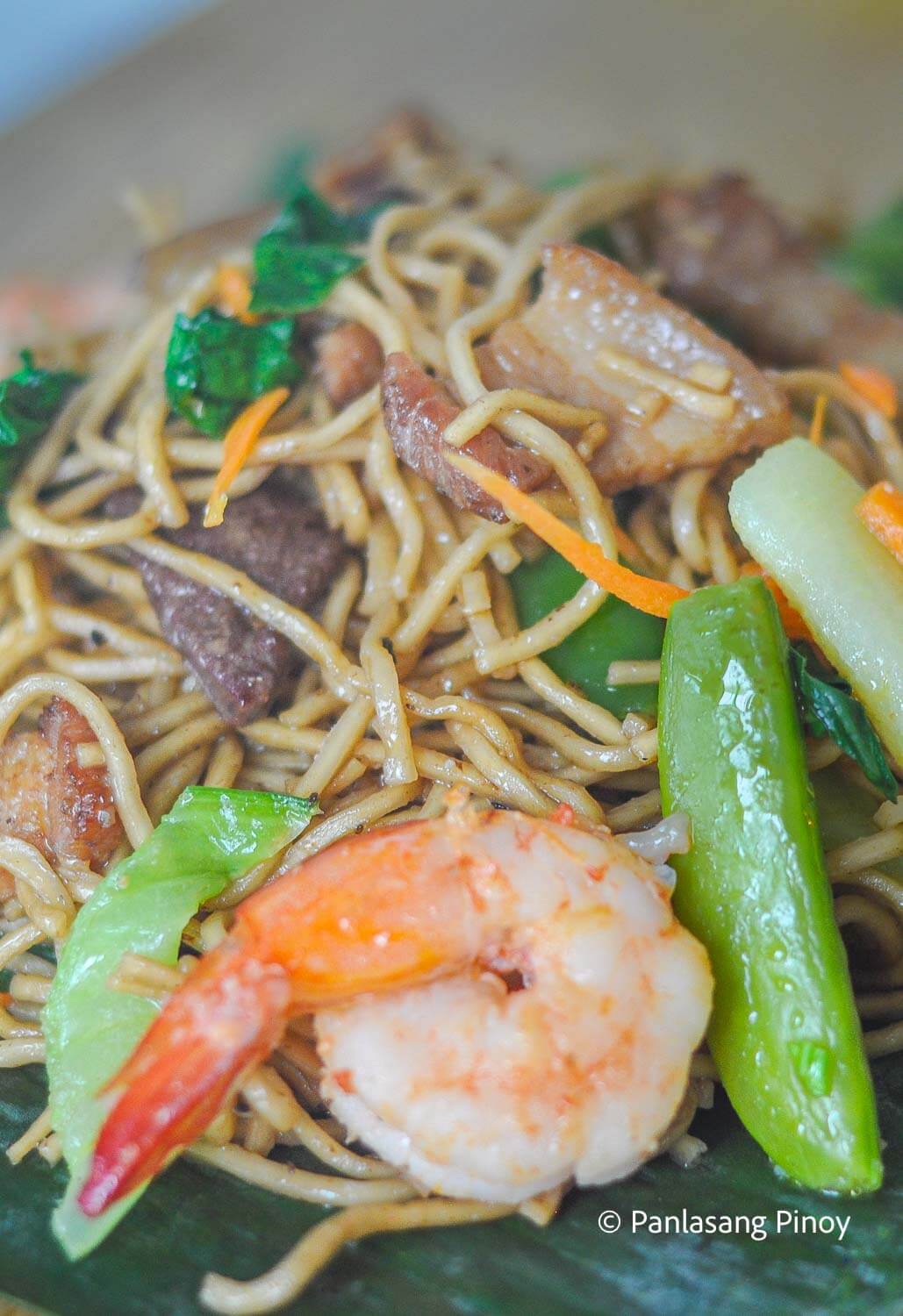
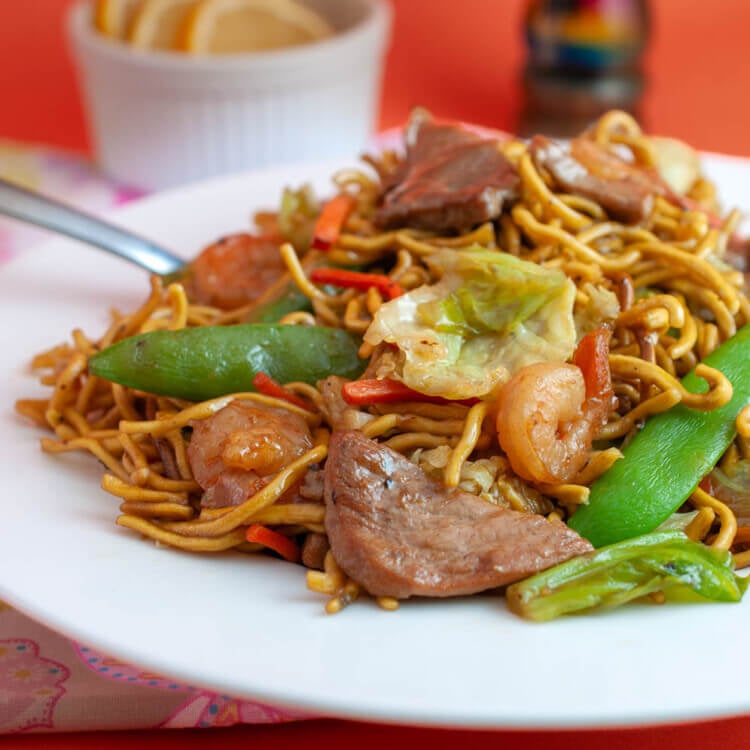
This dish combines pork, shrimp, and assorted vegetables like cabbage, carrots, snow peas, and chayote. Everything is sautéed in soy sauce and oyster sauce, then tossed with the noodles until coated with flavor. A few drops of vinegar before eating add a hint of tang that brightens the whole dish.
In Lucban, Pancit Habhab is a popular merienda and street food. Vendors sell it from small stalls or bilao trays lined with banana leaves. It is both humble and celebratory, which is why many Filipinos continue to cook it at home or during gatherings.
How to Cook Pancit Habhab
- Cook the pork and shrimp.
Heat oil in a wok over medium heat. Add the pork belly and cook until lightly browned and crisp on the edges. Add shrimp and cook briefly until it turns pink. Remove both from the wok and set aside. - Sauté the aromatics.
In the same wok, sauté garlic until fragrant. Add onion and cook until soft and translucent. - Add the sauces.
Pour in soy sauce and oyster sauce. Stir and let the mixture bubble slightly to bring out the flavor. - Add vegetables.
Toss in chayote, carrot, snow peas, and cabbage. Stir well so that the vegetables absorb the sauce. - Add broth and noodles.
Pour water or broth into the wok and bring to a gentle boil. Add the miki Lucban noodles and toss carefully until the noodles soften and absorb the liquid. - Combine everything.
Return the cooked pork and shrimp to the wok. Season with ground black pepper. Adjust soy sauce to taste. Continue tossing until all ingredients are evenly coated with sauce. - Serve.
Transfer to banana leaves. Serve hot and drizzle a little vinegar before eating for the authentic Lucban touch.
Ingredients for Pancit Habhab
- Miki Lucban noodles – firm egg noodles that give the dish its signature chewy texture
- Pork belly – thinly sliced for rich flavor and a bit of crispness
- Shrimp – peeled and deveined; adds sweetness and depth
- Chayote (sayote) – sliced thin for a mild, clean taste
- Carrot – julienned for color and slight sweetness
- Snow peas – for a crisp texture and fresh flavor
- Cabbage – chopped; balances the savory flavors and adds volume
- Garlic – minced; the base of the dish’s aroma
- Onion – sliced; adds sweetness that blends with soy and oyster sauce
- Soy sauce – gives savory depth and color
- Oyster sauce – adds roundness and subtle sweetness
- Ground black pepper – for seasoning
- Water or broth – helps soften and flavor the noodles
- Cooking oil – for sautéing
- Vinegar – for drizzling before eating; traditional Lucban style
Tips in Cooking Pancit Habhab
- Use freshly made miki Lucban noodles for a springy, chewy bite.
- Do not overcook the vegetables; they should stay crisp for texture contrast.
- Always drizzle vinegar just before eating, not while cooking.
- Add a bit of shrimp stock or pork broth for richer flavor.
- A sprinkle of chopped green onion adds color and freshness before serving.
- Serve immediately to keep the noodles soft but not soggy.
- Cook the noodles just until soft; overcooked noodles will break easily.
- Keep a bit of broth aside so you can adjust the consistency when reheating.
- If the dish turns too salty, add more cabbage or a touch of water to balance the flavor.
- Always use banana leaves for serving; it enhances both aroma and authenticity.
Best Ways to Enjoy
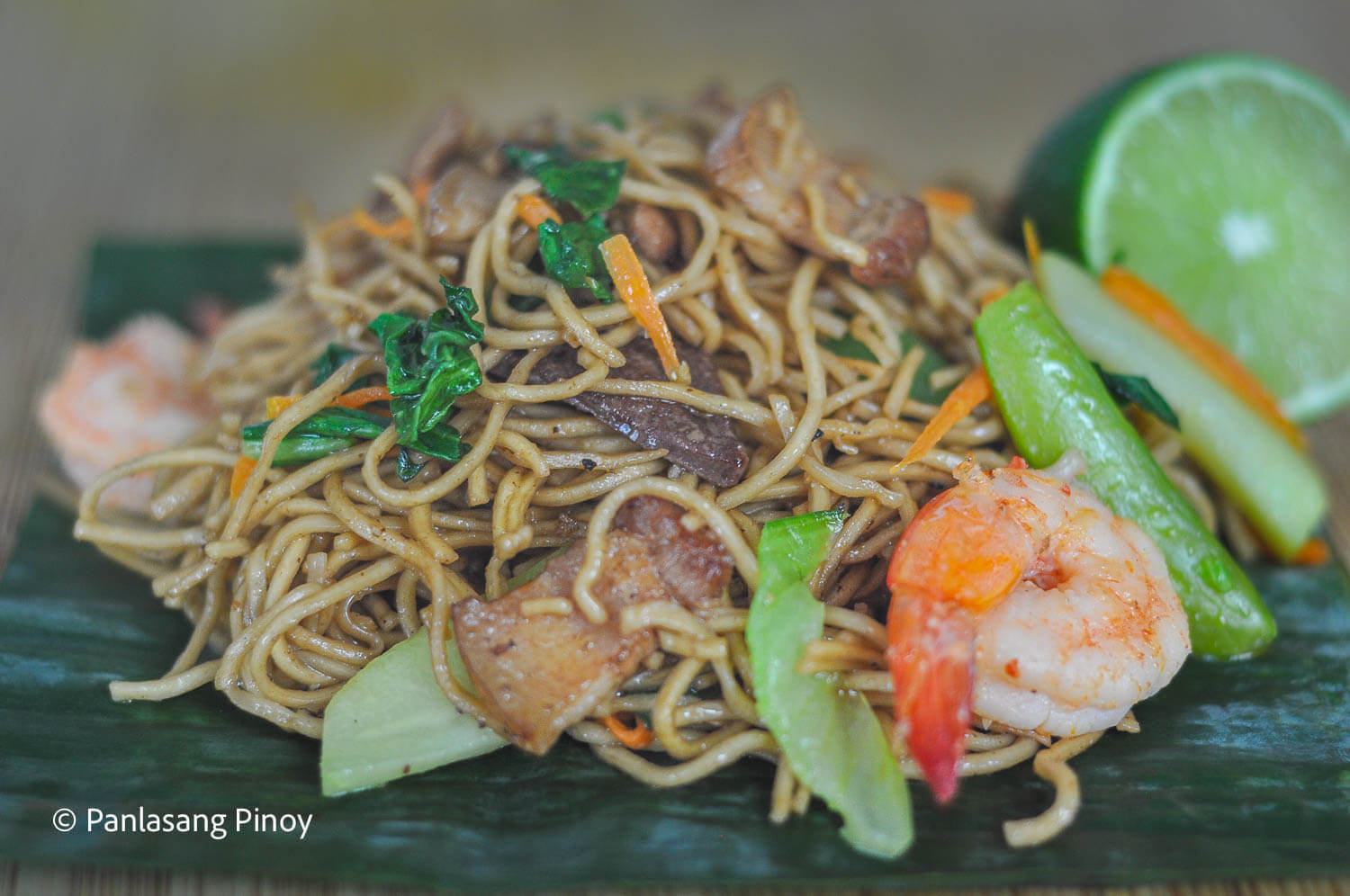
Pancit Habhab is best enjoyed as merienda or a light meal. The classic way to eat it is to hold the banana leaf and slurp the noodles straight from it. It also goes well with longganisa Lucban or fried egg for breakfast. For a fuller meal, serve it with a side of fried pork and a glass of cold calamansi juice.
For parties, you can serve it family style on a large bilao. It looks festive and instantly gets everyone in the mood for Filipino comfort food.
How This Dish Stands Out
Among the many pancit dishes in the Philippines, Pancit Habhab stands out for its serving style and unique noodles. The miki Lucban noodles give it a chewy texture that absorbs the sauce without turning mushy. The vinegar drizzle adds a light tang, setting it apart from richer, oilier pancit dishes.
What also makes it special is its story, a dish tied to a community that celebrates simple flavors done right. It reminds me of meals shared with family after a long day, and how Filipino cooking always finds joy in simplicity.
Substitutions and Variations
- Substitute pork belly with chicken or tofu for a lighter version.
- Add green beans or bell peppers if you want more vegetables.
- Use bihon or canton noodles if miki Lucban is unavailable.
- Add a few slices of longganisa for a smoky, sweet variation.
- Sprinkle crushed chicharon before serving for texture.
Storage and Leftovers
- Store cooled leftovers in an airtight container for up to two days in the refrigerator.
- Reheat in a wok with a splash of broth or water to bring back moisture.
- Avoid freezing, as the noodles may lose their texture.
Frequently Asked Questions
- Is Pancit Habhab eaten with utensils?
Traditionally, it is eaten straight from banana leaves without utensils. The term habhab comes from the way it is eaten, by slurping directly from the leaf. - Can I make Pancit Habhab without shrimp?
Yes, you can skip the shrimp and use only pork, or replace it with squid or chicken. The flavor remains rich and satisfying. - What makes miki Lucban noodles special?
They are fresh egg noodles with a slightly firm and chewy texture that holds up well when tossed in sauce. - What kind of vinegar should I use?
Use cane vinegar or sukang paombong for authentic flavor. A few drops are enough to balance the saltiness. - Can I cook this dish ahead of time?
Yes, but it tastes best freshly cooked. If preparing early, keep the sauce and noodles separate, then combine them before serving.
Suggested Recipes
Pancit Habhab is a celebration of simplicity and tradition. It captures the essence of Filipino street food, flavorful, affordable, and best enjoyed with others. Cooking it at home connects you to a piece of Lucban culture, where good food and good company are always part of daily life.
Once you taste the balance of savory sauce, chewy noodles, and that signature splash of vinegar, you will understand why Pancit Habhab remains a favorite across generations. Try it once, and it might just become part of your family’s table too.
Did you make this? If you snap a photo, please be sure tag us on Instagram at @panlasangpinoy or hashtag #panlasangpinoy so we can see your creations!
Pancit Habhab
Ingredients
- 8 oz Miki Lucban noodles
- 4 oz pork belly thinly sliced
- 4 oz shrimp peeled and deveined
- 1 small chayote thinly sliced
- 1 small carrot julienned
- 6 pieces snow peas
- 2 cups cabbage chopped
- 5 cloves garlic minced
- 1 piece onion sliced
- 3 tbsp soy sauce
- 2 tbsp oyster sauce
- 1/4 tsp ground black pepper
- 1.5 cups beef broth
- 3 tbsp cooking oil
- vinegar for serving
Equipment
- Wok or large skillet For sautéing and tossing the noodles
- Tongs For tossing noodles and vegetables
- Knife and board For slicing meat and vegetables
Instructions
- Heat oil in a wok over medium heat. Add pork belly and cook until light brown. Add shrimp and cook until it turns pink. Remove pork and shrimp from the wok and set aside.3 tbsp cooking oil, 4 oz pork belly, 4 oz shrimp
- In the same wok, sauté garlic until fragrant. Add onion and cook until it softens.5 cloves garlic, 1 piece onion
- Pour in soy sauce and oyster sauce. Stir to combine and let the mixture bubble briefly to deepen the flavor.3 tbsp soy sauce, 2 tbsp oyster sauce
- Add chayote, carrot, snow peas, and cabbage. Toss to coat with the sauce.1 small chayote, 1 small carrot, 6 pieces snow peas, 2 cups cabbage
- Pour in beef broth and bring to a gentle boil.1.5 cups beef broth
- Add miki Lucban noodles. Toss until the noodles absorb the liquid and become soft and flavorful.8 oz Miki Lucban noodles
- Return pork and shrimp to the wok. Season with ground black pepper and adjust soy sauce to taste. Toss to combine and heat through.4 oz pork belly, 4 oz shrimp, 1/4 tsp ground black pepper, 3 tbsp soy sauce
- Serve hot on banana leaves and drizzle with a little vinegar before eating for the classic style.vinegar
Notes
- Use freshly made miki Lucban noodles for the most authentic texture.
- Drizzle vinegar at the table to brighten the flavor.
- Add a splash of shrimp stock or pork broth to enrich the sauce.
Nutrition Information
Watch the cooking video

haz says
hi.. i am going to lucban quezon this june for a day tour trip. would you recommend any restaurant where i and a freind can eat pancit habhab?
shilandy says
I have been living in abroad(Australia) anyway,thank you for sharing your recipe,this is very helpful..I just would like to ask regarding Sinigang..I all have a ingridients except sinigang mix or tamarind base..they dont have that mixing powder in grocery..Do u have any idea if I might to add something different para lng ma complete ko yung lasa nung sinigang. Or is there anything else that might possibly sinigang becomes little bit sour or maasim asim. pls help!!!! thanks a lot 🙂
alelie says
u can buy sinigang mix in asian store or in coles they have tamarind based cubes like knorr here in Philippines
May says
Thanks for the posting of Pancit Habhab. I’m sure it’s delicious. But the original Pancit Habhab doesn’t have any other ingredient besides the special noodles, soy sauce, pepper and a bit of vinegar. The noodles itself has a special taste and doesn’t need anything else to accompany it. But of course, if you want a complete meal – veggies and meat may be added. But majority of people from Lucban, Quezon and the nearby cities enjoy it the traditional way.
Conrad Almoradie Jr says
Can you please email recipe how to make habhab noodle ( Miki Lucban ). You are correct– noodle is not available in Filipino/Asian stores. Thank you!!!