Chicken and Pork Adobo Recipe
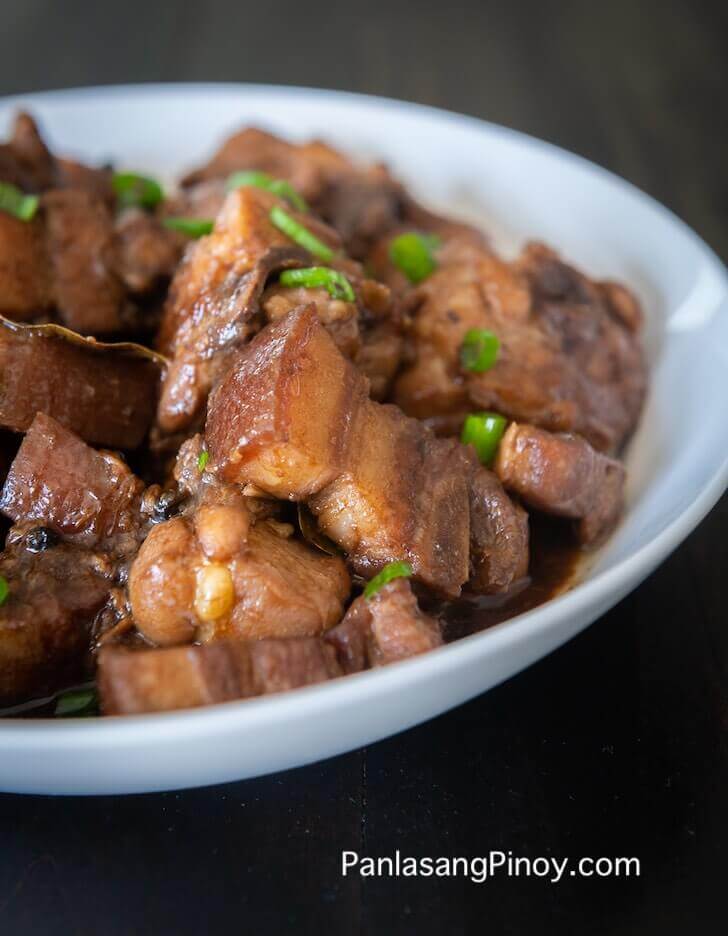
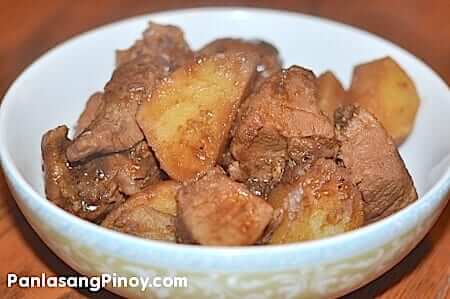
I make Chicken and Pork Adobo when I am cooking for a bigger group and cannot decide between the two, so I use both. Chicken and Pork Adobo is a Filipino dish of pork belly and chicken simmered in soy sauce, vinegar, garlic, whole peppercorns, and bay leaves until the meat is tender and the sauce turns salty and a little sour. The pork gives the sauce more body and the chicken soaks it all up. If you already know chicken adobo or pork adobo, this will feel familiar. It is the same braise, just with both proteins in one pot.
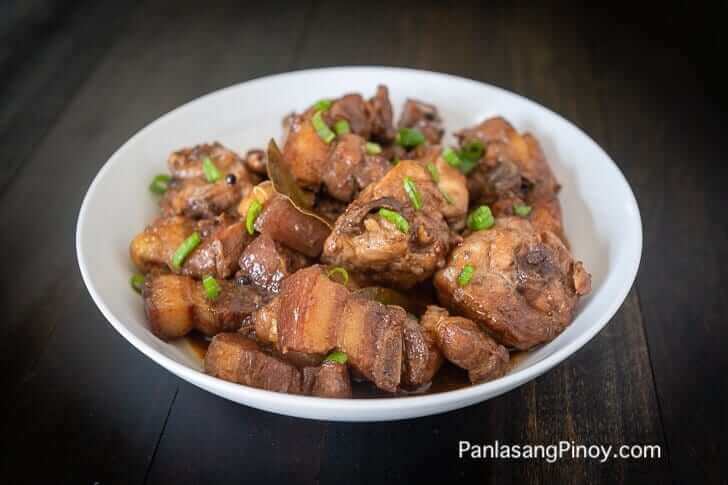
Cooking two meats together sounds tricky because pork needs more time than chicken. If you leave the chicken in the pot the whole time, it can dry out or start to fall apart. What I do is simmer everything together first, then take the chicken out and let the pork keep going until it is tender. The chicken goes back in near the end, so it stays juicy instead of dry.
The vinegar takes a little care too. Pour it in and let it boil before you stir, so the sharp raw taste cooks off and the sauce stays smooth. A spoon of oyster sauce and a little brown sugar balance the salt and the sourness. Cook it down until the sauce clings to the meat and still leaves enough to spoon over rice.
What is Chicken and Pork Adobo?
Chicken and Pork Adobo is a Filipino dish that braises pork belly and chicken in vinegar, soy sauce, garlic, peppercorns, and bay leaves. Adobo is often called the national dish of the Philippines. The name comes from the Spanish word adobar, which means to marinate, but the method is older than the name. Filipinos were already simmering meat in vinegar and salt long before the Spanish arrived, since the acid kept food from spoiling in a hot climate. When the Spanish saw it, they gave it a word they already knew.
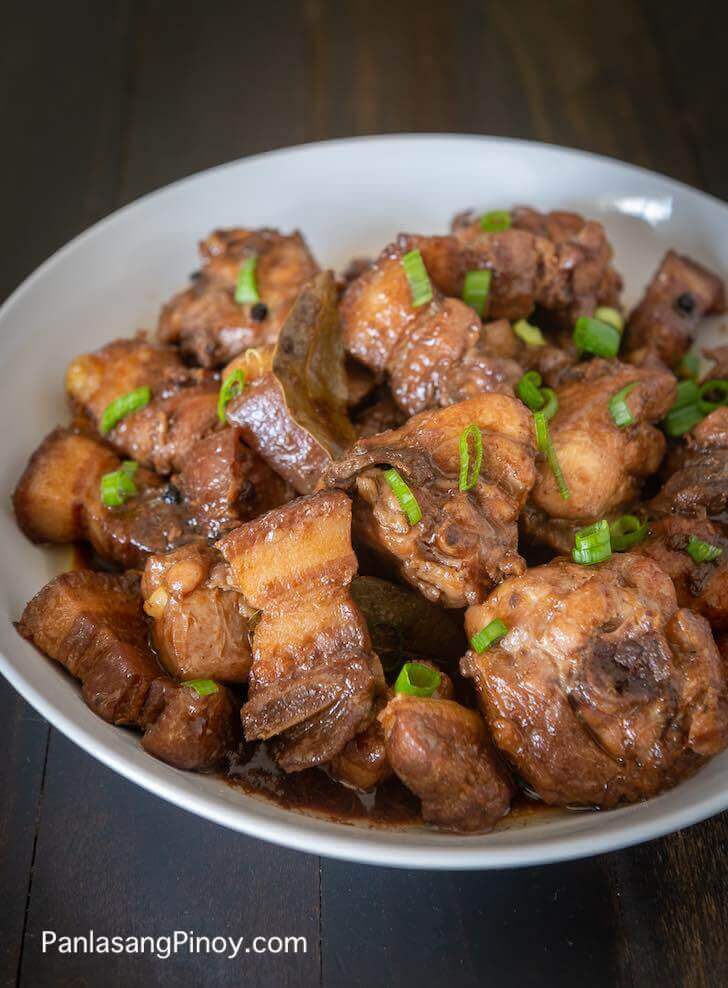
Using both pork and chicken is a common way to make adobo at home. Some families cook only pork, others only chicken, and plenty of us do what I do here and combine the two. The pork belly renders fat into the sauce and makes it richer, while the chicken picks up all that flavor. It is one dish that feels a little more generous than either version on its own, which is why I reach for it when there are more people at the table.
There is also a practical reason adobo shows up so often. The vinegar acts as a preservative, so it keeps for days and tastes even better the next day. That is why it has always been a good baon and the dish many families pack for outings and excursions during summer.
Ingredients
- Pork belly – Cut into serving pieces. The fat is what makes the sauce rich, so I do not trim it all off. Pork shoulder works too, and I sometimes use chopped pork ribs when I have them.
- Chicken – Bone-in thighs and drumsticks hold up best through the long simmer. Boneless pieces work but cook faster, so keep an eye on them.
- Garlic – A whole head, crushed. Adobo is a garlic-forward dish, so do not go light here.
- Soy sauce – A Filipino brand like Silver Swan or Datu Puti gives a darker, saltier sauce than most supermarket soy sauces. Use a milder brand and the adobo can taste flat.
- White vinegar – Cane or coconut vinegar also work. Skip apple cider and balsamic, they are too sweet for this.
- Oyster sauce – About a tablespoon. It makes the sauce a little thicker and rounder. No oyster sauce? See substitutions below.
- Whole peppercorns – Left whole so the heat stays mild and in the background. Cracked pepper works if that is what you have.
- Dried bay leaves – For that familiar adobo aroma.
- Brown sugar – Just a couple of teaspoons to balance the salt and vinegar, not to make it sweet.
- Salt – Only at the end, and only if it needs it. The soy sauce and oyster sauce already bring a lot.
- Cooking oil – For browning the garlic and the meat.
Vanjo’s Advice
These are the small things I pay attention to when I make this dish.
- Cook the pork longer than the chicken. After the first simmer, take the chicken out and let the pork keep cooking until it is fork-tender. Put the chicken back in near the end so it does not overcook.
- Let the vinegar boil before stirring. Pour it in, wait for it to come to a boil, then stir. This cooks off the raw, sharp smell and keeps the sauce mellow.
- Use a fatty cut of pork. Pork belly or pork shoulder both have enough fat to keep the meat moist and give the sauce body. Leaner cuts can turn dry.
- Taste for salt at the very end. Soy sauce and oyster sauce vary in saltiness by brand, so I wait until the sauce has reduced before deciding if it needs any salt.
- Make it ahead if you can. Adobo tastes better the next day once the meat sits in the sauce. I often cook it a day early, especially if I am bringing it somewhere.
- Save the leftovers for breakfast. I like this with rice and a fried egg the next morning. You can also turn leftovers into pork adobo paksiw or chop the meat into adobo fried rice.
How to Cook Chicken and Pork Adobo
Making Chicken and Pork Adobo is straightforward once you get the timing of the two meats right. Take it in three parts and the pot comes together without much fuss.
Brown the Garlic and Meat
- Heat the cooking oil in a large pan over medium heat.
- Add the crushed garlic and cook until it starts to brown.
- Add the pork belly and chicken to the pan. Saute for about 5 minutes, until the outsides turn light brown.
- Pour in the soy sauce, oyster sauce, and water, then add the whole peppercorns and bay leaves. Let it come to a boil.
Simmer Until Tender
- Cover the pan and simmer for 30 minutes.
- Remove the chicken from the pan and set it aside. The chicken should reach an internal temperature of 165°F and no longer be pink at the bone.
- Continue simmering the pork until it turns fork-tender, adding a little water whenever the pan starts to dry out.
- Return the chicken to the pan once the pork is tender.
Finish the Sauce
- Pour in the vinegar and let it boil before stirring.
- Add the brown sugar, stir, and cook until the sauce reduces and coats the meat.
- Taste the sauce and add salt only if it needs it.
- Transfer to a serving plate and serve with warm rice.
What to Serve with Chicken and Pork Adobo
- Steamed white rice – Adobo is salty and sour, so plain hot rice is what balances it. This is the standard pairing.
- Sinangag – Garlic fried rice makes the plate feel fuller, and the garlic in the rice matches the garlic in the adobo.
- Fried egg – A runny yolk over rice and adobo is how I like the leftovers in the morning.
- Boiled eggs – Halved boiled eggs on the side are common with adobo and soak up the sauce.
- Sliced tomatoes – A few fresh tomato slices cut through the richness of the pork.
Storage
This Chicken and Pork Adobo keeps well, which is part of why it is such a handy dish to make. Store it properly and it tastes even better the next day.
- Refrigerator – Transfer the leftovers to a container with a tight lid and refrigerate for 3 to 4 days. I find that adobo tastes even better the next day once the pork and chicken have had more time to sit in that garlicky, vinegary sauce.
- Freezer – Divide the extra adobo into smaller containers before freezing, especially when you have more than you can finish in a few days. I do this so we only thaw what we need at one time. It keeps its flavor for about 2 months.
- Reheating – Warm it on the stove over gentle heat until the sauce starts bubbling again. I add a spoonful of water when the sauce looks too thick from sitting in the fridge. For crisp edges on the pork, let it cook a little longer until the sides catch and caramelize.
More Filipino Adobo Recipes
- Spicy Pork Adobo – The same braise with dried red chilies and oyster sauce for a bolder, spicier sauce.
- Sprite Pork Adobo – A sweeter version that uses lemon-lime soda instead of adding sugar.
- Coke Pork Adobo – Cola gives this one a darker color and a hint of sweetness close to humba.
- Adobo Pork Chops – Adobo flavors made with bone-in pork chops, browned first, for a quicker plate.
- Pork Adobo with Sitaw – Regular pork adobo with string beans added near the end for a vegetable in the mix.
Substitutions
- Pork belly – Pork shoulder or chopped pork ribs work. Any cut with some fat keeps the meat moist.
- Chicken – Bone-in thighs and drumsticks give the best result. Boneless thighs work but cook faster.
- Oyster sauce – Leave it out and add a little more soy sauce, or use a splash of fish sauce for savoriness. The sauce will be slightly thinner without it.
- White vinegar – Cane vinegar or coconut vinegar both work. Avoid apple cider or balsamic, which are too sweet for adobo.
- Soy sauce – Coconut aminos make a gluten-free version, though the color is lighter and the salt level is different, so taste as you go.
- Brown sugar – White sugar works, or leave it out if you prefer a sharper, less sweet adobo.
Frequently Asked Questions
Do I need to marinate the meat for this adobo?
No. This version skips the marinade and builds the flavor in the pot instead. The pork and chicken simmer long enough in the soy sauce and garlic to take on plenty of it. If you have time and want the flavor deeper, you can marinate the pork and chicken in the soy sauce and garlic for 1 to 3 hours.
How do I make the adobo saucier or drier?
For a saucier adobo, add a little more water during the simmer and stop cooking while there is still liquid in the pan. For a drier one, let the sauce cook down further until it almost disappears and the pork starts to fry in its own fat. Both ways are common, so it comes down to how you like it over rice.
Can I use chicken breast instead of thighs?
You can, but it dries out faster than dark meat. If you use breast, add it later than you would thighs and keep its time in the pot short. Bone-in thighs and drumsticks are more forgiving in a long braise like this one.
Is this adobo good to make as take-along?
Yes. The vinegar helps preserve it, so it holds up well for a day out and does not spoil as quickly as most dishes. It is one of the reasons adobo has long been a favorite baon for trips and busy mornings. Cook it the night before and it will taste even better by the time you eat it.
Chicken and Pork Adobo is the version I cook when I want one dish that can feed a crowd and still taste good the next day. Give this recip
Watch How to Make It

Did you make this? If you snap a photo, please be sure tag us on Instagram at @panlasangpinoy or hashtag #panlasangpinoy so we can see your creations!
Chicken and Pork Adobo
Ingredients
- 1 1/2 lbs pork belly cut into serving pieces
- 1 1/2 lbs chicken cut into serving pieces
- 1 head garlic crushed
- 4 pieces dried bay leaves
- 2 teaspoons whole peppercorn
- 1/2 cup soy sauce
- 1 tablespoon oyster sauce
- 6 tablespoons white vinegar
- 2 teaspoons brown sugar
- 2 cups water
- Salt to taste
- 3 tablespoons cooking oil
Equipment
- 1 Large pan or pot Use one with a lid for simmering the meat
Instructions
- Heat the cooking oil in a large pan over medium heat.3 tablespoons cooking oil
- Add the garlic and cook until it starts to brown.1 head garlic
- Add the pork belly and chicken, then sauté for 5 minutes.1 1/2 lbs pork belly, 1 1/2 lbs chicken
- Add the whole peppercorn, dried bay leaves, soy sauce, oyster sauce, and water. Let it boil.2 teaspoons whole peppercorn, 4 pieces dried bay leaves, 1/2 cup soy sauce, 1 tablespoon oyster sauce, 2 cups water
- Cover the pan and simmer for 30 minutes.
- Remove the chicken from the pan and set it aside.1 1/2 lbs chicken
- Continue simmering the pork until it becomes tender, adding more water when necessary.1 1/2 lbs pork belly
- Return the chicken to the pan.1 1/2 lbs chicken
- Pour in the vinegar and let it boil before stirring.6 tablespoons white vinegar
- Add the brown sugar, then stir and continue cooking until the sauce reduces.2 teaspoons brown sugar
- Taste the sauce and add salt only if needed.Salt
- Transfer to a serving plate and serve with warm rice. Share and enjoy!
Bhebs /Pure Balansag says
masarap
Vanjo Merano says
Salamat, Bhebs. I’m glad you enjoyed the Chicken and Pork Adobo. Thank you for trying the recipe.
Jamie says
this is genuinely bomb asl, make it all the time
rufino sison says
perfect dish
Robert Garcia says
I love this and just want the recipe for it thanks
Nanette says
Just like my mom made it!
Vanjo Merano says
That is good to know. I hope you enjoy.
Yen says
I did it! And the taste is amazing!! Worth trying, just follow the instructions so you won’t have any problem.
Eul Lopez says
Thanks you for sharing. We always use all your recipe! Great job po!