• Skip to primary navigation
  • Skip to main content
  • Skip to primary sidebar

Panlasang Pinoy

Your Top Source of Filipino Recipes

  • Start Here
  • All Recipes
    • Course
      • Breakfast
      • Lunch
      • Appetizers
      • Dessert
      • Dinner
    • Ingredient
      • Chicken
      • Pork
      • Beef
      • Turkey
      • Vegetable
      • Fish
      • Rice
      • Egg
      • Tofu
      • Noodles
    • Type
      • Adobo
      • Bread
      • Fried Chicken
      • Sinigang
      • Kilawin
      • Ginataan
      • Kaldereta
  • Cooking Schools
  • About
Facebook
Instagram
Pinterest
YouTube
Home Culinary Arts

Culinary Arts

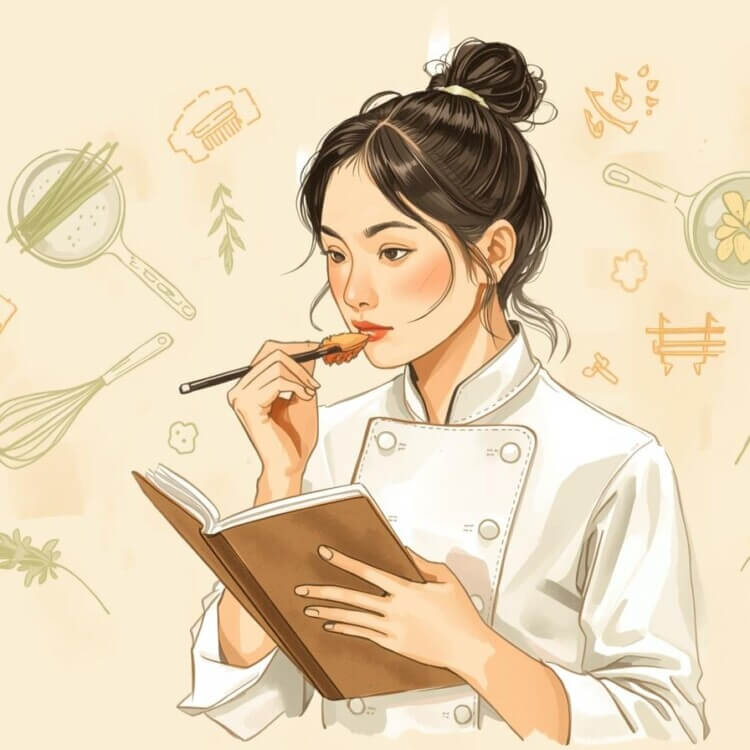
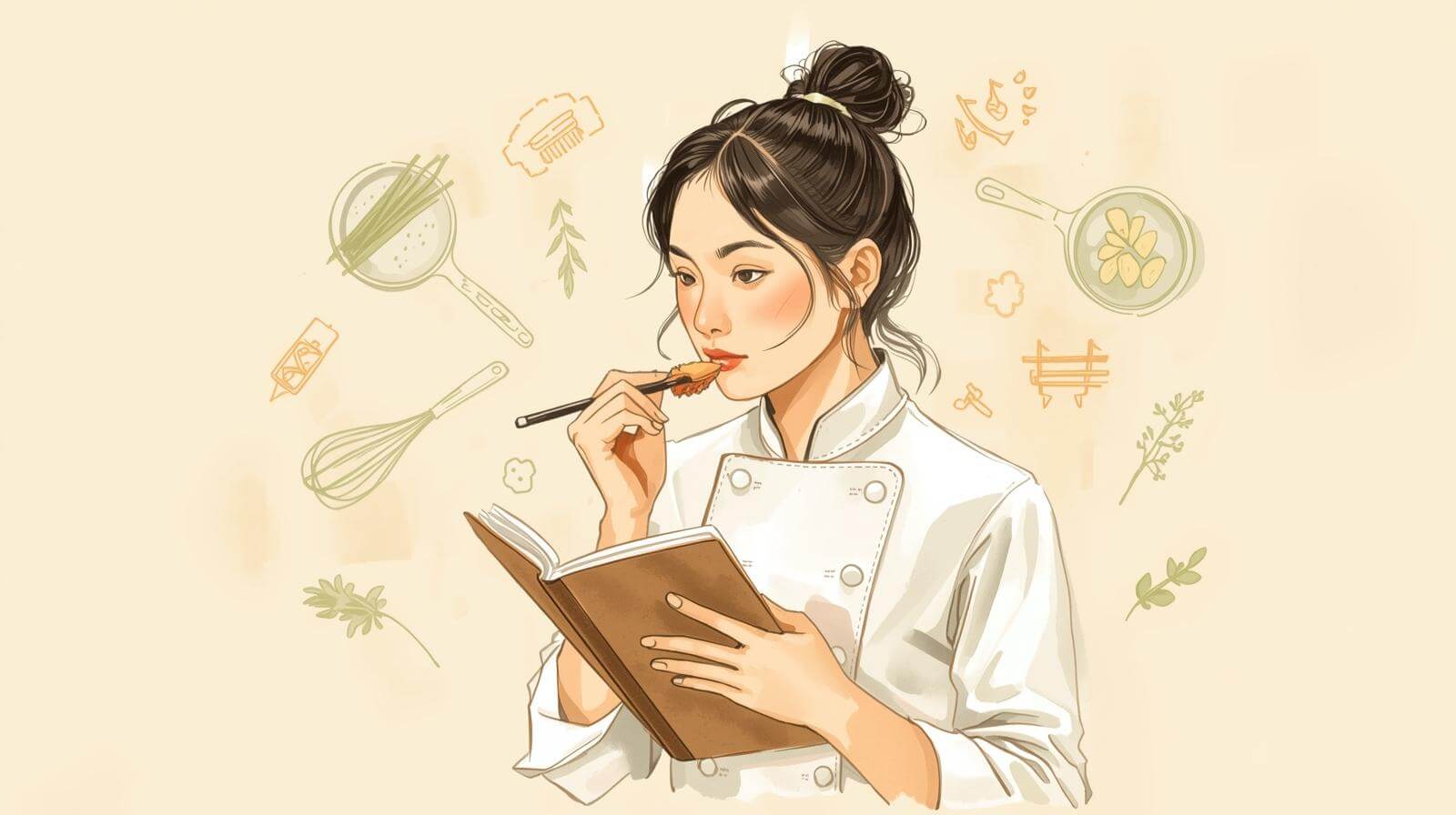
A Chef thinking about recipes to create

Helpful Tips on How to Become a Chef

Becoming a chef is a dream for many people who love food and cooking. Whether your goal is to work in a busy restaurant, explore different cuisines, or someday start a food business, the journey always begins with small steps. This guide shares practical and meaningful tips that you can follow, practice, and apply as you move closer to a professional kitchen.

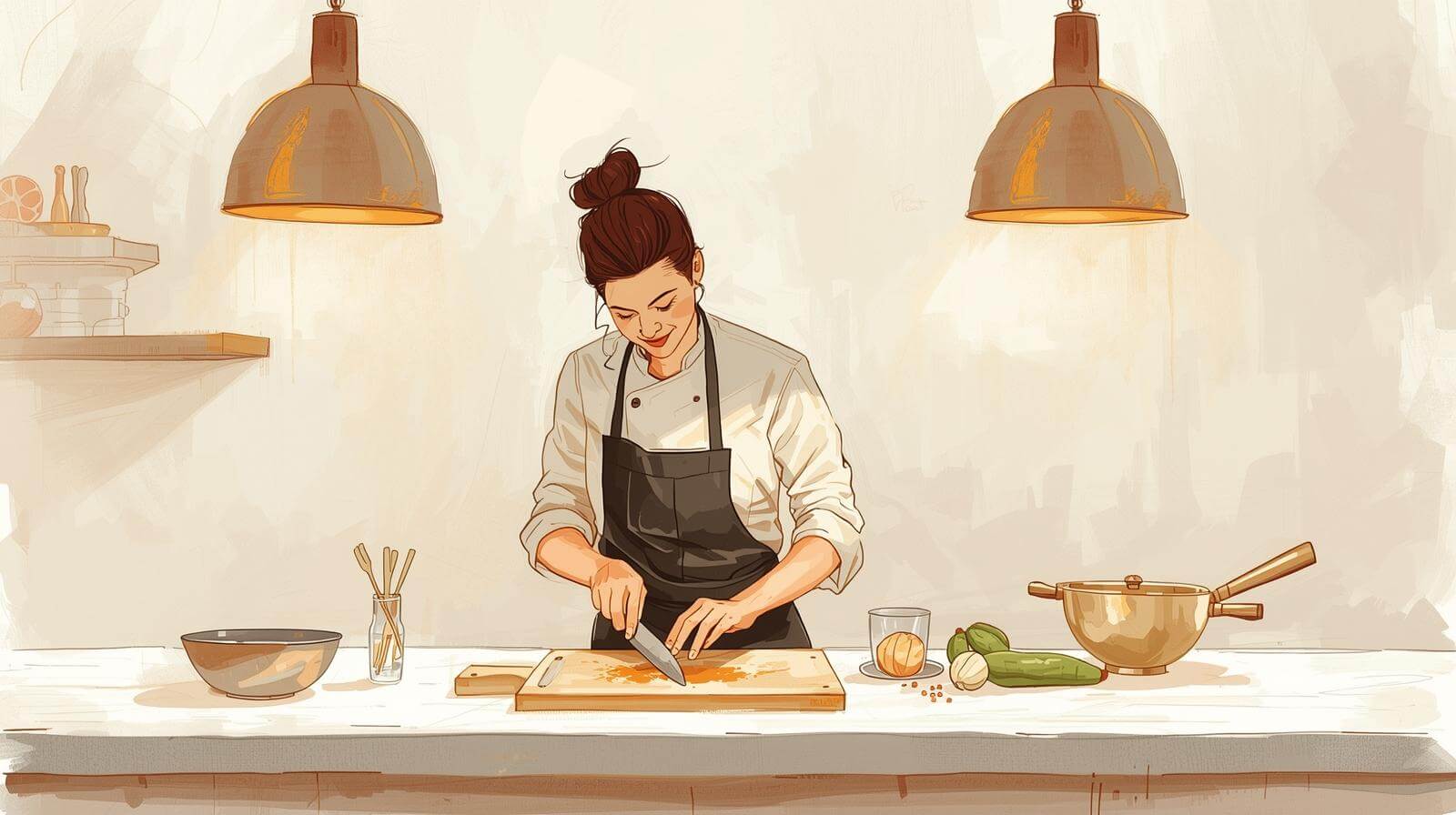
Knife skills

Start With the Fundamentals

Every chef begins with the basics. Strong foundational skills will help you in every kitchen you enter. Instead of jumping right away into complex recipes, focus on the core techniques that you can use every day.

  • Practice knife skills for a few minutes each day using one vegetable and focus on even cuts.
  • Learn simple cooking methods such as boiling, sautéing, roasting, and steaming.
  • Train yourself to taste food as you cook and adjust seasoning slowly and carefully.
  • Study food safety so you understand cleanliness, storage, and proper handling of ingredients.

23 Easy Filipino Vegetable Dishes

Filipino vegetable dishes are some of the simplest and easiest meals you can prepare at home, yet they still deliver comforting and familiar flavors.

Browse All

Once you feel comfortable with these basics, you will find it easier to follow recipes and create your own dishes with confidence.

Spend Time in a Real Kitchen

You learn the most when you spend time in a real working kitchen. This does not always mean a fine dining restaurant right away. You can start small and still gain valuable experience.

  • Assist in a local eatery, café, or catering business.
  • Volunteer for community events that prepare food for a crowd.
  • Help family and friends who run food stalls or small food businesses.
  • Look for short term roles as a kitchen helper or prep cook.

Real kitchen work teaches discipline, speed, teamwork, and the natural rhythm of service. You learn how to move with purpose and how to support other cooks during busy hours.

Learn From Different Cooks and Kitchens

Every cook and every kitchen has something unique to offer. If you pay attention, you will collect techniques, habits, and ideas that you can apply to your own style.

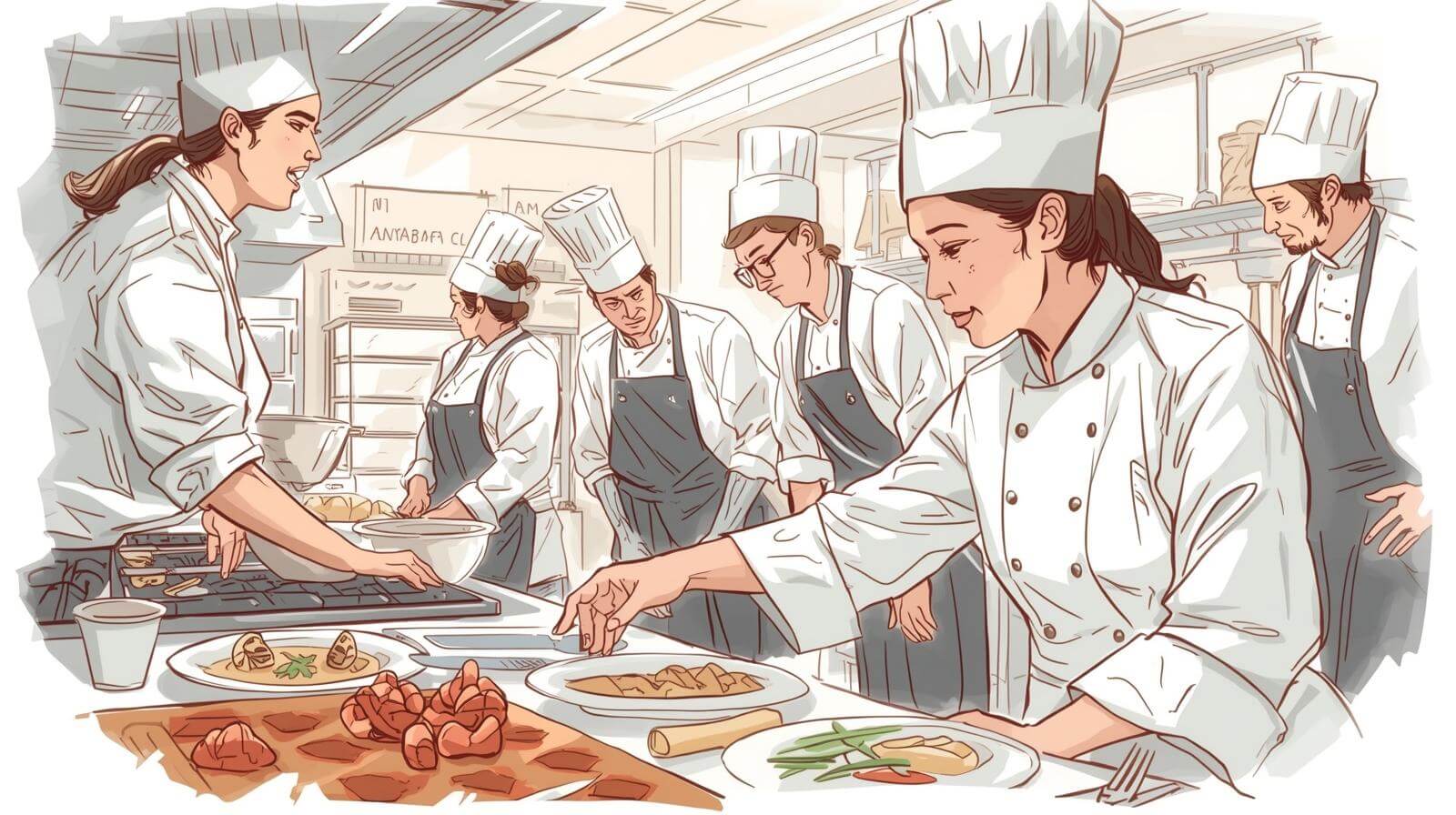
Team of chefs in a busy kitchen
  • Observe how different cooks organize their station and handle ingredients.
  • Ask respectful questions when time allows and listen to the reasoning behind their methods.
  • Study how dishes are plated and presented before they leave the pass.
  • Taste dishes from many cuisines and try to identify the main flavors and aromatics.

The more you watch and taste, the richer your cooking vocabulary becomes. This helps you grow faster as you move from beginner to more advanced roles.

Build Confidence Through Repetition

Repetition is one of the most powerful training tools in the kitchen. You become more confident when your hands and eyes know what to do without hesitation.

New chef chopping carrots
  • Cook the same basic dish several times in one week and compare the result each time.
  • Time yourself during prep work to see if you can become faster without losing accuracy.
  • Choose one technique for the week such as sautéing or roasting and focus on it.
  • Keep a simple cooking notebook where you write what worked and what you want to improve.

Small improvements add up. Over time you will notice that tasks which once felt difficult now feel natural and easy to repeat.

Develop the Right Mindset for Kitchen Life

Skill is important, but mindset often decides who grows and who gives up. The kitchen can be busy and demanding, and the right attitude helps you stay steady.

A Chef thinking about recipes to create
  • Stay humble and accept correction from more experienced cooks.
  • Arrive early, be prepared, and keep your station clean and organized.
  • Stay calm when orders begin to pile up and focus on one task at a time.
  • Show respect to everyone on the team, from dishwashers to head chefs.

When people see that you work hard, listen well, and support the team, they will be more willing to teach you and trust you with more responsibility.

Train Your Palate

Your sense of taste is one of your most important tools as a chef. You can train it in the same way that you train your knife skills and cooking techniques.

  • Taste individual ingredients before you cook with them so you know their natural flavor.
  • Notice how salt, acid, sweetness, and bitterness affect a simple soup or sauce.
  • Compare the taste of fresh herbs and dried herbs in the same dish.
  • Adjust seasoning little by little instead of adding a large amount at once.

As your palate improves, you will be able to fix dishes, balance flavors, and create sauces and marinades with more confidence.

Take Care of Your Body and Energy

Cooking in a professional kitchen is physically demanding. You may stand for long hours, carry heavy pots, and work in a hot environment. Taking care of your body will help you stay in this field for many years.

  • Stretch your back, shoulders, and wrists before long cooking sessions.
  • Wear proper footwear that supports your feet while you stand.
  • Drink water regularly and eat meals that give you steady energy.
  • Get enough rest between busy days in the kitchen.

Good health allows you to focus on cooking instead of struggling with constant fatigue or discomfort.

Choose the Learning Path That Fits You

There is no single correct path to becoming a chef. Some people start in culinary school, others learn through apprenticeships or direct kitchen work. What matters is that you keep moving forward and keep improving.

  • Culinary schools offer structured classes, kitchen labs, and theory in a classroom setting.
  • Apprenticeships mix work in a real kitchen with guided learning from a supervising chef.
  • On the job training allows you to learn directly in restaurants as a prep cook or line cook.
  • Home practice with serious study can prepare you before you apply to a restaurant or school.

Look at your budget, schedule, and long term goals, then choose the path that feels realistic and sustainable for you.

Avoid Common Beginner Mistakes

New cooks often make the same mistakes. Being aware of them can save you time and frustration.

  • Focusing only on recipes without learning the underlying techniques.
  • Skipping proper preparation and trying to cook while ingredients are still unorganized.
  • Ignoring food safety and cross contamination rules.
  • Giving up quickly when the work becomes tiring or repetitive.

Mistakes are normal, but if you learn from them and adjust your habits, you will continue to grow as a cook and future chef.

Create a Simple Practice Routine

A clear routine helps you stay consistent. You do not need expensive ingredients or equipment to train like a future chef. You just need time, focus, and a plan.

Weekly cooking planner
  1. Day One: focus on knife skills and vegetable preparation.
  2. Day Two: practice one cooking method such as sautéing.
  3. Day Three: work on seasoning and tasting a basic soup or sauce.
  4. Day Four: follow a complete recipe from start to finish.
  5. Day Five: repeat the same recipe and aim for a better result.
  6. Day Six: read or watch lessons about cooking techniques or kitchen organization.
  7. Day Seven: rest and review what you learned during the week.

You can repeat and adjust this routine based on your schedule. The important part is to keep moving and keep practicing.

Becoming a chef is a journey that takes time, patience, and consistent effort. Every dish you cook, every shift you complete, and every lesson you learn in the kitchen brings you one step closer to your goal. Stay curious, stay humble, and keep practicing. With passion and steady work, you can build a future where cooking is not only your skill but also your career and source of joy.

What is a Kitchen Twine?

In some cases, it would be necessary to do some tying and knotting when preparing food. That is why, it is important to keep a kitchen twine in the kitchen which you could easily pull out if you happen to need one. But what is kitchen twine?

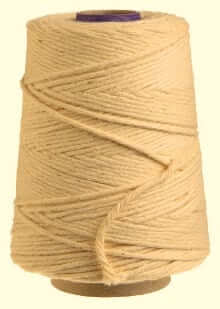
Kitchen-Twine

A kitchen twine is not similar to the ropes which are found in hardware stores. It is found is specialty stores which focus in selling kitchen essentials. The twine comes in spools.

Kitchen twine is particularly made to be safe and efficient for trussing food. It is also called butcher’s twine in some stores. Usually, this is made of cotton fiber and it is also thick. Other manufacturers use linen which is also a good material for kitchen twine.

This type of twine should be made of natural materials. It should not be plastic, polyester or nylon. When food is prepared using a twine, it means that the string would also be subjected to heat. If the twine is made of plastic, then this would melt during the cooking process. Aside from not being able to maintain the desired shape of the food, the molten plastic may also mix with the ingredients and become toxic.

Synthetic materials are not safe for health too. These materials use a myriad of chemicals which could result to health problems. Aside from digestive issues, it could also trigger more serious problems like severe allergic reaction.

How Kitchen Twine is Used

There are certain recipes which require the food to be tied up before it is put inside the pot or oven for cooking. For example, stuffed meat has to be tied to keep it intact while being cooked. The meat is sliced in the middle and the prepared stuffing is placed in the gap. If this is not properly laced, all the stuffing would come out before the cooking process is done.

There are different ways on how chefs and cooks use kitchen twine. One popular method is the butcher’s knot. This starts at the end part of the meat and then forming an initial loop which will be connected to the second loop. The second loop should be a few inches away from the first one and the process goes on depending on the length of the meat. Of course, other people have varying techniques when trussing meat. Some cut the thread in desired lengths and then individually create loops which are finished off with a double knot. In some cases, the kitchen twine is used with meat-trussing needles.

The important thing is that once cooking is done, the string should be snipped using shears. Since the thread is made of cotton or nylon, removing it would not be such a difficult thing to do. After removing the kitchen twine, then the meat can be carved or the dish can be opened and served as desired.

This may not be something that is needed in the kitchen every single day but it is important to have a spool of kitchen twine that is always kept clean. That way, there is no need to use alternative strings which are not specifically made for tying food.

Where to Attend Cooking Classes in Vancouver

All cooking enthusiasts and aspiring chefs in Vancouver no longer have to search too far just to find a class or program to enroll into. Because of the astounding reputation of schools in this place, all it takes is some little research to be able to discover which cooking classes Vancouver should be picked.

Are you thinking of enrolling too? Here are some of the finest schools and institutions within Vancouver which will give you excellent education and knowledge. You just need to decide whether you want a class which will fulfill your recreational dreams or one that will gear you up for a culinary profession in the future.

photo credit: flickr.com/ReneS

Pacific Institute of Culinary Arts: The best cooking classes Vancouver are found in this school. They have a myriad of courses being offered to both hobbyists and professionals. Aside from that, the different programs that are offered by the school allow their students to concentrate on a certain culinary aspect, whether it is beer classes, wine programs, cake decorating, international cooking or others. Aside from their short-term classes, they also have programs for individuals who want to immerse into the culinary field as a profession. The school has accreditation to grant Baking and Pastry Arts Diploma, Culinary Arts diploma and others.

The Art Institute of Vancouver: The excellent reputation of this school goes beyond the borders of Vancouver. This institution has a wide range of programs to offer their students. The cooking classes Vancouver which they can provide range from short-term courses to long-term programs which would prepare their students for future culinary profession. They have certificate and diploma courses for Baking and Pastry Arts, Culinary Arts and Restaurant Ownership, Culinary Arts, Restaurant Business Management and Restaurant Management and Hospitality.

Northwest Culinary Academy of Vancouver: The programs offered by this school can be categorized to two—amateur classes and professional programs. For the professional programs, they have Professional Culinary and Pastry/Bread Diploma, Professional Culinary Diploma and Professional Pastry/Bread Diploma. For the amateur classes, they have French Bistro Classics, Pork Butchery and other short-courses. That is why they are considered as one of the best providers of cooking classes Vancouver. Their approach in teaching is based on personal experiences that are acquired by the expert chefs who run the school. Hence, they offer more than just the theoretical learning but also enable their students to experience practical training.

Dirty Apron Cooking School: This school offers one of the most interesting cooking classes Vancouver. Professional chefs who want to enrich their culinary knowledge and hobbyists can choose among their programs such as French, Italian and Spanish cuisine cooking. They also have special classes which are focused on maintaining the perfect condition of knives, creating the best soups, preparing seafood meals and a whole lot more. The best part is that the school does not only offer group classes. They also have private classes which is perfect for individuals or couples.

With all the great options for cooking classes Vancouver, people who are into cooking, baking and pastry-making would be able to satisfy their hankering for more knowledge.

Pastry Chef Training Overview

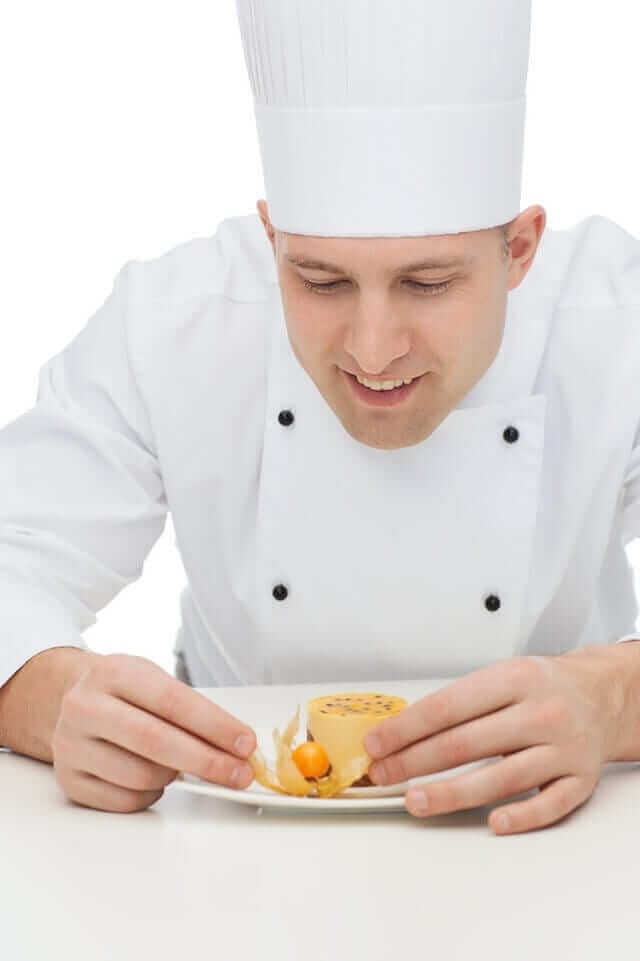
Becoming a pastry chef starts with wanting and deciding to focus on creating cakes, pies, sweets and other types of dessert. This profession is very exciting because it is not just all about culinary. It is also a form of art which allows the chef to assemble dessert and pastries that look like a true work of an artist. It involves not just skills in preparing food but also entail a lot of creativity.

What is the chef training for people who would like to become a pastry chef? There are several aspects which need to be focused on if a person would like to venture into this profession. Here is a quick guideline on how to reach one’s goal to become a pastry chef.

Education

Being a pastry chef also means getting the right kind of education which will enable one to qualify for the position. There are plenty of culinary schools and private institutions which offer baking and pastry making courses. Shorter programs for diploma and certificate will only last for a few months to a year. On the other hand, higher learning like getting a bachelor’s or master’s degree takes about two years or more.

Of course, the school to enroll into should have competitive and experienced teachers who will teach not just the theoretical aspect of baking and pastry making but also the practical applications. It is important to check out the facility too and see whether this will be a great training ground. Most important of all, the school should have proper accreditation. Graduating from a non-licensed school would only lead to trouble in the future because the employers would not recognize the degree, certificate or diploma.

Necessary Skills and Knowledge

Being a pastry chef requires a specific set of skills and knowledge. For individuals who are targeting for this position, here are some of the aspects which should be given much importance:

Food Chemistry—Even when creating pastries and dessert, a lot of perishable ingredients would be used. Aside from ensuring the everything is fresh, it is also important to know how long would the dessert last. This is important especially because some people would assume that pastries and desserts can be kept in the fridge for a few days.

Proper Measurement—Getting the exact measurement for both dry and wet ingredients is extremely important for baking. Hence, the pastry chef should be very familiar with this.

Creativity and Attention to Detail—Making pastries, cakes, pies and other types of desserts entail a lot of artistry. Hence, a pastry chef should always have new ideas on how to decorate and make their creations even more enticing. Aside from making them taste great, they should also be very aesthetically impressive. A pastry chef should also be very particular about small details. Little imperfections can easily turn off customers so the chef should be able to easily determine and resolve even the most miniscule mistake.

To become the head pastry chef, it usually takes apprenticeship and years of experience. Immersing one’s self into the craft will allow him/her to learn things that are not taught in books.

The Best Cooking Classes in Toronto

Finding cooking classes Toronto which will fit your preferences will not be such a daunting task. Toronto is a place which has rich resources when it comes to various types of food—from vegetable to seafood, spices and other ingredients. That is primarily the reason why this place has a rich food culture. Another significant characteristic about food and dining in Toronto is that people are so inclined to eating healthy.

The cooking classes Toronto are also reflective of the food culture in this place. Aside from focusing on local cuisines, numerous schools also offer courses which are centered on international cooking. There is no need to go elsewhere if a person would like to pursue culinary studies.

Here are some of the best schools for cooking classes Toronto:

photo credit: flickr.com/ilkerender

The Chef Upstairs: This is one of the more popular among the cooking classes Toronto. The main reason why they have won the hearts of many people is because they have a state-of-the-art coking studio, expert chefs and amazingly fun classes. The courses that they offer are not just limited to adults who are looking for a stress-busting hobby. There are also classes for young professionals who want further culinary knowledge so they can excel more in the field. Aside from that, this school also offers cooking classes for teens and kids.

George Brown College Center for Hospitality and Culinary Arts: The division which is specifically dedicated to culinary arts and hospitality learning offer an extensive program which will gear up individuals to becoming professionals in the field. The courses are designed to prepare students to eventually become chefs, hotel managers, kitchen staff and other types of occupation which demand culinary expertise. Because of the school’s good reputation and their accredited curriculum, graduates from their courses would be able to land on their dream job in no time.

Calphalon Culinary Center: This is the all-in-one place for culinary studies as well as other needs in the kitchen. Yes, this institution also offers various equipments for the kitchen but their expertise does not end there yet. They also have impressive cooking classes Toronto. The reason why a lot of people choose to enroll in this school is because their teachers are renowned chefs and the curriculum is based on extensive experience of top culinary professionals. The time and money spent on taking classes from this center is absolutely worth it.

Bonnie Gordon College of Confectionary Arts: For individuals who want to specialize in dessert making and baking, there is no other place to rely on than this school. Their years of experience when it comes to teaching pastry and dessert making can not be doubted. They have diploma and certificate courses, plus they also accept students who wish to pursue higher or continuing education. Enrolling in this school will unveil the secret of the pros when it comes to creating delectable pastries and desserts, which also look astounding.

These are the top places for cooking classes Toronto. Whether a student would like to specialize in a certain area of culinary arts or explore all aspects of this field, there surely is a program which will fulfill his/her desires.

Bachelors Culinary Arts Degree

Getting a culinary arts degree is the initial step in reaching one’s aspiration to become a culinary expert, a professional chef or a renowned hotelier. If you are also considering going into a culinary arts program and eventually earning your degree, you need to understand that there are also various areas which subdivide the culinary realm. When you get into the school, you will realize that you need to decide about specialization—whether it is pastry making, international cooking or others. You also have to know what you intend to become after finishing the degree. Do you want to work in hotels and restaurants, be an expert in creating intricate cakes and pastries or manage an establishment?

Different schools and institutions call their culinary arts degree by different names. Among the common ones include Bachelor of Arts in Restaurant or Hospitality Management, Baking and Pastry Arts, Culinary Management or Culinary Arts. Oftentimes, students are also given the chance to major in one specific culinary aspect like wine and liquor, dessert or pastry making, bread making and others.

Skills to Learn

photo credit: flickr.com/DC Central Kitchen

When looking for a culinary arts degree that you will enroll in, there are two major aspects that you need to consider. It is best to scrutinize the curriculum and check out both the theoretical and practical aspects of the program.

What exactly are these? The theoretical aspect should teach you about the chemistry of food, familiarize you with the origin and characteristics of various cuisines, inform you about pioneers of culinary arts and a whole lot of other basic information. This will be the foundation of your culinary knowledge. On the other hand, the practical aspect should improve your skills, allow you to try out various techniques and actually do a whole lot of kitchen work. Combining both the theoretical and practical side of culinary should give you a well-rounded education which will prepare you for your future profession in this field.

Different schools may slightly vary when it comes to the details in their curriculum. However, there are certain basic topics which are often included such as Food Preparation, Cost Management, Creating New Menu, Sanitation and Hygiene, Inventory Management, Catering Planning and these are just to mention a few.

Career After Graduation

What will happen to you after graduating from a culinary arts degree? Yes, this program is designed to enable individuals to become professional chefs one day. If you finish your degree from an accredited school, you may eventually start up as a kitchen chef, venture into catering or become a personal chef. Excellent performance makes it easy to be promoted as sous chef and even head chef in no time.

Aside from becoming a professional chef, culinary arts degree will also open up a lot of career opportunities. With extensive knowledge about cost control, inventory management, employee supervising and customer relation, it is also possible to eventually become a hotel or restaurant manager or get other administrative positions. If you want to explore new horizons on your own, you might want to endeavor into catering business, pastry making or cake designing and a whole lot of other great business opportunities.

Top Cooking Classes in Boston

Are you in search for the top cooking classes Boston? Then this is a task that is way too easy to accomplish. For people who have keen interest on cooking or to those who would like to venture into the culinary profession, there is an almost endless list of schools and institutions to choose from. All it takes is picking the one which will perfectly match one’s preferences.

Boston may be a place where the hustle and bustle goes on day and night but amidst the busy streets are schools which provide the best culinary programs. Hence, people who live in this place have plenty of options to choose from.

Here are some of the schools which have really good reputation when it comes to cooking classes Boston:

photo credit: flickr.com/jeffgunn

Helen’s Kitchen Cooking School: The cooking classes in Helen’s Kitchen are more intimate. Usually, each session which lasts about 3 to 4 hours only have eight students or less. This is a great pick for people who are looking for ways on how to improve their cooking skills due to recreational purposes. The crash course from this school will not only introduce students to new techniques on how to cook meat, seafood, Italian dishes and a lot of other cuisines, but will also expose them to basic kitchen skills like sanitation, equipment maintenance and others.

Sea to You Sushi: There are not too many schools which focus only on a single cuisine. For students who would like to dig deeper into Japanese cuisine preparation, this is the right school to enroll into. Sea to You Sushi is actually a restaurant which serves Japanese food. Today, they are also giving classes to interested students.

The Clarke Culinary Center: This is a place where techniques for various cuisines can be learned. For years, this institution has established a good reputation not just for excellent cooking classes Boston but also in providing fine-grade kitchen appliances.

The Cambridge School of Culinary Arts: For people who would like to take cooking classes Boston so they could eventually become a professional chef or hotelier, this school would be a great pick. There are professional courses and programs for those who would like to pursue higher culinary studies. To make things even better, this school also has short courses for recreational culinary.

Sam Feller Cooking: The great thing about enrolling in this school is that the curriculum is based on extensive personal experience from traveling in different parts of the world. Hence enrolling in this school means becoming more aware not just of local dishes but also of rare and unique recipes from distant places.

Art Epicure Cooking School: It can not be questioned why this school is among the best cooking classes in Boston. They offer different programs which are tailored into various specialties such as International Cooking, Vegetarian Cooking, American Cooking, Classic Cooking or Baking. Aside from their usual group classes, it is also possible to arrange for private classes. This is the place to achieve extensive knowledge when it comes to cooking, food science, kitchen etiquette and a whole lot more.

Executive chef standing confidently in a professional restaurant kitchen

What is an Executive Chef?

I was 12 the first time I took over a kitchen. Not a restaurant kitchen, just the one at home. But I remember the feeling of being in charge of a meal, making decisions about what goes in and when, and watching people eat something I made. That was over 30 years ago. The executive chef role is that same feeling, except the stakes are much higher and the kitchen is a lot bigger. An executive chef manages the menu, the team, the money, and the quality of every plate. If you have ever wondered what an executive chef does on a daily basis or how someone becomes an executive chef, this is the guide I wish existed when I was starting out. I wrote it because most of what you find online about the executive chef position reads like a job listing, and that does not tell the real story.

Executive chef standing confidently in a professional restaurant kitchen

What an Executive Chef Actually Does

The short answer is everything. The long answer takes a while. You might hear the role called head chef, chief chef, or chef de cuisine depending on the restaurant. In most places, these all refer to the same person.

Most people picture a chef standing at a stove, tasting sauces and calling out orders. That is maybe 30% of the job on a good day. The rest is management, logistics, and paperwork. I know that sounds less exciting, but it is the truth. An executive chef creates and updates the menu, which means developing recipes, testing them, adjusting for cost, and making sure the team can reproduce each dish consistently. They hire cooks, fire cooks when it is necessary, build schedules, run training, and deal with personality conflicts in a small hot room where everyone is moving fast and tensions run high.

Executive chef reviewing a restaurant menu in a busy professional kitchen

Then there is the money side. The executive chef manages food costs, negotiates with suppliers, tracks inventory, and figures out how to keep quality high without blowing the budget. I have spoken with restaurant owners who are surprised at how much of the role is financial. If you cannot read a P&L statement or understand food cost percentages, you will struggle in this position no matter how talented you are at cooking.

Food safety and sanitation are on the list too. Health inspections, proper storage, FIFO rotation, making sure everyone washes their hands. Not glamorous. But one bad health score can shut down a restaurant. The head chef is the last line of defense.

And then, yes, there is the actual cooking. Tasting food during service. Checking plate presentation. Jumping on the line when someone calls out sick or the kitchen gets slammed on a Saturday night. I have always believed that a chef who will not do the same work they assign to their team is not really leading. You have to be willing to get your hands dirty. That is not optional.

How the Title Works in Different Kitchens

In a standalone restaurant, executive chef and head chef usually refer to the same job. One person runs the show.

Larger operations are different. A hotel chain or restaurant group might separate the roles. The executive chef sits at the top and handles big picture decisions across multiple outlets. They design the menus, manage overall budgets, and oversee hiring. Below them, a head chef or chef de cuisine runs a specific kitchen day to day, making sure service goes smoothly and orders come out right.

Large hotel kitchen with multiple chef stations during active service

I have heard people argue about which title is more prestigious. Honestly, it does not matter much. What matters is the work. Someone who runs a busy 80 seat restaurant solo is doing just as much (and often more) than someone with the executive chef title at a corporate operation where the cooking is mostly delegated. Titles are useful for job listings, but the kitchen does not care what is on your business card.

Getting to the Top of the Kitchen

There is no single path. That is the honest answer. But there are patterns.

Most people who reach this position started young. Not always in a professional kitchen. Some started at home, like I did. Others got their first restaurant job washing dishes or doing prep work after school. The common thread is years. Lots of them. The typical timeline is somewhere around 7 to 10 years from entry level to executive chef. I know chefs who did it in 5 and others who took 15. It depends on where you work, how fast you learn, and if the right opportunities show up at the right time.

Education

Culinary school is not mandatory. I want to be clear about that. Some of the best chefs I know never went. They learned everything on the job, in busy kitchens, from people who were better than them. But a formal education does help. It gives you a foundation in technique, food science, nutrition, and kitchen management that would take years to piece together otherwise. If you are considering this route, these are some of the best culinary schools in America and they produce graduates who are genuinely prepared for professional kitchens. A bachelor’s degree in culinary arts opens more doors at the corporate level, though plenty of executive chefs hold associate degrees or certificates instead.

Culinary school students learning cooking techniques from an instructor

The real education happens in the kitchen. School gives you the theory. Work gives you the instincts.

Working Up Through the Ranks

Line cook. Lead cook. Sous chef. Then, if you are ready, executive chef. That is the traditional ladder. Each step teaches something the previous one could not.

As a line cook, you learn to move fast, stay organized, and execute recipes with consistency. You are focused on your station and nothing else. As a lead cook, you start thinking about the bigger picture. You manage a section and begin mentoring newer cooks. The sous chef position is where real leadership starts. You are running service, handling schedules, managing inventory, and training staff. It is basically the executive chef role with training wheels. Most of the chefs who struggle at the top are the ones who skipped or rushed through the sous chef years. That step matters.

If you are just starting out and wondering where to begin, becoming an apprentice chef is one of the most practical first moves. You learn by doing, which is how most successful cooks got their start.

Working in Different Kitchens

This is advice I wish someone had given me earlier. Do not stay in one kitchen for your entire career. Fine dining teaches precision. Casual restaurants teach speed. Hotels teach scale. Catering teaches logistics. Each type of kitchen builds a different muscle, and the best executive chefs are the ones who have trained all of them.

The Money

Executive chef salaries in the United States generally fall between $70,000 and $110,000 a year. That is a wide range, and where you land depends on a lot of things. A head chef at a small independent restaurant in a mid size city might earn $55,000 to $65,000. A chef running multiple outlets for a luxury resort or hotel group can earn $120,000 to $150,000 or more.

Chef coat and notebook on a table representing executive chef salary and career planning

New York, San Francisco, Los Angeles, and Miami tend to pay more. Cost of living is higher in those cities, so the salary bump does not always translate to more money in your pocket. I have known chefs in smaller markets who live more comfortably than chefs making 30% more in a major city. It is worth thinking about.

Beyond salary, many chefs get bonuses, health benefits, and sometimes profit sharing or ownership stakes. A chef who co-owns the restaurant ties their income to how well the business does. Great years mean great money. Bad years mean you might be the last person to get paid. You can learn more about pay at different levels in this overview of average chef salaries.

The Part Nobody Talks About

The hours. Let me just say it plainly. This is not a 9 to 5 career. It is not even close. Most executive chefs work 50 to 60 hours a week. During holidays, special events, or if you are short staffed, it can be more. You will miss family dinners. Birthdays. Weekends. That is the trade off.

It is physically demanding too. Standing all day in a hot kitchen. Moving fast for 10 or 12 hours straight. Burns, cuts, sore feet, aching backs. The kitchen is not kind to the body. I have been cooking for over three decades and I feel it. The younger cooks bounce back quickly. Give it 20 years and you will understand what I mean.

Chef sitting alone in an empty kitchen after a long service shift

I am not saying this to discourage anyone. I am saying it because you need to go in with open eyes. If cooking is just a job to you, this career will wear you down. If cooking is something you genuinely love, the long hours feel different. Still tiring. But different.

Where Executive Chefs Work

Restaurants are the obvious answer, but the role exists in a lot of places people do not think about. Hotels, resorts, cruise ships, corporate dining halls, hospitals, universities, country clubs, and private households all hire executive chefs. Some chefs oversee food programs at retirement communities. Others run kitchens for tech company campuses. The White House has one. The options are broader than most people realize.

Each setting comes with its own challenges. A restaurant chef has a fixed menu and regular service. A hotel chef might juggle a fine dining outlet, a casual cafe, room service, and banquets all at once. A catering chef works different events every week. The variety is one of the best things about the profession. If you get restless, there is always somewhere new to go.

What Happens After

Former executive chef working at a desk on a cookbook and food business

Not every executive chef stays in the position forever. Some open their own restaurants. Others move into food and beverage director roles. Consulting, recipe development, food writing, teaching, content creation. The leadership and business skills you build as a head chef transfer to a lot of other paths. Understanding culinary arts at a deep level opens doors that go well beyond the kitchen. I built Panlasang Pinoy after years of cooking experience, and that same foundation is what makes the content work. The habits that make a great chef are the same habits that make a great entrepreneur, teacher, or creative professional.

More Culinary Career Resources

  • What is a Sous Chef? – The second in command role and what it involves.
  • How to Become an Apprentice Chef – A practical starting point for beginners.
  • How to Become the Chef de Cuisine – The path to leading a full kitchen brigade.
  • Sous Chef Training Overview – What training looks like for the second in command.
  • How to Become a Personal Chef – An alternative career for chefs who prefer working with individual clients.
  • How to Become a Saucier Chef – A specialized role that builds toward senior kitchen positions.

Frequently Asked Questions

What is the difference between an executive chef and a regular chef?

A regular chef works one station. Grill, sauté, pastry, whatever they are assigned. The executive chef runs the entire kitchen. Menu, staff, budget, quality, all of it. Think of it like the difference between a player on the team and the head coach.

Do you need culinary school?

You do not need it, but it helps. A culinary degree gives you a foundation that would take years to build on your own. Most high end employers prefer candidates who have formal training, especially for senior positions. That said, I know plenty of executive chefs who never stepped foot in a classroom. Kitchen experience counts for a lot.

How long until you can become an executive chef?

Plan on 7 to 10 years of working in professional kitchens. Some people get there sooner. It depends on the quality of the kitchens you work in, how fast you pick up leadership skills, and honestly, a bit of luck and timing. The position opens up when someone leaves, retires, or when a new restaurant needs a chef. Being ready when that moment comes is the real challenge.

How much do they make?

Between $70,000 and $110,000 a year is the typical range in the US. Luxury hotels and fine dining can push past $150,000. Small independent restaurants might pay less. A lot depends on location, experience, and how much revenue the restaurant generates.

Is it worth the stress?

Depends on who you ask. I think it is. The hours are brutal, the pressure is constant, and you will sacrifice a lot of personal time. But if you love cooking and you love leading people, there is nothing else like it. You create something new every day and you feed people. That matters to me. If it matters enough to you is something only you can answer.

The executive chef position is not a title you apply for fresh out of school. It is the result of years spent cooking, learning, failing sometimes, and getting back at it. Every kitchen teaches you something. Every chef you work under shows you what to do or what not to do. Pay attention to both. Start where you are, cook as much as you can, and be honest about what you still need to learn. That is how it works. It has always been that way.

How to Choose a Pastry Chef School

How to Choose a Pastry Chef School? The culinary world is composed of various areas of expertise too and pastry making is one of those aspects. Are you inclined to focus on creating delightful pastries and mouth-watering sweets? Whether you want to open a small shop for pastries, be employed by the most renowned bakeshops or make desserts for the family, you would need to enroll in a pastry school.

How to Choose a Pastry Chef School

Why do you have to enroll in a pastry school if recipes are easily available? It is true that there are so many recipes which you can just follow when making pastries. However, these would not really teach you about expert techniques, important skills and proper procedures. Those are the things which you can acquire when you enroll in classes.

Since there are too many options when it comes to pastry school, how will you be able to trim down your options? Here are some tips which would help you in weeding out other choices so you can find the school that is best for you.

  • Know the Difference Among Schools—Schools are categorized into culinary institutes, universities or cooking classes. If you are aiming to gain credibility which will make you qualified for employment, then you should consider enrolling in a university or culinary institute. These are the ones that are easily recognized by potential employers. On the other hand, if you are looking for a pastry school for recreation, the personal and short-course classes from independent chefs and cooking schools will be perfect. photo credit: flickr.com/Sabrina Eras
  • Ensure Accreditation—Whether you want a school which will gear you up for the professional world or one that will satisfy your interest for recreational baking, it is important to ensure that the pastry school is accredited and licensed. That way, there will be no questions or doubts about your diploma, degree or certification in the future.
  • Compare Student to Faculty Ratio—Some schools give one-on-one pastry-making classes to ensure that the teacher would be able to train the student well. On the other hand, some schools handle classes with up to fifteen students. It is important to decide whether you want a more personalized program or one that allows you to interact with other students.
  • Cross-Check Curriculum—It is alright to request for a copy of the curriculum from several schools. Pastry making is more than just mixing and combining ingredients. There are other important aspects like kitchen sanitation, equipment maintenance, decorating and others. A closer look into the curriculum will reveal which pastry school will fit your interests.
  • Evaluate the Costs—The amount of tuition fee does not determine the quality of education that a pastry school can provide. Doing some simple mathematics before enrolling is important because this will reveal which school is the most cost efficient.

These are the primary aspects hat have to be checked when it comes to choosing the pastry school to enroll into. Enrolling in the programs which are related to pastry making, bread making and dessert creation will enable you to find a stress-busting hobby or a lucrative business.

What is a Spatula?

If people are asked if they have a spatula in their kitchen, most are so quick to answer yes. But really, what is a spatula? Are you sure that you have one at home?

A spatula is a very important tool in the kitchen, whether it is at home or in commercial food establishments. Some people may not realize its importance right away but it is a handy tool that can resolve a lot of kitchen issues.

A spatula is sometimes called as a palette knife too. Contrary to other types of knives, this does not have a sharp edge or a blade because it is not designed for cutting or chopping. It is flat, flexible and wide. The tip is also rounded so it could not poke or scratch.

Spatula Materials

The main reason why some people are confused when identifying a spatula is because there is a myriad of materials that are used in making this kitchen tool. Metal spatulas are the more traditional ones. These are still recommended these days because it is highly durable. Those which are made of thin sheet of metal are flexible enough but not flimsy. To make them easy to use, metal spatulas also have heat-proof handles.

Another traditional material for spatula is wood. Some people prefer to use this because it does not take a lot of effort to lift them and it would not conduct heat.

There are also plastic spatulas these days. These are excellent because they are lightweight. However, it is not recommended for high-heat cooking. Sometimes, plastic spatulaspatulas have the tendency to melt if it is used for stirring hot food.

These days, silicone and rubber spatulas are becoming more and more popular. These are the ones which are specifically designed not to scratch pots and pans, especially the ones that are made of non-stick surface or Teflon. Silicon and rubber spatulas are great too since the material would not melt even if it touches extremely hot surface.

Spatula Designs and Uses

The shapes of spatulas vary depending on its use. Some are square or rectangular in shape while others are elongated. Usually, spatulas are also perforated, especially the ones which are used for cooking. That way, other wet ingredients or oil would not get stuck on its surface. Spatulas with holes are great for frying

The spatulas which do not have holes are often used for mixing and folding ingredients because it is more efficient. These are perfect especially for baking because the ingredients are blended much easier. When applying icing on a cake, it is ideal to use a spatula without holes too.

Buying a Spatula

It is not a bad thing to have several types of spatula in your kitchen. After all, the different designs have various uses. When picking the right one, you should consider how you intend to use it. Is it for baking, cooking or flipping pancakes? Consider the type of bowls, pots and pans that you have too because some require a specific type of mixing tool so that it would not be damaged. If you are opting for the ones with slanted tips and you are left handed, better check if the slant works for you too.

  • Previous
  • Page 1
  • Interim pages omitted …
  • Page 15
  • Page 16
  • Page 17
  • Page 18
  • Page 19
  • Interim pages omitted …
  • Page 27
  • Next

sidebar

Welcome!

As a huge fan of Filipino food, it is my goal to teach people how to cook it using the simplest way possible. Prepare your taste buds for an ultimate showdown of delectable Filipino dishes! Read more…

Facebook
Instagram
Pinterest
YouTube

Reader Favorites

Chicken Adobo Panlasang Pinoy

Filipino Chicken Adobo Recipe

Leche Flan Recipe

kare kare beef tripe

Kare-Kare Recipe (Beef Tripe)

Pork Sinigang

Sinigang

Receive new recipes by email!


Seasonal

Beef Morcon Recipe

Arroz Valenciana

lechon belly roll recipe

Lechon Belly Roll

Christmas Macaroni Salad

How to Make Macaroni Salad for the Holidays

As Seen In:

good housekeeping
parents
serious eats
livestrong
kitchn
sheknows
Facebook
Instagram
Pinterest
YouTube
About
Meet Vanjo
New? Start Here
Browse Recipes
Explore
Ingredient 101
Philippines
Cooking Schools
Privacy Policy
Disclaimers
Contact
© 2026 Panlasang Pinoy
Site Credits
Designed by Melissa Rose Design Developed by Once Coupled
Back to Top
Back to Top