Basil Pesto
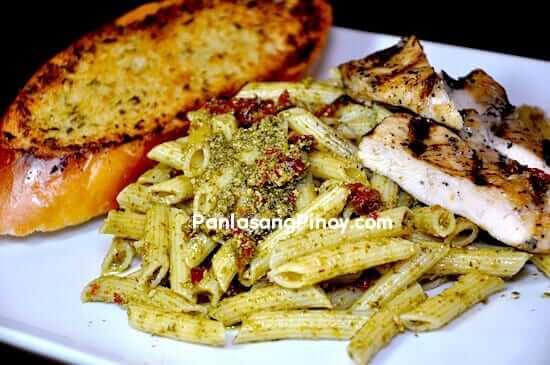
Basil Pesto is a fresh, uncooked basil sauce that I make in a mortar and pestle when I have time to spare, and in a food processor when I do not. The hand ground batch comes out silkier and I like the few minutes of grinding, though the machine gets me close enough on a busy day. Either way, the basil needs to be completely dry before it goes in. I spoon this sauce over pasta and baked chicken, and sometimes over warm garlic bread while the bread is still hot from the oven.
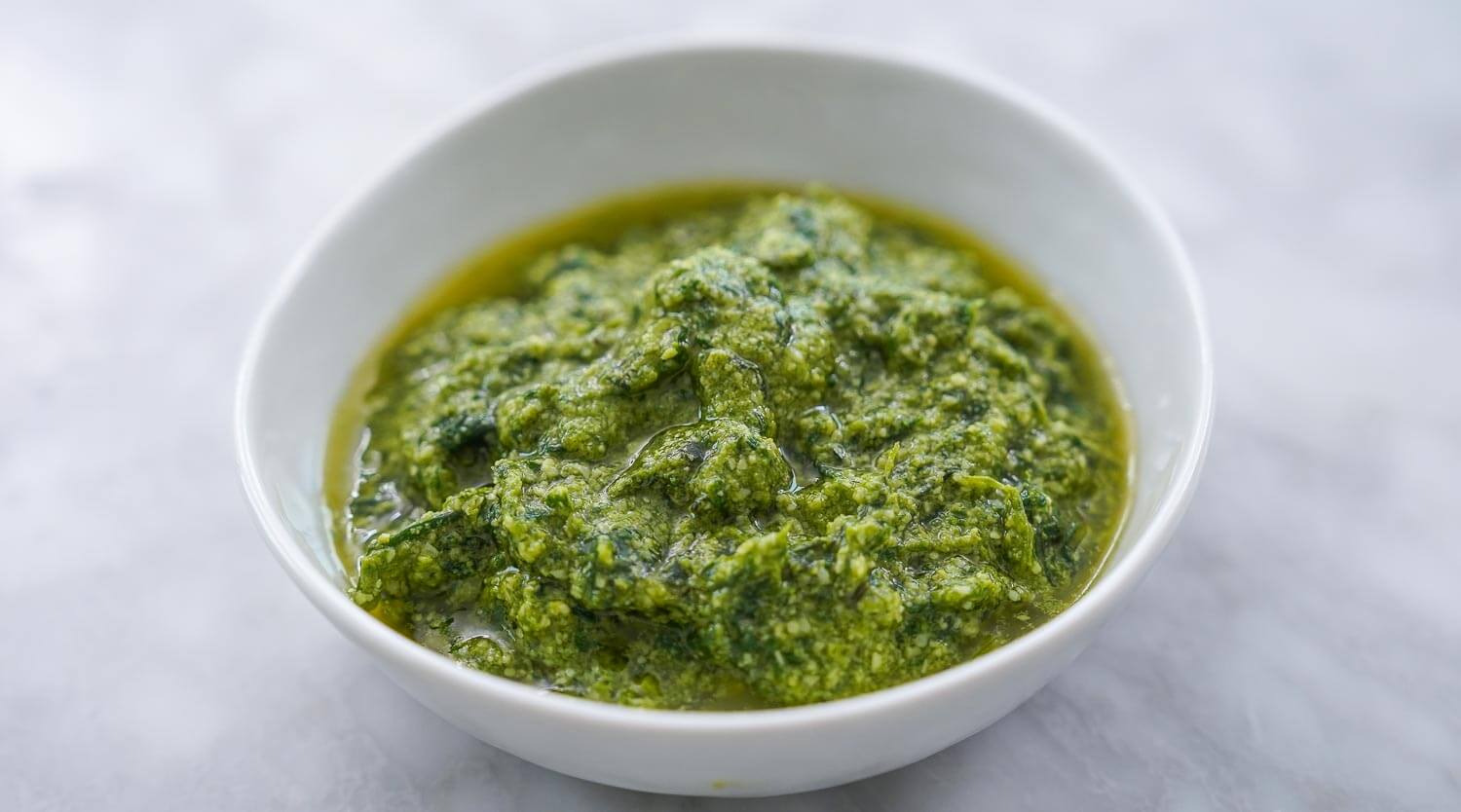
My version uses Parmigiano Reggiano on its own. Plenty of recipes mix in Pecorino Romano for a sharper, saltier bite. I leave it out because I want to taste more of the basil than the cheese. The sauce comes out milder that way, which works well with fish and grilled chicken as much as it does with pasta. You can also try my tuyo pesto spaghetti pasta for a Filipino take on pesto.
Drying the basil is the step I do not rush. Water left on the leaves thins the finished pesto and turns it dark sooner, so I rinse the leaves gently, spin them dry, and let them sit on a clean towel while I set up the mortar.
What is Basil Pesto?
Traditional basil pesto is made by grinding fresh basil leaves with garlic, pine nuts, hard cheese, salt, and olive oil into a thick green paste. It comes from Genoa in the Liguria region of northern Italy, where it is known as pesto alla genovese. The name traces back to pestare, which means to pound or crush, and that is what a mortar and pestle does to the leaves.
Nothing in the sauce is cooked, so you can clearly taste the basil, garlic, cheese, and olive oil. Chimichurri is the closest thing to it in my kitchen, another raw herb sauce, though chimichurri leans on parsley and vinegar and stays loose enough to spoon over grilled steak. Pesto is thicker and richer, and it clings to pasta instead of running off it.
I usually see pesto served with pasta in Filipino homes, especially at parties and Sunday lunches. Basil grows well in our weather and supermarket basil is easy enough to find, so a batch of homemade basil pesto in the freezer is a practical thing to keep. Mine goes on weeknight pasta and on whatever protein is already in the oven.
Ingredients
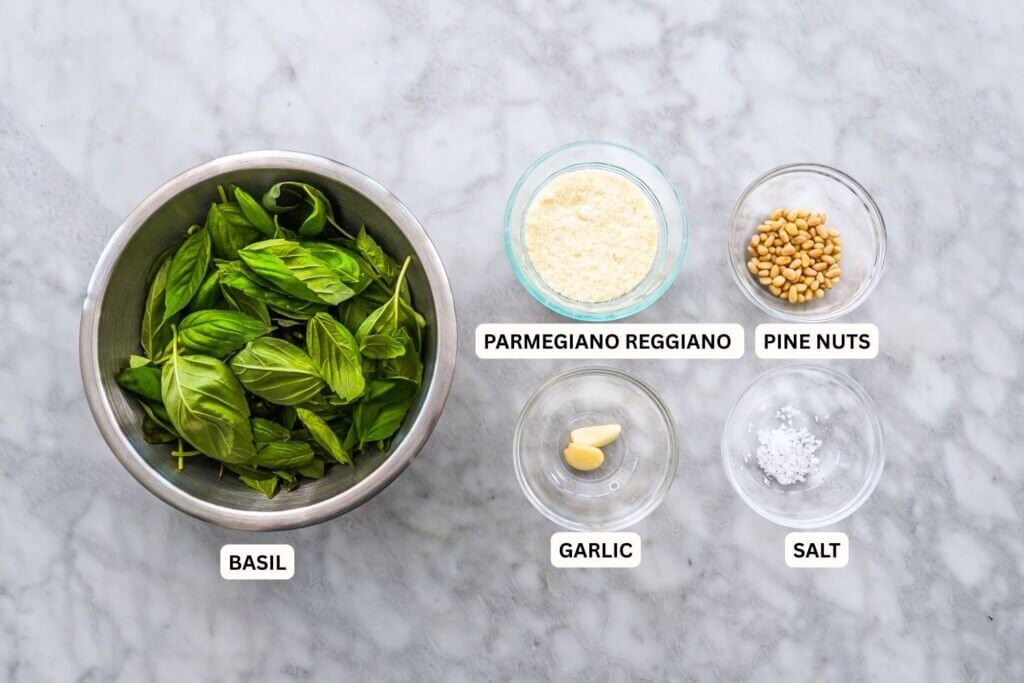
- Fresh basil leaves – Packed into the measuring cup, gently pressed, stems left out. Smell the bunch before you start. Good basil smells bright and sweet.
- Parmigiano Reggiano – Grate it finely from a block. Pre grated cheese in a tub is coated to keep it from clumping, and that coating stops it from melting into the sauce.
- Garlic – Two small to medium cloves are enough. Raw garlic sharpens as the pesto sits, so a big clove that tastes fine today can take over the sauce by tomorrow.
- Pine nuts – Raw, not toasted. Out of pine nuts? See the substitutions below.
- Coarse sea salt – The coarse grains give the pestle something to grind against, which is how the garlic breaks down into a paste instead of staying in bits.
- Extra virgin olive oil – Use a bottle you would put on bread. The oil goes in raw and you will taste it.
Pine nuts are the expensive part of this recipe. I keep them raw because I want the basil to come through more than the nuts. Toasting makes the flavor stronger and slightly sweeter, so toast only if you want the nuts noticeable. Either way, store the bag in the freezer. Pine nuts have a high oil content and can turn rancid faster than most nuts.
Equipment
- Mortar and pestle – The traditional tool, and the one that gives the smoothest texture because the leaves are crushed rather than cut. A heavy stone mortar with a rough inside surface works best.
- Food processor – The faster route, and what I use when I do not have time for the mortar and pestle. A small bowl works better than a large one here because the basil keeps falling back toward the blade.
- Salad spinner – What I use to dry the basil. Paper towels and a little patience also do the job.
Vanjo’s Tips
- Pick through supermarket basil before anything else. I am usually working with a plastic clamshell rather than a garden, and that is fine. Take out the stems, the flowering tops, the blackened leaves, and anything that feels slimy.
- Chill the food processor bowl and blade first if you have the time. The bowl and blade warm up as they run, and that heat can dull the color of the basil.
- Use 1 1/2 tablespoons of pine nuts for a mild batch and 2 tablespoons if you want to taste them. I stay at the lower amount because I would rather taste basil first.
- Add a little extra basil rather than a little less. Pesto can take it. If you end up with only about 2 cups, cut back the cheese, oil, garlic, and salt a little too.
- Grate the cheese finer than feels necessary. Coarse shreds sit in the sauce as separate flakes instead of disappearing into it, and you notice it right away on pasta.
- Make the full batch even when you only need half. Half goes on pasta the same day and the rest goes straight into the freezer, which is the whole reason I bother with a big bunch of basil.
How to Make Basil Pesto
Start with the garlic and salt, then work up to the pine nuts and the basil. The cheese and olive oil go in last, after the basil mixture is transferred to a bowl.
Prepare the Basil
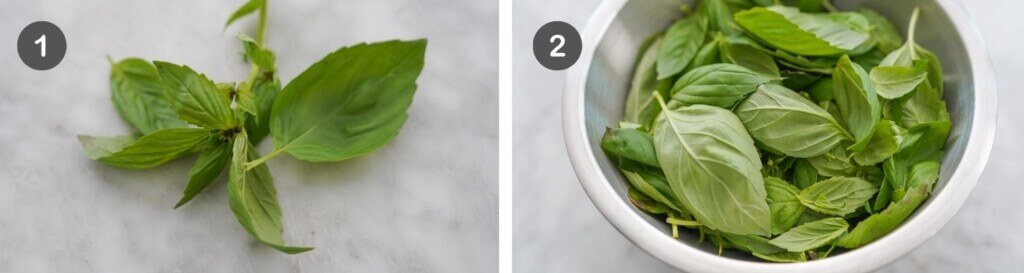
- Pick the basil leaves from the stems. Remove the flowering tops, bruised leaves, blackened leaves, and anything that looks slimy.
- Rinse the basil gently with cold water, then dry it very well.
Grind the Garlic and Pine Nuts
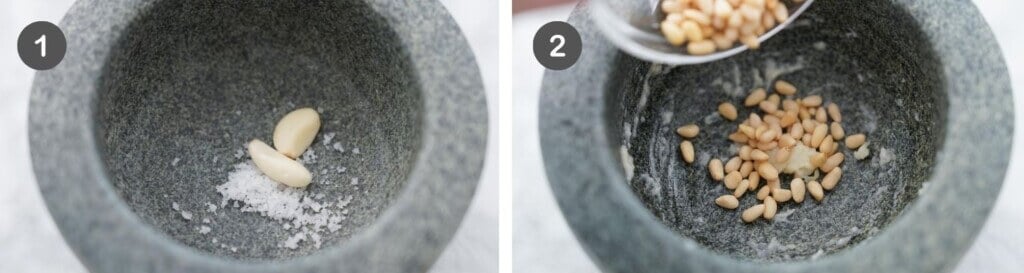
- Place the garlic and coarse sea salt in a mortar. Grind them together until the garlic turns into a paste.
- Add the pine nuts and grind them with the garlic until the mixture starts to look creamy.
Grinding the garlic and pine nuts first gives you a smooth base before the basil goes in. A food processor needs the same head start, so pulse the garlic, salt, and pine nuts together first.
Work in the Basil
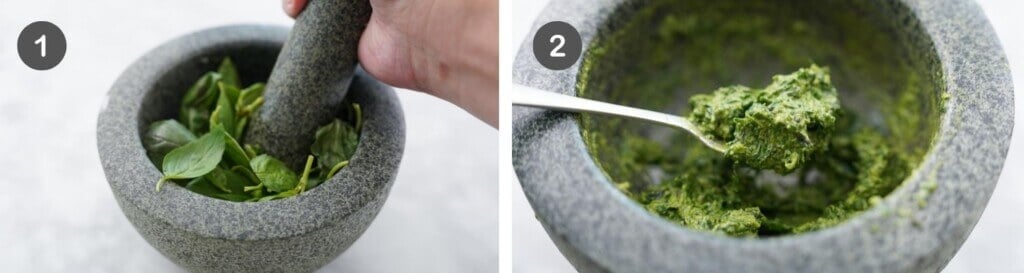
- Add the basil a handful at a time, using a gentle circular motion with the pestle. Do not pound it.
- Stop once the basil turns into a paste.
In a food processor, pulse in short bursts and scrape the sides as needed. Letting the machine run turns the pesto dark and gives it a slightly bitter edge.
Finish the Sauce
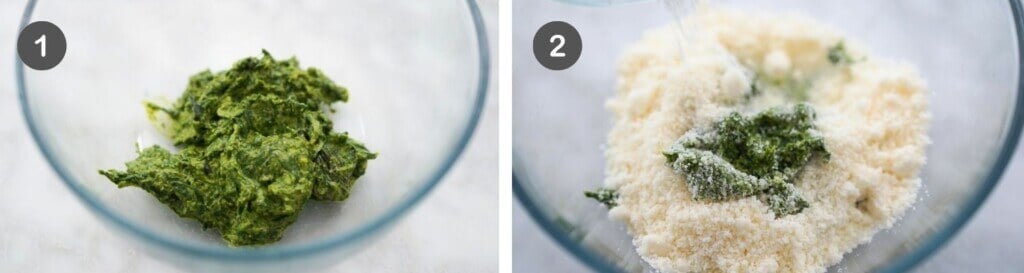
- Transfer the basil mixture to a bowl.
- Stir in the Parmigiano Reggiano.
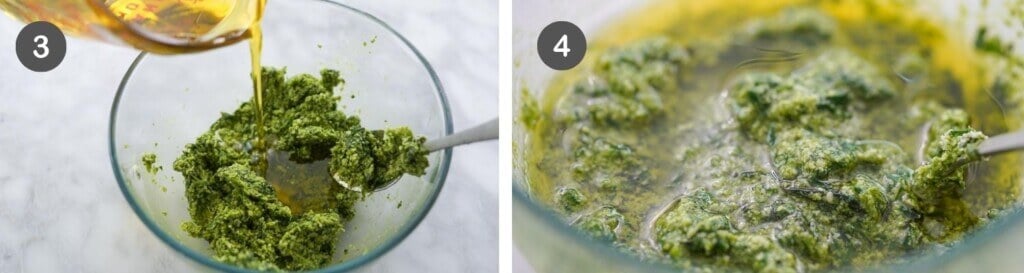
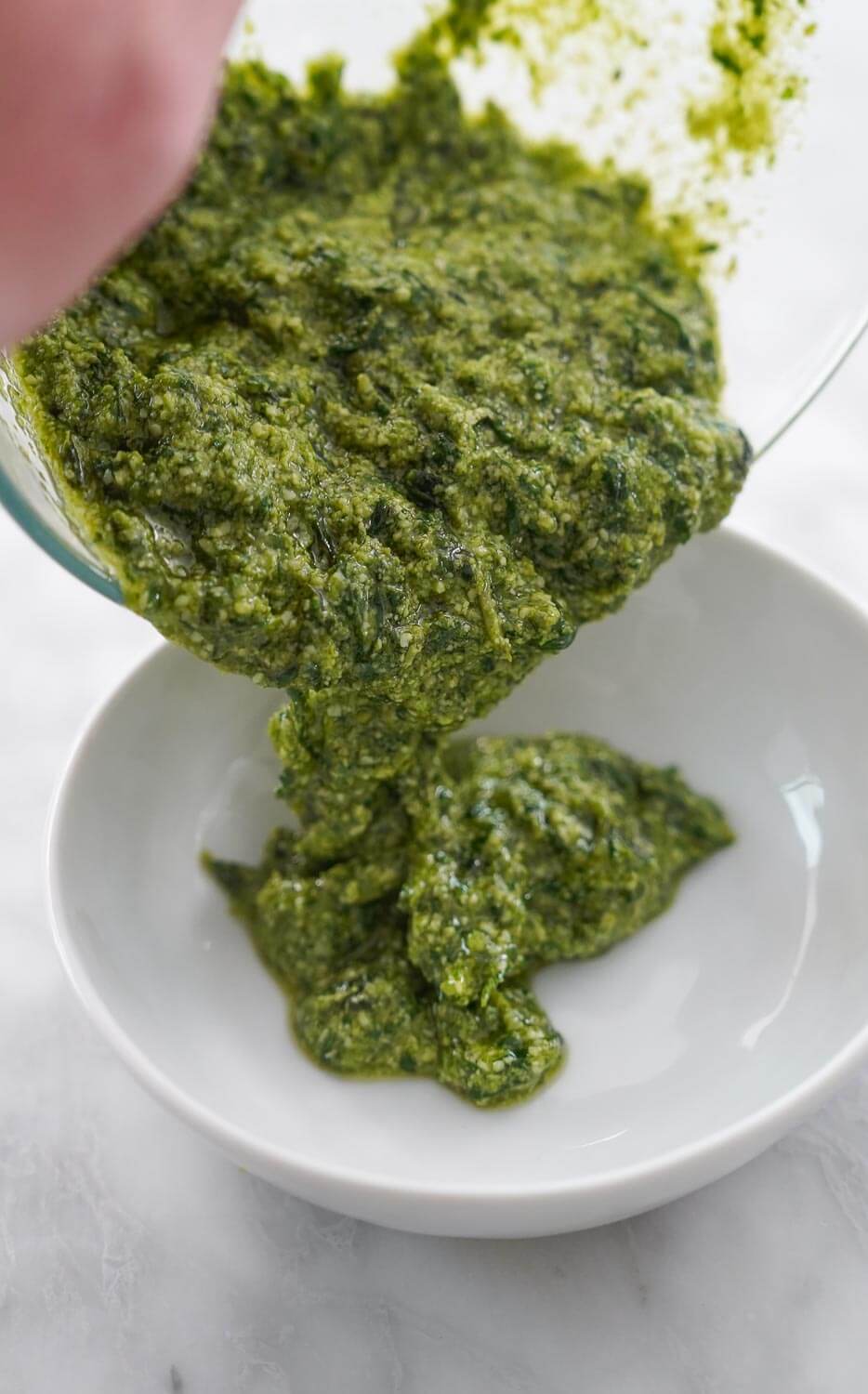
- Slowly pour in the olive oil while stirring.
- Taste it before adding more salt, because the cheese is already salty.
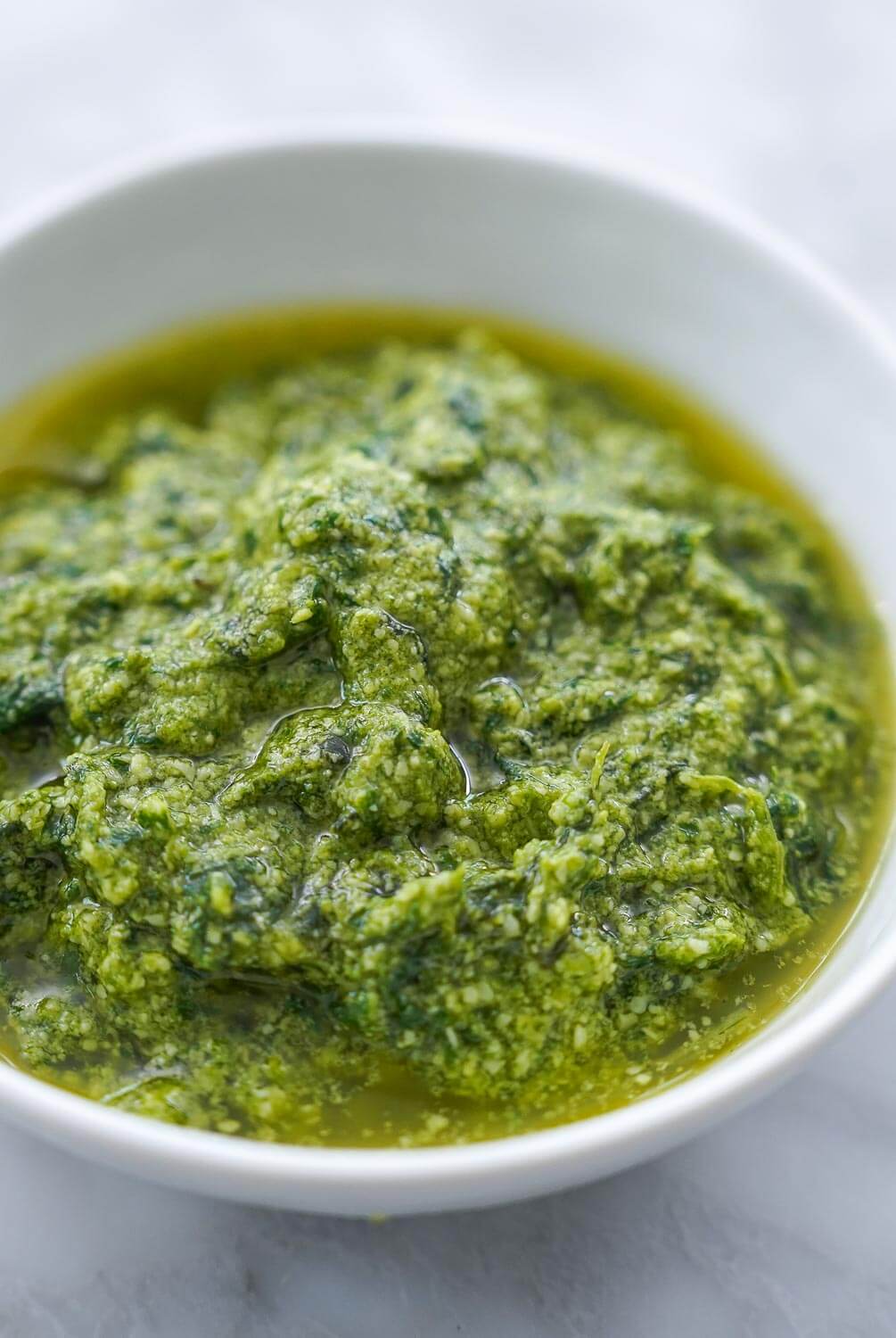
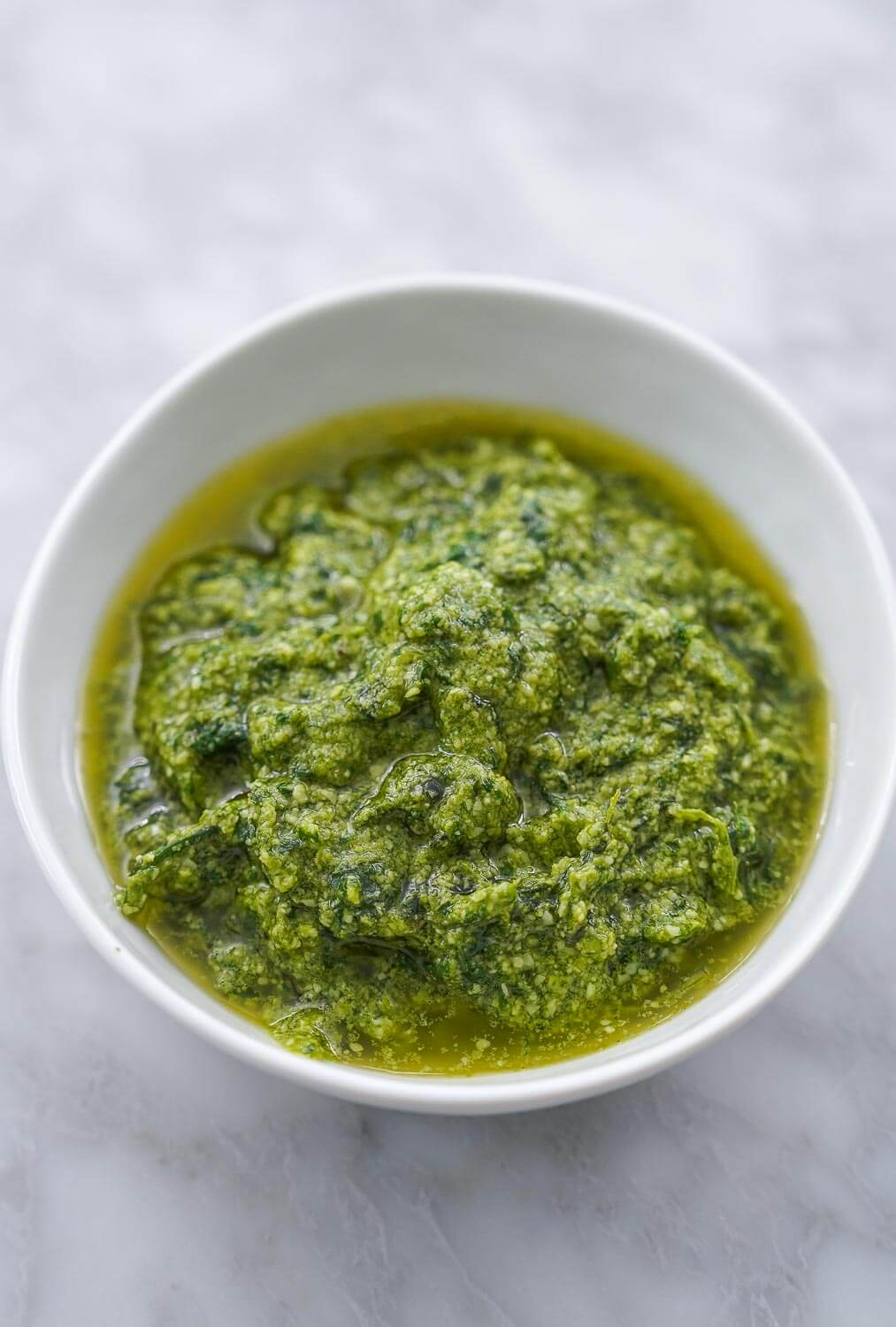
The pesto should look glossy and thick, and it should spoon out easily. If it looks stiff, another splash of oil loosens it without watering down the flavor.
What to Serve with Basil Pesto
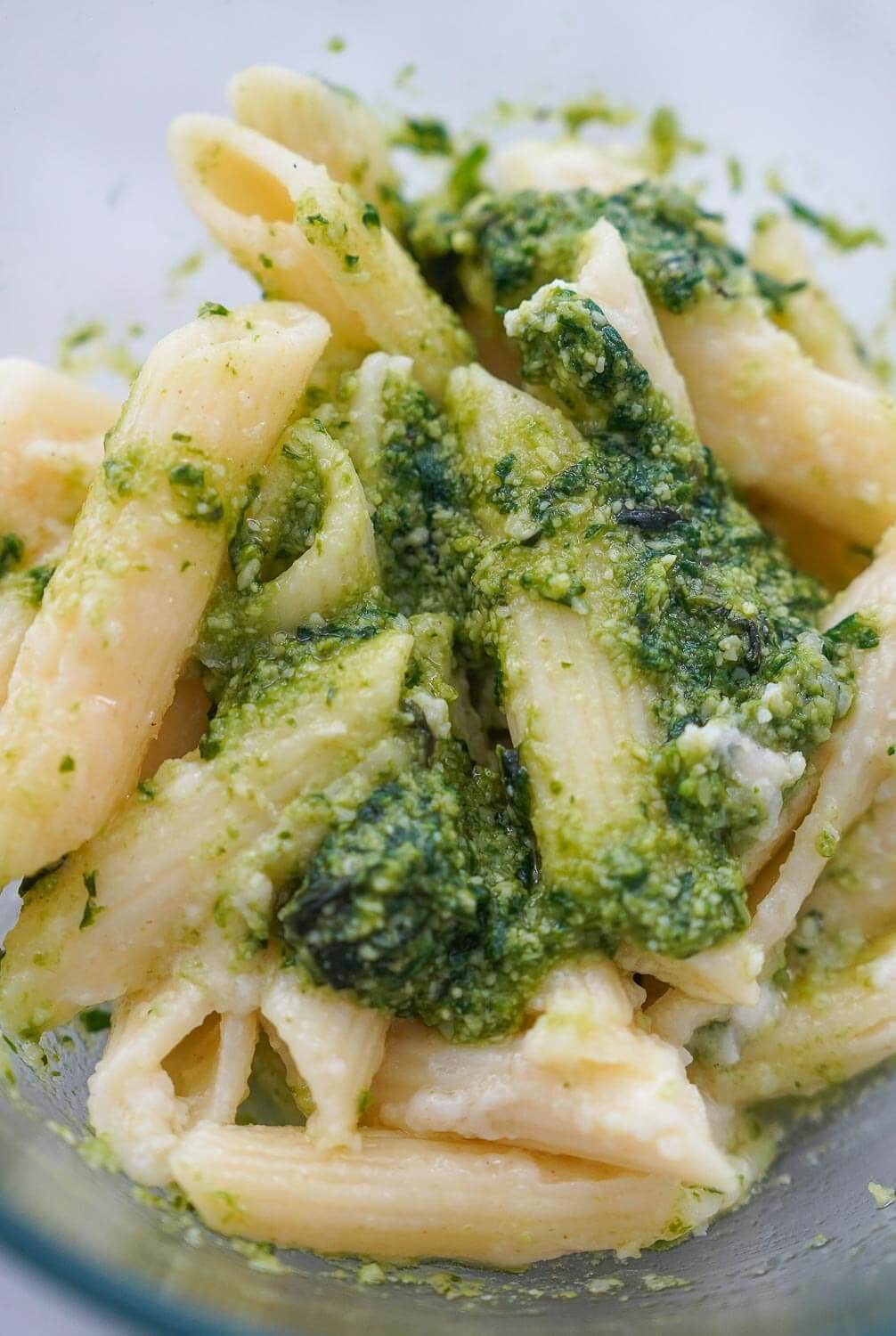
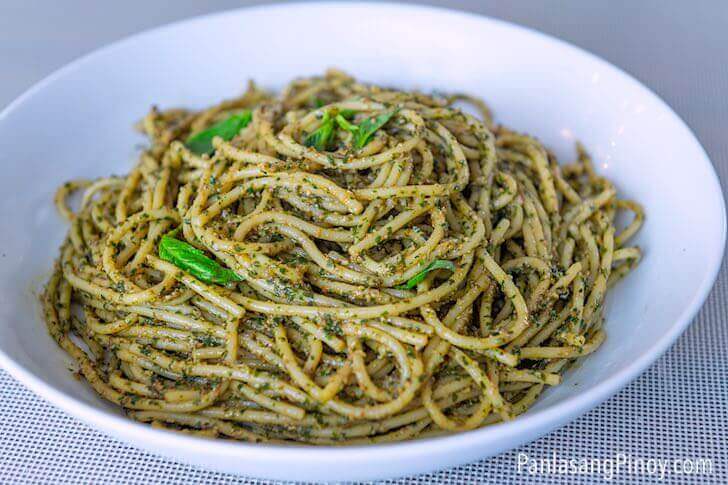
- Hot pasta – Toss the pesto with the noodles off the heat and loosen it with a few spoonfuls of the water you cooked the pasta in.
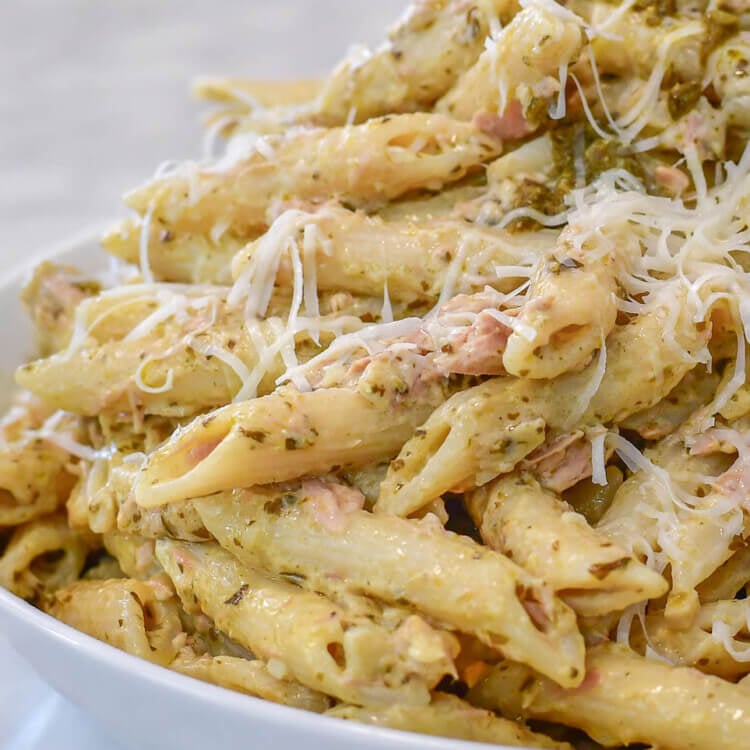
- Creamy Chicken Pesto Pasta – I use this pesto when I want to make a richer pasta.
- Baked chicken – Spoon it over the breast after the chicken comes out of the oven, once it has rested for a few minutes.
- Baked fish – Mild white fish takes the sauce well, especially with the milder Parmigiano-only version.
- Boiled potatoes and green beans – The Ligurian way of eating basil pesto. It sounds simple, but I think it is worth trying.
Storage and Leftovers
Fresh basil pesto is at its best soon after you make it, but you can keep the rest for later.
- Refrigerator – Keep it in an airtight container for up to 3 days. I press plastic wrap directly against the surface before covering it to help keep the basil from darkening. Take out only what you need and let it sit for a few minutes before using so the olive oil can loosen up.
- Freezer – Pesto freezes very well. I like to freeze it in ice cube trays, then transfer the frozen cubes to a freezer bag so I can take out only what I need. Three months is a good practical window for keeping the flavor fresh, although extension guidance allows considerably longer freezer storage.
- Reheating – I do not cook pesto on its own because I want to keep the fresh basil flavor. For pasta, stir refrigerated pesto into the hot noodles off the heat. Frozen cubes can be thawed in the refrigerator first, or stirred into hot pasta until they loosen, adding a little pasta water if needed.
More Sauce and Pasta Recipes
- Homemade Marinara Sauce – A homemade tomato sauce to keep in the freezer alongside your pesto.
- Creamy Tuyo Pesto – Salted dried fish flakes and cream in the same bowl, richer than the plain tuyo version.
- Fresh Basil and Sun Dried Tomato Spaghetti Pasta – This uses whole basil leaves instead of pesto, along with sun dried tomatoes.
- Tuna Pesto Pasta – Canned tuna and all purpose cream stirred through pesto, using pantry ingredients most Filipino kitchens already have.
- Butter Garlic Shrimp Pasta – Shrimp in a butter and tomato sauce, finished with fresh basil at the end of cooking.
- Basil Beef – A stir fry that uses basil by the handful, for the days you bought too much of it.
Substitutions
- Pine nuts – Cashews or blanched almonds at the same 1 1/2 tablespoons. Walnuts also work, though they carry a slight bitterness, so start with 1 tablespoon.
- Parmigiano Reggiano – Grana Padano works and costs less. For a sharper sauce, swap 2 tablespoons of the Parmigiano for Pecorino Romano and hold back on the salt.
- Extra virgin olive oil – Sunflower oil also works. It tastes plainer than olive oil, which some people prefer.
- Coarse sea salt – Kosher salt is a straight swap. With fine table salt, start with half the amount and adjust after the cheese goes in.
- Fresh basil – Replace up to 1 cup of the basil with baby spinach when basil is expensive. Dried basil does not work here at all.
Frequently Asked Questions
What is a good alternative to pine nuts?
Cashews are my first pick. They grind into the same creamy base and they cost far less, which matters when pine nuts are priced the way they are. Walnuts are the more common swap and they work, though the slight bitterness shows up in a mild sauce like this one. Sunflower seeds also work if you need to avoid tree nuts.
Why does my pesto turn dark?
Basil pesto darkens because of bruised leaves and air. Cut leaves darken the way a cut apple does, and a blade running for a full minute does a lot of bruising in a short time. Wet leaves speed it up further. Pulse instead of running the machine, and once the pesto is in a container, press plastic wrap onto the surface so no air sits on top of it.
How do I measure packed basil leaves?
Press the leaves gently into the measuring cup so they settle. Not too loose, and not crushed either. Only leaves go in the cup, never the stems.
What does basil pesto taste like?
You taste the basil first, followed by the pine nuts, cheese, and raw garlic. A batch made with Parmigiano Reggiano alone is milder. Pecorino makes it saltier and sharper.
I usually use half of the pesto with pasta on the same day and freeze the rest in small portions for later. Add it at the end, off the heat, whether you are using it with hot pasta, baked fish, or soup. Any little bit left over usually ends up in a sandwich the next day. Share and enjoy!
Did you make this? If you snap a photo, please be sure tag us on Instagram at @panlasangpinoy or hashtag #panlasangpinoy so we can see your creations!
Basil Pesto
Ingredients
- 2 1/2 cups fresh basil leaves packed, stems removed
- 10 tablespoons Parmigiano Reggiano finely grated; 1/2 cup plus 2 tablespoons
- 2 cloves garlic small to medium, peeled
- 1 1/2 tablespoons raw pine nuts
- 3/4 teaspoon coarse sea salt
- 10 tablespoons extra virgin olive oil
Equipment
- 1 Mortar and Pestle The primary method here. Marble holds the cold and gives the pestle something to grind against.
- 1 Salad spinner Dries the basil fully so the pesto does not turn watery.
- 1 Food processor (optional) The alternative to the mortar. Chill the bowl and blade first if you have time.
- 1 Ice cube tray For freezing the half you are not using right away.
Instructions
- Pick the basil leaves from the stems. Remove the flowering tops, bruised leaves, blackened leaves, and anything that looks slimy. Rinse the basil gently with cold water, then dry it very well. I use a salad spinner for this. Wet basil waters down the pesto and makes it darken faster.2 1/2 cups fresh basil leaves
- Place the garlic and coarse sea salt in a mortar. Grind them together until the garlic turns into a paste. The salt helps break down the garlic as you grind. A food processor also works, but chill the bowl and blade first if you have time.2 cloves garlic, 3/4 teaspoon coarse sea salt
- Add the pine nuts. Grind them with the garlic until the mixture starts to look creamy. I keep the pine nuts raw for this recipe because they give the pesto a mild buttery taste.1 1/2 tablespoons raw pine nuts
- Add the basil a handful at a time. Use a gentle circular motion if you are working with a mortar, and do not pound it. If you are using a food processor, pulse in short bursts and scrape the sides as needed. Stop once the basil turns into a paste. Running it too long turns the pesto dark and makes it taste a little bitter.2 1/2 cups fresh basil leaves
- Transfer the basil mixture to a bowl. Stir in the Parmigiano Reggiano.10 tablespoons Parmigiano Reggiano
- Slowly pour in the olive oil while stirring. The pesto should look glossy and thick, and it should spoon easily. Taste it before adding more salt because the cheese is already salty.10 tablespoons extra virgin olive oil
- Use half of the pesto for pasta and freeze the rest. Share and enjoy!
April says
What is a good alternative to pine nuts?
Anne says
Hi Vanjo, how do you measure the basil leaves? Is it loosely packed on the measuring cup?
Vanjo Merano says
Hi Anne, yes that is correct. Not too loose though