Sipo Eggs Recipe
I first had Sipo Egg at a town fiesta in Pampanga when I was still in elementary school. My parents took me there, and it was served alongside bringhe, tidtad, and asadong matua. Seeing all those dishes together was exciting, especially at that age. But Sipo Egg stayed in my memory. The quail eggs, shrimp, and colorful vegetables covered in creamy sauce made it look right at home on a fiesta table.
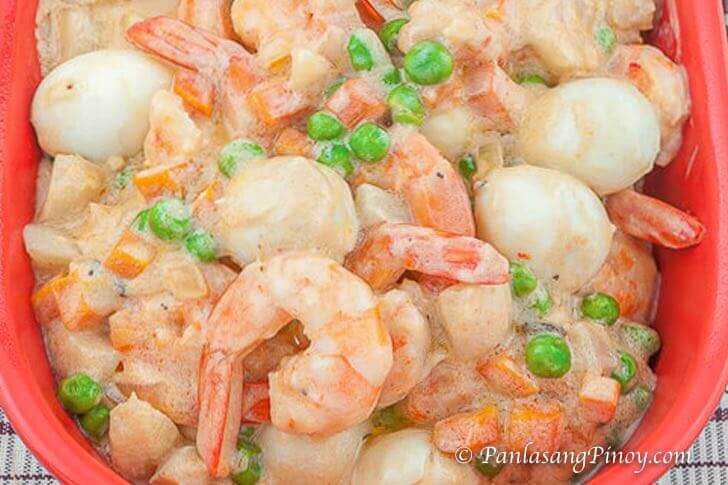
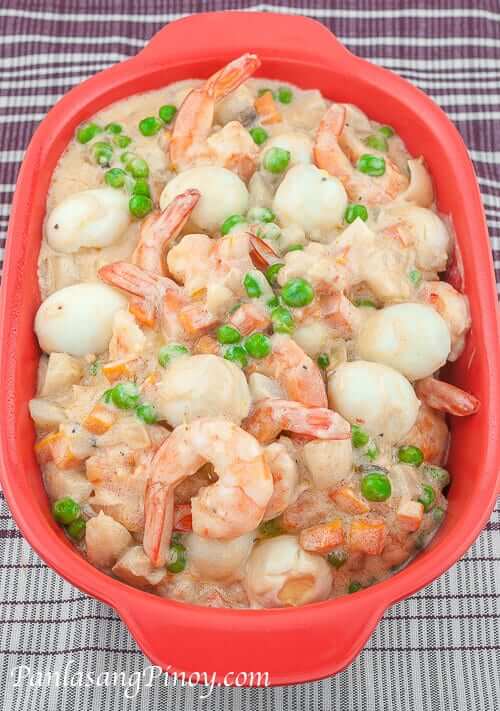
Years later, I still expect the same thing from a good Sipo Egg. It should be creamy and rich, but it should not eat like one soft mixture. The shrimp must stay tender, while the carrot and singkamas should still have a little bite. You should be able to taste each ingredient instead of having everything disappear into the sauce.
The roasted cashews finish the dish for me. I add them at the very end so they stay crisp, giving you a bit of crunch against the creamy sauce and tender quail eggs. That mix of colors, flavors, and textures is what makes Sipo Egg feel worthy of a celebration.
What is Sipo Egg?
Sipo Egg comes from Pampanga and is commonly served at fiestas, weddings, birthdays, and other celebrations. It looks right at home on a full party table. The quail eggs, pink shrimp, green peas, carrots, and singkamas give the dish plenty of color, while the creamy sauce makes it feel rich enough for the occasion.
The quail eggs may be the first thing you notice, but Sipo Egg is not simply a creamy egg dish. Each spoonful should have a good mix of ingredients and textures. You might get a tender piece of shrimp in one bite, followed by vegetables with a little crunch and a roasted cashew in the next. That variety is a big part of what makes the dish so enjoyable. The sauce brings everything together, but it should never hide what is underneath.
The name is harder to explain. I have not found a clear and settled account of where “Sipo” came from or how the dish received its name. What is clear is its connection to Pampanga and the place it has earned on Kapampangan celebration tables.
I also have a Sipo Egg with Chicken Gizzard for those who enjoy the firmer, meatier texture of gizzard. That version replaces the shrimp with chicken gizzard and uses cream of mushroom for the sauce. It takes longer to prepare because the gizzard must first be boiled for about 45 minutes. This step cannot be rushed. The gizzard needs enough time to become tender before it goes into the pan with the other ingredients.
Why This Sipo Egg Recipe Works
- Butter with a little oil – Butter gives the dish its flavor, and I use a little oil along with it when cooking the shrimp and aromatics. Keep the heat at medium because the butter can still brown and burn.
- Chicken broth instead of plain water – The carrot and jicama simmer in broth for three minutes before any cream goes in, so they pick up flavor early.
- Two minutes on the quail eggs – I boil them for 2 minutes at the start, then let them finish cooking for another 1 to 2 minutes after they go into the sauce.
Sipo Egg Ingredients
- Quail eggs – Twenty pieces. Fresh ones taste better than canned. These are the same quail eggs I use for kwek kwek.
- Shrimp – One pound, peeled and deveined. Medium shrimp are easier to eat with a spoon alongside the eggs than the large ones.
- NESTLÉ All Purpose Cream – 250 grams, which is one standard pack. The whole pack goes in.
- Chicken broth – One cup. Use low-sodium broth if you have it. The Magic Sarap and optional ham will add more salt later.
- MAGGI Magic Sarap – One 4-gram sachet, added near the end with the pepper.
- Butter and cooking oil – Three tablespoons of butter with one tablespoon of oil, melted together in the same pan before anything else goes in.
- Ham – Optional. Four ounces, minced. It makes the dish saltier, so go lighter on the sachet if you are using it.
- Carrot – One cup, diced. Dice it to about 1/4 inch so it can soften during the 3-minute simmer.
- Jicama – Three quarters of a cup, diced. Singkamas is the same thing. It stays firm through the simmer while everything else softens.
- Green peas – One cup. Frozen is fine. They go in with the cream rather than earlier.
- Roasted cashews – Three tablespoons. Buy them already roasted and unsalted if you can find them.
- Onion – One medium, minced.
- Garlic – Three cloves, minced. It goes into the butter before the onion and needs about 30 seconds.
- Ground black pepper – To taste, at the end.
Fresh quail eggs are usually sold by the tray at Filipino and Asian groceries. Peel them while they are still warm, starting at the wider end where the air pocket is. Once you get under the membrane, the shell comes off more cleanly.
Vanjo’s Advice
- Cut the carrot and jicama to about the same size. They cook at the same rate that way.
- Keep the pan at a simmer once the cream is in. Bubbles around the edge are all it needs for those three minutes, and the sauce stays smooth.
- Taste the sauce before seasoning. The broth and ham already add salt, so adjust the Magic Sarap from there.
- Boil and peel the quail eggs the day before. Twenty of them take a while. Keep them covered in the refrigerator overnight and the cooking itself goes quickly.
- Scatter the cashews on right before serving. They stay crisp when they go on at the last minute.
- If you double the recipe, use two pans. Crowding one pan slows the simmer and can make the vegetables softer than you want.
How to Cook Sipo Egg
Boil the Quail Eggs
- Boil water in a saucepan. Add the quail eggs and boil for 2 minutes.
- Remove the eggs from the water and peel them. Set aside.
Cook the Shrimp
- Melt the butter in a wide pan over medium heat. Add the cooking oil.
- Add the shrimp and cook for about 1 minute per side. Remove the shrimp from the pan and set aside.
Take the shrimp out while it is still a little underdone. It will finish cooking when it goes back into the sauce.
Build the Sauce
- Add the garlic and sauté for about 30 seconds. Add the onion and continue sautéing until the onion softens.
- Add the ham, carrot, and jicama. Cook for 1 minute, stirring occasionally.
- Pour in the chicken broth and bring to a boil. Reduce the heat and simmer for 3 minutes.
- Add the NESTLÉ All Purpose Cream, followed by the green peas. Stir and simmer for 3 minutes.
The sauce should coat the back of a spoon after about 3 minutes. If it still looks thin, give it another minute before adding the shrimp and eggs.
Finish and Serve
- Return the shrimp to the pan.
- Season with MAGGI Magic Sarap and ground black pepper. Stir gently to combine.
- Add the quail eggs and cook for another 1 to 2 minutes.
- Transfer to a serving dish. Top with the roasted cashews and serve warm.
What to Serve with Sipo Egg
- Steamed rice – The simplest choice. Spoon some of the cream sauce over the rice.
- Arroz Valenciana – Good when Sipo Egg is part of a bigger fiesta-style spread and you want something more substantial than plain rice.
- Dinuguan – The vinegar gives you a nice contrast to the creamy sauce.
- Lechon Kawali – If you want a pork dish on the side, this works well because it adds some crunch.
- Chicken Barbecue – A good grilled main if you are serving several dishes for a gathering.
Storage
- Refrigerator: Keep leftovers in a covered container for up to 3 days. The sauce will get thicker once chilled.
- Freezer: I would not freeze the finished dish. The cream may separate and the jicama loses its crunch after thawing.
- Reheating: Warm it gently in a pan over low heat, stirring now and then. Add a small splash of broth or water if the sauce is too thick. For a single serving, microwave in 30-second bursts and stir between each one.
More Filipino Shrimp Recipes
- Halabos na Hipon with Butter – Shrimp steamed in lemon lime soda, then finished with butter and chopped parsley.
- Coconut Shrimp – Large shrimp in a coconut and bread crumb coating, fried and served with sweet chili sauce.
- Filipino Shrimp Curry – Curry powder and turmeric in coconut milk, with red and green bell peppers.
- Shrimp Laing – Dried taro leaves simmered in coconut milk with chili and bagoong alamang.
- Butter Garlic Shrimp Pasta – Fettuccine in a cream cheese and Parmesan sauce with tomatoes and chili flakes.
Substitutions
- Jicama – Water chestnuts are the closest swap and hold the same crunch. Chayote works too, though it goes softer in the sauce.
- Shrimp – Chicken gizzard is another version you can make. Boil it for about 45 minutes first so it is tender before adding it to the pan.
- Green peas – Frozen beats canned here. Canned peas are already soft and already salted.
- Roasted cashews – Toasted peanuts give you the same crunch with a different flavor. Leave them off entirely if anyone at the table has a nut allergy.
Frequently Asked Questions
Can I use canned quail eggs instead of fresh?
You can. Drain them and rinse the packing liquid off, then add them at the same point in the recipe. Fresh ones taste better and hold their shape a little better in the sauce, but canned saves you the boiling and the peeling.
Why did my sauce separate?
The heat was probably too high after the cream went in. Keep it at a gentle simmer instead of a hard boil. If the sauce has already separated, take the pan off the heat and stir gently. It may come back together a little, but not completely.
Do I need cornstarch to thicken the sauce?
Not for this one. The pack of all-purpose cream simmered for 3 minutes gives you a sauce thick enough to spoon over rice. Stir in a slurry only if you want it heavier than that.
Can I make Sipo Egg ahead of time for a party?
Do the prep ahead, not the cooking. Boil and peel the quail eggs and dice the vegetables the day before, then keep everything covered in the refrigerator. Cook the Sipo Egg close to serving time because the sauce thickens as it sits.
How do I keep the quail eggs from breaking in the sauce?
Add them near the end and stir gently. They only need another 1 to 2 minutes in the pan, so there is no reason to keep moving them around.
Serve Sipo Egg soon after cooking. The sauce thickens as it cools, so get it to the table while it is still easy to spoon over hot rice.
Watch How to Make It

Did you make this? If you snap a photo, please be sure tag us on Instagram at @panlasangpinoy or hashtag #panlasangpinoy so we can see your creations!
Sipo Eggs
Ingredients
- 20 pieces quail eggs
- 1 lbs shrimp peeled and deveined
- 1 pieces onion medium, minced
- 3 cloves garlic minced
- 3 tablespoons butter
- 1 tablespoon cooking oil
- 4 ounces ham minced, optional
- 1 cup carrot diced
- 3/4 cup jicama diced
- 1 cup green peas
- 1 cup chicken broth
- 250 grams NESTLÉ All Purpose Cream
- 4 grams MAGGI Magic Sarap
- Ground black pepper to taste
- 3 tablespoons roasted cashews
Equipment
- 1 Saucepan For boiling the quail eggs.
- 1 Wide pan A wide surface keeps the shrimp in a single layer so it sears instead of steams.
- 1 Slotted spoon Lifts the quail eggs out of the boiling water without cracking them.
Instructions
- Boil water in a saucepan. Add the quail eggs and boil for 2 minutes. Remove the eggs from the water, peel them, and set aside.20 pieces quail eggs
- Melt the butter in a wide pan over medium heat, then add the cooking oil.3 tablespoons butter, 1 tablespoon cooking oil
- Add the shrimp and cook for about 1 minute per side. Remove the shrimp from the pan and set aside.1 lbs shrimp
- Add the garlic and sauté for about 30 seconds. Add the onion and continue sauteing until the onion softens.3 cloves garlic, 1 pieces onion
- Add the ham, carrot, and jicama. Cook for 1 minute, stirring occasionally.4 ounces ham, 1 cup carrot, 3/4 cup jicama
- Pour in the chicken broth and bring to a boil. Reduce the heat and simmer for 3 minutes.1 cup chicken broth
- Add the NESTLÉ All Purpose Cream, followed by the green peas. Stir and simmer for 3 minutes.250 grams NESTLÉ All Purpose Cream, 1 cup green peas
- Return the shrimp to the pan.1 lbs shrimp
- Season with MAGGI Magic Sarap and ground black pepper. Stir gently to combine.4 grams MAGGI Magic Sarap, Ground black pepper
- Add the quail eggs and cook for another 1 to 2 minutes.20 pieces quail eggs
- Transfer to a serving dish. Top with the roasted cashews and serve warm.3 tablespoons roasted cashews


Anne Garcia says
perfect
nancy says
Thank you for sending me your recipes. Everyday i have the idea what to cook.especially du ring this holiday seasons to come. Also i am always excited to cook and share it to my Friends and co-workers.i appreciate and very grateful that i am link to the panlasang pinoy.thanks again.
Davy Saba says
I just bought a pack of kropek in Toronto here similar to the foto in your blog and found it similar in taste and texcture to Indonesian “krupuik gendar” which is made of rice. The term Krupuk in Bahasa Indonesia is a generic term and therre many kinds or krupuk like krupuk udang (= prawn), krupuk ikan (= fish) etc.
And I am also surprised that the Sipo is similar to Sapo in Indonesia.
Vanjo Merano says
yes, you can.
JR says
I’ve been borrowing a lot of your recipe’s for a few years now and this particular recipe popped up on my facebook page. When I was young this was my favorite dish… I never knew what it was called, but I would describe it to my mom and she would cook it for me. My mother passed away in 2008 and I turned 30 today (9/11). This just brought back tons of memories and tears. Thanks for sharing your recipes online!
Gloria Sabater says
I really appreciate your Sipo egg recipe to prepare for my family and friends, especially during special occassion. Thank you so much.
Analisa B. Sumigcay says
I liked Panlasang Pinoy very much..thats why everytime i saw recipe here i copy it.Hope you can send me a copy of your cookbook. Many thanks..:)
Josie Susi Kasingsing says
I live the recipe that you shared..need more recipe good for diabetic person like me.Thank you in advanced..