Filipino Glass Noodle Soup With Egg
I started making this glass noodle soup when we were living in Chicago. I wanted my chicken sotanghon soup one day but had no chicken left, so I boiled a few eggs and used those instead. It worked well enough that I kept making the soup that way.

Chicago winters are brutal, and I remember coming back inside after shoveling snow off the driveway and wanting something hot right away. The broth is light, but with glass noodles (sotanghon), cabbage, and a boiled egg in each bowl, it is filling enough for a meal.
The part I watch closely is the sotanghon. It cooks in about 3 minutes, then keeps softening and absorbing broth as it sits. If the soup has to wait, keep the noodles out and add them when everyone is ready to eat.
What is Filipino Glass Noodle Soup with Egg?
Sotanghon is what we call glass noodles in Filipino cooking. They go into this soup dry, without soaking, and turn clear after a few minutes in the broth. Once cooked, the sotanghon is soft, while the cabbage still has some bite. Each bowl gets a boiled egg and plenty of the light orange broth.
The flavor comes from garlic and onion sauteed in the oil first, then chicken powder and fish sauce once the water goes in, and it tastes better than that list sounds. There are no pieces of chicken, pork, or shrimp in this version. The same noodles turn up in my sotanghon guisado, but that one is stir fried with pork and vegetables and has no broth at all.

Why This Glass Noodle Soup Recipe Works
- Annatto goes in the oil Stir it into the hot oil with the fish sauce and the color spreads through the whole pot.
- The noodles cook in the broth. No separate pot of water to drain. They come out seasoned instead of plain.
- Cabbage gets 2 minutes. That is it. Perfect texture.
- The eggs are already cooked. They go in at the end to warm through, not to simmer. This prevents overcooking them.
Ingredients

- Glass noodles (sotanghon) – Sold dry in bundles at Asian and Filipino stores. They go into the pot straight from the pack. No sotanghon on hand? See the substitutions below.
- Eggs – The protein here, and the reason a bowl fills you up without any chicken. Boil and peel them before you start. Week-old eggs peel much more easily than ones bought that morning.
- Cabbage – Regular green cabbage, shredded thin. It only cooks for 2 minutes, so slice it thin enough to soften quickly.
- Annatto powder – Sold as atsuete. This gives the broth its orange color.
- Chicken powder – Granulated chicken bouillon, added with the noodles. Some brands are much saltier than others, so taste the broth before you reach for more fish sauce.
- Fish sauce – Goes in twice. Two teaspoons early with the annatto, then more at the end once you know how salty the broth is.
- Garlic and onion – Sauteed before the water goes in. Crush the garlic instead of chopping it so it browns without catching.
- Toasted garlic – This goes over the soup at the end. Jarred is fine, or make your own toasted garlic.
- Green onions – Chop them and add them with the eggs at the end.
Powder is the easiest form of annatto here because it goes straight into the oil. Seeds work too. Steep them in the hot oil a minute or two and scoop them out before the garlic goes in, or use annatto oil in place of the cooking oil.
Vanjo’s Advice
- Keep the toasted garlic for the individual bowls. If you stir it into the pot, it softens almost immediately.
- Boil the eggs the day before. Peeled and covered in the refrigerator they keep fine, and it takes the longest part of this recipe out of the way.
- Whole eggs or halved, either way. Halved ones pick up more broth, whole ones look neater in the bowl. I do not think it makes much difference.
- Cut everything before the water goes in. Once the pot boils, the soup is finished in about 5 minutes. There is no time to shred cabbage while the noodles are already cooking.
How to Cook Filipino Glass Noodle Soup with Egg
Boil and Peel the Eggs
- Cook the eggs until hard boiled, then move them to a bowl of cold water. My guide on how to boil eggs has the timing for each doneness.
- Peel the eggs and set them aside while you start the soup.
Start the Aromatics
- Heat the cooking oil in a pot.
- Add the garlic and saute until it starts to brown.
- Add the onion and continue cooking until it softens.
- Stir in the annatto powder and 2 teaspoons of fish sauce.
Cook the Noodles
- Pour in the water and bring it to a boil.
- Add the glass noodles and chicken powder.
- Cover the pot and let the liquid return to a boil, then reduce the heat and simmer for 3 minutes.
- Gently stir the noodles to loosen them.
The noodles should be clear all the way through before the cabbage goes in. If you still see white down the middle of a strand, give it another minute.
Add the Cabbage and Eggs
- Add the shredded cabbage. Cover and cook for 2 minutes.
- Add the boiled eggs and green onions.
- Season with additional fish sauce and ground black pepper as needed.
- Transfer the soup to serving bowls and top with toasted garlic. Serve hot. Share and enjoy!
What to Serve with Glass Noodle Soup
- Fried Tilapia – Whole tilapia fried until crisp. It gives you something with texture beside the soft noodles.
- Daing na Bangus – The vinegar and garlic in the marinade work nicely against the mild broth.
- Rice – Serve it on the side if you want a heavier meal.
- Pandesal – Dip it into the broth, especially if you are having the soup for breakfast or merienda.
- Fish sauce with calamansi – Put it on the table so everybody can adjust their own bowl.
Storage
- Refrigerator: Keeps about 3 days in a covered container. What comes out the next day is closer to a bowl of seasoned noodles than a soup, with very little liquid left around them. Taste it after reheating and adjust the fish sauce.
- Freezer: Skip freezing the finished soup. Thawed sotanghon loses its shape, and boiled egg whites come back rubbery. The part worth freezing is the seasoned broth by itself, before any noodles go in, and it holds for about 2 months.
- Reheating: Use a pot rather than the microwave, and add enough hot water to give the noodles something to sit in again. Stop once it steams. The toasted garlic goes on after reheating, not before.

More Filipino Noodle Soup Recipes
- Spicy Sotanghon Chicken Soup – The same noodles in a chicken broth with Thai chili peppers and white pepper.
- Chicken Sotanghon Soup with Patola – Chicken and sponge gourd in a clear broth, finished with roasted garlic.
- Chicken Sotanghon Soup with Malunggay and Sayote – Shredded chicken with chayote and malunggay leaves stirred in at the end.
- Chicken and Miswa Soup – Shredded chicken with miswa, a much finer noodle that cooks in about a minute.
- Asian Chicken Vermicelli Soup – Ground chicken and thin rice noodles in broth, topped with crispy fried garlic.
- Sotanghon with Upo Soup – Bottle gourd with pork and shrimp, finished with fried garlic.
Substitutions
- Glass noodles (sotanghon) – Miswa or rice vermicelli can work, but both cook faster. Miswa only needs about a minute, so add it with the cabbage. Wide egg noodles like the ones in my chicken soup with egg noodles also hold up in broth, but they make the soup heavier.
- Chicken powder – A chicken cube works, or use chicken broth in place of the water and season less.
- Annatto powder – Atsuete seeds steeped in the oil, or annatto oil in place of the cooking oil. Leave it out and the broth will be pale, but the soup will still work.
- Cabbage – Napa cabbage, chayote in thin strips, or malunggay leaves. Napa needs less than 2 minutes.
- Fish sauce – Salt is the simplest swap. Soy sauce works too, but it will darken the broth and cover some of the annatto color.
- Eggs – Boiled quail eggs, about three per serving in place of one chicken egg.
Frequently Asked Questions
What are glass noodles made of?
Mung bean starch, mostly. Some brands add potato or tapioca starch. They are not rice noodles, even though a few packages use the names loosely, so check the ingredient list if you are unsure.
Do I need to soak the glass noodles first?
Not for this recipe. There is enough liquid in the pot for the sotanghon to soften as it cooks, so I add the noodles dry.
Why is there no broth left in my soup?
The sotanghon took it. It keeps absorbing for as long as it sits in the pot, and after twenty minutes you have a noodle dish. Pour in hot water, season it again, and serve it right away.
How much dry sotanghon do I need for each person?
A little over an ounce each, with about 5 cups of water for five servings. Go heavier on the noodles than that and you will be short on broth.
Are glass noodles gluten free?
Yes, when they are made from mung bean, potato, or tapioca starch. Read the label anyway. A few brands mix in wheat starch.

Serve the soup while there is still plenty of broth around the sotanghon. The cabbage should still have some bite, and the toasted garlic should still be crisp when it reaches the bowl.
Did you make this? If you snap a photo, please be sure tag us on Instagram at @panlasangpinoy or hashtag #panlasangpinoy so we can see your creations!
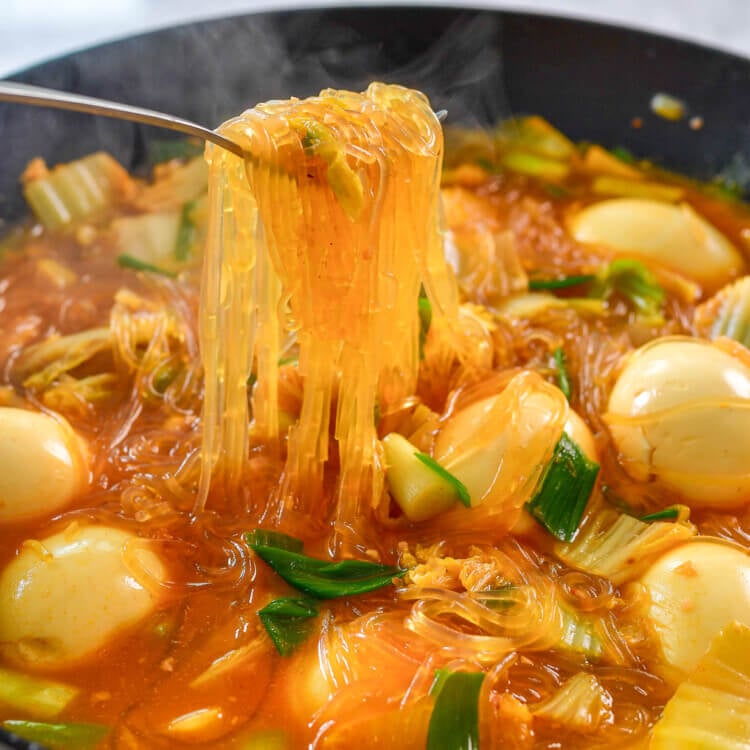
Filipino Glass Noodle Soup with Egg
Ingredients
- 5 pieces eggs boiled and peeled
- 5.6 oz glass noodles (sotanghon)
- 1/4 head cabbage shredded
- 5 cups water
- 2 1/2 teaspoons chicken powder
- 1 teaspoon annatto powder
- 5 cloves garlic crushed
- 1 pieces onion medium, chopped
- 2 stalks green onion chopped
- 1 teaspoon toasted garlic
- 3 tablespoons cooking oil
- 2 teaspoons fish sauce plus more to taste
- ground black pepper to taste
Equipment
- 1 Cooking pot A 4-quart pot gives the noodles room to expand without crowding.
- 1 Kitchen shears Useful for cutting the glass noodles into shorter strands before cooking.
Instructions
- Heat the cooking oil in a pot over medium heat.3 tablespoons cooking oil
- Add the crushed garlic and sauté until it starts to brown. Add the chopped onion and continue cooking until it softens.5 cloves garlic, 1 pieces onion
- Stir in the annatto powder along with 2 teaspoons of fish sauce.1 teaspoon annatto powder, 2 teaspoons fish sauce
- Pour in the water and bring it to a boil.5 cups water
- Add the glass noodles and chicken powder. Cover the pot and let the liquid return to a boil, then reduce the heat and simmer for 3 minutes.5.6 oz glass noodles (sotanghon), 2 1/2 teaspoons chicken powder
- Gently stir the noodles to loosen them, then add the shredded cabbage.5.6 oz glass noodles (sotanghon), 1/4 head cabbage
- Cover the pot and cook for 2 minutes.
- Add the boiled eggs and green onions. Season with additional fish sauce and ground black pepper as needed.5 pieces eggs, 2 stalks green onion, 2 teaspoons fish sauce, ground black pepper
- Transfer the soup to serving bowls and top with toasted garlic. Serve hot.1 teaspoon toasted garlic
Eon Orogo says
Pwede po magpaturo kung pano magpaganda ng website? Balita ko po kasi, web dev po kayo na mahilig magluto eh, eh ako din po, mahilig magluto, pati na din ang pagc-code. Gusto ko po sana makahingi ng tips po about using HTML and CSS for my website. Thank you po, Kuya Vanjo! Idol ko po kayo!
Danny says
Nice1