Pancit Canton Recipe
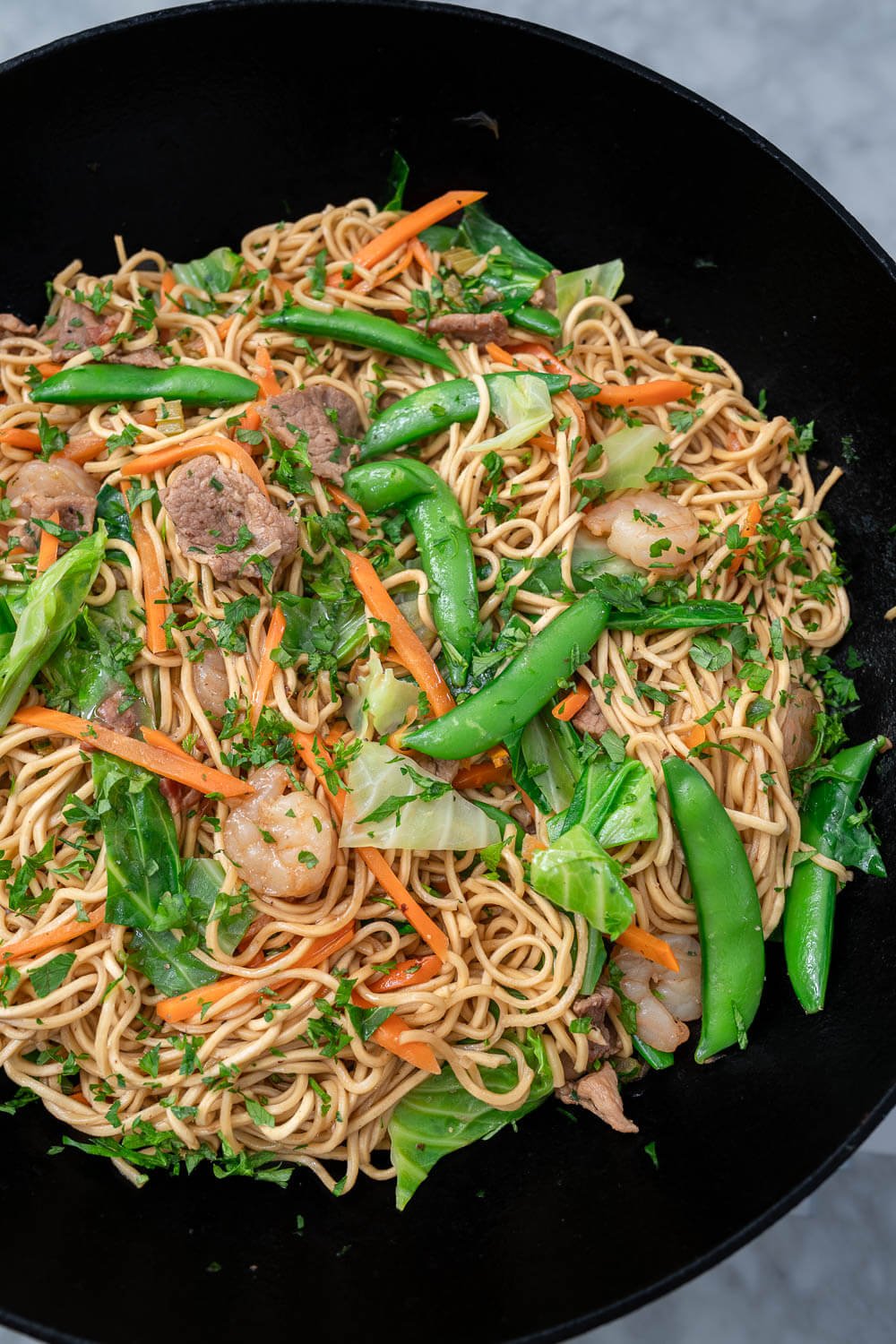
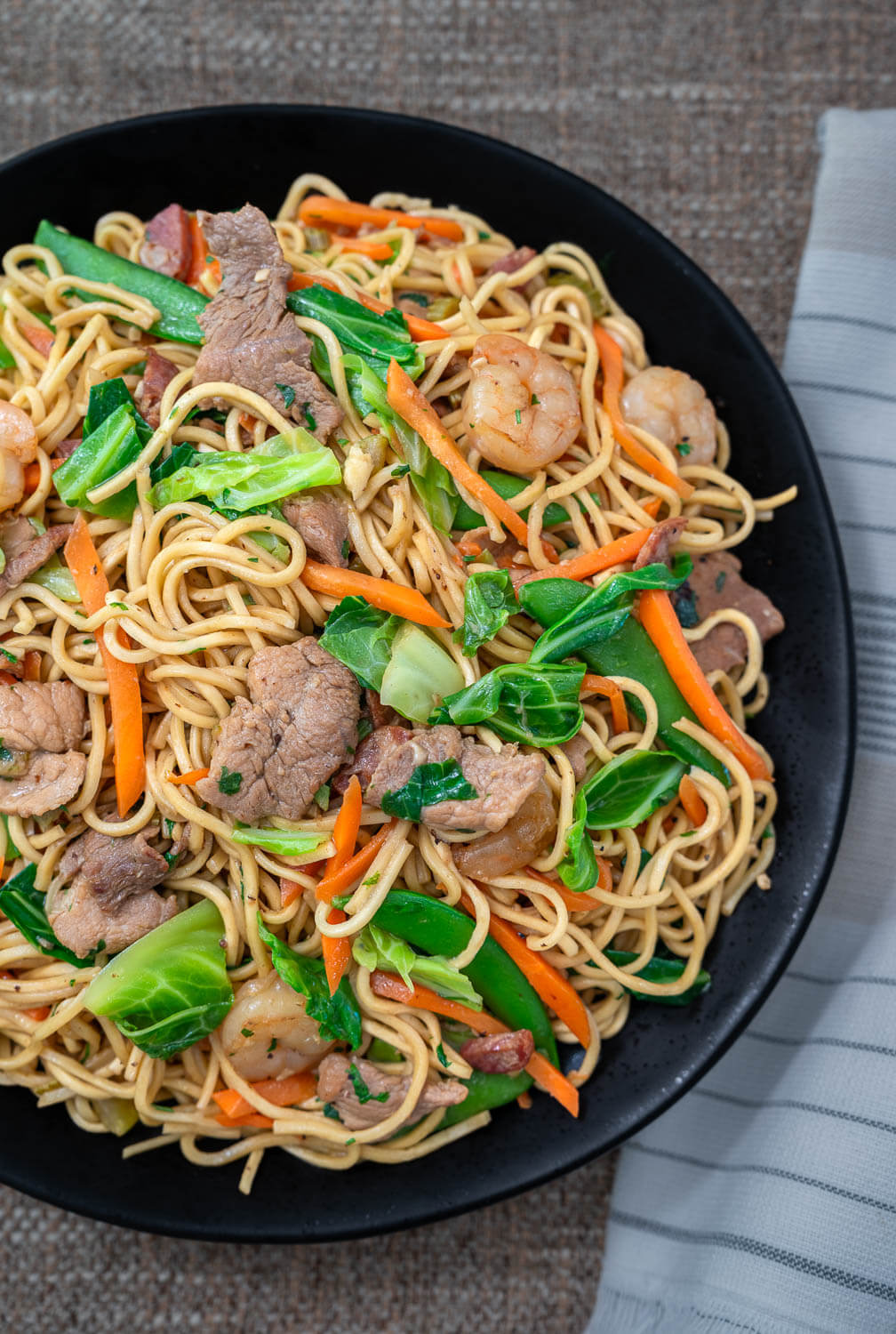
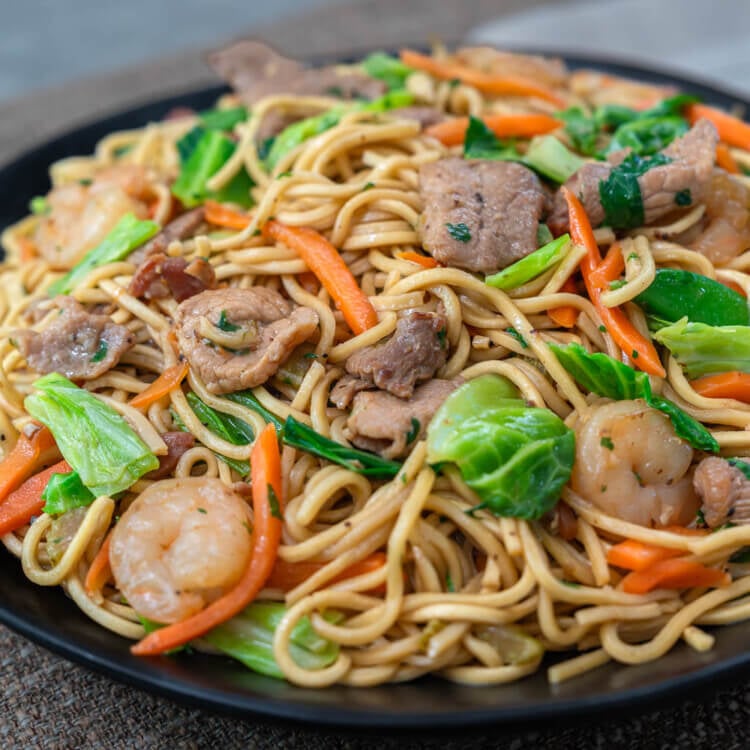
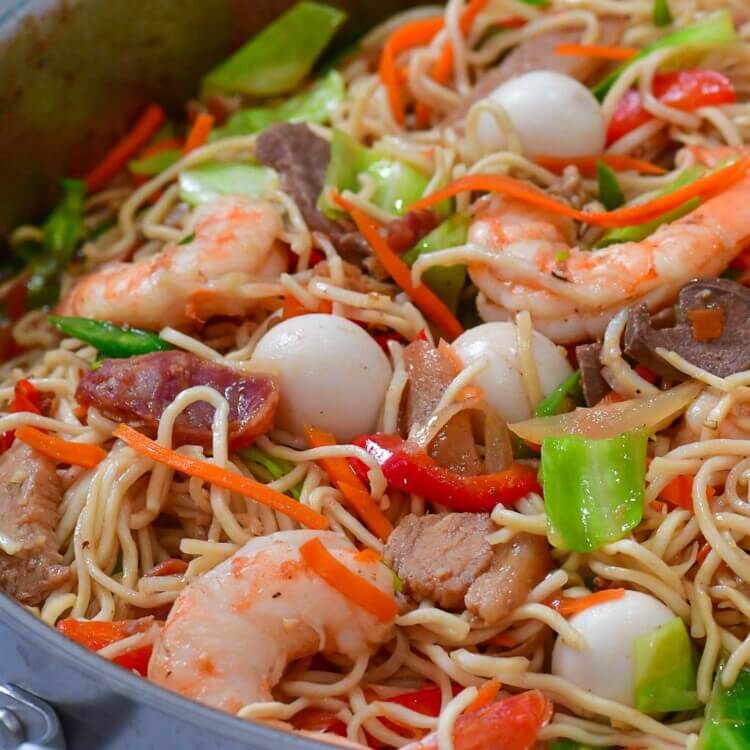
Pancit Canton is one of those dishes I never get tired of making. This pancit canton recipe has been a staple in my kitchen for as long as I can remember. Flour stick noodles, pork, shrimp, and vegetables all in one plate. It is a full meal on its own. If you love Filipino pancit, this pancit canton version is the one you want to learn first because it forms the base for so many other variations.
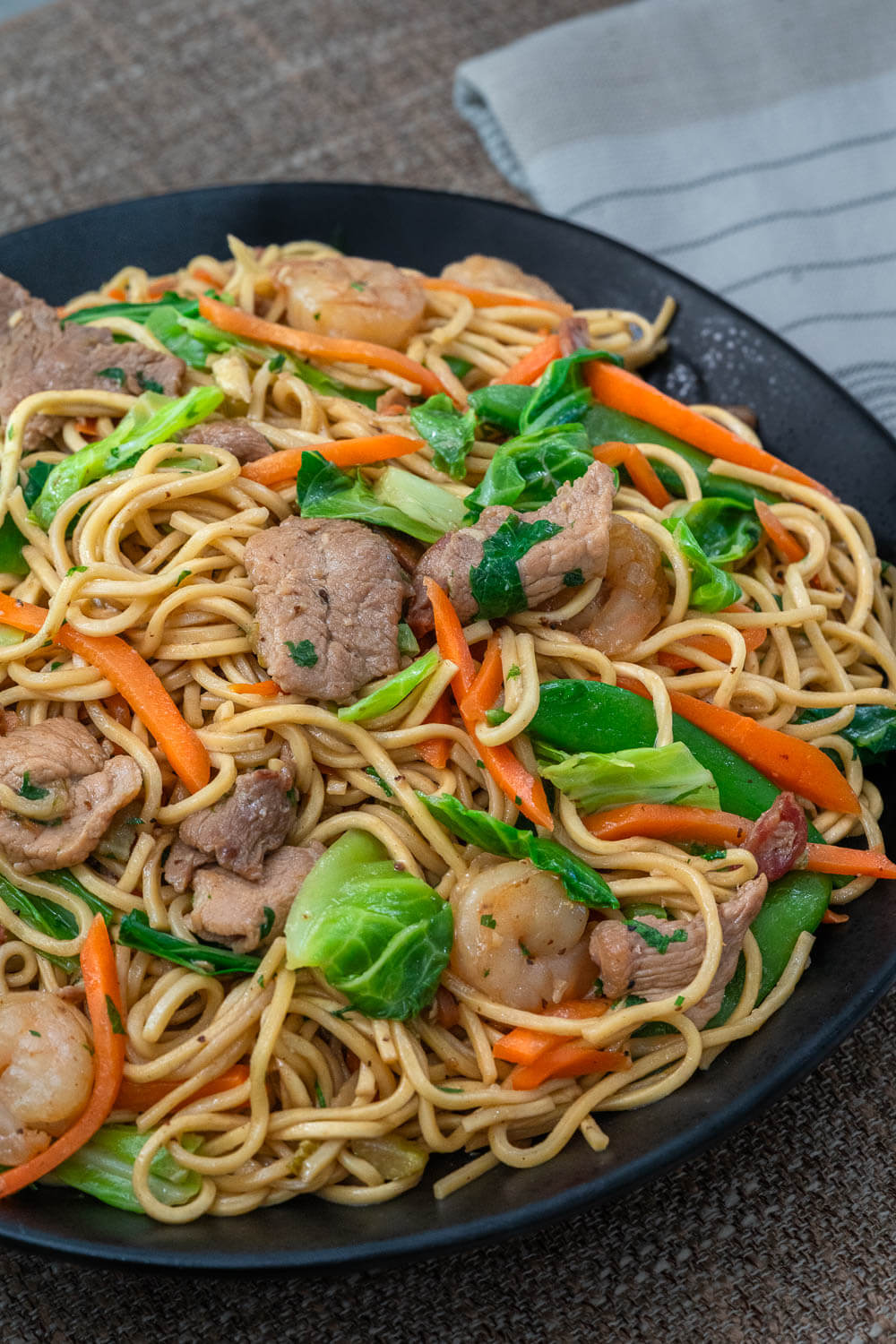
I remember eating this at every birthday party growing up. My grandma would make a huge batch, and it would disappear within minutes. Now I make it for my own family, and the reaction is always the same. The sauce gets into every strand of noodle, and nobody ever stops at one serving. This pancit recipe is perfect for feeding a crowd or meal prepping for the week. If you want a version built entirely around shrimp, try my shrimp pancit canton.
What is Pancit Canton
Pancit Canton is a Filipino stir fried noodle dish made with flour stick noodles, also known as egg noodles or lo mein noodles. The name “canton” refers to the Cantonese style of cooking noodles that was adapted by Filipinos over generations. These noodles are made from wheat flour and eggs, giving them a chewy texture that holds up well to stir frying.
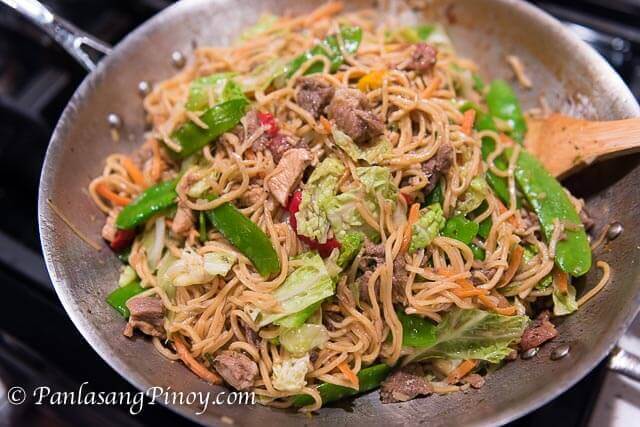
The dish typically includes a mix of proteins like pork, chicken, or shrimp along with vegetables such as cabbage, carrots, and snap peas. Everything gets tossed together with soy sauce and oyster sauce, so the noodles end up savory with a little sweetness. Some versions add Chinese sausage for extra richness. You can also go heavier on the seafood with a seafood pancit canton, or load it up with more toppings the way I do in my special pancit canton.
In Filipino culture, noodles symbolize long life. That is why pancit is always served at birthday celebrations and special occasions. Serving it is a way of wishing the birthday celebrant a long life.
Why This Pancit Canton Recipe Works
This recipe produces restaurant quality results because of a few key techniques:
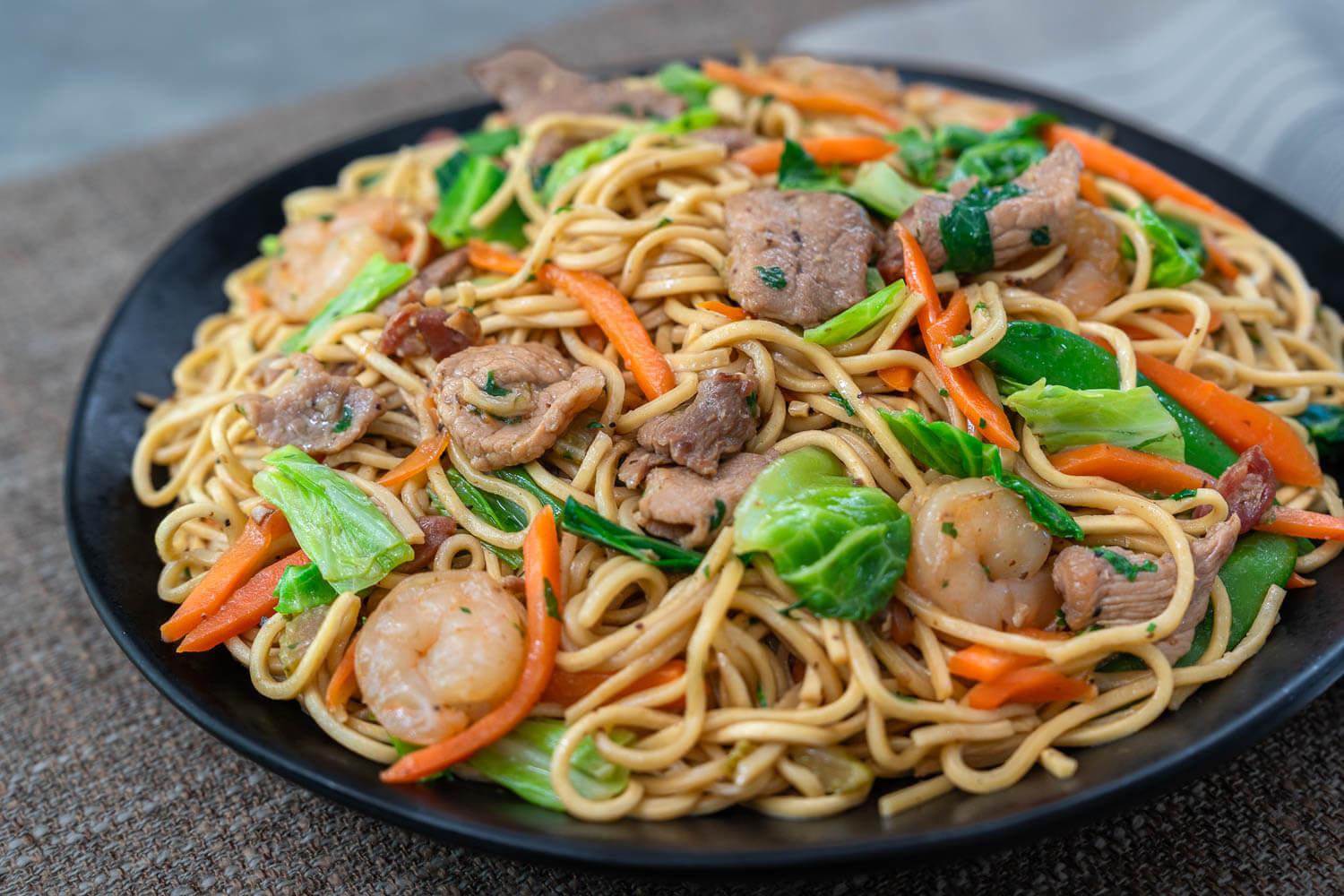
- Blanching vegetables separately – Cooking the vegetables in boiling water then shocking them in ice water keeps them crisp and brightly colored. They get added back at the end so they do not overcook.
- Building flavor in stages – Sautéing the aromatics first, then browning the meat, then adding the sauce builds more depth than a one pot method can.
- Steam cooking the noodles – Adding the noodles to the liquid and covering the pot lets them absorb flavor while softening evenly. This prevents dry spots and clumping.
- Proper liquid ratio – Using the right amount of broth and water ensures the noodles absorb everything without becoming soggy or staying too dry.
Pancit Canton Ingredients
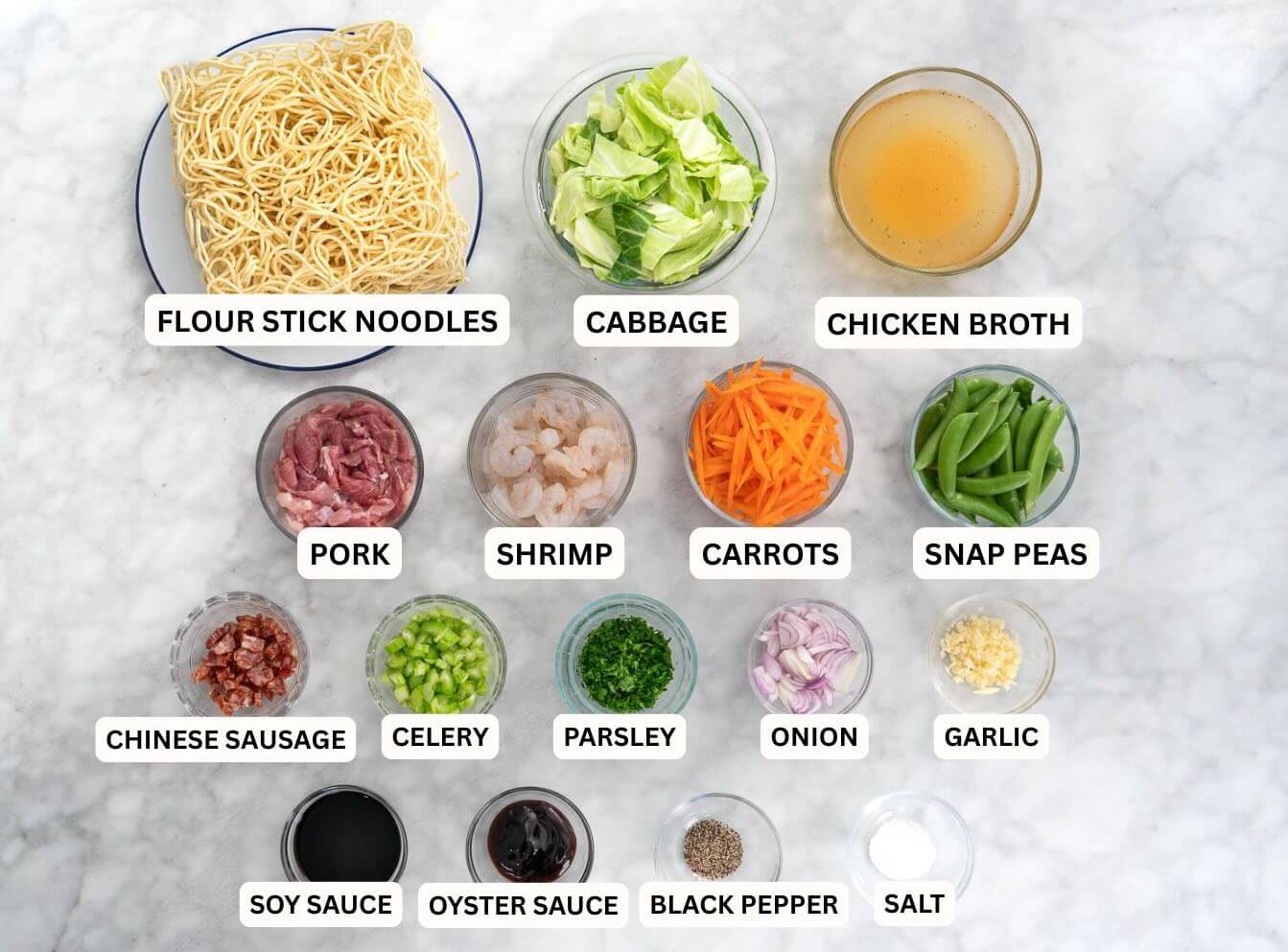
- Flour stick noodles – The traditional noodle for this dish. They have a chewy texture and hold sauce well.
- Pork – Thinly sliced pork cooks quickly and becomes tender. Pork shoulder or loin both work.
- Chinese sausage – Slightly sweet with a firm texture. It balances the savory sauce nicely.
- Shrimp – Adds a seafood element. Medium sized shrimp work best for this dish.
- Snap peas – Sweet and crunchy. They hold up well after blanching.
- Cabbage – A classic pancit vegetable. It softens slightly but keeps some texture.
- Carrots – Julienned thin so they cook evenly and stay slightly sweet.
- Garlic and onion – The aromatic base. I use plenty of both for maximum flavor.
- Soy sauce – Provides saltiness and the characteristic dark color.
- Oyster sauce – Thick with a slight sweetness. It gives the sauce a nice shine.
- Chicken broth – Adds depth of flavor. Use low sodium if you prefer less salt.
- Flat leaf parsley – Tossed in at the end for a little freshness.
Vanjo’s Advice
- Ice bath timing matters – Do not leave vegetables in the ice water too long. Two minutes is enough. Any longer and they get waterlogged and lose flavor.
- Slice pork against the grain – This makes each piece more tender. Look at the lines in the meat and cut perpendicular to them.
- Do not rush the sauté – Let the pork and sausage get some color before adding liquid. That browning creates fond on the bottom of the pan which dissolves into the sauce.
- Cover when cooking noodles – The steam helps soften the noodles evenly. Resist the urge to keep stirring. Let them absorb the liquid undisturbed.
How to Cook Pancit Canton
Prepare the Ice Bath and Blanch Vegetables
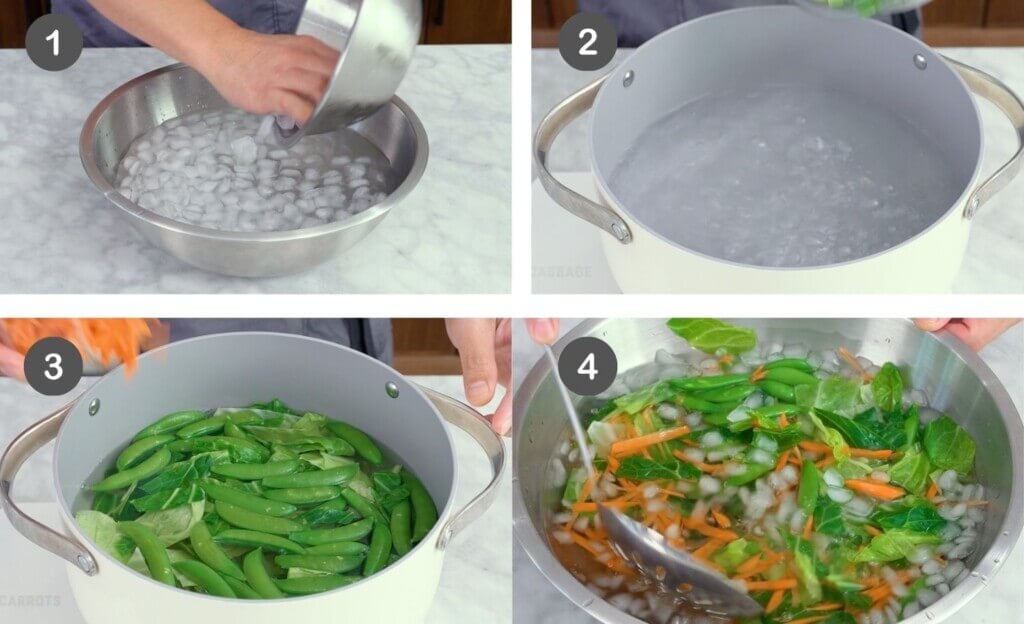
- Fill a large bowl with ice and cold water. Set it near the stove.
- Bring a pot of water to a rolling boil.
- Add snap peas, carrots, and cabbage. Blanch for 35 to 50 seconds only.
- Quickly transfer vegetables to the ice bath. Drain after two minutes and set aside.
Sauté Aromatics and Brown the Meat
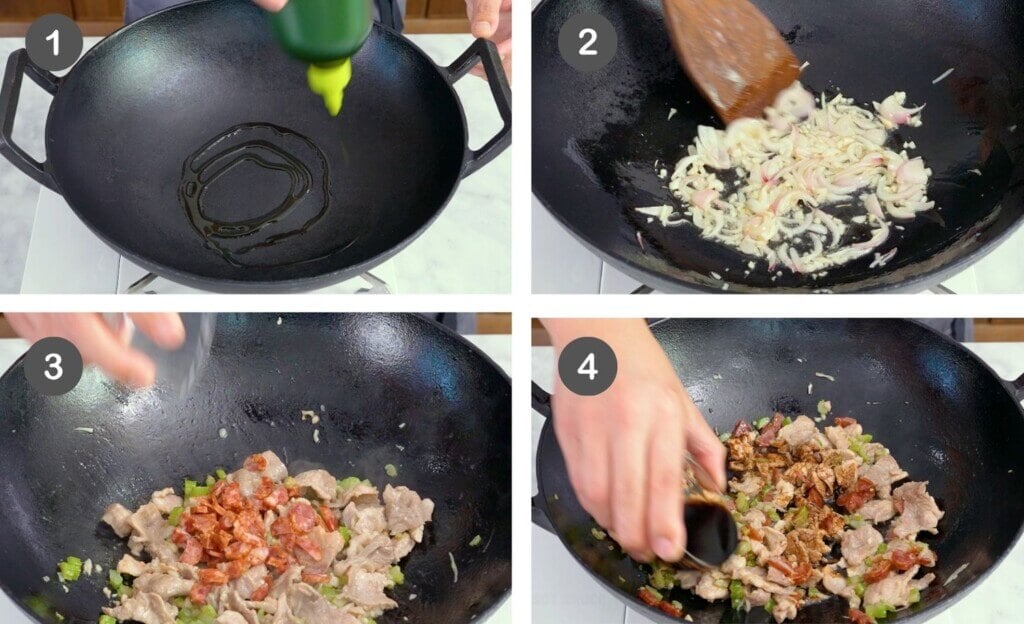
- Heat oil in a large wok or wide pan over medium high heat.
- Sauté onion and garlic until fragrant and the onion softens.
- Add pork and Chinese sausage. Cook for two minutes until lightly browned.
- Pour in soy sauce and oyster sauce. Stir to coat the meat.
Add Liquid and Cook the Shrimp
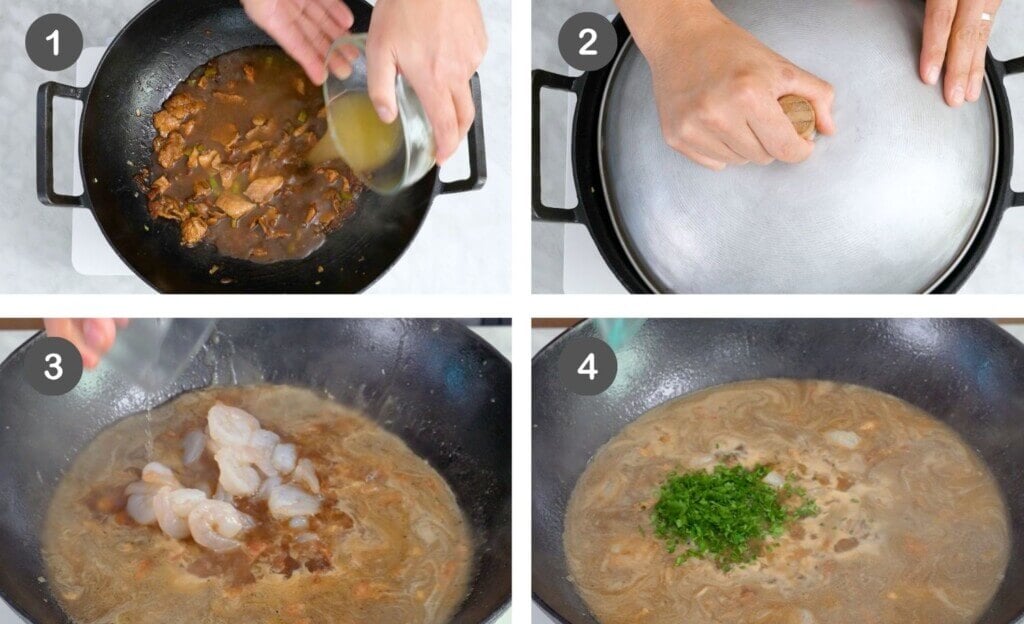
- Pour in chicken broth and water. Season with salt and pepper.
- Bring to a boil, then reduce heat. Cover and simmer for 5 to 10 minutes until pork is tender.
- Add shrimp. Cook for three minutes until shrimp turns pink.
- Add chopped parsley.
Add Noodles and Finish the Dish
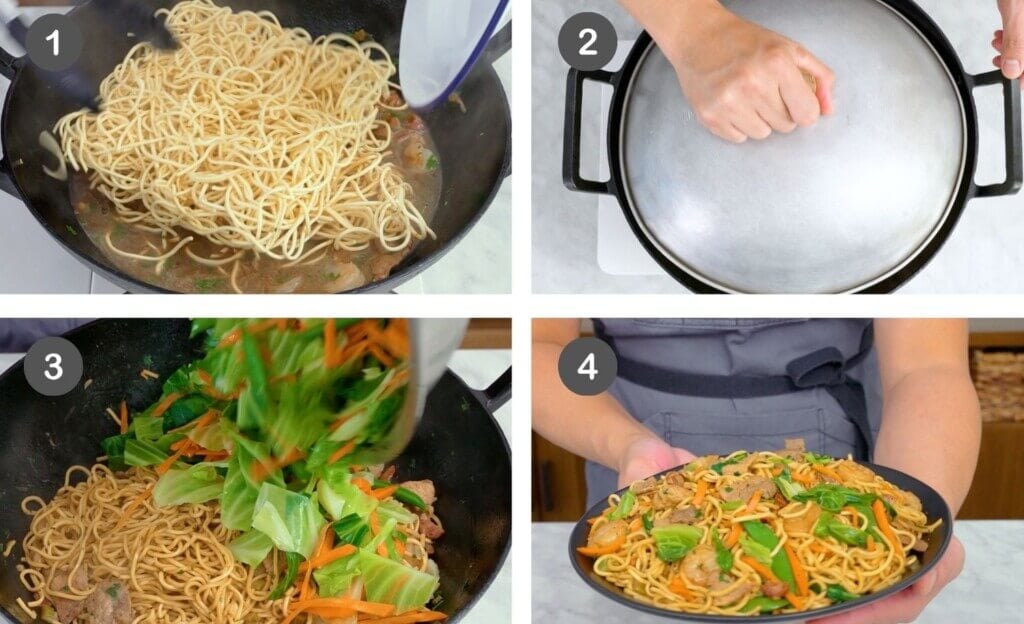
- Add flour stick noodles to the pan. Gently toss to distribute.
- Cover and let the noodles steam until they absorb most of the liquid.
- Add the blanched vegetables back in. Toss everything together.
- Season with ground black pepper. Transfer to a serving plate.
Pro Tips
- Use a wok if you have one because the shape allows for better tossing and even heat distribution
- Have all ingredients prepped and within reach before you start cooking since stir frying moves fast
- Squeeze calamansi or lemon over individual servings for a bright citrus note that cuts through the richness
- Add a splash of sesame oil at the very end for extra aroma
- Taste the sauce before adding the noodles so you can adjust seasoning
What to Serve with Pancit Canton
- Lumpia – Crispy spring rolls are the classic pairing at Filipino parties. The crunch goes well with the soft noodles.
- Calamansi – A squeeze of citrus brightens the whole dish. I always put a bowl on the table.
- Toyomansi dipping sauce – Mix soy sauce and calamansi juice for a tangy condiment. Some people drizzle this over their pancit.
- Steamed rice – Not traditional, but some people like to eat pancit over rice for an extra filling meal.
Storage and Reheating
How to Store Pancit Canton
- Refrigerator: Let the pancit cool completely before storing. Transfer to an airtight container and refrigerate for up to 4 days.
- Freezer: Place cooled pancit in a freezer safe container or bag. Remove excess air before sealing. Freeze for up to 2 months. Thaw overnight in the refrigerator before reheating. Vegetables will soften after thawing, but the flavor stays good.
How to Reheat Pancit Canton
Place pancit in a microwave safe dish and sprinkle a tablespoon of water over the noodles. Cover loosely with a damp paper towel. Heat in 1 minute intervals, stirring gently between each, until heated through. The moisture keeps the noodles from drying out.
More Pancit Recipes
Once you master this version, try these other variations:
- Bami – A Cebuano specialty that combines flour stick noodles with rice stick noodles in one dish. The mix of textures is really satisfying.
- Palabok – A classic Filipino noodle dish made with rice noodles topped with a rich shrimp based sauce and finished with a mix of seafood pork chicharon eggs and garlic for a bold savory flavor.
- Pancit Bihon – a popular pancit version with bihon noodles, which are thin noodles made from cornstarch or mung bean starch, stir fried with vegetables, meat, and shrimp and seasoned with soy sauce.
Substitutions
- Pork – Chicken breast or thigh works well. Slice thin for quick cooking.
- Chinese sausage – Use bacon bits or ham if you cannot find Chinese sausage. The flavor will be different but still good.
- Shrimp – Squid rings or fish balls make good substitutes. You can also leave out the seafood entirely.
- Snap peas – Snow peas or green beans work as alternatives. Cut green beans into shorter pieces.
- Cabbage – Napa cabbage or bok choy can replace regular cabbage. They cook a bit faster.
- Flour stick noodles – Spaghetti or linguine can work in a pinch. Boil according to package directions first.
Frequently Asked Questions
Why are my noodles sticky?
The noodles probably absorbed too much liquid or were overcooked. Make sure there is enough liquid (not too much) when you add them.
What is the best condiment for pancit canton?
Toyomansi is the traditional choice. Mix equal parts soy sauce and calamansi juice. Lemon or lime juice can substitute for calamansi. Some people also like fish sauce with calamansi.
How do I keep the vegetables crisp?
The blanching and ice bath method is the key. Cook the vegetables briefly in boiling water, then immediately transfer them to ice water. This stops the cooking and locks in the color and crunch. Add them back at the very end.
Can I make this ahead for a party?
You can prep all the ingredients a day ahead. Store sliced vegetables and meat separately in the refrigerator. Cook the dish right before serving for best results. If you must cook ahead, add a splash of water or broth when reheating.
Pancit Canton is one of those recipes that gets better the more you make it. You will figure out your own rhythm with the noodles and the heat after a few rounds.
Watch How to Make It

Did you make this? If you snap a photo, please be sure tag us on Instagram at @panlasangpinoy or hashtag #panlasangpinoy so we can see your creations!
Pancit Canton
Ingredients
- 250 grams flour stick noodles pancit canton
- 4 oz pork thinly sliced
- 1 piece Chinese sausage sliced
- 8 pieces shrimp shell removed
- 10 pieces snap peas
- 3/4 cup carrot julienned
- 1 small cabbage chopped
- 1/2 cup flat leaf parsley chopped
Equipment
- 1 Large wok or wide pan For stir frying
- 1 Large pot For blanching vegetables
- 1 Large bowl For ice bath
Instructions
- Place 2 cups of ice and 3 cups water in a large bowl. Set aside.
- Boil 6 cups of water in a cooking pot.
- Once the water starts to boil, blanch the snap peas, carrots, and cabbage for 35 to 50 seconds. Quickly remove the vegetables and immerse in bowl with ice cold water. Drain the water after 2 minutes and set aside.10 pieces snap peas, 3/4 cup carrot, 1 small cabbage
- Heat a large wok or cooking pot and pour in the cooking oil.3 tablespoons cooking oil
- Sauté the onion and garlic.1 piece onion, 1 teaspoon garlic
- Add the pork and sausage slices and continue to cook for 2 minutes.4 oz pork, 1 piece Chinese sausage
- Add soy sauce and oyster sauce. Stir.3 tablespoons soy sauce, 1 tablespoon oyster sauce
- Pour in chicken broth and water. Add salt and pepper. Let boil. Continue to cook for 5 to 10 minutes.1 1/2 cups chicken broth, 3/4 cup water, salt and pepper
- Add the shrimp and parsley. Cook for 3 minutes. Add more water if needed.8 pieces shrimp, 1/2 cup flat leaf parsley
- Add the flour noodles. Gently toss until the noodles absorb the liquid.250 grams flour stick noodles
- Add the blanched vegetables. Toss and cook for 1 to 2 minutes.10 pieces snap peas, 3/4 cup carrot, 1 small cabbage
- Transfer to a serving plate. Serve.
- Share and enjoy!
Haydee Lozada says
Perfect
frissia says
Hi Sir. Just a question. Is 1 Chinese style sausage the same with Chorizo de bilbao? Thanks in advance!
JamJamajam says
Thank you so much! I’m a big fan of Panlasang Pinoy!
Arlene says
this becomes one of my husband favorites, thanks a lot sir!
Arlene says
Hi Sir,
i cooked this for my American husband and it’s one of his favorites now! Yummyyy
glenn says
glad i found this site, dont have the filipina asawa (wife) anymore but i miss the philipino food, and wil look for your lumpia recipe next, thanks
Vanjo Merano says
Thanks for the feedback, Glenn. Please feel free to search around.Let me know if you have questions.
Konnie says
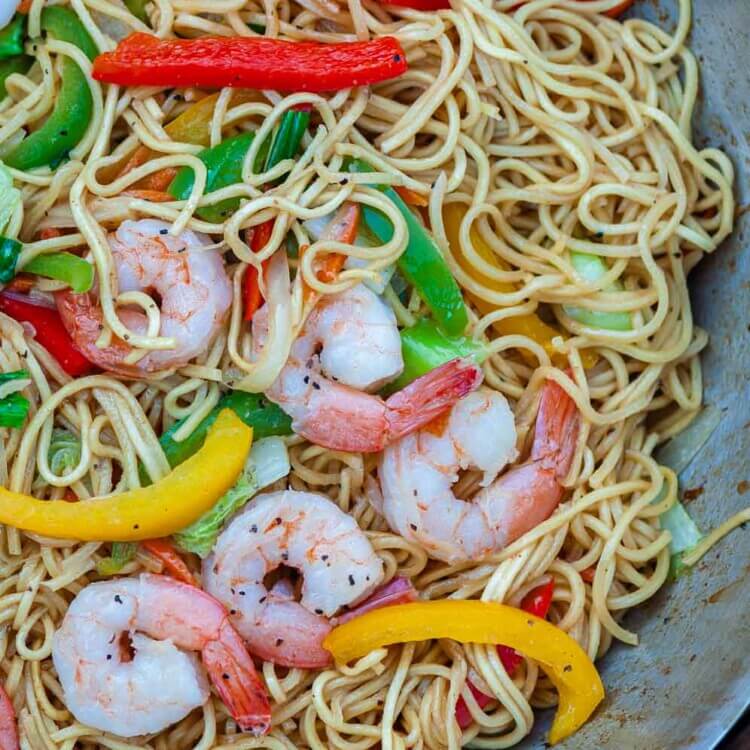
Will this still taste good if we use only veggies? I do not eat meat….I was going to use snap peas, bell peppers green beans, onion, mushrooms and maybe a little cabbage….also baby carrots salt and pepper.
Vanjo Merano says
Thanks for the question. I think that it will still taste good without the meat. However, I suggest that you refer to our vegetarian pancit canton recipe for a better result.
Tess says
thank you for sharing…i like the way you presented each recipes, simple and easy to follow
your website is now my go-to place when i want to cook Pinoy foods