Pancit Recipe
Pancit is a stir fried noodle dish made with egg noodles, pork belly, kikiam, squid balls, Chinese sausage, and vegetables in a thick soy and oyster sauce. The noodles are coated in a cornstarch-thickened sauce that clings to every strand instead of pooling at the bottom of the plate. The pork belly is seared first to render fat, and that fat is what I use to fry the kikiam and squid balls. You end up with egg noodles that taste savory, slightly sweet from the Chinese sausage, and a little briny from the squid balls. It is the kind of pancit bihon guisado approach but done with thicker noodles and a heavier sauce.

I make this for parties and weeknight dinners. My wife and kids like it because the sauce coats everything and the kikiam gives it a different flavor from the usual pancit canton. It also sits well on a table next to other dishes without drying out.
The thick sauce is the difference. Most pancit recipes end up a little dry after sitting for 10 minutes. The cornstarch slurry here keeps the noodles glossy and saucy even after you plate it.
What is Pancit?
Pancit is the general Filipino term for noodle dishes. The word comes from the Hokkien Chinese phrase “pian e sit,” meaning something cooked quickly or conveniently. Chinese traders and settlers introduced noodle cooking to the Philippines centuries ago, and Filipino cooks adapted the techniques using local ingredients and regional preferences.

There are dozens of pancit varieties across the Philippines. Pancit palabok uses thick rice noodles topped with a golden shrimp sauce. Pancit Malabon is a seafood-loaded version with shrimp broth, chicharon, and smoked fish. Pancit sotanghon uses glass noodles made from mung bean starch. Pancit habhab from Lucban, Quezon is served on banana leaves and eaten without utensils. Even pancit molo, which is a wonton soup from Iloilo, carries the pancit name despite having no noodles at all.
In Filipino culture, long noodles symbolize long life. That is why you always see pancit at birthday celebrations and special gatherings. Serving it is a way of wishing the guest of honor more years of health and happiness.
Why This Pancit Recipe Works
This version produces a well coated noodle dish because of a few key techniques.
- Searing the pork belly first – The caramelized surface creates depth, and the rendered fat becomes the cooking medium for the squid balls and kikiam
- Cooking proteins in stages – Frying the squid balls and kikiam separately in the pork fat infuses them with extra flavor while keeping their texture intact
- Building the sauce before the noodles go in – Sauteing Chinese sausage, onion, and garlic in oil before adding the liquid creates layered flavor that a single step method cannot produce
- Using a cornstarch slurry – This thickens the sauce so it sticks to the noodles instead of sliding off, giving the dish its glossy finish
Ingredients
For the noodles and sauce:
- Egg noodles – The main base of the dish, these hold up well in the thick sauce
- Soy sauce – The salty, umami foundation of the sauce
- Oyster sauce – Rounds out the seasoning with mild sweetness
- Cornstarch – Mixed with water and stirred in at the end to thicken the sauce
- Maggi Magic Chicken Cubes – For extra savory depth in the broth
- Garlic – Sauteed with the onion and Chinese sausage to build the aromatic base
- Onion – Softens in the oil and balances the garlic
- Salt and ground black pepper – Final seasoning
Meats:
- Pork belly – Seared for richness and rendered fat
- Squid balls – A street food staple with mild seafood flavor and chewy texture
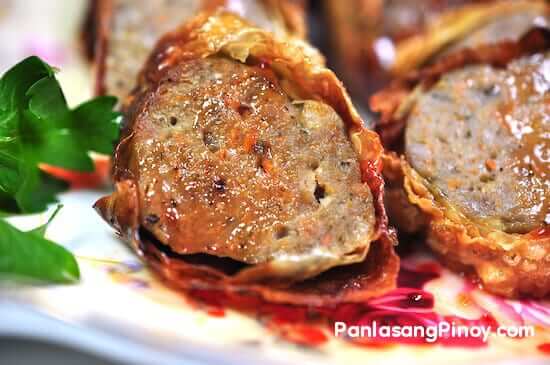
- Kikiam – A Chinese inspired sausage roll with a sweet and aromatic bite
- Chinese sausage – Smoky, slightly sweet, it flavors the oil before the sauce goes in
Vegetables:
- Cabbage – Bulk and mild crunch
- Red bell pepper – Sweetness and color
- Green bell pepper – Slight bitterness that contrasts with the richer elements
- Carrots – Firm texture and natural sweetness

Vanjo’s Advice
Here are some things I have picked up from making this dish over the years.
- Fry the squid balls and kikiam in the rendered pork fat. Do not use fresh oil. The pork fat carries flavor that ties all the proteins together.
- Give the Chinese sausage about 30 seconds in the pan before adding anything else. That short time releases its smoky sweetness into the oil, and it flavors everything that follows.
- Pull the vegetables out early. Saute them just until slightly softened, then set them aside in a separate bowl. Fold them back in at the very end so they keep their color and crunch.
- Taste the sauce before you add the noodles. Once the soy sauce, oyster sauce, and chicken cubes dissolve in the water, taste the liquid and adjust. It is much easier to fix the seasoning at this stage than after the noodles go in.
- Toss the noodles with tongs, do not stir with a spoon. Lifting and tossing distributes the sauce evenly and prevents the noodles from breaking apart.
How to Cook Pancit
This pancit recipe is straightforward once you have everything prepped. Take it one step at a time.
Sear the Pork Belly
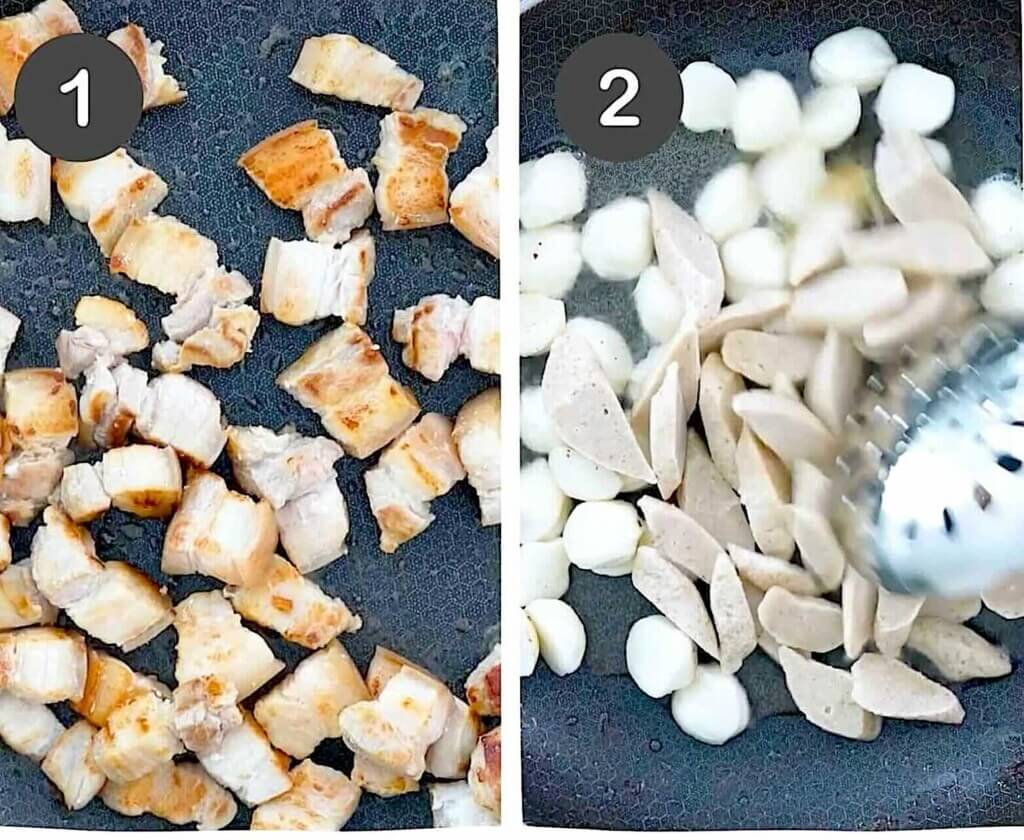
- Place the pork belly in a large pan and sear until the surface turns golden brown.
- Pour in the water, bring to a boil, then lower the heat and simmer until the pork is fork tender and the fat has rendered.
Remove the pork and set it aside.
Fry the Squid Balls and Kikiam
- In the same pan with the rendered pork fat, fry the squid balls and kikiam for about 2 to 2 1/2 minutes until browned.
- Remove from the pan and set aside.
Cook the Vegetables

- Reduce the oil in the pan to about 2 tablespoons, then add the sliced bell peppers, julienned carrots, and chopped cabbage.
- Saute for 2 minutes until slightly softened but still firm, then remove and set aside.
Build the Sauce and Add the Noodles
- Return about 3 tablespoons of oil to a clean pan and saute the Chinese sausage for 30 seconds, then add the sliced onion and garlic until the onion softens.
- Pour in the water, soy sauce, and oyster sauce, bring to a boil, then reduce heat to low.
- Add the chicken cubes and stir until dissolved.
- Add the egg noodles and cook for 2 minutes while tossing occasionally to avoid clumping. Season with ground black pepper.
Thicken The Sauce
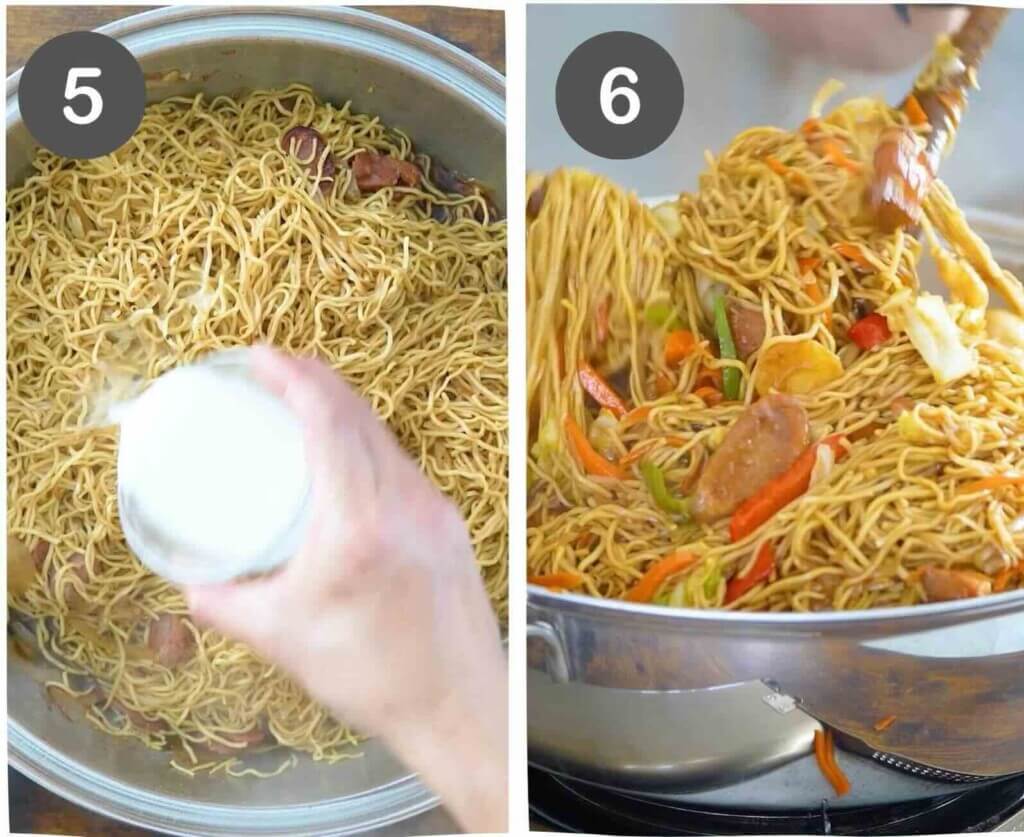
- Mix the cornstarch with water and pour it into the pan,
- Toss the noodles to distribute the thickened sauce evenly.
The cornstarch step is what gives the noodles that glossy, saucy coating. Do not skip it.
Bring Everything Together
- Add back the pork, Chinese sausage, squid balls, and kikiam, then toss until everything is distributed.
- Fold in the vegetables gently. Transfer to a serving plate.
Pro Tips
- Check your noodle type before cooking. Dried egg noodles need about 2 minutes in the boiling sauce. Raw egg noodles need a separate boil first. Precooked noodles only need a quick soak. Overcooking makes them soft and mushy.
- Chill the Chinese sausage in the fridge before slicing. Cold sausage holds its shape and gives you cleaner cuts.
- Keep calamansi or lime wedges on the table. A squeeze of citrus right before eating cuts through the richness and balances the dish. This is how pancit is traditionally served.
What to Serve with Pancit
- Fried chicken – Crispy chicken alongside saucy noodles is a standard Filipino combination at gatherings
- Lumpiang shanghai – Crunchy spring rolls with sweet chili sauce pair well with the savory noodles
- Pork barbecue – Smoky charred skewers on the side
- Steamed white rice – Some people eat pancit over rice for a fuller meal
- Calamansi – Halved calamansi on the table so everyone can adjust the acidity themselves
- White bread – Filipinos commonly eat pancit with sliced bread, locally known as Tasty bread
Storage
This pancit recipe stores well if you have leftovers, though in my experience a full pan does not last long.
- Refrigerator: Transfer to an airtight container and keep for up to 4 days. The sauce thickens more as it cools, so the noodles hold together well.
- Freezer: Seal in a freezer bag or container for up to 3 months. Vegetables will soften after thawing, but the overall flavor stays intact.
- Reheating: Warm in a pan over medium heat with a splash of water or broth to loosen the sauce. A pan gives better results than a microwave because it restores some of the texture.

More Noodle Recipes
- Lomi recipe – Thick egg noodles braised in a rich, starchy soup with pork, kikiam, and meatballs
- Pancit Luglug – Thick rice noodles topped with a shrimp sauce, chicharon, and hard boiled eggs
- Pancit Cabagan – Saucier miki noodles with meats, vegetables, and quail eggs
- Filipino Pancit – A mixed noodle version using both bihon and canton for two textures in one dish
- Pancit Canton at Bihon – Another combined noodle dish with flour noodles and rice noodles
- Chicken Pancit Medley – Bihon and sotanghon noodles with shredded chicken
Substitutions
- Pork belly – Boneless chicken thighs or pork shoulder work if you want leaner meat
- Squid balls – Fish balls or shrimp balls give a similar chewy seafood element
- Kikiam – Chinese pork sausage links or firm tofu can replace it, though the flavor will differ
- Egg noodles – Rice vermicelli (bihon) or flour stick noodles (canton) can substitute, with adjusted cooking times
- Oyster sauce – Hoisin sauce is a sweeter alternative if oyster sauce is not available
- Maggi chicken cubes – Chicken bouillon granules or chicken broth concentrate
Frequently Asked Questions
What is the difference between pancit bihon and pancit canton?
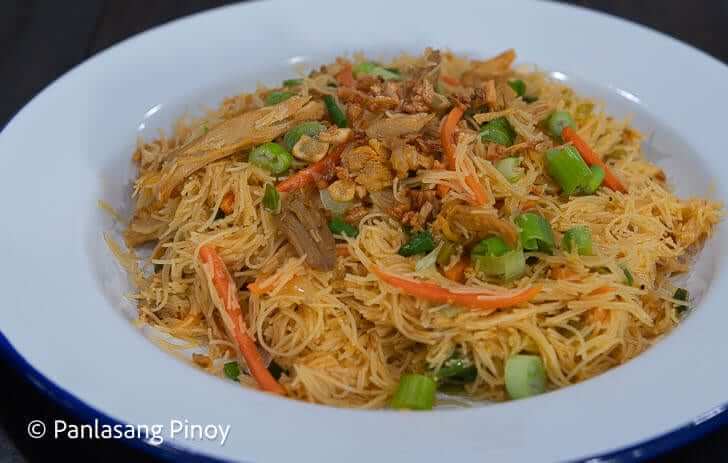
The noodle is the main difference. Pancit bihon uses thin rice vermicelli made from cornstarch or rice flour. Pancit canton uses thicker egg or wheat noodles with more chew. Both are stir fried with similar sauces and toppings, but the texture and mouthfeel are different.
Can I use both bihon and canton noodles together?
Yes. Mixing the two is a popular variation. The thin bihon absorbs the sauce while the thicker canton noodles hold their shape. Many Filipino families combine them for contrast.
How do I keep the noodles from sticking together?
Toss them with a small amount of oil right after draining or soaking. During cooking, lift and toss with tongs rather than stirring with a spoon. This keeps the strands separated and distributes the sauce.
Can I make this pancit ahead of time?
You can prep the vegetables and meats a day in advance and store them separately in the fridge. The noodles are best cooked fresh. If you need to prepare the full dish early, keep extra broth on hand because the noodles absorb liquid as they sit.
What protein can I use instead of pork?
Boneless chicken thighs, shrimp, or a mix of both. Slice chicken thin for quick cooking, and add shrimp toward the end to prevent overcooking.

This pancit recipe is one I keep going back to because of how the thick sauce holds everything together. The pork belly, kikiam, and squid balls give it a flavor that you do not get from standard guisado versions. I hope you try making it. Once you see how the cornstarch pulls the sauce together and coats every noodle, you will understand why this version works so well.
Watch How to Make It

Did you make this? If you snap a photo, please be sure tag us on Instagram at @panlasangpinoy or hashtag #panlasangpinoy so we can see your creations!

Pancit Recipe
Ingredients
- 800 grams egg noodles
- 2 pieces Maggi Magic Chicken Cubes
- 1 ½ lbs. pork belly
- 8 ounces squid balls
- 8 ounces kikiam
- 3 pieces Chinese sausage
- 1 ½ cups water
- 8 cloves garlic
- 1 onion sliced thinly
- 1/2 teaspoon Ground black pepper
Vegetable ingredients:
- 1 head cabbage chopped
- 1 red bell pepper sliced into strips
- 1 green bell pepper sliced into strips
- 2 carrots julienned
Sauce ingredients:
- ½ cup soy sauce
- ¼ cup oyster sauce
- 6 cups water
- 2 tablespoons cornstarch
Instructions
- Sear the pork belly until the outer part turns medium brown. Pour 1 ½ cups of water. Let boil. Simmer until the pork tenderizes and enough fat gets rendered.1 ½ lbs. pork belly, 1 ½ cups water
- Remove the pork from the pan. Using the rendered fat, fry the squid balls, and kikiam for 2 to 2 ½ minutes or until it browns. Remove from the pan. Set aside.8 ounces squid balls, 8 ounces kikiam
- Reduce the oil to at least 2 tablespoons. Sauté the bell peppers, carrots, and cabbage. Continue sautéing for 2 minutes. Remove from the pan. Set aside.1 red bell pepper, 1 green bell pepper, 2 carrots, 1 head cabbage
- Put 3 tablespoons of the oil back into a clean pan. Sauté the Chinese sausage for 30 seconds. Add the onion and garlic, then cook until the onion softens3 pieces Chinese sausage, 1 onion, 8 cloves garlic
- Add soy sauce, oyster sauce, and water. Let boil. Adjust the heat to the lowest setting.½ cup soy sauce, ¼ cup oyster sauce, 6 cups water
- Add Maggi Magic Chicken Cubes. Stir.2 pieces Maggi Magic Chicken Cubes
- Add the egg noodles. Cook for 2 minutes while occasionally tossing the noodles. (see notes below)800 grams egg noodles
- Season with ground black pepper.1/2 teaspoon Ground black pepper
- Combine ¼ cup water with 2 tablespoons of cornstarch. Stir and pour the mixture into the pan. Toss. (see notes below)2 tablespoons cornstarch
- Add back the pork, Chinese sausage, squid balls, and kikiam. Toss until everything is evenly distributed.
- Add the sauteed vegetables. Toss.
- Transfer to a serving plate. Serve. Share and enjoy!
Notes
- Tossing egg noodles – Give the noodles a gentle toss every now and then for about 2 minutes. This helps them cook evenly, soak up all that flavorful sauce, and keeps them from clumping into one big noodle ball. Waiting until the end to add them is important. It stops them from turning soggy or overcooked, so they stay perfectly chewy and coated with flavor.
- Diluting cornstarch with water – Always mix your cornstarch with a bit of water before adding it to the pan. If you throw it straight into the hot liquid, it will clump up fast. Creating a slurry makes sure that the sauce thickens smoothly. This little trick helps the sauce stick to every strand of noodle and every bite of meat. Skip the cornstarch, and your sauce might end up thin and watery. Definitely not what we’re going for.

Leave a Comment