Pork Ribs Sinigang
I like using pork ribs for sinigang because the meat becomes tender as it simmers and the bones give the broth more flavor. This pork ribs sinigang has the same sour tamarind broth as regular pork sinigang, but the ribs make the broth taste richer.
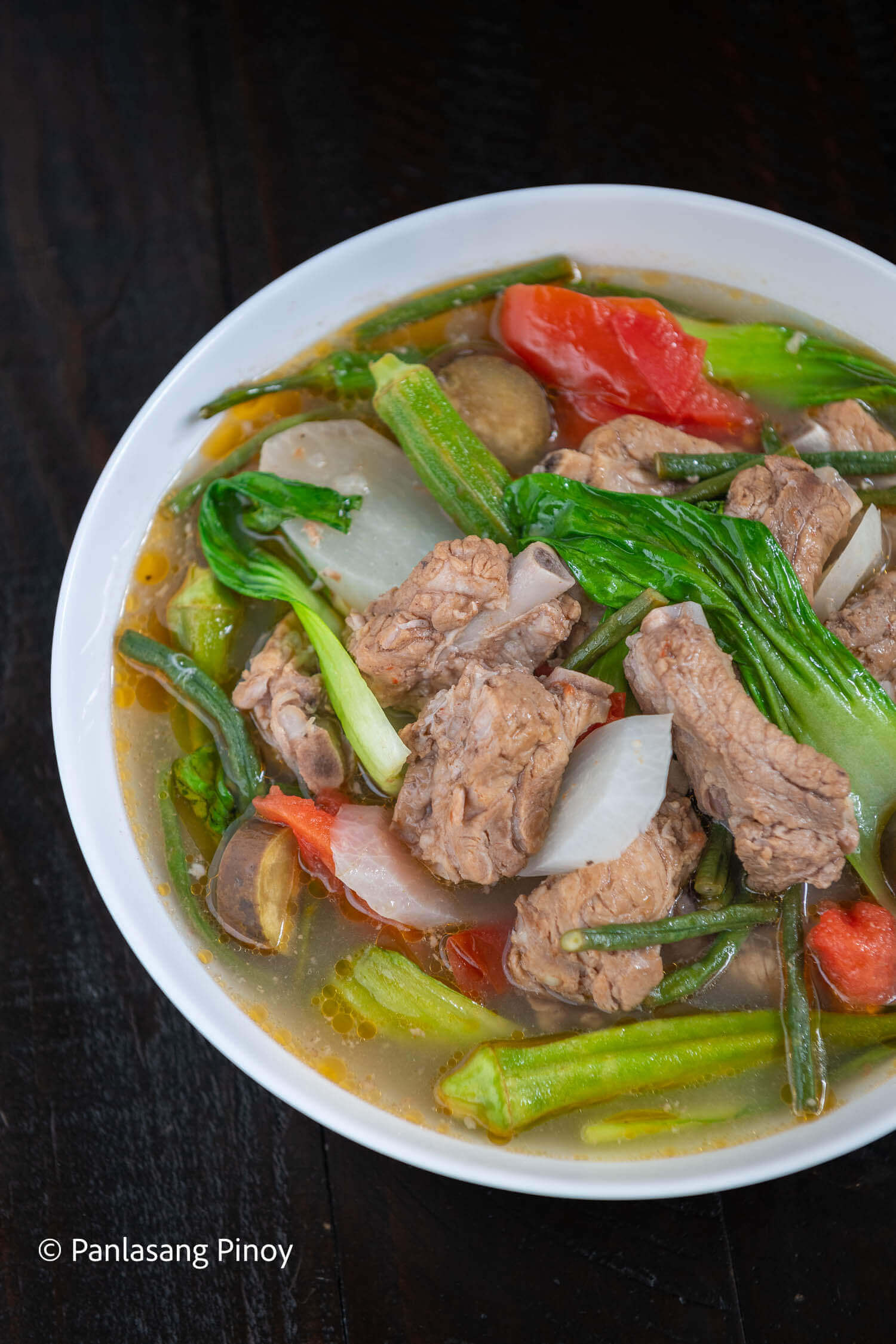
Start by simmering the ribs until the meat is tender. After that, the rest of the cooking is quick. Add the souring mix, then cook the vegetables in order so each one cooks properly. The daikon radish (labanos) goes in first, while the pechay goes in last so it stays green and does not overcook.
I learned to cook sinigang early on, and I still make it often today. This version keeps the cooking simple, but the pork ribs give the broth more body and flavor. If you prefer beef, I also make beef ribs sinigang in a pressure cooker when I want to save time.
What is Pork Ribs Sinigang?
Pork ribs sinigang is sinigang na baboy made with ribs instead of pork belly. It has the same sour tamarind broth, vegetables, and patis on the side, but the ribs make it a little different because you get pork pieces you can enjoy with rice.
The sour taste usually comes from tamarind. I use sinigang mix here, but fresh sampalok also works if you want to make the broth from scratch. Kamias and guava are other options if that is what you have. For this version, I add plenty of vegetables and serve it with hot rice on the side.
What Makes This Version Different
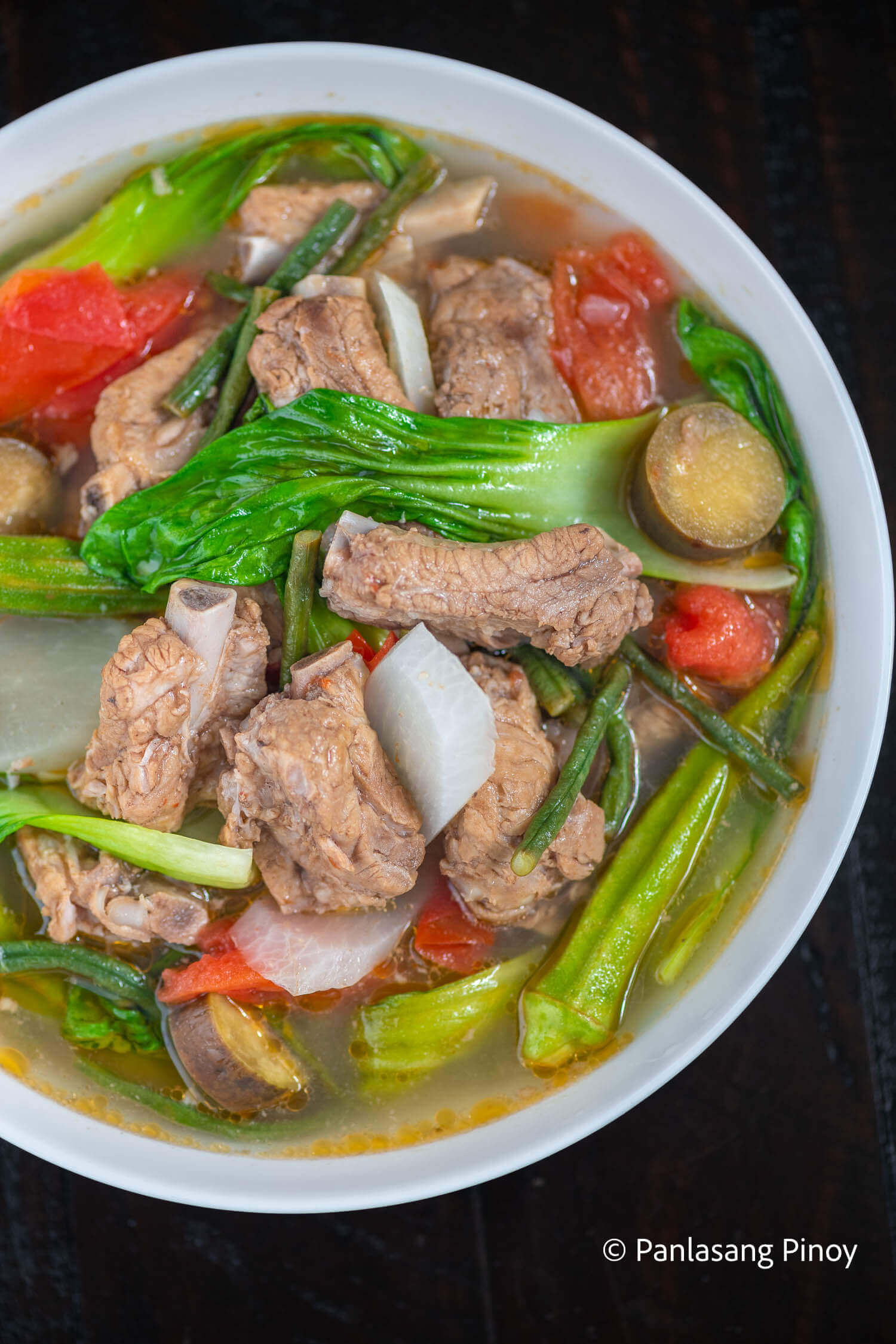
Ribs make this version different from the usual pork belly sinigang. As the ribs cook, the meat softens and loosens from the bone. You get pieces of pork to enjoy with rice instead of soft slices of belly.
Ingredients
- Pork baby back ribs – The cut I use here. Ask the butcher to cut the rack into single ribs so they fit the pot and are easy to serve.
- Knorr Sinigang sa Sampaloc with Gabi – The souring mix for this. It gives the broth its sour tamarind taste, plus a little thickness from the gabi. Any tamarind based mix works, or use fresh tamarind.
- Daikon radish (labanos) – Slice into rounds. It goes in after the mix and adds a mild peppery bite.
- Long green peppers (siling pansigang) – For aroma and a little heat. Leave them whole if you do not want the soup spicy.
- String beans (sitaw) – Cut into 2-inch pieces.
- Okra – Whole is fine. It thickens the broth a little.
- Chinese eggplant – Slice on the diagonal so it cooks evenly.
- Pechay or bok choy – The leafy green that goes in last. Either one works.
- Fish sauce (patis) – Season at the end and taste as you go.
- Onion and tomato – Cut into wedges. They help build the base of the soup.
Vanjo’s Advice
- Brown the ribs first. Sauté them until light brown before the water goes in. It gives the soup a better base than boiling the ribs right away.
- Cook the ribs until tender before adding the mix. I wait until the meat is soft, then add the sinigang mix so I can adjust the sourness before the vegetables go in.
- Add the vegetables by how long they cook. Labanos goes in after the mix, then the firmer vegetables, and the pechay last so it stays green.
- Add water if the broth gets low. The soup reduces while the ribs simmer. Add hot water if the broth gets too low so it does not become too salty or too sour.
- Make it as sour as you like. I like mine sour, so I add a bit more mix after tasting. Add it slowly so you do not overdo it.
- Add fresh gabi if you want it thicker. The mix already has some gabi, but a few pieces of real taro mashed into the broth thicken it nicely, like my sinigang na baboy with gabi.
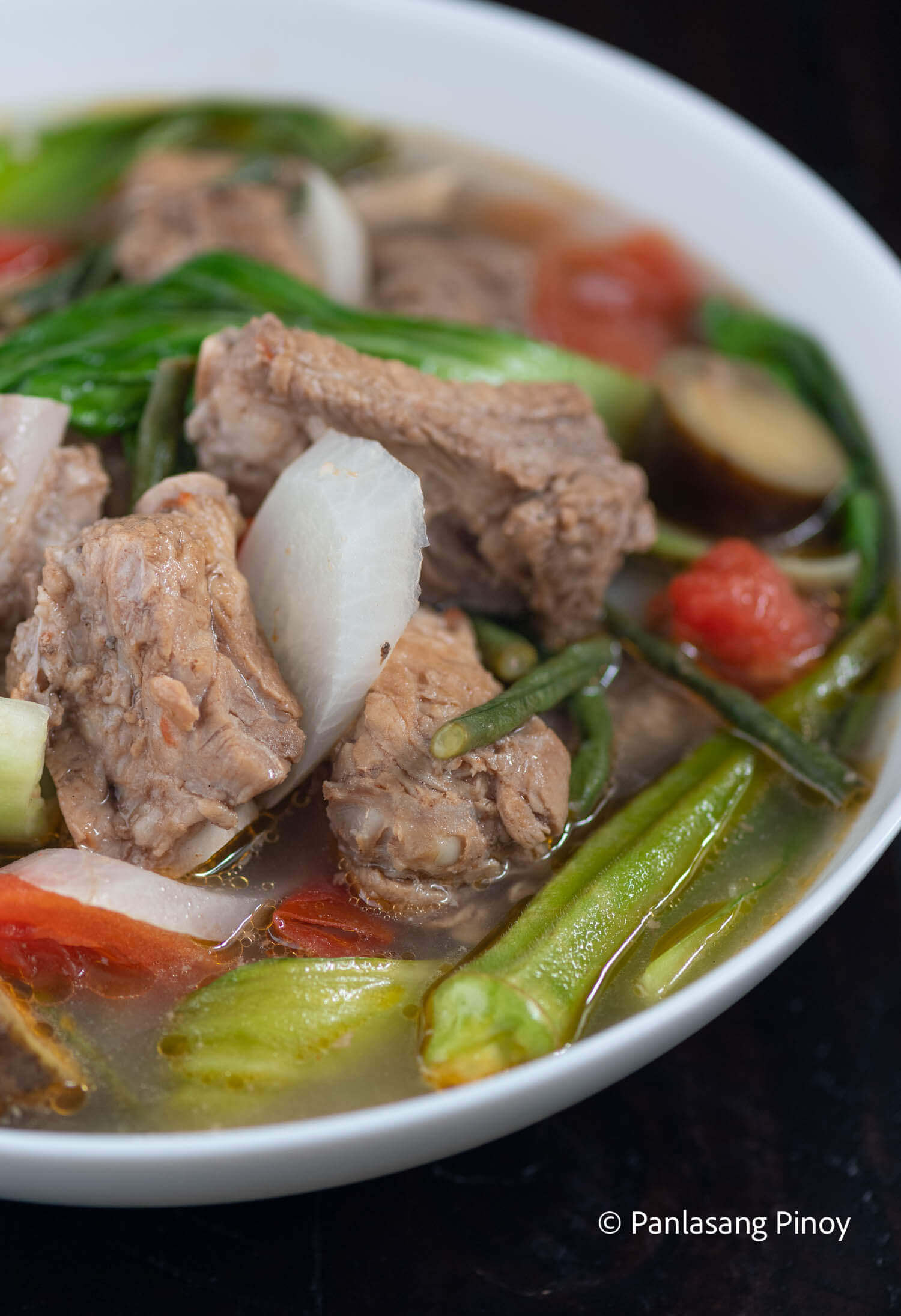
How to Cook Pork Ribs Sinigang
This is how I make it. Give the ribs time to get tender first, and the rest goes quickly once they are soft.
Sauté the Base
- Heat the cooking oil in a large pot. Add the onion and tomato and cook until the onion softens and the layers start to separate.
- Add the pork ribs and cook until they turn light brown on the outside.
Simmer the Ribs
- Pour in the water and cover the pot. Bring to a boil, then lower the heat and simmer for about 1 hour, or until the ribs are fork-tender. Add more water if it gets too low.
- Stir in the sinigang mix, then add the daikon radish. Cook for about 5 minutes.
Add the Vegetables
- Add the long green peppers, string beans, okra, and eggplant. Cook for 10 to 12 minutes, or until the vegetables are just tender.
- Add the pechay and cook for 3 minutes. Season with fish sauce and ground black pepper to taste, then serve hot with rice.
Best Ways to Enjoy This Sinigang
- Over hot rice – I like spooning the broth over rice before eating the ribs.
- With spicy patis on the side – Mix fish sauce with crushed siling labuyo and a little calamansi for dipping the ribs.
- With extra calamansi – Squeeze more in if you want it more sour.
Storage
This sinigang keeps well, and honestly I like it even more the next day once the sourness settles into the pork.
- Refrigerator – I keep leftovers in a covered container in the fridge for up to 3 days. The broth thickens a bit as it sits, and that is fine with me.
- Freezer – You can freeze the broth and ribs for up to 2 months. I leave the leafy greens out, since they go mushy after thawing, and just drop in fresh ones when I reheat.
- Reheating – I warm it slowly on the stove until the broth is hot and the ribs are heated through. Keep it at a gentle simmer so the vegetables do not fall apart.
More Filipino Soup Recipes
- Pork Baby Back Ribs Nilaga – The same ribs in a clear broth for the days I want something without the sour.
- Killer Crispy Sinigang – Sour soup with crispy fried pork belly on top, for when you want it a little richer.
- Pork Sinigang sa Kamias – This one uses kamias for the sour. I used to eat it almost every week growing up.
- Sinigang na Pata with Gabi – Made with pork hocks and plenty of taro, so the broth comes out thicker.
- Pesang Baboy at Manok – A ginger soup I make when I want a break from sinigang.
Substitutions
- Daikon radish – White turnip works, or you can leave it out. I do not always add it.
- Pechay – Bok choy, spinach, or kangkong all work. They wilt fast, so I add them at the very end.
- Long green peppers – Jalapeño or Serrano if you cannot find siling pansigang. I keep them whole so they add aroma without much heat.
- Okra – Skip it if you are not a fan. The soup is still good without it.
Frequently Asked Questions
How long does it take to cook pork ribs until tender for sinigang?
On the stove it usually takes about 1 to 1.5 hours, depending on the cut and how thick the ribs are. You will know they are ready when the meat gives easily and starts to pull away from the bone. I add the mix and vegetables only after the ribs are tender.
Can I cook this in an Instant Pot or pressure cooker?
Yes. A pressure cooker works well for ribs. Sauté the onion, tomato, and ribs first, then cook on high pressure for 25 to 30 minutes. Release the pressure, then add the mix and vegetables and let them cook in the hot broth.
Should I use baby back ribs or spare ribs?
Both work. Baby back ribs usually cook faster than spare ribs, which is why I use them here. Spare ribs have more fat and take longer to soften, but they can give the broth more richness. Just have them cut into single ribs.
How do I make the broth more sour?
Taste it before serving and add more mix a little at a time until it is as sour as you like. If you want a cleaner tamarind taste, use fresh tamarind or tamarind paste instead. Add a little first, taste, then add more if needed.
Can I use pork belly instead of ribs?
You can. Pork belly cooks softer and adds more fat to the soup. I sometimes mix ribs and belly so the soup gets flavor from the bones and richness from the pork belly.
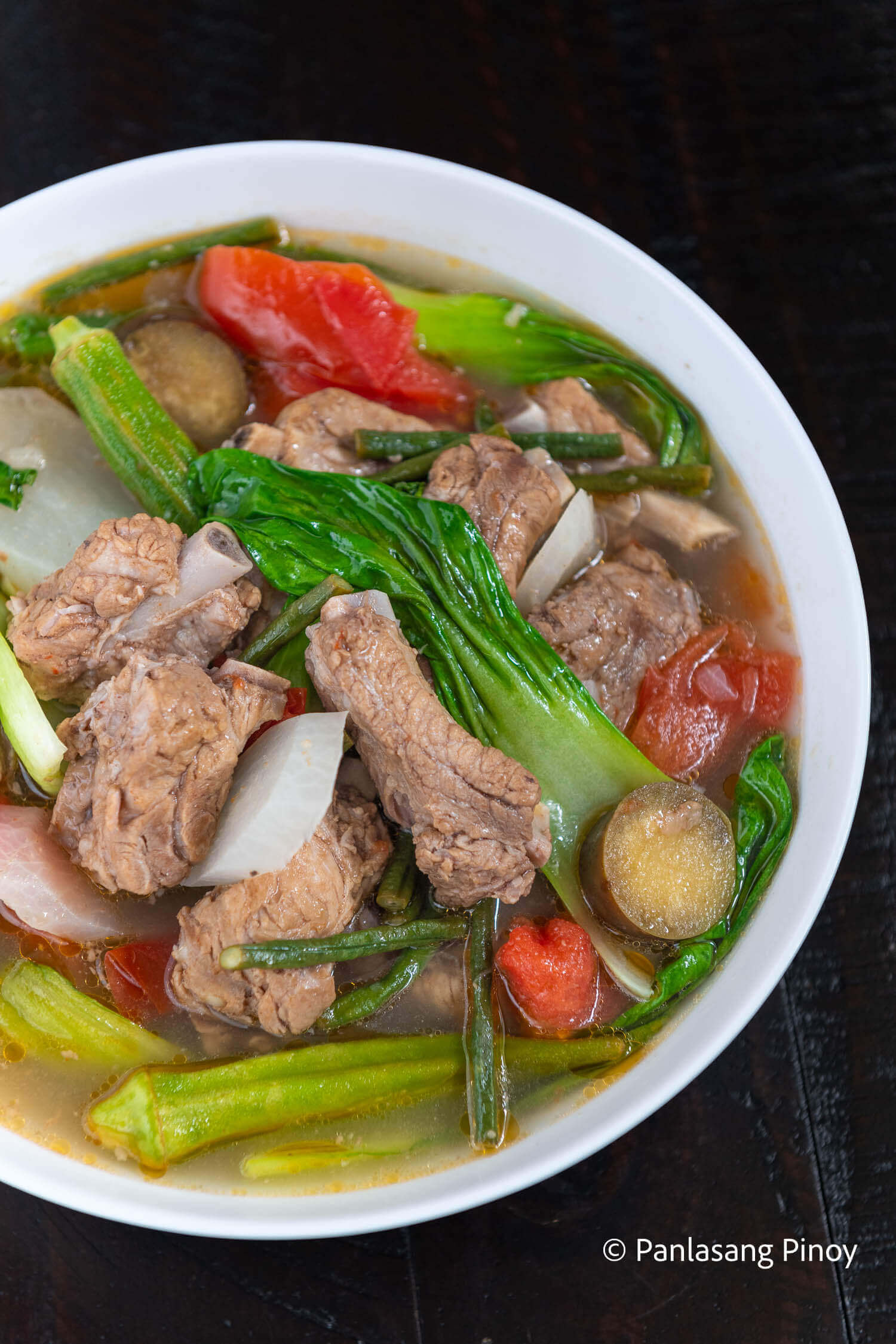
Try this pork ribs sinigang when you want a sour soup with tender ribs and plenty of vegetables. Serve it hot with rice and spicy patis on the side. Share and enjoy!
Watch How to Make It

Did you make this? If you snap a photo, please be sure tag us on Instagram at @panlasangpinoy or hashtag #panlasangpinoy so we can see your creations!
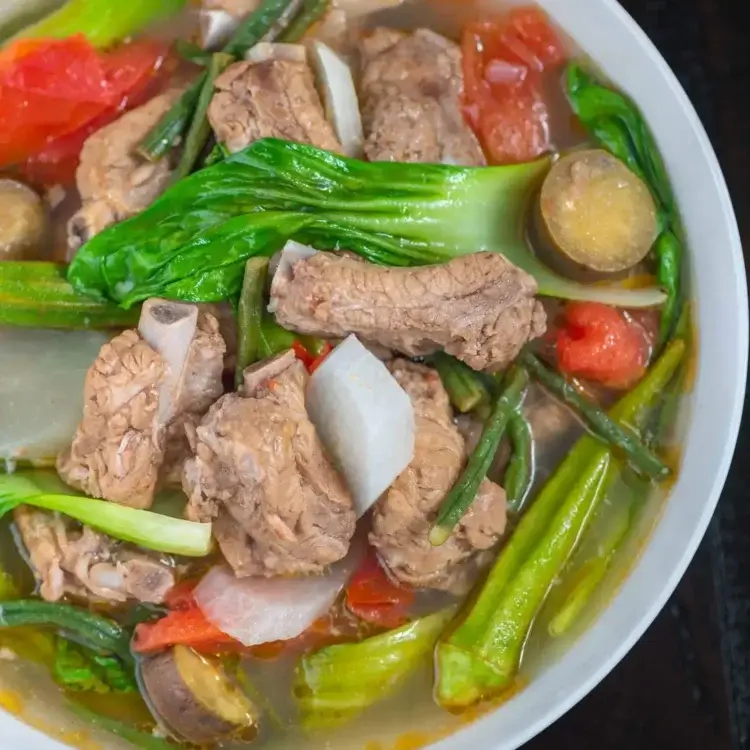
Pork Ribs Sinigang
Ingredients
- 3 lbs. pork baby back ribs
- 3 bunches bok choy
- 1 1/2 liter water
- 44 grams Knorr Sinigang sa Sampaloc with Gabi
- 15 counts string beans cut in 2-inch pieces
- 8 okra
- 1 Chinese eggplant sliced
- 3 long green chili pepper
- 1 cup daikon radish sliced
- 2 tomato
- 1 onion wedged
- 3 tablespoons cooking oil
- Fish sauce and ground black pepper to taste
Instructions
- Heat oil in a large pot. Saute onion and tomato until the layers of the onion starts to separate.
- Add pork spare ribs. Continue sautéing until the pork turns light brown in color.
- Pour water. Cover the pot. Let the water boil. Adjust heat to low setting and continue boiling for 30 minutes.
- Add Knorr Sinigang sa Sampaloc with Gabi recipe mix and daikon radish. Stir and cover the pot. Continue cooking until the pork gets tender.
- Add chili pepper, string beans, okra, and eggplant. Cook for 12 minutes.
- Add pechay. Cook for 3 minutes.
- Season with fish sauce and ground black pepper.
- Transfer to a serving bowl. Serve with rice. Share and enjoy!

Maganda ny says
Everything are so so yummy. Looking for recipes for pork belly. And skin will be crispy.
Vanjo Merano says
You might want to try this recipe https://panlasangpinoy.com/crispy-mini-lechon-belly-roll/
M A Guieb says
The best food recipe ever! Only is panglasangpinoy!