• Skip to primary navigation
  • Skip to main content
  • Skip to primary sidebar
Your Top Source of Filipino Recipes
About
Cooking Schools
Contact
Facebook
Instagram
Pinterest
YouTube

Panlasang Pinoy

Your Top Source of Filipino Recipes

  • New? Start Here
  • All Recipes
  • Course
    • Breakfast
    • Lunch
    • Appetizers
    • Dessert
    • Dinner
  • Ingredient
    • Chicken
    • Pork
    • Beef
    • Turkey
    • Vegetable
    • Fish
    • Rice
    • Egg
    • Tofu
    • Noodles
  • Type
    • Adobo
    • Bread
    • Fried Chicken
    • Sinigang
    • Kilawin
    • Ginataan
    • Kaldereta
Home Culinary Arts

Culinary Arts

What is the Difference Between Baking Soda and Baking Powder?

Our adventures in the kitchen lead us to try different recipes. Most of these recipes require ingredients that we are completely unfamiliar with – while others ask for common ones. However, there are still some of us who might not have any idea as to what make-up these common ingredients. I bet that you experienced this sometime while you were still learning to cook.

baking-soda-and-baking-powder-front

If you are fond of baking cakes and pastries, chances are that you’ve tried different cake and bread recipes that made use of baking soda, baking powder, or both. Why is there a variation between these ingredients? What is the difference between the two?

Both baking soda and baking powder are considered as leavening agents.

Leavening agents are ingredients that produce carbon dioxide when added or mixed with dough or baked in the oven (as a result of chemical reaction); the carbon dioxide produced inside the dough expands it and causes the bread to rise.

Baking soda is a compound known as Sodium Bicarbonate (NaHCO3). When it is combined with acidic compounds and moisture, a chemical reaction takes place. The chemical reaction triggers the baking soda to release carbon dioxide which produces bubbles that expands the dough and makes it rise. The following are considered as acidic compounds that can cause reaction when mixed with baking soda: phosphates, cream of tartar, lemon juice, yogurt, buttermilk, cocoa, vinegar.

On the other hand, baking powder is a mixture that already contains Sodium Bicarbonate, acidic compounds (cream of tartar usually), and starch (this can either be corn or potato starch). The starch is also called the drying component because it keeps the acidic component dry preventing chemical reaction. Chemical reaction takes place right after combining baking powder with moisture. Nowadays, commercial baking powder can be categorized into 2 groups; the single acting and double acting powders. Single acting baking powder is set off by water or moisture while double acting baking powder releases gas first when combined with water or moisture then during high temperature where most of the gases are released.
Going back to our previous question; why is there a variation between these ingredients?

The main ingredients in a recipe call for the variation. For example, baking soda will taste bitter if does not fully react with an acidic component. This means that moderate amount of acidic ingredients should be present in a recipe to obtain optimal taste and texture when baking soda is used. Most lemon cake recipes require the use of baking soda.
If the ingredients are not too acidic, baking powder should be used. Using baking soda will just make the dough flat and taste bitter. It takes an acidic compound to trigger a chemical reaction. Since acid is already present in baking powder, only moisture is needed to activate the reaction and release carbon dioxide without affecting the taste.

Now that you have an idea, let’s revisit some questions posted in the comments section of our previous featured recipes.

1. The recipe requires for baking soda but I only have baking powder, can I use baking powder instead?

No. Although baking powder is also a leavening agent, using it as an alternative for baking soda might affect the taste of the cake or pastry.

2. The recipe requires for baking powder but I only have baking soda, can I use baking soda instead?

It depends. You may use baking soda as an alternative for baking powder only if you mix it with an acid compound. Using two parts of acid compound (such as cream of tartar) and one part baking soda should do the trick.

Did you find this article helpful? Do you have more information to add? You can always place a comment below.

Orange Chicken: First Place in SPCBA Culinary Competition

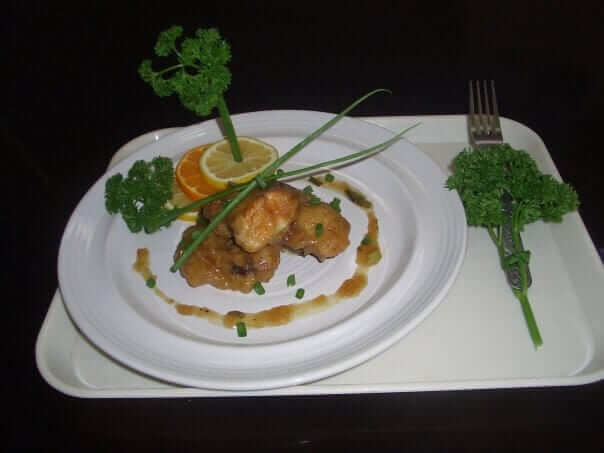
I was delighted to learn from one of our avid readers about her recent victory in the 2010 SPCBA Culinary Competition. Apple Instrella, a student at the San Pedro College of Business Administration bagged the first prize in the recently concluded SPCBA Culinary Competition. She and her teammate entered their twist of the Orange Chicken Recipe that we featured a few months back.

Orange-Chicken-Entry

This achievement is significant especially for Culinary Arts students because they are able to develop self confidence and a more competitive attitude which will help them in their culinary career in the future.

I am honored that they chose one of our featured recipes as their entry. This event made me realize the value of quality that we are putting in each of our recipe posts. Expect us to continue concentrating in this aspect on the next recipes to come.

Congratulations Apple and Mark. Good Job!

How to Butcher a Chicken

Have you ever tried to butcher a whole dressed chicken? I remember the first time to butcher a whole chicken; it was confusing. Back then, I didn’t know where to start and I have no idea as to how many parts should I divide it into. I spent more than 30 minutes to complete the task and I created a mess. The chicken was torn apart; I can’t even recognize one part from the other.

After observing how my mom does it (not to mention several hours of watching several cooking shows on TV), I finally figured the steps and techniques to butcher a chicken appropriately. After that day, I practiced… and practiced… and practiced until I got it right.

This is a basic topic that most of you already know. For the benefit of those who want to learn the proper way, I listed some steps that you may use as a guide. Remember, knowledge is just the first part of learning. Once you know what to do, start to practice until you get it right. Also, take extra caution when handling sharp objects. Good luck!

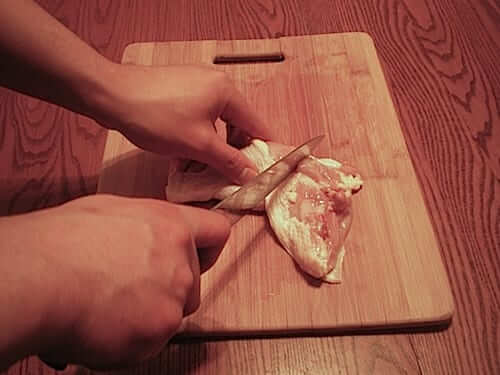
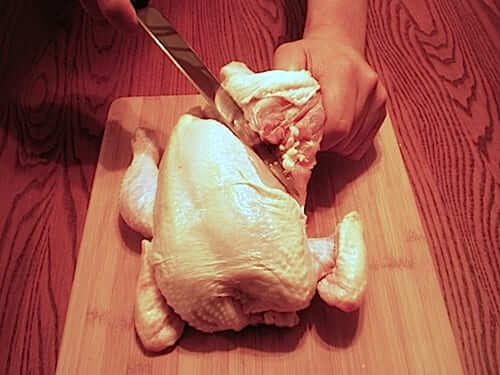
butcher-a-chicken-1
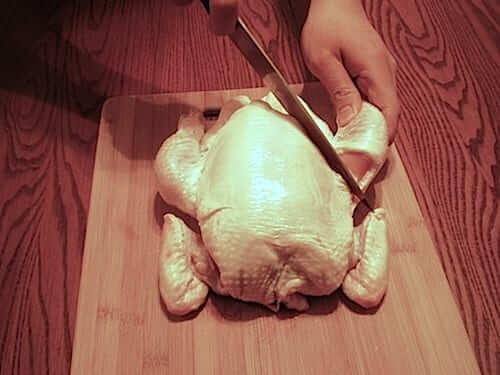
1. Place the chicken on a chopping board (the back should be facing down). Using a sharp knife (preferably chef’s knife), slice between the leg and breast until you reach the bone. Stop right there; don’t attempt to cut the bone.

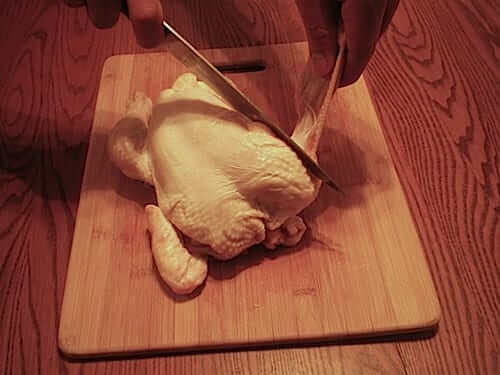
butcher-a-chicken-2
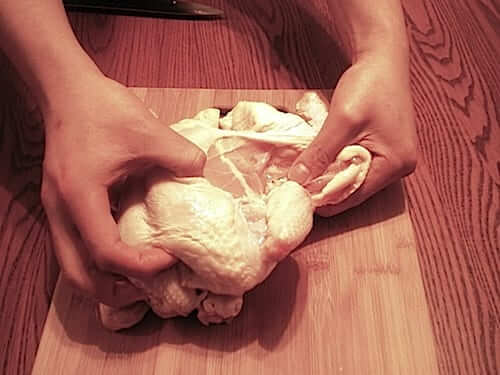
2. Loosen the hip joint by pulling the sliced leg away from the body while pressing the back of the hip joint. You’ll know that you are done when you see the leg bone pop-out from the joint.

butcher-a-chicken-3
3. Once the leg bone is disconnected, continue slicing through the joint until the leg and thigh are completely detached.

butcher-a-chicken-4
4. Separate the drumstick and thigh by putting the leg on a chopping board and cutting through the joint between the two parts.

butcher-a-chicken-5
5. Pull the wing out and cut it off at the joint then trim the wing tip. Perform step number 2,3, and this step to the other side of the chicken.

butcher-a-chicken-7
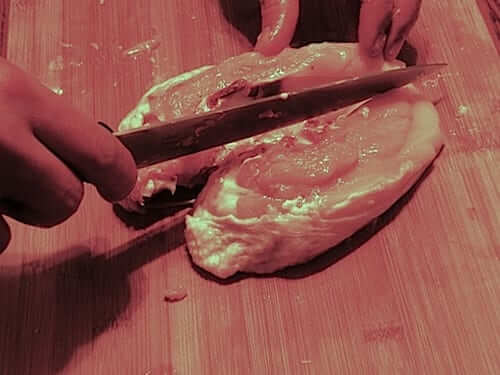
6. Remove the breast by making a slit down the middle of the breastbone then continue slicing alongside the ribcage while pulling the meat.

7. Turn the remaining part around and perform step number 6 to remove the breast on the other side.

As for the trimmings and remaining parts, you can always use them to make chicken stock so nothing goes to waste.

5 Things to Consider in Making the Best Fried Rice

Fried Rice is the result when steamed or boiled rice are fried in oil or animal fat. For practical reasons, the Chinese first used this method to preserve and recycle leftover steamed rice for consumption. Nowadays, several varieties of fried rice are enjoyed throughout the world.

How to Make Best Fried Rice

Making fried rice seems simple and easy. When asked as to how this is done, you might say “heat some oil and fry the steamed rice then add the other ingredients that you have”. While this statement is true, there are more things to consider that may help you make the best possible outcome out of what you have.

A friend approached me a week ago asking for some advice on how to make fried rice similar to the ones bought from Chinese take-outs. He tried making one the night before but the outcome was not satisfactory; the rice was clumped and it had a soft and sticky texture. So, I gave him some pointers which I learned from my past mistakes (sometimes we need to commit mistakes to be able to understand the right thing; it’s okay as long as we learned something from it). Here is what I told him:

1. Choose the appropriate rice variety

The variety of rice that you will use can make or break your expectations. Can you still recall how the fried rice that you ordered in the Chinese restaurant looks like? Notice how loose each grain was? Determining the texture of each rice grain is one way to examine the quality of your fried rice. Based on my experience, sushi or calrose rice, Jasmine rice, and other rice with soft and sticky texture when cooked do not make good fried rice. Using rice varieties with firm texture will likely give you good results. The two varieties that worked well for me are Mexican rice (the one used to make burrito) and Sinandomeng. You may want to check my post on Garlic Fried Rice recipe wherein I used day-old Jasmine rice. The recipe was superb though the rice was sticky (even if I followed the next pointer #2). This mistake lead me to experiment more and come-up with this article.

2. Prepare the rice before frying

Making the rice ready before frying is a smart move. The ideal rice that we need to use should have a firm outside texture. Using day-old rice is a good idea but it will be better if the rice is placed in a Ziploc or similar plastic container and refrigerated. You may also put the rice in the freezer and thaw it before frying. Since making fried rice involves cooking oil and other liquid seasonings (depending on the recipe), having a firm textured rice means less liquid is absorbed. This avoids the possibility for the rice to soften and become sticky. If in case you want to make fried rice from newly steamed rice, you don’t need to wait a day pass by. One proven technique is the use of baking sheet or aluminum foil. Simply place the hot rice on a baking sheet or aluminum foil and set aside until room temperature is achieved then refrigerate for at least 2 hours. Also, make sure to loosen the rice before frying. This can be done by lightly pressing the plastic container until clumped is loose.

3. Ensure that your wok or frying pan is hot enough

It is important that heat is well distributed in the wok or frying pan that you are using. Since frying rice requires the maximum heat available, having enough heat on the pan makes the grains equally cooked.

4.Perform the proper stirring/tossing technique

Frying rice requires the proper stirring technique (or tossing) to preserve the shape and texture of the grain; this also prevents the rice from sticking. The proper way of stirring the rice is to push the spatula downwards (45 degree angle) until the bottom of the pan is reached. You need to scrape the rice that is stuck on the bottom of the pan and toss so to evenly mix all the ingredients. Do not press the rice with the spatula.

5. Prepare other ingredients beforehand

The ingredients that you will use depends on the fried rice recipe that you are doing. Here are the rules that I practice:

  • Meat – This pertains to pork, chicken, beef, shrimp, scallops, and even tofu (if required). When using raw meat, make sure to first cook the meat before putting-in the rice. Through this method, the rice won’t get overcooked and excess liquid from the meat (that may soften the rice) will evaporate before the rice can absorb it.
  • Vegetables– Raw vegetables also need to be cooked beforehand for the same reason as raw meat. If you are using packed frozen vegetables, you need to thaw them first and drain excess water.
  • Eggs – There are different ways to prepare the eggs. You may cook the eggs separately then dice or shred it before adding to the rice. The best time to add this is when the rice is almost done. Another way is to use the egg as binder. Beaten eggs are cooked while the rice is fried; eggs are usually placed in the middle of the cooking process.
  • Seasonings – There are some fried rice recipe that require the use of liquid seasonings such as soy sauce. I usually pour the liquid seasoning on the side of the hot wok so that it will be enough when then bottom of the pan is reached. This also helps loosen stuck rice on the bottom of the pan.

Do you have other pointers to add? Please let me know.

Tips on How to Enjoy Eating Sardines

Are you a fan of canned sardines? I am posting this question because I know of some people who don’t like it; I’m a bit curious and would want to know the reason why.

Personally, I like eating canned sardines though I can say that this is one of the foods that I can live without. I don’t really crave nor experiment some recipe with it but I make sure to stock a few cans just in case the need arises.

If you grew-up in the Philippines, chances are that your pantry is filled with different canned goods and probably canned sardines make-up at least 25 percent of your supply. This has been the practice of most people because preserved or non-perishable foods are necessary in order to survive during typhoons (the Philippines is hospitable enough to welcome at least 15 typhoons a year). I think that this was the main reason that forced me to try sardines when I was still a child – and eventually got used to it. Aside from this, I also learned that sardines are rich in omega-3 fatty acids: this is responsible in reducing occurrence of cardiovascular diseases and may also decrease the possibility of developing Alzheimer’s disease.

Sardinas Recipes

I usually eat a heavy meal during breakfast. Any entrée would do as long as there is rice (plain rice or garlic rice) on the side. I usually consume the leftover foods from the night before (its one way to live a frugal life) – but today is different. There were no leftovers, I haven’t had coffee yet to give me some boost, and I’m really starving. This makes me a starving lazy man that would grab almost anything to satisfy that growling stomach. This is an emergency – I thought. Its time to open some canned sardines that have been sitting in the pantry for a few months.

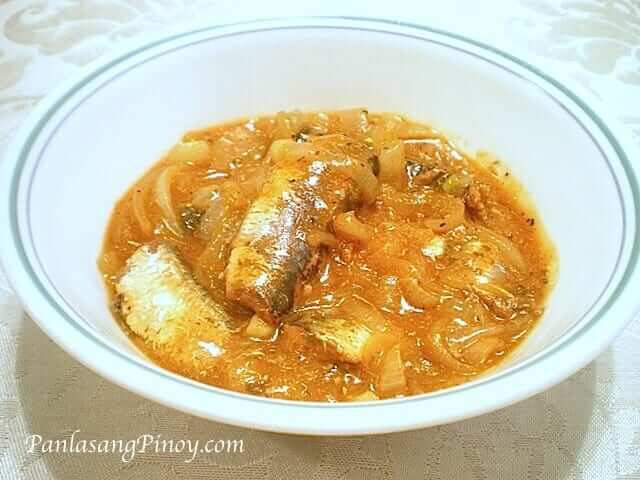
Eating sardines fresh from the can does not work for me. It has to be cooked one way or another to make it more appealing. For this meal, I sautéed some garlic and onions before pouring the sardines (this is the regular canned Philippine sardine in tomato sauce) then allowed it to cook for a few minutes. I smell something fishy – can’t do anything about it since it is fish that I’m cooking. What I can probably do is to neutralize or lessen the fishy taste: I simply do this by squeezing some lemon or some local lime (known as calamansi) over the sautéed sardines. This is the simplest and fastest method to prepare sardines – at least that I know of.

There are other ways to make your sardine meal more enjoyable or at least encourage you to try having some. Here are some suggestions:

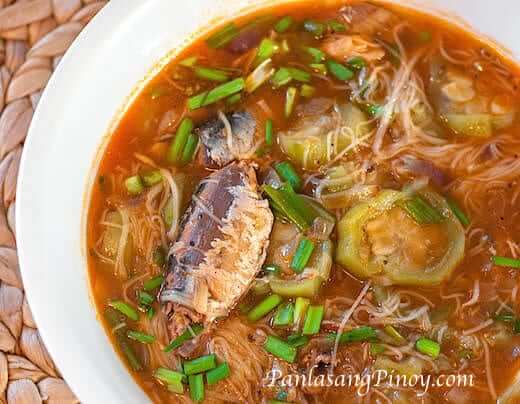
  • Add some vegetables – adding vegetable in cooking canned sardines is not a bad idea; in fact, it is considered as a healthy combination. Imagine getting all the health benefits that are already present in sardines plus the vitamins and minerals that you can derive from the vegetable of your choice.Bottle gourd (upo) and angled luffa (patola) are the common vegetables cooked with sardines. These vegetables are sautéed with the sardines; an addition of some spices and a little water is also needed. Aside from that, this is also a good way to manage your tight budget and save you money. You see – the vegetables also act as fillers that increase the serving size of your dish.
  • Combine with noodles – There are several recipes out there involving canned sardines and noodles. In fact, some are even delicacies in certain regions of the Philippines. The most common noodle added to sardines is the thin flour noodle locally known as “Miswa”. I was able to stumble upon Lalaine’s post in her blog  about this; you might be interested in knowing how to cook Ginisang Sardinas at Miswa. Odong is another sardine dish that you might be interested in. Popular in the southern part of the Philippines, odong is cooked by adding short yellowish spaghetti-like noodles (also known as “odong”) with the sardines. Market Man elaborates this topic in his blog.
  • Create a fancy snack – A fancy what? You read it right; sardines can also be eaten as a snack (just make sure to brush your teeth afterwards). A fancy snack can be some kind of sardine sandwich or a pandesal pizza perhaps.I am assuming that making pandesal pizza is a no brainer for everyone. You can make pandesal anytime by following our pandesal recipe post – we’ll be using sardines for the topping –of course. All you need to do is slice the pandesal in half and top the cut part with sardines. You may also top it with some grated cheese of your choice if preferred.Don’t be grossed-out, I understand that this isn’t for everyone; you might need to develop an acquired taste to enjoy this.
  • Make a soup out of it – Have you heard of “Sinigang na Sardinas”? Yes, it is a sour soup dish similar to that of our “Sinigang na ulo ng salmon”; the only difference is that it uses canned sardines instead of fresh fish. This might be a bizarre idea that seriously needs an acquired taste – but my take on this is simple: anything new can be considered bizarre, you need to try and get used to it to be able to develop a sense of appreciation. Check out the video on 10 Peso Meals with Chef Edward Bugia.

YouTube video

What do you think ? Do you have other suggestions to add? Please feel free to post a comment

Dice an Onion

How to Dice an Onion

Part of our culinary adventure is learning the proper method of preparing the ingredients. This article is intended to visually demonstrate the proper steps in dicing an onion. There are no incorrect procedure as long as the goal is achieved but following best practices tend to make work simple and easier.

Dice an Onion

Are you also doing the same method?
 

IMGP6988

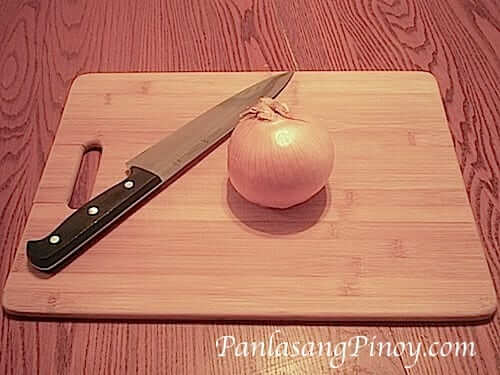
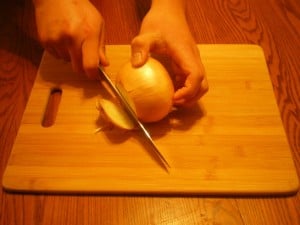
1. Using a knife, cut-off the pointy end of the onion.

IMGP6989

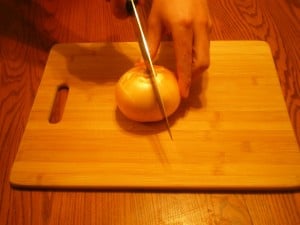
2. Stand the onion up using the cut end as the base and divide it into two equal pieces by slicing in half through the root then peel off the skin.

IMGP6990

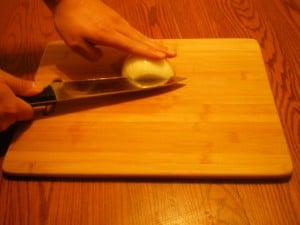
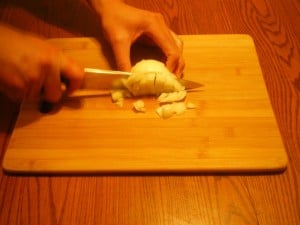
3. Position half of the onion (cut-side facing down) and slice horizontally on the center. Make sure you don’t slice too far so that the root part is still in one piece.

IMGP6991

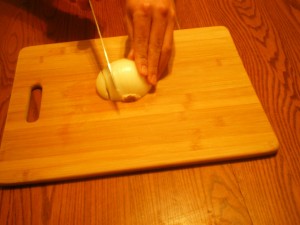
4. Make a series of vertical slices (about 1/4 to 1/2 inch apart) ; do not slice through the root.

IMGP6992

5. Hold the side with the root then perform a series of vertical slices perpendicular to what you did in the fourth step. The diced onion pieces will automatically be detached after every slice.

What to do with Leftover Ham

What to do with your Leftover Ham

The holidays have passed by and chances are that some of us might have some (or lots) of leftover foods stocked in the fridge. Sure, we don’t want these foods to go to waste that is why we try to dig in to them little by little until everything is gone.

The statement above applies to most prepared leftovers such as stews, pasta, and dessert. What about the traditional holiday food that we call “ham”? There is no doubt that leftover ham still taste good but I think that it will taste even better if we hype it up a little. Since this is just the start of the year and we all got tired in preparing our special holiday dishes, I’ll just be presenting very simple ideas that we can do to make ham taste a little better.

What to do with Leftover Ham

I understand that there are hundreds of possible recipes that we can do using leftover hams but I opted to show (or rather remind) you the three simplest and easiest preparation. We’ll get to the more challenging recipes on our next posts.

Ham Sandwich

This very easy-to-prepare ham sandwich is a no brainer for everyone. Just place a slice of leftover ham, mayonnaise, lettuce, and your favorite condiment between two toasted slices of bread and there you have it. You can also add cheese and turn it into a Ham and Cheese Sandwich.

Fried rice with ham and mixed vegetables

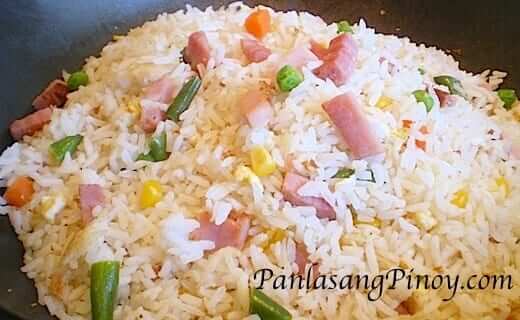
This simple recipe makes use of left over steamed rice, leftover ham, and frozen mixed vegetables. You can do this by simply sautéing chopped ham and mixed vegetables in butter or cooking oil then adding left over rice seasoned with a few pinches of salt. You can also make a simple Ham and Egg Fried Rice.

Finger food: Sliced Ham and Cheese

If you are planning to have a party then this can save you money. Cube your leftover ham and skewer it (using a toothpick) with cubed sharp cheddar cheese. Another idea is to make a fried ham and cheese roll.

Do you have some more related ideas to share? I would love to hear from you. Please speak up by posting a comment.

Cooking Terms

Do you really understand what the cookbook and recipe procedure tells you? Have you messed-up any dish because of not doing the correct steps?

Hey guys, I’m not belittling anyone. It just so happened that I was one of those who answered “yes” to both of the questions in the past. I was thinking that this simple definition that I have here could help you understand more and avoid the mistakes that I did. By the way, I’m trying not to be so serious here so please forgive my additional comments after each definition. Hope this helps.

cooking terms

Bake – Cook and make edible by putting in a hot oven; prepare with dry heat in an oven; “Please bake some pandesal, monay, and pandecoco”

Baste – This term is often used when roastingchicken or cooking meat in a marinade. You will need to regularly “baste” the meat with the juices or sauce to keep it moist. You can use a spoon to spoon the juices or sauce over the meat or you can use a “baster” which is a bit like a syringe or bulb. The mag-iisaw is bastingwhen he dips the brush (usually paint brush) in a bottle with oil mixture and applying it on your isaw or betamax while being grilled.

Beat – A term often used in cookingor baking. You may be instructed to beat and egg – simply crack an egg into a bowl and beat (stir rapidly) with a fork or whisk to combine the yolk and white. In cake recipes you may be instructed to beat the margarine and sugar together – use an electric whisk or beater for ease. Before steaming the lecheflan, the egg yolk should be constantly beaten. You might hear your mom saying “Anak, mag bati ka ng itlog para sa agahan”.

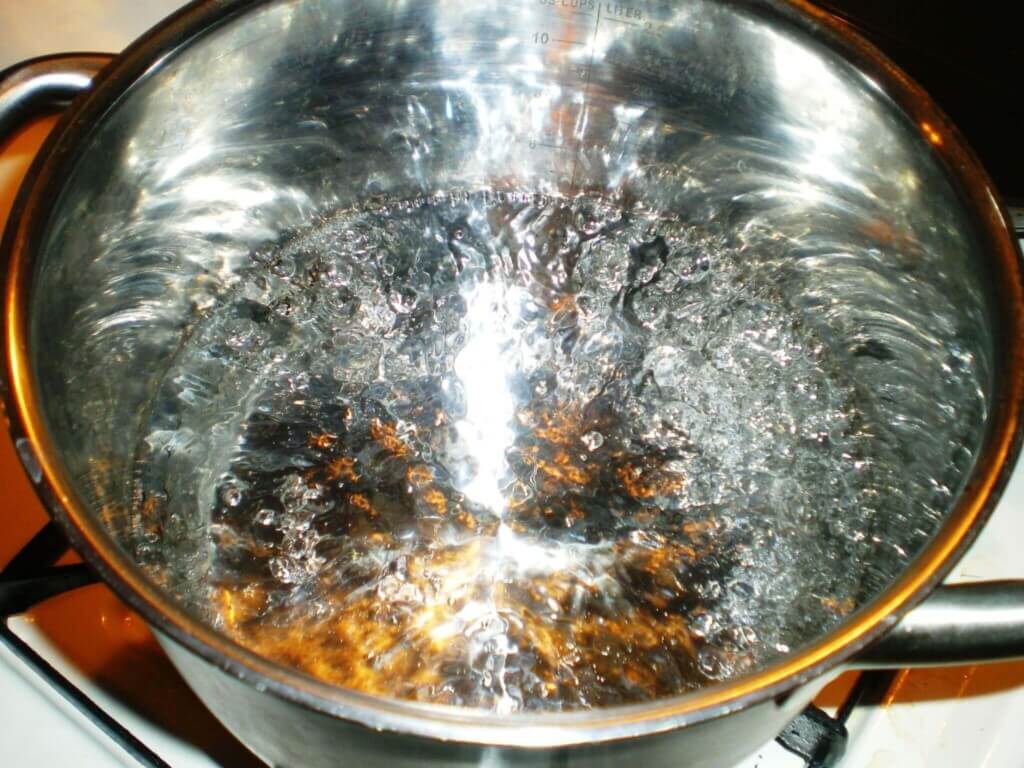
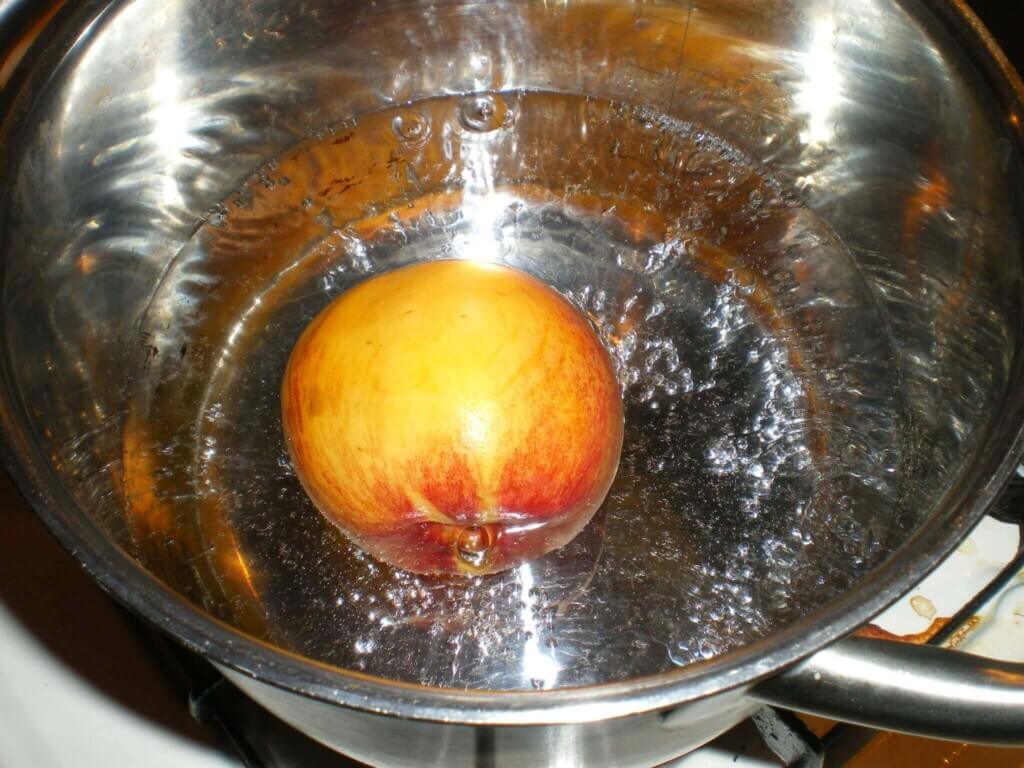
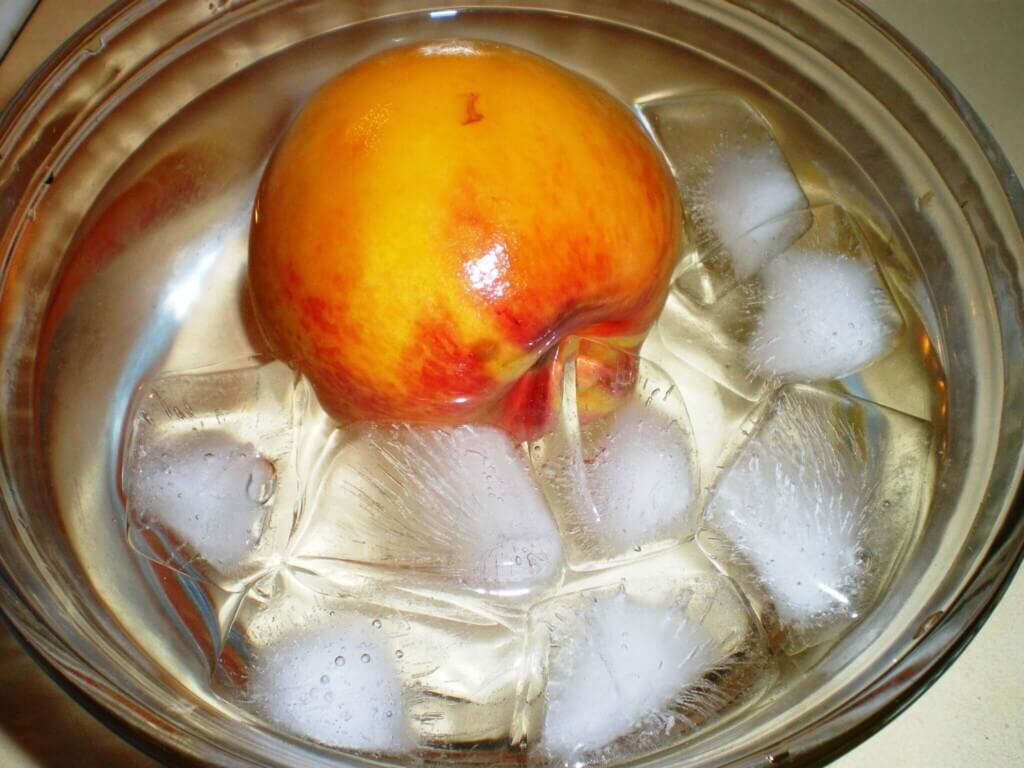
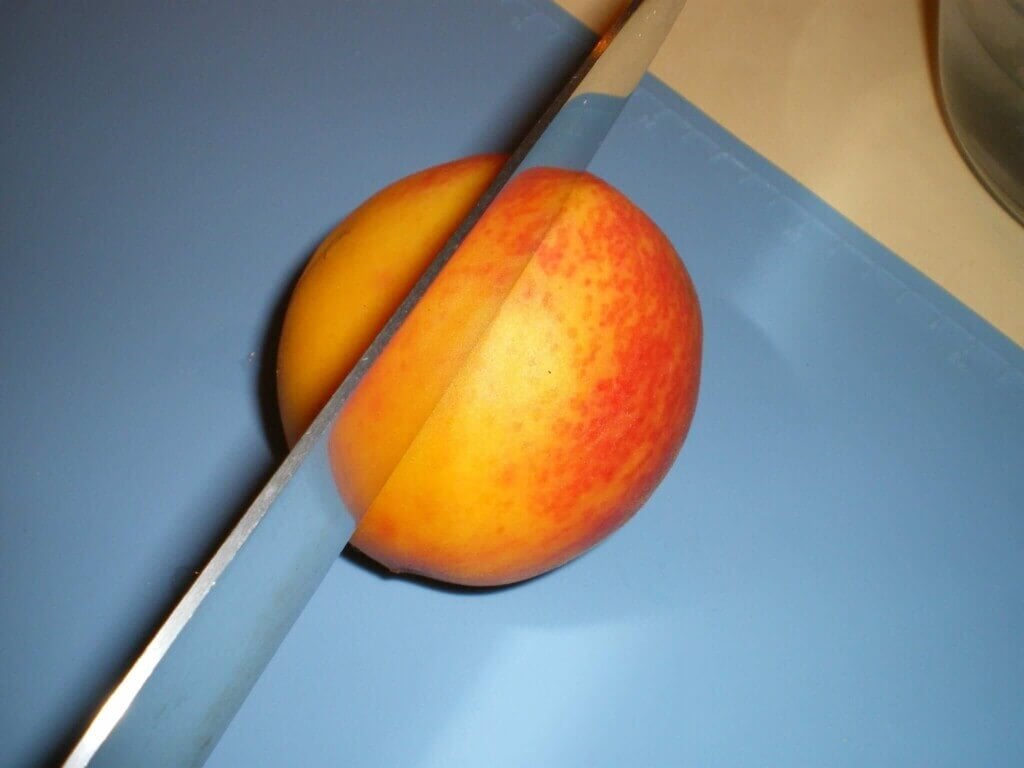
Blanch – A recipe may call for blanching vegetable. This simply means to plunge them into boiling water for about a minute.

Chop – self explanatory but use a good sharp knife and try to chop vegetables etc. so that bits are uniform in size and thickness. Onions often have to be chopped finely so chop them as small as you can.

Cream – Cake recipes often instruct you to cream the butter or margarine with the sugar. Beat them together either with a wooden spoon or electric mixer until they are well combined and the mixture has turned a paler color.

Dice – If you are instructed to dice meat or vegetables it means that you should chop into uniform squares.

Drain – To remove liquid

Fillet– This word can either be used as a noun or a verb. A meat fillet is a good quality piece of meat which has been “filleted” had the bones removed. If a recipe asks you to fillet a piece of meat or fish it means you need to remove the bones. Fish fillet is used in preparing “kilawin”.

Fold – Cake recipes often tell you to fold in the flour after creaming the margarine and sugar and adding eggs. Remember that this is different from the term used in playing poker.

Julienne – This term is used with vegetables. Julienne carrots are carrots which have been chopped into matchsticks or strips. So the next time you see this word in a cookbook, always keep in mind that this is a valid verb used in cooking and not a type of carrot :).

Marinate– To coat a piece of meat or fish in a sauce usually overnight or for a few hours in the fridge. The meat will take on the flavors from the sauce. “Marinade the liempo that we will grill in our inuman tomorrow.

Pare – Remove the skin from fruit or vegetables. Remember, this is not your child’s God Father.

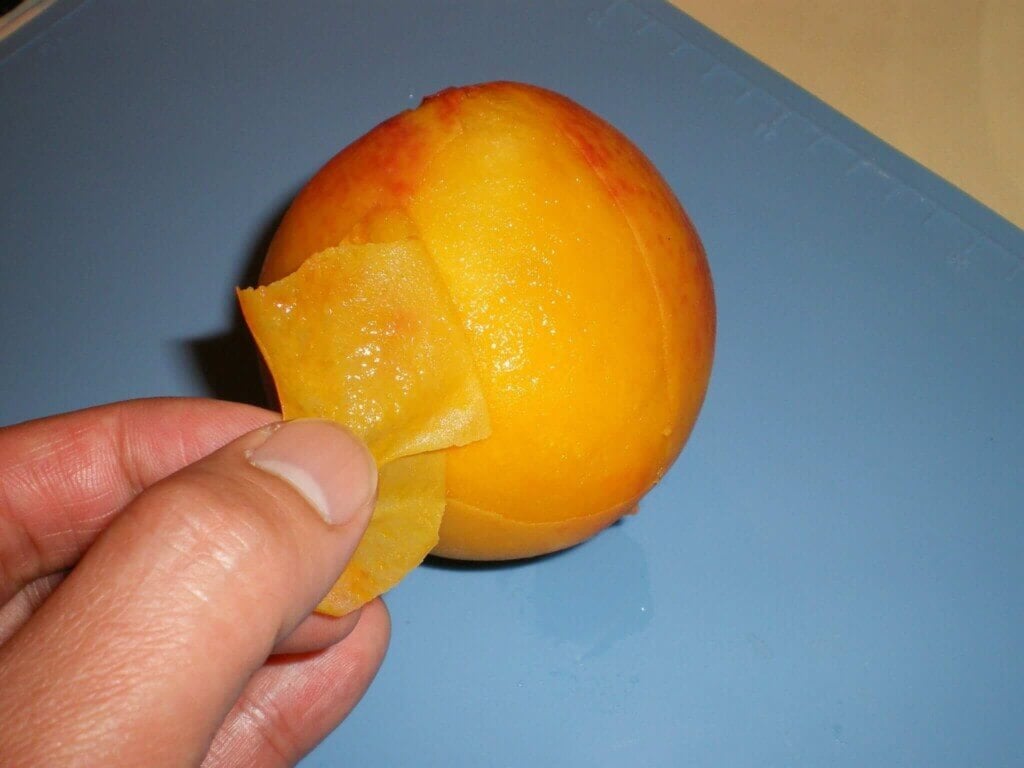
Peel – Remove the skin from fruit vegetables or prawns. “I can peel it”

Poach – To cook in liquid. Poached eggs are cooked in boiling water and poached fish is often cooked in hot milk. Are you thinking about your small bag? Well, this isn’t it.

Puree – To puree a vegetable or fruit is to blend it until it is as smooth as baby food. Use an electric blender.

Sauté– You can sauté vegetables and this means to fry in hot oil over a high heat for a short amount of time.

Season – To flavor with salt and pepper.

Simmer– It means to bringa sauce to boilingand then turn down to a level where the sauce is bubbling but not boiling.

Stiff peaks – If you are instructed to beat cream or egg whites until stiff peaks are formed then you need to whisk or beat until the mixture forms peaks which do not collapse and you could even turn the bowl upside down without the mixture immediately falling out.

Stir-fry – To stir-fry is to cook meat and/or vegetables in a wok at a high temperature. Stir-fry packs can be found in supermarkets and all you have to do is fry them briefly in hot oil in a wok add sauce or spices and serve with noodles or rice.

Scald – Applying heat that is close to the boiling point. It’s not the verb describing your actions to your kid when you are mad;).

Sift/sieve – sieve separates wanted/desired elements from unwanted material using a tool such as a mesh, net or other filtration or distillation methods, but it is also used for classification of powders by particle size, or for size measurement as an analytical technique. A strainer is a type of sieve typically associated with separating liquids from solids.

Whisk – Use an electric whisk or a hand whisk to beat something like cream. This is different from Johnnie and Jack.

How to Make Salted Duck Eggs (Itlog na Maalat)

salted eggs

Ever wondered why “itlog na maalat” is salty? Hmmm…I’m wondering why some of the ladies started to smile. I’m not talking about the other “itlog na maalat”, please let me make this clear just to be sure that everyone is with me. What I’m talking about are the red salted duck eggs that we usually eat along with “Kamatis” (tomatoes) and are sometimes placed on top of Special Puto (rice cakes). I hope that we are all in the right track now.

Salted duck eggs are not only made and sold in the Philippines. In fact, the Chinese were the first ones to do the procedure. They make the duck eggs salty by soaking it in brine or placing each egg in damp salted charcoal. However, the ingenuity and creativeness of the Filipinos led them to create their own method of salting duck eggs. This method involves the use of clay or “putik” mixed with salt and water.

The duck eggs are soaked in the clay mixture then cured for quite some time. The curing process takes several days wherein the eggs are placed in trays and stocked in a temperature regulated room. This process actually lets the egg absorb the salinity from the clay mixture. Once the eggs absorb the right amount of salt needed, they are boiled and painted.

During this times, technology plays an important role in learning. Everyone can just sit in front of the computer and absorb information from the internet.

  • Previous
  • Page 1
  • Interim pages omitted …
  • Page 24
  • Page 25
  • Page 26

sidebar

bio

Welcome!

As a huge fan of Filipino food, it is my goal to teach people how to cook it using the simplest way possible. Prepare your taste buds for an ultimate showdown of delectable Filipino dishes! Read more…

Facebook
Instagram
Pinterest
YouTube

Reader Favorites

Chicken Adobo Panlasang Pinoy

Filipino Chicken Adobo Recipe

Leche Flan Recipe

kare kare beef tripe

Kare-Kare Recipe (Beef Tripe)

Pork Sinigang

Sinigang

Receive new recipes by email!


Seasonal

Beef Morcon Recipe

Arroz Valenciana

lechon belly roll recipe

Lechon Belly Roll

Christmas Macaroni Salad

How to Make Macaroni Salad for the Holidays

As Seen In:

good housekeeping
parents
serious eats
livestrong
kitchn
sheknows
Facebook
Instagram
Pinterest
YouTube
About
Meet Vanjo
New? Start Here
Browse Recipes
Explore
Ingredient 101
Philippines
Cooking Schools
Privacy Policy
Disclaimers
Contact
© 2025 Panlasang Pinoy
Site Credits
Designed by Melissa Rose Design Developed by Once Coupled
Back to Top
Back to Top