Filipino Chicken Adobo Recipe
I first cooked chicken adobo when I was around 12 years old in Las Piñas. I had watched my mom make it so many times that I already knew what came next even before I held the ladle. It was one of the first dishes I tried on my own, along with sinigang. Maybe that is why I still enjoy cooking it today. It reminds me of home, but it is also the kind of recipe I can make without thinking too much. This is also true of pork adobo, which is another popular variation of the dish.
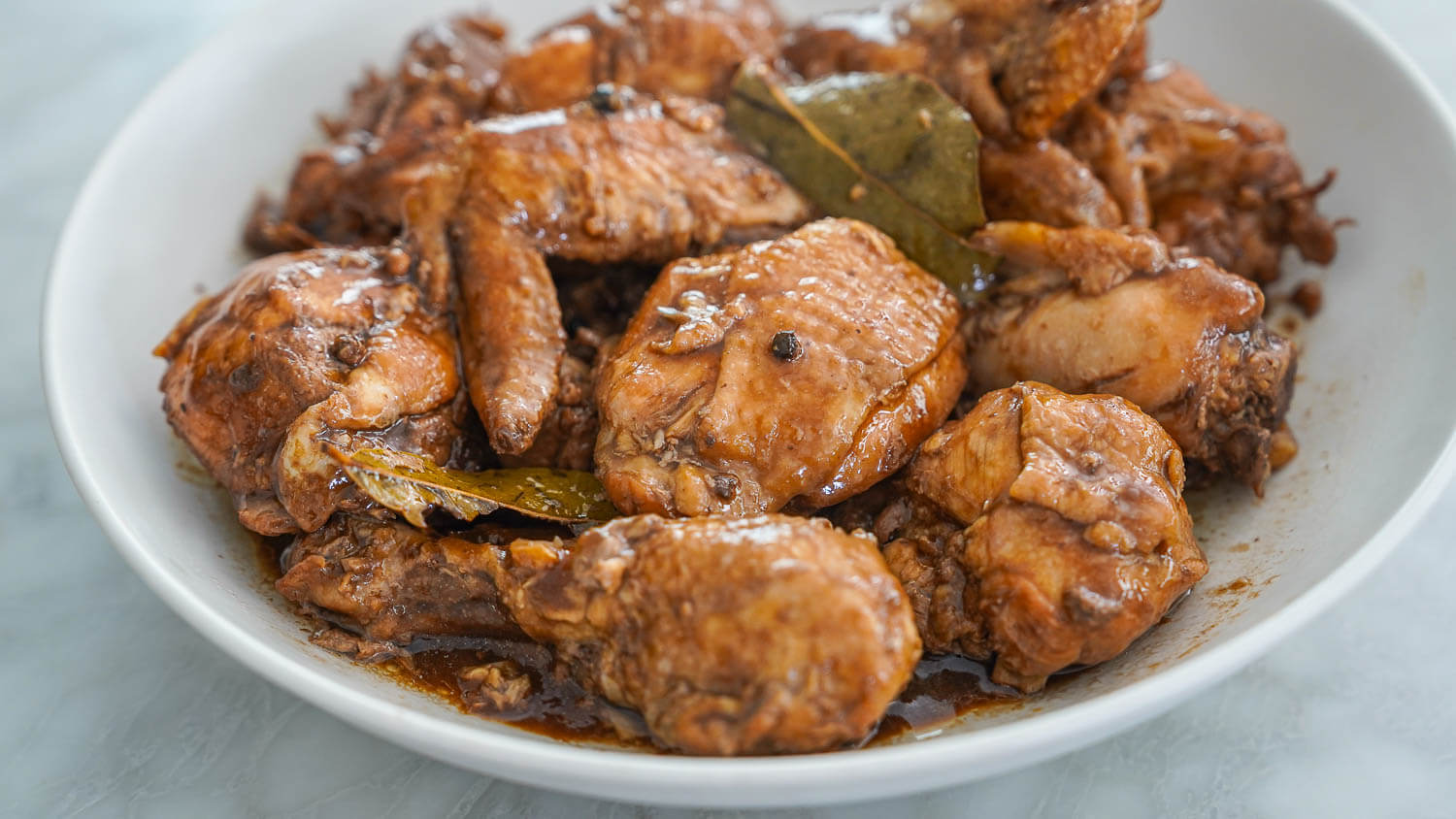
My chicken adobo is simple. I marinate the chicken in soy sauce and garlic, pan fry it a little, then simmer it with bay leaves and whole peppercorns until the meat turns tender. I add the vinegar later and let the sauce cook down until it tastes right. My kids like the sauce over rice, so I leave enough in the pot for them. I also cook more than we need because adobo is usually better the next day. If you want a heartier version with both proteins in one pot, there is also pork and chicken adobo, which is what I cook for bigger family meals.
What Is Chicken Adobo?
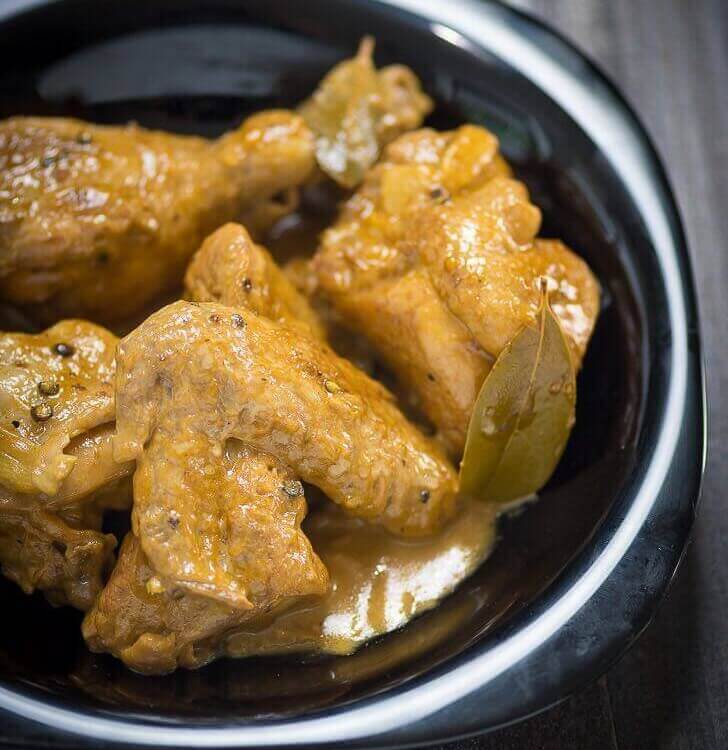
Chicken adobo is chicken cooked in soy sauce, vinegar, garlic, bay leaves, and whole peppercorns. The chicken becomes tender, and the sauce turns salty, sour, and garlicky. That is really the beauty of it. You do not need many ingredients to make something that feels complete.
Almost every Filipino home has its own adobo. Some make it saucy. Others cook it until the sauce is almost gone. Some add coconut milk, potatoes, sugar, or chili. I keep this version close to the one I grew up with because this is the taste I look for when I want chicken adobo with rice. If you want a richer take, there is adobong manok sa gata with coconut milk added in the middle of cooking, or chicken adobo sa gata, which is a slightly different approach to the same idea. For one without soy sauce, there is chicken adobong puti, which uses coconut vinegar and no soy sauce at all.
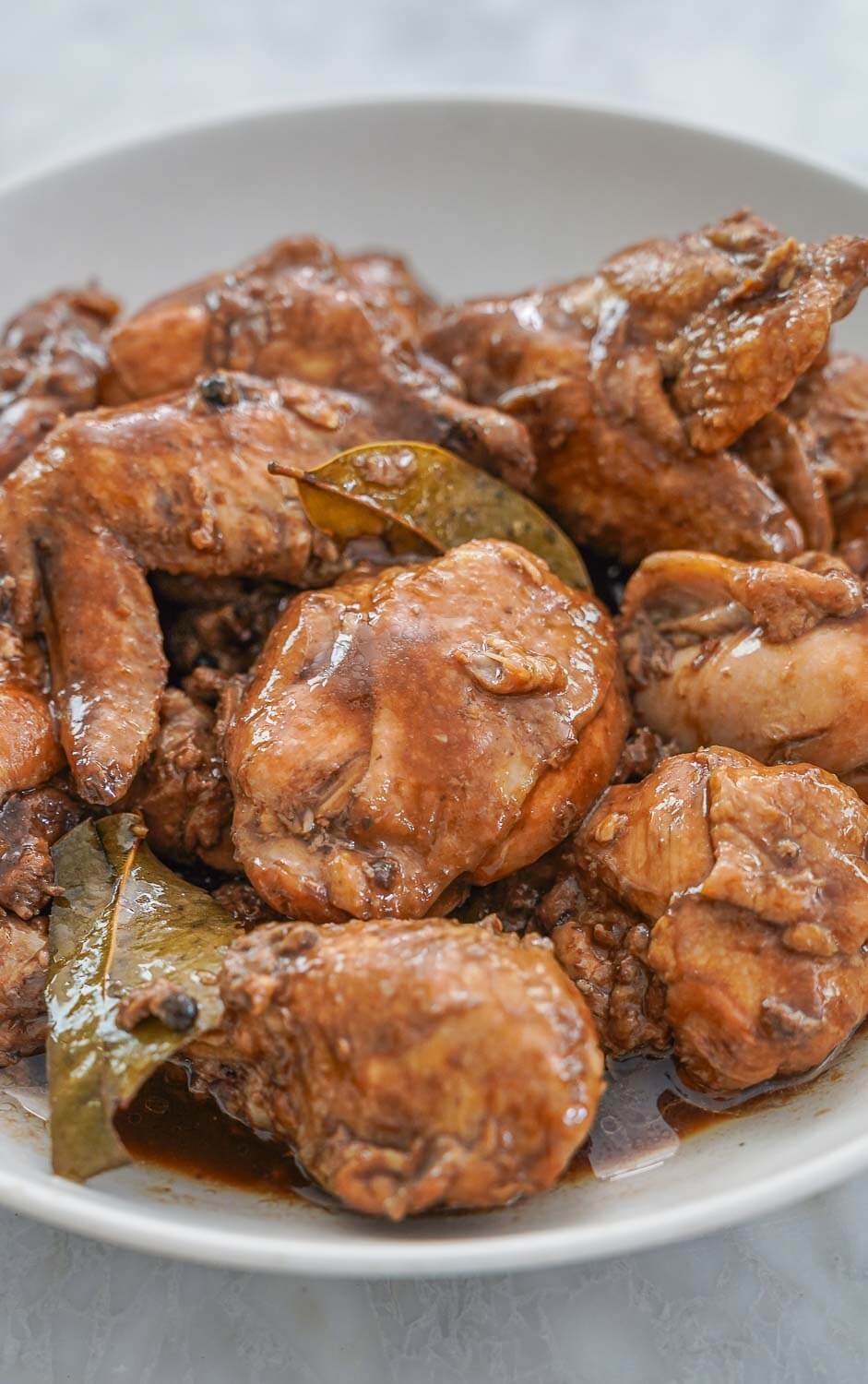
Chicken adobo comes from the old Filipino way of cooking meat with vinegar so it would keep longer. This was already being done before the Spanish arrived. The Spanish later called it adobo, from their word for marinating, but the vinegar cooking method was already Filipino. Soy sauce came later, and that mix of soy sauce, vinegar, garlic, and bay leaves became the chicken adobo many of us know today. Here is a guide on how to cook adobo that walks through the variations.
Why This Recipe Works
- The marinade does most of the work. Soy sauce and garlic go into the chicken before it even hits the pan. The flavor goes deeper than the surface.
- Pan frying adds something the braise cannot. The chicken gets a little color before the sauce goes in. That browning gives the sauce more depth later.
- Vinegar goes in after the chicken is tender. Adding it late keeps the tang sharp without it cooking off completely. Add it too early and you lose the bite.
- The sauce reduces at the end. Simmering uncovered tightens the sauce so it coats the chicken instead of sitting at the bottom of the plate.
Ingredients
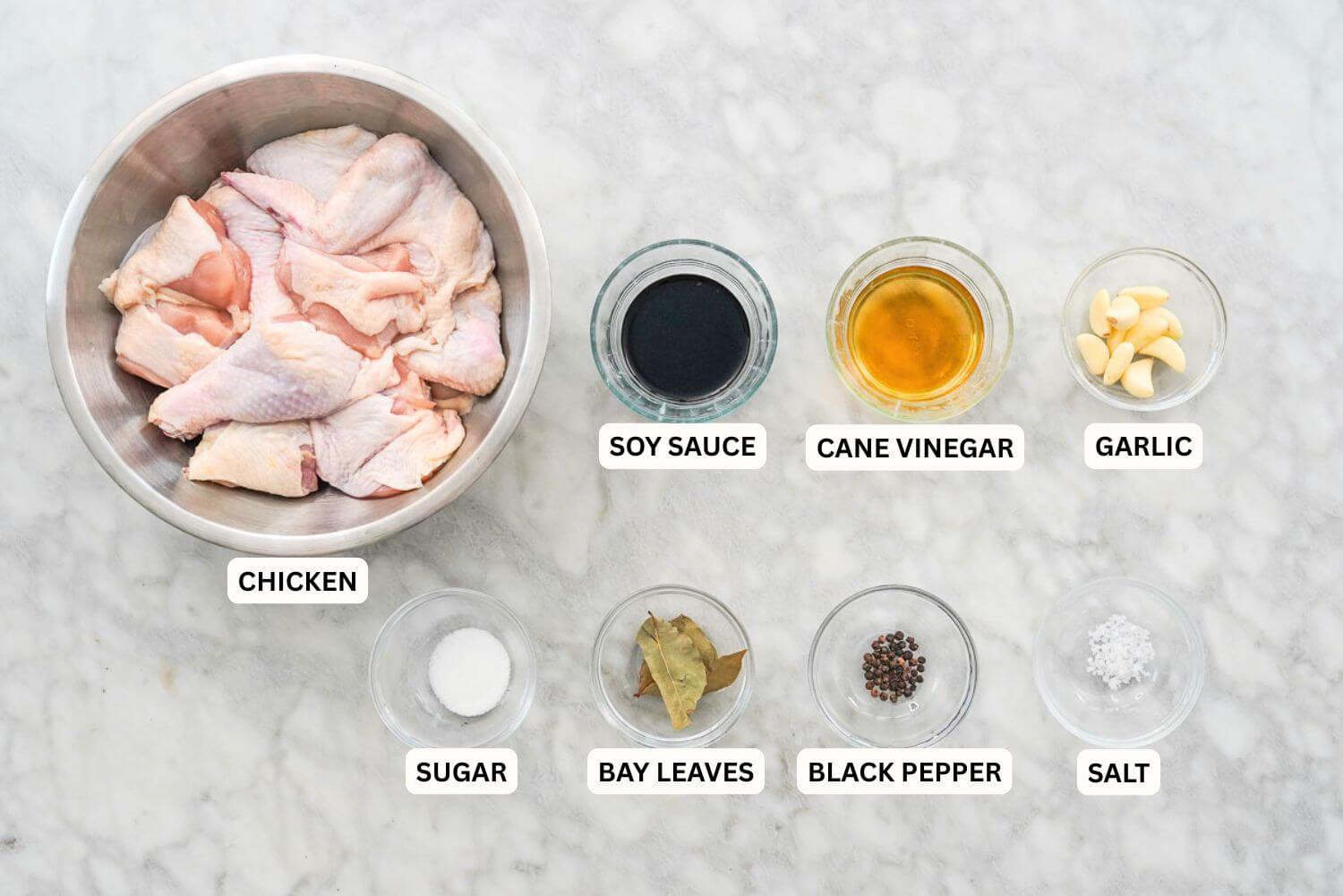
- Chicken – Bone in, skin on thighs and drumsticks are what I use. Dark meat stays moist. Boneless thighs work too, and I have a separate post on how to cook chicken adobo using boneless chicken if that is what you have on hand. Chicken breast dries out unless you cut the simmer time short.
- Soy sauce – I use Filipino brands like Silver Swan or Datu Puti. The taste is closer to what I grew up with. Kikkoman or any regular soy sauce will work, but the result will be lighter.
- White vinegar – Cane vinegar or any white vinegar is fine. I do not use apple cider or balsamic for adobo. The flavor is not right.
- Garlic – A lot. A whole head is normal. I crush the cloves with the side of a knife so the flavor comes out faster.
- Dried bay leaves – Two or three pieces. They give the sauce a soft herbal note in the background.
- Whole black peppercorns – About a teaspoon. Whole, not ground. Whole peppercorns release flavor slowly during the simmer.
- Sugar – Just a teaspoon. It rounds out the saltiness from the soy sauce and the sourness from the vinegar. You can skip it if you do not want any sweetness, but I always add a little.
- Water – Enough to braise the chicken. Most of it cooks off.
- Cooking oil – Any neutral oil for pan frying.
Vanjo’s Advice
A few things I have figured out over the years:
- Vinegar can go in at the start or near the end – The recipe card has me adding it later. That is how I usually do it. But you can also add it with the soy sauce at the start. Both versions work. They just taste a little different.
- Toasted garlic is something I add when I want extra – Traditional adobo does not need it. Sometimes I toast a small batch of garlic in oil until golden, set the chips aside, and use the garlic oil to fry the chicken. The chips go on top at the end. The chicken still gets fresh crushed garlic in the marinade.
- Marinate longer than one hour if you can – One hour is enough. Three hours is better. Overnight is best. The chicken absorbs more of the soy sauce and garlic the longer it sits.
- Do not stir right after pouring in the vinegar – Let it boil for a minute or two first. Old folks say this and they are right. Stirring too early gives the sauce a sharp raw taste.
- Taste before adding salt. – Soy sauce is already salty. The teaspoon of sugar takes some of the edge off. I only add salt at the end if it still needs it.
- Always make extra – Chicken adobo tastes better the next day. Even just a few hours sitting in the fridge improves it.
- Use a heavy bottomed pan or pot – The heat stays steady and the sauce does not scorch.
- Pat the chicken dry before pan frying – Wet chicken steams instead of browning.
-
Skim the foam in the first few minutes of boiling – The sauce comes out cleaner.
-
Adjust the amount of the sauce properly – If the sauce reduces too much before the chicken is tender, add a splash of water. If there is too much sauce at the end, simmer uncovered until it tightens.
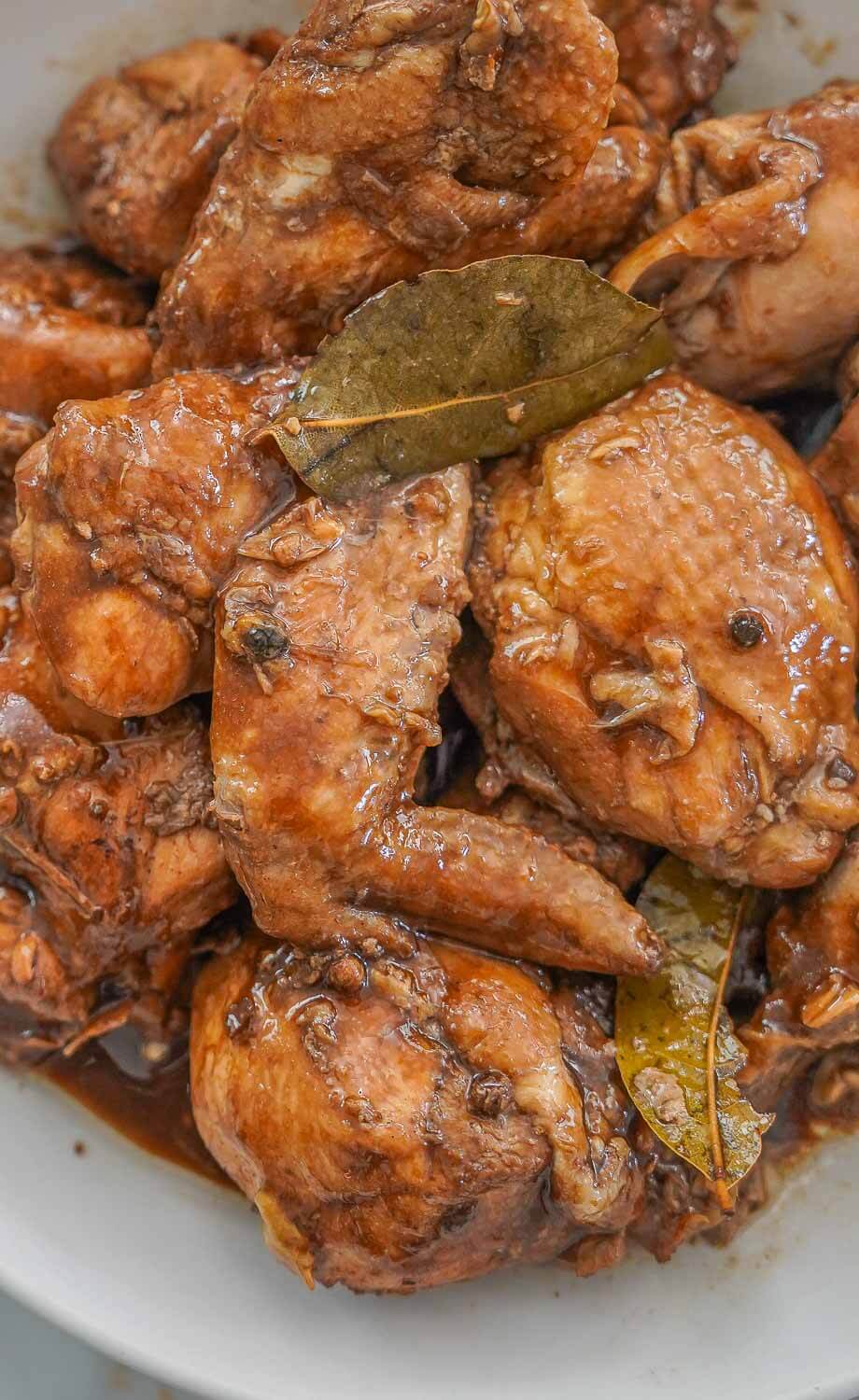
How to Cook Chicken Adobo
Marinate the Chicken
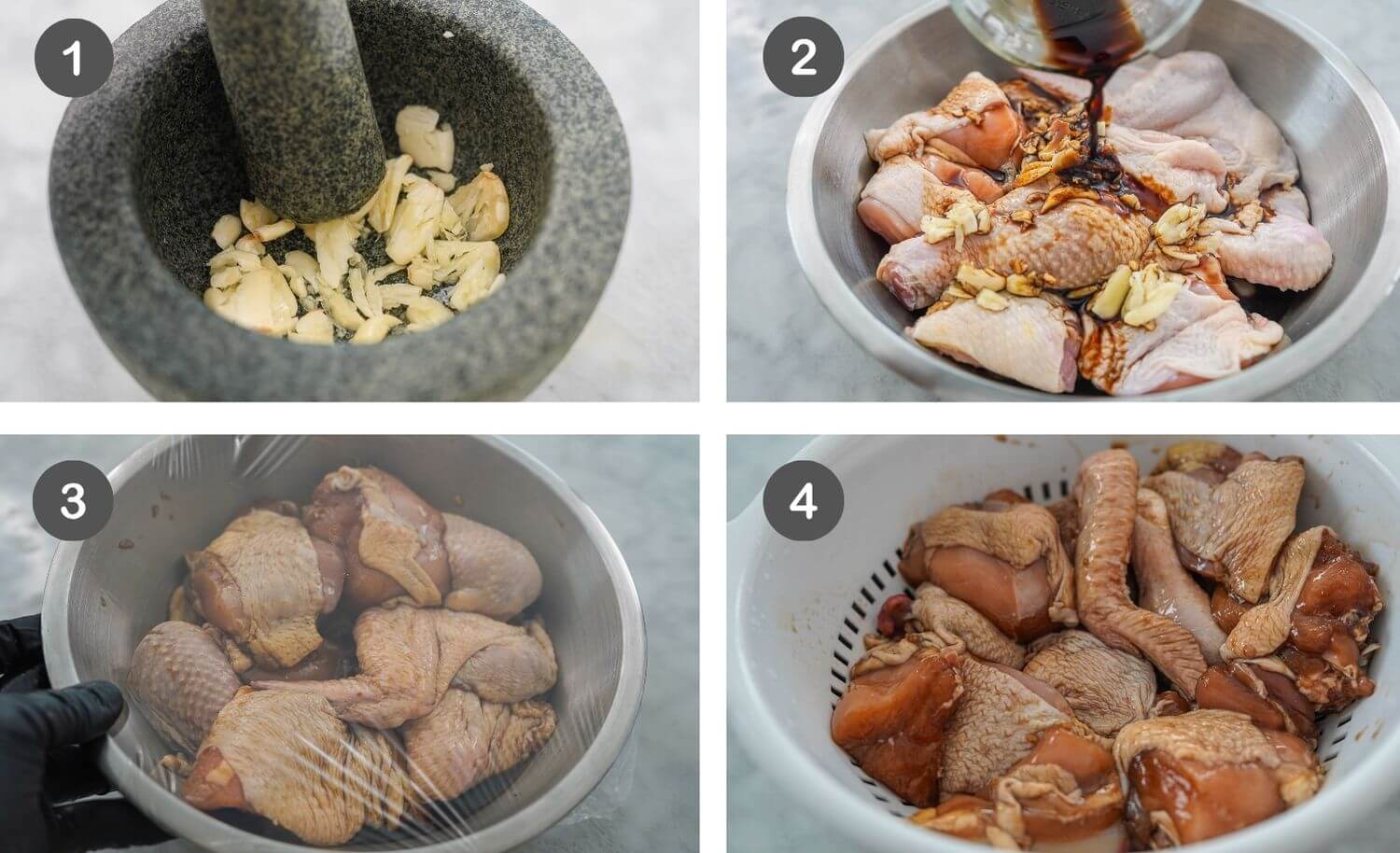
- Crush the garlic using a mortar and pestle.
- Combine the chicken, soy sauce, and crushed garlic in a large bowl. Mix well.
- Marinate for at least 1 hour. The longer the chicken marinates, the better the flavor.
- Separate the chicken from the garlic and marinade. Set the garlic and marinade aside.
Pan Fry the Chicken
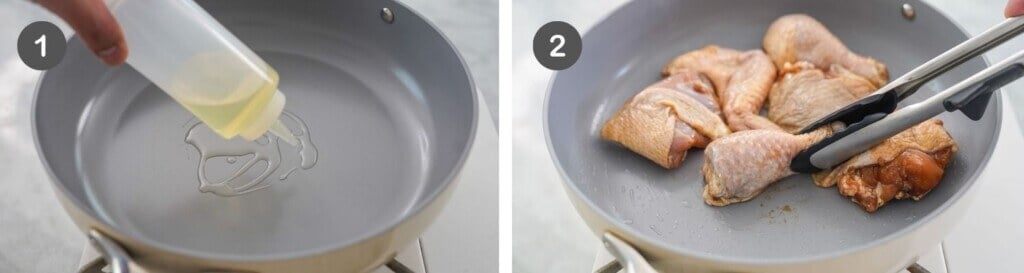
- Heat a cooking pot and pour in 3 tablespoons of cooking oil.
- Once the oil gets hot, pan fry the marinated chicken for 2 minutes per side. Remove the chicken from the pot and set it aside.
Simmer
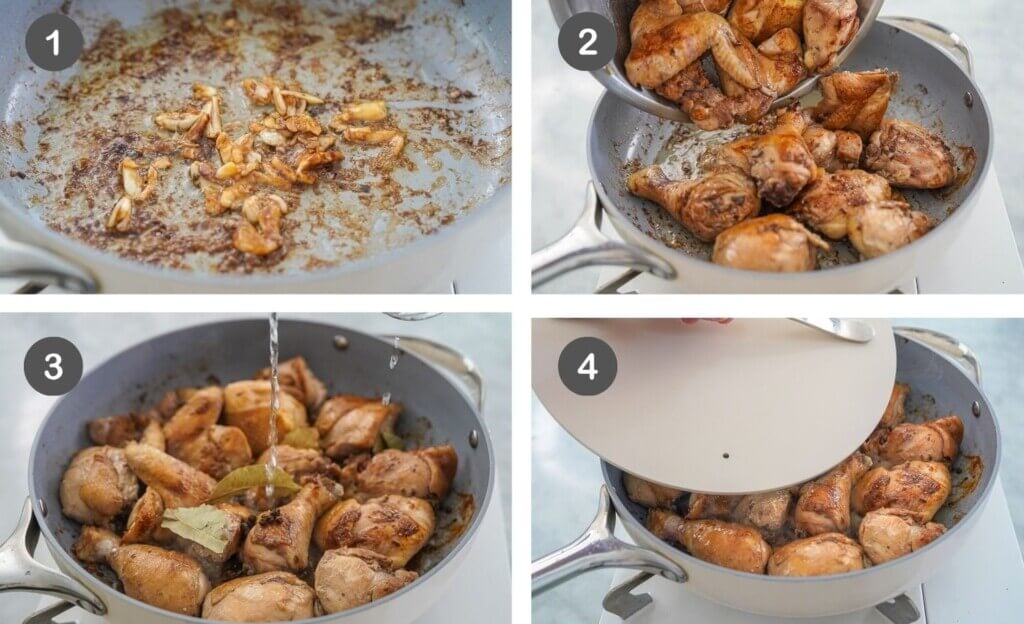
- Pour the remaining cooking oil into the same pot.. Add the garlic from the marinade. Sauté until it starts to brown.
- Put the chicken back into the pot. Add the remaining marinade, whole peppercorns, and dried bay leaves.
- Pour in the water and let it boil.
- Cover the pot and simmer for 30 minutes, or until the chicken becomes tender.
Add Vinegar and Finish

- Pour in the vinegar. Let it boil before stirring. Stir and continue simmering for 15 minutes.
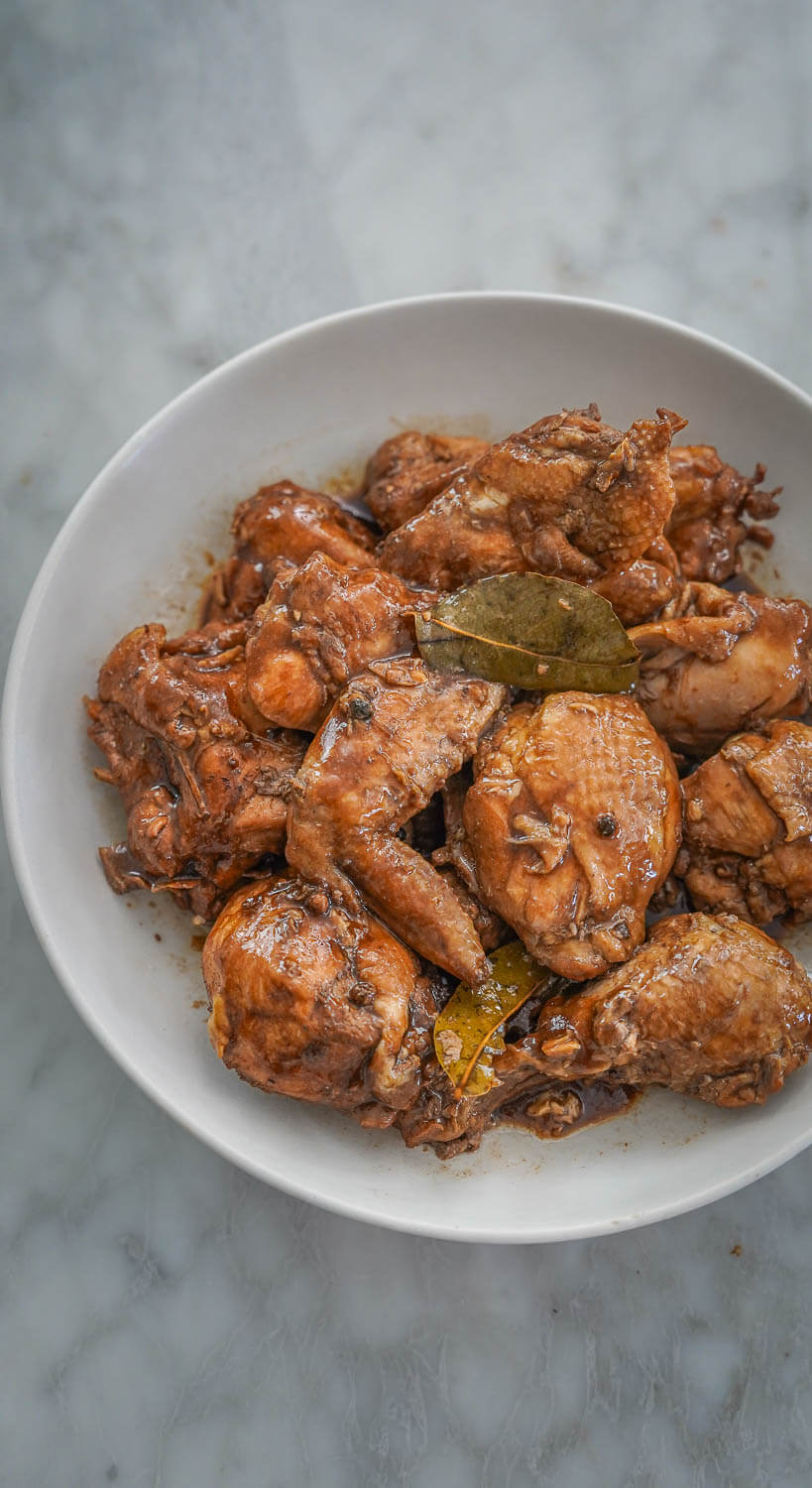
- Add the sugar and salt as needed. Stir, then turn the heat off.Transfer to a serving plate. Serve hot with rice.
If you want the sauce thicker, simmer it longer with the cover off. If you want more sauce for the rice, take it off sooner. My kids like more sauce. I usually want less.
What to Serve with Chicken Adobo
Chicken adobo is meant for rice. That is how I have always eaten it.
- Plain steamed rice – The standard. Hot rice with the sauce poured over the top.
- Day old rice – Rice tastes a little sweeter the next day. The grains are firmer. It pairs well with chicken adobo.
- Garlic fried rice – When I want more, I make sinangag. The garlic in the rice goes with the garlic in the adobo.
- Ginisang sitaw – Sauteed string beans with ground pork. A vegetable side I serve with chicken adobo at home.
- Steamed broccoli – A simple steamed vegetable also works. Just a little salt is enough.
- Fried egg – A fried egg with runny yolk on the side. One of my favorite ways to eat this for breakfast.
Storage and Reheating
- Refrigerate leftover chicken adobo in an airtight container for up to 4 days. The flavor improves overnight. Reheat gently in a pan over low heat. Add a splash of water if the sauce has thickened too much.
- Chicken adobo also freezes well for up to 2 months. Thaw overnight in the fridge before reheating.
- One thing I do with leftovers. I take the leftover chicken adobo, simmer it again until the sauce is almost gone, and shred or chop the meat. I eat it with leftover rice and a fried egg for breakfast. You can also turn leftover meat into crispy adobo flakes, which is the same idea taken further.
More Adobo Recipes
- Easy Chicken Adobo – A quicker version that boils first, then fries.
- Chicken Adobo with Egg – Classic version with hard boiled eggs.
- Adobong Itlog – Meatless egg adobo. A budget friendly Filipino classic.
- Sous Vide Chicken Adobo – A modern method for fall off the bone tender chicken.
- Killer Chicken Adobo – Sweeter version using lemon lime soda.
- Kakaibang Chicken Adobo – A different take with extra ingredients.
Substitutions
- Chicken cuts – Bone in thighs and drumsticks are best. Boneless thighs work but cook faster. Chicken breast dries out unless you cut the simmer time short.
- Soy sauce – Coconut aminos for gluten free. Light soy sauce gives a milder taste.
- Vinegar – Cane, rice, or coconut vinegar all work. Skip rice vinegar and balsamic.
- Pork for chicken – Same recipe works with pork belly or pork shoulder. Simmer for 45 minutes to 1 hour.
Frequently Asked Questions
Does chicken adobo need to be marinated?
It does not have to be, but it is better when you do. Marinated chicken absorbs the soy sauce and garlic before cooking. The flavor goes deeper than the surface. One hour is the minimum. Three hours or overnight is better. If you skip marinating, the braise will still season the chicken, but the result is not the same.
Do you cook adobo covered or uncovered?
Both, at different stages. Cover the pan during the simmer so the chicken cooks gently and stays moist. Uncover at the end so the sauce can reduce. Covered the whole time gives you too much sauce. Uncovered the whole time can dry out the chicken before the sauce thickens.
Can you overcook chicken adobo?
Yes. Dark meat is more forgiving than breast, but it still has a limit. Bone in thighs and drumsticks need 30 minutes of simmering plus 15 minutes after the vinegar goes in. If you go much longer than that, the meat starts falling off the bone and the sauce can over reduce.
What do bay leaves do in chicken adobo?
Bay leaves add a soft herbal note in the background. They balance the salt from the soy sauce and the sour from the vinegar. Two or three dried bay leaves is enough for a regular batch. Add them at the start of the simmer so they have time to release their flavor.
Why use whole peppercorns instead of ground pepper?
Whole peppercorns release flavor slowly during the simmer. Ground pepper dissolves into the sauce. It can turn bitter in a long cook and muddy the color. Whole is the way to go for adobo.
Why is my chicken adobo sauce too watery?
Watery adobo usually means there was too much water to start, or the sauce did not cook down long enough. When mine turns out thin, I take the lid off, turn up the heat, and let it boil until the sauce thickens and coats the chicken. If it is still thin after that, use less water next time, because the chicken releases liquid as it cooks. Give it a few more minutes uncovered and it should thicken up.
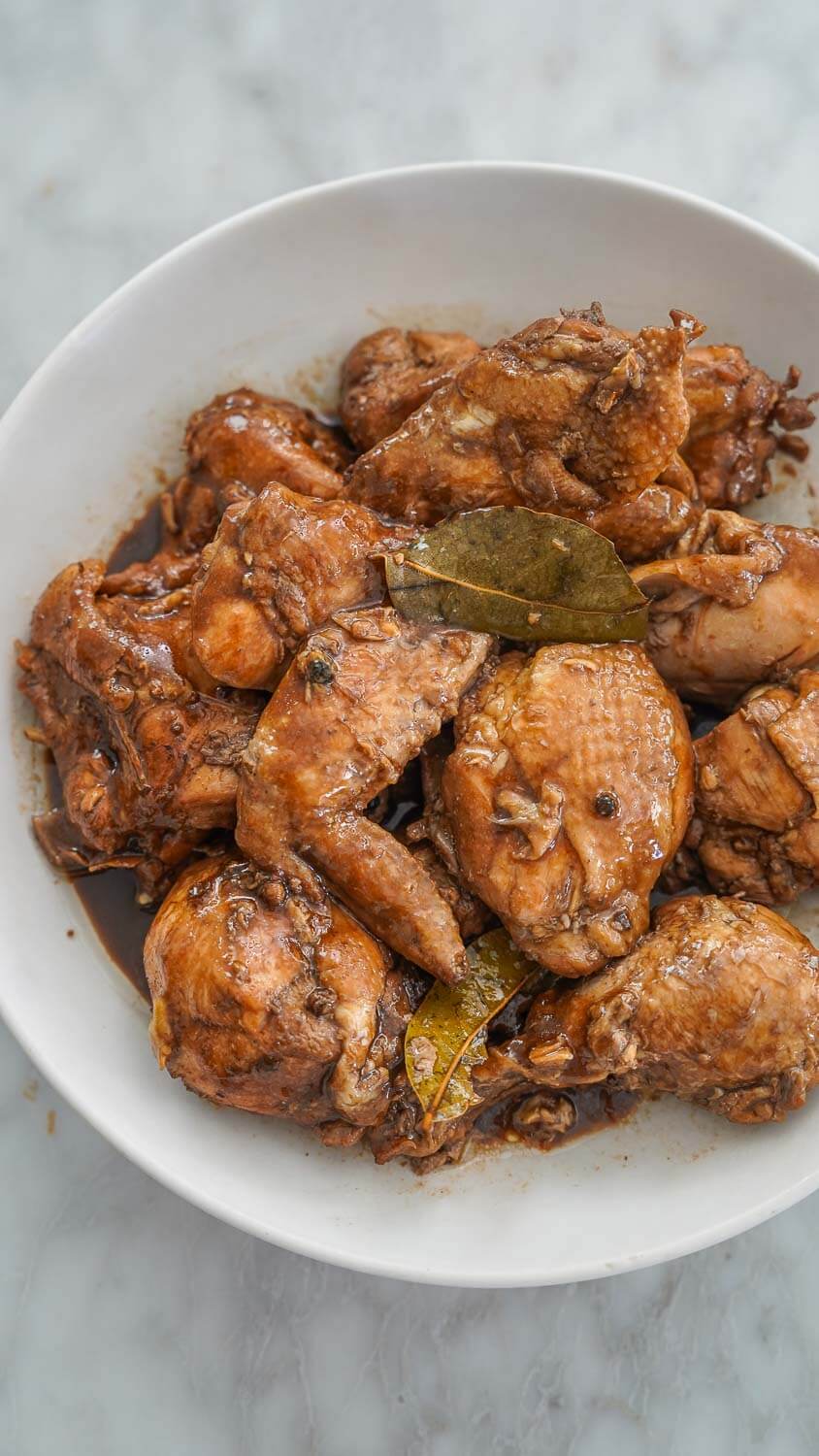
Try this Filipino chicken adobo recipe and see how it goes. Cook it once the regular way to learn the rhythm. Adjust to your taste over time. Some like it sweeter, some saucier, some drier. There is no single right way.
Watch How to Make It

Did you make this? If you snap a photo, please be sure tag us on Instagram at @panlasangpinoy or hashtag #panlasangpinoy so we can see your creations!
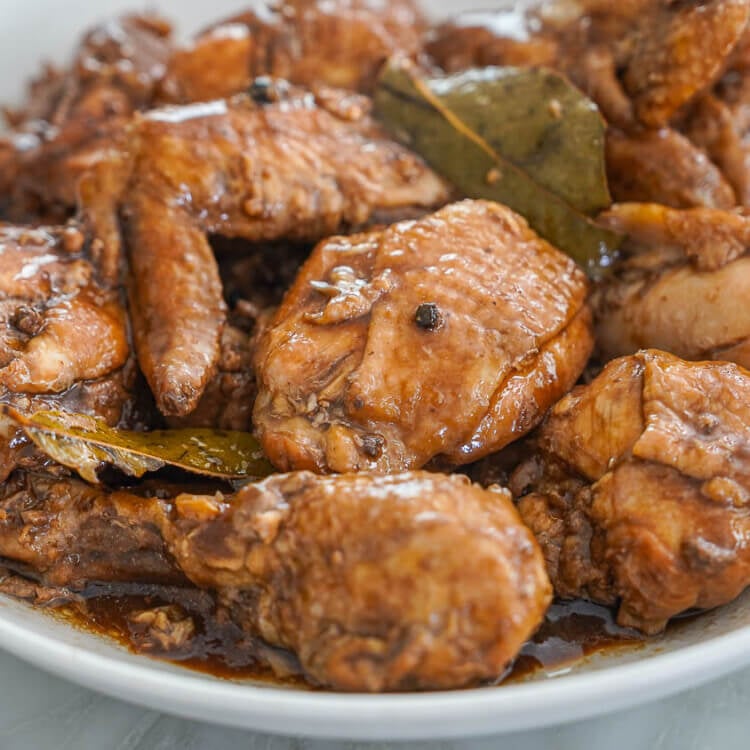
Chicken Adobo
Ingredients
- 2 lbs chicken cut into serving pieces
- 3 pieces dried bay leaves
- 4 tablespoons soy sauce
- 4 1/2 tablespoons white vinegar
- 10 cloves garlic crushed
- 1 1/2 cups water
- 4 tablespoons cooking oil
- 1 teaspoon sugar
- 1 teaspoon whole peppercorn
- Salt to taste
Equipment
- 1 Mortar and Pestle For crushing the garlic to release more flavor.
- 1 Heavy-bottomed Pot Holds heat evenly for steady simmering.
Instructions
- Crush the garlic using a mortar and pestle.10 cloves garlic
- Combine the chicken, soy sauce, and crushed garlic in a large bowl. Mix well and marinate for at least 1 hour. The longer the chicken marinates, the better the flavor.2 lbs chicken, 4 tablespoons soy sauce, 10 cloves garlic
- Remove the chicken pieces from the marinade using kitchen tongs. Scoop out the crushed garlic with a slotted spoon. Reserve the garlic and marinade separately.2 lbs chicken, 4 tablespoons soy sauce, 10 cloves garlic
- Heat a cooking pot and pour in 3 tablespoons of cooking oil.4 tablespoons cooking oil
- Once the oil gets hot, pan-fry the marinated chicken for 2 minutes per side.2 lbs chicken
- Remove the chicken from the pot and set it aside.2 lbs chicken
- Pour the remaining cooking oil into the same pot.4 tablespoons cooking oil
- Add the garlic from the marinade and sauté until it starts to brown.10 cloves garlic
- Return the chicken to the pot.2 lbs chicken
- Add the remaining marinade, whole peppercorns, and dried bay leaves.3 pieces dried bay leaves, 4 tablespoons soy sauce, 1 teaspoon whole peppercorn
- Pour in the water and let it boil.1 1/2 cups water
- Cover the pot and simmer for 30 minutes, or until the chicken becomes tender.2 lbs chicken
- Pour in the vinegar. Let it boil for 1 minute without stirring. Stir, then continue simmering uncovered for 15 minutes.4 1/2 tablespoons white vinegar
- Add the sugar and salt as needed. Stir, then turn the heat off.1 teaspoon sugar, Salt
- Transfer to a serving plate. Serve hot with rice. Share and enjoy!
Anita says
Yummy easy to make! Recommended.
The sauce at the end was quite liquidy would you have any tips? Or would you know why it was liquidy?
Vanjo Merano says
This is the standard chicken adobo with sauce. To make it dry, cook it longer without covering the pan and stir occasionally until the liquid evaporates.
Wayne says
We make this at least twice a month, sometimes more.
My wife says bone in chicken is best, I prefer boneless skinless thighs.
What’s your take?
Vanjo Merano says
That is great to hear, Wayne. Chicken adobo is definitely one of those dishes you can enjoy again and again.
Both options work well. Bone in chicken gives the sauce more depth and a richer flavor, while boneless skinless thighs are very convenient and stay tender. I usually lean toward bone in when I want a more traditional, flavorful adobo, but I also use boneless thighs when I want something quicker. Either way, it will turn out delicious.
Tony. says
As delicious as the pork Adobo,
One question though, how do you get more gravy (juice) without making it too watery,
Vanjo Merano says
Hi Tony, you can omit the water. Make sure to cook the chicken covered in low heat (simmer). The natural juices will come out helping to cook the chicken in the process.