Pork Adobo Recipe
Pork Adobo is a dish wherein pork is simmered in soy sauce and vinegar. This is considered as a favorite in Filipino households. I like using pork belly because the fat melts into the sauce while the meat becomes tender. The sauce tastes richer that way, and it is the kind of adobo I want over hot rice. If you already know chicken adobo, this will taste familiar, but pork needs more time in the pot. This is the adobong baboy I cook most often at home. It is simple, familiar, and still tastes good the next day.
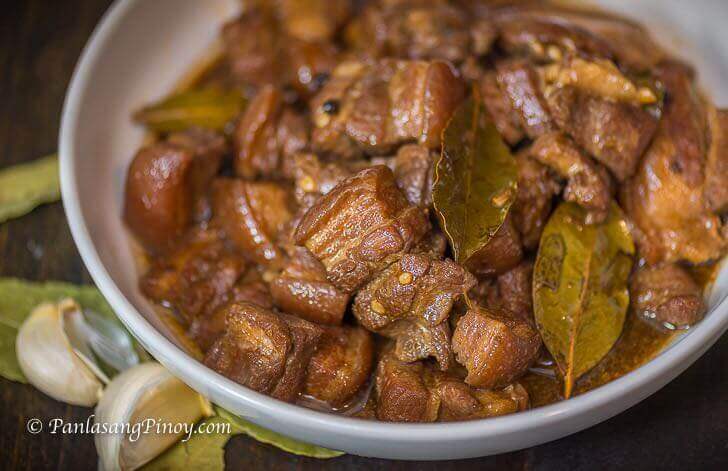
At home, pork adobo was always one of those dishes that worked beyond dinner. We packed the leftovers for school the next day, reheated some for breakfast, and sometimes ate it with garlic fried rice and egg. For bigger meals, I make pork and chicken adobo instead. That was the dish our family usually brought to summer outings. My titos and titas would bring two large pots every time we went on a family outing, one for the adobo and one for the rice.
The pork should be tender, but not falling apart. I still want the pieces to hold their shape when I spoon them over rice. The sauce should be dark, a little sharp from the vinegar, and rich enough from the pork belly fat. The two things I always watch are the simmer time and the vinegar at the end.
What is Pork Adobo?
Pork Adobo, also called adobong baboy, is pork cooked in soy sauce, vinegar, garlic, bay leaves, and whole peppercorns. The word adobo comes from the Spanish word adobar, which means to marinate. The name came from Spain, but the cooking method was already in the Philippines long before that. Filipinos cooked meat with vinegar and salt because it helped preserve food in a hot climate.
Adobo is widely considered the unofficial national dish of the Philippines. It does not have an official government declaration, but it is one of the first dishes many Filipinos mention when talking about our food. The first written record goes back to 1613, where it was called adobo de los naturales. Every region has its own version. Some cooks add coconut milk (adobong baboy sa gata), some use turmeric (adobong dilaw), and some add mashed liver to the sauce.

Soy sauce came later through Chinese trade. The older version without soy sauce is called adobong puti, and it stays lighter in color. The version most Filipino families cook today is the darker soy sauce version, and that is the style I am sharing here.
Why This Pork Adobo Recipe Works
A few small steps make the sauce taste fuller and keep the pork tender.
- The pork marinates first. An hour in soy sauce and garlic seasons the meat from the inside. Without this, the soy only flavors the outside.
- The pork sears in its own marinade. Browning the marinated pork before the long simmer gives the sauce a deeper taste and color.
- Pork belly renders fat into the sauce. As the belly simmers, the fat melts into the liquid. The sauce gets richer and the meat stays moist.
- The vinegar goes in later. Adding it near the end keeps more of that sour kick. Adding it earlier makes the vinegar taste softer as it cooks with the pork. I do it this way when I want the sauce to taste a little more tangy.
- The simmer is long enough to tenderize. Forty minutes to an hour on low is what pork belly needs. Less time and the meat is tough. More time and it falls apart and loses its bite.
Ingredients
- Pork belly – The cut I always use for this dish. The fat renders into the sauce and keeps the meat moist.
- Garlic – Crushed. The more, the better.
- Dried bay leaves – These give adobo its familiar aroma while the pork simmers.
- White vinegar – The sour balance to the soy. Cane vinegar or coconut vinegar also works.
- Soy sauce – The salt and color. I use a Filipino brand like Silver Swan or Datu Puti.
- Whole peppercorns – Bites of heat in the sauce. Cracked or ground pepper works in a pinch.
- Water – Stretches the sauce and gives the pork enough liquid to simmer.
- Salt – Only at the end, only if the sauce needs it.
Vanjo’s Advice
Some of things I picked up after all these years making it:
- Do not stir right after pouring the vinegar. My mom always told me not to stir right away after adding the vinegar. It traps the raw vinegar smell in the sauce. Let it boil first, then stir.
- Marinate longer if you have time. One hour is the minimum. Three hours or overnight in the fridge gives deeper flavor in the meat.
- Pork shoulder works too. Pork shoulder has fat in it like pork belly. Fat makes the meat moist. If you cannot find belly or want a leaner cut, shoulder is a good swap.
- It is better the next day. The pork sits in the sauce overnight in the fridge and the flavor goes deeper. I cook a double batch so I have some for the next morning.
- I leave the rendered fat in the sauce. Some cooks skim it off. I like a little of the fat in there because it carries the flavor and coats the rice
How to Cook Pork Adobo
Pork adobo is simple. Marinate the pork, brown it, simmer it until tender, then add the vinegar near the end.
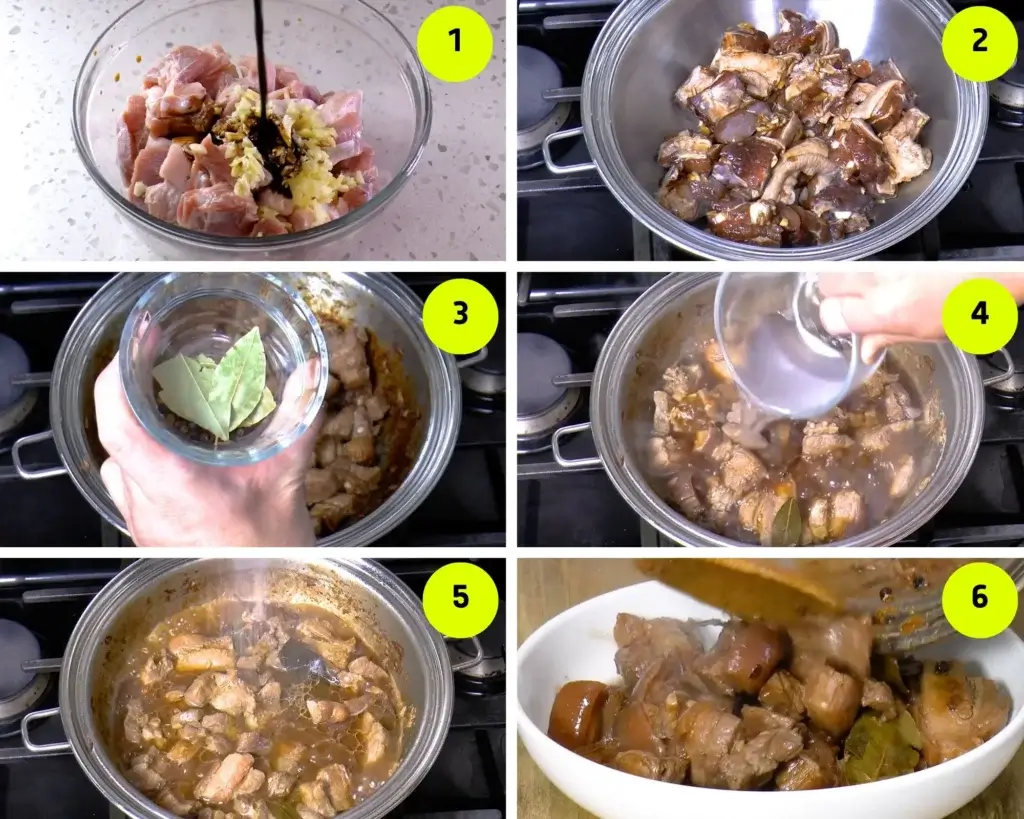
Marinate the Pork
- Combine the pork belly, soy sauce, and crushed garlic in a bowl.
- Mix well, cover, and marinate for at least 1 hour.
If you have time, marinate for 3 hours or overnight in the fridge. The longer the pork sits, the more flavor goes in.
Sear the Marinated Pork
- Heat a heavy pot over medium heat.
- Remove the pork from the marinade and put it in the pot. Set the marinade aside.
- Cook the pork for a few minutes, turning the pieces so they brown on the outside.
- Pour in the remaining marinade including the garlic once the pork has color.
Simmer with Aromatics
- Add the water, whole peppercorns, and dried bay leaves to the pot. Bring to a boil.
- Lower the heat and simmer for 40 minutes to 1 hour, or until the pork is tender.
Check the pot once in a while. If the liquid drops too low before the pork is tender, add a little more water.
Finish with Vinegar
- Pour the vinegar into the pot without stirring.
- Let the liquid come back to a boil before you stir.
- Simmer uncovered for 12 to 15 minutes so the vinegar cooks through.
- Taste, add salt if needed, and serve hot over rice. Share and enjoy.
Pork Adobo Variations
You can finish this Pork Adobo in a few different ways depending on how much sauce you want. At home, we usually go between three versions. The ingredients stay the same. The only thing that changes is how long you let the sauce reduce.
- Saucy Pork Adobo – Stop cooking while there is still a good amount of sauce in the pot. This is how my kids like it because they can spoon the sauce over hot rice. Pork belly works well here because the fat melts into the sauce and makes it taste richer. Add a little more water while simmering if you want extra sauce.
- Medium Pork Adobo – This is how I like mine most of the time. Let the sauce reduce until it coats the pork, but still leaves enough to spoon over rice. The pork belly fat helps thicken the sauce naturally, so you do not need to cook it until almost dry. This is the version shown in the recipe.
- Dry Pork Adobo – Let the sauce cook down until it is almost gone and the pork starts to fry in its own fat. The edges of the pork belly become lightly crisp, and the garlic gets darker and more toasted. This is also a good way to reheat leftovers the next morning. I like it with garlic fried rice and a fried egg for breakfast. This nagmamantikang adobo is an excellent example of it,
What to Serve with Pork Adobo
- Steamed white rice – Pork adobo needs rice because the sauce is salty, sour, and rich.
- Sinangag – Garlic fried rice turns this into a silog plate with a fried egg, which is how I like the leftovers for breakfast.
- Atchara – The pickled papaya cuts the richness of the pork belly.
- Bok choy with garlic and oyster sauce – A simple green side that balances the heavy sauce.
- Fried egg – For leftovers the next day. Fry an egg, put it over rice, spoon the adobo on top.
Storage
Pork adobo keeps well in the fridge. I like it even better the next day because the pork sits in the sauce overnight.
- Refrigerator: Cool the adobo, then transfer to an airtight container. It keeps for up to 4 days. It tastes best the next day.
- Freezer: Freeze in airtight portions for up to 2 months. Thaw overnight in the fridge before reheating.
- Reheating: Warm in a pan over low heat. Add a splash of water if the sauce has thickened too much. You can also cook it down further until the pork crisps at the edges. That is what I do for breakfast adobo, served over adobo rice.

More Filipino Pork Adobo Recipes
- Basic Pork Adobo – My simpler version that builds the sauce in the pot from start to finish, no separate marinating bowl.
- Spicy Pork Adobo – The same sauce with dried red chilies and oyster sauce for a bolder version.
- Sprite Pork Adobo – A sweeter version using lemon-lime soda instead of adding sugar.
- Pork Adobo with Potato – Potatoes added at the end to stretch the dish and soak up the sauce.
- Adobo Pork Chops – The same flavors with bone-in pork chops, pan-fried for a faster version.
- Crock Pot Pork Adobo – Slow-cooked for 5 hours until the pork is pull-apart tender.
- Pork Adobo Paksiw – Leftover adobo turned into paksiw with lechon sauce.
Substitutions
- Pork belly – Pork shoulder or pork butt works. Both have fat in them, which is what you want.
- White vinegar – Cane vinegar, coconut vinegar, or rice vinegar. Skip balsamic and apple cider, the flavors are too sweet.
- Soy sauce – Coconut aminos for a gluten-free version. The color will be lighter and the salt level different, so taste as you go.
- Whole peppercorns – Cracked black pepper or a generous pinch of ground pepper. You lose the burst of heat but the seasoning still lands.
- Pork – The same recipe works with bone-in chicken thighs and drumsticks. Cut the simmer to about 30 to 40 minutes since chicken cooks faster.
Frequently Asked Questions
Is Pork Adobo the national dish of the Philippines?
Adobo is the unofficial national dish of the Philippines. There has been no formal government declaration, but adobo is the first dish Filipinos name when asked what represents our cooking. Pork adobo is one of the two most common versions, along with chicken. We grew up eating it on weekdays and packing it for baon the next day.
Should I use pork belly or pork shoulder for adobo?
Pork belly is what I always use. The fat renders into the sauce and keeps the meat moist. Pork shoulder also works because it has fat in it too. The cut matters less than the fat content. If you want a leaner plate, use shoulder. If you want the richest sauce, use belly.
Why is my pork adobo bland?
Bland adobo usually comes from one of three things. The soy sauce was a milder brand, the marinating time was too short, or the sauce was not reduced enough. Filipino brands like Silver Swan or Datu Puti are darker and saltier than most American supermarket soy sauces, so the difference shows. Let the sauce cook down until it clings to the pork before you taste for salt. If it is still flat, add a tablespoon more soy sauce and a fresh dash of black pepper.
Can I make pork adobo with chicken instead?
Yes. The recipe works the same way with bone-in chicken thighs and drumsticks. Chicken cooks faster than pork, so simmer for about 30 to 40 minutes instead of an hour. The flavor is close but the protein is different, so it is its own dish.
Do I need to marinate pork adobo overnight?
One hour is the minimum and what most home cooks do on a weekday. Overnight is better when you have the time. The pork absorbs more of the soy sauce and garlic and the final dish tastes deeper. If you forget to marinate at all, the sauce will still season the meat during the simmer. It just will not be as bold.

Pork adobo is the one I cook most often for my family. I like this version because the pork gets tender, the sauce tastes rich, and you can still taste the vinegar. Make a little extra if you can. The leftovers are always good the next day.
Watch How to Make It
Did you make this? If you snap a photo, please be sure tag us on Instagram at @panlasangpinoy or hashtag #panlasangpinoy so we can see your creations!

Pork Adobo Recipe
Ingredients
- 2 lbs pork belly (note 1)
- 2 tablespoons garlic (note 2)
- 5 dried bay leaves (note 3)
- 4 tablespoons vinegar (note 4)
- 1/2 cup soy sauce (note 5)
- 1 tablespoon peppercorn (note 6)
- 2 cups water
- Salt to taste
Instructions
- Combine the pork belly, soy sauce, and garlic then marinade for at least 1 hour2 lbs pork belly, 1/2 cup soy sauce, 2 tablespoons garlic
- Heat the pot and put-in the marinated pork belly then cook for a few minutes
- Pour remaining marinade including garlic.
- Add water, whole pepper corn, and dried bay leaves then bring to a boil. Simmer for 40 minutes to 1 hour1 tablespoon peppercorn, 2 cups water, 5 dried bay leaves
- Put-in the vinegar and simmer for 12 to 15 minutes4 tablespoons vinegar
- Add salt to tasteSalt to taste
- Serve hot. Share and enjoy!
Notes
Notes:
- Pork belly – This is the most common cut of pork to use for adobo, but you can also use other cuts as long as it has some fat content. Fat makes the meat moist. I suggest using pork shoulder as an alternative cut.
- Garlic – Filipino adobo won’t be the same without garlic. The more garlic I use, the better my adobo is (in my opinion). Crush the garlic using a mortar and pestle tool or the side of your knife before cooking. This ensures that the flavors are quickly extracted from it.
- Dried bay leaves – Bay leaves or Laurel leaves is a must for this recipe. Dried bay leaves are the most commonly used due to its availability. Fresh bay leaves is good too.
- White vinegar – If this is not available, either cane or rice vinegar can be used as substitutes.
- Soy sauce – I use Filipino brand soy sauce all the time. In my opinion, using other kinds of soy sauce affects the authentic flavor of the dish.
- Peppercorn – Whole peppercorns are ideal. However, you can use cracked pepper or ground pepper for this recipe.
- Onion – This recipe does not suggest the use of onion. But I think that onions help improve the taste of adobo. Use red, yellow, or white onion for this recipe, but make sure to chop it into small pieces!
- Sugar – Adding a teaspoon of sugar will move your Pork Adobo towards the sweeter side. I personally love the taste of adobo with a bit of sugar!


Samantha says
This was SO GOOD! I cubed pork roast, used tamari and added carrots and cauliflower to make it a complete meal. I will be making this again! Yum!!
Ronda says
I love filipino food but I’ve never tried to make it at home. Thank you for sharing this recipe!
jun says
pro po ba kayo sa adobo na my sibuyas?? kasi po hindi ako ng lalagay ng sibuyas kung nag luluto ako ng adobo,… and dito po sa visayas, madami akong kilala na nakikipag talo na dapat daw may sibuyas ang adobo dahil daw ito ang tamang recipe…. lol…
Troy says
I have used this recipe regardless of what type of meat. I don’t add salt though. But the best for me was with beef. Wow, it was amazing! I cooked it for family for fathers day recently and it was a hit! So good!
Robert K Goetz says
Pork Adobo is my favorite dish. I really like your recipe and have cooked it many times. Time tor me to visit the Asian market again so I can buy more .Silver Swan Soy Sauce
Rich Chambers says
I’ve made this a few times and it is great. Can you re-write the recipe for an Instant Pot, please!
Patricio Santiago says
Yummy I’m making this tomorrow evening !
Patricio Santiago says
I’m going to cook this tomorrow evening to put over my Basmati rice …. I can’t wait I too am part Filipino. My dad was a chef in the Navy & The White House. Jorge Santiago Sr. I’m cooking this in your honor and the Filipino heritage I am.
Pat Santiago
Kirsten says
4 years ago I spent some time in the Philippines. My homestay mom made this AMAZING tofu adobo for me sometimes, which I still think about to this day. I’ve always longed to be able to have it here in Canada…and now I can! I used your recipe, then boiled the tofu in the sauce for a few minutes rather than doing what the recipe called for with the pork.
SO
SO
GOOD
It’s almost as good as my homestay nanay’s! Thank you so much for this recipe, you’ve brought so much joy to my life with this!
loic buchet says
from a French fan of Philippines everything , Salamat Po !
Janice says
Yay thank Sir you nka success din ako ng adobo! Many more to come! Happy wating to us!
Janice says
Yay thank Sir you nka success din ako ng adobo!
Lori says
My father who is in his nineties has been looking for a pork adobo recipe that matched what he had when he visited the Philippines back in the 1950’s. Your recipe was exactly what he remembered! Thank you for making it so easy and so delicious. We all loved it!
Maureen says
Thank you po talaga sa mga recipes niyo. Website niyo po talaga unang una kong pinupuntahan kapag di ko po ang alam gagawin. Hehe. Thank you po ulet and more power po sa inyo. God bless po.
Marie Lou says
Does it really need 2 cups of water? It seems a bit too much and will drown the flavor.
Vanjo Merano says
The water is only used to boil the pork until it gets tender. It will evaporate almost completely after 40 minutes or so. Flavors from the meat are extracted during the process which makes the dish tastier.
gigi says
can you also show a video too of adobo in gata and adobo with tofu.thanks
Loise says
Whenever I cook whether it’s adobo or kaldereta, there’s always little sauce left afrer cooking. Do you have any tips to prevent this?
Diego Nicholas says
The best food on the planet! 😉
Destria says
Hope you will post more yummy articles in 2019 🙂
Eva says
I tried his adobo recipe today and everything tasted really good coming from someone who barely cooks adobo. Thanks for sharing your recipe.