Sinigang
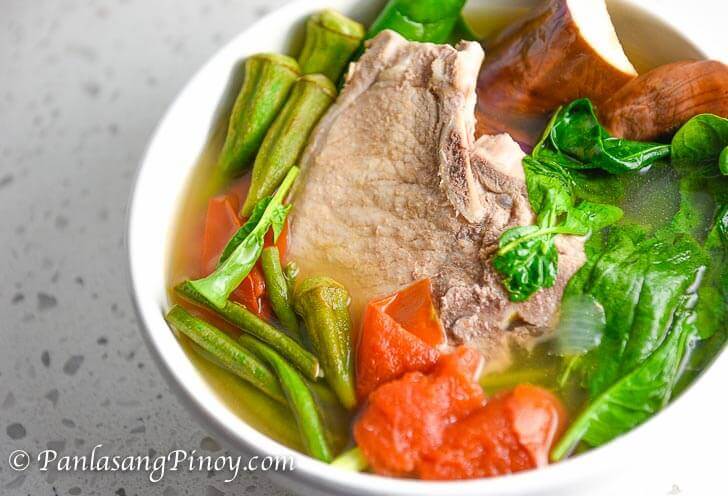
Sinigang is a Filipino sour soup with pork belly, tamarind broth, and vegetables like daikon radish, eggplant, string beans, and kangkong. The broth is sour from the tamarind and savory from the pork fat that comes out as the meat simmers. This Pork Sinigang is the most common version of sinigang in Filipino homes. It is eaten with rice and a saucer of fish sauce with crushed siling labuyo on the side. This Pork Sinigang recipe uses the traditional boiled method.
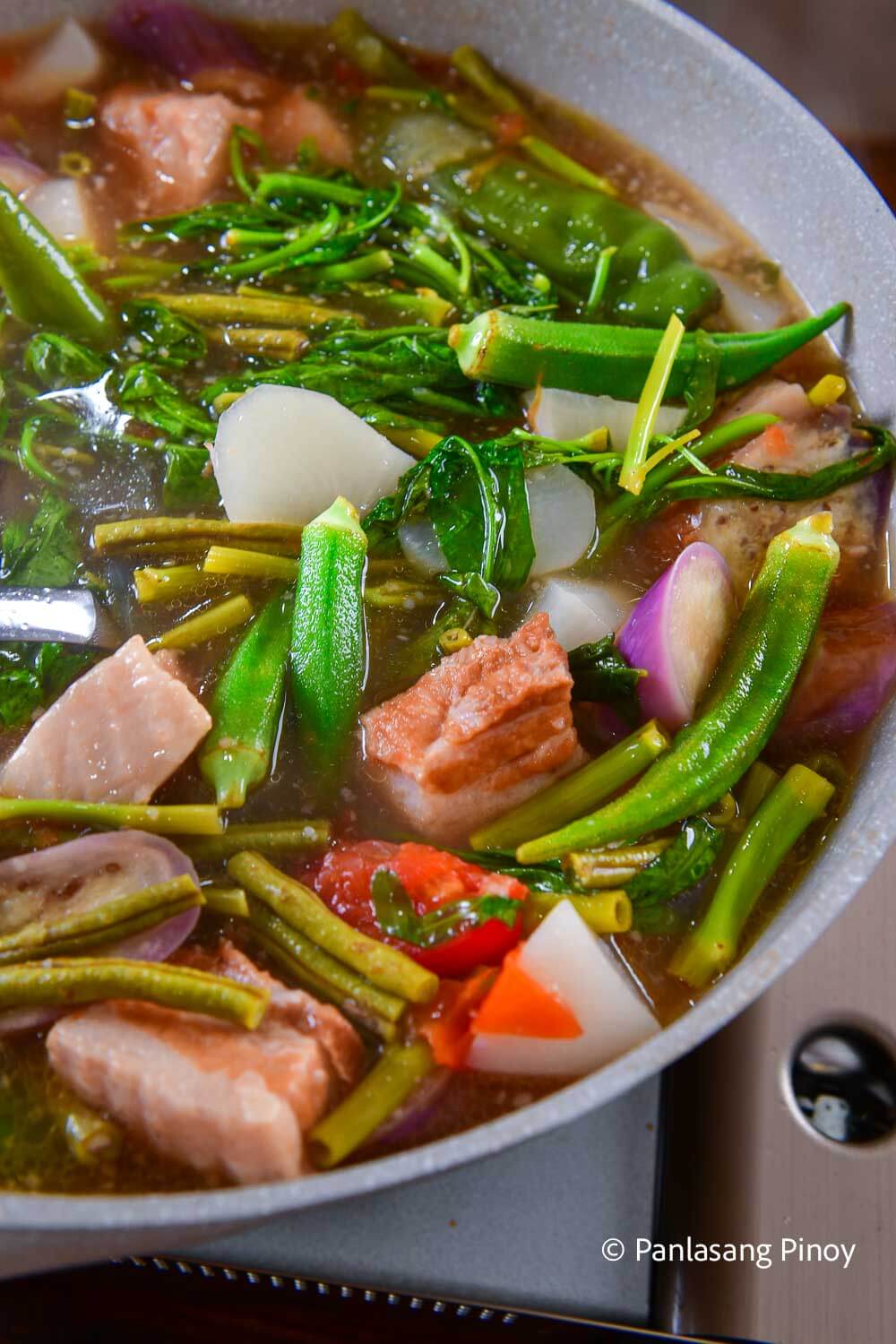
This is one of the first dishes I tried cooking. It was the very first, actually. Adobo was second. I watched my mom cook sinigang many times as a kid, so I knew the steps. I was also the one tasked to buy the ingredients from the flea market just outside our subdivision, so I knew what to get. That was over thirty years ago, and Pork Sinigang has stayed in regular rotation in my kitchen ever since.
This recipe gives you a clear, sour broth with tender pork and vegetables that still have a bit of bite. The detail that matters most is the souring agent. Fresh young tamarind gives the cleanest sour flavor. Sinigang mix works too when you need something faster.
What is Pork Sinigang?
Pork Sinigang, also called sinigang na baboy, is a Filipino sour soup with pork in tamarind broth and vegetables added in batches at the end. The name comes from the Tagalog word sigang, which means to stew. Sinigang is a cooking method more than a single dish. The protein can change to beef, fish, or shrimp.
The pork version is what most Filipinos mean when they say sinigang without saying which kind. The chicken version is called sinampalukang manok when made with young tamarind leaves. In 2021, TasteAtlas named sinigang the best vegetable soup in the world. It is also mentioned alongside adobo as a candidate for the unofficial national dish of the Philippines.
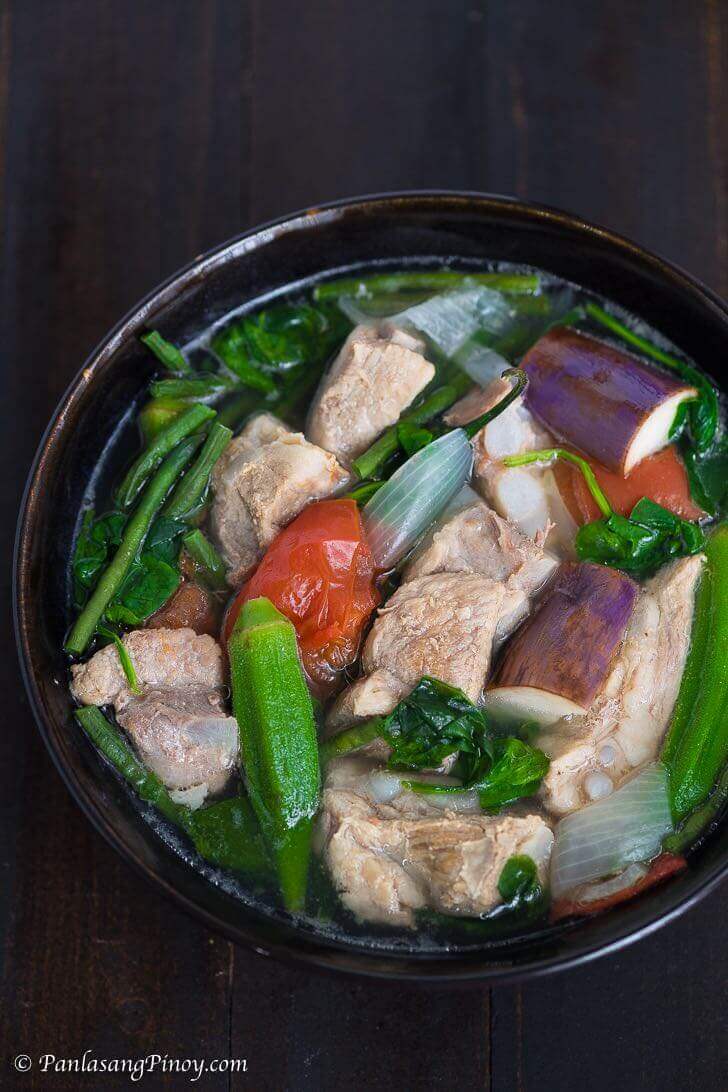
In Filipino homes, Pork Sinigang is served hot with rice. It is the soup people cook on rainy days, cold afternoons, and weekday dinners when the family wants something familiar.
Why This Pork Sinigang Recipe Works
This Pork Sinigang recipe works because the method keeps the flavor clear and the texture right. The traditional boiled approach gives a cleaner tamarind taste than the sautéed version, and the vegetables stay fresh because each one is added at the right time.
- Boiling the fresh tamarind separately. The 40-minute boil pulls the sour out of the pulp. Adding this concentrated broth to the pork gives a stronger, clearer sour than tossing tamarind into the pot whole.
- No oil and no browning. Searing the pork adds richness but also makes the broth cloudy. The traditional boil lets the pork fat render slowly for a clean broth.
- Skimming the scum early. Skimming during the first 15 minutes is what separates a clear sinigang from a cloudy one.
- Adding vegetables in batches. Daikon and eggplant take longer to cook. String beans need a few minutes. Kangkong only needs the residual steam at the end.
- Finishing with fish sauce. Patis is umami with saltiness. Sinigang seasoned with fish sauce tastes deeper than sinigang seasoned with plain salt.
Ingredients
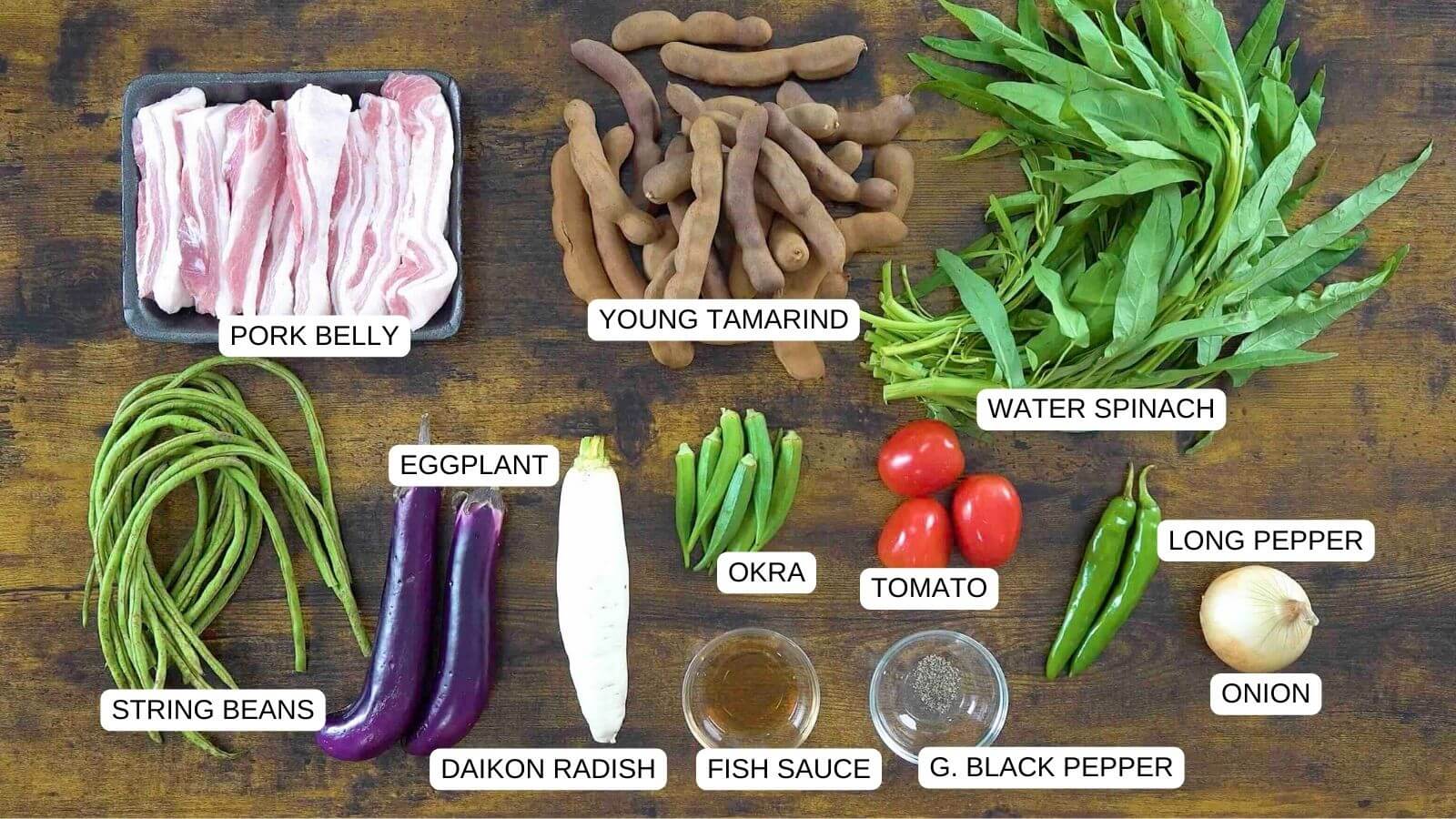
- Pork belly is my preferred cut. The fat gives the broth its body. You can also use pork shoulder, spare ribs, or pork neck bones.
- Young tamarind is the traditional souring agent. These are the unripe green pods.
- Water spinach (kangkong) – Wash thoroughly and separate the leaves from the tougher lower stems.
- String beans (sitaw) – Cut into 2-inch lengths. Green beans work as a substitute.
- Eggplant – Chinese or Japanese variety is best. Slice diagonally or roll-cut.
- Daikon radish (labanos). One medium piece is enough. This is an optional ingredient.
- Okra – Use whole or sliced.
- Tomatoes – Slice into wedges.
- Long green pepper (siling pansigang). Use 2 pieces. Jalapeño or Serrano work as substitutes.
- Onion – Sliced into wedges and added with the pork.
- Fish sauce (patis). To taste in the pot, plus more for dipping on the side.
Vanjo’s Advice
A few details I pay attention to when cooking Pork Sinigang at home.
- Skim the scum during the first 15 minutes. This is the step that separates a clear sinigang from a cloudy one. I use a slotted spoon and stay on it until no more scum rises. After that I cover the pot and let it simmer.
- Use a wide pot. A wide pot lets the pork sit in a single layer and makes skimming easier than fishing scum out of a tall narrow pot.
- The tamarind needs the full 40 minutes. Some recipes say 20 minutes. That is not enough time to pull the sour out of the pulp. Give it the full 40, and squeeze the pulp afterwards to get the last of the flavor.
- Skim the foam, do not stir it in. When the pork first hits the broth, foam will form on the surface. Lift it off with a slotted spoon. Stirring pushes the impurities back into the soup and makes the broth cloudy.
- Add the vegetables in batches. Daikon and eggplant go in first because they need the most time. String beans and okra come next. Kangkong goes in last and finishes with residual heat after the stove is off.
- Instant Pot works well here. Pressure cook the pork until tender, then add the vegetables and let the residual heat finish them. It cuts the cooking time almost in half.
How to Cook Pork Sinigang
Making Pork Sinigang is straightforward when you handle the tamarind and the pork separately at the start. Take it one step at a time and the pot will come together cleanly.
Extract The Flavors From The Tamarind
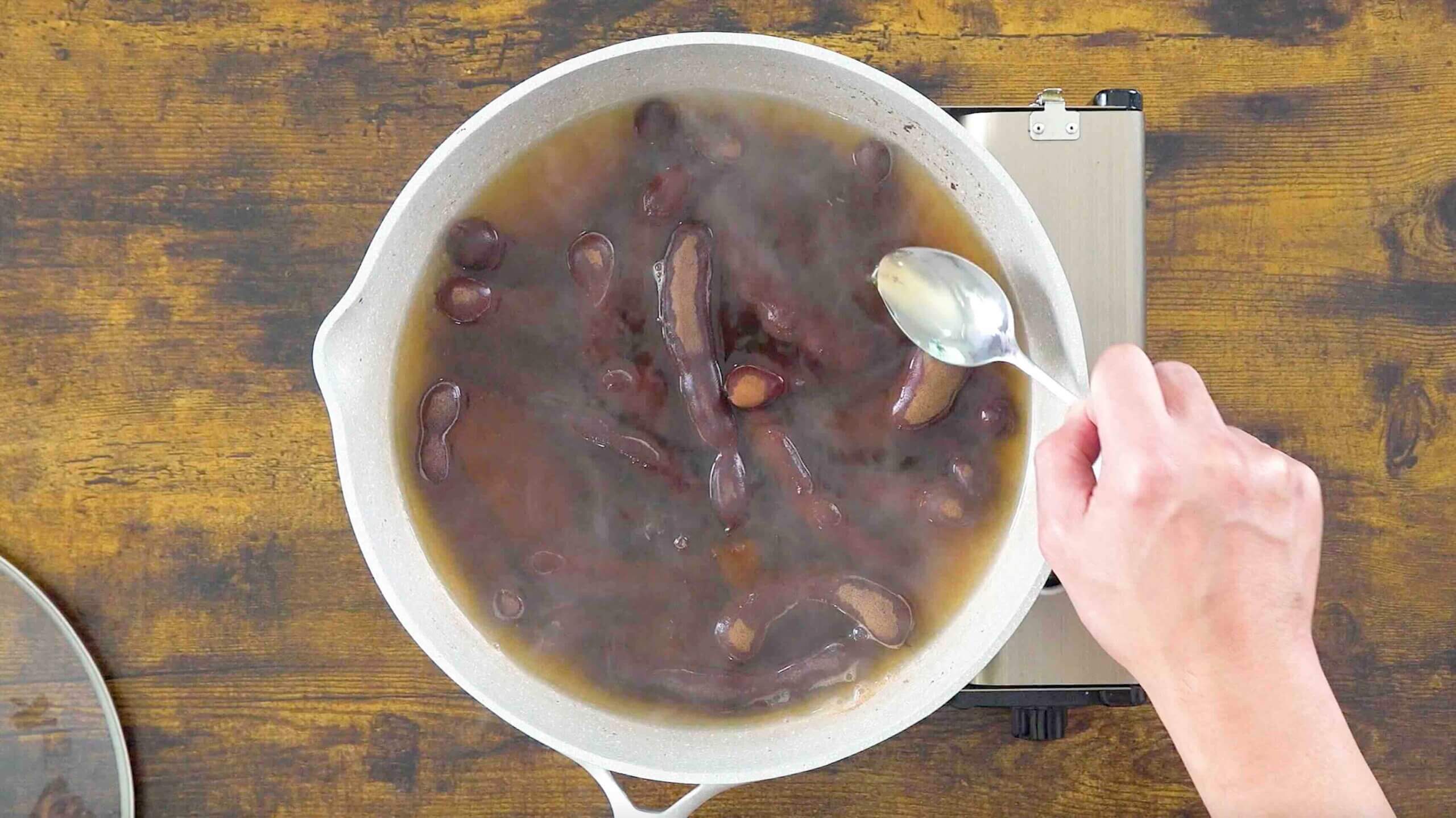
The old school method of cooking sinigang makes use for fresh young tamarind. This has to be boiled until enough sourness is extracted from it. In this recipe, I boiled the tamarind in 2 quarts of water for 40 minutes. It can be done for up to 1 hour for optimal results.
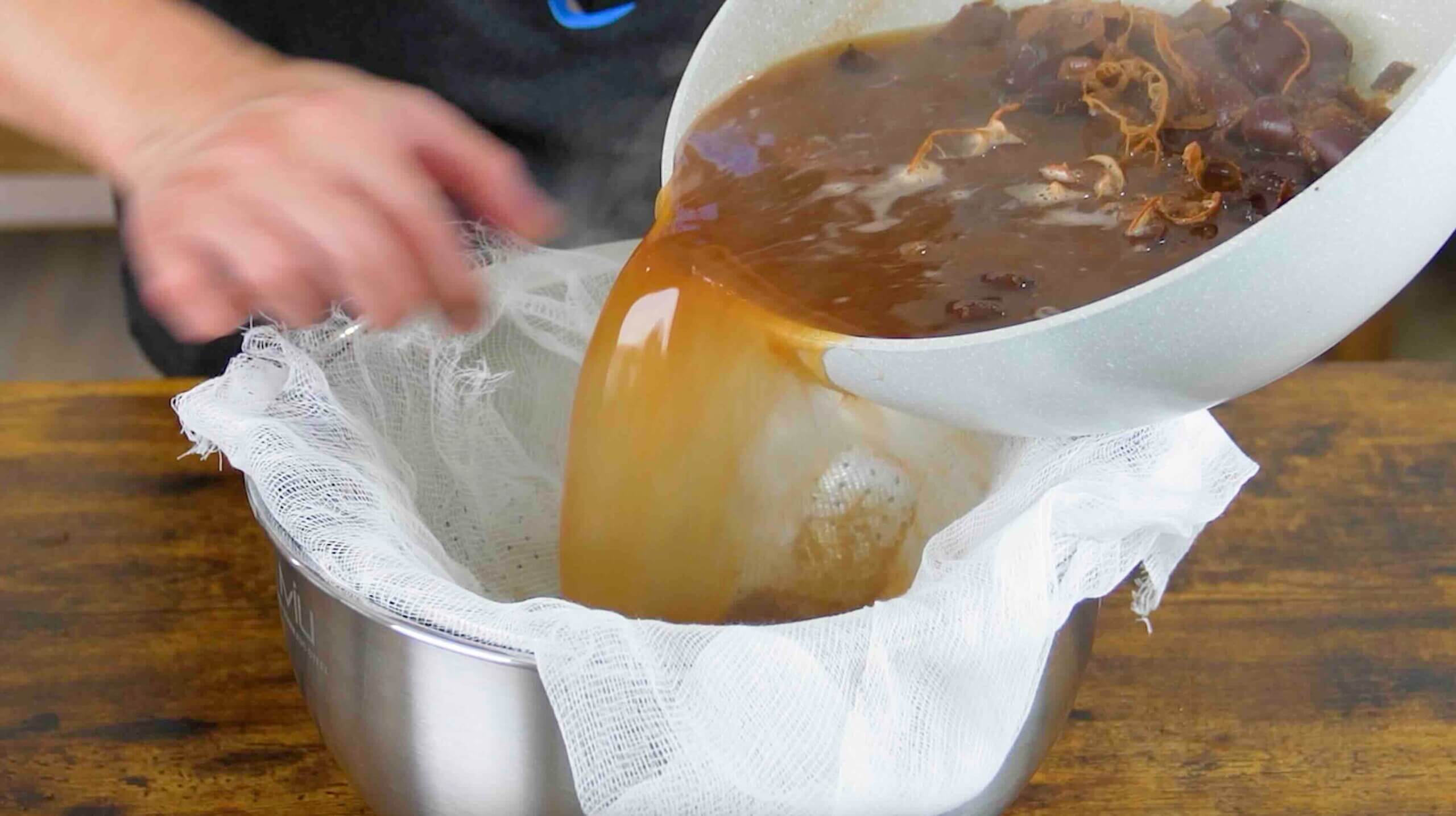
Once the flavors are extracted from the fruit, the solid parts of the tamarind need to be removed. Do this by running the water into a kitchen sieve or a strainer. I recommend squeezing the tamarind afterwards. You will be surprised on how much flavors are left in the pulp.
Boil The Tamarind Broth And Cook The Meat

Traditional sinigang is cooked plainly by boiling all the ingredients together. Start by pouring the tamarind broth (in step 1) into a cookware of your choice. Deep and wide pots are perfect for this.
Boil the liquid and then add some onion and tomato. This will add flavor to the broth. This is also the proper time to add the pork belly. Make sure to cover your pot so that the liquid can boil quickly.
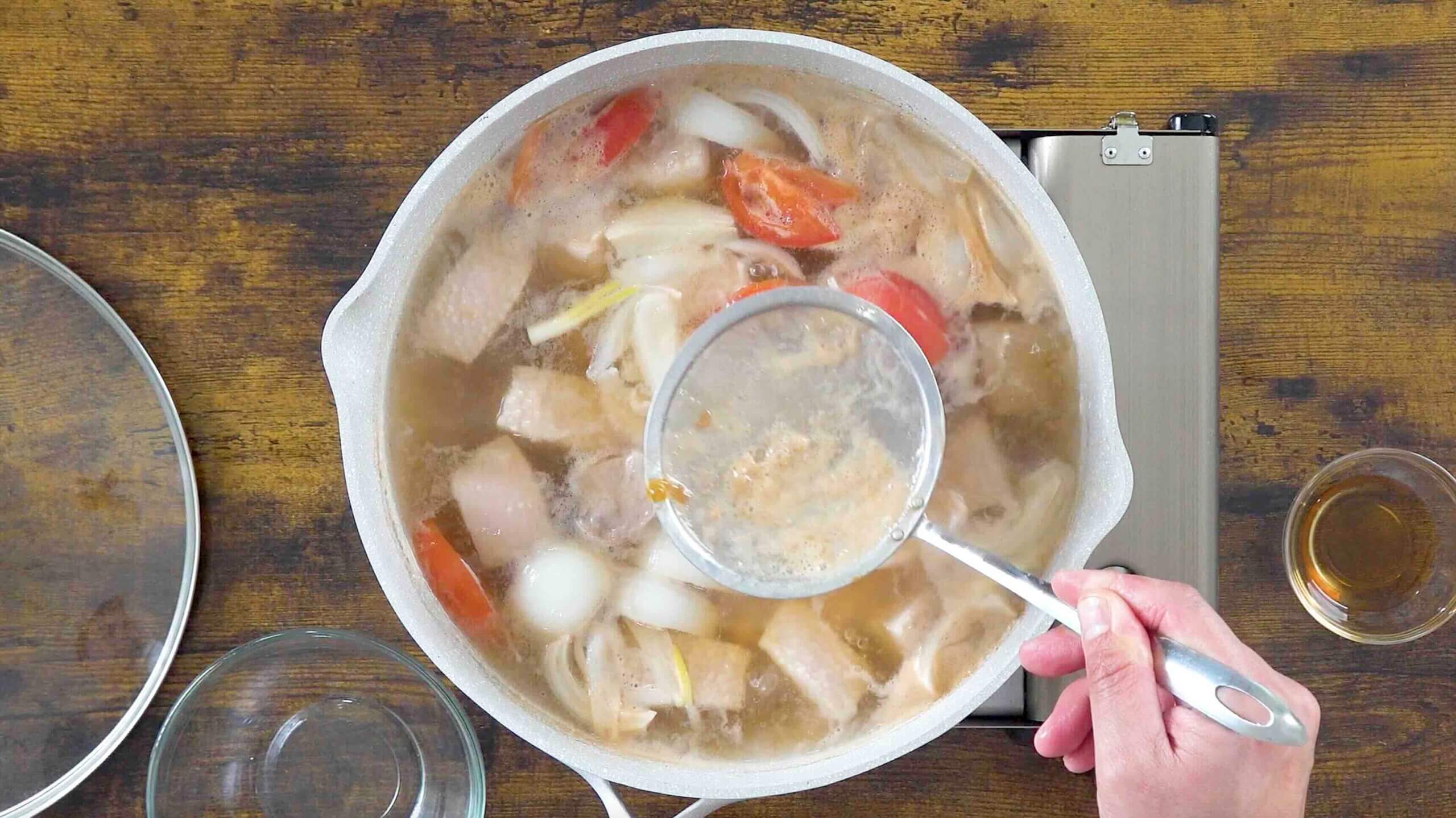
Skim-off the floating scums, add a bit of fish sauce for flavor, and then cover and simmer until the pork becomes tender. This can take between 45 to 90 minutes depending on the quality of the meat.
Add The Vegetables Sequentially
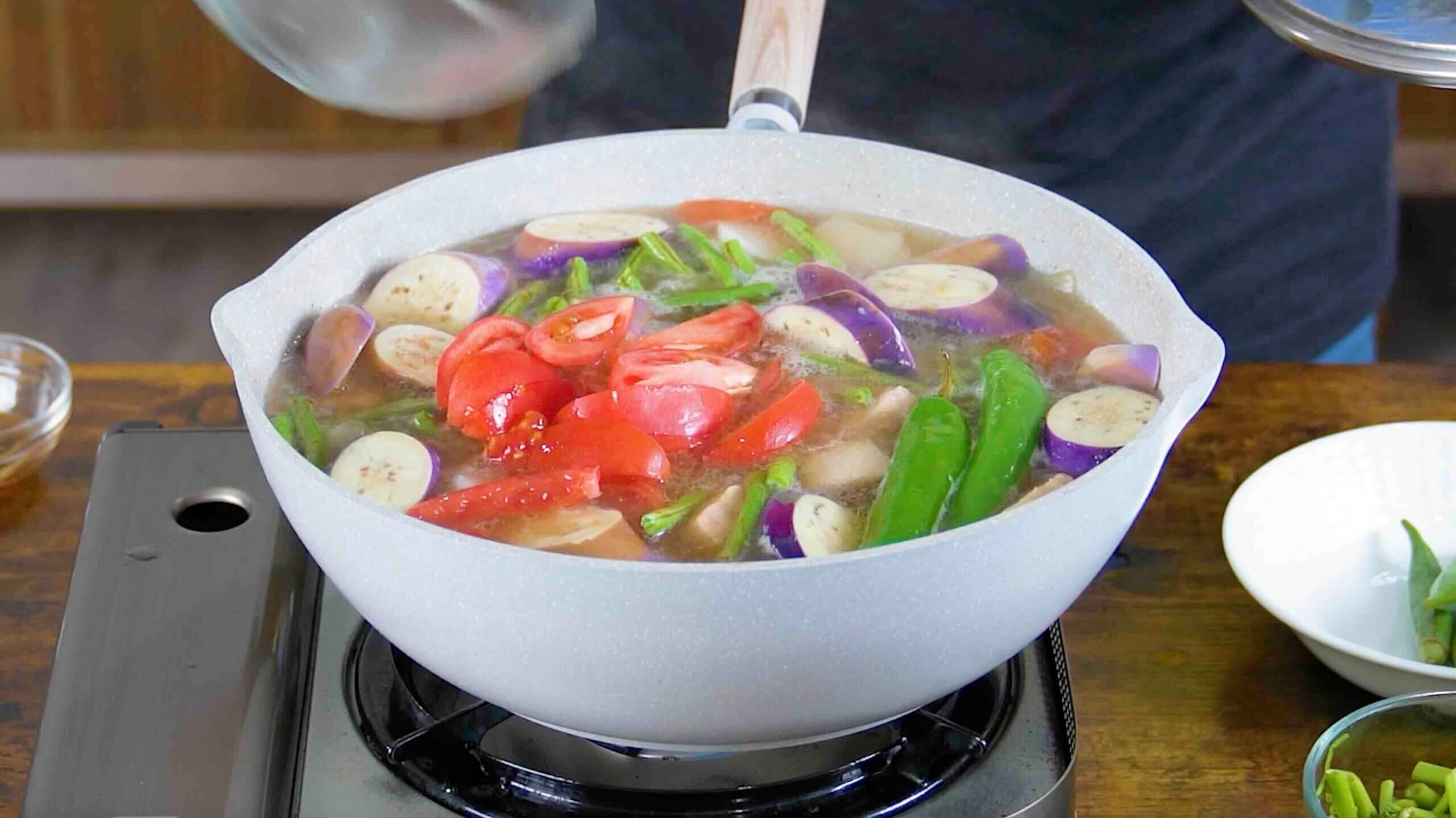
Not all vegetables cook at the same time. This is the reason why I am adding the sinigang veggies by batch.
The first batch of veggies to add are daikon radish and eggplants. Some people also add their string beans at this point if they want it to be extra soft later on. I prefer mine to be a bit crisp.
After 5 minutes of cooking in low heat (above simmering temp), add the long green peppers, string beans, remaining tomatoes, and okra and continue cooking for 3 minutes.
Season It And Then Add The Remaining Ingredients

There is one vegetable that needs to be added yet. I am referring to the water spinach. I personally add the stalk and leaves on the later part of the process to retain its freshness. It is important to serve the soup right away (while piping hot) for best results.
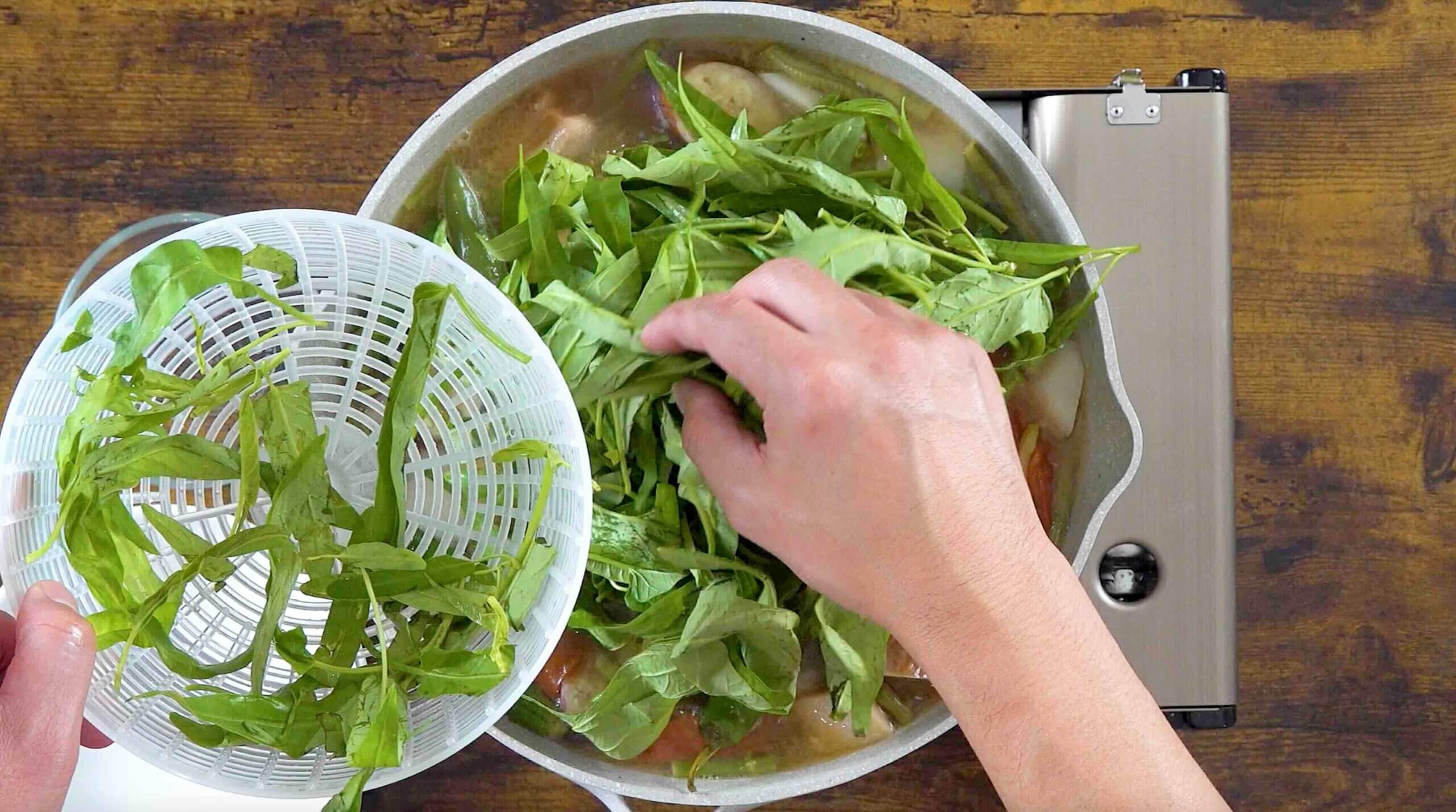
For this step, I added the stalks of the water spinach and seasoned the dish with fish sauce (patis) and ground black pepper (this ingredient is optional). Quickly cook it for around 2 minutes before adding the water spinach leaves. Cover and turn the heat off. You will basically be cooking the leaves using the residual heat inside the pot. Do this for 3 to 5 minutes. It should be enough for you to prepare the rice and side
Souring Agents for Pork Sinigang
The souring agent is what defines every pot of Pork Sinigang. It is the single ingredient that decides how sharp, mellow, or bright the broth will taste. The same pork, the same vegetables, and the same method can produce very different results depending on what you use to sour the soup.

- Young tamarind (sampaloc) is the most common souring agent and the one I grew up with. The unripe green pods have a higher concentration of tartaric acid, which gives them the clean, sharp sour most Filipinos associate with sinigang.
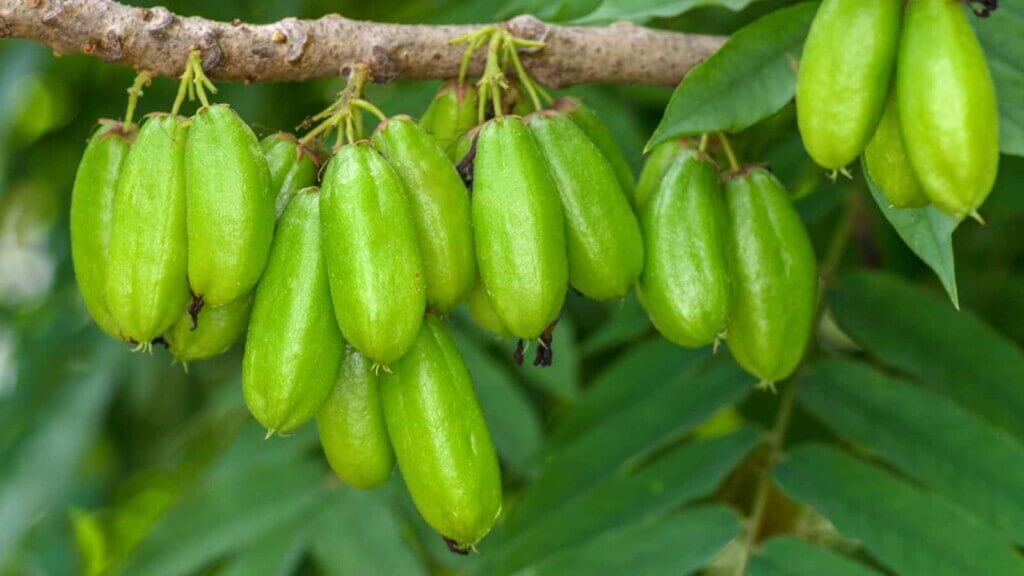
- Kamias (bilimbi) gives a brighter and sharper sour than tamarind. I have a separate recipe for pork sinigang sa kamias.
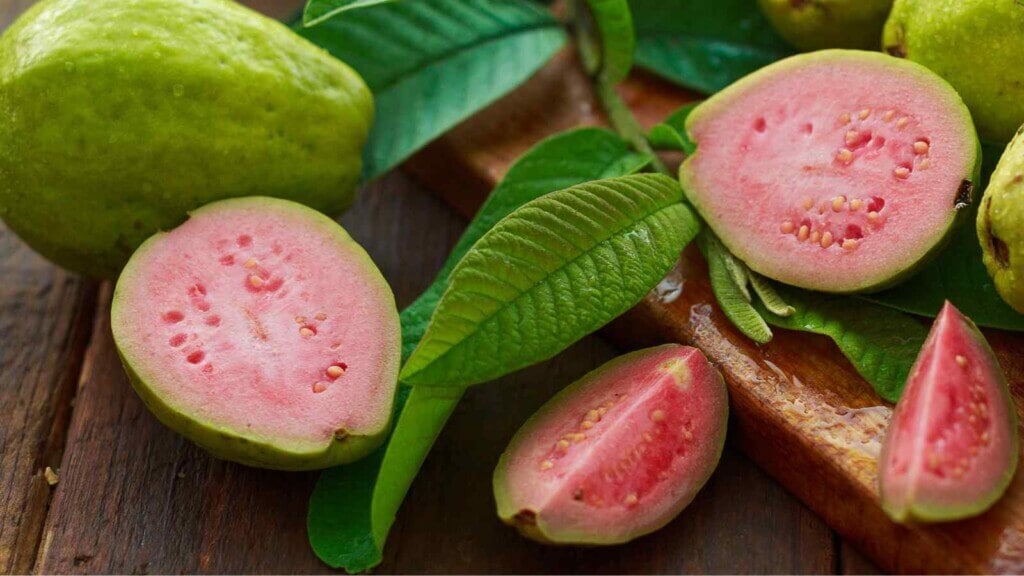
- Guava (bayabas) gives the mildest sour. Ripe guavas lean sweet with a tangy undertone, so the broth comes out softer and a little fruity.
- Green mango gives a tart, almost citrus-like sour. Use 1 medium unripe mango, peeled and sliced, added with the pork.
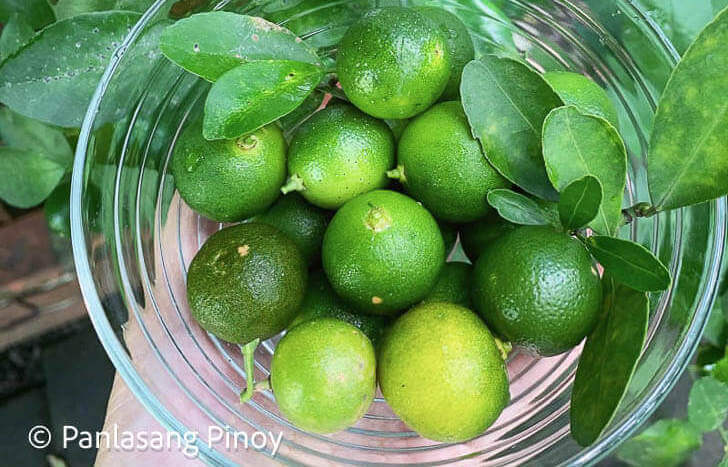
- Calamansi works for a lighter, citrusy version. Use the juice of 8 to 10 calamansi, added at the end of cooking.
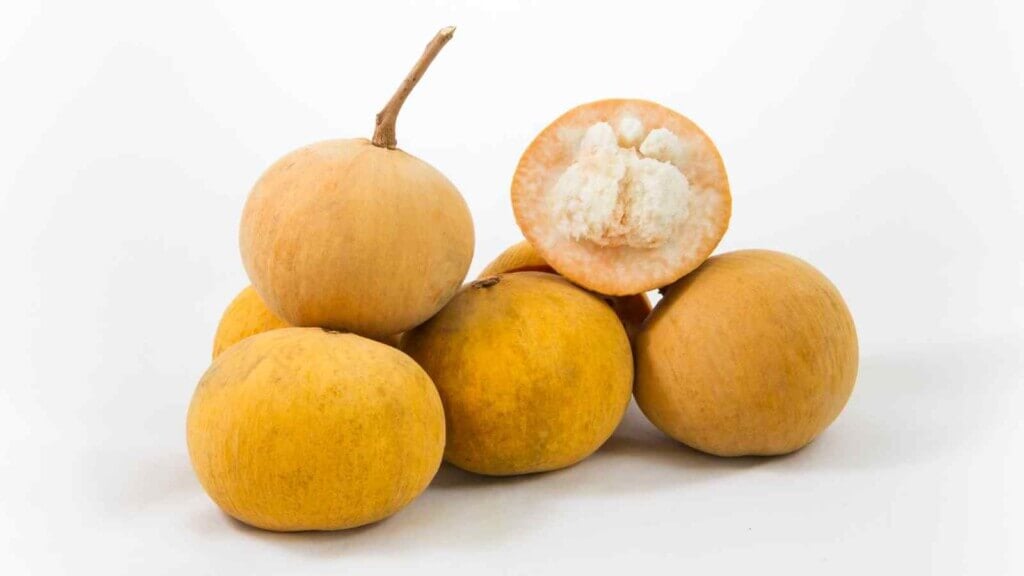
- Santol (cotton fruit) is a regional choice when in season. Both the rind and pulp contribute sour notes.
- Sinigang mix (powdered) is the shortcut my mom started using as the years passed. One 40g packet of Knorr Sinigang sa Sampaloc replaces fresh tamarind. I keep this in the pantry for busy days.
What to Serve with Pork Sinigang
- Steamed white rice – the standard pairing. Pork Sinigang needs rice to round out the meal.
- Fish sauce with crushed siling labuyo – the classic dipping sauce. You dip the pork into it before each bite.
- Fried tuyo – what I grew up having alongside sinigang. My mom always served salty fried tuyo with it and we got used to the pairing.
- Sinangag works well, especially with leftover sinigang the next day.
- Crispy fried fish – like tilapia or bangus contrasts the soup.
Storage
Pork Sinigang keeps well for a few days if you store it right. The broth deepens overnight, so leftovers often taste better than the first pot.
- Refrigerator: Store in an airtight container for up to 3 days. Add fresh kangkong when reheating because the original leaves get slimy on day two.
- Freezer: Sinigang freezes for up to 2 months. Strain out the kangkong and soft vegetables before freezing.
- Reheating: Warm on the stove over medium heat. Do not microwave the kangkong because it gets slimy.
More Filipino Soup Recipes
- Sinigang na Baboy with Gabi adds taro that thickens the broth.
- Killer Pork Sinigang uses the sautéed method with sinigang mix for a faster, richer version.
- Sinigang na Pata with Gabi uses pork hocks. The collagen makes the broth thick when cool.
- Tinolang Manok is a ginger-based Filipino chicken soup.
- Nilagang Baboy is a simple Filipino pork soup with cabbage and corn, without the sour element.
Substitutions
- Pork belly can be swapped for pork shoulder, spare ribs, or pork neck bones. Bone-in cuts give a deeper broth.
- Fresh young tamarind can be replaced with one 40g packet of sinigang mix or 2 to 3 tablespoons of tamarind paste. See the Souring Agents section for full alternatives.
- Kangkong can be replaced with spinach, bok choy, or pechay. All wilt quickly and go in at the end.
- Daikon radish can be substituted with white turnip or skipped. It is an optional ingredient.
- Long green pepper can be replaced with jalapeño or Serrano if siling pansigang is unavailable.
Frequently Asked Questions
What is the best pork cut for sinigang?
Pork belly is the cut I use. The fat keeps the meat moist and gives the broth body. Bone-in cuts like spare ribs and pork neck bones make a deeper broth, so use those if you want a richer soup. Pork shoulder works for leaner meat.
Can I use tamarind paste or sinigang mix instead of fresh tamarind?
Yes. Both work well. Use 2 to 3 tablespoons of tamarind paste stirred into the broth after the pork is tender. For sinigang mix, one 40g packet replaces the fresh tamarind. Skip the boiling and straining step and add the packet after the pork is cooked.
Can I cook Pork Sinigang in an Instant Pot?
You can. Sauté the onion and tomato briefly using the sauté mode, then pressure cook the pork on the meat setting until tender. Add the sinigang mix, vegetables, and kangkong after pressure release. Cover and let the residual heat finish the vegetables.
What is a substitute for kangkong?
Spinach, bok choy, and pechay all work. They wilt quickly and go in at the end of cooking, same as kangkong. Add them last and let the residual heat finish them so they stay fresh.
How do I keep my sinigang broth clear and not cloudy?
Skim the scum during the first 15 minutes of simmering the pork. Use a slotted spoon and keep skimming until no more scum rises. Boiling the tamarind separately also helps because you are not breaking up the pulp inside the pot.
Pork Sinigang is the soup I come back to. I hope you give this recipe a try and serve it hot with rice and a saucer of fish sauce on the side.
Watch How to Make It

Did you make this? If you snap a photo, please be sure tag us on Instagram at @panlasangpinoy or hashtag #panlasangpinoy so we can see your creations!
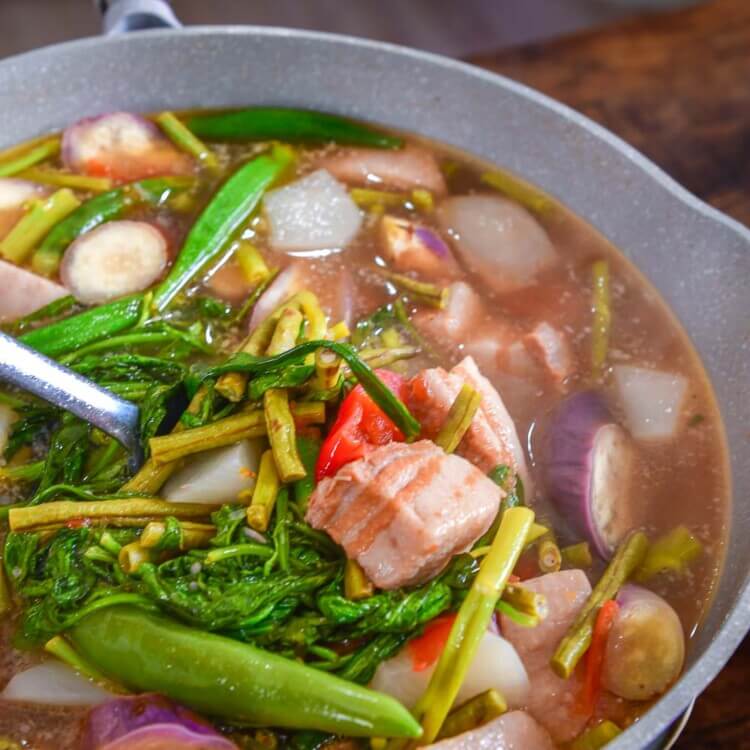
Sinigang
Ingredients
- 2 lbs. pork belly see notes
- 1 lb. young tamarind see notes
- 1 bunch water spinach chopped
- 8 pieces string beans cut into 2-inch pieces
- 2 pieces Chinese eggplant sliced
- 1 piece daikon radish see notes
- 8 pieces okra
- 2 pieces tomatoes sliced into wedges
- 2 pieces long green pepper
- 1 piece onion sliced into wedges
- 2 quarts water
- Fish sauce and ground black pepper to taste
Instructions
- Boil the young tamarind in 2 quarts of water for 40 minutes. Filter the tamarind broth using a kitchen sieve or a strainer. Squeeze the tamarind afterwards to extract its remaining juices.1 lb. young tamarind, 2 quarts water
- Pour the tamarind broth into a cooking pot. Let it boil and then add the onion, pork belly, and half the amount of the tomatoes.2 lbs. pork belly, 1 piece onion, 2 pieces tomatoes
- Skim-off the floating scums, pour 1 tablespoon fish sauce, cover and continue to simmer for 1 hour.Fish sauce and ground black pepper
- Add daikon radish and eggplants. Cook for 5 minutes.1 piece daikon radish, 2 pieces Chinese eggplant
- Add the long green pepper, string beans, remaining tomatoes, and okra. Cook for 3 minutes.8 pieces string beans, 2 pieces tomatoes, 2 pieces long green pepper, 8 pieces okra
- Add the chopped water spinach stalks and season with fish sauce and ground black pepper. Cook for 2 minutes.Fish sauce and ground black pepper
- Put the water spinach leaves. Cover and turn the heat off. Let the residual heat cook the leaves for 3 minutes before serving.1 bunch water spinach
- Share and enjoy!
Notes
- Pork Belly – This is the best cut to use when cooking sinigang, in my opinion. The fat in the belly makes the meat moist which complements well to its tenderness. The other cuts of pork that I use are: pork shoulder, spare ribs, and pork neck bones.
- Young Tamarind – Use only young tamarind if you want your soup to be sour. However, a combination of both young and ripe tamarind can be good too, especially if you like your soup to have a hint of sweetness.
- Daikon Radish – This is an optional ingredient for sinigang.
- Taro (gabi) – Adding taro to the dish will make the soup thicker. This is a version of the dish known as sinigang na baboy with gabi.

Ali says
Excellent recipe, love all the vegetables
Roger says
Today is the second time I’ve made this. The first time I did it straight through, from boiling the whole tamarind pods on. I used taro as well- excellent. This time I added tamarind paste to the stock/water (instead of boiling pods)until it tasted like enough; it tastes great and is a lot less work. I also used chicken thighs instead of pork belly, also great. Ultimately, an excellent recipe flexible enough to make it your own.
Vanjo Merano says
That sounds wonderful. Thanks for trying the recipe!
fran says
nice one, im gonna try this out
Ed in DE says
This is my comfort food! It is a great easy base recipe and you can add your own special tastes. I always use my Instant Pot for this recipe so that I don’t have to babysit the stove. You can do the onions and browning using the sauté mode. Then set to the “meat” setting and pressure cook. Once it’s finished, add your sinigang mix, beans and spinach (I also add baby bok choy and eggplant). Afterwards, I put the lid back on the IP and let the veggies cook using the natural heat (the liquid is extremely hot so you don’t need to turn on the pressure cooker again. It’s so hot that it will develop pressure naturally). Let it sit for a while (maybe 15 minutes). The vegetables will be cooked but not soft and soggy. I wind up adding more fish sauce because that is my preference. Masarap!
Vanjo Merano says
Ed, this is truly delicious. I appreciate you sharing how you cook it using Instant Pot. Cheers!
Jeff Traylor says
Thanks for making this sinigang recipe as simple as possible. I was able to make it at home and it was delicious!
Erikka says
Perfect! I’m half-Filipina, half-American and this was my first time making sinigang. So yummy!
Tat says
Thank you for this recipe! It was easy to make. I used my instant pot to cook it, set it to pressure cook (high) for 40mins and the meat came out tender! Thank you again!
nida nido says
can i use lemon instead of other condiments, if so, how many cups of lemon do i add & when do i add it?