Sinigang na Salmon sa Miso
Sinigang na Salmon sa Miso is my favorite version of fish sinigang. I like the richness that comes from the salmon head, especially the meat around the cheeks, and the miso gives the sour broth a little more depth. For me, this is best with hot rice and a small dish of fish sauce with chili on the side.
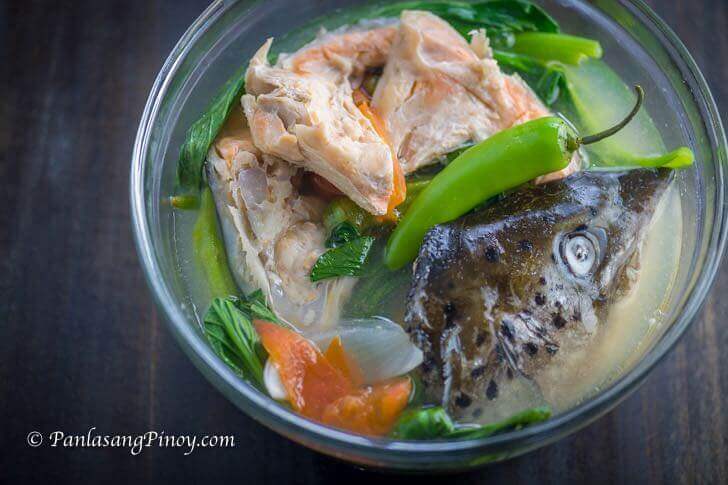
This version is also easy to put together because the souring agent and miso are already combined in one mix. I usually keep a few packs in the pantry, so I can make this even when I do not have miso paste on hand. If you would rather use salmon fillet instead of the heads, try my salmon sinigang recipe.
There is no sauteing here and no oil needed. I start with plain water, then let the onion and tomato cook first to build the broth. The salmon heads go in once the tomato starts to soften, followed by the sinigang mix after the pot comes back to a boil.
What is Sinigang na Salmon sa Miso?
Sinigang na Salmon sa Miso is a Filipino sour soup made with salmon heads simmered in a tamarind broth seasoned with miso. It is another version of sinigang, which takes its name from sigang, an old Tagalog word for stewing. Sinigang na baboy is the version most people picture first. Fish sinigang cooks much faster than the pork version. A salmon head takes about twenty minutes in the pot instead of the hour pork needs.
Miso is a fermented soybean paste from Japan. Its place in Filipino sour soups is usually traced to Japanese settlers who arrived in the Philippines in the early twentieth century. The broth still tastes sour, but it comes out fuller and slightly thicker than a tamarind broth on its own, and most of the miso versions are cooked with fish. My sinigang sa miso guide has more information about this type of sinigang.
Salmon is not native to Philippine waters, which makes this a newer dish than the pork and shrimp versions of sinigang. I usually serve this for lunch or dinner with hot rice while the broth is still steaming.
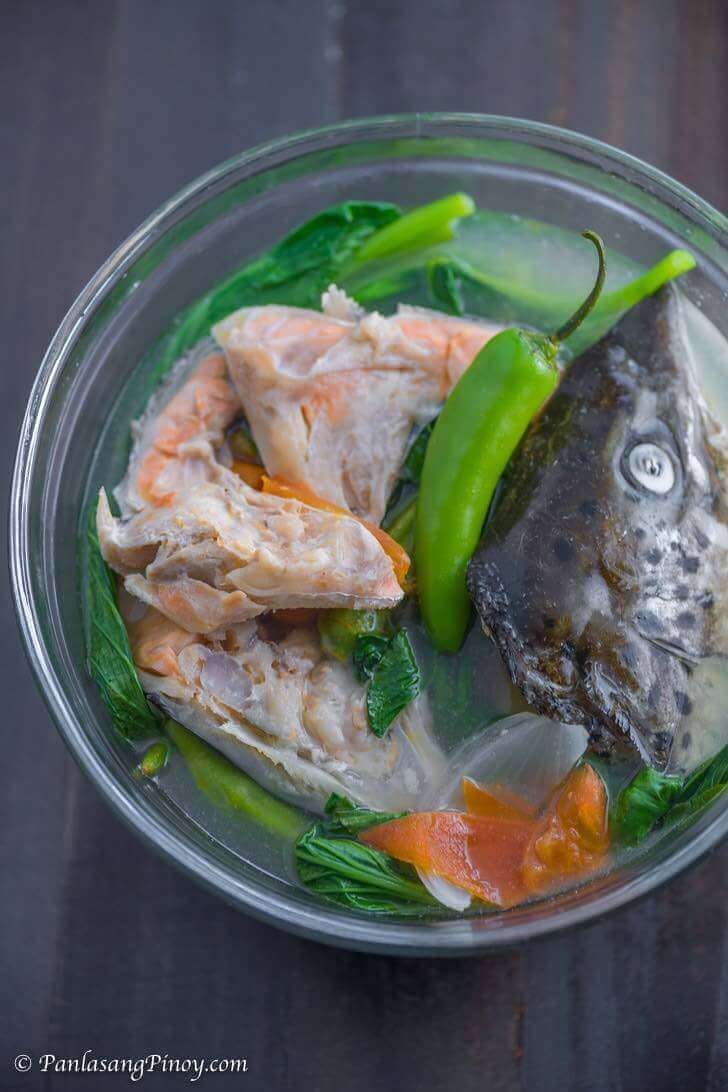
Ingredients
- Salmon heads – Ask for them cut in half lengthwise, or split them yourself with a heavy knife. The fish counter will usually do it for you.
- Knorr Sinigang na May Miso Recipe Mix – The tamarind and the miso are already combined in it, so there is no separate miso paste in this recipe.
- Mustard leaves – One bunch, added at the very end. No mustasa at your store? See the substitutions below.
- Okra – Trim the stem end only and leave the pods whole so they stay firm in the broth.
- Tomatoes – Wedged, not chopped. Riper ones soften faster at the start of the boil.
- Yellow onions – Cut into large wedges so they can be eaten along with the soup.
- Long green peppers – Added whole for a mild heat. Split one open before it goes in if you want the broth spicier.
- Fish sauce – Start with two tablespoons and taste before you commit to the third.
- Ground black pepper – Goes in with the okra rather than at the start.
- Water – Use the smaller amount in the recipe card for a stronger broth.
The mix provides most of the seasoning here. Knorr Sinigang na May Miso Recipe Mix is a powdered blend of tamarind and miso sold in 25-gram sachets, and it is the reason this soup needs no separate souring agent and no tub of miso paste in the refrigerator. Filipino and Asian groceries carry it near the other sinigang mixes, and it also sells online. Two packs season 6 to 8 cups of water, which is enough for three salmon heads.
Every sinigang mix already adds plenty of saltiness, and some brands are saltier than others, so the fish sauce goes in later rather than at the same time. If your store only stocks the plain sampaloc mix, the swap is in the substitutions section below. I use the same all-in-one packet for my sinigang na bangus sa miso recipe.
Vanjo’s Advice
- Cut the mustard leaves before they go into the pot. Cutting the leaves into shorter lengths makes them easier to add to the pot and serve at the table.
- Let the pot return to a full boil before adding the next ingredient.
- Taste the broth before all the fish sauce goes in. Two tablespoons is enough for me most of the time. The amount you need depends on the size of the heads and how much water you started with.
- Keep the boil steady rather than hard once the heads are in. A rolling boil can shake the pieces apart, and the cheek meat is the part you least want floating loose in the pot.
- Put the mustard leaves in last and take the pot off the heat soon after. Three to five minutes is plenty. You can also drop them in and simply cover the pot with the burner off, which I do when the soup is going straight to the table.
- Scale the water along with the fish. If you use five heads instead of three, add more water and a third packet of the mix.
How to Cook Sinigang na Salmon sa Miso
Everything cooks in one pot, and it takes about 35 minutes once the water starts boiling.
Start the Broth
- Pour the water into a cooking pot. Let it boil.
- Add the onion and tomato. Let the water boil again.
- Put the salmon heads into the pot. Stir.
- Once the water starts to boil again, add the Knorr Sinigang na May Miso Recipe Mix. Stir.
Give the onion and tomato a few minutes before the fish goes in. The tomato should look soft at the edges by then. Skim off the foam that rises after the salmon heads go in so the broth stays clearer.
Simmer with the Vegetables
- Add the long green peppers. Cover the pot and cook over medium heat for 12 minutes.
- Add the okra, ground black pepper, and fish sauce. Stir. Cover the pot and cook for 5 minutes.
- Add the mustard leaves. Cover the pot and cook for 3 to 5 minutes.
- Transfer the soup to a serving bowl. Serve.
Check one head before the mustard leaves go in. The meat around the cheek should come away from the bone with a spoon. If you use a thermometer, the fish should reach 145°F.
What to Serve with Sinigang na Salmon sa Miso
- Steamed white rice – Plain rice soaks up the sour broth, and a bowl of soup goes much further with it.
- Fish sauce with crushed chili – I usually have a small dish of fish sauce with crushed spicy chili peppers on the side.
- Lechon Kawali – Deep fried pork belly with crackling skin, which I like on the table when the soup is the only other dish.
- Fried Galunggong with Salted Egg and Tomato Salad – Crispy fried mackerel scad served with a salted egg and tomato salad.
- Eggplant Salad – Grilled eggplant with tomatoes and onions, which I like having with anything fried on the same table.
Storage
I usually cook Sinigang na Salmon sa Miso close to mealtime, but there is often enough left for the next day.
- Refrigerator: Store leftovers in a covered container in the refrigerator for up to 2 days. I usually reheat only the portion we plan to eat because the mustard leaves get softer each time the whole pot is warmed again.
- Freezer: Freeze the broth by itself for up to 1 month. I leave out the salmon heads, okra, and mustard leaves because their texture does not hold up as well after thawing. If I know I will freeze part of the sinigang, I set that portion of broth aside and add fresh vegetables when reheating it.
- Reheating: I warm it in a pot over medium heat just until it starts to steam, then take it off the heat. A microwave works for a single serving, but I prefer the stove because the salmon is less likely to break apart.
More Salmon Recipes
- Salmon Sisig – Broiled salmon flaked and cooked with butter, onion, and chili, then served on a hot plate with chicharon on top.
- Breaded Fried Salmon – Marinated in soy sauce and Worcestershire, dredged in flour, and fried until golden. I like it with atchara on the side.
- Teriyaki Salmon – Fillets marinated in teriyaki sauce, brushed with a thickened glaze, and baked for 15 to 17 minutes.
- Salmon Steak – Marinated in olive oil and lemon juice, seasoned with garlic powder, and grilled 4 to 5 minutes per side.
- How to Poach Salmon – The gentlest way to cook a fillet, with notes on what to put in the poaching liquid.
Substitutions
- Salmon heads – Salmon steaks are the easiest swap and take about the same time. Tuna jaw is the other head cut I like in a sour broth, and my tuna jaw sinigang recipe covers that one.
- Knorr Sinigang na May Miso Recipe Mix – Use one 40-gram pack of plain sinigang sa sampaloc mix plus 2 to 3 tablespoons of miso paste. Dissolve the miso in a ladle of hot broth before stirring it back into the pot.
- Mustard leaves – Kangkong, spinach, or pechay. Spinach wilts fastest, so give it a minute rather than five.
- Okra – String beans cut into 2-inch pieces, or daikon radish added with the green peppers so it has time to soften.
- Long green peppers – Siling labuyo, one or two pieces. They are much hotter, so keep them whole.
- Salmon – Any large fish with firm white meat holds up here. My sinigang na lapu lapu sa miso recipe uses grouper in the same kind of broth.
Frequently Asked Questions
Can I use salmon belly instead of salmon heads?
Yes, and the belly cut is richer since it carries more fat. Belly cooks faster than the head, so check it before the full 12 minutes are up. My sinigang na salmon belly recipe is written for that cut and starts by sauteing garlic, ginger, onion, and tomatoes.
Do I need to fry the salmon heads first?
No. The heads go into the pot raw in this recipe, and the broth turns out clean and light that way. Frying the fish first is a different soup with a deeper taste, and my fried bangus sinigang sa miso recipe shows how that version is put together. I also have an air fried fish sinigang sa miso for the same idea without a pan of oil.
My broth tastes flat. What should I do?
Add a little more fish sauce and taste again. If the broth still tastes weak, stir in half of another packet of the mix. The amount that works changes with the size of the salmon heads and how much water is actually in the pot.
Can I use rice washing water instead of plain water?
You can. Hugas bigas is an old practice in Filipino sour soups and it makes the broth slightly cloudy and a little thicker. Use the second rinse rather than the first, and use it the same day. I use plain water for this recipe, and the mix carries enough flavor on its own.
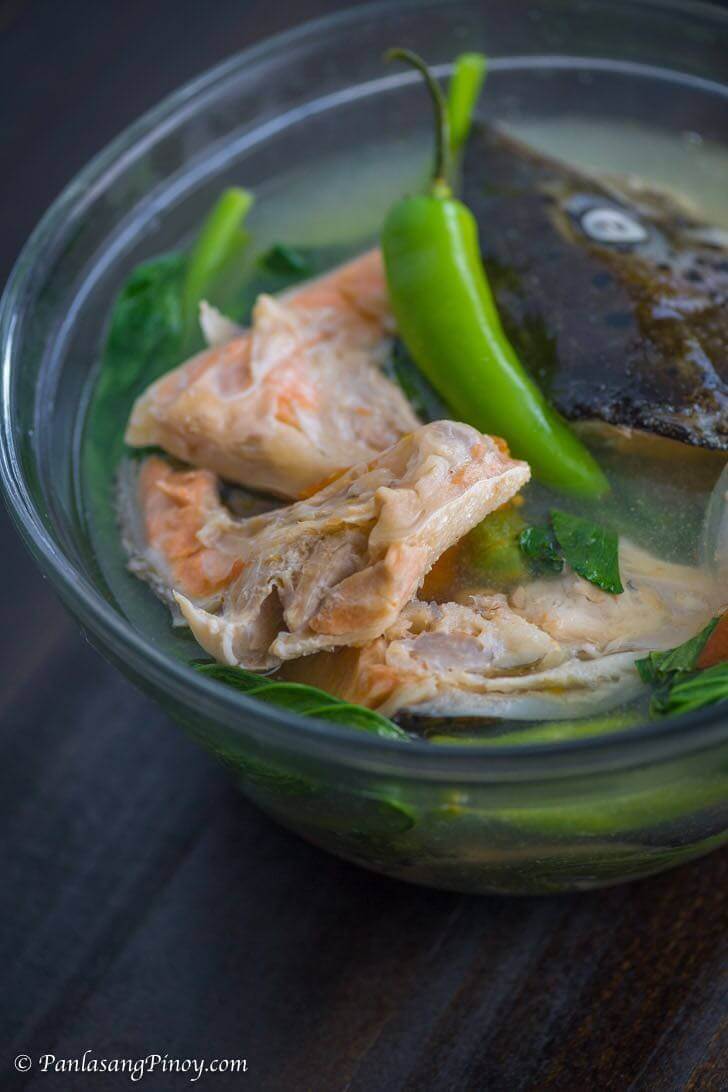
Ladle the Sinigang na Salmon sa Miso out while the mustard leaves are still bright and the broth is steaming. Put the heads in a shallow bowl of their own so the cheek meat is easy to reach with a spoon. Three salmon heads are enough for about six people. Share and enjoy!
Watch How to Make It
Did you make this? If you snap a photo, please be sure tag us on Instagram at @panlasangpinoy or hashtag #panlasangpinoy so we can see your creations!
Sinigang na Salmon sa Miso
Ingredients
- 3 pieces salmon heads cut in half lengthwise
- 2 pieces Knorr Sinigang na May Miso Recipe Mix 25 grams per pack
- 1 bunch mustard leaves washed and trimmed
- 12 pieces okra stem ends trimmed
- 2 pieces medium tomatoes wedged
- 3 pieces long green peppers
- 2 pieces medium yellow onions wedged
- 6 to 8 cups water
- 0.5 teaspoon ground black pepper
- 2 to 3 tablespoons fish sauce patis
Equipment
- 1 Cooking pot A 5 to 6 quart pot holds the salmon heads and broth without crowding.
- 1 Ladle Use it to skim the foam that rises after the salmon heads go in.
Instructions
- Pour the water into a cooking pot and bring it to a boil.6 to 8 cups water
- Add the onion and tomato, then let the water boil once more.2 pieces medium yellow onions, 2 pieces medium tomatoes
- Put the salmon heads into the pot and stir.3 pieces salmon heads
- Once the water returns to a boil, add the Knorr Sinigang na May Miso Recipe Mix and stir.2 pieces Knorr Sinigang na May Miso Recipe Mix
- Add the long green peppers. Cover the pot and cook over medium heat for 12 minutes.3 pieces long green peppers
- Add the okra, ground black pepper, and fish sauce. Stir, then cover the pot and cook for 5 minutes.12 pieces okra, 0.5 teaspoon ground black pepper, 2 to 3 tablespoons fish sauce
- Add the mustard leaves. Cover the pot and cook for 3 to 5 minutes.1 bunch mustard leaves
- Transfer the Sinigang na Salmon sa Miso to a serving bowl and serve.

Leave a Comment