• Skip to primary navigation
  • Skip to main content
  • Skip to primary sidebar
Your Top Source of Filipino Recipes
About
Cooking Schools
Contact
Facebook
Instagram
Pinterest
YouTube

Panlasang Pinoy

Your Top Source of Filipino Recipes

  • New? Start Here
  • All Recipes
  • Course
    • Breakfast
    • Lunch
    • Appetizers
    • Dessert
    • Dinner
  • Ingredient
    • Chicken
    • Pork
    • Beef
    • Turkey
    • Vegetable
    • Fish
    • Rice
    • Egg
    • Tofu
    • Noodles
  • Type
    • Adobo
    • Bread
    • Fried Chicken
    • Sinigang
    • Kilawin
    • Ginataan
    • Kaldereta
Home Culinary Arts

Culinary Arts

Pork Belly

Pork Belly 101 – The perfect recipes, reheating procedures & substitutes

Some ingredients, when slapped on the title of any dish, make for the simplest way to lure in diners. While we all have our fair share of cravings and food preferences, seeing the name of some popular fruits or meat can set our hunger on high. And this is very much the case for pork belly, which you might know better as liempo.

Pork Belly Recipes

This cut of pork is most often defined as a crowd pleaser. This is because of how easily its flavor and tender texture can entice your taste buds. And with the Philippines’ love for various grilled meats, this ingredient can be seen in several Filipino recipes. If you are just as much a fan of pork belly as the majority are, keep reading to get some background on the meat. And read about how much delectable goodness you can make of it with some Panlasang Pinoy recipes.

Where does the pork belly come from?

One of the distinguishing characteristics of this pork cut is how juicy and tender it tastes when cooked just right. Coming from the pig’s underside after you take off the spareribs and loin, it is naturally savory. That, and it is a boneless, fatty cut that works incredibly well with different types of cooking methods. 

You might easily recognize pork belly for its variation with a crispy, golden skin. But it also works amazingly well when grilled and coated with a rich sauce. But if you want it at its softest, and most tender, braising or frying your pork in a covered pot is known to be one of the best ways to attain this, alongside other slow-cooking methods.

Another benefit there is to this part of the pig is its accessibility and affordability. You can find it in most markets, and for a comparably low price. This is because it is often only the starting point for many meat variations you might be familiar with. For one, various kinds of sausage meat do contain a hefty deal of pork belly. And of course, it can also be turned into one very popular ingredient– bacon.

What is the difference between bacon and pork belly?

Most people end up confused with the difference between these two, and understandably so. They have similar flavors, and that is because bacon is a cured, smoked and salted version of pork belly. To make this, they cut pork belly into the bacon strips we often see.

Luckily, bacon is another pork cut you can find in most local markets. And it also isn’t too pricey for meat. If you ever find yourself wondering how to make the most of your bacon, check out this article. It has all the tips on cooking these thin, crunchy strips of pork belly! But if you are interested in finding some of this pork cut prior to the curing process, I also have some advice that’ll come in handy for choosing them in the market.

How do I pick a good pork belly?

Pork Belly

One great indicator of the quality and freshness of your pork belly is its color. Given that the cut we are looking for comes from the pig’s abdomen, we can count on seeing some fat. A nice, white colour for the fat of the pork belly is a good sign of freshness. Yellow or greying fat can mean a more worn and old meat cut. 

It is also ideal that you get even amounts of flesh and fat in your pork belly. If you can, try to look for one with equal parts of these two. And look at the width of layers of fat between the muscles. This should benefit you largely later on when you cook a good pork belly cut with a little bit of the tenderness of the fat, as well as the thick texture and flavor of the flesh part. Additionally, you should look out for a generally pink pork belly with a firmer, dense texture. Also try to steer away from any signs of sliminess. 

But despite the general availability and high supply of pork belly in most areas, there can be cases wherein you end up with none. If you find yourself in a situation as such, but are craving for a recipe that asks for liempo, I have some fitting suggestions. One of the best parts of cooking truly is the experimentation with various ingredients. And so feel free to try some alternatives!

What can I replace pork belly with?

Because of the wide range of meat cuts with versatility in flavor, it actually isn’t too hard to find a decent pork belly substitute. For one, you can take the same part of the cow to mimic our pork belly’s flavor. Beef bacon comes from the cow’s belly. And it has an overall taste that we can liken to pork belly. However, it can be less crispy because of its higher melting point than pork. And because beef is generally leaner, it may not be as naturally juicy as pork. But on the bright side, people often resort to this alternative easily. This is because it is notably healthier with much less fat. 

Of course, you also can’t discount other cuts of pork to serve as a fitting alternative. The fat that you can find on the pig’s backbone, also known as fatback, can also take the place of pork belly. This is because both have a wealthy amount of succulent fat, as well as similar flavor. However, fatback has significantly higher fat content so unlike our previous option, it does not make for a more nutritious choice. But to make up for the flavor lost with less flesh, you can always add more seasonings, and incorporate some vegetables for the best texture. 

What about some vegan substitutes?

If you are on a vegan diet, fret not because the alternatives certainly don’t stop at meat. Dried soy, which can be easily found in most markets, can make for a fantastic replacement for pork belly. It is actually quite popular as a meat substitute in general. But to help copy the taste of pork belly, you can utilize some pork seasonings, and follow most recipes with the fatty cut, as the spices used can also help bring out that similar taste.

Another subsitute you might want to keep an eye out for is Tempeh. It is considered a superfood with great health benefits, and has an undeniably close texture to meat. Composed of fermented and processed grains and soybeans, it is usually packaged as a frozen good like most meat. This is not as well-known as a meat alternative. But you can actually find it in most organic or health food shops and markets in the Philippines and other countries. 

Now that you’ve got a handle on the basics of pork belly, as well as some other ingredients that can fittingly take its place, you might be ready to take on the challenge of working with some great recipes!

What dishes can I try to make with pork belly?

Grilled Pork Belly

When in doubt, one sure-fire way of getting the best of most meats is grilling it. That is, if you’re doing it right. Sometimes, it can be tricky to heat food up over charcoal and ensure that it is cooked all the way through without toasting it to a blackened crisp. But that is why I have this Grilled Pork Belly recipe for you to follow with ease.

Other than easy steps towards grilling, it has all the essentials to lead you towards the perfectly classic grilled liempo. We have a deliciously potent marinade that can permeate our pork belly and give it an abundance of flavor within an hour. The result is, of course, an unquestionably rich and tender set of beautifully cut meat. 

Roasted Pork Belly (Lechon Liempo)

If you’ve had your fair share of Filipino family gatherings, this Lechon Liempo might be an extremely familiar dish. And with that familiarity, I’d guess you’d also regularly be having cravings towards this savory, juicy dish with that audible crisp at every bite. Because of its popularity, it might not be all that affordable to buy in stores. But worry not because I have the guide to help you make it, yourself!

This comes with all of the details to make a roasted pork belly that’s good enough for a group of 8. And we also utilize some of the best, but accessible seasonings to bring our slab of pork belly’s flavor to life. 

Crispy Pork Belly Chicharon

Having your first go at a set of pork rinds should feel like a new world of crispiness is opened up to you. But if you’re ready to take that one step further, you should definitely try this Crispy Pork Belly Chicharon recipe. It has all the beautiful perks in flavor and texture of your regular chicharon, and a little bit more. 

It has the meatier flavor of our liempo, but with far more crunch! And if you are looking to have this in a slightly healthier way with less oil use, you can use your air fryer. It also makes for a great snack to pop into your mouth in between work or hangouts with friends. 

Oven Roasted Pork Belly

This is another popular way of having your liempo, and this comes as no surprise. What with a gloriously crunchy coat of skin, and an evidently tasty interior infused with 5 spice powder, Shaoxing cooking wine, and sea salt, it makes up a most promising recipe for our delicious meat cut.

It may take a bit more time to make– over 2 hours in total– but the work pays off with a mouthwatering result. The soft belly only enhances its meaty flavor, as well as the crispy skin. No wonder we love to have this as pulutan in most celebrations, as well as just having it as the best ulam to a fresh cup of rice. Were your cravings for liempo awakened? Let us know any questions you might have about pork belly, and the recipes we’ve got for you, in the comments section!

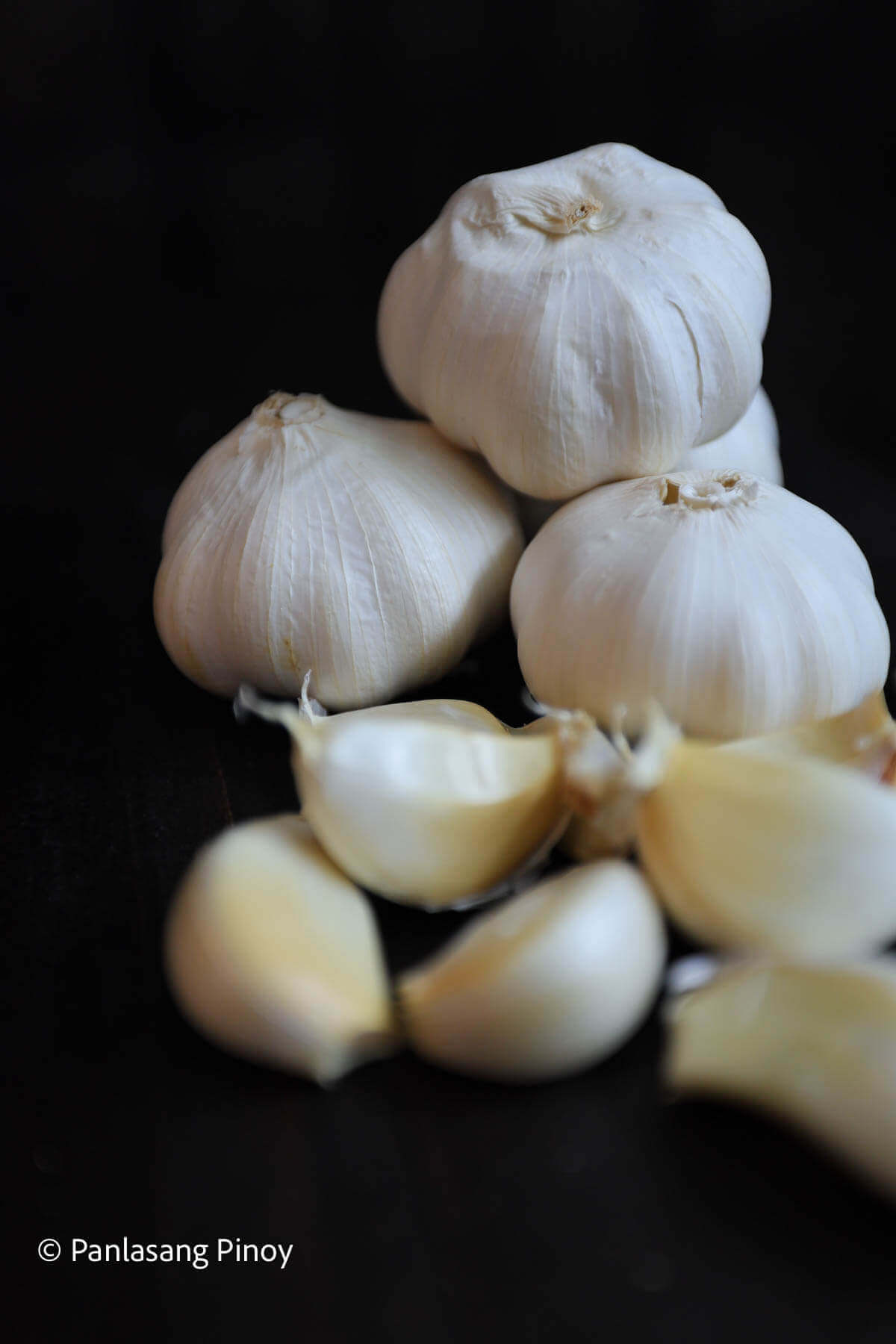
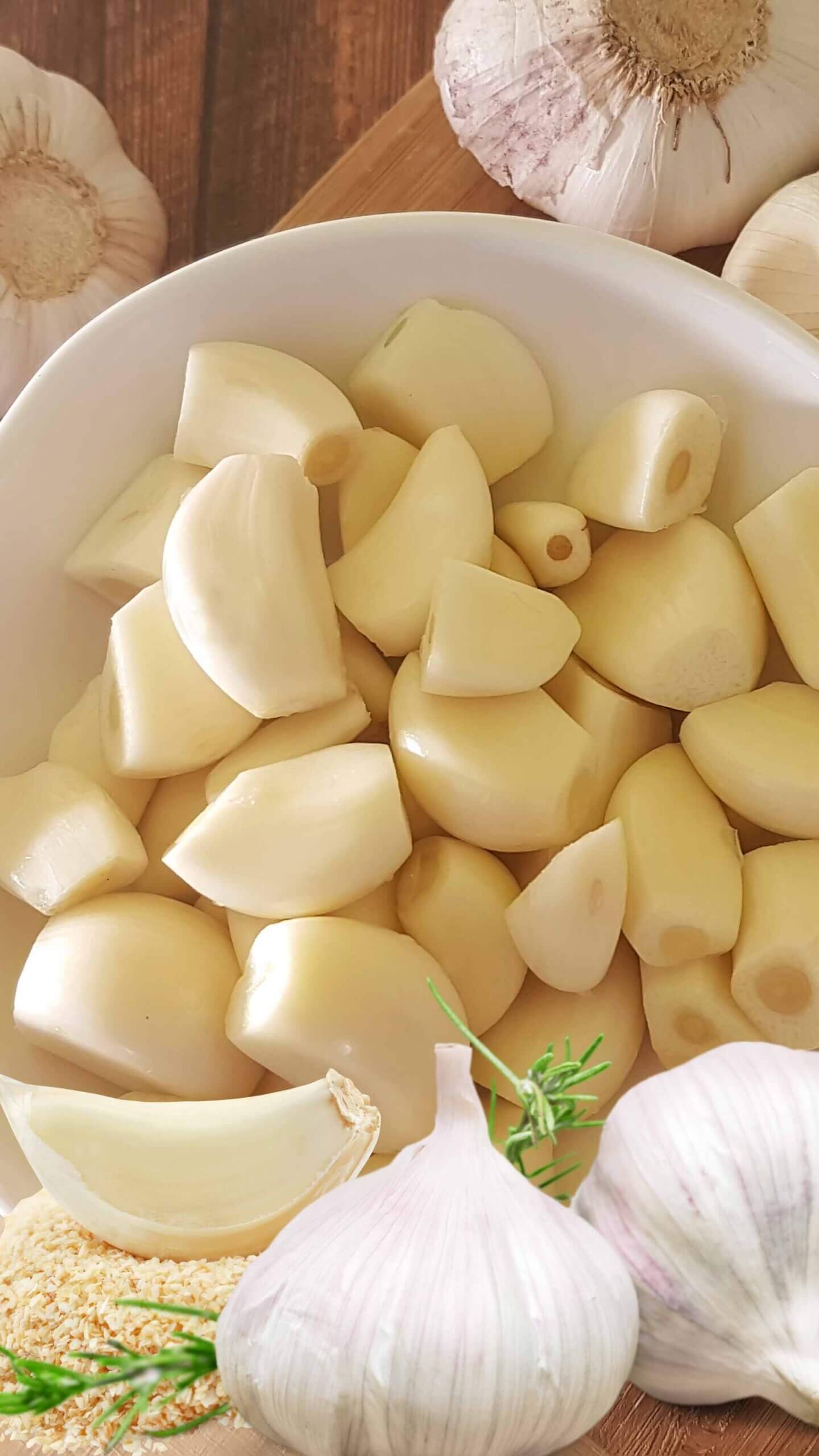
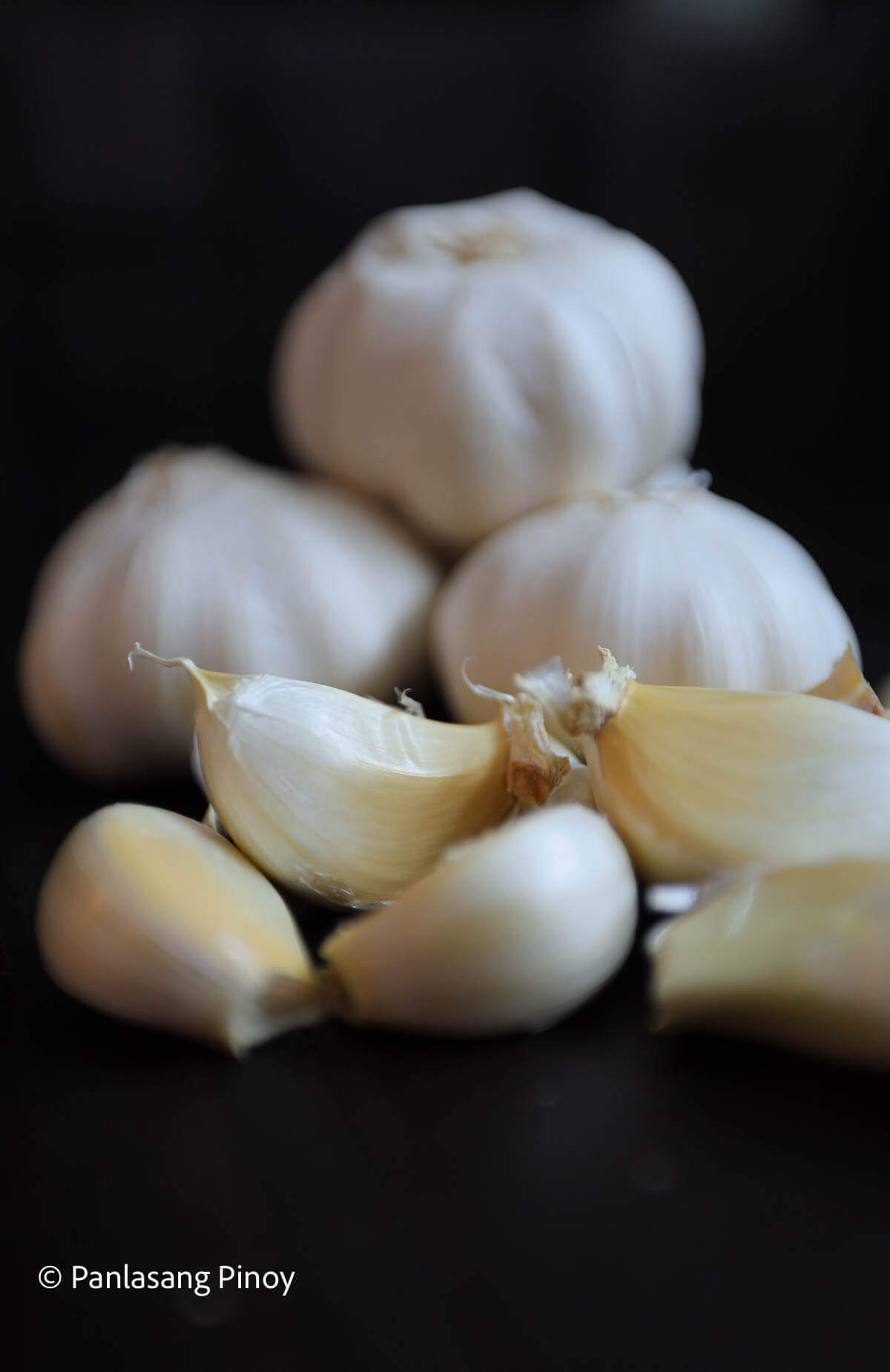
What is Garlic

What is Garlic?

One of the most popular and frequently used seasonings around the world, garlic is a staple in almost every kitchen. No matter what cuisine you cook regularly –– or even what restaurant you order from! –– you’ve tasted garlic at least once in your life. Its pungent aroma is only a telltale sign for its even more powerful taste. While it’s typically not the star of the dish, garlic lends its flavors to so many different recipes –– which I suppose makes it a star of its own!

What is Garlic

Garlic’s scientific name is Allium sativum, under the genus Allium which, unsurprisingly, several other ingredients share. The ingredient’s close relatives include other seasonings like green onions, leeks, scallions, and chives. Each one has their own separate taste and function.

  • Green onions have a very powerful aroma and taste, similar to the red or yellow onions we’re more familiar with. They’re definitely uncannily similar to scallions, seeing as they come from the same genus and species. You can use green onions in meals when you want a sharper taste to counter your dish’s flavors.
  • Scallions have a more peppery taste, and are quite easy to find in supermarkets. You can use both the white and green parts of the seasoning, with the former having a sharper taste than the latter –– akin to onions. The green part of scallions are typically used as a garnish instead, adding both color and flavor to an already delightful dish.
  • Leeks have an almost garlicky taste and a creamy texture. You can cook leeks in a variety of ways –– boiling them, blanching them, frying or roasting. You can caramelize them in butter, the same way you do onions. Just make sure to wash them thoroughly first, otherwise there’s a salty taste you won’t be able to shake. When prepared properly, however, you get a sweeter, slightly sourer taste than scallions.
  • Chives are mild and have a less overwhelming taste than the other seasonings mentioned. Its flowers and leaves are both edible, and they provide a subtle but evident touch to many rich and savory breakfasts and appetizers.

But garlic’s nutty, creamy, and sometimes even spicy flavor makes it stand out from the rest. Leeks probably have the most similar taste to garlic amongst its seasoning relatives –– in fact, garlic is actually the Old English word for ‘spear-shaped leek’! However, there’s just something so unique and irreplaceable about the original. 

Where does garlic come from?

Because garlic is so prevalent and popular worldwide, it’s hard to pinpoint exactly a place of origin for the popular ingredient. Many say that garlic originated in central Asia, or in some parts of West China or Kazakhstan. But when it began to travel across the world, people like Sumerians and Egyptians started using it for its medical properties. In the Middle East, Greece, and Rome, too, garlic became a highly sought after ingredient, both for its distinct flavor and also its health benefits. It was a very popular medicine at the time, known to cure a number of diseases and also assisted in folk remedies popular in tribes across the world. 

Bawang

It’s interesting to note how important garlic has been to cultures around the world. It really is more than just a seasoning!

Is it easy to grow?

Garlic is not only delicious –– it’s so easy to grow, too! All you need is the right amount of soil, moisture, and patience. From just one garlic clove and a lot of fertilization, you can produce garlic that’s perfect to use in the kitchen. Garlic grows best in the spring and takes about four to six weeks of harvest. That might seem like a while, but its rewards are always plentiful.

You can learn more about how to grow your own garlic here.

How can I cook garlic?

You can enjoy garlic in so many ways! Whether you’re using one or several cloves, its taste and aroma is impossible not to recognize. No matter what cooking method you use, garlic is an incredibly helpful companion in the kitchen.

A popular way to enjoy garlic is to roast the whole head in the oven. The warm cloves that come out as the end result are so satisfying and tasty! While in the oven, garlic tends to caramelize, bringing out its creamier, sweeter flavor profile. Don’t forget to drizzle it with olive oil and wrap it in aluminium foil before putting it in the oven. Roasted garlic goes great on bread (who doesn’t love garlic bread?) or atop pastas or potatoes. 

garlic

Garlic flakes are also another popular addition to a kitchen pantry. When you’re in a pinch and need something to spice up your meal, crispy garlic flakes are the way to go! You can buy garlic flakes at the supermarket or even make your own at home. Garlic flakes are basically the product of dehydrating the ingredient, or frying them until they’re crispy and a beautiful golden brown.

Have you ever had garlic butter before? Butter by itself is already a well loved ingredient, but tossing garlic into the mix makes for a killer combination! The mix of rich and creamy ingredients is heavenly. While you can find it at groceries, making it at home is definitely fulfilling.

And there are other sauces and spreads garlic can become the star of, too! From aioli to mayonnaise to hummus to chili oil, you can never go wrong with garlic’s mouthwatering taste.

What do you like to cook your garlic in? Let us know!

What recipes is it useful in?

I love garlic in any dish I prepare. No matter how simple or extensive preparing a dish is, the addition of garlic makes every bite that much more satisfying. You truly can find garlic in nearly every cuisine around the world. While it isn’t the end all and be all of seasonings, it’s definitely one of the most accessible –– and you can never really go wrong with it!

Filipinos love garlic –– or bawang, as we know it! In fact, we love it so much we’ve made a snack out of a crispy variant of it; ever had Boy Bawang before? Because we’re rice eaters by nature, it’s only natural that we’ve incorporated bawang into our national carb. This is where garlic fried rice comes in. Otherwise known as sinangag, garlic fried rice is a staple in every breakfast meal. We usually find sinangag in popular –silog combinations, wherein a viand is accompanied by an egg and fried rice. Whether it’s tapsilog, tocilog, or longsilog, a classic Filipino breakfast isn’t complete without sinangag!

Try these recipes

Baked Garlic Milkfish

Baked salmon

Baked Garlic Salmon and Easy Tofu Sisig

Bok Choy in Garlic Sauce

Chili Garlic Oil Recipe

Chili Garlic Oil Recipe

Pancit is another food particularly popular among Filipinos; no matter the occasion, it’s almost always a go to meal, a symbol of both long life and celebration. Garlic Bihon is one of those most popular renditions of the well loved noodle. The unforgettable taste of bawang paired with fresh vegetables and the classic bihon is a standout. Not only is it incredibly tasty, but it also looks superb on a plate, with all the golden brown and green colors mixing together.

Of course, in dishes in other Asian and Western countries, garlic also shines! Take, for instance, this Creamy Garlic Salmon. This recipe comes with a delightful combination of tomato and spinach. I really love this recipe because not only does it combine the refreshing taste of salmon with the rich garlicky flavors, but over a bed of rice or pasta it’s incredibly filling and delicious. 

The same goes for this Creamy Garlic Parmesan Chicken! Dishes like these appeal to eaters young and old, and the garlic taste is something everyone in your family will be craving for a long time.

bawang

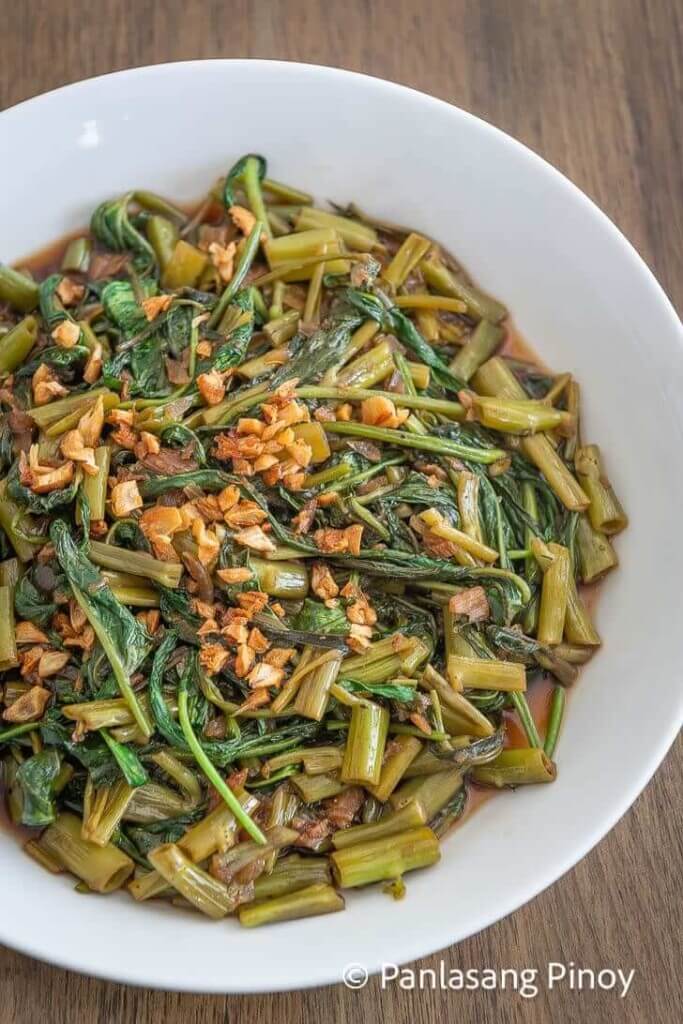
If you don’t have a lot of time in the kitchen, stir frying vegetables with some toasted, golden brown garlic is already a great quick fix meal. Like in this Kangkong in Oyster Sauce, bawang can really bring out and accentuate the flavors in both the vegetable and sauce.

The list already seems quite plentiful, but this isn’t where your uses of bawang end; in fact, there are so many more recipes you can enjoy it with! What are some of your favorites?

Is garlic healthy?

As mentioned prior, garlic was also famous for its many medicinal benefits, especially back when Western medicine had yet to evolve. Chock full of vitamins and nutrients, bawang is a perfect example of keeping your stomach happy and body healthy!

For one, garlic is a great source of vitamin C, B6, and manganese. These make it great for your immune system and for maintaining your body’s strength. More specifically, having garlic in your diet has proven to help prevent the spread of several types of cancers. These include lung cancer, prostate cancer, and breast cancer, among others.

Garlic

Garlic is also recommended to help improve cholesterol levels, which then reduces the risk of heart illnesses. Garlic supplements can help reduce your LDL (bad cholesterol) levels by up to 15%. Alongside cholesterol levels, bawang also reduces the risk of high blood pressure –– another factor that can lead to heart failure and other cardiovascular diseases.

These are only some of the health benefits one can attain by consuming garlic in their everyday diet. And with how versatile an ingredient it is, that shouldn’t be hard! Garlic is well loved for a reason, with all its uses and health benefits ready in just one bite. How are you going to use this perfect spice today?

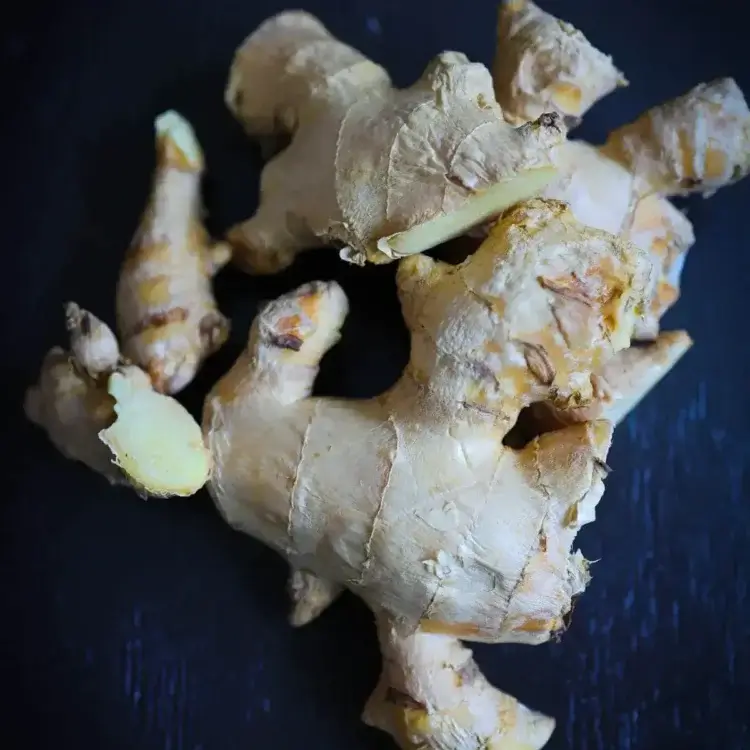
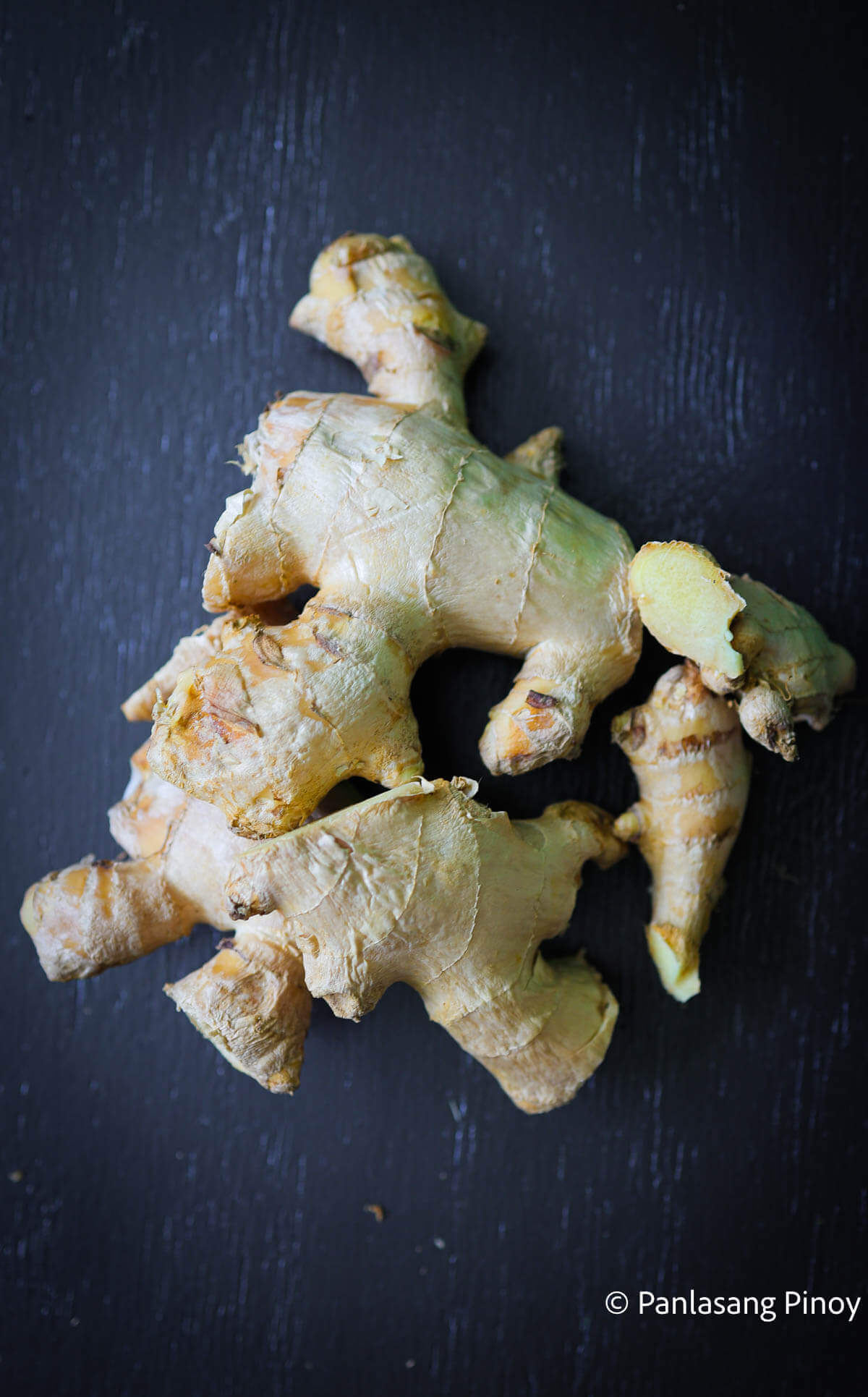
what is ginger

What is Ginger?

Zingy, unique, and unlike any other, ginger is a one of a kind spice used all across the world. Its bumpy, brown exterior gives way to a distinct aroma and flavor, popular in several cuisines. And its medicinal uses are seemingly never-ending; just a hint of this in food or tea can cure a number of illnesses.

What is Ginger

There’s really nothing quite like ginger. Its unique flavor has cemented its popularity and use in many places, and the Philippines is no exception. Luya is a common ingredient in several stews, soups, and even dry dishes. Whether you pair it with proteins or vegetables, luya is sure to bring a fantastic kick of flavor that no other spice can make up for. 

A whole lot of history

Ginger (or its scientific name Zingiber officinale) comes from Maritime Southeast Asia –– countries like Brunei, Indonesia, Singapore, and our own Philippines. The earliest record of people cultivating ginger and other similar plants dates back centuries. Without even saying so explicitly, you can probably assume that since then ginger has garnered a rich and thriving history of its own.

The people of Maritime SEA back then, the Austronesians, regarded ginger as something incredibly important and even holy. The ginger plant had many uses beyond just eating, with people using its leaves to make mats. Ginger was even used to bless Austronesian ships, as well as to ask for healing, protection, and favor from spirits.

When the Austronesians brought ginger to places like India, the Pacific Islands, and even going as far as Hawaii, its prominence grew. In India specifically, traders from the Mediterranean and the Middle East came to take some ginger for their own. This was during the 1st Century –– almost 2000 years ago! Isn’t that crazy? Now, India still remains to be one of the leading producers and exporters of ginger worldwide. 

Many people claim that famous philosopher Confucius ate ginger with every meal. In 406AD, ginger was sailing across the world, with the Chinese especially growing it in pots and carrying it in ships because they heard it helped cure scurvy. Ginger went as far as Europe, where people started important raw and preserved versions of it in the 14th century. In the UK, a pound of ginger cost one live sheep!

Keeping it in the family: Luya’s relatives

Ginger has two close relatives –– let’s call them cousins: turmeric and cardamom. All these spices originate from Asia and provide a distinct flavor to the dishes you put them in. But what makes luya similar, or different, from these two? Let’s analyze them one by one.

  • Turmeric is one of the main ingredients in Indian curry. Its bright yellow appearance masks a flavor that is warm and slightly bitter. It’s also quite earthy. Most of the time, we see turmeric in its powder form, as opposed to ginger which is often preferred in its fresh form. Even in powder form, however, its flavor definitely packs a punch!
  • Cardamom is the spice you commonly find in chai tea. It’s almost cinnamon-y in nature, but its taste is a lot stronger. Cardamom lends its fragrant aroma to several drinks and pastries; in Sweden, cardamom buns are a popular delicacy during an afternoon coffee break. It also works well in curries, masala and other dishes in desi cuisine –– just like its relatives.

A shapeshifting game-changer

Ginger is a spice that comes in a variety of forms, but here are its most prevalent ones:

Ginger

Fresh ginger

This is the luya we’re most familiar with at supermarkets; its strange shape and hard texture make it difficult to miss. Fresh ginger is a staple in many kitchens, not just in the Philippines! This is because of how dynamic and useful it is. Its fresh and lively taste provides a refreshing bite to any recipe. Fresh ginger is perfect in marinades, and as a flavoring spice in stews, soups, and the like.

Most recipes will call for you to peel your fresh ginger before cooking it, so having a peeler or spoon onhand is recommended. You can also use your knife, but unless you have prior knowledge on how to use it, you might end up wasting a lot of the actual ginger. You can learn more about how to peel and mince fresh ginger here.

Almost all recipes call for fresh ginger because it’s hard to replicate that fresh taste any other way. Another great thing about fresh luya is that it’s inexpensive, and quite easy to look for in groceries. 

Powdered ginger

By far, the best substitute for fresh luya is ground or powdered ginger. Powdered ginger is prevalent not only in food, but also in several medicines! In several herbal medicines that line grocery or convenience store shelves, ginger is a common ingredient. Its antibacterial properties and health benefits cannot go discounted.

One of the advantages powdered ginger has opposite fresh ginger is its shelf life. It’s a lot easier to keep and store ground ginger in your pantry than it is to keep it fresh; you run the risk of getting molds and other bacteria. Adding ginger powder to dishes like curries or masala also helps prevent excess, unwelcome gas. In rice, soup, meat, or wherever else, ginger powder is perfect for seasoning and spicing up just about anything!

Dried ginger

The process of dehydrating ginger results in this spicier, drier variant of the seasoning. Dried ginger is what you commonly find in tea leaves, or to sprinkle onto food. It works in both sweet and savory cooking; you can use it to top your curry mixes, or on cookies and cakes! Either way, dried ginger lends its distinct taste to dishes that really enhances or adds layers to its flavor palate.

Dried ginger is also known to help with headaches and other ailments, like arthritis, nausea, and the common cold. They’re very easy to find in supermarkets as well! However, you could always opt to make your own. The process may sound rather daunting at first, but it is most definitely worth it. Drying ginger is a simple process, albeit one that requires a lot of time and patience. You can find out more on how to dry ginger here.

Pickled ginger

Are you a Japanese food lover? If you’ve ever been to a Japanese restaurant and ordered a tray of sushi or sashimi, you’ll find that these often come with several other companions. These include the umami soy sauce, the spicy wasabi, and a sometimes yellow, sometimes pink partner that truly completes the platter. 

Surprise: these small strips are actually pickled ginger! Known as gari or amazu shoga in Japanese cuisine, these pieces of ginger help in cleansing your palate while you’re enjoying your sushi. While sushi is great, the fishy taste and texture can sometimes produce a sense of umay. Gari is there in order to prevent that and ensure that you have an enjoyable experience with your meal.

Pickled ginger is an easy find at any Asian supermarket. However, it is also incredibly easy to make your own from the comfort of your own home!

Ginger Health Benefits

Preserved ginger

Ginger that you keep in a sugar and salt-based liquid is called preserved ginger. This variant maintains its initial flavors, while also providing a sweetness that complements ginger’s distinct taste.

A popular variant of preserved ginger is called stem ginger in syrup. The little balls of ginger that come with the delightful syrup make a wonderful addition to both cooked and baked recipes. Like dried ginger, it’s wonderful in dishes that can satisfy both an empty tummy and a sweet tooth. 

Find out how to make your own preserved ginger recipe here –- you’d be surprised at how simple the process can be!

Candied ginger

The last ginger variant I’ll be talking about is the fresh, vibrant, and oh so delectable candied ginger. I know plenty of Filipinos who carry around luya candy in their bags as a treat to alleviate hunger. I personally think ginger candy is nearly, or just as effective as coffee flavored candies are in keeping people awake. Its bright taste can really wake up your taste buds, and it’s a refreshing treat to have, especially during hot summer days. Candied ginger is also a great antidote for nausea and headaches.

While it works great as a standalone, you can also use candied ginger to highlight your other desserts! Gingersnaps, sugar cookies, and homemade jams and jellies are just some of the dishes candied ginger can work its wonders on. Not only does it add to the sweetness, but it’s able to cut through rich flavors and provide a deeper palate, giving it a taste you won’t get enough of.

This amount of ginger variants seems plentiful already –– but there are so many other ways you can enjoy this wonderful spice. What type of ginger do you most commonly have at home? Which variant is your favorite?

What recipes can I use luya in?

Now that we know how flexible ginger can be, it’s no surprise that luya is such a popular and well loved companion in the kitchen. In recipes sweet and savory, hot and cold, it easily comes to the rescue in any dish we’re making. 

If you’re in need of new dish ideas that incorporate this fantastic ingredient, look no further! Here are some of my favorite recipes that include ginger –– maybe they’ll become your favorites, too!

Ginger Beef Stir Fry

Tender beef in a scrumptious marinade –– what’s not to love? Stir frying is the perfect solution for those who want a quick meal but need to be on the go. Cooking your sirloin strips on high heat with a variety of other ingredients gives you a dish that’s delectable from start to finish. The taste of luya in this recipe really bleeds into not just your meat but your other vegetables, giving it that extra bite you didn’t know you needed. 

Ginger Beef Stir Fry is straightforward and simple –– no frills necessary for a delicious dish. Just as it’s a favorite in many Chinese restaurants, this meal can become a favorite in your own dining room, too!

Pesang Manok (Chicken in Ginger Broth)

This native Filipino soup is a favorite alongside flavorful dishes like crispy pata. Despite having a subtle taste, pesang manok leaves a strong impact –– and it’s largely in thanks to its delightful ginger broth.

Pesang manok is a wonderful comfort dish. On rainy days when you’re stuck indoors, a warm bowl of soup can really soothe and lift your spirits. The tender chicken meat combined with the unique flavors of ginger broth are a timeless combination –– truly chicken soup for the soul.

if you’re not a big fan of chicken but still want to try this yummy soup, an alternative is this Pesang Isda (Fish in Ginger Broth). This recipe has more soup than its original counterpart, and involves the healthy, leafy malunggay to accompany the ginger’s calming taste. Just like pesang manok, this dish can give you a sense of comfort during cold seasons (or maybe, if it’s in the summer, when you have your aircon on). For pesang isda, you can opt to use a whole fish or pieces of fish fillet. The former will require you to devein and clean your fish first, but the extra flavors that will steep into the broth make it worth it.

Steamed Fish with Scallions and Ginger

Steamed Fish with Ginger

Another family favorite at the Chinese restaurant dining table is steamed fish. Sesame oil, soy sauce, and ginger are just some of the ingredients that come together in order to make this dish shine. 

The combination of both prep and cooking time is only about half an hour! However, it is integral that you have a steamer onhand before cooking. It is steamed fish, after all. By allowing the fish to sit in the steamer alongside your soy sauce and ginger mixture, your fish is able to soak up all these succulent and mouthwatering flavors. The result is a dish with immaculate taste that pairs great with warm white rice!

Ginataang Alimasag with Sitaw at Kalabasa (Crabs in Coconut Milk with String Beans and Squash)

ginataang alimasag with sitaw at kalabasa recipe

Rich and creamy, the wonderful taste of crabs in sweet coconut milk is only highlighted by the strong and distinct flavor of ginger in the mix. The presence of luya in this ginataang alimasag helps the dish strike the balance between sweet and savory. It is refreshing and filling, and one of my favorites to make when I see fresh crabs at the market.

I love to cook any kind of seafood in coconut milk –– crab isn’t the exception, it’s part of the rule! Whether you’re making ginataang isda or ginataang hipon, throwing ginger into the recipe makes for the absolute perfect bite.

Kanto Style Beef Pares

beef pares sa kanto recipe

Ginger stars opposite another spice in this classic dish –– star anise! Star anise has a delicate yet strong flavor, heavily influencing any dish it works its magic on. In that sense, we can say it’s a lot like ginger. Pares is a dish that elevates almost all of our senses; if the sight of it is enough to make your mouth water, what more its trademark aroma? 

Luya, star anise, and soy sauce prove to be a heavenly combo, producing the pares stew we all know and love. And with a nice generous portion of garlic rice to accompany it? There’s just so much to love!

Gingerbread

Don’t ever listen to anyone who says ginger is only good for savory dishes! Whether or not it’s the holiday season, a bite into a gingerbread cookie is enough to put you in good spirits. This dessert is what many aspire to be: the perfect blend of sugar, spice, and everything nice. 

Gingerbread is a great dessert option for those who don’t like to go too overboard with their sweets. The spice’s classic bite and kick of flavor remains evident in these sweet treats, but the end result is far from unpleasant. Making gingerbread cakes and cookies is a delightful way to spice up your oven’s repertoire –– it also makes for a great bonding activity with your loved ones.

Salabat (Ginger Tea)

A tea made from luya extracts, salabat is fresh and bright on the tongue. It’s a satisfying, healthy drink you can enjoy at the end of a long day –– or at the start of a new one! Whether you have it hot or iced, there’s no denying that it not only tastes good, but keeps your body feeling good, too.

Ginger for good health: Health benefits and nutrition facts

We can’t have an article about ginger without, of course, including the many ways it is helpful for our bodies! Health should be of the utmost importance to everybody –– especially in these uncertain times. Luckily, ingredients like ginger are around to ensure that we are as healthy as can be. 

Since people started using it centuries ago, ginger has become a beacon and source of great health. Here are some of the health benefits luya offers:

  • Treatment for cancers (ovarian and colon, specifically)
  • A remedy for motion and morning sickness
  • Relief for heartburn
  • Beating the common cold or flu
  • Prevention of kidney damage

You can read more about these different benefits here. But even with this impressive list already, ginger still has so many other ways of helping and curing illnesses –– and providing a yummy treat any time of day.

Flavorful and fragrant, ginger is a spice that has been around for a long time –– and is guaranteed to stick around for a long while longer. Don’t be afraid to try ginger in your recipes today! You won’t regret it!

How to Cook Adobo

Adobo is one of those dishes that’s practically representative of Filipino cuisine. Bring up the topic of Filipino food and one of the first memories to come to mind is a tender meat in a savory, salty, umami sauce. A good plate of adobo can unite everyone, across different backgrounds and walks of life. Known by many and beloved by all, this dish is so Filipino, it’s hard to imagine our cuisine without it! How to cook adobo is a process that has been passed down for centuries, producing the many variations we know today.

How to Cook Adobo

If you’ve been to any Filipino household before, you’ve seen adobo grace the dining room table at least once. It’s hard to find a Filipino family without at least one member who knows how to cook adobo. You’ll know it by its sight and smell alone –– its brown appearance and garlicky aroma is one hard to ignore. 

Unsurprisingly, the Filipino way of how to cook adobo is one that dates back centuries –– even before the Spanish arrived. Due to our tropical climate, pre-colonial Filipinos used to prepare their ingredients in vinegar and salt to preserve their freshness. This applied not only to seafood, but meat like pork and chicken as well. Vinegar was such an important ingredient in Filipino cuisine that it applied not only to the adobo cooking method, but also to kinilaw, sangkutsa, and paksiw!

When the Spanish took over the country for over three centuries, they applied the term adobo to any kind of meat or ingredient that was marinated before consumption. However, this, of course, changed over time. Now, the term adobo refers solely to any dish that you marinate in a combination of vinegar, soy sauce, whole peppercorn, and garlic, amongst other spices. With a long history behind it, it’s only fitting that we deem this savory, hearty meal our (unofficial) national dish.

How to cook adobo may have changed over time; its popularity has led to a multitude of variations and versions of this Filipino classic. Despite its seemingly simple recipe, there’s a way of cooking adobo for everyone. What we have here today are 8 different methods on how to cook adobo. Some you may be completely familiar with, while others may be a completely different approach on the dish you know and love. Regardless –– whether you find an oldie but goodie or a whole new favorite, this list is a testament to the innovation of Filipinos in putting spins on even a popular dish like this one!

Without further ado, here is a list of how to cook adobo in 8 different ways. Take a look through each recipe; what you find may surprise you!

Pork Adobo

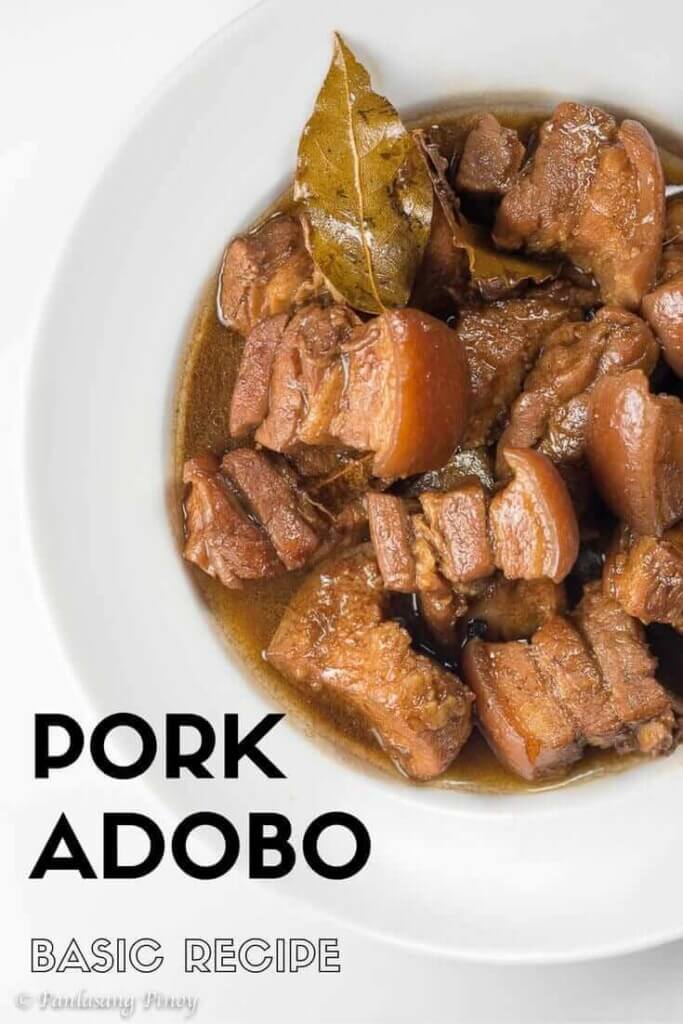
Of course, you can’t go wrong with the classics! Nothing says adobo quite like juicy, fatty pieces of pork drenched in your ever reliable soy sauce-vinegar marinade. Indeed, it’s hard to go wrong with a succulent piece of meat in the classic sauce. This has to be one of the most popular ways of cooking adobo –– and it’s so easy to do, too!

Pork Adobo

Like in any other adobo recipe, one of the most important aspects of cooking this pork adobo is ensuring you’ve marinated it thoroughly, and long enough. I recommend leaving your pork to marinate overnight, in order to further soak up all the delicious juices. If you’re pressed for time, however, try to leave at least one hour of marinating time for your pork adobo to be truly tasty.

However, be wary that leaving your pork to marinate for too long will cause the acids in the vinegar to break down your pork. This may result in meat too mushy to be fully enjoyable. While it’s good to get all those flavors in as much as possible, be sure to watch your time as well! If you aren’t cooking your meat right away, be sure to freeze your pork slices in order to fully preserve their taste, and thaw them once you’re ready to cook once again.

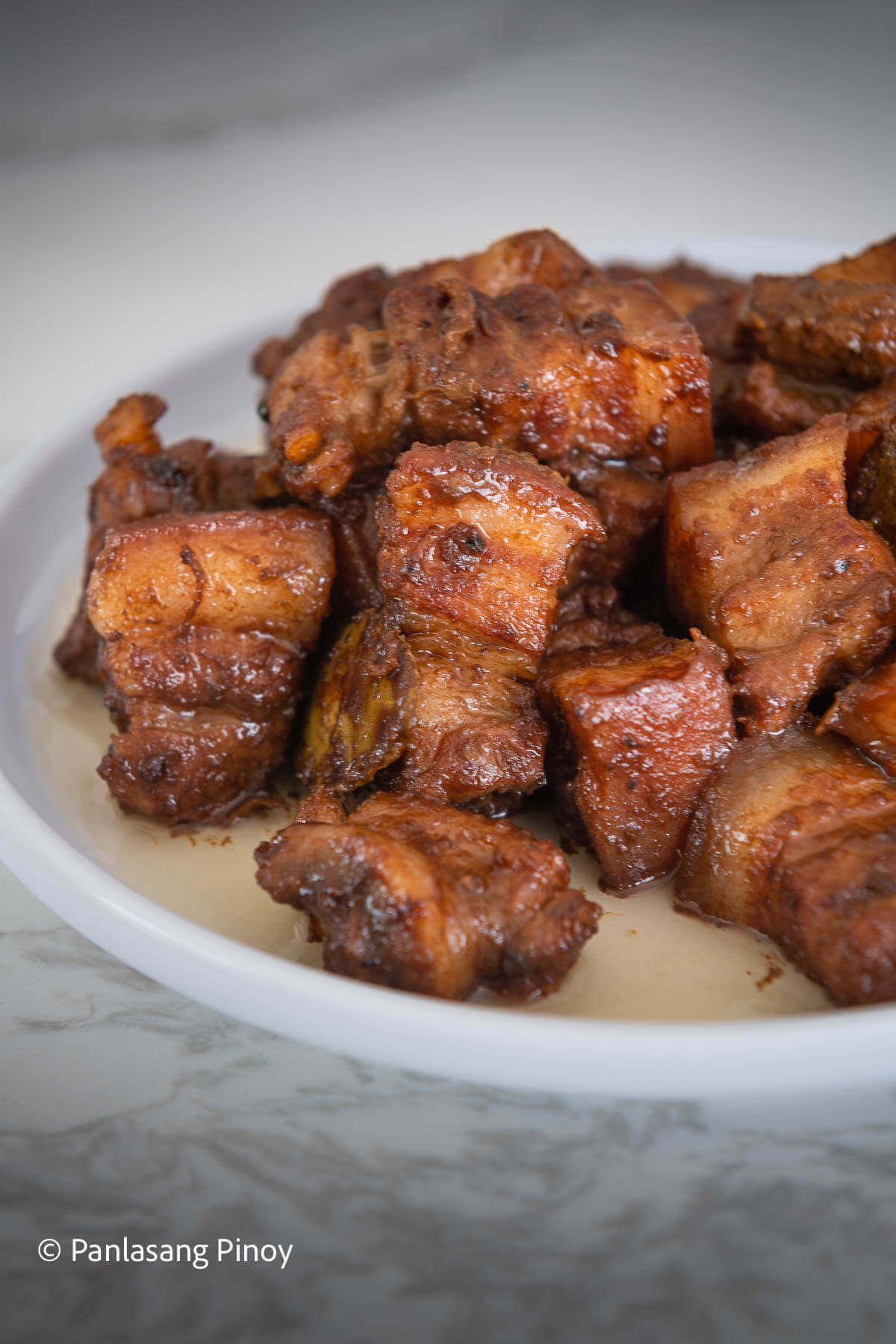
I love to use pork belly for the best results. Understandably, though, this may come across as being too sinful –– especially for those trying to watch their diets. If you’re looking for an alternative pork cut without having to sacrifice the adobo taste you love, pork tenderloin is an ideal sub. Additional ingredients like onions, a teaspoon of sugar, and even some leaves of basil will do wonders to the familiar, homey taste of adobo. Believe me, these elevate it more than you could ever expect! 

Chicken Adobo

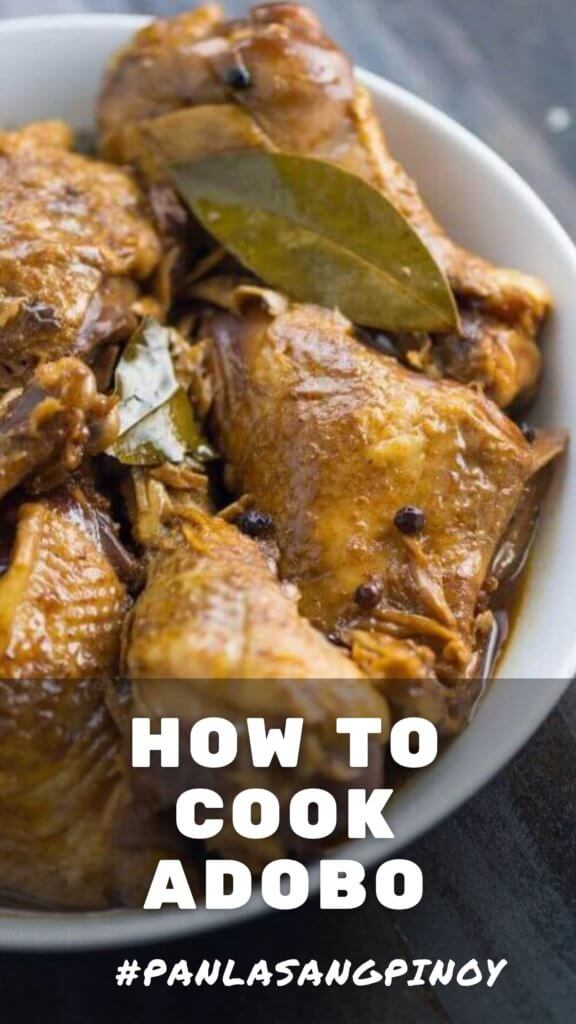
If you asked someone how to cook adobo, one of their first questions would be what main meat you’re using. While the juicy pork belly is one of the most obvious options, another variation that Filipinos often go to is the equally tender, but slightly healthier chicken adobo! Marinated, pan-fried, then stewed to perfection, these chicken pieces are a household and nationwide favorite –– and for good reason, too!

Filipino Chicken Adobo Recipe

In order for your chicken to attain the tenderness you aspire for, I like to let the pieces sit in a slow cooker or crockpot overnight. This lets your chicken become more moist, further soaking up the intensely flavorful marinade, so by the time you’re ready to cook, its flavor is close to perfection. 

Another winning attribute of chicken adobo –– or any adobo in particular –– is the garlic! Garlic plays a huge role in how to cook adobo in the best way possible. This seasoning’s nutty and sometimes even spicy flavor works wonders on many dishes around the world; chicken adobo is no different. While just one clove is enough to add flavor to any dish, add as many as you like to your chicken adobo! Alongside the varying flavors of vinegar and soy sauce, garlic will add to the perfect marinade combination –– making your dish even tastier.

This chicken adobo recipe, like all the other recipes of adobo that came after it, is an adaptable one. Its main ingredients are quite simple to source, which makes this dish an easy one to cook to begin with. But if you and your family add your own special ingredients to this meal, feel free to do the same now! Whether it’s pineapples, potatoes, or eggs, how to cook adobo, at the end of the day, is completely up to you. Alongside some white rice, sinangag, or even potato salad, this dish of chicken pieces is one that goes well with almost anything, after all!

Adobo Fried Rice

With all this talk on how to cook adobo, you may end up cooking too much of this dish. No matter how much you love adobo, sometimes your stomach has to tell you enough is enough –– but don’t fret! Your hard work in the kitchen doesn’t have to go to waste, and neither do all your leftovers. Enter this adobo fried rice: your solution to getting rid of all those leftovers taking up space in your fridge!

adobo fried rice recipe

Adobo fried rice is the perfect breakfast meal. Breakfast, arguably, is the most important meal of the day. What isn’t contested is how much Filipinos love a warm cup of fried rice, or sinangag, to jumpstart their day; and this adobo fried rice does all that and more! The combination of a saucy and umami adobo with a warm, garlicky plate of rice is enough to make your mouth water. Think of this dish as a twist on your classic –silog meal, which is usually a combination of a viand, your garlic rice, and a nice and perfectly cooked egg.

Speaking of –– you’re free to add an egg or two to this recipe as well! Whether you’re placing an over easy egg on top of your rice after or adding bits of scrambled egg into your dish, egg is another star ingredient of any fried rice. Sunny side up, scrambled, or in omelet form, an egg is part of a perfect breakfast, and a welcome guest to this adobo fried rice recipe. The addition of spring onions complements the savory sauce that you’d soaked your adobo in prior, for a breakfast that’s truly unforgettable.

Adobong Pusit

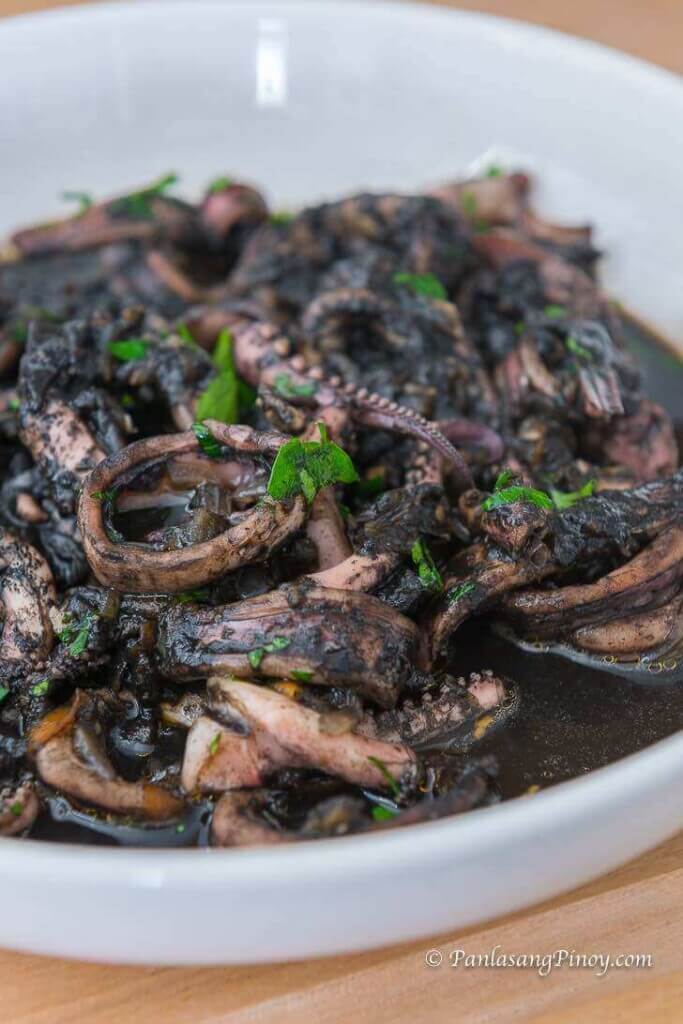
Pork and chicken may be the usual stars of the show. But, has anyone told you how to cook adobo using seafood? Living on an archipelago, it only makes sense that we’ve found innovative and creative ways to change up our cuisine in accordance to the ingredients we’re surrounded by. And seafood is abundant in our country, from fresh fish to shellfish that line our grocery store aisles.

easy adobong pusit recipe

This adobong pusit is just one of the many ways we’ve used our close proximity to the sea to our advantage! This chewy, flavorful squid makes just as delicious a star ingredient as your pork belly or chicken drumstick. The addition of the delicious squid ink really sets adobong pusit apart from the other popular variations of this dish. The rich array of flavors are enough to have you coming back for seconds –– and even more! You’ll be needing a lot of rice by the time you’ve readied this dish on your dining table.

Apart from the garlicky and savory flavors of the marinade, you can also add a piece of green chili to your adobong pusit. Filipinos love spice, after all. This not only adds a pop of color to your dish –– it gives it a refreshing zing, too! If you or your family aren’t the type to enjoy spicy food, you can opt out of this entirely. But the option is there, and it blends in harmoniously with the rest of these fantastic flavors.

Chicken Adobong Puti

When the question of how to cook adobo comes to mind, fewer ingredients are conjured up before the dark and salty soy sauce that makes up most of its marinade. This familiar condiment lends its appearance and darker hues to the dish, making it an easy stand out on any dining table. But did you know that adobo can come in a myriad of colors? That’s right –– just because it isn’t brown, doesn’t mean it isn’t adobo! Original, pre-Hispanic renditions of this dish used salt instead of soy sauce. Thus, the adobo of that time wasn’t brown at all –– it was white!

chicken adobong puti recipe

This chicken adobong puti is more like the original version of adobo than the one we’ve come to know and love. More popular in the Visayas and Mindanao regions, this recipe is incredibly simple –– much like the recipe we’re familiar with. The only difference is the use of salt instead of soy sauce in the marinade, reducing its brown hues. A piece of Knorr Chicken Cube is the key, too, to making your sauce more flavorful! 

You don’t need the umami taste of soy sauce for adobo to be absolutely delicious. Although subtle in color, I guarantee you its taste won’t leave you wanting.

Adobong Kangkong

Who says you need meat to enjoy the filling and tasty flavors of adobo? One bite of this deliciously healthy dish is enough to prove them wrong. Adobong Kangkong retains how to cook adobo in the way we love, while being a healthy alternative to a fatty pork belly. Regardless, its taste is still delicious –– and a lot less heavy on both the stomach and the wallet.

how to cook adobong kangkong

Kangkong, or water spinach, is an easily accessible and inexpensive main star of the show. Its mild taste causes it to soak in dishes that have a much stronger sauce –– much like our adobo. It’s also incredibly versatile, as you’re able to cook it in an array of ways. From boiling, blanching, to making it into chips, kangkong’s low price and wide repertoire make it a Filipino kitchen favorite! And in adobo, it’s truly no different.

This recipe may be one of the fastest adobo renditions there is! Because kangkong cooks quite quickly, it’s best not to leave it in the pan or wok for too long. When making this recipe, the kangkong only stays in the pan for roughly 5 minutes; any longer and it may overcook! This also makes it perfect for those on the go, who want to throw together a quick meal. Perfect alongside a meat dish or as a standalone, you won’t be able to get enough!

Adobong Manok Sa Gata

It would be a disservice to make a list of Filipino recipes and not include one that involves gata. Nutty, milky, and creamy, gata is a favorite ingredient in Filipino cuisine. It lends its signature taste to many dishes, particularly in the Bicol region. Gata can make even the best of dishes shine even brighter. That is exactly what it does here in this particular adobo rendition. 

Chicken Adobo sa Gata Recipe Panlasang Pinoy

The classic, garlicky taste of adobo is the perfect partner to the coconut milk’s distinct flavor. In about 35 minutes, you’ll have a dish that everyone at the dining table will be talking about! Explosive with flavors and different tastes, adobong manok sa gata is new and comforting, all at the same time. It’s a personal favorite of mine, and I can see it becoming one of yours, as well.

Just like with the adobong pusit, you have the option to turn up the heat on this dish! Anyone knows that coconut milk pairs harmoniously with a little spice. With a few pieces of chilis tossed into your pot, you definitely have an award-winning dish on your hands.

Chicken Feet Adobo

The last on this list of how to cook adobo is not for the faint of heart. But for the adventurous, daring, and dauntless –– you may want to give this chicken feet adobo a shot!

Like in many Asian countries, chicken feet is a popular delicacy that has found its way into Filipino cuisine. Appealing to those who like a little spice, the addition of Thai chilies breathes life into this dish. This is one of the few adobo recipes that works just as well as a pulutan as it does a main course! The gooey texture of the chicken feet soaks up the classic adobo flavors with ease, making it a perfect combination. You may be hesitant at first, but give this dish a shot; I assure you, you won’t regret it!

There you have it: eight new and old ideas on how to cook adobo, waiting for you to discover them! If this list has proved anything, it’s that Filipinos really are as innovative as they come, with new spins on timeless dishes popping up every now and again. Adobo may be a national dish, but we all can find different ways to make it uniquely our own. 

Let us know which one is your favorite, whether it’s on the list or not!

Lye Water

What is Lye Water?

In crafting and creating our food, we might sometimes forget the fascinating processes behind it all. There truly are a lot of forces at work getting our bread to rise, or attaining that perfect crisp to our chicken when we fry it. This is why we also can’t forget about certain ingredients that may seem inconsequential at first or forgettable. Most times, we end up remembering the components that add a great deal of flavor or protein to our dish. But ingredients like Lye water, also known as Lihia in Filipino, are part of what ties the entire dish together. 

Lye Water

You might have heard of this in various rice cake or kakanin recipes, as it really is a staple in some of these dishes. And while it might not initially shine as a component in your ingredient list, it plays a vital part in the baking or cooking process. Lye water is responsible for that wonderfully gooey and sticky texture that distinguishes the taste of rice cakes from so many other desserts. What would your kutsinta be without that signature stickiness that makes it so delicious? 

But before we delve into some other recipes we use this with, let’s get to the basics of what lye water actually is. 

What is Lye water:

This is actually a food-grade alkaline solution that manufacturers create by dissolving lye in water. It is transparent, and essentially looks a lot like water. But don’t be fooled by its appearance, as it actually has a great deal of functions that make it unlike water. Firstly, it can give food a yellow color, and has functions in providing tint for your meals. This is where your ramen noodles may be getting its unique yellow color. 

Lye water can also neutralize acid content in food, as well as give a bit of an alklaline flavor to your dish. Another important role of this ingredient is curing food like pretzels, bagels and olives. This is also essential in giving pretzels a nice and brown surface by treating its exterior, and also making it crunchier. 

Is Lye Water Safe?

Considering how important it can be to some recipes, you might be wondering where to buy Lye water. Well, the bottled version of this can actually be bought in grocery stores or in the palengke or wet market in the Philippines. Because of how often we also like to make kakanin, it shouldn’t be too hard to find in local stores. But if you live outside the country, you might be able to catch a glimpse of it in local Asian markets or stores. The ones sold are ready-to-use, and usually are made of potassium carbonate and a white alkali salt that is soluble in water for your recipes. 

But in the case that you can’t find it anywhere, or have simply run out of your supply of it, don’t fret. There is actually something that you can make at home that provides the same function, and is quite easy to make!

How to make Lye water of your own:

This isn’t necessarily one of the most popular ingredients that we use in our dishes. But don’t be intimidated by perhaps the unfamiliarity of Lye water. A homemade version is something you can actually whip up with just some baking soda and water! There are a few methods for this too. We just need to make sure to heat our baking soda so that we get a pretty strong alkaline substance that can perform  the same duties as our original ingredient when we integrate it with some water.

Making this by using a pot:

Lye-Water

You can try the boiling method, which will involve placing 1 teaspoon of baking soda and 4 cups of water in a medium pot. Make sure the pot is a bit deep. This is to ensure that we don’t end up with the water overflowing later on. Now with high heat, wait for this to boil for approximately 5 minutes. Make sure to keep your eyes on this so that it does not spill over. After you’re done, you can wait for the mixture to boil,. And then pour your homemade Lye water into an airtight jar for later use. 

Making this by using the oven:

You could also bake your ingredients to turn this into a good Lye water alternative! Simply preheat your oven to 120 °C. And as you are waiting, use some aluminum foil to line your baking tray. Then put the teaspoon with baking soda on top of the foil, and distribute it evenly. Now put this inside your oven. Let this bake for approximately an hour wherein the baking soda will start to have strong alkali. 

After this, you can take it out of the oven. But be careful not to touch the mixture with just your hands, as this is dangerous to sensitive skin. Place this in an airtight jar with caution, and make sure the powder does not get moisture from air. And when you need to use it again, you can just incorporate 1 teaspoon of this baking soda you’ve baked to 4 teaspoons of water. Stir this thoroughly, then feel free to use it with whichever recipe you’d like to get your hands on!

But if you’re at a loss for what to cook with this, I’ve got some options for you. Since you now have choices on your Lye water, whether it be store-bought or homemade, it is time to explore the various recipes you can try out!

Recipes making use of Lye water for your reference:

Suman sa Lihiya

Scrumptious and sure to fill your stomach, Suman sa lihiya is a dish that you really won’t want to skip out on. It is a rice cake that boasts a mild sweetness. This makes it perfect with some brown sugar, white sugar or latik sitting atop it. And as previously mentioned, despite being best known as a dessert snack, it can be pretty hearty. This comes from our usage of heaps of glutinous rice.

What is Lye Water?

Of course, your supply of Lye water also comes in handy for this dish. This helps give it that rich chewiness in texture. Now you might have had your fair share of this from seeing them sold practically everywhere in the Philippines, but it would be great to make some of your own! Not only would you get to have it at its freshest and most delicious, but it only uses few ingredients for your convenience. All you will be needing is glutinous rice, Lye water, a banana leaf, and water. Sharpen your cooking skills by trying your hand at some Suman Sa Lihiya!

Kutsinta

And if you are craving some mighty tasty kakanin with a bit more sweetness and hints of a smoky or coffee-like flavor, this is the recipe for you. Kutsinta is definitely a fan favorite because it holds a distinguishable flavor compared to some other rice cakes. Other than its appealing sugariness, it has a unique taste brought by a nice amount of brown sugar.

Another fantastic part about this recipe is how easy it is to make. You will essentially be mixing and steaming, and you’ll be good to go! And by the end of it, you’ll have 6 servings that your family and friends are sure to love. Perhaps you could have it with some Suman sa Lihiya? After all, these two make a beautiful pairing, and are two kakanin foods we definitely enjoy having together! Just throw in your cold drink of choice, and enjoy some of this during the afternoon. Make sure your guests are satisfied and happy for meryenda by making some yummy Kutsinta!

Now even if Lye water is already pretty widely used in various recipes like the ones mentioned above, there are still concerns about its safety. 

Is Lye water dangerous:

It is a pretty common misconception that lye water is not good for consumption. But rest assured that this is actually safe to have in your dishes. This is because food-grade Lye water is not the same we use for industrial purposes. There are other types that we use for cleaning and soap manufacturing, but the food-grade kind definitely differs from these. As long as you use it as indicated for your recipes, it is pretty much safe. However, you should be careful to handle it properly. 

Do not swallow it directly from the container, as this can poison you or burn your mouth. Also be careful not to let it splash onto your eyes or skin, as this can also burn these areas. It would be important to go to the hospital if ever this were to happen. Just be sure to use this wisely and safely!

Other tips on handling Lye water:

Considering how this can be a pretty strong ingredient that won’t be safe for consuming on its own, you should also be mindful of how you use it in your recipe. Remember that going overboard with your Lye water, at least more than what the recipe says, could lead to a bitter flavor in your dish. 

Lye Water Bottle

Now if you instead are looking for less of the taste of this ingredient, you could also try lessening the quantity of this by just a little. This could also work if you want a lighter tint on your food like if you are making noodles. Also make sure that it is out of children’s reach if you have any in the house. They may accidentally drink the Lye water on its own. 

As for thoughts and questions about this ingredient, don’t hesitate to comment below! I’d be happy to answer any queries you’ve got! And perhaps we could also converse about some dishes you’d also recommend that use Lye water.

Malabar Spinach Benefits

Alugbati (Malabar Spinach)

While we all love to indulge in guilty pleasure dishes every once in a while, there truly is something refreshing about eating healthy food. And especially if you’re a Filipino, you will at one point learn to enjoy and relish in your heaps of leafy greens in one plate. The secret truly is mixing and matching the right components with one another. Through this, we can bring the best out of our vegetables and fruits. A massively nutritious component that can’t be forgotten in Filipino cuisine is Alugbati. If you’re unfamiliar with the name, you’d probably recognize its somewhat citrus-y taste and semi-sticky texture. 

Alugbati

While I previously mentioned that balanced combinations in ingredients is key to making a delicious, healthy dish, Alugbati is a great choice to add to various combinations. With its mild flavor and satisfyingly crisp texture, it works great with stews, salads, fried meals, and many other recipes. But before I introduce you to them, let me give you a bit of a backgrounder on this pleasant vegetable!

What is Alugbati? 

Firstly, let me answer a commonly asked question about this ingredient. What is Alugbati in English? You may have heard of this component often in your kitchen at home. But have you truly gotten to know its roots? Alugbati is actually known as Malabar spinach, Indian spinach or vine spinach in most other countries, but it isn’t actually a kind of spinach. But when you cook it up, it tastes very much like spinach, which is why people consider it to be a great alternative to the leafy component. 

Malabar Spinach Benefits

And because it grows great in hot weather, cooks love to utilize it when salad greens aren’t available. Most of these, including lettuce, usually thrive in colder tempreatures. And so in the Philippines, we love to grow our own Alugbati, which grows nicely in temperate places, and is also quite perfect for tropical lowlands. 

Alugbati, the ingredient, actually comes from a herbaceous vine with the scientific name Basella alba L. And this comes from the Madeira-vine family, all of which possess relatively fleshy leaves and tuberous rootstocks. For Alugbati specifically, the leaves are heart-shaped and usually about 5 to 12 centimeters long. And as you might have already guessed, we grow it mostly for its deliciously succulent vegetable. But other than its great taste, we also love to include it in dishes for its large stock of nutrients. Keep reading to find out just some of the many vitamins and minerals you can find in Alugbati!

Alugbati benefits for your health:

Integrating a good arrangement of vegetables into your meals has always been a great idea to keep your health in check. And our Alugbati is definitely one vegetable you should think about adding to your diet. Did you know that just 100 grams of this, which equates to about one serving, already gives you 35 percent of your recommended daily allowance (RDA)? And it also provides 23 percent of the RDA for manganese. The leaves in Alugbati also provide compounds you’ll need to keep your body away from free radicals. These contain antioxidants such as lutein, beta carotene and zeaxanthin, and they are carotenoids. These help keep blue light away from the deep layers of our retina, and keep your eyes nice and healthy.

How to Plant Alugbati

Moreover, Alugbati is a fantastic source of calcium, zinc, magnesium and iron. But the vitamins and minerals don’t end there. This ingredient also possesses a great deal of dietary fiber, which can help slow down sugar absorption in your blood. This makes it a good preventive measure for diabetes. Fiber, in general, also helps largely with your digestive health. 

Now if you’re concerned with keeping your brain in good condition, consuming more of this vine spinach might be a great option for you. Biotin, thiamine, folic acid, as well as other B vitamins are integral in maintaining your mental functions and general mental health. A lack of Vitamin B-12 has previously been shown to lead to more chances of getting fatigue, paranoia and depression. 

Another fantastic thing about this filling and nutritious vegetable? It’s something you can have a huge supply of, just by growing it in your garden! Learn how to keep some of your own at home!

Malabar Spinach

How to plant Alugbati:

Start off by making sure you’ve got the right conditions for your Alugbati plant. If you live in the Philippines, you’ve got a pretty good setup already, as it thrives in hot and humid climates. But if you live in a colder place, your plant’s development might be a little slower, and yield less produce. Still, you can try making this work by making sure your Alugbati plants get full sunlight for most of the day. Now let’s head on the process of planting this versatile vegetable! 

Since you’ll be planting from home, it will be best to use cuttings for your garden. For this, you may want to use stem cuttings that are already quite mature, and are about 20 to 25 centimeters long. It would also be ideal to use with a minimum of 3 internodes. Then when you’ve picked them out, you should soak them in some water overnight. You also have the option of keeping them in an area away from light, and is quite damp for a day or 2. 

After this preparation, you’re all good to go with growing some vine spinach! Begin by getting 2 to 4 of your cuttings, and watering them prior to planting. Now place them at 15 to 20 centimeters between hills, and 20 to 30 between rows. After this, you can water the cuttings again if your soil is lacking in some moisture. Then we’ll be mulching this or covering it with a layer of grass clippings or some rice straw. 

What is Alugbati

Now planting some Alugbati might feel like a lot of work, but there definitely is a huge pay-off as well. That’s because there’s a ton of recipes that make use of this flexible ingredient. Let me introduce you to a couple!

Recipes to try cooking that feature Alugbati:

Ginisang Monggo with Inihaw na Liempo

Why stop at one delectable homemade Filipino dish when you can make two? My Ginisang Monggo with Inihaw na Liempo recipe puts together the richness of grilled meat with a satisfyingly savory mix of mung beans, tomatoes and more. I really love the combination of flavors we get from a vegetable dish with some meat that displays a distinct juiciness. Despite this being quite a simple dish, it is definitely something you and your guests would love for lunch.

One of the main secrets to this dish is the marinade for our meat. It can truly hype up the taste of our pork belly. And it evidently sits nicely with the taste of Ginisang Monggo, which has a considerably milder flavor. For this recipe, I used some malunggay leaves for the Ginisang Monggo. But I can tell you that it also tastes great with Alugbati instead, making for a perfectly healthy alternative.

Cooking Alugbati
Laswa

Filled with the goodness of shrimp, Chinese eggplant, okra and more, my Laswa recipe is a celebration of fresh and delicious ingredients in one bowl. This vegetable soup is definitely a dish you will want to add to your menu from home. Not only is it loaded with nutrients from its brilliant array of vegetables, but its mild, savory taste is sure to bring you comfort. This dish radiates warmth,and is hearty enough to also fill your stomach up. 

Like our previous recipe, malunggay leaves is actually the ingredient I indicated for this recipe. Given how largely accessible malunggay is as well, its popularity in Filipino cuisine comes as no surprise. Likewise, Alugbati makes for a great leafy component to add to our dish. It gives a one of a kind, satisfying texture that blends in perfectly with the soup, onions, okra, kalabasa, and several other ingredients. 

Since you’ve now got an idea of what you can cook with our glorious ingredient, you may also be wondering about keeping it fresh. 

Tips on storing your Alugbati:

We really cannot avoid how sometimes, we’ll end up with more leftover ingredients than we accounted for. Perhaps in trying to cook up some nutritious Laswa, you end up with a couple more Alugbati than you expected afterwards. Don’t think twice about keeping this for cooking later on, as you definitely have a large array of recipes to choose from that work perfectly with Malabar spinach. 

To store these properly, simply place them in a styrofore box. Afterwards, you can put the box in your fridge, and keep them good for consumption for about 2 more weeks. Of course, there is another method for preservation, which also works quite nicely. You could simply propagate a new plant out of these, depending on how much you might have left.

If it is long enough to cut ½ inch out of the lower part of its stem, and still have a good length left, this method should work! After you cut the half inch off, put what is left of the Alugbati inside a jar. Then pour some water inside until the Alugbati is partially submerged, and the water should only be somewhat deep. 

Alugbati Recipe

Doing this will lead to the Malabar spinach rooting in a few days or less than a week’s time. And when you need more Alugbati, all you will have to do is cut off the roots and use it for your recipe of choice! Considering how you can make even more out of the Alugbati you buy, it truly is a great idea to keep a good supply at home.

Have you got any questions about Malabar spinach, or the vegetable we know better as Alugbati? Simply comment on them below!

YouTube video
Can you eat bay leaves

What are Bay Leaves?

Bay leaves are a fragrant, flavorful herb that we often find in Filipino dishes. Another common name we have for bay leaf is laurel, as it comes from the bay laurel tree. Many may assume these leaves are only there for presentation or aesthetic purposes; you aren’t even meant to eat it when it appears during meals! However, although the taste itself isn’t overwhelming, many chefs argue that this herb brings a subtle but deep flavor to many dishes. In meals like adobo, afritada, and even menudo, bay leaf is an integral ingredient––even if it may not be the star of the show!

  Burning bay leaves

Many dishes that include these leaves in their recipes are those that are left to simmer and stew for a long time. You can usually put it about halfway through the recipe, as this is when it is most effective in impacting its flavor and fragrance. It is also effective in emphasizing the other flavors that your dish can bring.

Where do bay leaves come from?

As we mentioned prior, bay leaves actually stem from the bay laurel plant, which were popular in ancient lands, particularly Greece and Rome. In its Mediterranean origins, laurel wreaths back then were symbols of both victory and honor. It was originally known as daphne in Greek myth, named after a high priestess the god Apollo fell in love with. When she rejected his advances she fled to Crete, and in her stead Gaia put a laurel tree which Apollo fashioned wreaths out of to cope.

Since then, the daphne, or the laurel wreaths, became an emblem of high society. Other legends say that priestesses in Apollo’s temple would chew on the bay leaves before espousing predictions and prophecies about the future. Laurel wreaths were also prizes during their version of the Olympic Games at the time; if you had laurel on your head, that means you’d attained the gods’ favor!

Dried bay leaves

Such traditions of holding the laurel wreath in such high esteem continued until the Roman Empire. Associated with immortality, prosperity, and good health, terms like poet laureate and baccalaureate came from how much we held the plant in high regard. In modern day Italy, students from Italian universities wear laurel wreaths during their graduation!

But it isn’t just in Europe that laurel wreaths have become so popular. Laurel was a common plant in Asia Minor, particularly in countries like Turkey and Syria. It also has roots in China, where it was commonly linked to a legend about the phases of the moon. Known as Moon gui, laurels were also associated with victory, much like its Roman history counterpart.

With its distinct smell and evergreen qualities, the laurel plant (and bay leaves, as a result) has really traveled the world, garnering importance worldwide! 

Are there different kinds of bay leaves?

The two basic divisions are Turkish bay leaves and the California bay leaves. You can usually find these in supermarkets either fresh or dried. The former possesses a brighter, almost “shinier” green color, and its flavors are subtler. On the other hand, dried bay leaves are the ones we more commonly use in Filipino dishes. When you dry the leaves, like many other herbs, the flavor begins to grow more intense. Dried ones are the more affordable option, and they have a longer shelf life as well.

Turkish bay leaves are usually of the dried variety, while California bay leaves are sold fresh. The latter has an almost “minty” taste, which has the danger of overpowering a recipe’s other flavors. As such, the Turkish variety are the more common, more popular type––most of the Filipino dishes that call for it use this type.

What dishes can I cook with it?

It’s very important to note that you should not eat your bay leaves whole when you use them in meals! They may smell great, but eating them will only leave you with a bitter, sharp flavor.

From Spanish and French to Indian and Filipino, bay leaves have found a home in cuisines around the world. In the Philippines, here are some examples of dishes which Laurel leaves help shine:

Bay leaves
  • Adobo is a prime example of a popular dish that makes use of bay leaves’ fragrance and flavor. Whether you have your adobo on the wet, saucier side, or a little dryer like in this recipe, the bay leaves really help add that extra depth of flavor. I personally enjoy this Killer Chicken Adobo recipe because it adds another unexpected ingredient to the dish: lemon lime soda! It may sound strange at first, but it’s definitely a treat.
  • I also enjoy the subtle flavors of bay leaves in chicken afritada. For this Pineapple Chicken Afritada, I put the the leaves in about halfway through the cooking process. This is so when it simmers, the stew is able to absorb all of the great, unique properties of this dried herb.
  • Another Filipino comfort food is, of course, the unforgettable pork menudo. In my Pork Menudo sa Gata recipe, the use of coconut milk adds a creamy, nutty twist to this Pinoy classic. Mixing it with the bay leaves’ flavor makes pork menudo sa gata a unique experience of its own!
  • Bay leaves and vinegar make for the perfect pairing in a dish like the classic lechon paksiw. While we love Filipino celebrations because of the crispy, juicy lechon that typically comes with it, Lechon Paksiw makes the morning after just as enjoyable. You’ve never had tastier leftovers!

You may not even notice its presence at first, but these fragrant leaves really work wonders in some of your favorite meals. What do you like to cook it in?

Are there any good substitutes?

Don’t worry if you go to the supermarket and bay leaves aren’t available. There are many herbs you can use as a substitute! Although it won’t be exactly the same, these herbs can still provide a subtle yet impactful effect on your dishes. 

Can you eat bay leaves
  • Of all the possible substitutes, oregano proves to be one of the most popular. With its own distinct, strong aroma, oregano is a great substitute for bay leaves, especially in several meat dishes. The proportions of oregano to bay leaves would be about the same for substitution.
  • Basil is another herb that you can use when bay leaves are unavailable. Basil has a bit more of a pronounced, minty flavor, but it’s delicious nevertheless. It’s another common ingredient in Italian dishes, and works best with chicken, lamb, and fish. Like with oregano, a 1:1 ratio is also key for basil and bay leaves.
  • Although it comes from a different plant family and looks different, too, thyme is another viable option! However, for this herb, you only need a quarter teaspoon to achieve the same amount of flavors as the bay leaves. You can get the same almost minty flavor you can get from bay leaves from this herb.

However, there’s nothing quite like bay leaves’ original flavors. If you’re planning to cook a dish that involves this unique ingredient, I suggest buying some bay leaves beforehand; after all, their long shelf life does come in handy!

Is it healthy?

Like any herb, bay leaves are full of their own medicinal and beneficial properties. Both laurel’s leaves and the oil you can extract from it are used in several medicines and ailments, especially before Western medicine began to spread across the world.

Some of the nutrients you can find in bay leaves are vitamins A, C, and B6. Iron, manganese, and calcium are some of the other nutrients you’ll be able to enjoy from its indirect consumption. Furthermore, adding it to a dish reduces your need to add more seasonings like salt or other ingredients that may have more fat! And although there isn’t quite enough scientific basis to fully prove the extent of bay leaves’ powers, you can take a glimpse at what it can do here.

In even the littlest or most subtle of ways, bay leaves really help improve your diet, and make your eating both a satisfying and healthy experience.

How to store?

Dried bay leaves may be stored in any cool, dry spots where it is tightly sealed. Spice cabinets or pantries work best for this seasoning, most likely alongside your other herbs. As we mentioned earlier, bay leaves have a long shelf life of almost two years! But if you want to retain its flavor even further, you can opt to store it in your freezer.

Bay leaves in Spanish is Laurel

It’s common to say that cooking is an art, but you can also view it as an equation. Every ingredient is integral to the recipe, or ‘formula,’ in order to produce a perfect product. You might not have even realized it at first, but bay leaves already do so much to make your cooking and consuming experience that much more enjoyable. With just a few of these leaves, this powerful herb can really assist the stars of any dish you put on your dining table.

Tell us about your bay leaf experiences today!

Soy Sauce Substitute

Soy Sauce

Soy sauce is a staple in almost any Asian household. Ask any Filipino if they’ve ever had toyo with a dish. Immediately, they’d be able to recall the salty taste that gives many Filipino favorites its delicious, umami flavor. Stemming from Chinese origins, soy sauce has become a liquid condiment used worldwide, most prominently in several Asian cuisines.

Soy Sauce Substitute  

Even with its popularity in kitchens across the world, you might still have some questions about soy sauce. These questions might be about what it’s made of, or its health benefits, or whether or not it’s vegan or keto friendly. Here are 10 things you might not have known about the beloved condiment!

Soy sauce originated in China over 2,000 years ago …

Dating all the way back to the Han dynasty (206 BC – 220 AD). Salt was such a rare commodity back in those times, so people had to find ways to conserve it. They did this by mixing it with other fermented ingredients to make a paste or sauce for longer use.

Typically, Chinese soy sauces (or jiàng yóu) can be classified under two main categories: brewed or blended. The latter has more of an umami taste.

It is traditionally made with soybeans, grains, salt, and koji mold

Depending on the quality of the soy sauce you’re after, the mixture (called moromi) can be left to ferment for months, even years if you want the sauce to have a silkier, richer taste. Once you’re satisfied, the soy sauce is strained and ready to be sold at groceries and specialty supermarkets around the world.

You might want to try your hand at making your own soy sauce at home. We have an easy to follow recipe that can show you how to do just that! One of the most important aspects of making soy sauce is choosing the best quality of soybeans; the best place to high quality soybeans is at fresh food markets or specialty stores.

The key to making it is patience; fermentation takes lots of time. The sauce in this recipe took me about 6 months as I waited for the soybeans to dissolve in the salt water. But the end product –– a delicious sauce –– is always worth it.

Most of the soy sauce brands we’re familiar with are actually Japanese

Does the name Kikkoman ring any bells? If it’s not on the shelves of your family pantry, it’s in several grocery store aisles around the world. Kikkoman is a Japanese food brand. They are also the largest company in the world that produces shoyu, or the Japanese version.

Does Soy Sauce Go Bad

But how does Japanese soy sauce differ from the original? For one, when the traditional method of making it reached Japan, the Japanese people tweaked the recipe ever so slightly, now adding equal proportions of the soybeans and grains used. This made their version taste less strong on the tongue, and isn’t as thick either. Japanese soy sauce always strikes just the right balance of sweet and salty.

There are five (main) kinds of Japanese soy sauce.

These would be, in order of how common their production is in Japan: koikuchi (>80%), usukuchi (~14%), tamari (~1.5%), saishikomi (~0.8%), and shiro (~0.7%). 

Koikuchi shoyu is what we also know as “dark” soy sauce. This is the most commonly found in markets and in households. Kikkoman’s best selling version of the condiment falls under this category. Koikuchi has a deep color and flavor-packed punch –– perfect for dipping and marinades.

The second most common type is usukuchi. This is practically the same mixture but with the addition of mirin –– a sweet rice wine. Usukuchi is both saltier and lighter in color than koikuchi. People advise against using too much up in one recipe, because the flavors can already be quite assertive and intense.

Tamari is what people refer to as the “original” soy sauce. This is the most similar in color and taste to the ones made in China. For people who have a gluten or wheat allergy or diet, tamari would be your best option.

Saishikomi and shiro are not as popular, but they also have their own distinct flavors. You can use these different kinds of shoyu for a variety of dishes; most of the time, these cannot be interchanged.

Which types of shoyu have you tried? Which one did you enjoy most?

Koreans have their own kind of soy sauce, too!

Korean soy sauce (or ganjang) can also be split into two main categories. These are: hansik ganjang (Korean style) and gaeryang ganjang (modernized). The latter is what you commonly use in dishes today, and is the most similar to koikuchi.

Is Soy Sauce Keto

Jeju Island, mostly, also produces a sauce called eo-ganjang. Eo-ganjang uses fermented fish (jeotgal) in lieu of the main soybean ingredient.

The Filipino word for soy sauce (toyo) actually has Chinese origins

It comes from the word tau-yu, which is Philippine Hokkien in nature. Philippine Hokkien is a specific dialect used by the Chinese population that lived in our country. But our versions are more similar in taste and color to that of the Japanese koikuchi as well. Some popular brands of Philippine toyo are Mother’s Best and Coconut Brand, among others.

Beloved by many, toyo is one of our favorite sawsawans. We often pair it with calamansi or vinegar to counter its salty taste. It’s also important in dishes like adobo and stir fry, and even for adding flavor to vegetables like bok choy and broccoli.

Soy sauce is vegan … or at least, it can be

With all the ingredients of soy sauce laid out, it seems almost obvious that it is a vegan condiment. As mentioned earlier, the tamari variant even works for those with a gluten free diet.

But it really depends on where you get your soy sauce from. Some companies still test on and derive some of the lactic acid bacteria used in their brewing from animals. Since it is quite difficult in itself to contact the manufacturing companies, it’d be better to actively search for vegan counterparts, of which there are many, at local specialty stores or vegan markets.

It has a lot of different health benefits

The Chinese have been using soy sauce for centuries. Like any food, the liquid condiment can give you nutrients that can help sustain your good health.

Dark Soy Sauce

Dark soy sauce is rich in antioxidants, which can be helpful for your heart, and also helps reduce indigestion and allergies. Some components of soy sauce, too, seem to aid in boosting our immune system. Not only do we get a delicious dip to enjoy with our food; we also keep our body healthy and strong.

It can also be bad for your health … in extreme amounts.

Just like in anything, too much soy sauce can be a bad thing. The condiment’s salty taste also means that it can be high in sodium. This can cause a multitude of heart issues and cholesterol spikes.

The presence of MSG, a flavor enhancer, in some soy sauce brands also contributes to the umami flavor we all know and love. But it can also cause headaches and cholesterol issues. While studies have yet to fully prove what MSG does to the body, there is that certain bloated feeling that comes with consuming it too much in one sitting.

Soy sauce is easy to preserve and store.

And since you shouldn’t have too much soy sauce at a time, that means you shouldn’t go through one bottle right away! Luckily, soy sauce is an easy condiment to store. Once unopened, you can keep it in your pantry if you plan on using it in the following months. You can also choose to keep it in the fridge in order to preserve its flavor.

Like any other condiment, soy sauce has a “best by” date on its label. This label shows you how much time you have to consume your soy sauce while it’s at its best quality.

Typically, soy sauce doesn’t really rot or go bad. It just loses its quality and taste the more you don’t use it. If you smell something off when you use your soy sauce, it’s probably time to buy a new bottle. But unless that happens, feel free to use it as often as you’d like for meals for you and your family to enjoy.

Soy Sauce

Soy sauce has a rich history and a versatile repertoire of yummy eats, and can be one of your kitchen’s best friends. From adobo to tokwa’t baboy humba to teriyaki bistek to a pineapple and soy sauce pork pot roast, there are so many ways to utilize toyo and create dishes that become a hit at the family table. 

Let me know how you like using your soy sauce best!

Tomato

Tomato

With the warm sun beating down on us and the skies blue and bright, spring and summer are right around the corner. Now is the perfect time for barbecues and picnics with your loved ones. With many fresh fruits and vegetables ripe and for the taking, summer always makes for more delightfully colorful meals. And there are very few fruits that are as bright, brilliant, and gorgeous as the juicy, delectable tomato!

Tomato

In my opinion, tomatoes are the perfect summer ingredient –– and yet you can have them during any season! Not only does its bright hue make your dish eye popping and appealing, but its sweet, fruity taste brings color to every bite. Whether you enjoy them fresh or processed, tomatoes make an appearance in almost every kitchen. This is an ingredient that’s been around for a long time –– and is guaranteed to be around a lot longer.

The humble tomato (or kamatis, as we call it) has had a huge impact across several cuisines around the world –– but just how much do you know about this ball of deliciousness? Through this article, we hope to give you a bit of background on the ripe and juicy kamatis; its health benefits; and some of the best ways to utilize it in your cooking.

But first let’s answer the question that’s plagued many people’s minds for years now:

Is a tomato a fruit or a vegetable?

This is a classic debate people have been having for a long while now. It’s never gone as deep as to wreck friendships or relationships (I hope), but it is definitely a subject of discourse in several classrooms, and even in the culinary world.

To classify a tomato as a vegetable or fruit, we must first understand what being a vegetable or a fruit actually means. Let’s put it scientifically:

  • Basically, fruits are the product of flowers and have seeds, which can be used to produce more plants, flowers, and fruits. Examples of these, of course, are berries, apples, and peaches.
  • Vegetables, meanwhile, are other parts of a plant that don’t really help with its blooming or reproduction –– think roots, leaves, or stems. This is why when we think of vegetables, green is usually the color that comes to mind. See: cabbage, broccoli, kangkong, and other leafy greens.

Based on these definitions, we can say that tomato is most definitely a fruit considering its own constitution. They are born from the beautiful flowers of the plant, each containing seeds that can eventually lead to reproduction. More than just a part of a plant, it is the actual product! Therefore, by botanical classification, a tomato is a fruit.

However, talking about ingredients from a culinary perspective proves a little bit different. In the kitchen, chefs and nutritionists don’t really view fruits or vegetables the way botanists do. What do we mean by that? Let’s take a look.

Can Dogs Eat Tomato?
  • By culinary definition, fruits are those with succulent and sweet tastes, which you often see or use in snacks or desserts. Pastries, jams, and those you eat as a standalone often fall under this category.
  • Vegetables, meanwhile, have a starchier, more complex layer of taste. They are, for the most part, the farthest thing from sweet, however, with some even erring on bitter. Vegetables are the ingredients you typically use in more savory ingredients, served as part of a side dish or a standalone main. 

With this definition in mind, it’s unsurprising that a lot of ingredients that we classified as fruits botanically actually fall under the category of vegetables when we cook them. Pumpkins, zucchinis, and string beans are just some of the examples of these paradoxes. And guess what –– so is the tomato! Nutritionists and chefs alike acknowledge that while tomato has fruity roots, it is, by and large, used as a vegetable product when cooking.

The “Is tomato a fruit or vegetable?” debate is one that has disturbed so many people for so many years, for whatever reason. In fact, a ruling had to be done regarding tomato’s classification in the 1893 US Supreme Court; that’s how much people took this seriously. In their ruling, the judges agreed that while tomatoes met botanical criteria, to the common people, they were vegetables –– and a lot of people in the world now would still agree.

So to answer the question of whether tomatoes are fruits or vegetables, well –– they’re both! But such a matter doesn’t … matter, really, unless you’re dealing with some sort of import tax issue. Regardless of its classification, tomatoes are a fruit (or vegetable) you can enjoy in your diet, anywhere, any time.

Where do tomatoes come from?

The tomato has Latin and South American origins, with many crediting its birthplace as the Andes Mountains of South America. It was brought to Europe in the 16th century, but back then people saw it only as a means of decoration and not to eat. 

Why is that?, you might be asking. Truthfully, tomato’s family history isn’t exactly favorable. The tomato we know and love stems from –– you guessed it –– the tomato plant, whose scientific name is Solanum lycopersicum. The genus Solanum has housed many a powerhouse of ingredients, including bell peppers, eggplants, and the humble potato. It has, however, close relations to nightshade –– a deadly and poisonous plant that many in the past regarded with much fear. As such, people were wary of tomatoes and simply chose not to eat them if they had a choice.

However, despite its difficult beginnings, the humble tomato saw a rise in popularity across Europe. In fact, Italians call this fruit pomodoro, whose literal meaning is “golden apple.” This is also why some believe that the first tomatoes that Europeans ever saw were actually yellow, instead of the classic trademark red.

The tomato found its way in the United States during the 1700s. While it grew and was native to the state of Louisiana, it surprisingly didn’t achieve as much prominence until the early 20th century. Now, they’re all across the globe, finding its way in cuisines across the world –– and the Philippines is no exception. Our kamatis, ripe, juicy, and delicious, is here, and here to stay.

Choose your fighter: Tomato edition

History lesson aside, tomatoes come in several shapes and sizes. Depending on where you’re from or what you’re cooking, there are a myriad of variants that would work perfectly with your recipes. Here are some of the most common types of tomatoes, as well as what they’re best for.

  • Globe tomatoes

The globe tomato is the most common type of tomato you can find in any supermarket. Easily recognizable by its round –– globelike, of course –– shape, these tomatoes are probably the most accessible and inexpensive ones you can find. They’re the all rounders (pun intended) in the kitchen, perfect in dishes that range from sandwiches to soups to salads. You can even enjoy them raw!

  • Heirloom tomatoes

Heirloom tomatoes refer to the “purest” of the pure –– those that aren’t hybrids, and instead come from one single genetic line. The heirloom tomato is admired all over the world for its unique and distinct taste –– zesty and sweet all at the same time, it’s the perfect bite in one. Like the other tomatoes on this list, these guys are oh so versatile! But my recommendation? Drizzle your heirloom tomatoes with some olive oil and salt, and you’ll immediately be able to taste the difference.

  • Beefsteak tomatoes

Have you ever seen a tomato that looks like a mini pumpkin? That’s basically what a beefsteak tomato is! Large, firm, and meaty, beefsteak tomatoes really pack a punch of both size and flavor. They are the largest variant of tomato, and the heaviest, too! Beefsteak tomatoes provide an intense flavor unlike any other, and you can enjoy them raw. They’re also ideal for burgers or sandwiches, because of their thick consistency.

  • Cherry tomatoes

They say the best things come in small packages –– anyone who likes these sweet treats is bound to agree. Succulent and summery, cherry tomatoes are the best way to add bursts of flavor to your meals in small doses! True to its name, this tomato is only about an inch in diameter, making it the size of an unusually large cherry. Not only are they tiny, but they come in several different colors, too –– ranging from red to yellow to purple, even black!

Cherry tomatoes can usually be eaten whole; many love to add them to their skewers, or to roast them on the barbecue to further highlight their tangy goodness. Pop them in your mouth for a quick snack, too!

Is Tomato a Fruit?
  • Grape tomatoes

Thick and meaty, this type of tomato unsurprisingly resembles the fruit it gets its name from, but has its own unique flavor! You don’t usually eat this type of tomato raw. However, its meaty texture and thickness make it great for cooking or tossing into pastas. Many enjoy skewering and grilling it to bring out its delightful taste, too!

Grape tomatoes aren’t as sweet as cherry tomatoes are, but they also come in a wide variety of colors and flavors. For instance, pick a red one for sweetness, and yellow for a slightly tarter feel.

  • Roma or plum tomatoes

Fans of Italian cuisine are most definitely familiar with this one! Leaning more into its tart flavor profile, roma tomatoes are perfect in tomato sauces and pastes that we find in the pasta dishes we know and love. The roma tomato has a taste fresh and zingy unlike any other. For recipes that require thick sauces or marinades, this tomato is truly the way to go.

Looking at this list, it already seems like there are so many different types of tomatoes to enjoy. But would you believe me if I told you this didn’t even cover half of the varieties? Whether it’s sweet or tangy you’re after, big or small, the tomato truly has something for everyone. No wonder it’s as beloved and renowned as it is now.

Jack of all trades: How do you enjoy tomatoes?

With the many kinds of tomatoes come many ways to enjoy them! There’s no wrong way to use tomatoes, and across its centuries worth of being used I’m fairly certain people have tried most, if not all possible ways. Here are just some of the most commonly enjoyed approaches. 

  • Stuff them.

Stuffing veggies is a popular way of enjoying them and making your dish more unique and hearty. Whether it’s morning, noon, or night, stuffed tomatoes are a perfect, filling combination to any dish. Stuff tomatoes are made by slicing a tomato horizontally and scooping out its insides, replacing it with your preferred ingredients. The best thing about a stuffed tomato is its versatility; you can stuff these veggies with absolutely anything! Be it cheese, herbs, or other vegetables, toss them in the oven after for a heavenly bite. 

How to Make Tomato Sauce?
  • Grill them.

Eat them as a side dish or slip them between your burger buns; grilled tomatoes are used and adored around the world, and for good reason! Grilling a tomato only further highlights the fruit’s deliciously bright and refreshing flavors. You can even brush them with olive oil or any other seasoning before laying them on the grill to let the tastes steep in even further.

  • Marinate them.

Marinating tomatoes is one of the fastest and easiest ways to enjoy these tiny red treats. It literally only takes 10 minutes to prep and mix these exquisite jewels and turn them into something absolutely delicious. Marinated tomatoes are great for tossing into pastas, serving over toast, or pouring into salads. Toss your tomatoes in with some cheese, herbs, and pesto, too, for a bite that’s sweet and savory all at the same time.

  • Turn it into pasta sauce.

If you’ve ever been to a kid’s birthday party, sweet and scrumptious spaghetti probably isn’t a stranger to you. Both kids and adults alike can find comfort in the cheesy, meaty goodness of a great spaghetti. While others around the world enjoy a meatier, more balanced flavor palate in their pasta, Filipinos do love to satisfy their sweet tooth. This is evident in how decadent and sugary our Pinoy Style Spaghetti is!

But whether you’re having it the Pinoy way or the classic Italian way, tomatoes play a large part of our spaghetti pasta sauce. Here is an easy way to make this wonderful sauce from scratch, but you can always find it handy at a grocery store when you’re short on time. Not only does it taste delicious, but the sight of bright red really livens up your dinner table!

  • Make tomato jam.

Compact, filling, and bursting with tastiness, sandwiches are the perfect summer food to bring to picnics or to enjoy with a nice glass of coffee, tea, or juice. And one of the best things to enjoy as your palaman for sandwiches is a bright and tasty tomato jam! Tomato jam is definitely a bit sweeter than your regular tomato sauce, and served atop some nice slices of bread it works wonders. For both kids and adults alike this is truly a classic. Not to mention it’s pretty easy to make, too! Just be sure to consume it within a week lest it go bad.

  • … or make tomato soup.

Are you a grilled cheese fan? There’s just something so comforting about biting into golden brown pieces of toast layered with gooey, cheesy goodness. And to dip that into a nice bowl of tomato soup? It’s utmost perfection. Grilled cheese is one of my favorite comfort foods, and tomato soup as its partner speaks to my soul. But even without the sandwich, this soup can still be a soothing comfort food on its own! Thick, creamy, and bursting with the delightful flavors we know tomato contains –– what’s not to love?

When to Plant Tomaoes?
  • Want some ketchup with that?

Having french fries or hotdogs at the table? If so, you’re probably looking to squeeze some tomato ketchup on them to liven up the flavors. Ketchup is one of the most popular condiments in the world, and the taste of the sweet tomato makes a tasty addition to almost anything. You can find ketchup (tomato or banana –– your pick!) lining any grocery store condiment aisle, but if you’re feeling adventurous you can try to make your own at home, too! 

  • Keep them in a can

Canning tomatoes is actually a very economical and cost-efficient way to save tomatoes in your kitchen! Not only do you get to preserve its tastiness, but you’re also storing and saving the many nutrients that makes tomato the superfruit it is. Canning tomatoes is definitely a lot easier than it sounds; you can even do it from the comfort of your own home. Follow the instructions here and make it a fun bonding activity for your family!

Let’s get cookin’: Tomato and tomato-based recipes

Now that you have all these different ways to cook tomatoes, let’s see some of my easy and tasty recipes that include our favorite fruit of the day. Whether it’s the sidekick or the star of the show, the bright and cheery kamatis will leave its unforgettable mark on these dishes, and your kitchen, too.

  • Sarciadong Manok (or Kinamatisang Manok)

Simply put, this dish is chicken in tomato stew. What could go wrong? The juicy meat of the chicken is easily able to soak up tomato’s mouthwatering flavors. It is a wonderful, hearty meal that will have you wanting seconds (then third, then fourths …) with ease. Adding chili peppers can also bring your dish an eye-popping level of spice. Your rice intake to accompany this sarciadong manok will definitely lead to you having an undoubtedly filling meal! 

If you want something a little healthier, I recommend using tofu as the main protein for this meal instead. Tofu sarciado brings you all the tomato flavors of sarciadong manok that you love –– without the heavy feeling of chicken! Try it today!

Are Tomatoes Good For You?
  • Filipino Omelet

They say breakfast is the most important meal of the day, which is why you should never skip out on it! This Filipino omelette, prepared with a heaping bowl of garlic rice, is a great way to start your day. And all you need for a great omelet are tomato and onion slices!

Obviously an omelet is a very adaptable meal in itself. This is why at hotel breakfast buffets you even have omelette stations, which let you choose what you’d like inside your scrambled eggs. Some go the hearty route and opt for bacon and cheese, while others add more vegetables like bell peppers. But kamatis remains a classic and popular choice in your local omelette inclusions! You can never go wrong with this Filipino omelet to jump start your mornings.

  • Pork Menudo

I couldn’t make a list about tomato-based recipes without including one of our most beloved tomato stews! Menudo is one of the ultimate Filipino comfort foods. Tender pork, cooked alongside carrots, potatoes, and pig liver, make for an amazing meal in the morning, noon or night. Menudo is absolutely delicious, and the tomato sauce only highlights every other ingredient’s incredible flavors. It may take quite a while to make but it is always worth the wait!

  • Tuscan Salmon

For fans of rich and creamy flavors, this Tuscan Salmon makes a great and hearty meal! Salmon is another common ingredient in food, as it is versatile and can be used in a plethora of ways. Pairing this creamy fish with tomato really brings out its fresh flavors, and the creamy garlic sauce only makes this dish more enjoyable. Succulent and scrumptious, you’ll be wanting seconds and more after just one bite!

What dishes do you like to cook kamatis in? Let us know in the comments below.

Health benefits of the tomato

The amazing thing about kamatis is that they are regarded as a powerhouse vegetable. Just one tomato is enough to provide you with the quality vitamins and nutrients you need to power through the day!

A great source of Vitamin C, K, and potassium, among others, eating tomatoes improves both your skin and heart –– keeping you glowing and growing inside and out! Studies show that eating enough tomatoes even helps prevent your body from getting fatal illnesses like cancer, due to its high concentration of lycopene.

For more on the tomato and its nutritional content, read on here.

How to Make Tomato Soup

With summer just around the corner, a fresh and ripe tomato makes for a wonderful treat in any dish you’re cooking up. Its bright and refreshing taste cannot go by unnoticed; it really is one of the most beloved ingredients around the world. How are you having tomatoes today?

Carbs in onions

Onion

Rarely do you find an ingredient as popular and beloved across the world as the small and humble onion. Just one small bulb is enough to unpack a whole world of flavors. 

Onions

Onions are impossible to ignore in any dish you put them in. The first thing you’ll notice when slicing open a raw onion is its small strong, powerful, and pungent, there’s really no escaping it. These multilayered bulbs have an aroma that will bring tears to your eyes quite literally. And their taste is no different. As part of a recipe, onions can definitely help enhance already delicious flavors but try eating them raw, and you’re in for a reckoning. Like the popular Shakespearean quote in A Midsummer Night’s Dream, though onions be but little, they are fierce!

Where do onions come from?

Many historians speculate that this humble vegetable came from Central Asia, in nations like Pakistan or Iran. In fact, onions were so important to our society that they were also a staple in prehistoric diets! Indeed, throughout history, onions were valuable not only as a food source, but in fields like art and medicine.

Are Onions Good For You?

However, did you know that Filipinos have actually made up their own ingenious and somewhat ridiculous origin story for the beloved bulb? It’s true! The alamat ng sibuyas (legend of the onion) is one of the most popular folktales Filipino parents tell their kids. 

According to this legend, there was a girl, Buyas, who had grown up sensitive and in the shadow of her more beautiful younger sibling. Their father, a doctor, often had people over to their house, where they would be in awe of Buyas’ sister’s beauty. Because of how hurt she would feel, Buyas would go to the back of the house and weep there.

When she grew older, Buyas fell in love with a young man. However, that love was not mutual, and he ended up falling in love with her sister instead. The girl only grew more hurt when she heard that the young man she fell in love with had asked for her parents’ blessing to marry her younger sister! The next day she disappeared never to be heard from again …

Yellow Onion

… until one morning, when her mother noticed a plant growing at the back of their house. Seeing the fruits that surrounded the plant, she figured they could be eaten. But when she sliced one open, she found that it reduced her to tears! The mother was reminded of her lost child, and so she named the fruit buyas. Since then, the vegetable has evolved, becoming the sibuyas we know and love (and cry over) today.

Isn’t that an interesting story? It’s always amazing to think about how creative Filipino minds can be. While we know onions probably didn’t originate from Buyas’ lovesickness, there’s no denying that they can definitely be tearjerkers.

Why do onions make me cry?

While we love cooking onions, one of the most harrowing parts of using them is having to slice them open. It’s no exaggeration when we say cutting it brings us to tears. But what makes us so weepy over these little ingredients?

The answer lies in the chemistry of it all. The simplest explanation we can offer is that when you cut into an onion, it releases an irritating gas that’s really meant to incite tears from our eyes. This is actually a defense mechanism that it has adapted across the years, in order to prevent them from predators in the wild.

But when you’re not in the wild and in a kitchen instead, the experience can prove wholly more irritating. Some people even develop more severe reactions to it; hives and itching, among others. In order to prevent yourself from tearing up when chopping down, try to wear glasses or contact lenses in order to establish some sort of boundary between you and the bulb. You can also rinse your eyes with cold water after, or even add eye drops in order to stop the stinging. 

What are the different ways I can cook onions?

Just as it has many layers, there are many options for how you can enjoy this one of a kind ingredient! It is popular across the world for many reasons, and one of them is definitely for their versatility. 

Red Onion

Here are some ways you can enjoy it from the comfort of your own home, as well as which one works best per method.

  1. Sauté them.

This is definitely one of the most popular ways to utilize this wonderful ingredient. To sauté is basically to toss small, usually cut or sliced pieces of it in a pan with oil over high heat. This causes it to brown and cook, making it much juicier and sweeter than it would have been raw. A lot of recipes in the Philippines and in other parts of the world call for sautéing both onions and garlic together as one of the first steps in many dishes. Like in Bistek Tagalog, sautéing it first makes the taste that much sweeter. As the taste sweetens, sauteéd onions are a delightful addition to any meal you put it in.

Which one works best?: You can sauté almost any type of onion, so it’s really based on your preference or what the recipe calls for.

  1. Caramelize them.

Ever had caramelized onions before? They’re a treat! Caramelizing onions is one of the best ways to bring out the vegetable’s own natural sweetness. You’ll often see caramelized onions in burgers, pizza, or other meat dishes. The New York Times’ cooking section has actually featured one of their most popular grilled cheese recipes: one that makes use of caramelized onions! These onions have a very silky texture, and their taste is quite rich and almost buttery, more so if it’s actual butter you cooked them in. It might sound daunting to make at first, but caramelized onions can definitely be made and enjoyed at home! You can check out a step by step guide on how to make them here.

Which one works best?: Although some would argue that red onions are the most appropriate onions for caramelizing, any type of onion will do. After all, all onions contain natural sugars and caramelizing can bring out that sweetness in any of them. If you feel like you still haven’t attained that sweetness with the onions you use, you can always add a pinch of sugar or more, depending on your taste.

  1. Fry them.

When you go to burger restaurants or fast food places, the common sides to these hearty, meaty meals are either golden french fries or crisp onion rings. True enough, deep fried onion rings are a fast food favorite. Other than ensuring that you have delicious onions, the secret to great onion rings lies in the batter you make! You don’t want breading that comes across as too thick, nor do you want it to fall apart in your hand. Luckily enough, these onion rings look as good as they taste, and they’re also incredibly simple to make. In just the right amount of time, you’ll have your own fried onions to enjoy!

Which one works best?: Brown or yellow onions are the key to making perfect onion rings. These guys strike the right balance between the typical onion pungence and sweetness, and the longer you fry them the sweeter they become. With the batter as a partner, it’s absolutely delicious.

Can Dogs Eat Onions?
  1. Roast them.

Got an oven at home? Whether you put it in whole or chopped up into smaller pieces, roasted onions bring a subtle flavor to your dish and make them a divine partner to so many meals. For dishes like steak and sausages, roasted onions, combined with some herbs and butter and garlic, make a heavenly combo. The caramel brown color they also end up with as a result make it just as visually stunning.

Which one works best?: The mild flavors of white and yellow onions really become more complex with this roasting method. These are more delicate in flavor than your other common grocery find, the red onion. 

  1. Boil them.

If you like your onions on the soft and tender side, boiling them may be the key. Boiled onions are actually a popular side dish during Thanksgiving in New England regions. With a creamy broth to accompany it, the subtle sweetness is truly unlike any other. There’s a certain delicateness to an onion’s flavor palate that you can only bring out once you boil them.

Carbs in onions

Which one works best?: Yellow, white, or vidalia onions should do the trick. Smaller onions, like those the size of pearls, are also recommended.

  1. Pickle them.

Pickling vegetables are one way of ensuring you get to preserve and enjoy them for a long, long time. It may sound like an arduous process at first, but it’s actually quite simple to make your own pickled onions at home. Pickles onions’ bright, refreshing taste works super well with dishes that might be nakakaumay in nature. What makes them great is that after pickling them, their vibrance in flavor only grows with time!

Which one works best?: If you have leftover red onions at home, those are enough to make this simple yet delicious dish you won’t be able to get enough of. You’d be surprised at how quickly you enjoy this meal!

These are just a few of the ways sibuyas can be enjoyed at your dining table. With an array of recipes it goes great in, there’s no denying how well loved they are across the world. 

White Onion

What’s your favorite way to enjoy onions? Let us know in the comments below.

  • Previous
  • Page 1
  • Page 2
  • Page 3
  • Page 4
  • Interim pages omitted …
  • Page 26
  • Next

sidebar

bio

Welcome!

As a huge fan of Filipino food, it is my goal to teach people how to cook it using the simplest way possible. Prepare your taste buds for an ultimate showdown of delectable Filipino dishes! Read more…

Facebook
Instagram
Pinterest
YouTube

Reader Favorites

Chicken Adobo Panlasang Pinoy

Filipino Chicken Adobo Recipe

Leche Flan Recipe

kare kare beef tripe

Kare-Kare Recipe (Beef Tripe)

Pork Sinigang

Sinigang

Receive new recipes by email!


Seasonal

Beef Morcon Recipe

Arroz Valenciana

lechon belly roll recipe

Lechon Belly Roll

Christmas Macaroni Salad

How to Make Macaroni Salad for the Holidays

As Seen In:

good housekeeping
parents
serious eats
livestrong
kitchn
sheknows
Facebook
Instagram
Pinterest
YouTube
About
Meet Vanjo
New? Start Here
Browse Recipes
Explore
Ingredient 101
Philippines
Cooking Schools
Privacy Policy
Disclaimers
Contact
© 2025 Panlasang Pinoy
Site Credits
Designed by Melissa Rose Design Developed by Once Coupled
Back to Top
Back to Top