• Skip to primary navigation
  • Skip to main content
  • Skip to primary sidebar

Panlasang Pinoy

Your Top Source of Filipino Recipes

  • Start Here
  • All Recipes
    • Course
      • Breakfast
      • Lunch
      • Appetizers
      • Dessert
      • Dinner
    • Ingredient
      • Chicken
      • Pork
      • Beef
      • Turkey
      • Vegetable
      • Fish
      • Rice
      • Egg
      • Tofu
      • Noodles
    • Type
      • Adobo
      • Bread
      • Fried Chicken
      • Sinigang
      • Kilawin
      • Ginataan
      • Kaldereta
  • Cooking Schools
  • About Panlasang Pinoy
Facebook
Instagram
Pinterest
YouTube
Home Culinary Arts

Culinary Arts

Serrano Peppers

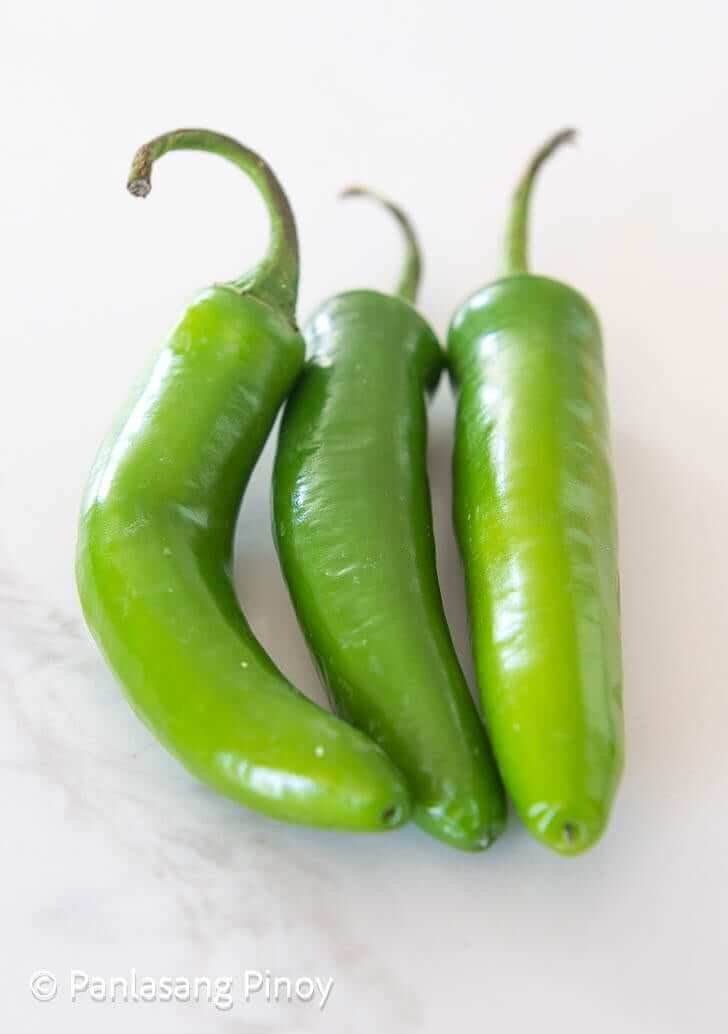
Serrano Pepper

With some dishes, all it takes is one ingredient to ensure that everything clicks. May it be a dash of brown sugar, or a good squeeze of calamansi, elevating a meal’s flavor can all come down to the tiniest added component. The smallest ingredients can bring the most impactful taste towards a dish, and for a lot of Filipino recipes, this could be the powerful serrano pepper.

Serrano Peppers

This hot chili pepper is widely used around the world, and this is because of its distinguishable flavor. It has slight notes of sweetness, but is best known for the heat it can bring to a dish. In fact, among some of the most commonly used and accessible peppers, it is up there with some of the spicier variants.

Origins 

Today, the serrano pepper stands as one of the most popular chili peppers. This may partially be due to how easy it is to grow in your own backyard, with various countries harvesting their own supply. But this actually originated in Hidalgo and Puebla, which are mountainous states in Mexico.

Because of where it came from, its name is actually Spanish in origin. “serrano” came from the word sierras, which means “mountains.” But it is also known by other names, such as Chili Seco, and its scientific name, which is Capsicum anuum. Like many other peppers, it is the fruit of a plant. The serrano pepper plant grows about 2 to 3 feet tall, and can have up to 50 hanging pods.

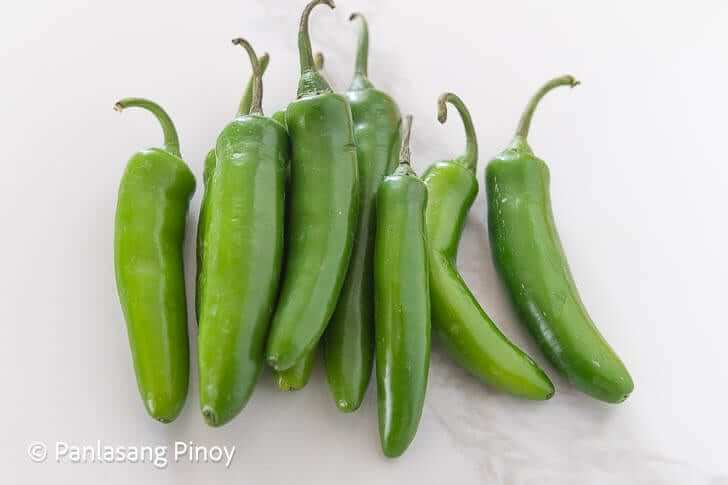
Eventually bears its conical fruit we now enjoy with many savory Filipino meals. These chili peppers have thick walls, as well as blunt ends. And if you are shopping for some of these, you should probably go for those with solid colors, as well as firm skin. These are signs of freshness, while those with wrinkled, soft skin can indicate the pepper’s old age.

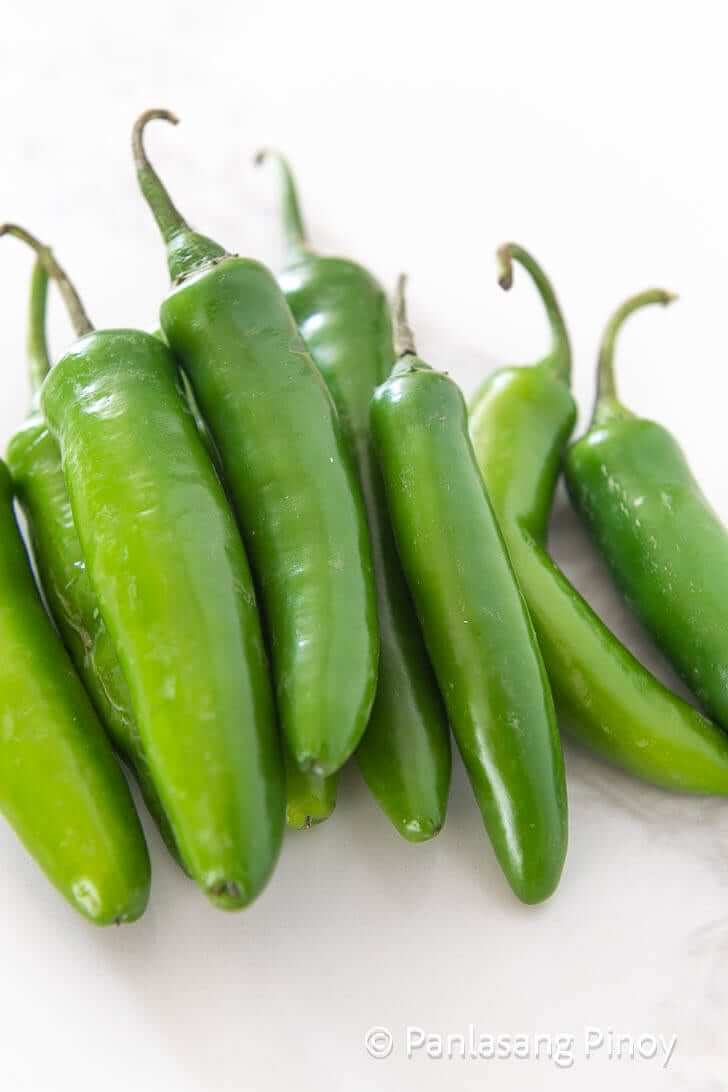
And if you want to find the spicier variations of serrano pepper, an easy way to do so is by comparing their sizes. Tinier serrano peppers tend to be hotter. And color can also be an indication, as the peppers that aren’t ripe yet usually aren’t as spicy. If you want a lighter flavor of heat, try buying some of the green serrano peppers.

How it compares to the spice of other peppers!

One very popular ingredient this tends to get compared to is the jalapeño pepper. One definite difference between the two is their size, as the serrano is smaller in size. But the more notable distinction probably comes in just how much hotter serrano can be. A serrano pepper can be about five times hotter than jalapeños. Despite their similar earthy flavor, your go-to should probably be a serrano chili pepper if you want a stronger kick in your dish.

serrano chili

This measurement of spiciness comes from Scoville Heat Units (SHU), which is the recognized way to distinguish chili peppers’ levels of heat. And while jalapeño peppers’ SHU ranges from 4,000 to 10,000, serrano peppers have 10,000 to 20,000 SHU. While the serrano’s spice can take a bit more time to kick in, within seconds, you should be able to taste that unmistakable punch.

As for other peppers, the ever-popular poblano pepper is still significantly milder in taste at 1,000 to 1,500 SHU. But the serrano is still comparably less spicy than many well-loved chili peppers. For one, it is quite far off from the pepper measured to be the hottest with 1,400,000 SHU, which is the Carolina Reaper.

And cayenne pepper can be over twice as hot as serrano with its SHU at 30,000 to 50,000. Habaneros, significantly known for their heat, are much spicier than these as well. They have an SHU upwards of 100,000, with the hottest at 300,000.

That being said, serranos still serve as a pretty good middle ground for spice because it has a significant level of heat. And this is arguably without being too overbearing or unpalatable for those with a lower spice tolerance.

Play around with these appetizing recipes 

Bicol Express

Whenever you’re craving something spicy, you can never go wrong with this Filipino classic. Bicol Express has managed to become a household staple for many because of its delectable and unique taste. This is mainly rooted from the graceful collaboration of rich, coconut milk with chili pepper, which is the serrano in our case.

Moreover, we get a much needed dose of delicious meatiness in the tender pork belly for this dish. And this is further empowered by our flavorful shrimp paste, making it taste more like a distinctly Filipino dish.

Sinigang na Buntot ng Baboy with Gabi

Have you ever wanted to try your sinigang with a thicker, delicious soup? Did you know that bringing along some gabi or taro to the mix could do just that? For this Sinigang na Buntot ng Baboy with Gabi, we play with some other ingredients to enhance our classic sour stew and make it stand out.

For one, you get to try pig’s tail with your dish, which is an affordable option, and can taste amazingly tender. You can make sure of this by leaving it to cook for longer, and get more of that soft, delectable texture. And of course, we get a perfect amount of spiciness to our dish with the power of 4 serrano peppers.

Sizzling Chicken Sisig

Is any Filipino gathering complete without a plate of steaming hot, mouthwatering sisig? But if you’re more into white meat, which can be a healthier choice, try this Sizzling Chicken Sisig recipe! Our dish keeps protein content high, while containing less fat. And of course, you can count on great flavor and a punch in our serrano peppers, as well as other classic seasonings such as soy sauce and garlic powder.

But one of the best flavor enhancers for sisig is mayonnaise, as it adds an extra layer of sticky texture and a tart kind of savor. Make sure to eat this fresh from the stove, as it is best when sizzling hot, and perhaps with some white rice.

Serrano Pepper

Easy Beef Nachos

Serrano peppers can be a pretty flexible ingredient, working well with various other components. But it is also useful to enhance the flavor of a side dish or a snack, such as these Easy Beef Nachos. Our irresistibly crunchy tortilla chips taste excellent with some chopped tomatoes and ground beef for this recipe.

But we also have just the steps to guide you towards making the perfectly thick and flavorful cheese sauce. Try out this recipe for your next merienda dish!

You’re all set with a good list of recipes to try out! But what if you aren’t able to find serrano peppers nearby? The solution lies in some other ingredients you might already have in your kitchen.


Substitutes for serrano pepper

We’ll start with what might seem like the obvious, but you can definitely try using some jalapeño pepper for your dish. In the place of 1 teaspoon of serrano pepper, you can put 2.5 teaspoons of jalapeño. This is to make up for the difference in spice level that the two ingredients have. This replacement works especially well because jalapeños are both accessible, and quite alike to serrano in terms of rich taste.

That, and you can use the same measurements indicated for your jalapeño if you want to tone down the heat.
But what if, instead, you’d like to hike up the heat? Cayenne pepper makes for a fitting alternative in this case. You can proceed to use the same measurements needed if you want a spicier dish. Otherwise, you can try 1 teaspoon of dried cayenne pepper for every 3 teaspoons needed of serrano.

A common ingredient you might have at home that would also work are red pepper flakes. These are essentially a dried type of cayenne, and will work wonders to add a punch to your recipe. Try a quarter of a teaspoon of this for every teaspoon of serrano pepper needed.

And it also works to use Thai chili for a substitute. I’ve used this as an interchangeable ingredient for some recipes with serrano pepper already. This is largely because of their similar flavor and texture. Just be warned that it is spicier with about 50,000 to 100,000 SHU.

How to store it properly

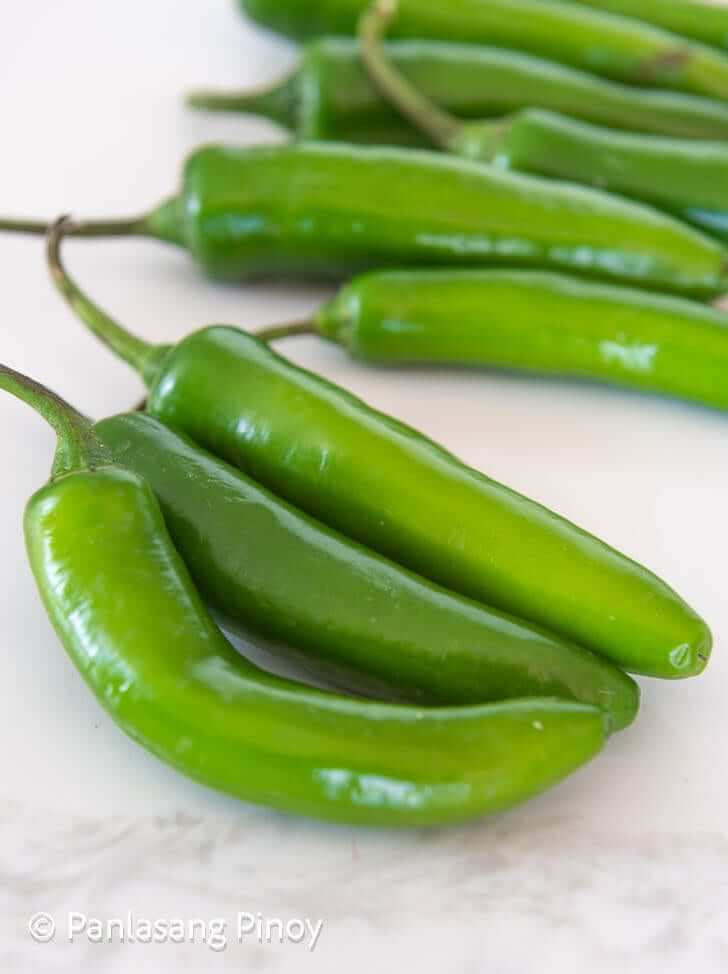
Firstly, like with most ingredients, refrigerating them will make them last longer. Keep them in a plastic bag, and put them in your fridge’s crisper where they can stay good for 2 weeks at most. Also make sure to wash your serrano peppers properly before you start cooking for safety!

long green pepper

You also have the option of slicing up your serrano and freezing them before you store them for later use. Try cutting them up, then distributing them evenly on a baking sheet with parchment paper on top. Then freeze them, and then place your peppers in a zip-top freezer bag. Ensure that you’ve gotten all of the air out of the bag, then proceed to seal it. You can use these for up to 3 months.

If you have any questions on serrano peppers, let us know in the comments below! Let’s start a conversation!

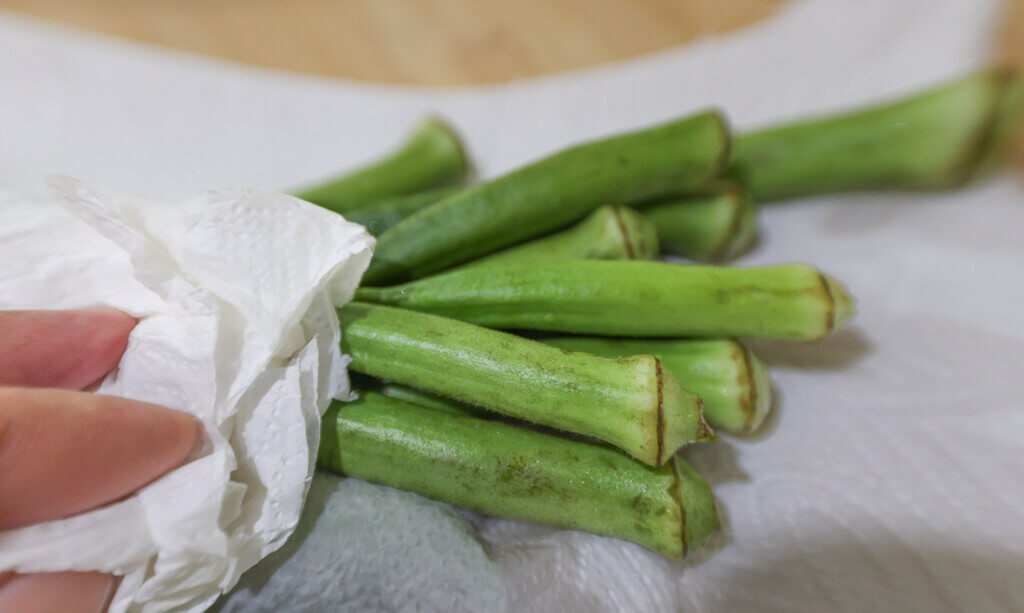
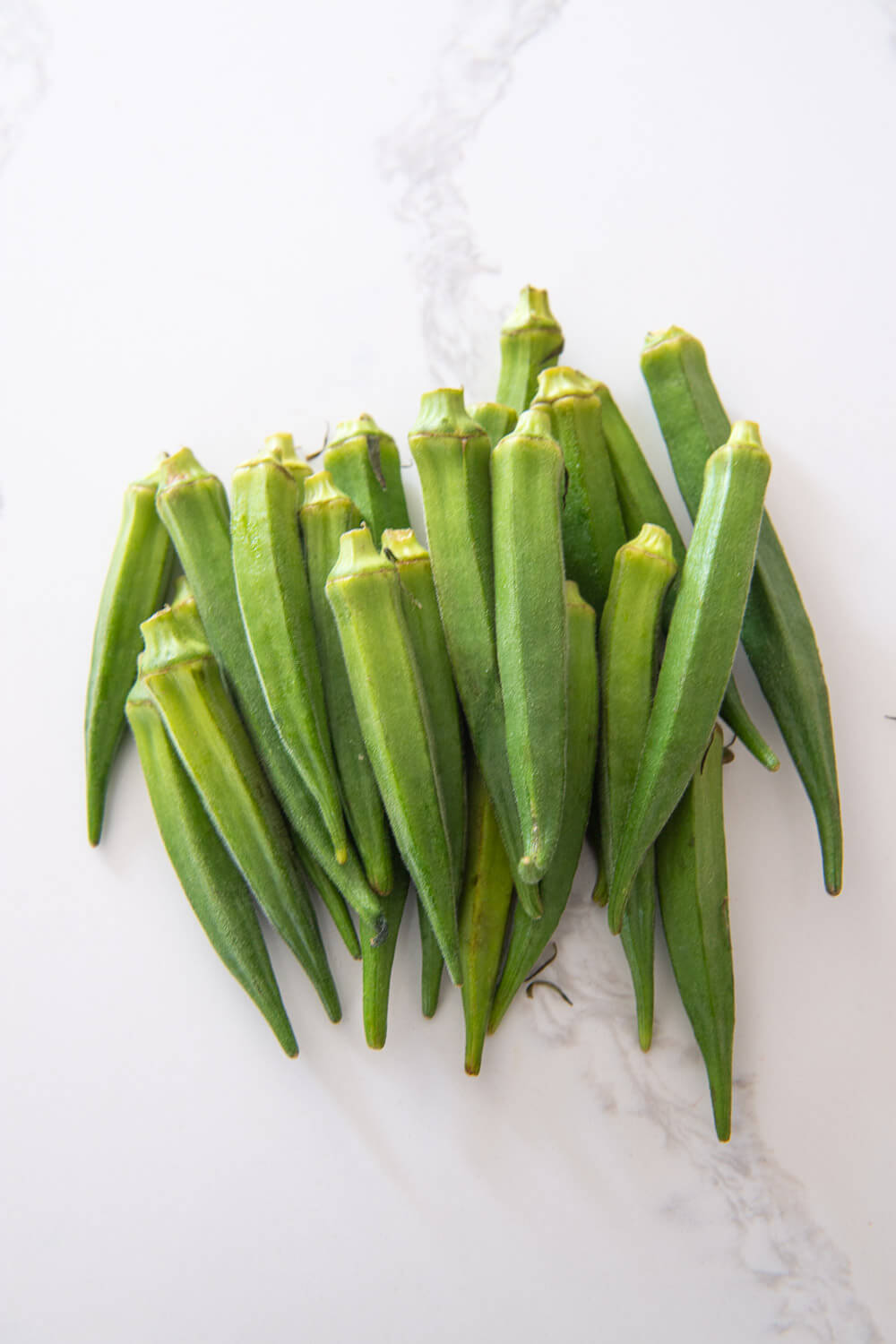
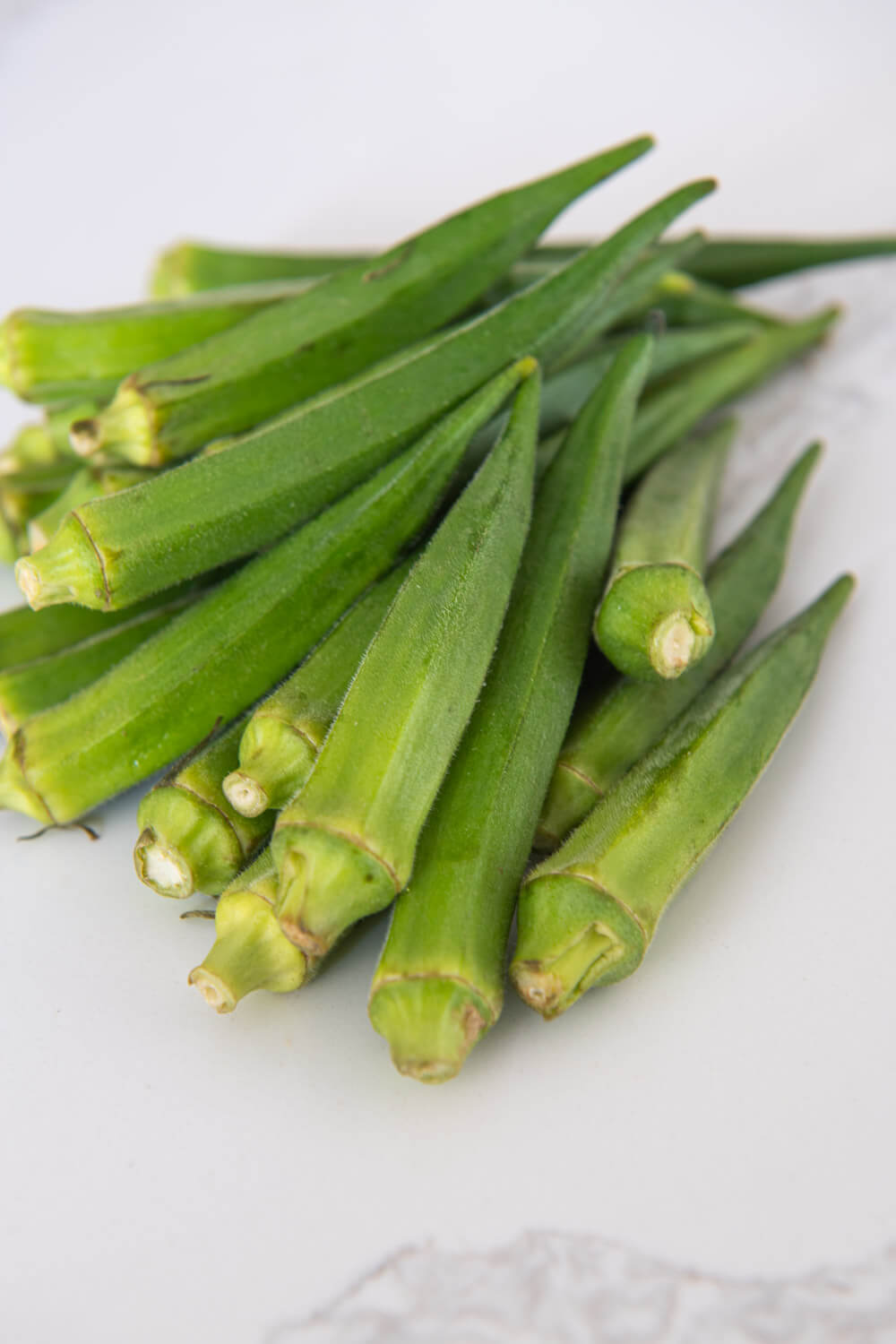
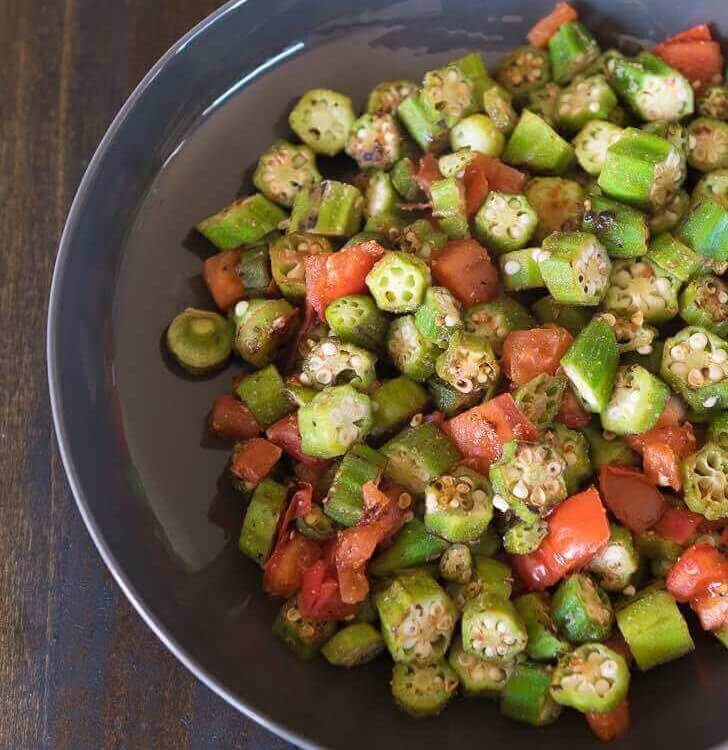
okra

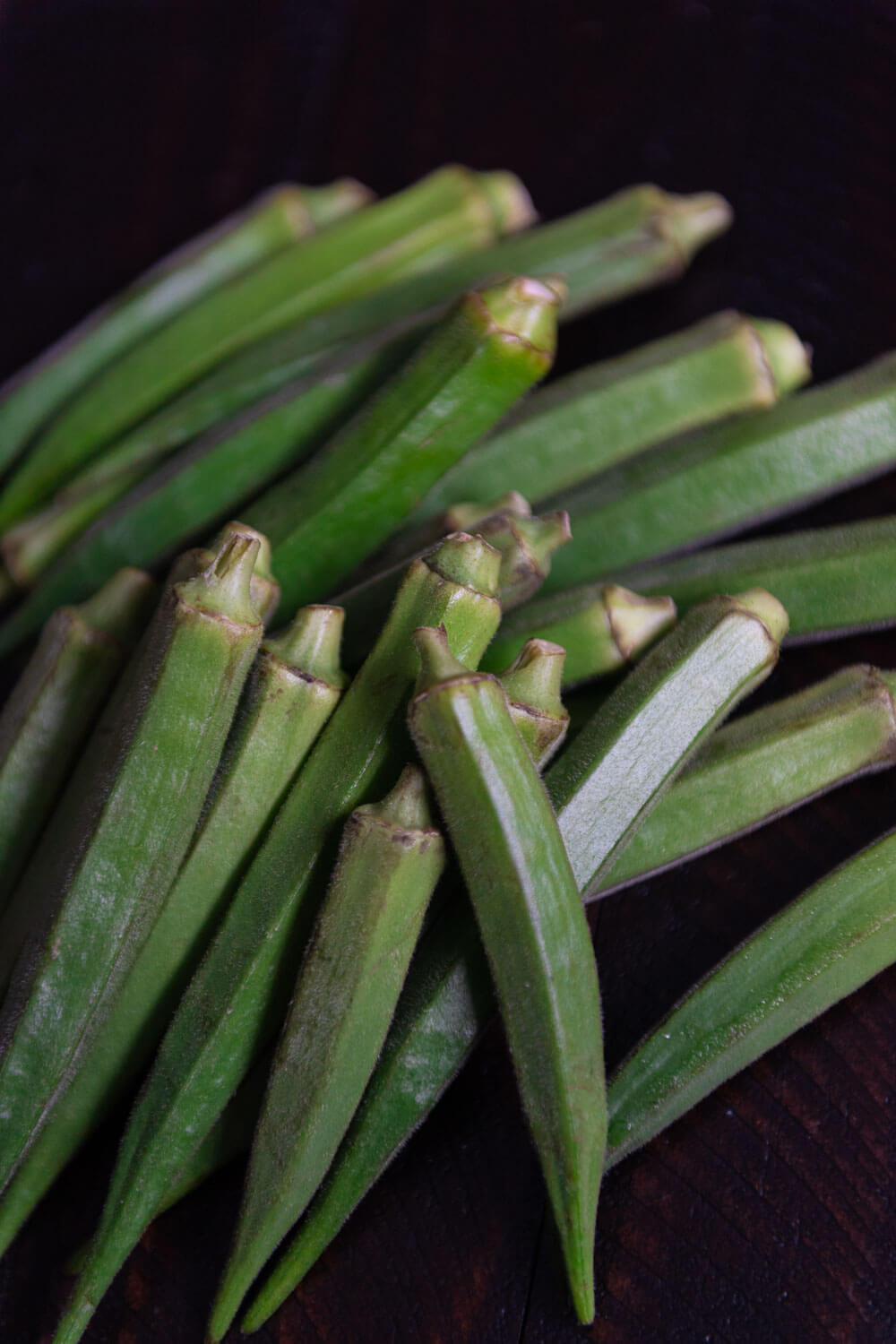
What is Okra?

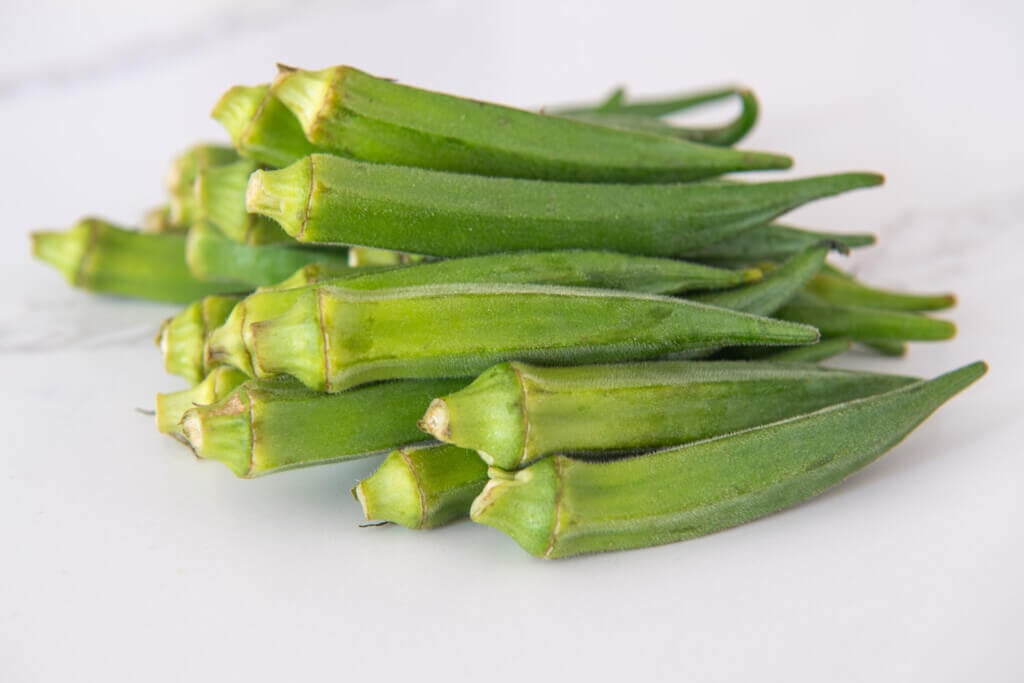
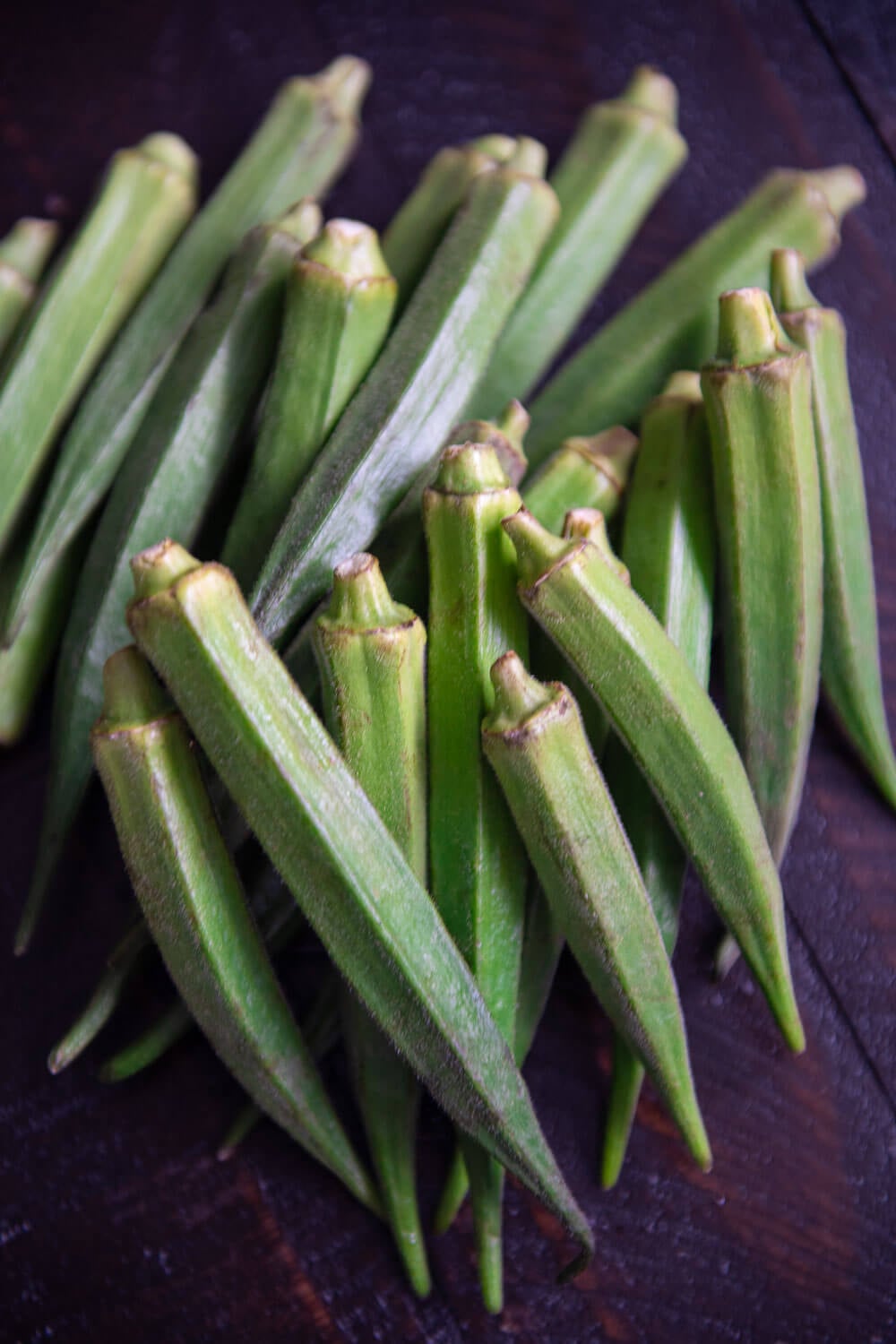
There are a handful of ingredients in the culinary world we deem polarizing; bring them up in conversation and they’re met with either adoration or vehement repulsion! Some of these ingredients are “acquired tastes”––meaning you hate them at first, but grow to appreciate them later on. What was once an undesirable eating experience may grow into a pleasant one as you get older. Whether or not that’s the case, ingredients can mean different things to different people. And the slender, tube-shaped, green okra is no exception.

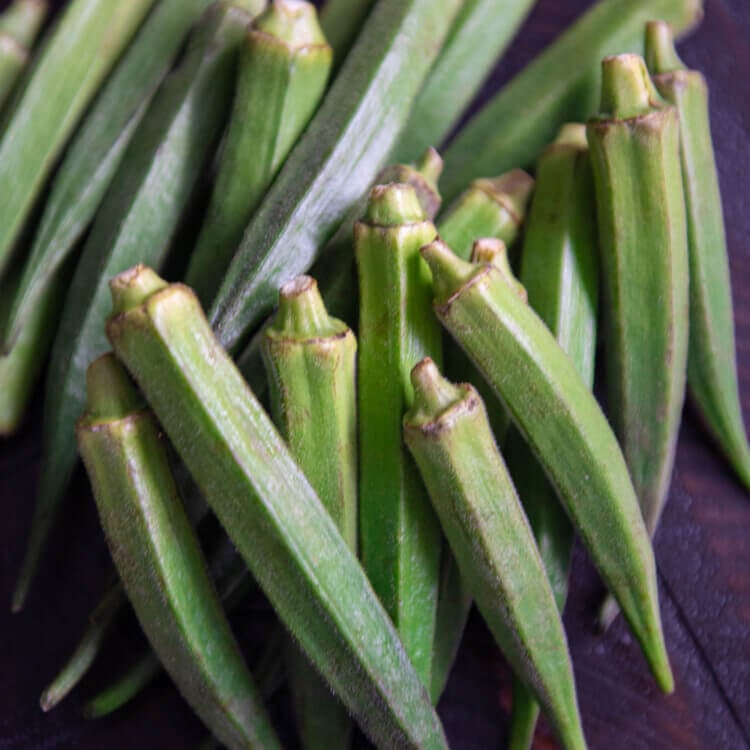
okra

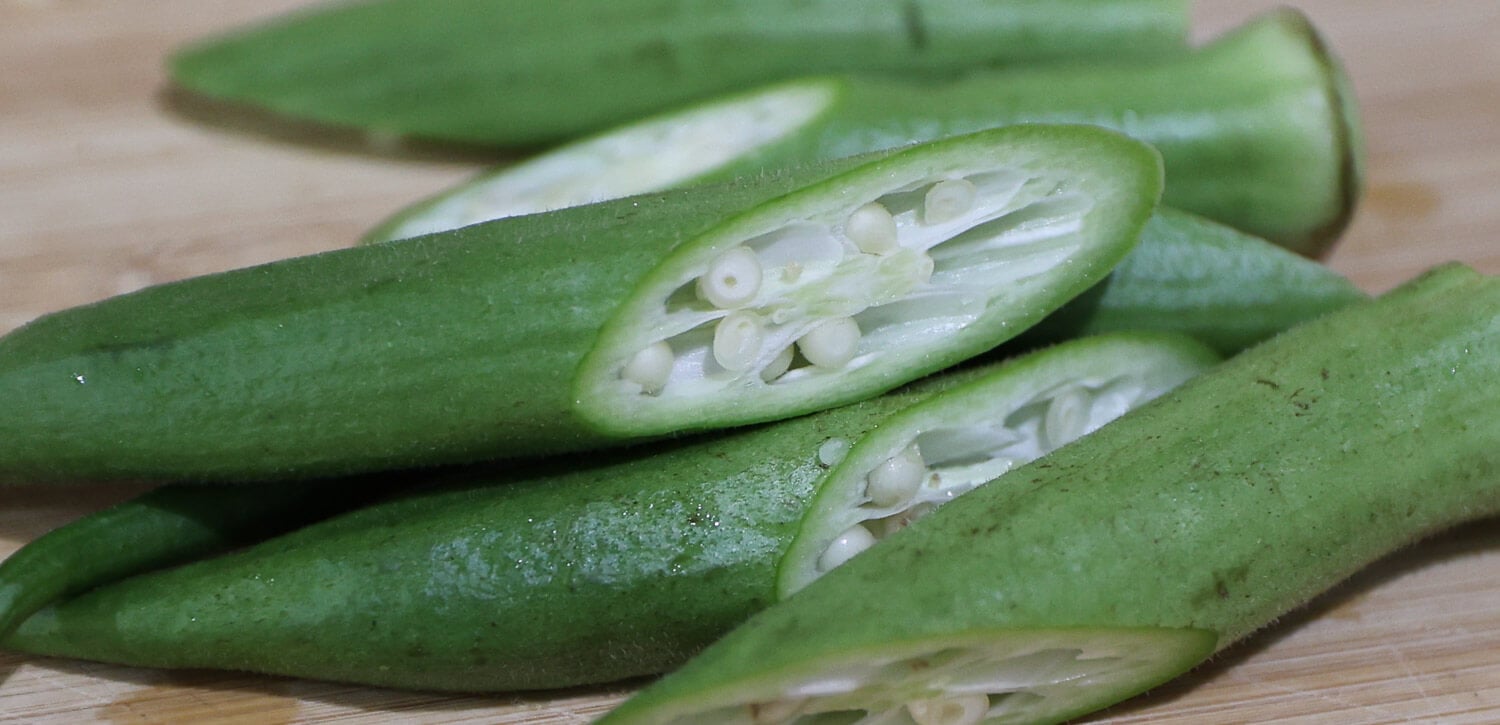
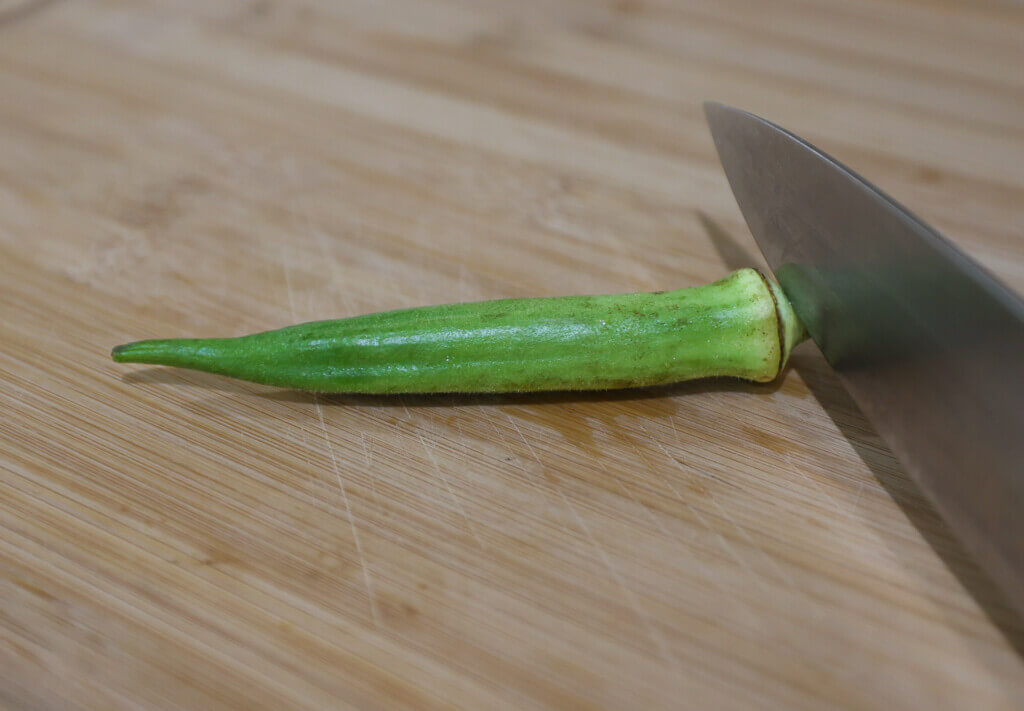
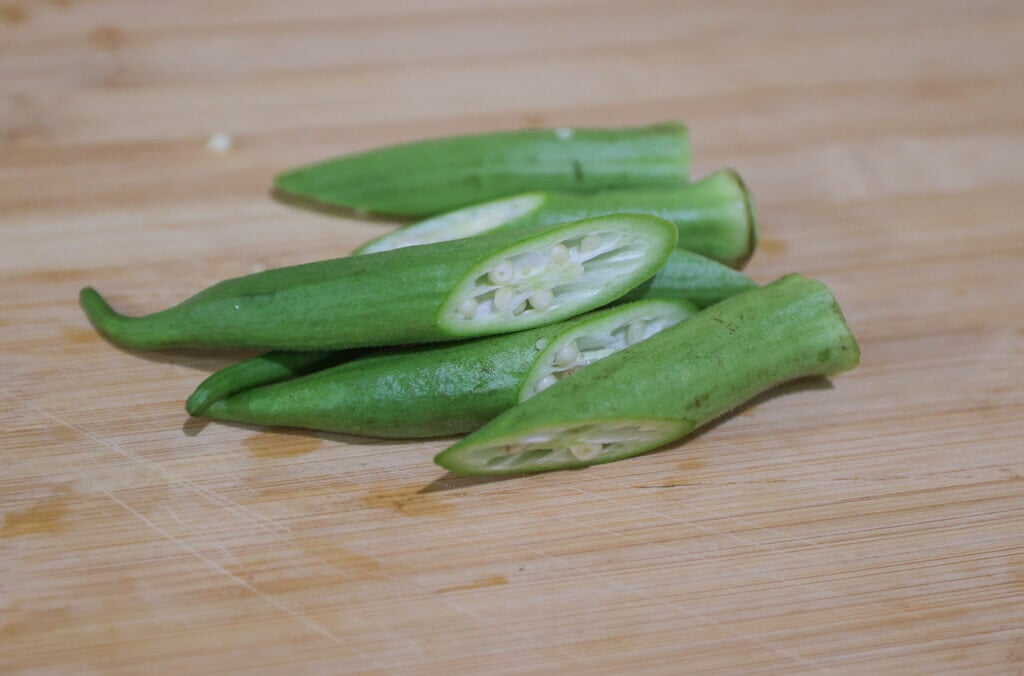
Contrary to popular belief, okra is actually a fruit, instead of the vegetable many assume it to be. Its long, slender form hides small white seeds within it. Okra is famous (or notorious?) for its texture more than its taste––silky, slimy, and almost “gooey.” This is due to its high traces of mucilage, which makes its consistency even thicker. Because of this slippery feeling, many have expressed a strong dislike for this ingredient. However, once cooked properly and slightly ridded of its slimy properties, okra actually makes a welcome guest in the family kitchen. And there are so many ways to enjoy it, too!

Whether your feelings have changed or stayed the same since the first time you had it, okra is a quintessential ingredient in many cuisines across the globe. Hopefully, after this article, you’d be willing to give okra a second chance!

Where does okra come from?: History and origins

Okra thrives best in warm, humid climates. Its scientific name is Abelmoschus esculentus, though in other regions we also call it “lady’s fingers” or bhindi. Okra is said to have origins in South Asia, West Africa, and Ethiopia. It has become a staple in several African diasporas in the Americas and across the globe. Author and food expert Jessica Harris writes, “[w]herever okra points its green tip, Africa has been, and the trail of trade evidenced by the presence of the pod is formidable.” She also explains that the word ‘okra’ is derived from the Igbo word for the plant––okuru.

okra lady finger

In the Southern regions of the US especially, okra is a quintessential ingredient in Southern cuisine. Some parts of the US refer to this fruit is gumbo––also the name of a popular Creole stew it is a key ingredient in. The word gumbo comes from the Portugese quingombo, which is in itself a corruption of the name for okra in Congo and Angola––ki ngombo.

Okra is an invaluable ingredient to members of the people of color (POC) community. It continues to flourish in many parts of Africa, the Caribbean, the Middle East, and South America.

But I don’t like how slimy okra is!

Admittedly, okra isn’t everyone’s cup of tea. Like we mentioned earlier, its silky, slippery consistency doesn’t exactly appeal to everyone. Luckily enough, there are ways of reducing that “sliminess” when cooking okra, in order to make it more appealing!

Cook it quickly!

There are many ways to cook okra. It’s especially popular in stews for its mucilage content, which thickens soups easily. But if you want to go the opposite route, frying it or cooking it fast on high heat keeps the mucilage at bay. Afterwards, the okra’s texture becomes a little bit more like eggplant; its taste, much milder.

Lessen your liquids

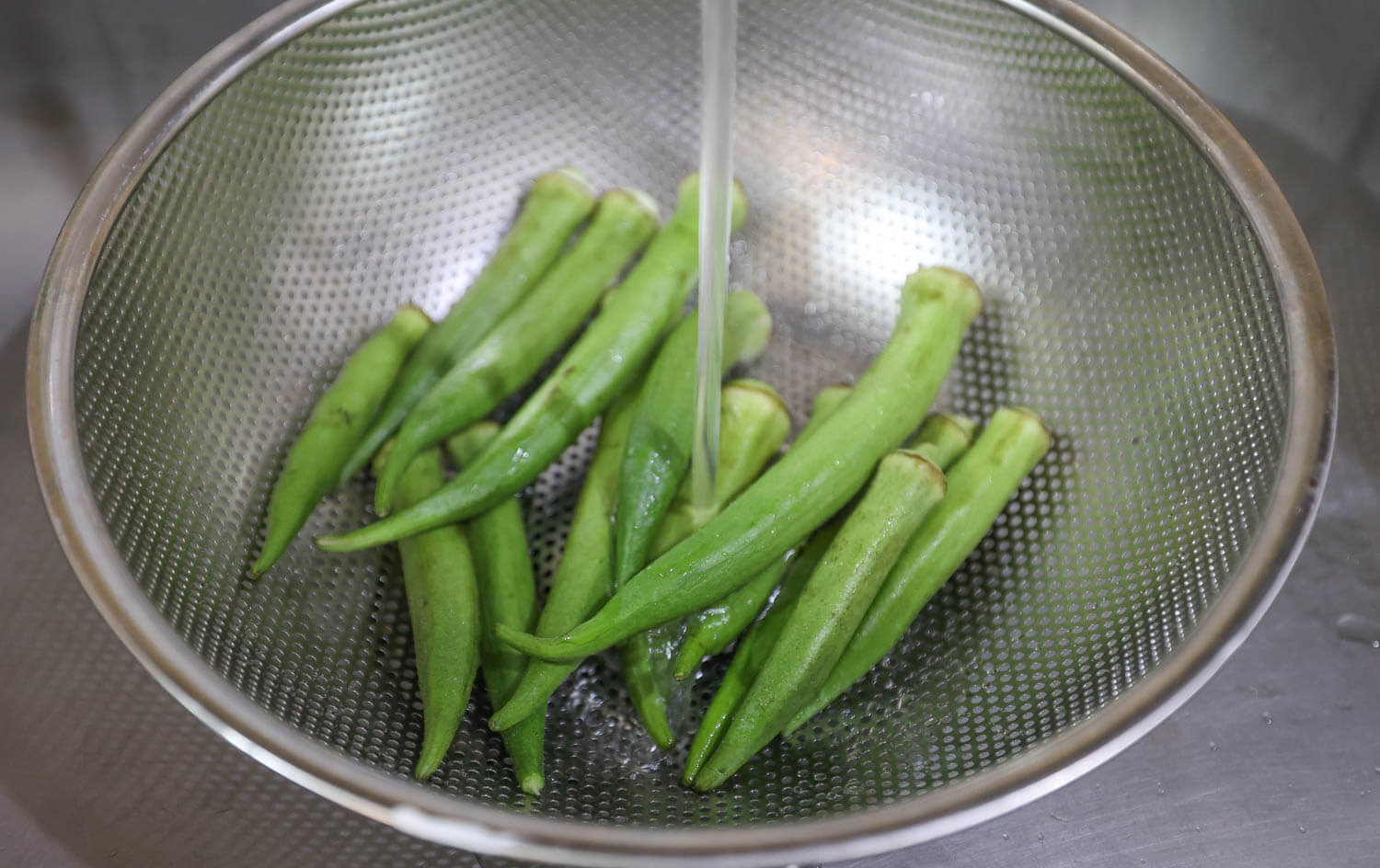
Okra’s high mucilage content activates its thick and viscous consistency. As much as possible, try to minimize its contact with water or other liquids before or during cooking. One way of making sure your okra is as dry as can be is by steaming or blanching it for 3 to 4 minutes first, then draining and drying completely. Don’t add it to the dish until the end, either, in order to minimize moisture contact.

… but vinegar is okay!

Many cooks in the South claim that another way to reduce okra’s thickness is to soak it in vinegar for about 30 minutes to an hour. It’s important to remember to pat it down after, though. Another way would be to salt the pods first, and then put it in a mixture of both water and vinegar for the same amount of time. Adding vinegar or lemon juice to the actual dish is also an effective way of making it a lot milder.

Keep in mind that these are just a few (but arguably the most effective) ways of making your okra feel less silky. However, if it’s that silky feel you want, feel free to skip these altogether! Its thickness can work wonders in many dishes, just as much as its dryness works well in others. It’s all a matter of preference.

What are some recipes I can make with okra?

Like many other fruits and veggies, there are a myriad of recipes okra works wonders in.

As we mentioned earlier, a dish most commonly associated with okra is the classic Creole gumbo. Gumbo is a dish with African origins, and you can find it in restaurants and kitchens across the South. Louisiana, particularly, its famous city New Orleans, is renowned for this savory, hearty dish. Okra is crucial to an effective gumbo, as its mucilage makes the roux even thicker. The mix of okra with other ingredients, such as chicken, shrimp, sausages, and tomatoes, makes gumbo not only filling but also delicious. It takes a while to make, but it’s definitely worth it once you and your loved ones have a full, happy tummy!

okra lady finger vegetable

But it’s not just in the South or in African diasporas that okra is beloved; we in the Philippines love to use okra in our dishes, too! Here are some Filipino dishes okra has found a home in, and some that I personally love:

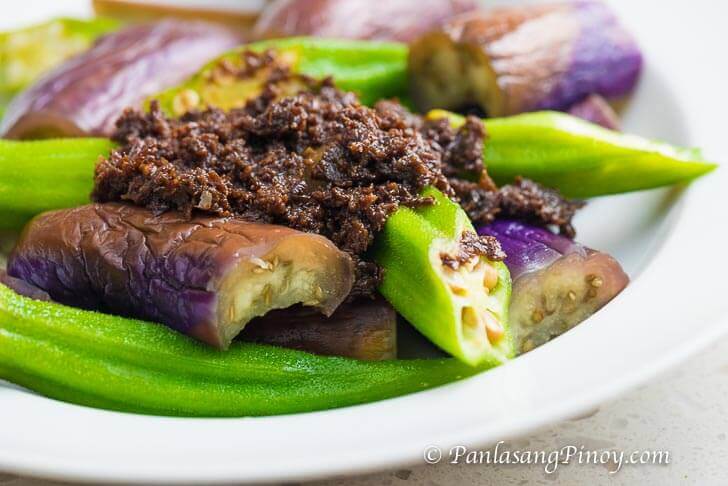
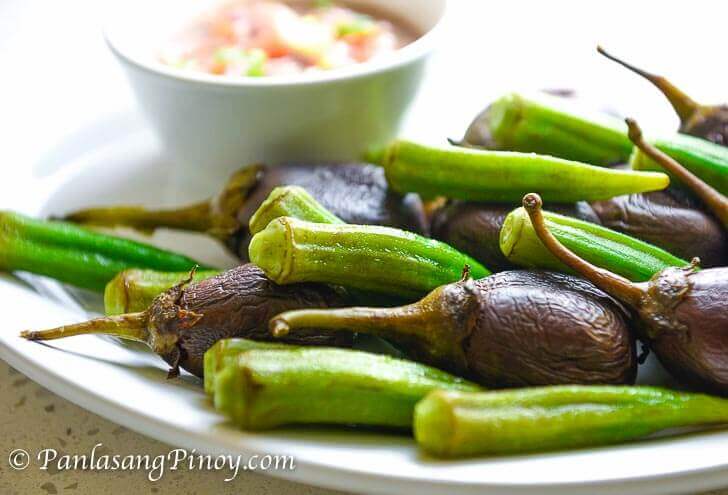
Steamed Eggplant and Okra with Bagoong (Shrimp Paste)

This dish sounds quite simple, but you’d be surprised at how filling and delightful it turns out to be! For those looking for a not too hearty meal, this steamed eggplant and okra with bagoong is perfect. The combination of the mild tasting vegetables with the powerful bagoong is quite impressive. Furthermore, the rice you pair it with also manages to absorb the flavors, too! Try this when you’re looking for something quick and healthy to fix up for dinner.

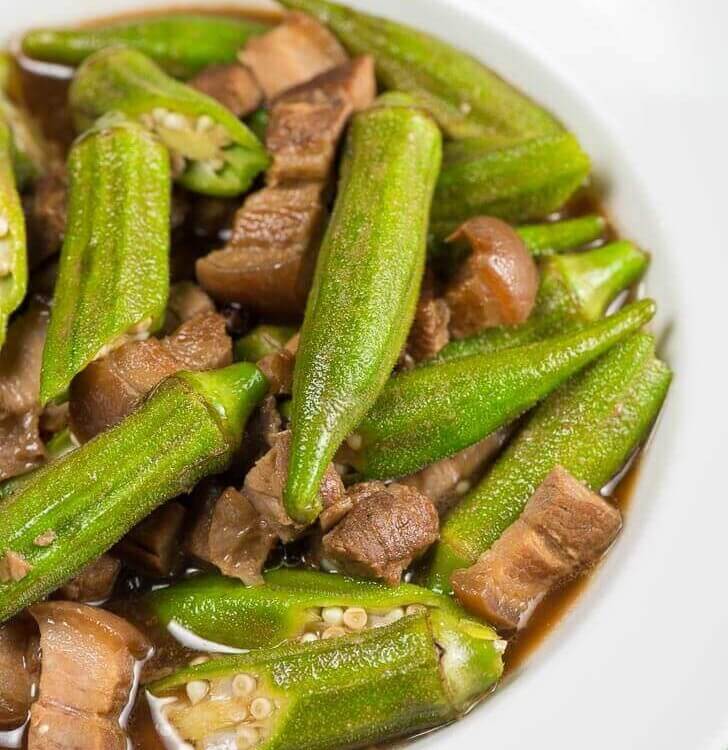
Adobong Okra with Pork

I have been, and always will be, a lifelong fan of adobo. Adobo sauce might be one of my most favorite flavors in the world, and partnered with juicy, fatty pork belly, it is the perfect combination. So why not add something different (read: healthier) to the mix? Adobong okra isn’t something I would’ve expected to enjoy. But the combination and complementing of flavors between the okra and pork was everything I didn’t know I was missing. Adobo has never been healthier!

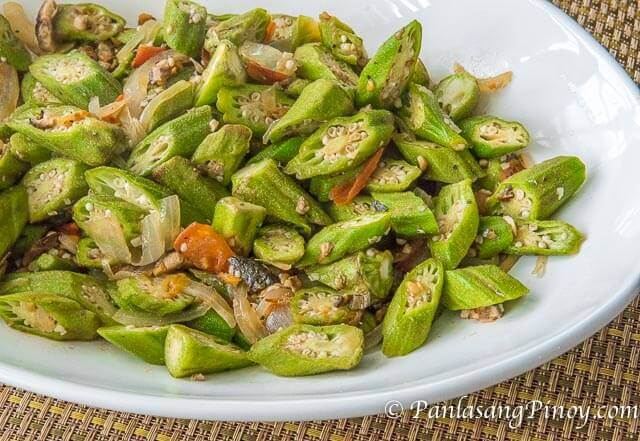
Ginisang Okra with Fish Flakes

This Filipino staple is as incredibly easy to prepare as it is to enjoy. With affordable and accessible ingredients, one bite of this dish is the perfect mix of both crispy and chewy. The only downside? You might end up eating a lot of rice after! But the delicious mix of flavors (and optional bagoong on the side) definitely make it worth it.

Air Fried Fish Sinigang sa Miso

Even when it isn’t the star of the dish, okra still makes a delightful addition to a recipe. Take, for example, this air fried fish sinigang sa miso. While here we’re highlighting the tilapia as our main protein, okra, along with the other veggies, make the sinigang stew truly unforgettable. And as we mentioned prior, its mucilage properties really make your soup thick and rich! Who doesn’t love an amazing sinigang?

Pinakbet Tagalog

You’ll notice that a lot of the dishes we’ve listed include bagoong as a good partner to okra––and pinakbet is no different! This classic dish and its use of shrimp paste really highlights the fresh flavors of every vegetable in it, okra included. With other ingredients in the mix like eggplant, ampalaya, and crispy lechon kawali, pinakbet is hard not to love.

Okra is as well-traveled as it is dynamic, and is the perfect partner to have in your kitchen. If you don’t like it yet, maybe it’s just because you haven’t found the right recipe for it! With the perfect ingredients suited to your taste, okra could definitely be something you fall in love with.

Okra’s nutrition and health benefits

Okra is a bastion of health and nutrition. Its profile is impressive, with nutrients spanning from magnesium, to folate, to vitamins A, C, K, and B6. The amount of antioxidants it has play a huge role in protecting your body from forthcoming diseases.

what is okra

Its mucilage content can also help in preventing cholesterol spikes, which may lead to heart disease if untreated. Because it’s also rich in folate, okra is important for pregnant women, seeing as this can help prevent defects in the fetus they’re carrying. Some say it even lowers the risk of cancer!

Okra is easy to incorporate into your diet. It is a fruit unlike any other, and has the potential to become one of your favorite ingredients. Give it a chance today!

chinese eggplant

What is Eggplant?

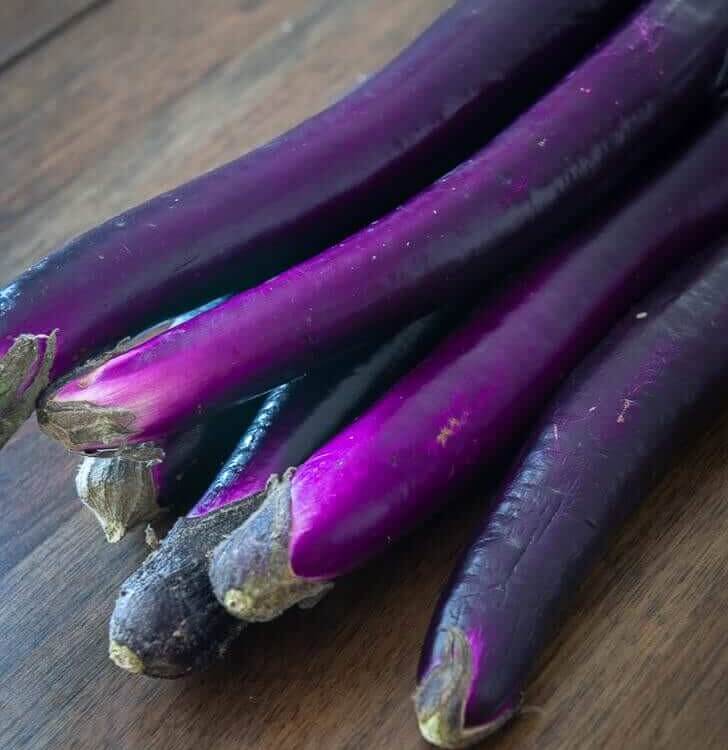
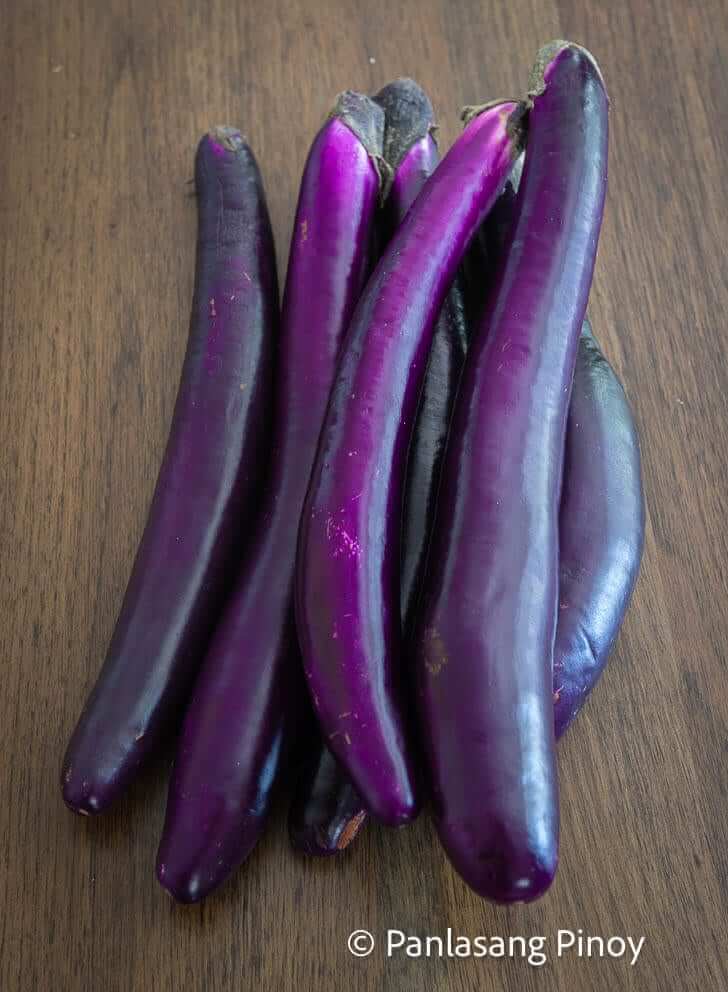
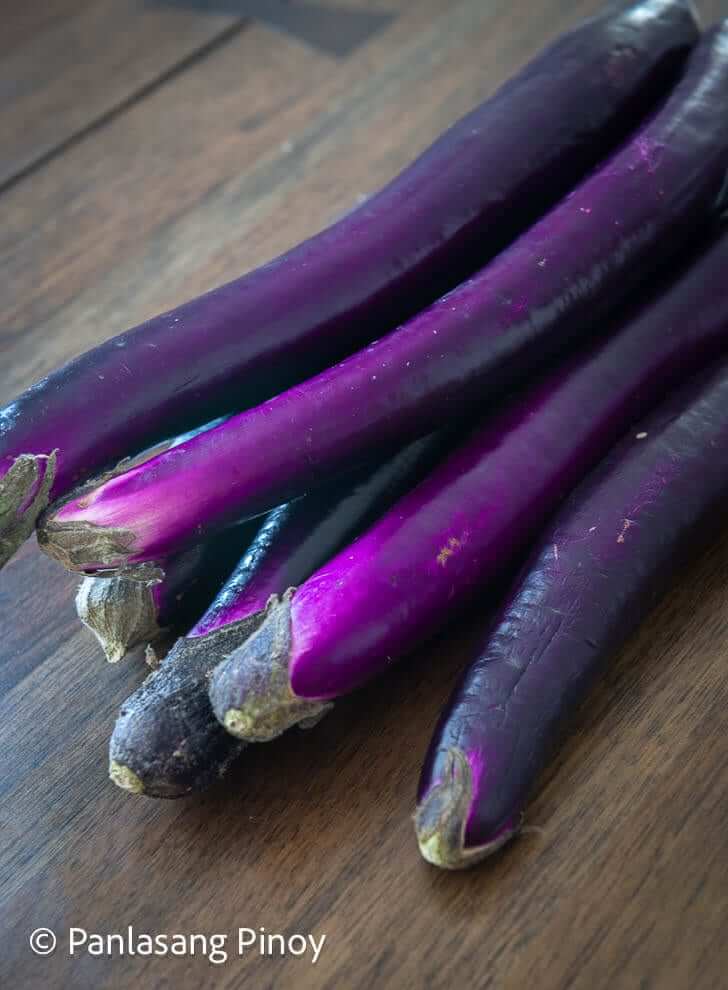
Long and purple with a trademark green stem, eggplant is one of the most common ingredients you can find in Philippine stews and soups. Although some don’t enjoy eggplant because of its texture, it’s a very versatile ingredient. Whether it’s in omelettes, salad, adobo or pinakbet, it’s hard to find something eggplant (or talong, as we call it) doesn’t work well in. With herbs and spices and other ingredients, eggplant becomes an effective assistant to the star of every meal––sometimes even the star itself! It’s easy to grow and work into dishes, which is no wonder why it’s so popular in the modern day Filipino kitchen.

what is eggplant

And it’s not just in the Philippines: people across the globe have enjoyed having eggplant in their cuisines for centuries. From our neighboring countries in Asia to those across oceans, eggplant has found a home almost everywhere. Its dynamic properties and rich, almost creamy taste make it a staple in dishes around the world.

Origins and related ingredients

Here’s a little known fun fact: did you know eggplants aren’t actually vegetables? While many classify them as such, eggplants, with the scientific name Solanum melongena, are actually berries! However, under the genus Solanum, their relatives include the tomato, the potato, and the chili pepper.

By now you might be asking: where exactly does eggplant come from? With such an expansive history, it would only make sense that this berry also has a multi-faceted history. Talong apparently has origins in India, though some contest and say it is an African native. Since prehistory, however, eggplant has been growing in South and East Asia. The earliest written record of eggplant is in a Chinese agricultural archive––dating back to as early as 544!

There are historic records, too, that prove that people also grew and harvested eggplant in the Mediterranean area by Arabs during the Middle ages. People brought it to Spain after. That was in the 8th century; 4 centuries later, historians unearthed an agricultural book from Arabic Spain, detailing how to grow aubergines!

Surprisingly, many people used to fear eggplants due to its close relative, nightshade. Nightshades encompass a large variety of plants, and many of them are poisonous or can become toxic in large quantities. In folklore, too, eggplants’ reputation wasn’t exactly favorable. In Italy, for example, eggplants were regarded as the root of insanity! For a berry that was grown almost worldwide, it certainly wasn’t a welcome one.

The many names of eggplant

With how many countries eggplant has found itself in, it comes as no surprise that eggplant goes by so many different names across the world.

eggplant

Eggplant, is of course, its most commonly known name. You might be wondering: why do we call them eggplants in the first place, when they don’t look like eggs at all? Believe it or not, they actually did look like eggs, once upon a time. In 17th century England, the product of the plants that grew these berries were small and white––a far cry from the long, purple description we’ve come to associate with it. Because of its chicken or goose egg-like appearance, the term “eggplant” came to be.

In the Philippines, talong is what we search for when browsing supermarkets and groceries for that long, purple berry. But in other countries like the UK, Ireland, and other portions of Western Europe, the people there refer to eggplant as aubergine. This is a direct translation to French, where people use eggplants all the time. The Italian and Spanish words for “eggplant” are quite close to each other –– melanzana and berenjana, respectively. Another common name for eggplant is brinjal, which is the more frequently used term in the South Asian region, as well as places like Singapore, Malaysia, and South Africa.

From this list of names alone, we can already tell our beloved talong is truly an international superstar!

Health benefits

Talong, aubergine, brinjal––whatever you call it, eggplant is undoubtedly loved not just for its versatility but its health benefits.

Eggplant is rich in fiber, protein, manganese, and nutrients like potassium and vitamins C and K. It is a great source of antioxidants, which make it effective in guarding your body against future ailments. Because of this antioxidant content, many believe that consuming eggplant helps in preventing several heart diseases from affecting your system.

Being so rich in fiber, eggplants are also great for keeping your blood sugar levels intact. They may even help with weight loss! You can read further about all the health benefits eggplant has to offer here.

This berry is packed with everything you could possibly want in an ingredient. And to make it even better, it’s so easy to add to your diet, too!

Dishes you can cook

As we mentioned prior, eggplants are nothing if not dynamic. There’s a reason they are so commonly used around the world, after all.

It’s important to note that eating raw eggplant isn’t exactly advisable. Raw eggplant has a bitter taste, which, coupled with its already spongy texture, isn’t great. Once you cook it, however, that bitterness fades away––immediately replaced by something creamier, milder, and altogether more pleasant.

90% of eggplant production comes from China, India, Egypt, Iran, and Turkey. This is because this berry thrives best in these countries’ warm climates, and is heartily used in several of these nations’ cuisines. Although not part of the list, France also loves their aubergines––incorporating it into several national dishes.

While we aren’t a part of that list, talong is still invaluable to Filipino cuisine. There are a million ways to enjoy eggplant: chopping it up and tossing it into stews, boiling it with other vegetables, frying it, or even stuffing it! Here are some recipes I can definitely vouch for.

Pinakbet

Of course, one of the most popular recipes you can find talong in is the classic pinakbet. Who doesn’t love that heavenly combination of crrrrunchy lechon kawali, paired with the freshest vegetables? Bagoong alamang also gives pinakbet that extra zing of flavor we all love. Talong may not be the star of the show here, but it definitely plays an important part.

Tortang Talong (Eggplant Omelette)

Tortang talong is one of the most popular eggplant recipes in the country. Simple and quick to make, tortang talong is essentially eggplant omelette. Growing up in a Filipino household, you’ve probably had this at least once. I personally enjoy tortang talong with rice and some ketchup to dip it in on the side. One of my favorite parts of this dish is that you usually serve it with the stem still attached. Not only that, but tortang talong is such a basic dish that anyone can make!

Steamed Eggplant and Okra with Bagoong (Shrimp Paste)

But if you want something even simpler (and healthier, too), I would recommend this recipe instead. This is for those who want something a little lighter after having hearty meat dishes. It’s a simple, humble dish, but the taste of steamed eggplant and okra always hits the spot when paired with the salty, umami bagoong. In only 15 or so minutes, you’ll be able to serve this dish, and enjoy it, too! For an added kick, I recommend adding chili flakes to spice it up.

Stuffed Eggplant (Rellenong Talong)

This is basically your tortang talong with a twist! I love relleno of any kind, be it bangus, pusit, or manok. But this rellenong talong, in my opinion, is the perfect combination of healthy and hearty. With yummy, flavorful pork giniling inside your perfectly cooked eggplant omelette, this is great for even kids who are picky eaters––and adults, too!

Eggplant Parmesan (Eggplant Parmigiana)

Another recipe kids are bound to love. It has all the delightfully cheesy tastiness that kids love in spaghetti, but with the health benefits that this vegetable provides. This is basically a lasagna without meat or pasta of any kind (although you could put it on a bed of noodles afterwards). This Italian dish has become just as much of a comfort food to Filipino homes.

These are just some of the many ways you can enjoy eggplants at home. What’s your favorite talong recipe? Let us know in the comments below.

How to keep your fresh

Bought one too many eggplants from the store? It happens to the best of us. Not to worry, though; eggplants can last in the vegetable crisper or section of your fridge for a long time. You just need to know how to store it well.

chinese eggplant

Make sure to always clean your vegetables before storing them. I like to wash it in a mix of water and vinegar, in order to rid it of the bacteria that forms around the skin. Once I’ve dried them all up, I wrap them up in paper towels, individually. Then, I place them inside a zip-lock or plastic container, almost but not quite sealing it the whole way through. From there I get to store it in the vegetable crisper––and I’m done!

Try to use these veggies as soon as you buy them, though––freshest is always best!

With a long history and a diverse impact on so many cultures, eggplant is really one of the best vegetables (oops; not-vegetable) out there! Don’t be afraid; try it today!

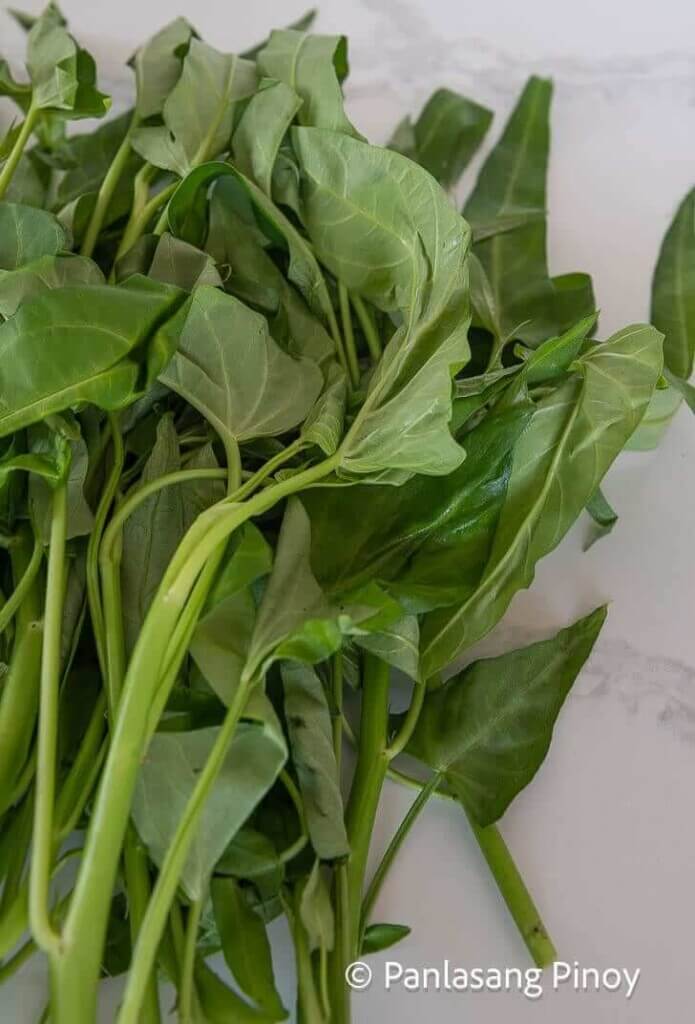
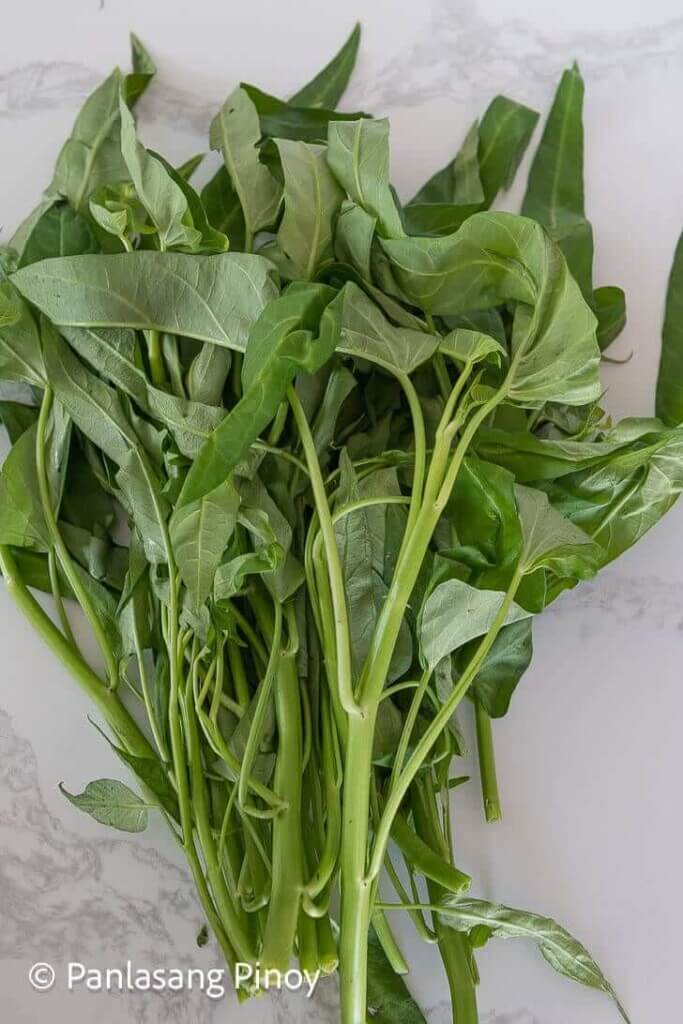
What is Kangkong?

The Philippines is home to so many different vegetables . These has been an essential part of every Filipino’s healthy lifestyle. Whether you are young or old, it’s important to have your greens frequently to maintain a balanced diet. And one of these vegetables is none other than the humble kangkong.

kangkong

What is it?

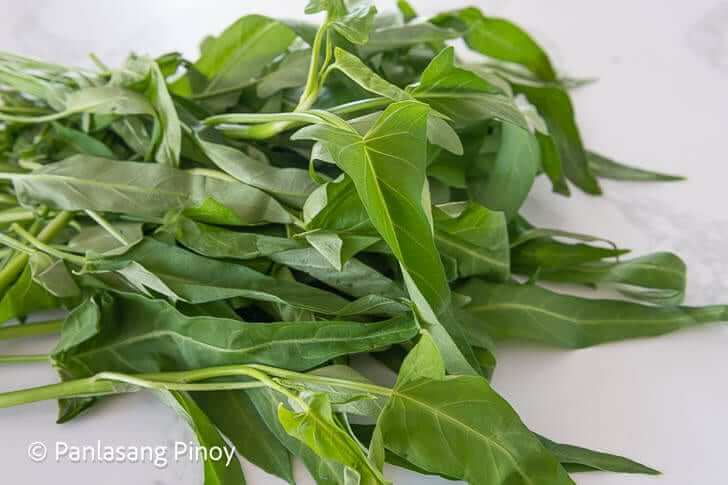
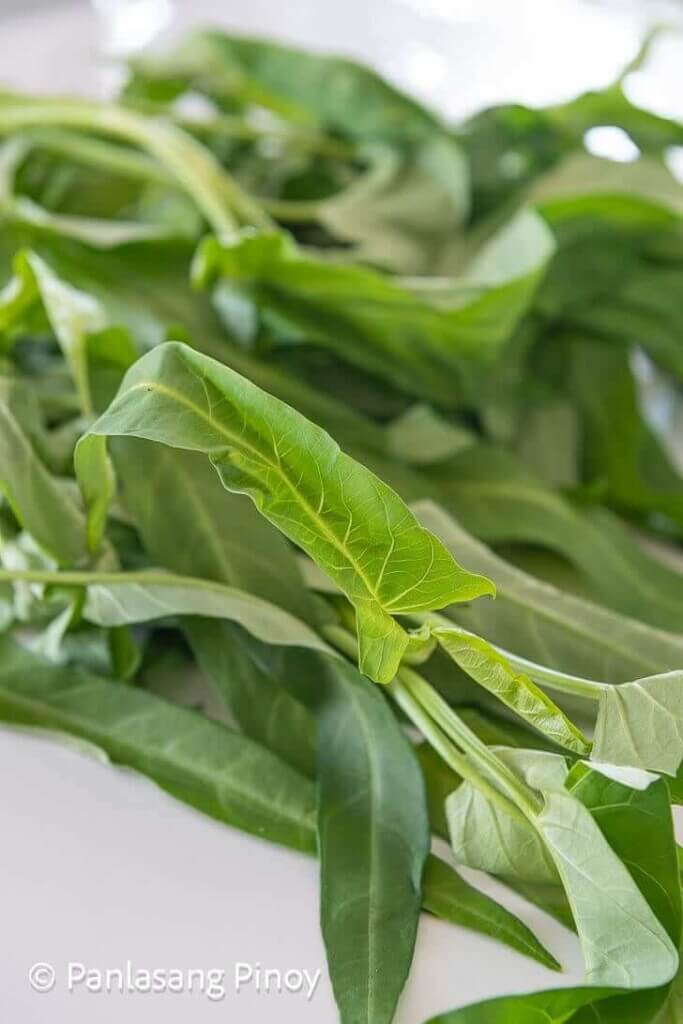
Kangkong is a leafy green vegetable that has found its way into several East and Southeast Asian cuisines. Similar to spinach or watercress, it is an adaptable ingredient we often use in stir fries, or as the side dish to hearty, meaty dishes. The flavors of this mild tasting ingredient can be brought out by different marinades. When cooked properly, its leaves are tender and delicious, ready to be enjoyed in a variety of ways.

Kangkong is also known in other parts of the world as water spinach. Native to Southeast Asia, it’s undetermined whether it stemmed from China or India. But it continues to grow in other countries beyond the region, like Australia, the Maldives, and New Guinea. It also thrives in select American states like California, Hawaii, Florida, and Texas.

You might be wondering what the difference between water spinach and plain old spinach is. Most of that difference lies in where each type of spinach grows.

Kangkong thrives best in water and in moist soil –– its name is water spinach, after all. You can breed and cultivate your own plant through its seeds or cuttings (stem or branches). But moisture is also one of the most key parts in growing water spinach of your own. It grows best in areas or soil that is constantly wet and moisturized. However, it is also necessary that it garners a lot of sunlight. This vegetable thrives best in humid and warm areas, so be sure that wherever you’re planting your water spinach reaches a lot of light. This is in stark contrast to regular spinach, which prefers colder climates. Even if it is partial to water, the plant still needs the presence of the sun. Regular spinach, on the other hand, will grow sensitive to excessive amounts of sunlight.

kangkong water spinach

Water spinach has a more consistent taste than regular spinach does. Its mild, sweet taste makes it stand out easily. The taste of spinach, meanwhile, depends on how well you have cooked it (sometimes, it can even end up a little bitter). Depending on how well you look after your plant, the first harvest should appear about a month or so after you planted them. From there, they should be ready to eat, and will make a delicious addition to your kitchen!

Health benefits of kangkong

Like any other delicious vegetable, Kangkong promises more than just an enjoyable meal –– it’s also deliciously nutritious!

Many in Asia (China, especially) have been using water spinach medicinally for hundreds of years due to its laxative-like properties. It is also an excellent source of Vitamin A, an essential vitamin for improving your vision and boosting your immune system. Its leaves, too, contain a lot of iron, which helps build and improve protein in red blood cells. Without enough iron in your system, this could lead to fatigue –– so it’s important that you get your regular intake of vegetables!

This veggie is rich in calcium and magnesium. Both these nutrients are important in keeping our bones healthy and strong, and magnesium particularly helps in regulating muscle and nerve functions.

The combination of the rest of kangkong’s contents (manganese, copper, and zinc, and other vitamins) make it effective for warding off illnesses. It can also help prevent several cardiovascular diseases, osteoporosis, and several types of cancers. And even with its abundance of supplements, it is low in calories, which helps if you’re looking to lose weight.

But it’s not only in eating kangkong that we’re able to reap the benefits of this powerful vegetable.

Did you know that the juice you get from boiling it actually helps soothe constipation? You can also mix that same juice with water, and use it as a cold compress to treat fevers. What’s more, by using the buds as poultice or a medical dressing, you can even treat diseases like ringworm and athlete’s foot.

By being resourceful, this humble vegetable can help you in a myriad of ways –– not just to soothe an empty stomach. With kangkong, not only are you getting a delicious vegetable, you’re also getting lots of benefits in one bite!

Kangkong cooking and storage tips

Something you always have to watch out for when cooking kangkong is how long you leave it cooking. It’s advisable to save it for last on the stove, as it cooks quite fast and runs the risk of being overcooked.

Some recipes don’t even call for cooking kangkong at all! Like lettuce leaves in salad, you can eat kangkong raw, so long as you have washed it properly.

True to its name, water spinach thrives best in water. To ensure its freshness, make sure to store its stems in water, or keep it wrapped in damp paper towels. It might be a good idea to cook it immediately after purchase. It is also worth noting that this veggie can wilt pretty quickly, so it is best to use it in your food, at most, two days after purchasing it. Not using it right away –– and not storing it well –– might lead to the yellowing or wilting of its leaves, which is an indication of its freshness.

Let’s get cookin’: Ways to cook your kangkong

Most kangkong dishes involve cooking the vegetable in condiments like soy sauce or oyster sauce. Its mild flavor balances out the saltiness of the sauces used. The addition of toasted garlic also brings out a smoky flavor to the dish, making it more complex.

kangkong vegetable

Typically, you can find these types of dishes as a side to mains like sweet and sour pork or kung pao chicken. These are usually served with a steaming cup of rice, and make for the perfect bite!

The leaves and stems of this vegetable are flexible ingredients, evident by the many ways you can choose to cook it. Whether you choose to boil, blanch, or steam it, it always comes out deliciously. Here are some of the other popular ways you can enjoy kangkong, and those most commonly seen in Filipino cuisine:

  • One of the other popular uses of this veggie in the Philippines is to add it in soups and stews like sinigang. The stems of kangkong are segmented and cooked along with the soup, soaking up the broth’s fantastic flavors.
  • For those who love the savory flavor of adobo but want to opt for a more veggie-friendly option, adobong kangkong is for you! Made with the same sauce as the classic Filipino dish, this is just as enjoyable and lacks the heaviness of pork or chicken. You also have the option of making it saucier. This recipe works if you’re the type who loves to pour extra sauce over your rice for even more flavor.
    • And if you still want the pork as part of the dish? Not a problem, either! An Ilonggo version of this dish, apan-apan, is just as easy to cook and enjoy.
  • Are you a bagoong (shrimp paste) fan? If so, you might enjoy the simple dish kangkong with bagoong! This is as simple as blanching kangkong, cooking it with garlic and other sauces, and putting it on a plate with a bowl of shrimp or fish paste. You usually see this dish as an appetizer at several Asian restaurants, but making it is quick and easy, too.
  • Binagoongang kangkong, on the other hand, is a dish you can make by already mixing the kangkong and bagoong together, as well as tossing in other ingredients. Another name for this dish is ensaladang kangkong. Tomatoes, onions, soy sauce, pepper, and even sili if you’re after that little kick will make this salad taste great! You can even serve it with crispy liempo (pork belly) or pork adobo.
  • Kangkong is so versatile; you can even have it as a snack! If you love Japanese tempura, then you’ll love this twist that Filipinos have put on the vegetable called crispy kangkong! It is a healthy dish (kind of; you’re still frying the vegetable in a lot of oil, after all), but you may come across the problem of lack of flavor. If you pair it with a sauce like mayo or any Asian dipping sauce that packs a punch, it’s bound to be a hit at the dinner table!

kangkong water spinach

But these are just examples within the Filipino cuisine! In other Asian countries like Thailand, Malaysia, Singapore and Indonesia, among others, this beloved vegetable has been incorporated into several of their own dishes. Typically stir-fried, water spinach can partner with so many dishes, ranging from cuttlefish to prawns to other vegetables and peanut dip.

Kangkong is such a versatile and valuable ingredient –– easy to grow, easy to cook, and easy to enjoy. With little to no cooking experience, you can enjoy these leafy greens with no problem at all, and serve it to your loved ones in several different ways. With every delicious bite, you get a meal packed with nutrition.

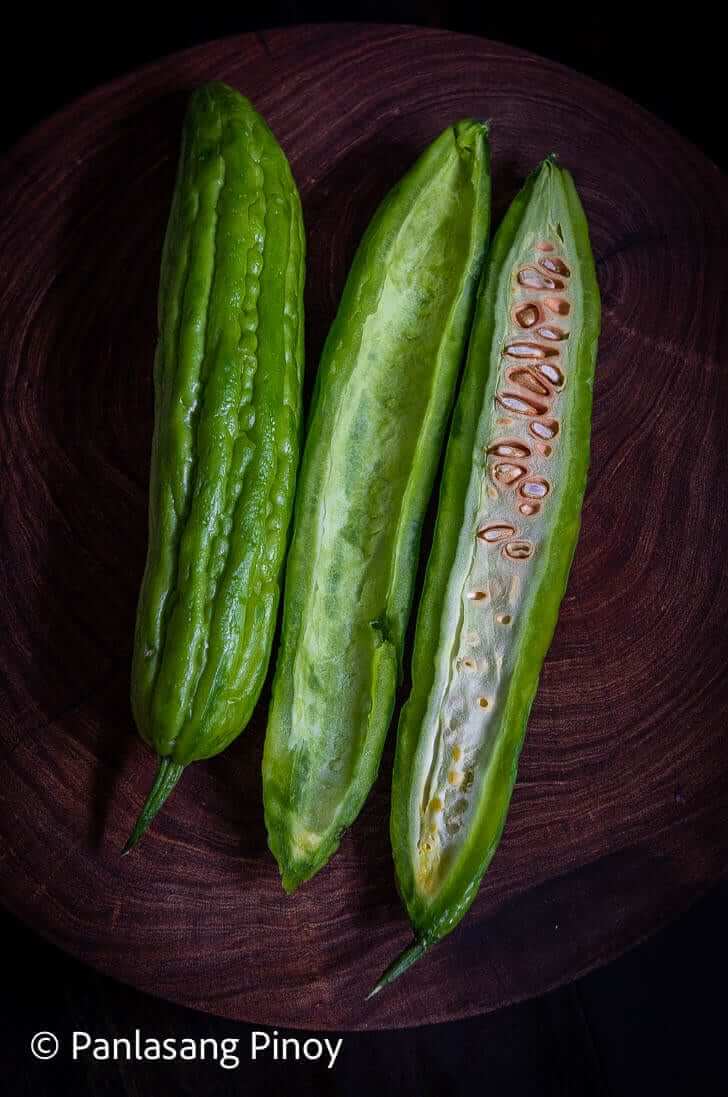
ampalaya

Ampalaya

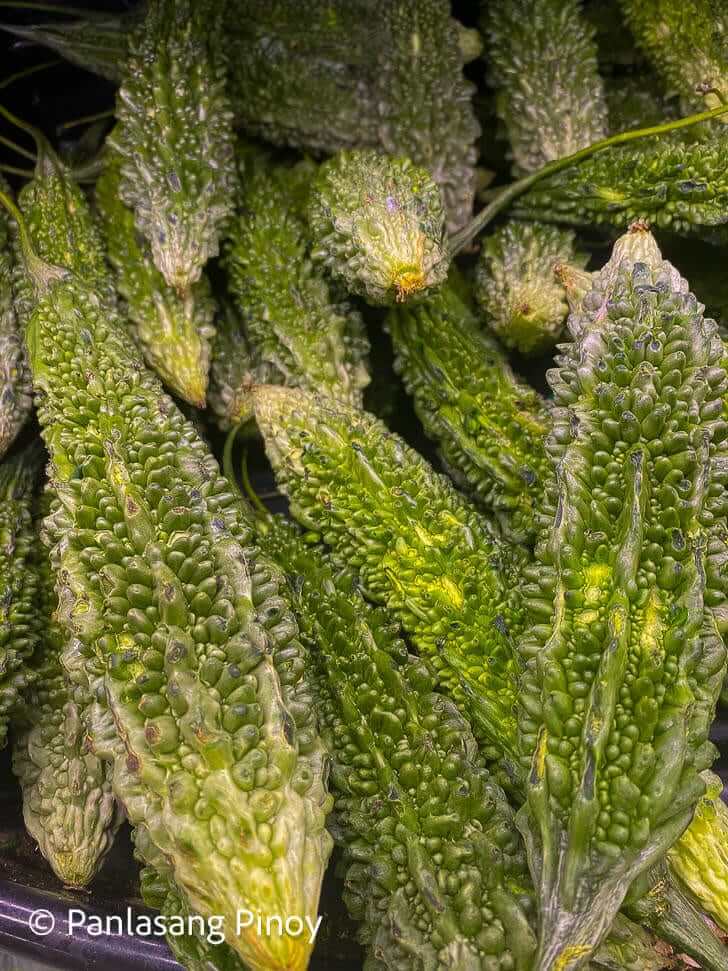
There is a great deal of ingredients and food items that go down in history for their infamy. And majority of the time, you can find this applies to healthy ingredients that may not necessarily bring immediate pleasure to the taste buds of some. But the magic, perhaps, comes from the seamless integration of these notorious ingredients with complementary spices and foods. This may just be why, in the Philippines, the bitter gourd, better known as ampalaya, is one of the most famous and well-used vegetables.

ampalaya

While the ampalaya’s signature trait may be its sometimes overwhelming bitterness, with the right set of ingredients, its taste can truly shine.

What is ampalaya?

Bitter gourd, with the scientific name of Momordica charantia, is a tropical and subtropical vine. It is often grown in the Carribean, the Amazon, and Southeast Asia. Because of its abundance in the Philippines and some surrounding countries, various savory recipes make the most of its signature bitter flavor. This comes from the momordicin in the vegetable.

As you can see in its name– it is sometimes referred to as bitter melon too– ampalaya is known for its distinctive bitterness. And it isn’t entirely uncommon for diners to reject a strong acrid taste. Some detest even the mildest trace of bitterness. But even for those who are not entirely opposed to its distinct flavor, balancing its taste with other ingredients can be tricky. With such sharp flavor, it can be hard to prepare a dish without it overpowering the entire meal’s taste.

But several Filipino cooks have learned to innovate, and slowly learn to master this vegetable. And I have a list of some tricks you could also adopt to cook your ampalaya better!

How to cook with ampalaya and get rid of some of its bitterness:

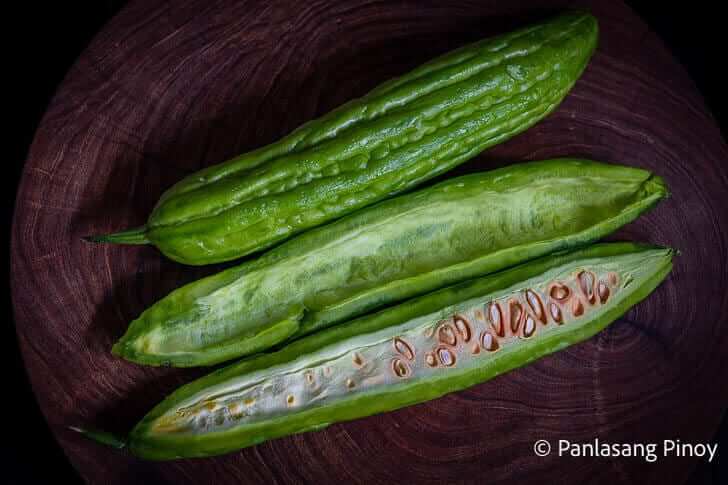
Making use of the bitter melon evidently involves some preparation beforehand. You can start by slicing it open vertically along the length. Then take a spoon, and scrape out all of the sides, as well as the white pith. This white is where you could taste most of the acridity. And so take it out as much as you can. What you will essentially be left with is the green gourd you’ll be needing for most dishes. Majority of the time, the preferred size is in ¼-inch pieces that are shaped like a half moon. Try to slice it in this manner.

The next part is a step that could heavily improve your dish, depending on your preference of bitterness. But if you’d like a much milder sense of acridity, one way to remove some bitterness is by rubbing 1 teaspoon of salt inside the ampalaya. Make sure to apply this step to both halves of your bitter melon, then wait for 5 minutes. Then you might be able to see some moisture, and that the bitter sap has exited from your ampalaya.

bitter gourd ampalaya

Other techniques to lessen acridity:

There are other steps you could adopt for a similar effect. You could do well by slicing up your ampalaya in pieces in the half moon shape for your starting step. Then put them in a bowl. Rinse this well with water, then dry your sliced bitter gourd. This easy step could still remove plenty of what could be an unpleasant flavor to some.

Another option also utilizes the rinsing method, but with some more time in the bowl of water. Try this with salted, lukewarm water to contrast the ampalaya’s acridity. Take note that more time soaking the vegetable would mean less of its natural bitter flavor. With this, you can soak this from a minimum of 5 minutes to overnight. Then you are likely to wake up with only some mild bitterness left to your ampalaya.

Another tip to make sure that the ampalaya does not end up too bitter is by ensuring that you cook it just the right amount. Spending too much time above heat and a stove could bring out even more of the bitterness you might be avoiding for the ampalaya. Keep a watchful eye while cooking your rich, flavorful bitter gourd.

Choosing and storing your bitter gourd:

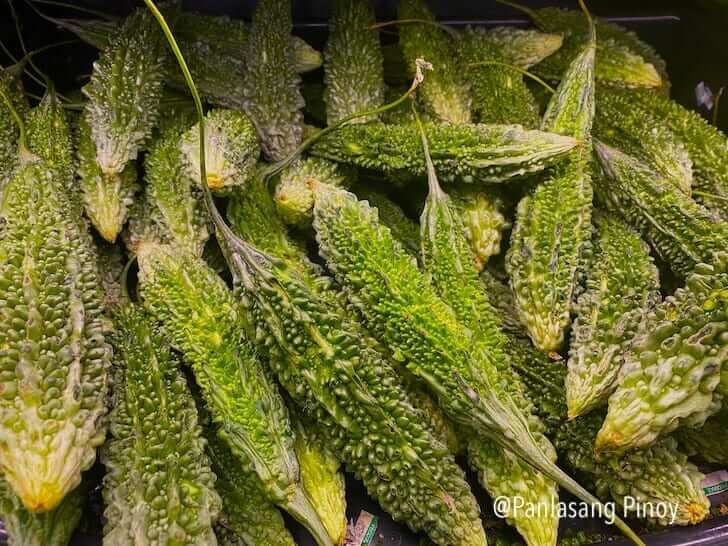
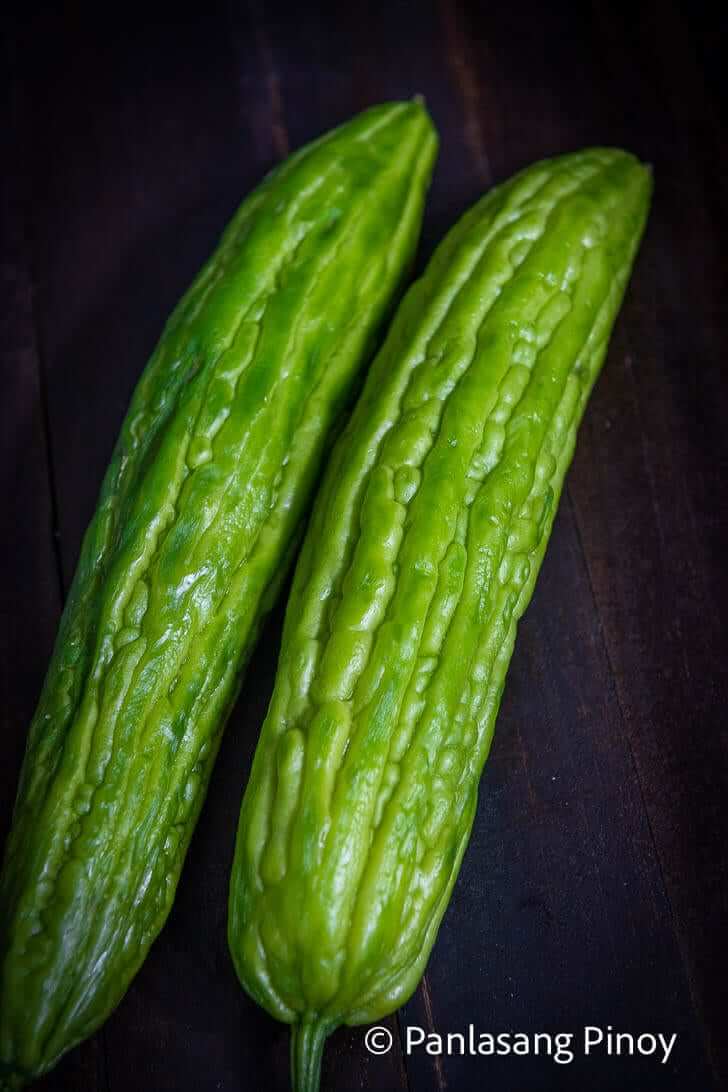
Another factor you should look at to ensure less of a bitter ampalaya is its ripeness. If it is unripe, it tends to be less bitter, and it is bright green and firm. When you stroll around the markets looking for your supply of bitter melon, keep an eye out for these kinds of ampalaya. This is because milder bitterness is ideal for most dishes. And on the other hand, you probably should try to keep away from bitter gourd that leans towards a more orange or red shade. This indicates a more ripe ampalaya with more bitterness.

Now if you want to keep your ampalaya from ripening, you can keep it in the fridge for approximately 4 days. This can slow down the ripening process, while keeping your vegetable from rotting.

It might seem like a bit much to be preparing this vegetable. This is especially given how it can usually be an unideal amount of bitter to the taste. But a little patience in cooking this nutritious ingredient could lead to a great deal of health benefits in the future!

Health benefits that come with eating ampalaya:

Filipinos have mixed this vegetable with a great amount of dishes, and this should come as no surprise. Because of the abundance of vegetables grown all over the country, it is a fairly accessible and low-cost way to boost your health. Ampalaya has 22 percent of the average daily requirement for folate or folic acid in its synthetic form. With this, the Harvard School of Public Health has said that increasing your intake of the bitter gourd can help prevent breast cancer, colon cancer and strokes.

ampalaya vegetable

But the advantages of incorporating this ingredient in your diet don’t stop here. It is also rich in dietary fiber. This means it could be beneficial in maintaining your gastrointestinal health, while protecting you from diabetes and heart disease.

And a lesser known fact about ampalaya is that one piece of this winkly vegetable is said to have 174 percent of the average daily requirement for Vitamin C. And Vitamin C, a great antioxidant, can help you make great strides towards protecting your cells from harmful free radicals.

Of course, if you are looking to improve your eating habits in consuming less calories, ampalaya also makes for a fantastic, piquant option. It has a lower amount of calories than most other ingredients. And this is while retaining some of the most helpful vitamins and nutrients. Other than folate and Vitamin C, the bitter melon also contains Vitamins B1, B2, and B3. Moreover, it is rich in manganese, phosphorus, zinc and iron. As such, iron can aid your body’s process of making more hemoglobin, which is great for your blood health.

Its health benefits compared to other food:

Ampalaya is also able to more than hold itself with pride when compared to other healthy food options. For one, it has twice the amount of potassium that bananas have. Following suit to this health benefit, broccoli only has about half the beta-carotene there is in the bitter gourd. It also has double the calcium that spinach has, meaning it will be largely advantageous for your bone health.

bitter ampalaya

And if all of these benefits have you convinced, you might be thinking of one thing. What can I make of this crumpled, strongly flavored and sustaining ingredient? Well, the good news is that you have a plethora of options to choose from. Despite the sometimes overpowering strength of the ampalaya’s bitterness, it actually tastes exquisitely good with various kinds of meat. And its unique acridity also makes it a gorgeous match for most mild ingredients or fellow vegetables.

Interested in figuring out a few recipes to try out with ampalaya? Here’s a list of some of my favorite dishes to have with the deliciously vinegary bitter gourd.

Recipes with ampalaya to try in your own kitchen:

Ginisang Ampalaya (Sauteéd Bitter Melon)
As mentioned earlier, the ampalaya is significantly known for one thing– it’s one of a kind, and easily recognizable sharp taste. But the bitterness, when utilized properly, is something you can make some of the best, most flavor-packed dishes with!

Ginisang Ampalaya is easily one of the best Filipino classics when it comes to savory dishes that take little time, but hold an abundance of flavor and healthy components. This recipe makes the most of tomatoes, onions, eggs and ampalaya. And this is to create a dish that mimics some of the distinct salty flavors of a regular meat recipe. And yet, it has all the magic and health benefits of a meal brimming with vegetables. But if you prefer a bit less acridity in your Ginisang Ampalaya, you could also try the methods written above. And in result, you could enjoy this dish with more of the other ingredients’ flavors shining through the bitterness.

Ginisang Ampalaya with Shrimp (Sauteéd Bitter Gourd)
There is an ease that comes with working with vegetables. This is partially because of their share of nutrients, as well as the distinctly striking textures they bring to a dish. But this texture could do well with some of the unique flavors brought by seafood ingredients. And flavors from the sea tend to be milder than meat. This could go well with what else but the rich ampalaya.

This Ginisang Ampalaya with shrimp essentially uses the same easy and clear steps as the recipe before this one. That is why it only takes a mere 35 minutes to make. But it also has the soft and salty taste of carefully sautéed shrimp. While this recipe is plenty flavorful and delightful on its own, its taste can be elevated further. It is best to try it with some fish sauce and spicy chili. Mix and match your own spices and seasonings with this dish, as it adapts well with other flavors too!

ampalaya vegetable healthy

Ampalaya Salad
Otherwise known as ensaladang ampalaya, this Ampalaya salad is a simple recipe for when all you’re looking for is a good, clean mix of fresh vegetables and the most piquant seasonings. Chopped up red onions and bright green bitter melon come together to make a vibrant salad dish you can easily whip up at home. The trick to making the most of this recipe and its crispy, juicy textures is by cutting your onions and ampalaya thinly. Of course, it would also help to ease your level of acridity a bit. You can do this by rubbing some salt onto your bitter melon. This would help it go even better with your combination of Roma tomatoes, vinegar and black pepper. Give yourself a light side dish or snack with this nutritious, colorful salad!

Beef in Oyster Sauce Stir Fry with Ampalaya
Playing with your flavors in a dish could create some delectable results. This is why spices and seasonings can truly make the mark of a recipe. As such, my Beef in Oyster Sauce Stir Fry with Ampalaya utilizes various flavors. This can range from sesame oil and sherry cooking wine to soy sauce to contrast our bitter gourd’s natural acridity. Oyster sauce, in its mild sweetness and unique saltiness, particularly plays well with the ampalaya not only flavor-wise, but also with regards to texture.

Coating our bitter gourd in the deliciously savory oyster sauce gives it a one of a kind flavor that also has a harmonious relationship with tender strips of tasty beef sirloin. I would also suggest grabbing your Worcestershire sauce if you’ve got a bottle of your own when eating away at this dish. It is yet another seasoning that integrates well into the dish, especially with a cup of warm white rice.

Ampalaya con Carne
Getting a single whiff of this dish while it’s cooking in the kitchen will tell you all you need to know about this Ampalaya con Carne. Sautéed in garlic, ginger and onion, your mix of marinated beef and ampalaya come together for an irresistible savory dish. This also conveniently only takes about 20 minutes to make with a simple recipe of quite accessible ingredients. But diners of this delicious dish may be oblivious to the easy preparation of this dish what with the rich flavors that will come in this bowl of fragrant beef sirloin and ampalaya. Similar to the previous recipe, which also utilizes beef, this Con Carne would taste especially pleasant with some rice to complement its powerful flavor and rich, tasty stew.

Stuffed Ampalaya
Wrapped all over excluding the top by a crinkled, green coat of ampalaya, and oozing in appetizing, salty flavor brought by a wealth of black pepper and paprika– you can do even more with your ground pork by taking on this Stuffed Ampalaya recipe! There is something especially tasty about meat stuffed in deliciously crunchy casing, and this utilizes that very technique. Resembling embutido and its unique, salty-sweet flavor with a little less of the sweetness and more of our signature bitterness, this dish makes use of a delicious ground pork mixture to collaborate well with the acridity of bitter gourd. You’ll come out of the kitchen with some wonderfully colored stuffed bitter melon with golden brown pork peeking from the top. And this recipe is great for 4 people, so it would be great to share with family or friends!

Kalabasa Soup with Ampalaya Leaves
The first thing that probably comes to mind at the mention of ampalaya is the classic bitter melon that graces many a delicious Filipino dish. But another significantly tasty ingredient brought by the subtropical vine the vegetable comes from are the tiny, heart-shaped leaves. And instead of the body of the bitter gourd, this recipe makes use of nutritious ampalaya leaves. But this ingredient isn’t solely remarkable for all the good it can bring to your health. It also adds a component with softer texture and great flavor to your traditional kalabasa or pumpkin soup. And with a very minimum amount of ingredients ranging from savory chicken broth to salty garlic powder, you can make a colorful, delectable dish.

Try this recipe for some simple steps towards a comforting bowl of warm kalabasa and tender ampalaya leaves.
While the general consensus towards ampalaya may generally be towards the avoidant side, there’s no harm in trying it with a couple of new recipes! And if the issue lies on the excessive bitterness of the vegetable, you can try some of the techniques listed above to alleviate that. With all of the delectable, not to mention healthy, dishes in the bitter gourd’s arsenal, perhaps it’s time to start getting more of it for your kitchen.

What ingredients do you prefer to have with your ampalaya? Let us know in the comments!

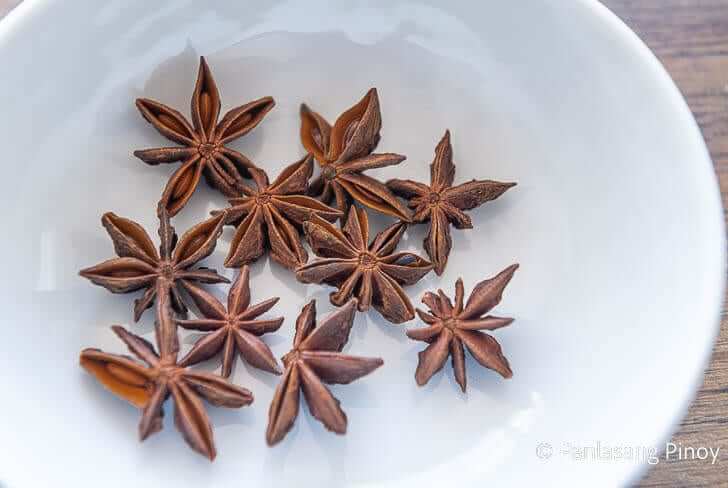
star anise

What is Star Anise?

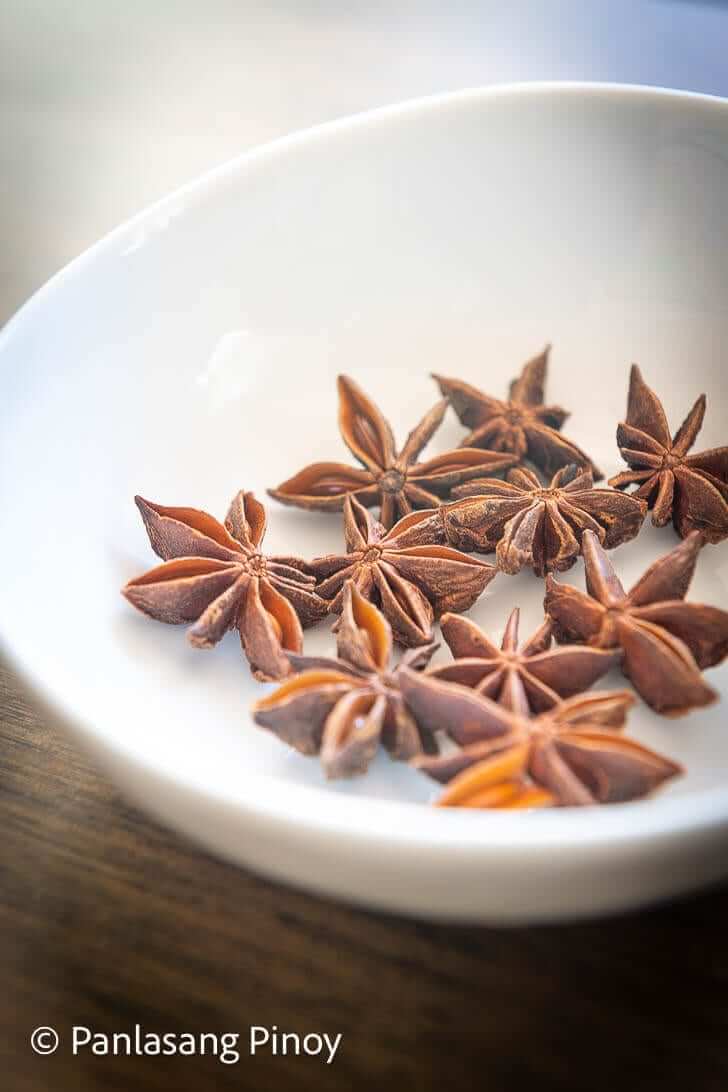
Have you ever heard of star anise? True to its name, it is a small, star-shaped spice we can find in several Asian cuisines. This spice is a popular ingredient in many Indian and Chinese dishes. Its flavor profile is similar to that of aniseed, licorice, or even fennel. It is one of the five traditional Chinese elements in food, as it is one of the main ingredients of traditional five-spice powder.

star anise

Where it come from?

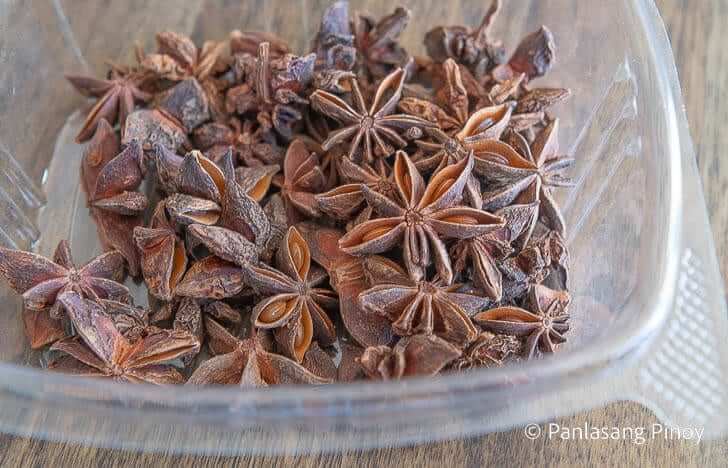
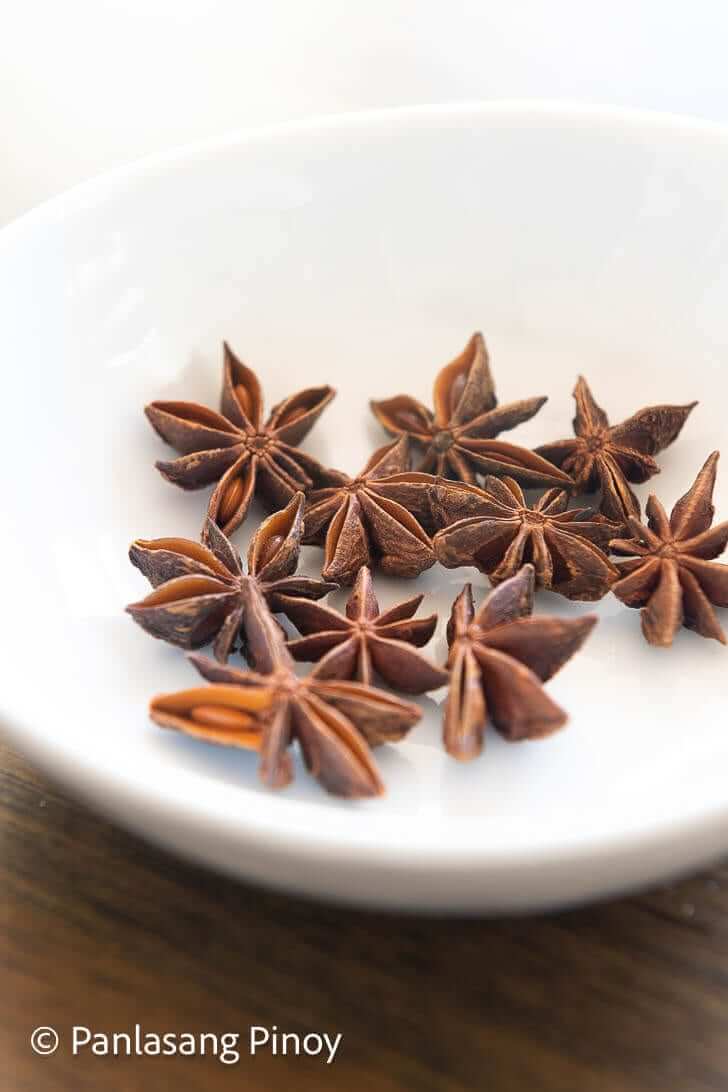
Star anise is the product of the evergreen tree, Illicium verum. This tree is native to several provinces in Southwest China as well as in Vietnam, which is probably why it’s so popular in these areas’ cuisines. All of the varieties typically look the same –– all small, rust shaped, and with eight points on average. Each point contains a seed, small and pea-like in appearance. These little spices are so pretty, those unfamiliar with it might even mistake it as decor for their homes! It is typically sold either whole or ground up, but either way its unique flavor shines through in any dish you put it in.

As mentioned prior, It is one of the five major components of traditional Chinese five spice powder. Five spice powder is a common flavoring agent in several Asian cuisines, but most prominently in China. According to stories, these spices represent the five elements: fire, water, wood, earth, and metal. Combining all of these spices together meant that there would be balance, not only in the food cooked with it but in our bodies. Apart from star anise, the other four spices typically put in this powder are cloves, Chinese cinnamon, Sichuan pepper, and fennel.

Making your own five spice powder with star anise and others is simple. You can check out an easy to follow recipe for it here.

Are anise and star anise the same thing?

Funnily enough, despite their name similarities, anise and star anise bear no resemblance or relation to each other! The former comes from Mediterranean origins, while star anise, as we’ve learned, comes from Chinese provinces. Both seasonings have anethole that gives it its licorice-like flavor, but it comes out in different ways. Where anise is potent and almost spicy, star anise’s flavor profile is definitely more modest.

Star anise and anise seed can be used interchangeably in dishes. However, the proportions and amount will have to be adjusted. You don’t want your dish to not have enough flavoring –– nor too much!

What can you cook with it?

As mentioned prior, star anise is incredibly popular in Chinese dishes, whether it’s in five spice powder or as a standalone. The ingredient also makes a common occurrence in Vietnamese cuisine. Have you ever had pho before? The mild but powerful combination of rice broth, meat, and noodles is Vietnam’s national dish. And this spice helps in seasoning the dish, giving it its unique yet delicious taste you can’t get enough of.

In the Philippines, several of our dishes have Chinese origins, with our own little twists that make them distinctly Pinoy. As such, five spice powder –– or even just by itself, specifically –– remains to be one of the most popular components of several dishes here.

Here are just some examples of well loved Filipino dishes where one can find star anise:

star anise spice

  • Have you ever had beef pares? The tenderized beef and mouth watering sauce of a great pares is always enjoyable, especially after a long, rainy day. Paired with a nice bowl of beef stock and a cup of rice, it makes the perfect meal. Star anise is arguably a valuable ingredient in beef pares, as it adds complexity to the dish’s flavor profile.
  • Pork asado is another great dish that requires the sweet and unique flavor of this spice. Asado is a dish that consists of meat braised in a mix of condiments and spices, like soy sauce, garlic, onion, sugar, and star anise. Five spice mix is also occasionally present, to bring out even more complex flavors. The meat of asado can vary based on your own preferences. But whether it’s pork, chicken, or even pata (pork hocks) you’re using, asado’s sweet sauce makes it a popular menu item in several Filipino-Chinese restaurants.
  • Humba is a dish similar to asado where this important spice come in handy. Like asado, humba is also cooked by braising pork in several other ingredients. By cooking your pork humba with tokwa (tofu), your dish is made even more filling! The addition of star anise gives it an irresistible aroma that’s only made more enjoyable with its scrumptious flavors.
  • Another Filipino-Chinese favorite is the sweet and savory pata tim. Cooked with mushroom and bok choy, pata tim combines soy sauce, cooking wine, sesame oil and star anise, among others, for that rich and perfect bite.
    If you’re a big fan of crispy pata, you can use this spice too as it is also an important ingredient! Boiling your pork leg in this spice along with bay leaves, among others, helps the meat absorb all these delicious flavors. Not only will your pork turn out super moist and tender, but also flavorful and tasty!
  • Have you ever heard of brined roast turkey before? Brining is what one calls the process of rubbing meat with brine or coarse salt before cooking. By doing so, the meat you use is seasoned and preserved properly, made even more tender and delicious. Adding star anise and apple cider can help give your turkey bit of a twist. It’s guaranteed to be delicious!

Star anise also makes an appearance in Indian cuisine, too! Garam masala literally translates to “heat” (garam) and “mixed spices” (masala). It is a blend of spices commonly used in several Indian meat dishes, like curry or biryani. With spices like coriander, cumin, and nutmeg, star anise gives Indian cuisine its colorful, vibrant flavor on your tongue.

cooking star anise

In the same way that you add cinnamon or nutmeg to desserts like pumpkin or apple pie, you can do the same for star anise! Desserts like apple crumble, chocolate tart, or even cookies get a deeper flavor profile with this special spice. The mix of sweet and savory gives your palate a twist that you and your loved ones will surely enjoy.

And if you’re of legal drinking age, you can use star anise and other spices to spice up your cocktails! Bourbon, whiskey, and other liquors taste even better when infused with star anise and ginger. This makes a great stiff drink even more relaxing. In French vin chaud (or mulled wine), it can even help steepen the flavor of your alcohol.

No matter what you eat it with or mix it in, star anise truly is a star ingredient! It’s so easy to incorporate into your cooking, and the results are always superb –– delicious meals or drinks to enjoy with loved ones.

Is it healthy?

Not only was star anise popular for its versatility as an ingredient –– it also proves to be medicinally beneficial! Star anise has been used medicinally for several decades now in China, and Western cultures are only now catching on to it.

Many of the compounds in star anise make it a great antioxidant agent. Antioxidants help boost your immunity and protect your body from a variety of illnesses. It is rich, too, in Vitamins A and C –– both integral to maintaining good health. Constipation, bloating and gas, and other digestive issues aren’t a problem with star anise around! And while studies still need to be done, star anise may also have anti-cancer properties, and can even help in making tumor sizes smaller.

Star anise’s components also make it antiviral, antifungal and antibacterial. Star anise is a renowned remedy for viral illnesses like influenza due to its shikimic acid. This acid also remedies symptoms of cough and the flu.

Star anise’s essential oil can also treat other types of illnesses, like herpes. The anethole present in star anise as well can also prevent harmful fungi from growing both on root crops and also inside human bodies once consumed. Furthermore, infections like UTI, brought about by various bacteria, can also be remedied by this spice.

Star anise is a flexible ingredient and spice, but as we know now, it’s more than just a flavorful seasoning. Its health properties are no joke –– when eaten in moderation, they can keep your body healthy and happy.

Star anise – the star of the show

what is star anise

With its subtle flavor and adaptable properties, it’s no wonder that star anise has found a place in several popular cuisines and food across Asia –– and now the world. Its health benefits are plentiful, its uses abundant, and its taste, absolutely delicious.

Use star anise in your dishes for a more complex and unique flavor, and it’s sure to grab the attention of your whole family.

What do you like to cook your star anise in? Let me know!

calamansi sour fruit

What is Calamansi?

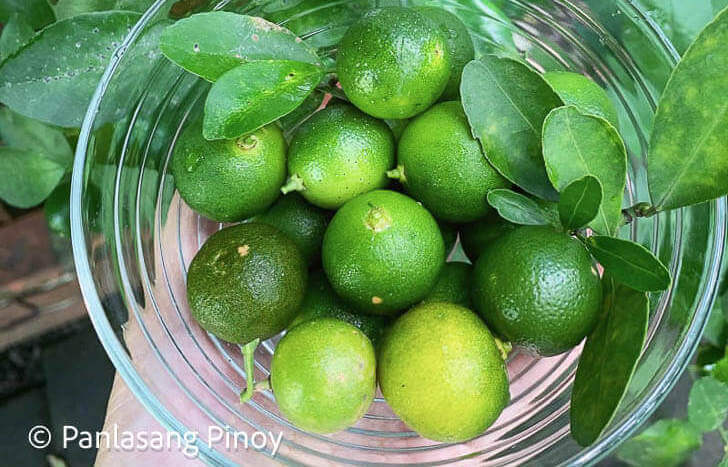
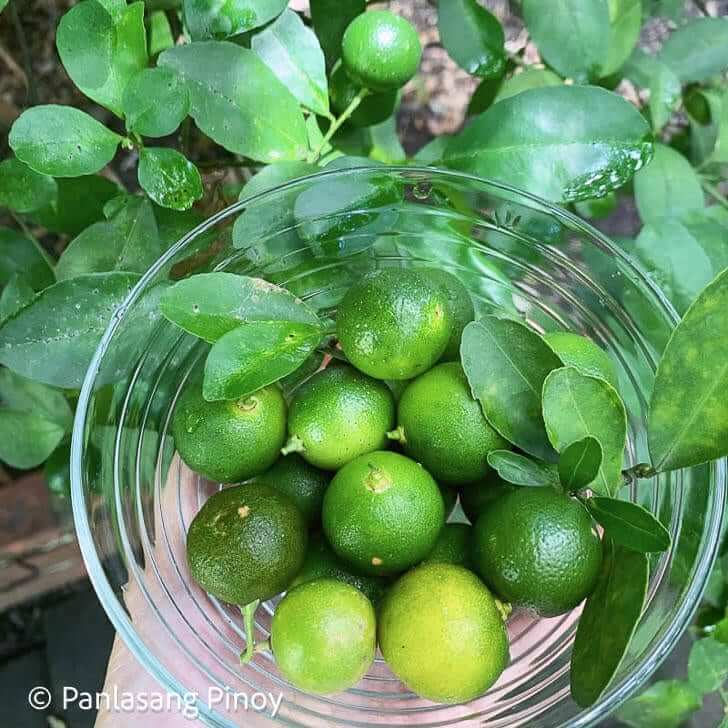
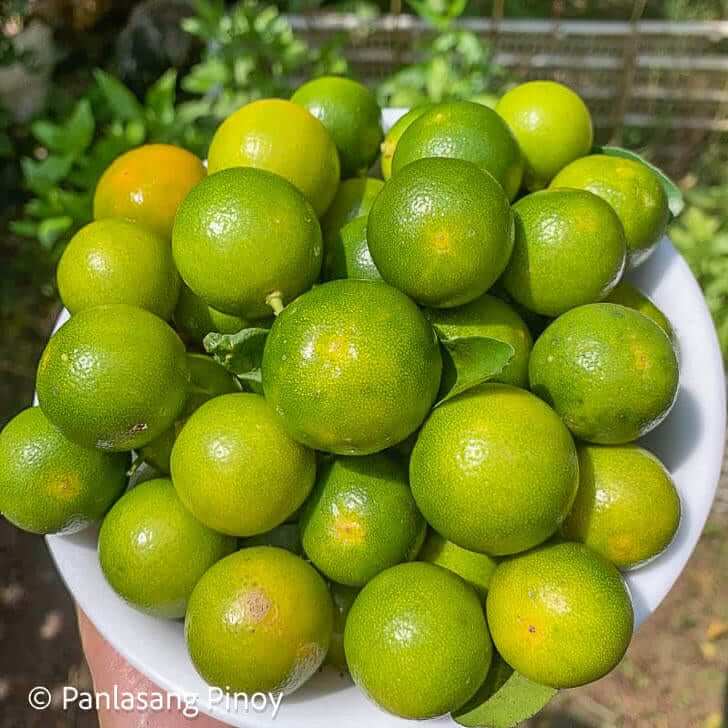
One of the other most popular fruits is none other than the citrus fruit, calamansi. It can be found in fruit juices, and as a garnish for other well-known meals in Filipino cuisine. Calamansi is a small fruit, round, green, and tart. But don’t make the mistake of thinking its size equals its flavor. Even just a quick squeeze of the fruit over your favorite food is bound to pack a flavorful punch!

calamansi fruit

Because it is just the right combination of sour and sweet, calamansi works as the perfect balancing agent. The fruit is able to cut through rich flavors that we find so often in Filipino dishes. Its bright, refreshing taste can make a lot of heavy dishes like pancit and lugaw feel a lot lighter. Plus, one always feels after a nice, cold glass of calamansi juice after a hot day!

The Philippines is home to a variety of fruits and vegetables that grow best in our country. Most domestic fruits and veggies come at pretty cheap prices in the market and make for excellent meals. What other nation can boast the sweetest, most delicious mangoes?

But our small but feisty calamansi deserves just as much recognition as any other of our favorite Filipino fruits. It has so many different roles and uses, not even limited to just food (but we’ll talk more about that later). So, let’s give it center stage now and learn more about this magic fruit!

What’s in a name (Calamansi)?

In some American states, this small green fruit is referred to as calamondin. In other parts of the world, calamansi is also known as the following, among others:

  • Philippine lime
  • Calamandarin
  • Golden lime
  • Philippine lemon
  • Pamana orange

Fun fact: Pamana orange is also a common name people call kumquats. Calamansi is actually a kumquat hybrid, so this makes sense.

Other Southeast Asian countries like Malaysia and Singapore call it calamansi lime. It also plays a huge role in their cuisines; sambals and laksas are no stranger to this small and sour fruit. Calamansi also partners with some Malaysian grilled fish dishes, giving it a bright, refreshing taste!

Growing and glowing

One can find calamansi at any Filipino fresh market during the warm and dry seasons, and at affordable prices, too. Abroad, the Philippines’ calamansi juice export is over 160,000 metric tons per year. If you’re abroad looking for the fruit in markets or groceries, try looking for its other names, too, like calamondin.

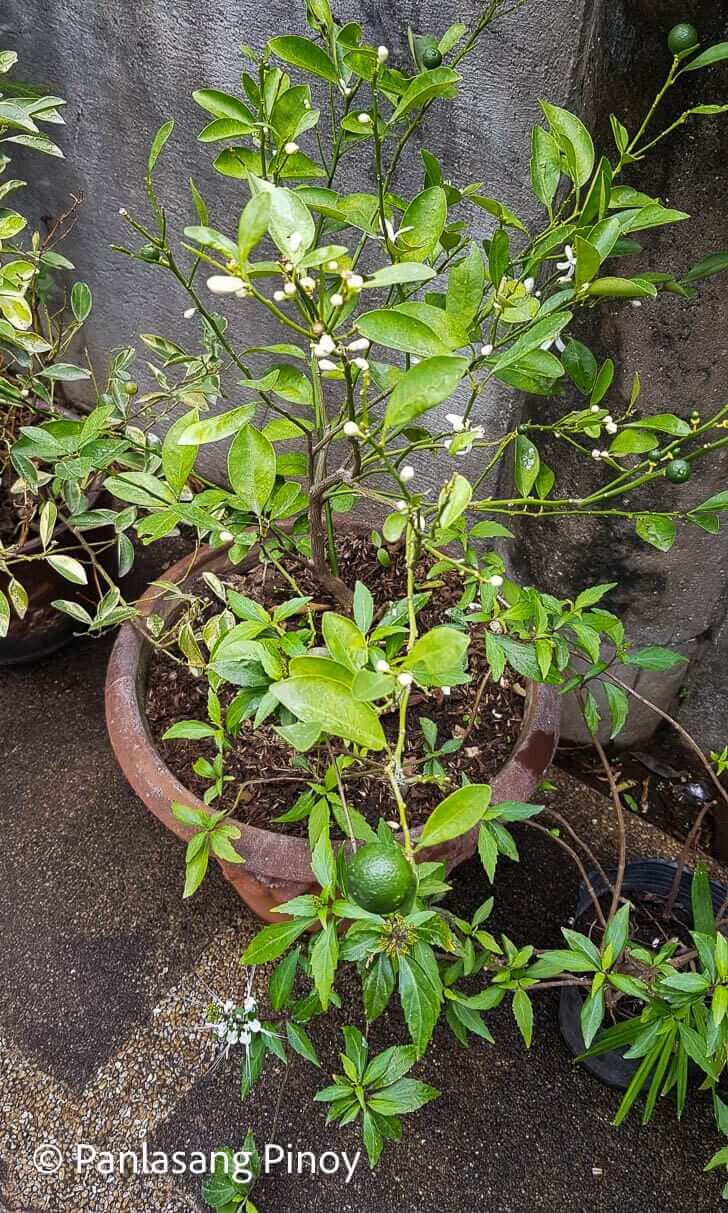
But if you want to try growing your own, that’s not a problem, either! Easy to take care of and look after, calamansi trees thrive in Southeast Asian warm and tropical climates. They can grow up to 25 feet in maturity, bearing not only delicious fruit but beautiful white flowers. But be patient––growing your own food can take time!

Calamansi grows best in soil that’s dry and doesn’t soak up moisture for too long. Sunlight is also a huge factor in growing this fruit , as the trees thrive under hot weather; this is why it might be a little difficult for it to grow in temperate climates. When watering your seeds, it’s crucial not to overwater –– keep the soil damp, not moist. From the stress of being under the hot sun, flowers are more likely to bloom.

A delicious variety

Calamansi is such a versatile ingredient, used across so many Southeast Asian cuisines. While its tartness is similar to other citruses, it’s the calamansi that has become a staple in Filipino food.

One of the most popular calamansi recipes is undoubtedly the sweet and refreshing calamansi juice. It is a lot like lemonade, but with a complex taste, similar to a mixture of lemon and lime. Served often with honey and sugar (and sometimes even ginger), calamansi juice can be served both hot and cold. However, the latter is always a refreshing treat during the summertime. Another option would be to take the juice and freeze it, using the ice cubes in water and tea. For those of legal drinking age, you can even make a liqueur with a combination of calamansi, sugar, and vodka.

calamansi plant

A lot of Filipino dishes lean more towards a sour palate –– think sinigang and cansi. Although already sour, some still enjoy these meals with a mixture of calamansi and fish sauce. More often than not, we use calamansi as a garnish for dishes like:

  • sisig
  • pancit
  • arroz caldo 
  • siomai
  • aligue fried rice

Its tangy taste adds an exciting zing for our taste buds. This makes it the perfect finishing touch to a lot of dishes.

You have probably heard the term “pampaalis lansa” in the kitchen. This is exactly another thing that calamansi is good for! For fish dishes, calamansi is often a part of the marinade or the dipping sauce that accompanies the main course. This helps not only give complex flavors to a dish but also reduces its fishy taste ( lansa ).

The combination toyomansi (that is, soy sauce “toyo” and calamansi ) is one that has become so popular in our cuisine. In fact, it’s so popular that instant noodle brands have named noodle flavors after it! If you’re a fan of food like lumpia and siomai , toyomansi makes for the best companion. You can even put some chili oil if you’re into a little spice!

Are you in the mood for something sweet instead of savory? With calamansi, that isn’t a problem either! Just like there are lemon-flavored desserts, calamansi bars, tarts, and cupcakes make that perfect mix of both sweet and sour. If you can’t find them at bakeries near you, there are several calamansi dessert recipes to follow online for a happy tummy.

Healthy and happy

Even with its small size, calamansi has a wide array of vitamins and nutrients that come with consuming it.

Like all citrus fruits, calamansi is rich in vitamin C. Vitamin C helps boost your immunity, protects your memory, and lowers your risk of getting several different illnesses. Studies have also shown that this fruit helps regulate the release of glucose and insulin into the body –– perfect for diabetics. Other vitamins and nutrients calamansi is rich in are vitamin A, potassium, and calcium.

Even with its sour taste and high levels of citric acid, calamansi actually helps soothe stomach pains and eases digestion. The fruit can help prevent acid reflux, which one can get from consuming too many ingredients high in acidic levels. Calamansi juice also boosts your metabolism, which can help if you’re looking to lose weight.

But did you know that calamansi is useful even beyond its delicious taste? People have begun to incorporate calamansi and its extract in other aspects of life … like beauty and skincare! Because calamansi is rich in vitamin C, it also aids in preventing signs of aging to appear. Wrinkles, age lines, and dry skin recover naturally as long as you have enough vitamin C in your system. It is also effective in fighting dandruff and itchy scalps –– because of its acidic nature, it even helps battle hair fall.

You may also want to see this article about the health benefits of lime.

ripe calamansi

Many have taken to using calamansi juice as a means of making skin fairer and more refined. Calamansi acts as a light bleach for the skin, without the awful burning sensation. It also works as a wonderful exfoliant; its juice can wash away dead skin cells, bringing out the new for a healthier and more glowing, rejuvenated appearance. By reducing oil production on your face, it helps put problems like acne, freckles, and blackheads to rest. Not only does your skin absorb all these helpful vitamins and nutrients, but you also look absolutely glowing!

Calamansi is a versatile fruit that makes our lives –– both in the kitchen and otherwise –– that much sweeter. With all its uses, calamansi can help you live a happier, healthier life. It really is evidence that the best things can sometimes come in the smallest packages.

How do you like to incorporate calamansi into your daily life? Let us know!

How to Cook a Lobster

Lobsters are loved for their tender meat and if cooked well, can make a delicious meal. Because of their size and shells, knowing how to cook a lobster properly can be challenging. Different cooking methods require lobsters to be prepped in different ways and cooked for varying periods of time. Use these helpful guidelines and tips on how to cook a lobster the right way.

how to cook a lobster

Buying the Best Lobster

To ensure freshness, lobsters should always be purchased live. The best lobster vendors usually have live lobsters displayed in a water tank. If you intend on using lobster meat in recipes, it is advisable to choose smaller lobsters. If you want to eat lobster as a meal on its own, bigger is better. Lobster sizes usually range from 1 pound to 5. The size you pick will depend on the number of people you want to feed or how much lobster meat your recipe requires.

If you are into lobster tails, I created an entire post wherein I shared some tips on how to buy lobster tails.

How to Cook a Lobster on Stovetop

The two basic ways to cook a lobster on stovetop is boiling and steaming. While boiling is easier and faster, steaming preserves flavor and can prevent overcooking the lobster meat. For both cooking methods, you will need:
• Whole fresh lobsters
• Sea salt as needed
• Butter and other seasonings to taste

Boiling Whole Lobsters

  1. Make sure you have a large pot that can sit whole lobsters comfortably without overcrowding. Fill the pot with water and add about a tablespoon of sea salt. The general rule of thumb is to pour 3 quarts of water per 1-2 pounds of lobster.
  2. Bring the water to a boil, drop in the lobsters and begin tracking the cooking time. Use the cooking time guidelines below.
    • 1 lb. = 8 minutes
    • 1 ½ lb. =11-12 minutes
    • 2 lbs. =15 minutes
    • 2 ½ lbs. =20 minutes
    • 3 lbs. = 25 minutes
    • 5 lbs. = 40 minutes
  3. Lobsters are cooked when the shell is bright red and the meat between the carapace and tail is white. Use shears to crack open the shell, season with butter, salt, pepper, garlic powder and other seasonings, and serve.

Steaming Whole Lobsters

Steaming is a great way to learn how to cook a lobster because it is gentler and less strict on cooking times than boiling.

  1. Add water and a tablespoon of sea salt to a pot. Bring to the boil.
  2. Arrange lobsters on a steaming rack and place it over the boiling salted water. Steam covered. To determine steaming time, just add 2 minutes to the recommended boiling times above. 1 pound of lobster, for instance, should take 10 minutes to steam.

How to Cook a Lobster in the Oven

  1. Boil lobsters in salted water for 3 minutes max in a large pot. Remove from pot and plunge into ice water and let it cool for 5 minutes.
  2. Remove from ice water and use kitchen shears to slice the lobster lengthwise. Peel off the top shell and take out the innards. Separate the knuckle and claw.
  3. Brush the whole lobster with softened butter and bake in 400F heat. Lobster is ready when it reaches 140F on a meat thermometer or the meat is white and tender. Season with salt and spices. Serve.

You might also want to refer to this post for more information on how to cook lobster.

How Do You Fry Pork?

There are more than 20 different ways to fry pork. It all depends on the cut of meat that we have available and our preference on a given time. For example, pork chops can be breaded and then deep fried, while pork belly is best done crispy. This means that it has to be boiled, seasoned, and deep fried until a crispy and crunchy texture is achieved. There are also times when it all depends on our mood or whether we have enough time to do the activity. On a lazy day, I just rub salt all over it and fry the pork directly in hot oil.

how-do-you-fry-pork

Although I really love to cook and might have tried some ways of frying pork (whether it is the simple way or otherwise), I know that there are still some pork frying methods that I have not tried or that are new to me. You might know better.

I am curious. Can you tell me the different ways on how you fry pork?

Let me go first. Here are some ways that I fry pork:

Rub with salt and dredge in flour

I do this on busy days when I have lesser time to spend in the kitchen, and needed a quick chow. Salt is rubbed all over the pork and then I dredge it in flour. The pork is pan fried until it browns. The flour prevents the oil from splattering and it also gives my fried pork a nice texture. This method works with pork belly (I prefer it sliced into individual pieces), or with pork chop. It is also perfect for pork shoulder and tenderloin.

fried pork belly pritong baboy in a bowl

Fry in own fat

There are times when Fried pork is needed as an ingredient in some dishes that I prepare; Apan-apan is a good example. Small pieces of fried pork are added to enhance the dish and make it taste better. The pork pieces are placed directly on a hot wok or pan. The heat extracts the oil from the pork and it accumulates later-on enough to fry it.

How to Fry Pork

Boil, Season, and Deep Fry

There are times when pork needs to be boiled before frying. Boiling makes it tender and gives is a more crisp texture when fried later on. This is true to dishes such as lechon kawali and crispy pata. Both these crispy pork dishes needed to be boiled first and then deep fried to attain that nice texture. Seasonings such as salt and pepper are rubbed before deep frying the pork.

How to Deep Fry Pork

Bread and Deep Fry

I adore deep fried breaded pork chop. I like how its nice and crunchy in the outside while moist and juicy in the inside. The pork is seasoned and then dipped in beaten egg and then dredged in flour. I do the dipping and dredging twice for best results. This is a regular thing once every two weeks, just like how ginisang monggo is any given Friday.

How to Cook Breaded Deep Fried Pork

Tonkatsu Style

Similar to breaded pork, Tonkastu style pork is cooked the same way. The difference is the type of breading used. This method uses Panko breadcrumbs. Pork Loin Tonkatsu is a dish that I made using this method. I like how moist the pork gets while I get a crunch in every bite.

How to Fry Tonkatsu

Fry directly in oil

When I get really lazy or if I just want simple fried pork, I go for this method. Season the pork chop and fry directly in oil. You can also simply fry it directly without any seasoning – dip it in ketchup later-on or in ponzu (toyo + calamansi) for extra flavor. Fried pork chops fall into this category.

Fried-Pork-Chops

What are Sea Grapes or Lato?

Lato, Sea Grapes, Latok, and Green Caviar are some of the names given to Caulerpa lentillifera. It is a type of edible seaweed common to the Philippines and nearby countries. This seaweed variety is the main ingredient for a popular Filipino salad called “Ensaladang Lato” which translates to Seaweed Salad.

Lato Seaweed

Health Benefits of Sea Grapes or Lato

Caulerpa lentillifera is good for persons who suffer from diabetes. Study shows that it is a potential anti-diabetic agent because it is able to enhance insulin secretion. According to slism, it is high in iodine, magnesium, and vitamin K. It was also categorized as a diet friendly food. This means that having seaweed salad regularly is good for your body. You can probably make different salad versions so that every meal will be something to look forward to.

sea grapes or caulerpa lentillifera

I was fortunate enough to stumble upon an article that details how lato or seaweeds are harvested, cleaned, and sold. It specifically talks about how the Tagbanua tribe in Coron, Palawan who makes a living out if these yummy sea grapes. I thought that it was very interesting and I was able to learn new information. For example, I learned that these are harvested manually in Palawan. The members of the tribe dives in murky water 5 meters deep  and pulls caulerpa lentillifera with their bare hands. You can read it here.

Aside from making ensaladang lato, do you know other dishes that can be made with this ingredient? If you have a your own seaweed salad recipe, you can share it with us by typing the details in the comments section.


  • Previous
  • Page 1
  • Page 2
  • Page 3
  • Page 4
  • Page 5
  • Page 6
  • Interim pages omitted …
  • Page 27
  • Next

sidebar

Welcome!

As a huge fan of Filipino food, it is my goal to teach people how to cook it using the simplest way possible. Prepare your taste buds for an ultimate showdown of delectable Filipino dishes! Read more…

Facebook
Instagram
Pinterest
YouTube

Reader Favorites

Chicken Adobo in a Bowl

Filipino Chicken Adobo Recipe

Leche Flan Recipe

kare kare beef tripe

Kare-Kare Recipe (Beef Tripe)

Pork Sinigang

Sinigang

Receive new recipes by email!


Seasonal

Beef Morcon Recipe

Arroz Valenciana

lechon belly roll recipe

Lechon Belly Roll

Christmas Macaroni Salad

How to Make Macaroni Salad for the Holidays

As Seen In:

good housekeeping
parents
serious eats
livestrong
kitchn
sheknows
Facebook
Instagram
Pinterest
YouTube
About
Meet Vanjo
New? Start Here
Browse Recipes
Explore
Ingredient 101
Philippines
Cooking Schools
Privacy Policy
Disclaimers
Contact
© 2026 Panlasang Pinoy
Site Credits
Designed by Melissa Rose Design Developed by Once Coupled
Back to Top
Back to Top